Applause to China; They Are Truly Africa’s Key Ally on Mitigating Climate

By Steven Akabwayi

On 4th-6th September this year, the  Kenyan government with AU co-hosted the inaugural Africa climate summit in Nairobi. The three-day summit brought together leaders and investors from Africa and beyond to share experiences and solutions for a  sustainable, resilient Africa.

The event focused on Adaptation and resilience, renewable energy, sustainable development, and financing for climate action.

China’s efforts towards clean energy and sustainable development in Africa have not been sufficiently covered by most Western mainstream media who aim at cherry-picked stories and character assassination.

This is done to influence the masses into a coherent narrative of China being a bad character in regard to climate issues on the African continent yet on the actual ground Africa and China are key allies on climate.

China and Africa hold the same view that cooperation and investment in environment-friendly initiatives is a critical part of their practical relations.

Unlike most Western civil groups that dictate what Africa should do, China has collaborated with Africa on developing both adaptation and mitigation plans holding a view that African countries should have legitimate rights to Pursue independent and sustainable development in relative areas.

Despite China being the world’s largest emitter of greenhouse emissions currently producing about 12.7 billion metric tons of emissions annually dwarfing the US which is at 5.9 billion tonnes, the discrepancy in the above figures doesn’t tell the whole story.

China’s high number of greenhouse gas emissions can be attributed to the fact that it is a highly populous country that is still developing with a hunger for heavy industrialization.

Since 1850 China has emitted 284 billion tons of carbon dioxide but the US which industrialized far earlier has raised almost twice as much with 509 billion tons of emissions making it the highest emitter of all time.

Additionally, in terms of per capita emission, China lags behind most developed nations with an average person in China emitting 10.1 tons of carbon annually compared to 17.6 tons of that in the US according to the Rhodium group report.

China has also taken stringent measures to address climate apocalypse not only at home but also overseas. The country stands as the leading global investor in greenfield energy and infrastructure systems across the developing world, the same climate-friendly developments have also been intensified under the Belt and Road Initiative.

Since 2017, there has been a shift in the forces regarding the policy framework of the Belt and Road Initiative in Africa, The initiative which started as a massive infrastructure project, is now focused on green sustainable development.

In 2021, China and 53 African states signed a joint declaration that pointed out that climate change and its negative impacts are an urgent problem facing humanity.

The joint declaration added that that climate change should be tackled by speeding up affordable green and low carbon transition, promoting sustainable development, and jointly fostering a community of life for man and nature.

Another noteworthy point from the China-Africa joint declaration on climate was for both parties to speed up the implementation of South-South trilateral cooperation projects on climate change, and promote the building of low carbon and low greenhouse gas demonstration zones.

China also pledged to support Africa in training professional personnel for climate response and facilitate the delivery of climate technologies and services in Africa.

In terms of renewable capacity, China is the leading producer of solar energy and manufacturer of solar equipment.

In 2022, China’s President Xi Jinping announced that they are targeting to develop 1200 GW of solar and wind energy by 2030.

The China-Africa joint declaration on climate change further reveals that China has launched over 100 clean energy and green development projects under the framework  Forum on China-Africa cooperation, this is to support African countries in better utilizing solar hydropower, wind, and other renewable energy sources.

As one way of improving the energy structure of Africa’s countries, China has upgraded its industrial structure and built smart cities with advanced urban planning and waste management.

Inthe last 45 years in what Is often referred to as China’s economic miracle, China has been able to industrialize, transform villages into smart cities, and lift billions of people out of poverty.

On the other hand, Western countries have continued to preach water as they make wine.

Despite discouraging African governments from investing in the much-required energy that will lift millions out of poverty, Western governments are on the other hand in a rush to secure energy for their citizens.

The world has seen coal mines being opened up in Germany and the UK, new drilling and production in Norway, and funding of undersea pipelines by European governments.

China being the largest developing economy, it’s aware that for any country to develop and lift its citizens out of poverty, it needs not just energy but funding and investing in green energy.

Looking at the declaration of the 8th Ministerial Conference of the Forum on China-Africa Cooperation (FOCAC) held in Senegal’s capital, Dakar, 29-30 November 2021, China committed to work with African countries to ensure the continent tackles climate Change in all ways and more importantly meet their climate change mitigation targets. Indeed, African countries applauded China noting that they “fully leverage the China-Africa Environmental Cooperation Center to advance  policy dialogue, exchanges and cooperation on environmental protection. We  welcome the positive role of the China-African Union Energy Partnership to  increase the share of clean energy and promote sustainable energy development of  both sides.”

In his Congress speech in 2022, China’s President Xi Jinping stated in a report that China must also develop petroleum and natural gas more cleanly and efficiently, explore untapped resources, increase production, and develop systems for new energy sources.

In his keynote address during Africa Energy Week in South Africa, Uganda’s president Yoweri Kaguta Museveni emphasized that Uganda will proceed with its oil and gas developments as the oil commercialization will lift millions of people out of poverty and provide them the luxury to invest in renewable energies.

China’s state-owned company the China National Offshore Oil Company (CNOOC) has been a key partner in designing and investing in the East Africa Crude Oil Pipeline Project (EACOP) with an emphasis on ensuring a lower carbon footprint compared to other gas projects.

Steven Akabwayi is a research fellow at the Sino-Uganda Research Centre
How U.S Tech Sanctions on China Present an opportunity for Africa

By Tarwana Ernest

As far back as 2019, the US placed sanctions on Chinese Tech Company, Huawei alleging spying and industrial espionage against US Tech companies. This led the Americans to place sanctions on Chinese Tech firms which subsequently led to subsequent Huawei mobile devices starting from their flagship P and Mate series being disabled from Google Android infrastructure. These events could be construed as a product of the US China Trade War.

Among others, the U.S has claims that the decision to sanction Chinese tech giant – Huawei is a result of the company’s tight collaboration with Chinese government and therefore cannot trust them in terms of security. Huawei strongly denies U.S’ accusation arguing that they are victims of America’s tech-nationalism which is meant to shield U.S tech firms from stiff competition Huawei is putting up using security concerns as a cover up. Beijing also accuses Washington of launching what they call unfair attacks against Chinese tech firms in what China sees as America’s efforts to contain China’s technology growth.

The U.S has also succeeded in convincing allies to isolate Huawei with the United Kingdom (UK) government blocking the tech giant from its G5 network rollout. While the U.S explicitly mentioned national security concerns as a reason for banning Huawei, in 2020, the UK’s security agencies concluded that any risk posed by Huawei was manageable. Indeed, while announcing the decision to side-line Huawei, then UK’s Secretary of State for Digital, Culture, Media and Sport, Oliver Dowden explained that London decided to lockout Huawei out of its market as a result of U.S’ sanctions against the firm which meant that Huawei could no longer use American chips in their kits.

However, China’s growth in the tech sector has hardly been impeded. Over the past few years, China has worked quietly to build internal capacity and wean itself off dependence to US firms. Huawei has been at the forefront of this progress.

Equally, Huawei infrastructure has aided most European countries in building their 5G networks. Some of these include Ireland, Portugal, Spain and Switzerland.

Due to the reputable nature of the Chinese firm and its infrastructure, this presents an opportunity for African nations to look aggressively towards China in building their data infrastructure and connectivity.

South Africa has been at that forefront after the recent BRICS Africa Summit, 2023. This including signing bilateral agreements with Huawei to build South Africa’s data infrastructure. If all goes according to plan, South Africa will be one of the few African nations with the most robust 5G networks on the continent.

The Chinese firm also partnered with Saudi Arabia to build cloud data centres serving the Middle East, Central Asia and North Africa. This presents a chance for African nations to liaise with Huawei in having their data held closer to the continent. In the near future, an African country with capacity could ewaully position itself to host data centres serving the continent or a particular region.

African nations can equally rely on Chinese Tech infrastructure to push for bilateral deals to encourage technology transfer which aides education and innovation on the continent. This can be through setting up innovation hubs and subsequent educational scholarships for students with interest and desire to harness their talents in a technologically advancing world. China presents itself as an opportunity for African youth to build indigenous expertise by learning from an advanced economy with historic links to the continent.

While U.S’ is still trying to convince more countries including in Africa to follow their suit and disengage from Chinese tech firms, African countries should not join this loosing battle. They should grab any opportunity should Chinese tech firms show readiness to work with them.

According to a paper published by Carnegie Endowment for International Peace, which is ranked as the world’s third most influential Think Tank, the formerly technological giants; “Japan and the United States have watched warily as China’s economic heft has grown and as the technological sophistication of its manufacturing base has increased” leaving the U.S worried that Beijing may soon overtake Washington in this important technological revolution. The paper concluded that presently, apart from China, no other country on its own can outcompete China’s determination in technology advancement and suggested that for the U.S to make it, they must form alliances with other like-minded countries as Japan and “update their decades old technological cooperation and deepen funding pools on certain shared strategic priorities, such as artificial intelligence and quantum computing”.

As James L. Schoff, a senior fellow in Carnegie observed; “fear of “losing” this competition (Technology) is fuelling an unprecedented scale of investment and a zero-sum mentality that could tempt countries to overreact in ways that would damage their national interests and broader global interests,” stressing that it is better to work with China than in technological advancement than attempting to isolate them.

To conclude, China’s trade conflict with the West presents a chance for Africa to develop her data and technological infrastructure with the aid of Chinese tech firms. This does not mean that if the West presents a fair proposal to support African countries technology adavancement support they should not take it. What must be avoided is U.S’ tendence of attempting to force other countries to deoulple from China’s techology.

Talwana is a Digital Research Fellow at the Deevelopment Watch centre.


By Musanjufu Benjamin Kavubu

Finally, the 15th annual BRICS summit is happening, and it is taking place on the African continent. There has been a lot of talk about it this time as though it’s happening for the first time but that is because of where the world finds itself at the moment. Ukraine-Russia crisis is impacting everything and the BRICS summit is not unique to the fact after all the “R” in the “BRICS” is at the forefront of what the Kremlin has eloquently blamed on what they call NATO’s eastward expansion spree which threatens Moscow’s national and strategic interests. There is no doubt, this ongoing crisis which the west is fuelling pumping arms into Ukraine has changed public opinion about the current World Order which the BRICS sees as biased to them.

BRICS started in 2001 as BRIC and it got its name from a report by Jim O’Neill who was an economist at Goldman Sachs and he predicted then that Brazil, Russia, India, and China would be the world’s leaders economically by 2050 because of the trajectory the four countries economies where taking. In 2010 South Africa joined to form the current BRICS that the whole world is talking about now which analysts argue it puts the G7 on spot especially that unlike G7, BRICS in all ways stands for the interests of the so-called emerging economies while speaking for entire global south.

Russia’s military operation in Ukraine is not the only reason the 15th BRICS summit is making headlines, but global problems like climate change are key to the agenda and also the over 40 requests from countries to join the formation is keeping the West on its heels.

At the moment, the formation is made up of about a population of 3.2 billion humans that can be also termed a labor force and market, a GDP of $ 24.44 Trillion that seems small compared to the population but an average of $ 7,500 GDP per capita is a dream for many in the global south especially in Africa.

At a time when the world is looking for an alternative to the current world order that is shaped by the US dollar the way BRICS operates seems like the best option going forward.  It’s rumored that Egypt, Algeria, Argentina, and Iran are close to membership then it’s a matter of time before everyone jumps onto the formation. Every developing country would desire this kind of forum that offers consultation and cooperation on significant economic and political issues between member countries and seems to be working.

Through the annual BRICS summit like the 15th South of the African continent, we should expect working groups on areas such as finance, trade, investment, science and technology, and health to set up and they are open to even those countries who are just willing to join. These working groups will then continue to meet as they from time to time identify areas of mutual interest and coordinate their efforts to foster inclusive development a major tenet of the BRICS.

As the formation meets on the African continent BRICS fits the current narrative by African leaders of complete independence from the West’s domination. BRICS members agreed at the start and going forward to strive for inclusive economic growth and to eradicate poverty, to fight unemployment, promote social inclusion, promote innovative economic development based on new technologies like blockchain and develop skills of citizens at the same time strongly cooperating with other countries.

Africa has a chance not to leave anyone behind through the BRICS formation since the ground in the group has proven the antithesis of elitism with its original intention of a restructured political, security, and economic outlook of the world. Africa also has conditions that are in line with the founding members of the BRICS for example fastest growing and emerging economies like Nigeria that is seeking membership, low labor costs that is being brain and muscle drained to Europe, favorable demographics of youths, and natural resources. These conditions need economic cooperation and development through multilateralism to have win-win situations at the end of the day.

To Africa, BRICS through the New Development Bank NDB can offer funding for infrastructure and sustainable development projects as it relives the pressure created by the Bretton Woods systems institutions like the IMF and World Bank that recently decided to stop funding in places like Uganda. For those countries that will go on to attain full membership, BRICS has the Contingent Reserve Arrangement CRA which is a financial safety net that provides liquidity support to members in case of balance of payment difficulties.

As AfCFTA works by boosting intra-African trade from 12% to 30% BRICS through Bilateral and Multilateral areas of trade, investment, technology transfer, Cultural exchange, and matters of security the Free trade Area on the continent can be unstoppable. BRICS along AfCFTA with the free movement of people would bring about people-to-people exchange programs and then foster research and innovation. Cultural exchange, enhance economic and social ties within the formation to create countries that can take on the West. Maybe even the International Criminal Court would be restructured and made to make more sense than being a tool for the West.

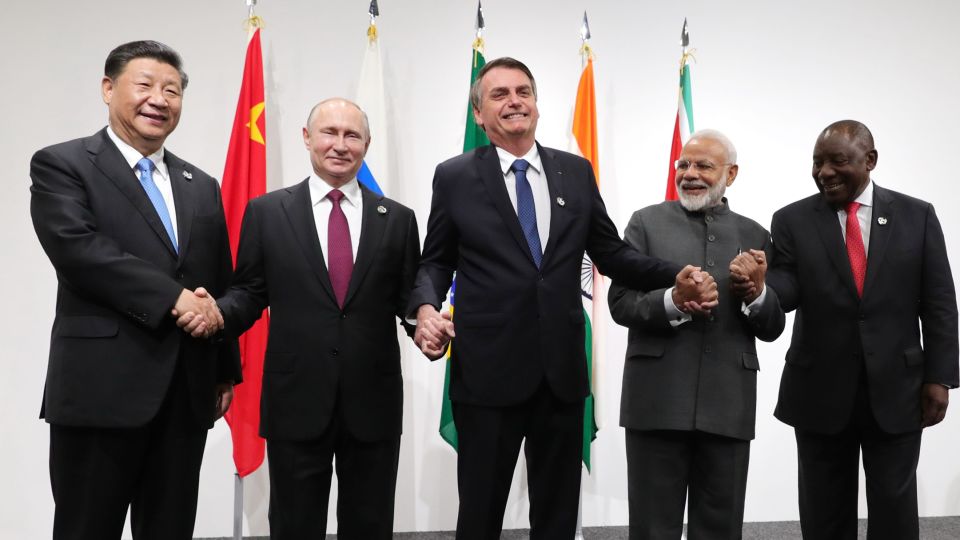
Apart from offering hope to Africa and the entire global south BRICS is so important that it offers a workable framework that can be exploited for real and true development that is inclusive. With BRICS bringing Africa on board the world Rebalancing will not be just a song but a reality. As Modi of India, Xi of China, Lula of Brazil, Ramaphosa of South Africa, and Putin is being represented by maybe Lavrov, since he has a war to attend to and just survived a mutiny come together BRICS through the NDB can start the process of de-dollarization in Africa where US designed sanctions are used and hurt most.

By Musanjufu Benjamin Kavubu is a Junior Research Fellow at the Sino-Uganda Research Centre.


BRICS STRUCTURE TO DEVELOPMENT MORE RELEVANT TO AFRICA

By Balongoofu Daniel

The steady traction of the emergence of the BRICS in the contemporary global order reflects a potential shift of the global governance structure to a more economic led mechanism of cooperation through trade and the formulation of coordinated political positions on global issues to secure and under guard a collective path to economic development. The BRICS, a bloc that represents emerging economies; Brazil, Russia, India, China and South Africa have gained much traction in the international arena due to their firm positions and structures of engagement specifically favorable for south-south relations, a structure that the global south has upheld to achieving economic development.

This year’s BRICS summit currently underway in south Africa is one of the most followed and widely anticipated political engagements globally due to the blocs’ spread popularity and attraction of interest from over 40 states including the UAE, Ethiopia, Saudi Arabia among others.  The state of turbulence in global governance characterised with war, economic recession and post -pandemic recovery have made this 15th summit a much anticipated one on forging a way through for development. However, I find the bloc’s structure to development a more relevant reality to Africa and the global south as follows,

In this year’s summit’s special mug, a compilation by the south African government highlights the blocs’ special achievements, challenges and way forward in south Africa’s context thus far seeks to  highlight the beauty and advantages of the adopted strategy for BRICS economic partnership that looks forward to increasing access to each other’s markets, promote mutual trade and investments and creating a business friendly environment for investors in all BRICS countries. The authorities in south Africa further highlight that the most important part of this strategy is to diversify the trading of finished products as opposed to raw materials, a strategy that Uganda, Africa and the global south needs to broadly adopt in order to realize home production and control trade deficits.in the same vein, south Africa notes that its exports share to the BRICS countries have recorded strong growth since 2016 and registered a 7.1% per annum on average reaching US 817.6 billion in 2022. The mug further highlights that the principal contributor to such growth was exports to china over the same period.

In light with the AFCTFTA, an economic initiative by the African union that seeks to achieve a liberalised African continental market and to address the challenges of Africa’s low level of participation in the global economy and world trade, the south African authorities highlighted the importance of merging markets and the building of more partnerships with the BRICS under such an initiative. This will not only unlock trade possibilities but also mutually beneficial opportunities for investment and infra structural development. This further underscores a much broader market and   more liberalism in trade and also promote self-reliance through encouraging industrialisation for production. It should be noted that BRICS brings together a 3.27 billion population of people that makes the question of market and diversity a more achievable reality necessary for production.

The relevancy of the New Development Bank (NDB) that the cooperation achieved through availing of funds for development seeks to solve the global south long unanswered question of funding. It should be noted that the bank has catalyses availability of funds for development that so far US$ 32.8 billion worth of developmental projects have been funded using this bank availed financial resources. So far, the funds have been invested in building and upgrading of 820 bridges, building and upgrading of 35000 housing units and the generation of 2800mw of renewable and clean energy. This therefore is a blessing and an alternative source of funding from the IMF and world bank that the global south has arguably criticized for politicizing funding and unfair repay policies.

Balongoofu Daniel is a Junior Research Fellow at Sino-Uganda Research Centre


The Multilateral Trading System: The U.S Should Stop Undermining Global Practice

By Alan Collins Mpewo

It is not in doubt that the United States of America (US) has is always doing their best to stabilize global economy through various measures for selfish gains. Indeed, the US was among the spearhead as of what has popularly in recent times to be known as the Multilateral Trading System that has wide reception globally. This game after the second world that had seen an increase in various shortfalls especially during and shortly after the Cold war with the Soviets. The inception of this system lead to a finality of the General Arrangement on Tariffs and Trade. The Multilateral Trading System also saw the birth of the Uruguay Round sometime in 1980. Because of the growing conflict in the economies of scale between the competing blocs of the West and the Eastern globe there was need to set up formal rules to follow during international trade and business. Because of this, the United States was one of the founding members of the World trade organisation and consequently part of the formulation committee over the World trade organisation rules that would later bind all existing partners States at the time and those that would later in the near future adopt and assent to the World trade organisation. Countless achievements have been since achieved by the World Trade Organization due to the recognisable leadership over the United States of America. It therefore goes without saying that the United States of America has made its solid contribution to the growth and periodic stabilisation of the world’s economy.

Most important under the World Trade Organization rules was and still remains the dispute resolution mechanisms that have constantly been explored by the various parties whenever conflicts arise. The United States of America has without a doubt being on the forefront of always making sure that no more devastating consequences arise which would greatly affect majority of the global stakeholders in dangerously unimaginable levels. It should therefore be understood That’s that the United States of America has made various contributions as aforementioned herein, it has also in equal measures benefitted from the Multilateral Trading System. It is therefore safe to state that the system has been important in elevating various economies globally. The role played by the United States of America remains pivotal given that it is the world’s leading economy and ranks among the top three investment Nations in the world. Understanding that comes with major implications on how it exercises its dominance and authority in the various circles to which it trades and has power.

It is not bad for any Nation to come up with policies that seek to put it first ahead of other global key players’ interests. The United States of America in 2017 also came up with a major slogan and policy formulation along that line of “America first.” However, while it is a noble thing to do, friction and antagonism has since ruptured between the United States of America’s internal policies and the aspirations of other global actors under the Multilateral Trading System. The U.S has constantly deviated from the very ideas to which it was a founding state. Its trade protectionist policies have rather been hurting other trade stakeholders by closing the windows to trade information and active participation on the American soil. From commencing with ideas of globalisation, the Multilateral Trading System has now come into an uncertain trade abyss and now every country does as it wishes under the current structures of global economics.

Among other things that explain the above State of affairs is the constantly unchecked bullying through its hegemonic tendencies that are used to exert unwarranted sanctions and dominance through the guise of “National Security.” In other instances, depending on how it chooses to act or react to other countries, it uses the connotation of “Human Rights.” It has been seen with the Middle East and due to the sanctions and blockages there has been deprivation of equity, debt, and investment in many countries because trade diplomacy ends up as a victim. Additionally, dispute resolution and settlement mechanisms have also been greatly undermined by the United States of America. An example can be cited before 2022 when the United States of America blocked the requisite appointments of the new members to the Appellate body. That alone has paralysed the various efforts by concerned countries in trying to resolve the different disputes that have been arising on an appeal point of view. The United States of America holds a very important vote and by December 2022, it has refused the outcries from the other members of the World Trade Organization to have the Appellate body constituted for purposes of dispute resolution. While Article 17.2 of the Dispute Settlement Understanding gives the legal reception for the appointment of the members to the Appellate body, enforcement has been stalled by the United States of America. By February 2023, 29 appeals are still pending as a consequence of US’s actions.

Some other practices have included, offending export control, often undermining other members’ legitimate industrial policies, unwarranted sanction measures, economic coercion, disrupting industrial and global supply chains, among many other. Other strong economies and lead actors like China and Mexico and the World Trade Organization have constantly called out the United States of America over the above practices but the endeavours have met unresponsiveness. And therefore, while the U.S’ reaction remains an impediment, if unchecked, the once booming Multilateral Trading System is a route of demise.

Alan Collins Mpewo, is a Law and Senior Research Fellow, Development Watch Centre.

NOTE: This article was first published by the Development Watch Centre

15th BRICS Summit: Is this Africa’s Time to Step Up onto the Global Stage?

By Moshi Israel

From the 22nd of August 2023 to the 24th, BRICS nations will be holding their 15th annual summit themed; BRICS and Africa- Partnership for Mutually Accelerated Growth, Sustainable Development, and Inclusive Multilateralism. The summit will take place in Johannesburg, South Africa. President Cyril Ramaphosa will chair this summit as agreed by all five member states of BRICS who host the annual summits on a rotational basis. The heads of state for Brazil, China, and India will attend in person with the exception of the Russian president. Mr. Putin will be represented by his foreign minister, Sergey Lavrov because the former has an arrest warrant from the ICC out for him and the host nation is a signatory to the criminal court. He is expected to attend via a video link.

BRICS countries represent around 42% of the world’s population and about 25% of the world’s Gross Domestic Product (GDP). The five members also account for around 18% of international trade. Since its creation in 2009, BRICS has been courted by over 30 eager countries that have either applied to join or have expressed interest to be part of the group. Some of these countries include; Argentina, Iran, Saudi Arabia, UAE, Ethiopia, and Egypt. This interest highlights one of the summit’s key agendas of focus, BRICS expansion.

The expansion of the bloc is being pushed by China and Russia with Brazil and India still on the fence. The seriousness of the expansion agenda can be deduced from the fact that well over 60 countries have been invited to the summit, including all African countries. Also, the fact that the last day of the summit is dedicated to ‘Friends of BRICS’ focusing on talks with leaders from other countries speaks volumes. The invited countries span four oceans; Asia, Latin America, Africa, and the Caribbean.

Economic cooperation will also be key on the agenda as the member states seek to improve their economic ties. Discussions will center on trade and investment opportunities in sectors ranging from energy cooperation and infrastructure development to the digital economy and the job market. Under the umbrella of strengthening ties, special attention will be given to the relations between BRICS and African countries which blends in with the theme of the summit. A major area of focus will be the exploration of opportunities within the African Continental Free Trade Area.

It is unfortunate that the world’s recent and current crises are what it took to bring a major focus on the role of the African continent on the global stage. The pandemic saw Africa do well in mitigating the spread of the virus, the global oil crisis has put a focus on Africa’s major oil producers and the War in Ukraine has shown Africa as a potential peacemaker. The competition among the West, Russia, and China to have Africa in their corner also highlights the growing geopolitical importance of the continent. The trajectory is slowly shifting from Africa being a backyard market for the global north to being a respected partner in international discourse.

It is up to African countries to step in and show up when a positive light is shining on the continent. The recent events in Niger present an interesting conundrum. But African states must handle the issue diplomatically with African interests in mind and not at the behest of any foreign power. BRICS presents an opportunity for the continent to get on board something that has been and could be even more mutually beneficial. African countries are still lagging behind the digital revolution and our social and physical infrastructure is still in need of upgrade. These are the key issues African leaders and representatives should aim to address during the summit.

The BRICS National Development Bank (NDB) can play a vital role in Africa’s growth. It was created in 2015 as an alternative to major lending institutions of the IMF and World Bank. The BRICS bank has had over $30 billion in investment in infrastructure development projects both for members and other developing countries. Moreover, the bloc aims to boost local currency fundraising and lending within the NDB. According to South Africa’s finance Minister Enoch Godongwana; local currency use will aid in de-risking the impact of foreign exchange fluctuations.

Furthermore, Brazil and China have signed a bilateral agreement to settle their trade in their local currencies. This adds meat to the bone of the notion that BRICS seeks to use member’s national currencies for trade and perhaps even adopt a common payment system long-term. However, a South African senior BRICS diplomat, the ambassador at large; Asia and BRICS during a press Briefing in July said that there will be no talks about a common BRICS currency.

Another important development at the BRICS summit to watch out for is the previous month’s announcement by BRICS education ministers expressing interest to create their own international university rankings system. This comes at the heel of Russia’s complaint that the current global university rankings are biased against it and extremely Eurocentric.

In the current global political atmosphere, it is impossible to talk about BRICS without mentioning China. As the second largest global economy, China’s geopolitical moves are always under scrutiny by both its allies and adversaries. During this summit, President Xi Jinping will co-chair the China-Africa leaders Dialogue as reported by the Chinese foreign ministry. This is an event that should be paid special attention to and could have significant implications for African countries. China’s presence on the continent keeps growing and presents new opportunities.

Therefore, African countries, should pay close attention to this summit and take this moment to step up and contribute significantly to global discourse. This summit must exceed expectations and produce some major announcements. The fight for a functional multipolar world could formally begin here on the mother continent. It is high time African countries stopped playing for different teams and play for themselves by taking the mantle presented by BRICS and run away with it into a new era of global order.

The Writer is a Senior Research Fellow with Development Watch Centre.

NOTE: This article was first published by the Development Watch Centre


A New Era in China- Africa Relations: What’s in it for Uganda?

By Moshi Israel

Yesterday, on the 27th of this month, Sino-Uganda Research Center (SURC), the lead Think Tank on China-Uganda relations, and Development Watch Center, Uganda’s leading Think Tank on foreign policy analysis hosted a symposium at fairway hotel in Kampala. The theme of the symposium was to have an in-depth look at a new era of China-Africa relations and what Uganda in particular could gain from it.

Several experts, dignitaries, members of the media fraternity, and Politicians from Uganda and China attended the symposium. The Guest of Honour was Her Excellency the Vice President of Uganda, Jessica Alupo, represented by the Right Honourable Rebecca Kadaga the 1st Deputy Prime Minister and Minister for East African Affairs. H.E. the ambassador of China to Uganda, Zhang Lizhong also graced the event with his presence. Also, delegates from major Chinese companies in Uganda such as CNOOC, Sinohydro, and China Communications Construction Company were present and were given the opportunity to discuss their work and challenges in Uganda.

In her speech, the chief guest acknowledged the vital role of think tanks in guiding policy formulation and implementation and recognized the key role SURC could play in making this a reality in Uganda. She pointed to the importance of independence in research exhibited by the research centre and noted its importance for the benefit of Uganda, China, and the world.  Furthermore, her speech emphasised the need to discuss China-Uganda relations candidly. In one of her key points, the guest of honor pointed to the need for Africans, in general, to control the narrative of cooperation with China without leaving room for distortions from cynics. This is an important point because for the most part relations between China and Africa are distorted by Western media and often painted in a negative light. Therefore, think tanks have an urgent role of setting the record straight through unbiased research that seeks to find the truth. The new era of China-Africa relations should be one in which the two parties control the narrative and avoid the use of Western frames to approach and debate issues.

The speech also, called upon governments in Africa and Uganda in particular to engage more with think tanks in setting national agendas. For the SURC to be the only think tank in the whole country to study and drive debate on the relationship between Uganda and one of her biggest trade partners shows that there is a gap between academia and government that needs to be covered. The chief guest was jubilant in pointing out the milestones China and Uganda have achieved since the bilateral talks in Beijing on 25th June 2019, between Presidents Xi and Museveni where they agreed to lift the two country’s relations to a comprehensive cooperative partnership. This set the stage for the betterment of China and Uganda relations which have hit a peak in recent years.

The vice president appreciated the fact that China does not seek to interfere in Uganda’s internal matters and assured the Chinese that Uganda is open and safe for China. She hinted at the fact that Uganda as a developing country has a lot to learn from China. The vice president understands that whereas China achieved modernization and poverty alleviation through adhering to the principles of a socialist economy with Chinese characteristics, Uganda as well as Africa can create a development path with Ugandan and African characteristics.

Another important area that Her Excellency touched on was trade and investment. Uganda’s trade with China keeps growing and bilateral trade between the two states grew by 28.8% in the first quarter of this year. However, Uganda’s market in China is still low and has room for improvement as long as “Ugandan farmers produce high-quality products with value addition.” In a world facing a resurgence of nationalism that has left more countries hostile to anything foreign; for example, the countries that engaged in vaccine nationalism, the Vice president through her representative the Right Hon, Rebecca Kadaga thanked China for standing with Africa in supplying free vaccinations in a show of true friendship and win-win partnership.

H.E. the Ambassador, Zhang Lizhong also addressed the symposium and strongly condemned all efforts to undermine the relationship between China and Africa. He commented on the various projects that Chinese companies have accomplished and are on the verge of completing with Uganda. The ambassador also lauded his tours around Uganda and his most recent visits to western Uganda. Uganda has great tourist potential and beautiful scenery which the ambassador noted could play a significant role in Uganda’s economic development. The ambassador noted that China has extended a tax-free incentive to Ugandan exports. Furthermore, China will continue to expand its assistance to Uganda in the health sector, infrastructure, energy sector, Agriculture, and all other potential areas of cooperation.

The ambassador shared his perspectives on the role of government strategic planning in China that led to the elimination of absolute poverty and the modernization of China. The emphasis was also placed on China’s development path which seeks to cooperate with the rest of the world through the concept of mutual benefit. Projects such as the Belt and Road are landmarks of China’s commitment to the development of African nations. He noted that the CPC (Communist Party of China) will always champion international cooperation instead of confrontation and that China-Africa, and in particular China-Uganda relations can only go higher in this new era.

The symposium also held a panel discussion where Ugandan experts and delegates from Sinohydro, CNOOC, and other Chinese companies shared thoughts on China’s projects in Uganda, challenges, and potential solutions. The representative from CNOOC shared the progress of the Tilenga oil project at King Fisher in Hoima. CNOOC has been instrumental in improving the lives of people in local communities surrounding the project and all Ugandans generally. CNOOC has employed thousands of local workers in both skilled and unskilled, provided scholarships for numerous Ugandan engineers who have subsequently been employed by the company, and just recently CNOOC has announced another round of scholarships for talented students. The company has built health centers in the local areas of Kikuube and eased access to water by constructing the Buhuka Gravity Scheme that supplies safe and clean water to over 1300 local residents. CNOOC has also engaged in environmental protection in collaboration with the National Forestry Authority by aiding and providing tools to ease law enforcement in the Bugoma forest reserve. This also aims to reduce the negative impacts of climate change in the Albertine region.

The symposium has been a milestone and is a potential trendsetter in the think tank domain within Uganda. Through the activities of SURC and Development Watch Center, the debate for a better, more knowledgeable, and progressive Uganda has been given a vital push forward. The Executive Director and founder of both think tanks, Dr, Allawi Ssemmanda noted that it is high time think tanks got the recognition they so deserve in Uganda as stakeholders in policy formulation and implementation. He emphasized that think tanks and academicians can play a crucial role in propelling a country like Uganda forward by leading the debate on issues that matter by analyzing and providing a nuanced understanding of complex global and domestic issues for all citizens.

Moshi Israel is a Researcher with Development Watch Center.


China’s BRI and a formidable AfCFTA in the face of Globalisation

By Musanjufu Benjamin Kavubu

After many years of planning, discussion and negotiations on the 1st day of 2021, the African Continental Free Trade Area (AfCFTA) came into existence. Now the basis for a free trade area is free movement of people and free movement of goods and commodities across countries’ borders. This whole process revolves around transportation. There is talk that “it’s easier to fly to France than fly directly to West Africa from East Africa” because there is barely any infrastructure to support intra African travels.

The Trans African highway system can easily come off as a myth if you looked at the figures for Intra-African trade.  For example, in East Africa, Kenya Exports about $ 1 billion worth of goods to the United States and $ 500 million to EU but it only exports $ 69 million to Ethiopia who they share a land border with. Of course, we can’t water down the impact of tariffs amongst African countries but there is need for ground infrastructure to foster an African free trade area.

We are yet to see the benefits of AfCFTA but in the last 10 years, there is something that has sprang up and it’s a remarkable vehicle for the African Free trade area. In September 2013 China’s President Xi Jinping put in place his grand political-economic project and in it came the Belt and Road Initiative (BRI) and at the moment it links about 155 countries and 32 International organisations. AfCFTA on paper brings together 55 markets of 1.2 billion people with a total GDP OF $ 2 trillion. The BRI project at the moment has 52 African countries out of its total 155 worldwide.

A close look at the BRI, one will understand how much China is subconsciously putting in an African Free trade area that benefits the European Union more since Exports to Africa stand at 36% against China’s 9%, EU imports from Africa including uranium for their weapons and energy are at 33% against China’s 5% but its China that is blamed to over invest in Africa’s infrastructure. One would say China uses its Silk Road history to link to Europe and maximise the African supply chain but then that would fit the definitions of Globalisation which is the future.

In China’s bid to facilitate free movement of goods and services Beijing set up $ 3.3 billion in the Nador Med West industrial port in Algeria and it’s said that route is the North African link to West Africa through the Trans-Saharan Highway. In West Africa we have witnessed China set its foot on projects like the Abuja-Kaduna railway line that was done by China Civil Engineering Construction Company (CCECC) as Africa’s giant embarks on setting up a standard gauge across the country. In 2023, we saw China sign a deal that would see oil pipeline in Niger and set up an industrial park.

The El Hamdania Central Port is one of the largest in Africa and its part of the BRI in Algeria on top of it China has done a 750 mile East-West road that connects Algeria, Morocco and Tunisia. At the peak of the resent Ethiopian civil war, the Addis Ababa-Djibouti Railway was a source of contest but no one ever mentioned that it was a BRI by-product that links Landlocked Ethiopia to the Sea and the Ethiopia-Djibouti Water Pipeline all financed by EXIM Bank.

There is a 10,228 KM road that starts from the many ports of Egypt and ends in Cape Town. The great Trans African Highway. This route is full of Chinese projects that are bettering transportation and industrial infrastructure. It’s said Egypt could be the most important part of the BRI with projects like the Chinese Industrial zone in the Gulf of Suez, the electric train system for Egypt’s new capital. Of course, geopolitically, Egypt has always been a prize for world powers and China is not being left behind. Apart from the African Cup of Nations there, nothing that has made Egypt more active in African affairs like the AfCFTA.

Down The great Trans African Highway in Sudan, China has been part of the rehabilitation of railway lines by the Chines Company CRRC Ziyang. China is at the forefront of the oil industry in Sudan and it has promised to have a nuclear power station be set up in future.

Along the great Trans African Highway is the East African Community and the BRI has seen the development of the Mombasa-Nairobi Standard Gauge Railway and also Kenya’s biggest infrastructure project since Independence that spans 470 km in 4 hours and half, boosting the GDP by 1.5% and creating about 40,000 jobs for Kenyans. In Tanzania, the BRI has put in place a 2,561 km line that links Dar es Salaam to Mwanza on Lake Victoria and will further go to Burundi, Rwanda and Democratic Republic of Congo. In Uganda, there is the Entebbe-Kampala Expressway that connects Uganda to the world in a shortened time.

The BRI could be China’s plan to speed up trade with Africa but at the end of the day chokepoints are eliminated they in turn benefit the African Continental Free Trade Area (AfCFTA) since there is this new mix of rail, road and water transport infrastructure being put in place. As China tries to reach more so called less developed countries, Africa is being opened up for Intra-African trade. Then AfCFTA will be able to lift 30 million African from poverty in no time.

Musanjufu Benjamin Kavubu is a Junior Research Fellow at Sino-Uganda Research Centre.


Uganda-China Relations: Partnership of Equals and Win-Win Cooperation

By Ndunaka Godswill Chikamso

Like many other countries, Uganda has been seeking foreign investment and partnerships to drive economic development and the country has made significant strides towards economic development in recent years, thanks to the support of various international partners. One such partnership that has been growing in significance is China-Uganda Relations.

China and Uganda have a longstanding relationship dating back to the early 1960s when Uganda gained independence. The relationship has been characterized by cooperation in various areas, including trade, infrastructure development, and education. Over the years, China has provided significant assistance to Uganda in the form of aid, loans, and investments opportunities. In 2018, China was Uganda’s largest trading partner, with bilateral trade worth over $1.2 billion. Since then, Beijing remains one of Uganda’s leading trade partners and major source of foreign direct investments (FDI).

With China introducing zero tariff to Ugandan goods which will see Ninety-eight percent of Ugandan goods accessing Chinese market tariff free, trade between the two countries is expected to grow further. Last year, Chinese Ambassador to Uganda, Zhang Lizhong announced the Special Preferential Tariff Treatment of Ugandan Exports to China, explaining that this was in line with commitments made by China at the Eighth Ministerial Conference of the Forum on China Africa Cooperation (FOCAC) held in Senegal last year.

Even before the said Special Preferential Tariff Treatment, China has been investing heavily in Uganda, particularly in infrastructure development projects such as roads, bridges, and power plants. The most notable project is the 51 kilometers Kampala-Entebbe Expressway, which was constructed with a loan from China’s Exim Bank and has greatly improved the country’s transportation sector. Additionally, China has financed the construction of the Karuma and Isimba hydroelectric power plants, which will increase Uganda’s energy capacity and reduce its dependence on fossil fuels. The entry of Chinese construction firms into Ugandan market is always cited as the reason for reducing billing prices for road construction in Uganda. Indeed, at the time when European companies were dominating road construction business, the construction of one kilometer took about 3.1 billion shillings compared to current rate of about 2.1 billion shillings per kilometer.

China has also invested in Uganda’s telecommunications sector, with Chinese companies such as Huawei and ZTE playing a significant role in the country’s development of 4G networks and fibre optic cables. This has greatly improved internet connectivity in Uganda and provided opportunities for innovation and entrepreneurship.

Another sector that China has played a significant role in Uganda’s economic development is supporting the country’s infrastructure especially road and energy sectors which has in turn helped easing transportation of goods and services and also helped in addressing unemployment challenge. In 2014, while closing a two-day Pan African Youth Conference at Serena International Hotel Conference in Kigali Rwanda, President Yoweri Museveni explained that “infrastructure development such as Roads, Electricity and Railway in any country is of importance as it attracts investments and creates jobs for the youths.”

In 2017, while on a visit to Uganda, Christine Lagarde, then Managing Director of the International Monetary Fund (IMF) credited Uganda for what she described as “Uganda has appropriately embarked on a strategy of scaled-up infrastructure investment in the energy and transport sectors to relieve key growth bottlenecks and enhance regional linkages.” Lagarde argued that “focusing on overcoming implementation challenges, including through strengthening public investment management, should help ensure that these investments yield the desired outcomes in terms of higher growth and job creation.”  If critically analysed, the improvement and development of Uganda’s energy and infrastructure sector became possible largely because of China’s assistance.

Today, Africa’s biggest challenge, especially Sub-Saharan region, is poor and aging infrastructure.  A 2022 study by McKinsey and Company concluded that unless addressed, infrastructure deficits in key sectors such as roads and energy will continue to hinder African countries’ economic growth and development especially in Sub-Saharan Africa. The study concluded that while the region is faced with high demand of infrastructure development, there are few partners or investors willing to provided huge amounts needed for such projects. Therefore, China’s readiness to back such projects in Uganda and Africa in general cannot be underestimated.

However, while China’s hand in supporting African countries infrastructure is a big boost, Uganda and other African countries must should only borrow and invest in projects that can easily spur economic development as a way of ensuring easy servicing of loan facilities extended while undertaking such infrastructure projects so that issues such as rising debts critics often point at are avoided.

That said, there are multitudes of opportunities that comes with steady and good relations between China and African countries. The other area with huge potential for cooperation is in the field of agriculture. While China is already working with Uganda in this area especially through FAO-China South-South Cooperation (SSC) in which China has since 2015 been supporting agriculture initiatives in Uganda, if projects under SSC especially its phase III are spread throughout the country, more fruits will be realized in a short period. SSC has potential to spark Uganda’s economic development especially if they work together with Uganda government’s introduced Parish Development Model (PDM).  Uganda is an agricultural country, and there is a need to enhance agricultural productivity and value addition. With her rich experience in modern agriculture, China can provide technical support, expertise, and investment towards Uganda’s agricultural sector.

In conclusion, China has played a significant role in Uganda’s economic development, providing funding and investment for critical infrastructure projects. China’s engagement with Uganda has brought many benefits, including employment opportunities, enhanced energy capacity, and improved connectivity. While this has brought several benefits to the country, including job creation and economic diversification, there are also concerns about debt sustainability, environmental impact, and the impact on local industries and businesses. As Uganda continues to seek foreign investment and partnerships, it will be important to carefully consider the benefits and drawbacks of these relationships and ensure that they are sustainable and equitable.

Ndunaka Godswill Chikamso is a junior research fellow at Sino-Uganda Research Centre and a Medical student Niger Delta University, Nigeria.

Authorized Economic Operator (AEO) Arrangement Between China and Uganda Will Improve Trade and Help URA in Revenue Collections

By Alan Collins Mpewo

 Technology has been prioritised by many countries allover the world because of the advantages and potential hacks that can be exploited. Often times the exploitation has been used to wage war, spying and propaganda. Other nations to the contrary have taken a distant trajectory from the usual, and used technology to outlive the blocks that avail themselves. Much as technology keeps improving and it still gets so much threat from people’s perception, it should be underscored that technology is the future.

Recently, China together with the Uganda Revenue Authority, a public body in charge of Revenue collection in Uganda, had a commemoration of a memorandum of understanding, that the two parties entered into in 2021. The spirit of the memorandum of understanding was the Authorised Economic Operator (AEO) Mutual recognition arrangement and this was signed at the 5th AEO Global Conference that was held in Dubai.

Uganda would be able to benefit from the arrangement in terms of streamlining trade finance and revenue collection which is aligned to China’s Revenue collection practices and enhancement of trade framework. If critically analysed, the main informing aspect for Uganda to enter this mutual arrangement was on a basis of China’s stand on the global floor of trade. The arrangement was also meant to further the corporation between Uganda and China on the basis of the Forum on China-Africa Cooperation (FOCAC). This way, Preferential treatment will be accorded to the goods coming from China to Uganda and vice versa. Therefore, this will be a wake-up call for companies that engaged in supply of goods, works, and services to and from Uganda and this can be confirmed to thus far have been achieved on great strides.

Numerous companies have taken part in registration and confirming participation in this great initiative and it can safely be said that there have been more than 5,000 Chinese companies and over 150 from Uganda adapting to this new trade arrangement. The good news with this is that over 230 companies from both countries have since engaged and participated in trade together using the arrangement and about 130 billion have been collected by the Uganda Revenue Authority for the trading done by those companies along the border and within the boundaries of Uganda. The value of the trade between the companies in both countries has also increased in the recent financial year to over 750 billion Ugandan shillings. This goes back to the objectives set out in the various Corporation agreements that two countries have been engaged in, in the recent years.

The most known modern way the countries worldwide are able to facilitate state activities and governments is through revenue collection and this is the main basis for engaging into this kind of arrangement by the two players. Therefore, each country twice as much to simplify not only ways of generating more revenue but also without inconveniencing the taxpayer while maintaining stable means of putting such finances to productive use. As far as application of the revenue is concerned, Uganda still grapples with all possible forms of corruption and should therefore seek as much of lessons from China to make sure that their education of the vice is also a major objective if it wants to make proper realisation of the revenue’s benefits.

The two countries also realised the adverse effects of delay in transportation of goods and services across boundaries and therefore since data is one of the most important resources in a government can have grip on, since this arrangement is also meant to enable easy data sharing on various cargo that would be transported to and from the two countries.

However, with multi border trade comes risks and therefore imperative to come up with risk assessment to measures. In this case, the arrangement was also meant to provide for better grip on the control of the Trade Practices between all key players during transportation and find a delivery of the goods to the consumers. On another bright side, the arrangement has since helped to increase competitiveness among the companies involved in the platform in as far as manufacturing, packaging, delivery, and response to consumer feedback. With clearance now eased, goods and services will be able to reach their final destination in the shortest possible time and also enable the companies involved to compete and set up themselves for better and bigger deals in the trade sector. Presently, more than 20% is being benefited from only the companies that are participating in this arrangement which is a great side and commendable initiative by the two countries. The figures from China are equally promising and therefore an indicator of why good international relations is important and a stable means of achieving much of the goals amongst various nations.

Tax evasion is a crime that many countries grew up with fighting to the nail to make sure that its effects are greatly eradicated. Otherwise, failure to combat such vices undermines efforts that would have been invested. Therefore, this calls for possible forms of compliance with the day’s tax laws, regulations, and practices. The benefits of this arrangement can not be overemphasized, but ultimately, with furthered sensitization, there will be more players joining along the way.

Alan Collins Mpewo, is a Senior Research Fellow, Development Watch Centre.