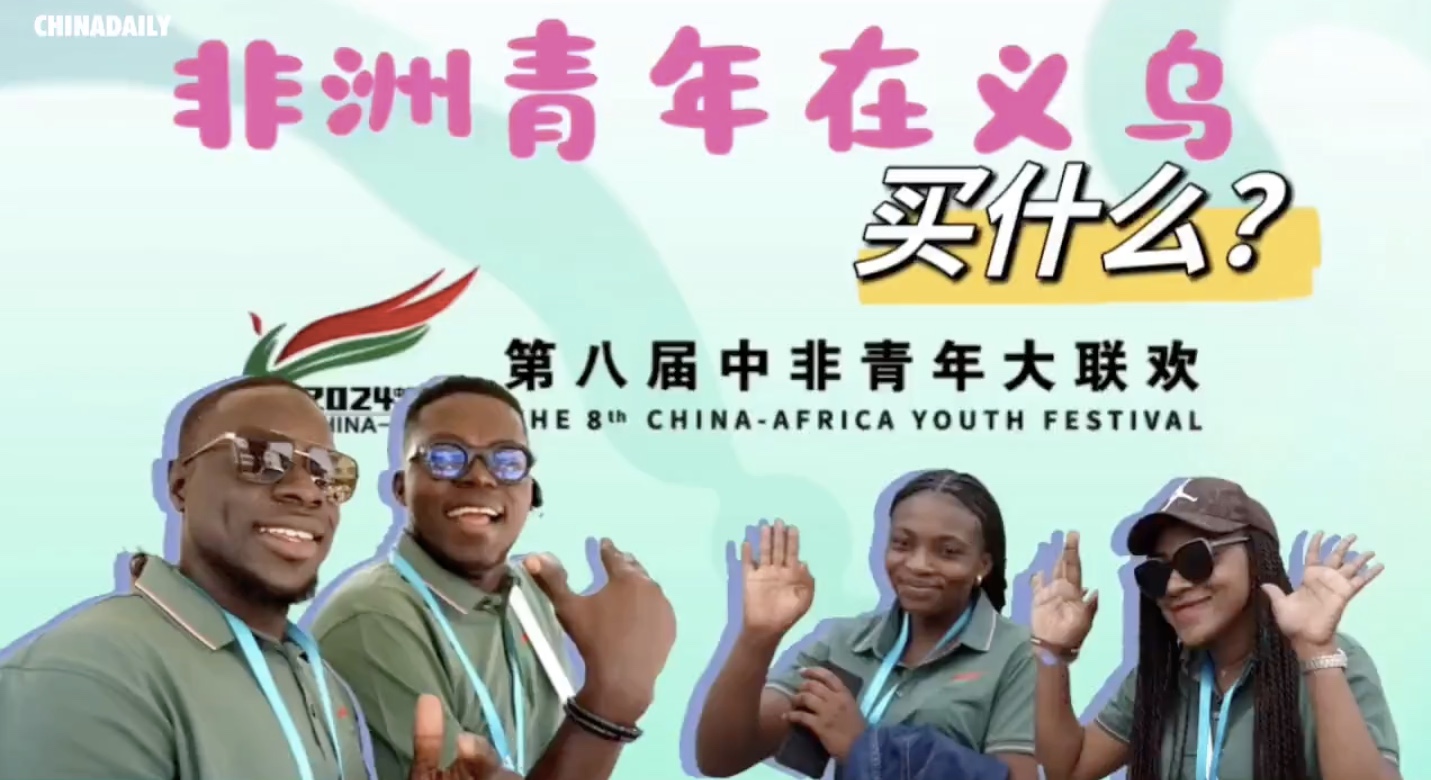
The Forum on China-Africa Cooperation 9: The Journey Over The Last Two Decades

By Musanjufu Benjamin Kavubu.

From September 4th to 6th  the Forum on China-Africa Cooperation (FOCAC) will take place in Beijing. This comes at a very critical time for South South-Cooperation, the world economy has slowed down mainly because of the impacts of the last Pandemic and the ongoing 54 major conflicts around the world that affect Africa and China’s supply chain on the Geopolitical discourse.

FOCAC 9 comes at a time when African Continental Free Trade Area (AfCFTA) is taking root and its backbone the Belt and Road Initiative (BRI) in many forms makes a decade milestone. The FOCAC summit also comes at a time when the BRICS have become formidable on the global scale and Africa is now very much involved in the new format that is driving multipolarity.

In many aspects, FOCAC 9 will be a momentous summit, in the year 2000 the Forum on China-Africa Cooperation started in Beijing with a ministerial meeting and it was followed by multi-year efforts by African diplomats to formalize the new relationship, in 2003 FOCAC 2 was hosted in Addis Ababa, Ethiopia Africa’s political capital and China announced the first Zero-tariff trade measures for Africa. It also marked the first time cultural exchange started being a target area. In 2006 FOCAC moved back to Beijing and it was held at summit level resulting in a $5 billion in financing from China that was geared toward agricultural exchange as a focus area and in 2006 the China-Africa Development Fund was also put in place.

The next FOCAC was back in the African continent in 2009 in Sharm el-Sheikh Egypt with more formalization of the cooperation area, with greater attention on the African development agenda including training and there was $10 billion in funding that was put in place for the Continent.  FOCAC 5 was in Beijing in 2012 and with a number of conflicts largely fueled by Western interests on the African continent and posing as a stumbling block for development, peace and security was the focal area of cooperation and China put in place $ 20 Billion in funding the endeavour.

In Johannesburg South Africa in 2015 FOCAC embraced the famous Belt and Road Initiative of President Xi that has seen infrastructural developments across the continent and the initial investment that was put in place at that SUMMIT by China was $ 69 billion in funding and it’s fruits are evident today across the Continent, from ports on the East African coast to the Standard Gauge Rail that snakes its way into the interior and new road networks like the Kampala-Entebbe Express highway.

As a tradition the next event in 2018 was in Beijing and the formal integration of the FOCAC into the BRI, agricultural modernisation was the key area of cooperation and more $ 60 Billion in funding was put in place.

FOCAC 8 was special and it was in Dakar Senegal in 2021 happening at the tail end of the COVID-19 Pandemic and it was a semi-virtual event. This saw health and inter-parliamentary diplomacy as Focus areas. And for this meeting there was no single funding package; instead the $ 40 billion put in place was to be spread across a wide range of different categories.

It’s at this back foot that we head into the 9th FOCAC on the 4th of September 2024 in Beijing and we expect agricultural trade for Africa’s part to be the focus point. Agritech cooperation is something that is lacking on the African continent and China has the resources and experience to make this end. Over the past years, diversification through Africa exporting to China for food security purposes will most likely take priority at FOCAC 9 as Africa seeks to move up the value chain. Africa’s agricultural potential production still has space for expanding and more countries can find thriving markets in China. China is already doing a great job in this aspect. To support Africa’s agricultural modernisation, Beijing has sent over 500 agricultural experts to Africa and provided more than 9,000 training opportunities for agricultural experts from the continent.

Other key areas are going to be climate resilience and we have seen China in the past collaborate with countries to develop satellite systems aimed at improving weather forecasts and other forms of scanning to make agriculture more climate-resilient.

As Africa now seeks to export more to China, there is a need to industrialize and Chinese firms are going to be asked to come into the African arena at FOCAC since the BRI has laid the groundwork for that to happen smoothly.

People to people exchange through training and the many scholarships will be another major focus area for cooperation at FOCAC, technology transfer and employment pipeline will take center stage and many African delegations heading to Beijing will be products of China in terms of education.

China’s partnership with Africa is crucial for our infrastructure, and energy sectors. FOCAC isn’t just about building relationships on a diplomatic level, it’s a strategic platform that’s shaping Africa’s role on the global stage.

Over the years, FOCAC has evolved from focusing mainly on economic ties in 2000 to becoming a broader platform for Africa-China relations. Now, Africa is setting the agenda when it comes to working with China, especially in areas like green energy, our youthful population, and our rich mineral resources. China plays a key role in helping us with mass electrification and industrialisation through technology transfer and this is the basis of South-South cooperation.

The September summit comes at a time when the trade between China and Africa is booming. For the last 15 years in a row, China has been Africa’s largest trading partner. In 2023, the trade between the two sides reached a hooping USD 282.1 billion. As we look ahead to FOCAC 2024 on the 4th of September,  this moment is set to be a critical time in our relationship as Africa with China. It has the potential to bring significant progress in trade, industrial development, and sustainable cooperation. For Africa, the key to long-term benefits will be our ability to shape and influence the agenda in this partnership.

The writer is a  research fellow at the Development Watch Centre.
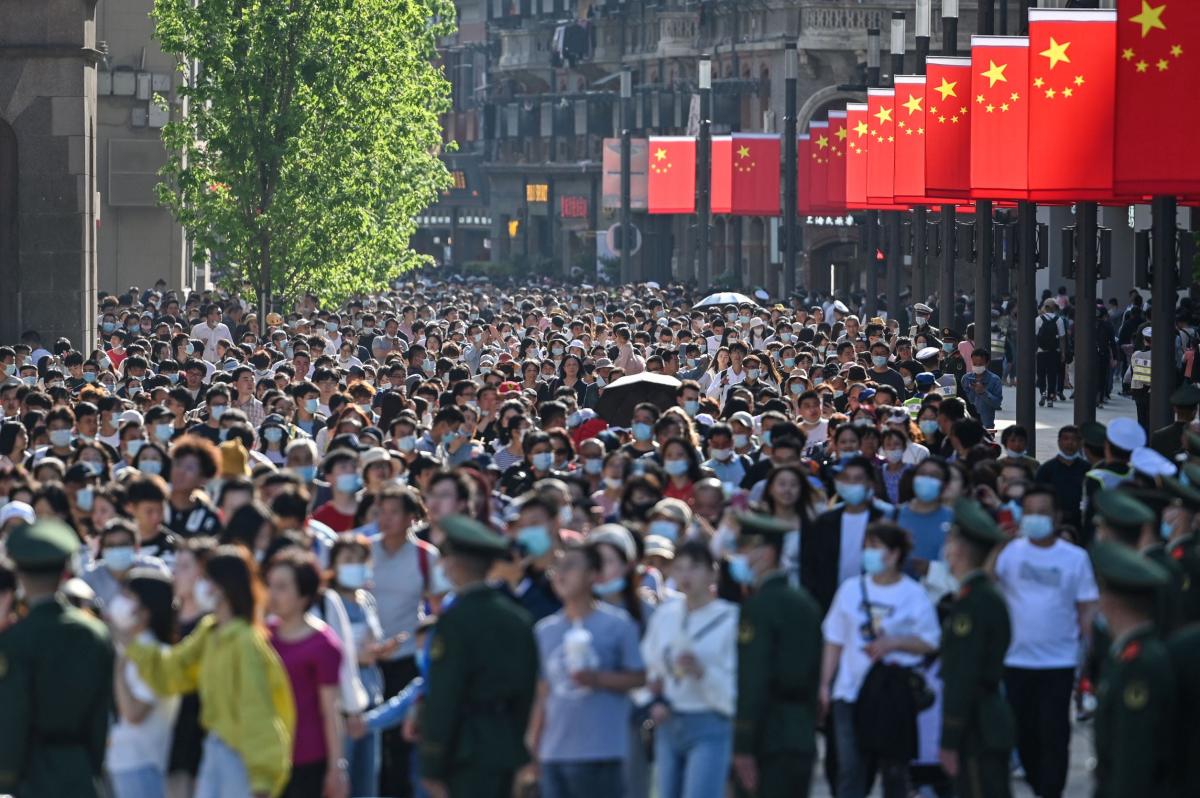
Is China a Democracy?

By Ernest Jovan Talwana

One of the hardest – and perhaps most controversial definitions in political literature today is democracy. What is democracy? Who decides what is democratic? Is there a universal value attached to democracy? Do all people, from all cultures, from all histories, and from all social-economic conditions, share common perspectives on what is or is not “democratic?” Is democracy about the processes of governance or the purposes and/or results of governance?

These are relevant and hard questions to settle in our contemporary political world. China is an interesting country to discuss on this topic because it is internationally considered to be among the least democratic countries in the world. (Here, I use the word “internationally” loosely to mostly mean the Western international community.) Out of 176 countries indexed in 2023, China ranked the 172nd least democratic country in the world, with a label of being a “Hard Autocracy.” This is a claim worth inquiring into, and consequently deconstructing. Often, when we talk about a country being “democratic,” we are referring to the values we cherish and thus attach to democracy. But those values are neither universal nor permanently fixed. They are values appreciated differently in different societies.

Every society’s experience, both historical and contemporary, shapes its national value systems, which inform its politics. As such, it would be misleading to assess every country’s political system based on the yardstick of Western understanding on democracy and autocracy. In fact, forcing a particular society’s political-value-standard onto every other society, is the quintessential embodiment of undemocratic behaviour. Therefore, before we understand whether China is a democracy or not, we need to first inquire into whether the label of China being a “Hard Autocracy” is from the billion Chinese people or from the mind of a guy working for a think tank or government agency in a Western capital somewhere.

Indeed, some studies challenge some western main scholarships findings on this topic. For example, Tony Saich, a Daewoo Professor of International Affairs and director of the Ash Centre explains that their 15 years quest to build a firmer understanding of Chinese opinion “found that compared to public opinion patterns in the U.S., in China there is very high satisfaction with the central government” with 95.5% of respondents saying “were either “relatively satisfied” or “highly satisfied” with Beijing. Compared to Gallup’s findings which revealed that only 38% of U.S citizens were satisfied with the American federal government, and aware that democracy is about majority, one can conclude that to brand China “hard autocracy” is nothing but a smear campaign.

China is a very different society from the United States of America, Britain, Norway, or even Uganda. The Chinese have diverse opinions on many things—just like all people in all places—but they share a common set of ideals, interests, or values that they pursue and want to realize. Their ideals shape what is democratic for them, and it doesn’t matter whether that ultimate thing they want out of politics is similar to what Americans or Norwegians want out of their politics.

China has a different set of prerequisites that its citizens follow to both choose and also hold public officials to account. As long as those prerequisites are met within the Chinese system, that process is democratic for them. The problem comes when the world’s all-knowing people from the West criticise the system established and upheld by the billion Chinese people because it doesn’t appeal to the political taste of the handful of millions of Europeans and Americans.

No one other than Chinese citizens has the political right to question China’s intrinsic brand of democracy. It is likely that citizens of Western countries value their democracy because it serves their interests and upholds their ideals and value systems. Those values might differ from what people in other countries, even in the Western world, or within different states in the United States want. But that doesn’t challenge the “democraticness” of their democracy. This principle should be applied when analysing China’s democracy too.

In China, the political administration developed what they conceptualised as a “whole-process people’s democracy.” The Chinese government translated this concept into relevant democratic values, which its public institutions are bound by and which the government strives to realize. China defines the whole-process people’s democracy as one that “integrates process-oriented democracy with results-oriented democracy, procedural democracy with substantive democracy, direct democracy with indirect democracy, and people’s democracy with the will of the state.” They understand this to be a model of socialist democracy that covers all aspects of the democratic process and all sectors of society. For them, it is “a true democracy that works.”

If what the Chinese wanted out of democracy was improved standards of living, their government over the last four decades has achieved that. Who can question whether that is not democracy for them? It is understood that in the Western world, a country is known to be democratic if citizens rise up frequently to challenge government authority. But this understanding of social behaviour blinds one to the nuance that within traditional Chinese philosophy, the preservation of social harmony is what is considered respectable order, not disruptive behavior. As such, Chinese citizens could be getting more from their government by maintaining the orderly political contestation that the ostentatious political activity experienced in the West.

We need to understand that democracy is not a decorative piece of ribbon picked and worn by every country to show off. It is rather an instrument through which public concerns are addressed. As long as China addresses the concerns of the Chinese people, that is democracy for them. The level of efficiency and order in the Chinese government are not questioned often. That is a big vote for the trust the citizens have in the democracy of China.

The author is a research fellow at the Development Watch Center.

Harness China-Africa Collaboration on Artificial Intelligence

By Ernest Jovan Talwana

Current economic estimations project the value of the Artificial Intelligence (AI) industry globally to reach $16 trillion by 2030. It is also approximated that AI, if well harnessed, could grow Africa’s economy by an additional $1.5 trillion. Given that as of June 2024, the estimated nominal GDP of Africa is $3.1 trillion, a 1.5 addition would go a long way in improving our economic standing.

That said, it brings me great sadness to often discuss Africa along the lines of “seeking help” or as diplomatically coined, “partnering” with developed countries to pursue the continent’s development goals. But given our several immense development challenges, and the nature of the world’s current scientific and technological areas of innovation, partnerships seem to be the most realistic means available.

Even then, we should evaluate our continent’s contribution to this new frontier of technological possibilities, which will dramatically alter the course of all human endeavour.

When discussing strategic partnerships for Africa, the competition between the West (United States) and China unpreventably shows up. It is not Africa’s making to be in such a position. Still, it is our call to always choose wisely which partners we embrace to negotiate our development journey, particularly in line with AI development and implementation on the continent.

Several American tech giants have already implemented AI-driven projects in Africa. For instance, IBM has set up research labs in Kenya and South Africa directed towards healthcare diagnostics, precision agriculture, and financial services. Google opened an AI research center in Ghana where among other projects they develop and apply natural language processing (NLP) technologies to understand, interpret, and generate human language specific to Africa’s linguistic diversity. Cisco, which has a center in Nigeria, also initiated AI training programs to develop smart city solutions using AI technologies.

However, the West’s investments in Africa usually do not give African countries the confidence required for long-term, sustainable reliance. Even the countries of choice for these investments already show a bias in investment destinations for American capital. It will be hard for Africa to transform if our leadership systems are under constant questioning and screening for legitimacy – which risks cutting the taps of investment cooperation whenever a country’s democratic credentials don’t appeal to our Western partners’ standards. This is why I have limited faith in these ambitious AI projects by the West in those few African countries.

On the other hand, during this year’s China-Africa internet summit, China and Africa enthusiastically discussed collaboration on AI. Following the event, the Cyberspace Administration of China (CAC) released a statement on China-Africa artificial intelligence cooperation calling for: strengthening of dialogue and cooperation mechanisms on AI policy, technology, industry, application, governance, and best practices; promoting technological research, development, and application within Chinese and African enterprises, universities, and scientific research institutions, in fields such as big data analysis, machine learning, natural language processing, and computer vision; promoting industrial cooperation, development, and application of AI in, among others, agriculture, medical care, education, and urban management, as well as supporting digital infrastructure; carrying out talent exchange and capacity building, including the provision of online courses and professional training; and building strong network and data security barriers, including the development of auditable, supervised, traceable, and trustworthy AI technologies, as well as preventing abuse of AI and cyberattacks. These are very inspiring areas of collaboration for Africa, where development in AI is still nascent.

The disappointing bit is that whereas China already articulated such a brilliant memo on AI cooperation with Africa, neither a single African country nor the African Union has designed a similar policy. It is an unpromising sign. China has published its policy on how to cooperate with us on AI, but we don’t have a policy on how we shall cooperate with it. Why should we be docile partners on matters involving our development interests and ultimate survival? Are we always going to sleepwalk through history?

It is not hard to realise that the integration of AI in Africa will potentially impact diverse sectors as already highlighted. Why is it that only a handful of countries such as Egypt, Rwanda and Mauritius have adopted national AI strategies? What is Uganda’s AI strategy for instance?

Our governments should develop these strategies if we are to enable African innovators to leverage Chinese expertise in developing AI-driven solutions for our development challenges. China is the world’s leading AI innovator with 61.1% of globally registered AI patents while the U.S. accounts for only 20%. Why are we not utilising our partnership with a forerunner like China to participate in the happening AI revolution?

The author is a research fellow at the Development Watch Centre.