China-Uganda’s Win-Win Cooperation is Bearing Fruits

By Akech Sarah Elias

In international relations and foreign policy, diplomacy is considered to be a major catalyst for good relations of countries and a step-in introduction and implementation of social-economic development projects of a country. Like in human beings, good cooperation and relations among countries which is always characterized by effective diplomacy, international relations and foreign policy aid in promoting development of countries; because, in most cases, it is diplomacy that influence countries where to invest or which country to cooperate with. In that process, a country with good relations with neighbors and beyond is most likely to attract investments and developmental cooperation from such countries as opposed to those without or with shaky relations. Also, diplomacy and good relations of countries especially among neighbors and arguably beyond are key when it comes to promotion of stability which is very key in economic development.

Talking about foreign policy and diplomacy, whereas it is true that foreign policy is a guiding framework for national interests, and that it facilitates countries in determining their goals, values and national interests which results into formation of alliances and treaties, formed alliances and treaties at times are meant to strengthen one country against the other or indirectly promote hegemony. This explains why some countries especially from the west often impose conditions for their relations with other countries acting as superior other than equal partners as United Nations charter dictates that all independent countries are equal!

However, when it comes to China-Uganda relations and broadly, China-Africa cooperation, the two sides cooperation are a text book example of partnership of equals and win-win cooperation. For several decades, China has always based its relations with African countries guided by principles of sincerity, real results, win-win cooperation, amity and good faith while dealing with African countries! It is these principles today, that guide Sino-Uganda relations and in many ways, both sides are benefiting from this this brotherly cooperation.

In economic engagement, China’s engagement with Uganda has been characterized by substantial investments and collaborative projects. A 2021 report by the UN Conference on Trade and Development revealed that China had become one of Uganda’s largest trading partners and a major source of foreign direct investment.

Further, a 2019 report by the famous Brookings Institution, observed that China has also been actively involved in infrastructural development in Uganda with the main focus on transportation oil and energy and the report argued that such investments are key for Uganda’s social-economic development explaining that China is doubling down investments in Uganda and generally African countries key sectors at a time when fewer funders are willing to support infrastructure projects. One prominent example is the Kampala-Entebbe Express highway which was constructed with the help of Chinese funding. This project has enhanced connectivity, reduced transportation costs, and boosted trade within the country registering thousands of users daily.

China’s economic engagement with Uganda has been boosted by bilateral trade and investment agreements and treaties. A case in point follows the signing of the Free Trade Agreement in 2018 by the two nations which have fostered trade expansion. With China granting up to 98% of Uganda’s taxable items zero-tariff into their market, one can safely argue that trade between the two countries will grow further with Uganda’s agriculture sector benefiting more.

Still on economic benefit of a flourishing Sino-Uganda relations, the May 2021 China-Uganda Authorized Economic Operator (AEO) which came into force on 1st June 2023 will see the two friendly countries enjoy preferential policies in terms of document review and goods inspection. This will definitely facilitate the customs clearances of goods between the two countries thereby facilitating trade and by extension easing the work of Uganda Revenue Authority.

With AEO, Uganda will benefit from this arrangement in terms of streamlining trade finance and

revenue collection which is aligned to China’s Revenue collection practices and enhancement of

trade framework. If critically analyzed, the main informing aspect for Uganda to enter this mutual arrangement was on a basis of China’s stand on the global floor of trade. The arrangement was also meant to further the corporation between Uganda and China on the basis of the Forum on China-Africa Cooperation (FOCAC). This way, Preferential treatment will be accorded to the goods coming from China to Uganda and vice versa thereby strengthening trade between the two countries.

As a result of the good relations between the two countries and enabling environment, as of 2022, China’s direct investments in Uganda reached 131 billion US dollars. And, since the start of this year, Chinese enterprises in different fields such as food processing, mobile home appliances and textile industries have entered into Liao Shen Industrial Park and China-Uganda Mbale industrial parks injecting over 84 million USD in Uganda’s economy. Also, over 2200 jobs for locals have been created as a result of the said investments.

In conclusion, as a result of China-Uganda relations, the benefits coming from the said relations have been key in Uganda’s economic development process and hence. Therefore, despite some challenges and criticism especially from Sino-Africa skepticists, China’s significant role towards Uganda’s economic development cannot be ignored and the two sides as the two countries embark on building a community of shared future and prosperity in the new era.

Akech Sarah Elias is a junior researcher at Sino-Uganda Research Centre and a law student.


Huawei’s Global Partnerships can be Replicated in Uganda

By Ernest Jovan Talwana

On, 21st November, 2023, Huawei Technologies held its Huawei Sustainability Forum in which they showcased their global developments over the past two years as well their future developments and partnerships. This event marked an inflection point as it showcased the growing influence of Huawei in sustainable growth and development in the fields of healthcare, tourism, education, sustainable infrastructure and 5G coverage in the promotion of the development of the aforementioned sectors.

This is not the first time Huawei technologies is extending and sharing their technology experience with the world. In November 2022, the company signed a global international telecommunication union agreement to provide technological services to rural areas in 80 countries covering 120 million people.

South Africa and Nigeria are one of the major beneficiaries of this agreement which aims to provide internet connectivity to rural areas in an effort to fast-track health service provision and education via Huawei’s networks. This is part of Huawei’s agenda to promote digital integration and sustainable development as well as cultivating digital talent and enabling economies sophisticate in line with the desire to meet Sustainable Development Goals (SDGs) and expand the middle class in various economies through digital inclusion.

This provides a ripe opportunity for Uganda to harness such digital technology and AI to promote innovation and sustainable development through digital inclusion by partaking in digitization to sophisticate her young population in a rapidly industrializing world that needs a highly trained working class who can meet the demands of today. Equally, with Huawei’s technology innovations, health care diagnostics can be availed in real time which can sharply reduce the infant mortality rate as well as fast tracking problem solving within shorter time frames. It should be acknowledged that Uganda and China have strong bilateral relations. Uganda cannot afford to be left behind in the digital revolution. This means that we should leverage our relationships to aide our growth and interaction with the wider world for the benefit of a younger, thirsty population who are eager to utilize the opportunities that are out there.

Digital technology can also rapidly boost productivity and efficiency. Huawei can aide this through partnerships which can rapidly increase our output. Huawei aims to promote digital inclusion through education which can increase the skillset of the youth in vulnerable and remote societies. In 2020, Huawei and UNICEF promoted Education for all in Ethiopia, Ethiopia and Ghana which aims to increase the skillset of students and teachers in remote areas. Huawei equally set up solar projects in these countries which aims to maintain connectivity in hard to reach areas. This helps to better serve humanity and maintain consistent supply of the internet for digital inclusion and education.

In the Yucatan Peninsula, Huawei uses technology to protect diversity and track rare species using AI and digital technology that carries out 24/7 tracking. This aims to protect such endangered species as well replicating such innovation in other countries to promote conservation efforts.

Huawei seeks to use her technology to promote “tech for good” to promote sustainable development across the globe.

A case study of Huawei’s work is in Heshun Town, Yunnan Province, China.  Huawei has managed to digitize the tourism, education and healthcare experience by providing consistent Wi-Fi network and charging stations which keeps the whole are connected to the internet. As announced during Huawei’s Sustainability Forum, 2023. It should be noted that all of this is achieved in harmony in nature by avoidance of harming the environment and promotion of eco-tourism and sustainable technology use by promoting smart travel and using transportation that does not increase the carbon footprint.

It should be noted that Uganda is seeking to promote sustainability through the Climate Change Act and reduce liability on imported electric vehicles.  Huawei is at the forefront of promoting rural development through smart infrastructure that has a limited impact on the environment. As stated in their 2023 Sustainability Forum. This can be reflected in Uganda where we seek to modernize without harming our flora and fauna.

Equally, companies like Huawei can increase our broadband services by widening our technological infrastructure so that internet reach in rural areas is as competent as that in urban areas. Or, in our instance, 5G infrastructure in regional cities is as competent as that in the capital, Kampala.

Huawei is equally at the forefront of technology that promotes the study of diversity. Huawei has partnered with the World Wildlife Fund in Italy to study rare species and foster research and education. This has been fostered through the provision of Huawei cutting edge hardware which makes research work seamless. As stated during the Huawei 2023 Sustainability Forum. This can equally be replicated in Uganda through partnerships with Huawei and the Ministry of Tourism, Wildlife and Antiquities and her subsidiary agencies like Uganda Wildlife Authority, and Uganda Wildlife Education Centre (UWEC) to study biodiversity and wildlife unique to Uganda.

Another case study of Huawei partnering in healthcare is through its partnerships in Pakistan (as stated during the Huawei Sustainability Forum, 2023) to promote digitalization in remote areas to fast-track diagnostics and providing storage for patient records and system information which aims to promote efficiency in health care provision as well as providing a database which can act as an inventory for medical records that are otherwise degradable in hard copy format.

It is should also be acknowledged that paper waste has a large harmful effect on the environment. This is because the process of creating paper demands cutting down of trees as a raw material for this paper. Digital storage therefore helps to reduce such storage by providing digital copies which help mitigate this waste.

In conclusion, Huawei Technologies’ recent forum provides an opportunity for African governments and Uganda in particular to partner with the tech firm to leverage the company’s know how to promote the country’s development in line with Vision 2040. However, it should go without saying that private actors can equally take this as an opportunity to court the Chinese tech firm to create partnerships for the benefit of their business as well as increasing their global footprint in line with their goals to promote rural development, interconnectivity and business across the globe.

Ernest Jovan Talwana is a Lawyer and Technology Research Fellow at Sino-Uganda Research Centre.


Revolutionizing Cancer Diagnostics with Urine and Blood: China’s Story

By Dr. Ham Wasswa M.

The world of cancer diagnosis has witnessed a paradigm shift in the way cancer is detected and diagnosed. Traditional methods such as biopsy of tissue and costly imaging have dominated the medical world for a longtime.

However, the emergence of innovative techniques and the integration of cutting-edge technology have redefined the field. One such game changer is Targene Biotech Company in Huangpu district, Guangzhou, China which I and a team of the Development Watch Centre researchers visited during a seminar on Chinese Modernization and China-Africa Joint Development which was organized by China-Africa Institute (CAI). Targene Biotech, a pioneering and budding Chinese company is at the forefront of cancer diagnosis using urine and blood.

Cancer is a global health concern ravaging millions of lives every year especially in Africa. According to the World Health Organization (WHO), cancer is the second leading cause of death globally killing nearly 1 in 6 persons and approximately 70% of these deaths are from low- and middle-income countries.  The early detection therefore is very vital for successful treatment and outcome of the affected. The approach used by Targene is poised to transform the landscape of cancer diagnosis to make it more accessible, non-invasive and economical. Targene’s work holds a promise for the future where early cancer diagnosis is within reach for all. The incredible work at Targene Biotech is in tandem with WHO’s two components of early detection that is; early diagnosis and screening.

Targene Biotech Ltd., is the brainchild of Mr. Shao Jian Yong who is the current President and Chief Scientist of the company. He recognized the need for less invasive methods and cost-effective means of diagnosing cancer. He therefore set out with a team of researchers to explore the power of liquid biopsy especially urine and blood to detect cancer in its early stages. The concept of this biotech company is ingenious: cancer cells shed DNA fragments into bodily fluids carrying with them genetic information about the tumor. By analyzing these DNA fragments, scientists at Targene are able to identify specific cancer mutations and alterations associated with different cancer types including urinary bladder cancer, colorectal, cervical, liver, prostate and esophageal cancers. All that is needed is circa forty milliliters of urine sample to detect one of these cancers.

The advantages of targene’s approach includes but not limited to; First, non-invasive; traditionally, biopsies have been done and they are very painful. For example, the bone marrow biopsy. Targene’s method being entirely non-invasive, patient is free of pain requiring only a blood and or a urine sample. This without doubt, reduces patient discomfort and associated complications.

Secondly, early detection; targene’s tech is highly sensitive, capable of detecting cancer at its earliest stage when treatment can be most effective and survival rates higher. A 95% survival rate has been reported if detection is done early among the cancers mentioned.

Thirdly, by identifying specific genetic alterations, this allows for treatment to be tailored individually to their unique cancer profile; and the fifth is that the method being used by Targene is cost effective compared to the costly traditional imaging and invasive biopsy picking.

The clinical impact of Targene’s approach cannot be underestimated as the ability to diagnose cancer at an early stage is crucial since this often times leads to better treatment outcomes and for the most part, complete remission of the cancer. This minimally invasive approach makes it easily acceptable and accessible to a larger population. Early diagnosis is relevant in all settings and in its absence, patients are diagnosed late when curative options may not hold much water.

Targene’s technology has showed significant promise in detecting a wide range of cancers including breast cancer, cervical cancer, esophageal cancer, prostate cancer and liver cancer which are very common in our Motherland-Uganda. Cervical cancer is the leading cause of cancer in the African region accounting for 22% of all female cancers and 12% of all newly diagnosed cancers. This method is especially suitable for such cancers that are notorious and often asymptomatic in their early stages.

It goes without saying that Targene’s future is a bright one as well as other partners that will get on board to explore this game changer in the field of cancer diagnosis. Despite this, there are some hurdles that Targene has to jump to be able to achieve successful outcomes. As with any emerging technology, standardization and validation are crucial ensuring that the method is consistent and delivers accurate results. Technology must undergo rigorous regulatory approval processes in areas where it will be embraced and considered. Collaboration with health authorities comes in handy in this case. Affordability and accessibility for a wide range of patients remains a valid concern especially in Africa where economies are just developing. Achieving the highest level of sensitivity and specificity is essential to minimize false positives and false negatives. Amazingly, the chief researcher at Targene, Mr. Binjie Xu, reported that the sensitivity of this cancer diagnosis method is at 95% while the specificity at 89%. Despite these challenges, the future prospects are promising with potential for early diagnosis to become a standard of care in our oncological practice so as to have better outcomes. Since 2012, China set up policies on early cancer diagnosis and the goal was to reach about 60% early screening rate amongst its population. This was only slowed down by the COVID-19 pandemic. However, there is no turning back and Targene reports show that there is steady progress to achieve this target by 2035.

The clinical impact of Targene’s cutting edge technology is very vital for cancers like liver cancer, bladder cancer that are often diagnosed late and hence poorer outcomes. However, the field of cancer detection using non-invasive methods faces challenges as mentioned above. Nonetheless, Targene’s future is bright and will even be brighter if African nations partnered with her so as to have better clinical outcomes for its people. For Uganda, the journey could start with the Uganda Cancer Institute benchmarking at Targene Biotech in China so that together, we continue efforts of building a community of shared prosperity for future of mankind in the new era of cancer diagnostics.

Dr. Ham Wasswa M. is a medical doctor and a Research Fellow at the Development Watch Centre.

Email: hammatovu@hotmail.com


By Allawi Ssemanda.

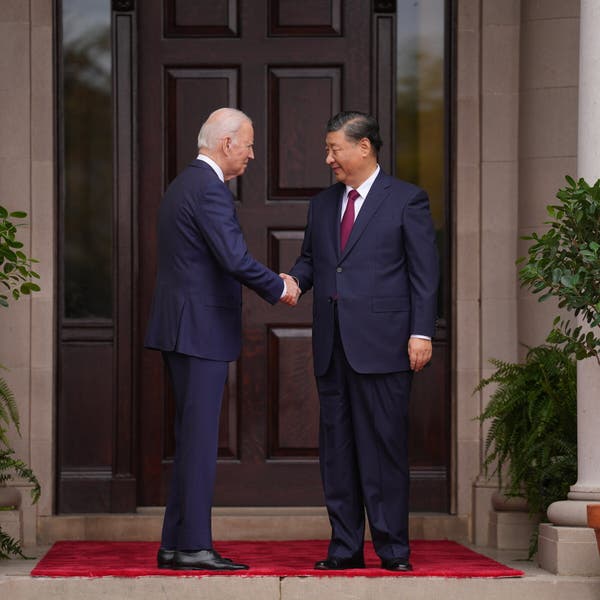
Last week, just hours after the U.S President Joe Biden met with his Chinese counterpart, President Xi Jinping in San Francisco. Biden described this meeting as “some of the most productive” talks before he announced on his X account resumption of military-to-military communications. However, while responding to a question from a CNN journalist, president Biden then called Chinese President Xi Jinping a dictator.

How do we explain this rapid transition from ‘productive talks’ to ‘dictator’? Typical of American leaders, this looks like a case of libidodominandi – a Latin phrase for desire to dominate others, Biden premised his wrong conclusion that Xi is a dictator simply because he is “a guy who runs a country that is a communist country that’s based on a form of government totally different than ours.” Of course, his reasoning is laughable. It is not a surprise that it left America’s top diplomat Anthony Blinken visibly incredulous.

Biden wrongfully assumes that he and the U.S alone have exclusive rights to define what democracy is. Accordingly, whoever challenges their hegemony and imperialistic ambitions in favour of a fair and world where all countries are equal as UN charter demands is undemocratic.

This wrong assumption has seen the U.S over the years present itself as the beacon of “democracy” and on different occasions, Washington has gone extra mile to coerce and impose its so-called values on other sovereign countries, a practice that has caused untold suffering and left millions of people dead, displaced others on top causing anarchy as we saw in Iraq, Libya among others.

That said, Biden’s basis of branding Xi a dictator simply because President Xi is a leader of a country “based on a form of government totally different than ours” reminded me of King Louis XIV’s infamous; “it is legal because I wish it.” Of course, this is big brother mentality is a thing of past and shows how selfish U.S politicians can be.

My concern with Biden’s wrong view of Chinese leadership is not just that his top diplomat Blinken was visibly not happy with it; my concern is that Biden’s reason is an insult to collective intelligence of scholars and those who follow current affairs. It is an insult because Biden assumes that our collective intelligence is blind to the fact that U.S’ endgame has never and is not about to be creating conditions for a fair world which is peaceful, free from America’s hegemony, cold war mentality, power politics and block confrontations.

It is not about democracy as Biden claimed, and it is not about human rights or respecting international law or sovereignty of other countries. For the U.S, all that matter is their libidodominand! On the other hand, China is arguably the world’s champion when it comes to observance of international law. Indeed, unlike the U.S, China has never invaded any country; has never started a war against other country; has never imposed leadership on any country against the wish of citizens which all shows characteristics of bad and dictatorial leadership.

Put differently, the U.S desire has never been good governance or democracy as Biden claimed. Going by assertions of U.S’ founding father, George Washington; “No nation is to be trusted farther than it is bound by interest; and no prudent statesman or politician will venture to depart from it…unless both [nations’] interests happen to be assimilated.

That said, it is also disrespectful of Biden to assume he or the U.S alone have exclusive patent when it comes to deciding which country is democratic or otherwise. America’s colonial and hegemonic mentality has always created disastrous effects. We have seen in all the countries the U.S. has gone to spread its so-called democracy and values. But who chose Biden or the U.S. to judge which country is democratic?

Biden should be reminded of Abraham Lincoln’s definition of democracy; ‘government of the people, by the people and for the people.’ With this, if people of China are comfortable with their government, where does Biden get the audacity to brand the Country’s leadership ‘dictatorial’? Is Biden implying anything not American is wrong even when citizens of that country approve it? If that is his reasoning, in real sense, save that being illusional, then Biden is the world’s chief dictator for lack of better description of his disrespect of other countries’ values.

Poll after poll in the U.S indicates that American population do not believe in their country’s much praised democracy. For example, 2021 Pew Research Centre found that just “17% of Americans” believe democracy in the U.S. is a good example for others to follow, … while 23% do not believe it has ever been a good example.”

Also, a 2022 January NPR/Ipsos Poll found that “64% of Americans believe U.S. democracy is “in crisis and at risk of failing.” Similarly, in October 2022, a Quinnipiac University poll concluded that “69% of Democrats and 69% of Republicans think the nation’s democracy is on the brink of collapse.” Interestingly, the same study found that even among the so-called independents, 66%, had similar view of America’s democracy!

China under the ‘undemocratic’ President Xi Jinping and Communist Party of China (CPC) has surging support back home! For example, York University (Canada) study found that 98% of Chinese believe in their government. With such facts at hand, one wonders where Biden basses his unsubstantiated claims and the cause of such? Put differently, isn’t his baseless claim an insult to majority of Chinese people who approve President Xi’s governance and therefore a sign of intolerance which is a typical character of dictatorship Biden claims to be against? Also, Biden’s claim that President Xi is a dictator simply because China is a communist country shows how the U.S’ view of a world is very narrow which disregards diversity of civilizations and humanity which itself is a sign of being a dictator.

It is high time president Biden realised the need for countries to work together while upholding key principles of equality, mutual learning, and inclusiveness among civilizations, and let cultural exchanges transcend estrangement, mutual learning transcends clashes, and inclusiveness transcend any sense of superiority. He should interest himself in Global Civilization Initiative (GCI) which President Xi introduced in March this year as another important public good in the new era. The GCI which has so far received a warm welcome in the international community, advocates the respect for the diversity of civilizations, the common values of humanity, the importance of inheritance and innovation of civilizations, and robust international people-to-people exchanges and cooperation.

Allawi Ssemanda is a Senior Research Fellow at the Development Watch Centre.


China is Shifting To A Green Belt And Road Initiative In Africa

By Steven Akabwayi

When I was researching China’s policy on climate, a friend of mine recommended to me a book titled “China Urban Evolution by Austin Williams”, in the book, Austin writes about the mythological China character known as “Yu the Great”, Yu was a founder of the Zia dynasty between 2100 to 1600 BC, in the book, William narrates how Yu was faced with a dangerous environment catastrophe during his time, amidst this potential devastation, Yu built flood defenses, rerouted rivers, dredged channels, constructed canals and contained those forces that threatened his community.

In doing so not only did Yu manage to contain the floods, but also the ranging waters were channeled towards irrigating the fields leading to agricultural plenty. This is what most scholars compare to what modern-day China under President Xi Jinping is doing towards addressing the climate change problem.

When President Deng Xiaoping took over power in China during the 1970s, as a reformist leader, he implemented a series of economic policies that transformed China’s economy, his revolutionary policies often referred to as “Deng Xiaoping theory or Dengism” aimed to transform China from a centrally planned economy to a market-oriented socialist system.

Under these reforms, China had a great hunger for development it was willing to undertake whatever means possible to achieve economic prosperity.

One of the guiding diplomatic philosophies of President Deng Xiaoping was “It doesn’t matter whether the cat is black or white for as long as it catches the mice”.

This simple yet deep premise helps to explain the Chinese modus operandi in all spheres of its diplomacy including the environment during the economic revolutionary years.

China topped the charts of top emitters in the 2000s surpassing the United States, as a result of liberalizing her economy, China experienced a boom of industrialization and economic growth which led to the expansion of the industrial sector and construction that required large quantities of energy to operate leading to an increase in emission of Greenhouse gases.

During this era, China relied heavily on coal due to its abundance coupled with its affordability which made the CPC party pay less attention to coal’s impact on the environment.

Due to its newly established economic policies that favor development, China also experienced rapid urbanization and a strong middle class that led to an increase in energy demand, by the time President Xi Jinping took over power, China was already heavily Industrialized banning fossil fuels in large quantities which resulted in significant environmental changes, having achieved economic stability and drastically reducing absolute poverty, China had to consider a transition. It was no longer necessary to just chase the GDP growth rate; under President Xi Jinping era quality now mattered over speed and President Xi has consistently noted that China is now concerned with sustainable development where green development is at the centre of all.

In October this year, President Xi Jinping met world leaders and representatives from over 130 countries in Beijing to mark the 10th anniversary of the Belt and Road Initiative. The forum was held against a global backdrop of the pandemic’s lingering impacts, increasing effects of climate crises and environmental degradation, and an economic slowdown. These factors have contributed to rising debt in countries where BRI projects are implemented, constraining their ambitions for greater infrastructure connectivity and agency in their own development and green transitions.

Just like it has been in the previous forums, Africa was well represented with over 5 heads of state including Kenya, Ethiopia, the Republic of Congo, Mozambique, and Egypt presidents attending in person and top of the agenda was climate.

In his opening remarks, President Xi Jinping pledged to finance and roll out more signature projects with more priority appropriated to lower risk and more socially and environmentally impactful projects announcing over U.S. dollar 100 billion in new funding for Belt and Road Initiative cooperation projects

Among the smart projects to be Funded in Africa under the Belt and Road initiative include a 25 MW photovoltaic solar power plant in Burkina Faso, a 10,000 MW solar power plant in Ethiopia, 50 MW wind farm in Lumu area Kenya among others. Investing in these considerably small yet smarter projects signifies the importance China attaches to green development among African countries especially those that are signatories to the Belt and Road Initiative

Steven Akabwayi is a Research Fellow at the Sino-Uganda Research Centre.


Global Civilization Initiative: Debunking its Critics

By Moshi Israel

President Xi Jinping introduced the GCI in his March 15 Keynote speech to the CPC High-Level Dialogue with World Political Parties. The GCI completes a tri-set of three initiatives including the Global Development Initiative (GDI) and the Global Security Initiative (GSI). These initiatives, it should be noted, represent China’s vision for the world of tomorrow. China attempts to approach problems differently, veering away from what is seen as the failures of the current ‘rules-based international order’ headed by the United States and its allies, commonly referred to as ‘the collective West.’

The GCI, in a sense, refutes the idea of “my way or the high way” and advocates for respecting the diversity of civilizations while opposing the imposition of certain values and models on others by a select few. It advocates for a drive toward realizing the common aspirations of peace, development, equity, justice, democracy, and freedom. It rejects the notion that only a few civilizations hold a monopoly over what is considered ‘right or the way.’

Critics of the GCI assert that, when combined with the GDI and GSI, these programs represent only China’s substitute for the LIO (Liberal International Order), which is dominated by the West. One viewpoint is that China just wants to take the place of the West and establish its own power globally. Opponents argue that while the current international rules-based order may not be flawless, it has primarily contributed to unparalleled wealth and world peace, especially for China, which has benefited from the order to get to where it is now. Furthermore, critics pile upon China, accusations of not respecting its own proposals of peaceful development and non-interference by pointing to the skirmishes in the South-China Sea and tensions with Taiwan.

However, all this criticism from mostly Western ideologues, politicians, scholars, pundits, and political commentators is far-fetched and always reaching. It is mostly verbal posturing backed by as much information as one can find in a newspaper headline. Most of the criticism is a repetition of tired tropes against China bought and paid for by anti-China political establishments in Western capitals. It is telling that most critics of China fail to establish the difference between ‘hate of the West’ and disdain for a rules-based order that is drenched in a hypocritical game of ‘rules for thee and not for me.’ It is not hate when one challenges your ideals.

China like many other countries has had squabbles and skirmishes with its neighbors. But to point to this and claim it as evidence of Chinese aggression and therefore dismiss any proposals from the country as mere propaganda is intellectual dishonesty. Considering, especially, the crimes and atrocities committed by Western countries in the Middle East, Africa, and Latin America under the guise of the rules-based international order. To the critics of China, it is fair game to often bring u the country’s (often exaggerated or non-existent) shortcomings when comparing it with the West but it is considered ‘whataboutism’ when Western hypocrisy is pointed out in political discourse.

It, therefore, skips the minds of Western political thinkers that it is this clear understanding of their hypocrisy and intellectual dishonesty in defending, dismissing, ignoring, and at times advocating for all the ills of Western hegemony that inspires the creation of such concepts as the GCI, GDI, and GSI. This is not to say, that there is no criticism of the Western disastrous foreign policy from Western citizens and elites, it exists and it is loud, however, it often has no significant impact and often fades into the background.

The GCI is China’s way of encouraging global south modernization without the need for Westernization. Indeed, the GCI is largely aspirational and would require enormous political will to put into practice, however, this in no way makes it obsolete or irrelevant. Today’s leading global institutions were all once an idea on paper, a concept and ideal to aspire to, and with grinding effort, they have been established and can function as practical entities tackling world problems, despite all their shortcomings. The next important step for China and the willing coalition of Global South countries is to rapidly institutionalize these concepts to test out their practicability on the international stage.

Furthermore, GCI encourages mutual learning and inter-civilizational exchanges, which is a welcome idea at a time when the world is increasingly disintegrating along religious, ideological, and civilizational lines. There is an obvious divide in political thought between the West and the East, with Western views of democracy working for many but not all, and Eastern views of democracy working for some but not all. The idea behind GCI is for the world to strike a balance and seek compromise under these circumstances. ‘Diversity is our strength’ is a common slogan in Washington, London, Brussels, and other Western capitals during domestic political discourse. However, this notion flies out the window when it comes to the international stage, the reason being the West prefers to practice realpolitik outside its borders. China through the GCI is standing up for itself and the entire global south and asking for a modicum of respect for their culture and values, which is bizarrely looked at by the West as a rebellion against the rules-based international order.

One of the most prevalent criticisms of China’s GCI, GSI, and GDI is the one directed at the ambiguity of the idea of non-interference. Understandably, China does not seek to be the world’s policeman, but at what point does China draw the line when another country blatantly violates international law and the rights of its citizens? China has attempted to address this issue by engaging in relentless diplomacy to broker peace and ensure stability. The recent Iran-Saudi peace deal is one example that shows the incredible results diplomacy can achieve.

However, going forward, China has to figure out a sustainable solution for crimes committed by leaders against their own people. Many Citizens in the Global South continue to suffer under the oppressive regimes of ruthless and unpatriotic leaders and would look to China to address this issue. Therefore, Beijing has to come up with practical solutions to tackling these geo-political headaches without resorting to Western methods of operation. Otherwise, many citizens from the Global South will always turn to the West in search of rescue from despots.

Overall, the GCI is a necessary concept that can lead to a better world full of mutual learning, trust, and understanding. This can be achieved through inter-civilizational exchanges and people-to-people diplomacy. The Global South has largely welcomed China’s ideas for a multi-polar world of tomorrow and believes in the aspirations put forward by the CPC. Currently, only China seems to be looking forward as most other powerful countries look and cling to the past for answers.

The Writer is a Senior Research Fellow with Sino-Uganda Research Centre (SURC).


China-Africa Joint Development: Beyond Slogans

By Moshi Israel

To understand the drive behind the concept of China-Africa joint development, one needs to know exactly what China wants from Africa and what Africa wants from its relationship with China. The cooperation between Africa and China aims to be a symbiotic relationship where benefits are shared fairly and at times equally.

The key objectives for forming alliances and partnerships among nation-states are for security and trade. Through joint development partnership, China and Africa can ensure their respective economic security because the concepts of trade and security within the framework of international partnerships and relationships often intersect. One way they intersect is through the correlation between trade and economic security. Good trade policies and practices can lead to economic security which is at a larger scale is a form of national security. A rich and successful country is secure in many ways. Joint economic partnerships ensure and insure the national security of all involved.

During the China-Africa Leader’s Dialogue in August of this year, in Johannesburg South Africa, President Xi Jinping highlighted the fact that China was steadily marching towards achieving its second centenary goal of becoming a ‘great modern socialist country in all respects that is prosperous, strong, democratic, culturally advanced, harmonious, and beautiful. He reiterated that China was pursuing its rejuvenation on all fronts through a Chinese path to modernization. This is China’s vision for itself and by analyzing this vision, we can deduce exactly what China wants with Africa. In short, China needs a stable, developed, independent, and reliable Africa to conduct business and foster civilizational exchanges for a shared future of prosperity. China can help Africa achieve its development ambitions and Africa can help China realize its ambitions for its people and vision for a world of harmonious coexistence.

China intends to expand the global market and make it diverse and less dependent on the core countries of the Western bloc. China, itself a developing country has decided to look south for developing markets, where it can trade its products and in turn assist the development process of countries in the global south. Through BRICs+, BRI, FOCAC and other initiatives, China has consistently courted Africa and made its intentions clear. Symbolic of the deep ties between China and Africa is the elevation of relations to a Comprehensive Strategic Cooperative Partnership in 2018 during the Beijing FOCAC summit.

For this relationship to work smoothly, Africa needs to know what it wants from China and fortunately, this is increasingly clear as stipulated through Agenda 2063. It is an agenda that seeks to transform the continent into a global powerhouse of the future. Through Agenda 2063, Africa aims to deliver on its objectives for sustainable and inclusive development. The agenda is driven by the Pan-African spirit rooted in the desire for unity, self-determination, freedom, progress, and collective prosperity. Agenda 2063 is an affirmation of pan-Africanism and the African Renaissance.  This pan-African vision was assented to by African leaders through the 50th Anniversary Solemn Declaration during the golden jubilee celebrations of the formation of the OAU/AU in May 2013. The vision imagines an integrated, prosperous, and peaceful Africa, driven by its citizens, representing a dynamic force in the international arena.

Under the current global political climate, Africa and China need each other. President Xi recognizes this with precise clarity and therefore has spearheaded efforts and a renewed drive by China to rejuvenate, reinvigorate, and redefine its relationship with Africa. The result should be a limitless friendship that is much more integrated and equal where both party’s interests are protected through joint efforts.

Proposed areas of collaboration include; working to safeguard a peaceful and secure global environment, building an open and inclusive world economy, and promoting an equitable and just international order. Also, China through the assurances of its president seeks to cooperate with Africa to enhance the synergy of both party’s development strategies, support Africa’s voice in the international arena, support Africa’s industrialization and Agricultural modernization, and implement a plan on China-Africa talent development.

The joint development of Africa and China will mostly rely on the initiatives proposed by the latter. These initiatives include the GDI, GSI and GCI, (Global Development Initiative, Global Security initiative, and Global Civilization Initiative) all respectively addressing the key problem areas of development deficit, security challenges and a gap in mutual learning between civilizations.

By analysing these initiatives, we can decipher that China’s partnership with Africa is not solely based on economic gains. It goes further and beyond the limitations of realpolitik. China is not focused only on practical considerations when it comes to partnership with Africa, the rationale of cooperation is also rooted in moral and ideological concepts. China and Africa consider themselves family with a bond forged through history. A past of shared suffering under colonialism, imperialism and racism binds Africa and China. The latter’s lessons of wisdom through the ‘miracle’ of unprecedented development can be an inspiration to Africa’s own renaissance.

The African Union has embraced the idea of an integrated continent through the African Continental Free Trade Area (AFCFTA). A more integrated Africa is a powerful one and Beijing supports this process. It is a popular view both in Africa and China that Africa’s own path to modernisation should be an African idea with African characteristics. By pushing its own modernisation path, China indirectly shows Africa the way and it is up to the giant continent to map its own path by learning what is practical from China’s experience.

For so long, the African continent has been underestimated and under looked. Africa has experienced its own centuries of humiliation and has forever struggled to raise its head above water. However, the continent, with the help of China has changed the narrative and is back floating and ready to swim. Africa is projected to have a population of over 2.7 billion people by 2060, well above the combined populations of both India and China. In the same year the continent is projected to have a combined output of $16 trillion and a vibrant middle-class market. China on the other hand is the second largest economy in the world and has a lot of potential to be the world’s leading economy with time.

It is therefore, this potential that makes China-Africa joint development an interesting prospect. Together, a better multilateral world is a reality and a shared future for all humanity is guaranteed.

The Writer is a Senior Research Fellow with Development Watch Center.

Fostering China-Africa Relations Through People-to-People Diplomacy

By Steven Akabwayi

In 2013 when President Xi Jiniping who doubles as the General Secretary of the Chinese Communist Party of China (CPC) officially availed the Belt and Road Initiative during his visit to Kazakhstan, he emphasised on major priorities which included constructing a large market and making full use of both international and domestic markets through cultural exchange and integration to enhance mutual understanding and trust of member nations resulting in an innovative pattern of capital inflows, talent pools, and technology databases.

Like it’s skeleton the Silk Road, BRI also embodies the cultural heritage and exchange through people to people as a key component for it’s success.

Many centuries ago, Africa and China had contact under the Silk Road the two civilizations had profound respect for each other not only through exchange of goods and services but also through knowledge and ideas at libraries and universities such as the ancient Timbuktu in western Africa.

Even  at it’s helm, the ancient Chinese Han dynasty(206 BCE- 220 CE)  traded fairly with Africa under the Silk Road they neither enslaved Africans or abused them like the Europeans did.

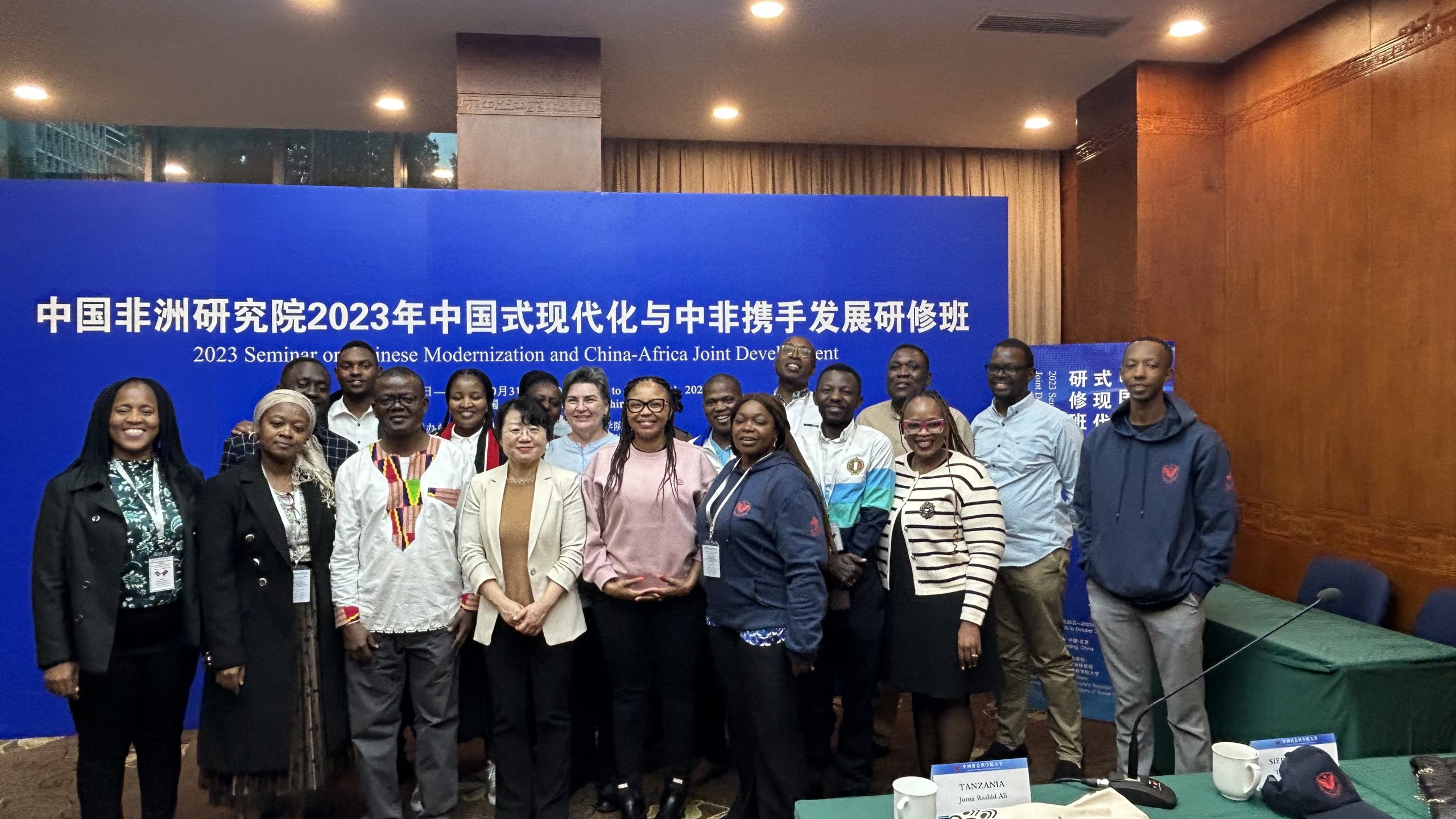
In October this  year, I had a chance to participate in the Modernization and China Africa joint development seminar hosted by the University of Chinese Academy of Social Sciences in Beijing in partnership with China Africa institute and Chinese Academy of social Sciences.

The seminar brought together government officials and scholars from African countries with an understanding of the inspiration and importance of Chinese modernization for AfricanDevelopment.

China has also initiated other various youth exchange programs that facilitate interactions between Chinese and African youth focusing on leadership development, cultural exchange and fostering global citizenship.

As the saying goes a friend in need is a friend indeed, As one way of strengthening people to people exchange, over  the past 20 years, China has provided about 120,000 government scholarships to African countries, built 61 Confucius Institutes and 44 Confucius Classrooms with 46 African countries, and sent 21,000 medical team members to 48 African countries, treating 220 million African patients.

It’s not by surprise  that Africa and China cultures have each influenced one another for generations, the two cultural heritages have the same underlying values that put a community over individualism unlike the western cultures.

While attending the seminar in both Beijing and Guangzhou, several interactive lectures were conducted that jointly explored the principles, strategies, path, and methods of China-Africa joint development under the One Belt One Road initiative that envisions facilitating Africa’s development alongside China’s development that will ultimately achieve mutual benefit, a win-win situation.

For years, the West has been peddling lies about the Belt and Road Initiative as a debt trap by the Chinese government targeting economically struggling African countries.

During the seminar Professor Wang Yuzhu of the National Institute of International Strategy demystified such allegations explaining that the Belt and Road Initiative follows a strict principle, he mentioned that it was jointly built through consultation to meet the interests of all and efforts are always made to integrate the development strategies of the participating countries.

In July this year, Uganda’s leading think tank on foreign policy Development Watch Centre conducted a study where at least 400 respondents from diverse backgrounds including scholars, journalists, politicians ,business community among others participated in it, the study found that 76% of Ugandans had a positive view towards China, this was based on China’s infrastructure development which has improved livelihoods, roads, reduced unemployment, provided scholarship, exchange programs among others.

This diplomatic victory is not only limited to Uganda, a recent study by Pew Research Centre found that in the past decade, many middle-income countries have had increasingly favorable attitudes towards China these countries include South Africa, Kenya, Nigeria among others.

By analysing Chinese history one can observe the role and significance of the Chinese leadership towards Chinse economic transformation with notable leaders including Chairman Mao Zendog, President Deng Xioping 1978-1989 and President Xi Jiniping 2012 to present these have have promoted national unity, enhanced economic strength, promoted democracy among others.

While at the seminar in both Beijing and Guangzhou, I undertook various intellectual stimulating lectures and personal interactions with delegates from different African countries, I observed that much as China has not completely weaned off many Africans from Western orientation, the fact is that it has achieved a big milestone towards leveling the ground of global politics, Africans are starting to learn more about Chinese civilization and its development model as a force that can counteract the western hegemony. This indicates the significance of China’s people-to-people diplomacy towards Africa as conducted through cultural, educational, and professional exchange visits.

I’m optimistic that by organising such engememnts and seminars, it will have profound impact on Sino-Africa relations.

Steven Akabwayi Research fellow at Sino-Uganda Research Centre Centre.


THE TRUE CHINA

By Moshi Israel

What is the true China? This is a question that is asked frequently by many, both elites and ordinary citizens from all walks of life all around the world. The China question is an important one since the country has a history spanning millennia and has consistently existed in global discourse, playing an important role throughout the world’s long history. Interest in China is not new and has steadily peaked over time mostly because it is a country that is unique in its characteristics and ideologies, yet very similar to many others in its political, social, cultural, and economic realities.

There is no absolute answer as to what is the true China. However, my answer to this question would be; that the true China is its people. My answer is not a new profound answer to the question, rather it is an observation influenced by personal experience. In a recent collaboration with the China Africa Institute (CAI), the Chinese Academy of Social Sciences (CASS) alongside the University of Chinese Academy of Social Sciences (UCASS), I attended a seminar in Beijing and Guangzhou themed Chinese Modernisation and China –Africa Joint Development. During this seminar, I better understood the significance of President Xi’s brilliant remark that the people are the country, and the country is the people.

China’s national organization is unique and a lot can be learned from it. The country is organized around the careful and strategic planning of its government led by the Communist Party of China (CPC). Despite all the vitriol from certain Western political centers about the CPC and its method of governance, my observation is that the Chinese people love the party and want to be part of it and its agenda. Patriotism is a key trait of Chinese people. The CPC does not demand uncritical loyalty from its members but also does not tolerate traitorous schemes of trying to overthrow the government. The government is the party and the party is the government. This is a system that works for China and has consistently delivered on development in all aspects which has led to an increase in people’s happiness. After all, it is one of the CPC’s and dare I say should be humanity’s principle to ensure the happiness of the people by helping them to realize their ambitions, hopes, and dreams. The CPC created a Chinese dream that is completely different in practice from the American dream. The Chinese dream is rooted in socialism, togetherness, and country above self as opposed to the individualistic American dream rooted in profit at the expense of everything else.

The CAI has done a commendable job in advancing China-Africa relations to greater heights. Its current vice president, Wang Xiao Ming is the embodiment of China’s warm embrace with Africa through mutual respect and focused collaboration. Moreover, through UCASS and CASS, China is also successfully bridging the information gap within the international community by telling China’s story through the lenses of well-educated and highly informed scholars. Seminars like the one described above are a vital magnet in attracting keen and genuine interest in the China question. More effort needs to be placed in such seminars and I confidently predict that within a short time, the narrative on China will have changed dramatically. Western framing of China holds no power or sway among well-informed and educated communities of people.

The warm, welcoming, and curious yet reserved people of China that I interacted with are the true ambassadors of the People’s Republic. The people and their culture make China a beautiful country that is truly a place prepared to lead the world into a new era of prosperity, civilizational diversity, peaceful development, and, true multi-polarity

Of course, not everything or everyone is perfect in China just like everywhere else. However, honest visitors to China will most likely come to a similar conclusion as I did. Unfortunately, a good number of people know nothing about China except for what they see in Western media, unreliable African tabloids, biased pundits, and pseudo-intellectuals with a pre-programmed worldview.

The fact is most of the discourse on China in Africa is dominated by Western ideological lenses and frames. This is driven forward by a propagandized media with a barrage of often skewed facts. The term ‘fake news’ did not gain popularity by mistake. There has been a concerted effort from Western governments to sully the image of China and create an aura of negativity around the country. However, a visit to China can reveal an entirely different truth.

The leadership of the CPC has captured the true meaning of good governance based on the principles of planned development with respect for the environment. The air in Beijing which was once polluted, and painted a bad image of China is now very clean and clear. The greenery in Beijing can be observed from the sky as the city leadership has taken unprecedented steps to clean it up. Also, the government has undertaken a large program to rid the city of harmful exhaust fumes from fuel-powered vehicles. The city has embarked on a bold program to increase the number of electric vehicles on the road and slowly transition from fuel-powered cars. The capital, despite having millions of people, is mostly quiet, clean, and organized. The crime rate in major Chinese cities is relatively low compared to some Western capitals. This is a huge achievement because it shows that the CPC’s way of governance leads to safety for both locals and foreigners.

Furthermore, whereas China is still a developing country, the CPC has taken huge strides to make the lives of Chinese better and much simpler. The transport network or system in China is state-of-the-art and can be compared to a few around the world. The subways are clean and well-maintained, and the transport system is fast and efficient.

Guangzhou is a city that bears hallmarks of China’s embrace of the future. The city is a vibrant spectacle of cultural diversity and inter-civilizational exchanges. In the outskirts is the China-Singapore knowledge city that is also a towering beacon of China’s future which is ambitious, daring, artistic, planned, and a testament to the CPC’s good governance through collaboration with willing partners.

Most people misunderstand China’s strict laws and often overlook the fact that it’s these laws that have made China a vibrant tourist destination and a safe place for all law-abiding foreigners. While in China, it is hard to see an armed officer, yet everyone seems to be orderly. The people have gradually internalized a true rules-based society and are mostly organized.

Finally, I think China-Africa relations are better served with these kinds of educational exchanges involving different groups of people from different sectors of the African economy. Mutual learning eventually leads to mutual understanding, win-win partnerships, and a shared future of prosperity. China has a lot to learn from Africa and the reverse is true. The future of China-Africa joint development is in the capable hands of the CPC and the Chinese people, African leaders, and African people and in organizations such as CAI, CASS, UCASS, Development Watch Center, and many more others. People-to-people diplomacy is the ultimate plug between China and Africa. CASS, CAI, and UCASS through joint efforts have managed to show the true China to many African friends.

The Writer is a Senior Research Fellow at the Development Watch Center

Belt And Road Initiative: 10 Years of Transforming Africa

By Steven Akabwayi

In 2013, Chinese President Xi Jinping launched the Belt and Road Initiative (BRI) which emerged to be one of the most significant and greatest projects of the 21st century according to experts.  By June 2023, over 152 countries and organizations had signed agreements related to BRI including the African Union as bloc.

The BRI was primarily established to link East Asia and Europe through physical infrastructure but was later expanded to Africa and other continents by the Chinese government significantly broadening the Chinese economic foothold on the continent.

Just two weeks ago, world leaders gathered in Beijing for China’s Belt and Road initiative, this was its third event of this kind since its official flag-off by President Xi Jinping in 2013, over 130 countries participated in this summit with analysts noticing China’s ambitions to solidify its relations and engagements more towards the global south as ties between Western countries and Beijing continue to take a drastic rift.

From the African perspective, the Belt and Road Initiative is beyond major infrastructure projects, Africans view the Belt and Road Initiative as a vehicle for improving people’s livelihoods and standards of living and a way of sharing China’s development dividends with other countries especially those in Africa where there is great hunger for development.

The Belt and Road initiative also embodies China’s vision of a win-win foreign policy approach that envisions building a global community of shared future as President Xi Jinping proclaimed in this years BRI summit.

While speaking at the second Belt and Road Initiative Forum for International Cooperation in 2019, UN Secretary-General Antonio Guterres acknowledged the critical linkage of the Belt and Road Initiative with the 2030 agenda.

He noted that the scale of the Belt and Road Initiative’s planned investments offers a meaningful opportunity to contribute to the creation of a more equitable prosperous world for all given that the five pillars of the Belt and Road Initiative are intrinsically linked to 17 sustainable development goals, these are conceptual pillars that can be translated to real world progress for all people mostly in Africa addressing poverty, hunger, climate change among others.

As one way of addressing climate change which ranks number 13 on the UN’s 17 Sustainable Development Goals(SDGs), China has expressed commitment to green development and promoting environmentally friendly projects.

“It doesn’t matter whether the cat is white or black, for as long as it catches the mice” This was the point of view Deng Xiaoping put forward as a guiding philosophy to develop the economy and restore productivity, however, when Xi Jinping took over in 2013, he reversed this view citing that for the cat to catch the mice, the later has to be green. This potrays  the emphasis and priority he accords to a sustainable clean green environment.

Currently, China is the world’s leading investor in Greenfield energy and infrastructure systems across the developing world the same climate-friendly developments have been intensified under the Belt and Road initiative by promoting renewable energy and clean sustainable transportation systems.

On the issue of poverty, China has facilitated a reduction of unemployment in Africa with the Belt and Road initiative projects established, recently china’s leading television CGTN released a documentary that starred a 29-year-old Ugandan youth named Bless whose life was transformed after securing an entry job at karuma hydroelectric power station in Kiryadongo district . According to the documentary, while working at the station Bless gained a set of professional skills that laid a solid foundation for his future development and light a path to a better future for other Ugandan youth.

Contrary to the Western narrative, China’s Belt and Road Initiative is not a debt trap for African countries, china a developing country Sees African countries as its fellows given their shared history, and the Asian economic giant comes intending to provide the assistance that is necessary for Africa development,, through its journey of development, China has identified infrastructure as a critical component for any countries development .

China contributes significantly to the development of infrastructure in Africa which has been for long been the main constraint of achieving economic transformation on the continent.

In less than a decade, Africa has witnessed the establishment of mega airports, roads, and railways to overlapping bridges that run overseas and across rivers connecting faraway places, ports, and large cities.

As far as infrastructure is concerned in the East African Community, China has been a key player through connective finances and technology exchange.

Some of the recent famous projects that have been launched under the Belt and Road Initiative in Africa as a whole include the Bagamoyo port in Tanzania which aims at enhancing Tanzania’s maritime capabilities and facilitating regional trade.

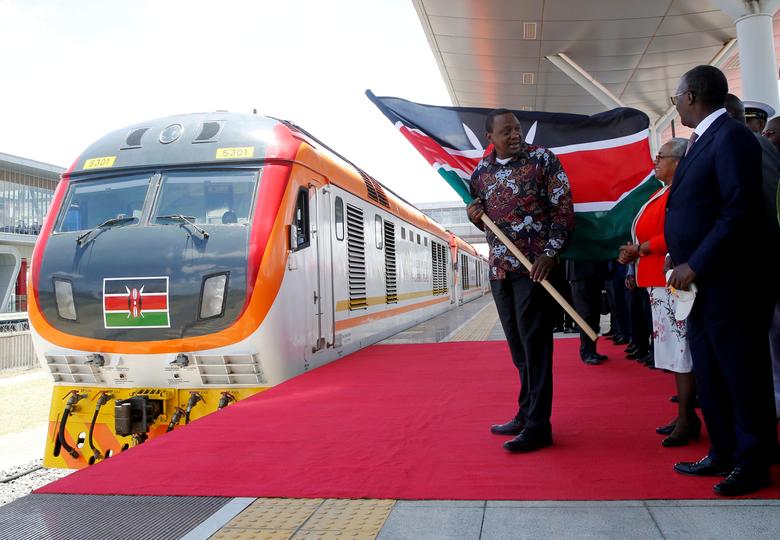
There is also a standard gauge railway in Kenya connecting port Mombasa to the capital Nairobi, the Lamu Port that aims at connecting Kenya with South Sudan and Ethiopia, Suez Canal Economic Zone in Egypt, port of Djibouti among others.

Steven Akabwayi is a Research Fellow at the Sino-Uganda Research Centre