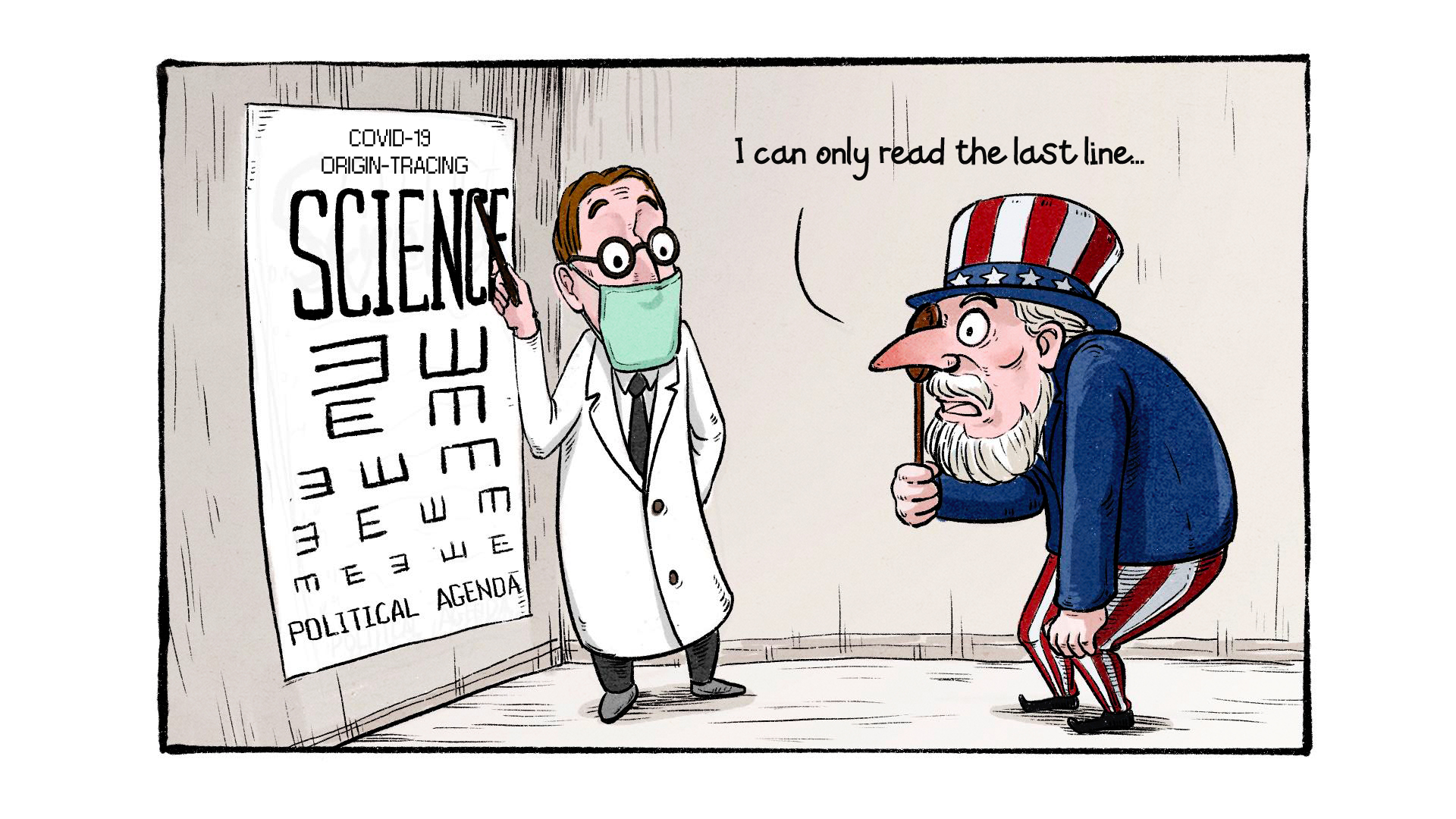
Price of Sovereignty: Nations Face Punitive Action for Seeking Alternatives

Development is to humans a breaking free from natural necessity as it is to nations breaking free from control by others. Likewise, for nations, the pursuit of development is a national interest as it improves their standing in the international arena and guarantees the attainment of other  aspirations as a result. This notwithstanding, unilateralism under the current global order often puts the interests of powerful nations ahead of those of the smaller nations. Oftentimes, actions taken by powerful countries  in the name of protecting their interests are a direct challenge to interests of other nations. These interests sometimes encroach on their legitimate right to development.

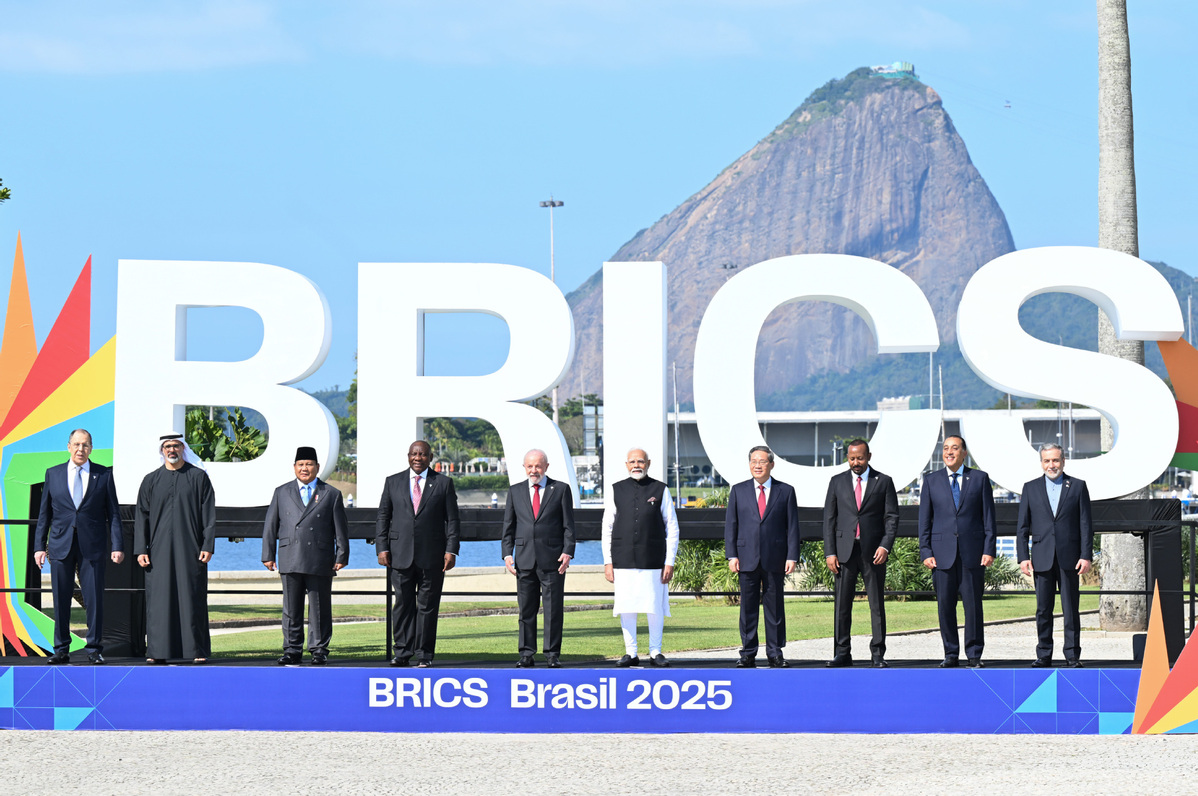
For instance, earlier this month, BRICS leaders reaffirmed their commitments to the group’s values of mutual respect, sovereign equality, and solidarity among others as cornerstones of meaningful multilateralism at the group’s 17th summit in Rio. While this was perceived as the common interest of member states, the declaration was met with threats from Washington ranging from of 10% additional tariff on all nations that  align with the group. At the same time, Brazil another member of the group joined the likes of China, receiving a special punitive package of 50% tariffs effective August 1st besides being investigated for so called unfair trade dealings.

As a platform for cooperation initially championed by the emerging economies of Brazil, Russia, India, China and South Africa, BRICS has added 6 new members since 2015 including Indonesia,  Saudi Arabia, Ethiopia and Egypt. Despite representing close to half the global population, the group  does not seek to replace the traditional multilateral system but rather to offer an alternative model of multilateral cooperation. Other than responding with opposition,  such efforts must be welcomed as they exemplify what is possible under a reformed multilateral system.

By addressing legacy shortcomings of the current multilateral setup faulted for a lack of equality and representation, BRICS must provide motivation for the requisite reforms; the absence of which  have for over half a century kept the global south on the sidelines of global governance. More so, the platform only aims to prioritize the southern agenda, giving it a collective voice in global governance. Therefore, to call BRICS anti-America is the equivalent of saying to be pro-America is to ignore the interests of the billions it represents.

As long as it remains difficult to delink international cooperation and development, targeting nations with punitive action on the basis of who they cooperate with or what group they  are aligned with is akin to dictating what interests nations are allowed to have, or the path to development they must follow. Of course, this is not practical where, due to different national realities, development challenges and capabilities are so diverse. When a 10% extra tariff is declared against any nation that aligns itself with what Washington calls “the anti-America BRICS,” it is an obvious threat to immediately reverse any gains nations might have sought in such a collaborative arrangement. A choice, conscious or otherwise  to perpetuate the unfair international political landscape that made BRICS possible in the first place.

Incidentally, following years of calling for reforms in the existing multilateral system, it should not come as a surprise when BRICS comes up as a brainchild of the global south. Likewise, neither should the alignment of other countries in the region with the platform be. Instead it should be surprising that nations whose interests haven’t mattered must be punished for seeking an alternative. For one, the framework is by nations from the global south and two, it promises sovereign equality, mutual respect; a shift from the status quo under legacy institutions. The same status quo that is at the foundation of  the calls for reforms.

Whereas it is understandable why proponents might argue for the right of Washington to protect its interest, this also raises a question on what must become of the interests of the  other nations. More importantly though, there is the question on whether  there can be sovereign equality where the interests of one supersede those of many. As this scenario unfolds, because Washington believes BRICS to be anti-American, all other nations must rally behind Washington’s interests -ignoring their own, or get crushed in a fete of punitive diplomacy. Meanwhile, apart from the inherent risks that come with being added to the hit list of powerful nations, the real risk is in what nations must give up in this trade off…their own national interests, even their development goals that are entwined with these interests.

The choice of partners and forums for cooperation should be a sovereign discretion. In the same way, the kind of threats levelled against any country that aligns with BRICS does nothing short of underscore the dire urgency for an more equitable global order – an order that respects sovereign equality, mutual respect and understanding among nations. While the choice to impose tariffs would fall perfectly within the purview of those imposing them, tethering them to alignment or non-alignment with anyone highlights the fractured state of international order and the importance of platforms like BRICS.

Unless the current multilateral system is designed to act in the interests of the powerful nations, it ought to have heeded the global-south’s call for reforms. Alternatively,  there is still time to act on unilateralism to keep it from suffocating  the interests of smaller nations. But as long as non of these is possible, the ensuing global challenges will necessitate new perspectives on current global problems like the one offered by BRICS, and resorting to punitive action only exacerbates the original challenges.

The author is a research fellow at the Centre for BRICS Studies, Uganda.
Georgemusiime@dwcug.org


Uganda’s BRICS Partnership: A Role in Reshaping the Global Order

The BRICS summit in Rio was the death knell to the old world order. In a seismic shift of global power diplomacy, 11 countries; with Uganda being the sole representative from East Africa, were formally admitted into the alliance. This bold move is an undeniable vote of confidence into the promise of the alliance to scale inclusive growth and sustainable governance.

The parallel remarks by US President Trump labeling BRICS-aligned nations as “enemies” and threatening 10% tariffs on their exports, underscore the urgency of the BRICS vision of a multipolar world of open markets and mutual prosperity. President Trumps remarks ought to call for a diplomatic response, not retreat. Uganda has the enviable opportunity to leverage its BRICS role as a spur for  economic resilience and regional leadership, ensuring Africa’s voice plays a role in shaping the global agenda within the BRICS framework.

The BRICS alliance was formed on the premise of a single question; why? Why should a single nation’s currency (not backed by anything) be the reserve currency of the entire world? Why must the global power structure be perpetually tilted to favor a select few world powers who lord systems of governance and economic monopolies around the globe? Why must we maintain a global world order that cripples our economies, inflates our trade deficits, and keeps us in a perpetual cycle of non-developmental administrative restructures blind to our cultural diversity? Why must our survival be financed by non performative debts to maintain extractive economies?

BRICS offers a numerical answer of 4.5 billion people. Our partnership with the BRICS offers the Ugandan farmer(seven in 10 Ugandans are engaged in agriculture) an expanded market of 4.5 billion people to sell our coffee and to as well as a myriad of other farm products, the Ugandan entrepreneur joins an expanded economy of 27.35 trillion dollars to explore and for the government a NewDevelopment Bank that will finance not a hamster wheel of neo-colonial extraction but real infrastructural development. Trading in local currencies like the Chinese yuan and South African rand can stabilize incomes for Ugandan investors , freeing them from the evident volatility of dollar dependence.

President Trump’s tariff threats, aimed at BRICS members and partners, challenge our economic ties with the U.S, including vital health programs still reeling from the impact of the early aid cuts by the current administration. This is precisely why Uganda’s BRICS partnership matters both nationally and regionally. It offers a pathway to diversify our alliances, reducing reliance on any single global power and in the growing multipolar world. As a nationalist with an unwavering “America First” principle, President Trump ought to be the strongest proponent of BRICS which is hinged on cultivating independent yet inclusive frameworks for transnational cooperation with core principles of mutual respect, understanding, sovereign equality, solidarity, democracy inclusiveness, collaboration and consensus.

To fully embrace this moment, Uganda must act with strategic foresight. A dedicated BRICS envoy would ensure our priorities—trade equity, climate finance, and global governance reform—are central in the partnership’s high level discussions. As East Africa’s sole BRICS partner, Uganda’s uniquely suited to re-echo the voices of Kenya, Tanzania, and Rwanda and the broader African Union, advocating for a permanent African UN Security Council seat and funding for sustainable energy and knowledge transfer. A national BRICS strategy, shaped by academics, businesses, and communities, would unify our efforts, positioning Uganda as a regional leader. Our history of peacekeeping in Somalia and South Sudan shapes us as continental leaders who can lead on the global stage, bridging divides with diplomacy.

What BRICS brings to the table is partnership based on mutual respect and the highlevel discussion in Brazil was a stark contrast to the Whitehouse Luncheon organised for African heads of states that coincided with the Summit where President Trump is quoted telling the African presidents to “go a bit quicker than this because we have a whole schedule. If I could just have your name and country, that would be great.

BRICS is not a rejection of the West but a complement to it, offering Uganda flexibility to engage multiple partners on diversified fronts. The African Continental Free Trade Area, set to transform regional trade, can work alongside BRICS to strengthen our markets As well as other BRICS member implemented projects like the Belt and Roads Initiative by China which has already spurred significant progress in Africa. As a BRICS partner, Uganda must speak with clarity, advocating for a world order where power is shared, not hoarded. Our BRICS partnership is a call to lead, ensuring East Africa’s aspirations resonate globally.

Shemei Ndawula is a Senior Research Fellow at the Development Watch Center.

Learning from China: Adapting Development Strategies for African Contexts

Although it may not be possible to have a comprehensive cookbook of China’s rapid development recipes, a few policy frameworks implemented in the country can provide guidance. The Chinese development model has not been uniform. It has been at every stage punctuated by state-led industrialisation alongside export-oriented growth, and strategic global engagement, among other factors/ policies. Africa sets its sights on China for direction, as a late developer, because China has mastered the art of leapfrogging growth or catching up. However, given the disparate and diverse political and economic characteristics between the two entities, we need to carefully tailor and adapt what works and leave what doesn’t, from the Chinese blueprint of late and rapid development.

There is a unique political economy framework that made China’s development success possible. Whereas Deng Xiaoping is highly credited for instituting transformative reforms, there was a strong, centralised state which he leveraged to implement pragmatic policies, i.e., special economic zones (SEZs), massive infrastructure investment, and education and technical training to spur human capital development. Deng was also granted a monopoly of power rendered by the Communist Party, which allowed him to have continuity of his policies under the stability of a cohesive political structure. It was also workable to implement policies on a largely ethnically homogenous population, with a social history of collective discipline embedded in Confucian cultural ideas. Such moral compulsion from social norms and habits can hardly be transplanted, but it facilitated the rapid policy implementation we see in China. Additionally, industrial transformation was timely in a nation which was poised to reform its large agrarian economy.

African nations emerged out of colonialism with significant infrastructure gaps. The post-colonial contexts they find themselves in require that they assert economic sovereignty and push for state-led development, which fits well with the Chinese model. It has, indeed, been China at the frontline of supporting Africa’s move to bridge infrastructure gaps, supporting such projects as Kenya’s Standard Gauge Railway and Ethiopia’s Addis Ababa-Djibouti Railway, under the BRI, among countless other projects in several African countries. Moreover, China never lends itself to political interference in Africa as a precondition for its investments, as is common with Western aid and development finance, which comes pegged with prescriptions and conditionalities of all manner, eroding away the autonomy and agency of African states.

The diversity among and within the 54 African nations, however, implies that the continent’s political economy is widely different from China’s. We have so many ethnicities, are corrupted by colonial legacies, plagued by electoral volatility undermining policy continuity, fragmented by opposing governance structures, which ultimately complicates state-led development initiatives.

Weak institutionality and corruption are a serious hindrance to Africa’s development efforts. Weak institutions make China’s state-led, long-term development strategies hard to replicate, because governments face significant opposition and illegitimacy, making the long-term stability that shelters growth absent. Corruption disorients public-spiritedness, turning ruling regimes into cash-and-carry kleptocracies. This is the challenge for countries like the Democratic Republic of Congo, making the implementation of large-scale projects unsuccessful. There is a need to earn legitimacy for African governments by ensuring merit-based and accountable governance that serves all citizens without accentuating ethnic differences. Traditional leaders should also not be merely co-opted but fundamentally involved in local and national development programs, so that they view state development policies as an inter-collective program in which they and their co-ethnics have a stake, and must therefore take responsibility and involvement.

While China’s development leveraged export-led growth to satisfy the global demand for manufactured goods, Africa finds itself in a different context. It is a resource-dependent continent; its economies survive on the extraction and sale of primary commodities like minerals, oil, or agricultural products. The key to transforming this status quo to increase returns rests in domesticating ownership and ensuring the locals have a higher stake in the businesses and industries. This will nip profit repatriation and rent-seeking in the bud. Local ownership here does not mean that indigenous people must be the only ones with economic rights, but rather that even companies owned by foreigners must register locally and transfer the most profitable work of their business to Africa.

Whereas China’s development was easy to mobilise in a socially cohesive population, Africa’s ethnic diversity should not be mourned as a challenge; rather, African governments should embrace traditional and communal participatory approaches to social mobilisation towards development goals. Africa’s ethnic groups were historically assimilationist, and this cultural heritage must be encouraged as opposed to perpetuating colonial divisions that politicised divisive ethnicity.

The writer is a senior research fellow at the Development Watch Centre.