Lessons for Uganda from China’s Special Economic Zones

By Nnanda Kizito Sseruwagi

The government of China established the first four “Special Economic Zones” (SEZs) in the 1980s to act as experimental laboratories for designing and testing new policies and approaches to reduce poverty and grow the economy. They are designated areas in China where economic regulations differ from those of the rest of the country so as to increase trade and investment, promote job creation, and ensure effective administration. They are government-run export enclaves offering taxation, logistical and infrastructure incentives to enterprises, especially those focused on manufacturing and shipping.

One of the most renowned reforms under Deng Xiaoping was establishing four special economic zones along the Southeastern coast of China, with Shenzhen, Shantou, and Zhuhai in Guangdong province and Xiamen in Fujian province. As of 2024, three additional special economic zones have been added. In 2009, Binhai district in Tianjin became mainland China’s seventh special economic zone. These zones are granted more free market-oriented economic policies and flexible governmental measures by the government of China, compared to the planned economy elsewhere. This allows SEZs to utilize economic management which is more attractive to foreign and domestic businesses. Trade was originally controlled by China’s centralized government. However, market-driven capitalist policies are implemented in these special zones to entice foreign investments in China.

Economic policies of SEZs included tax exemptions, reduced customs duties, reduced priced land, and increased flexibility to negotiate labour contracts and financial contracts.

SEZs became destinations for workers from across southern and southwest China, particularly younger women who could earn significantly more for factory work than they could earn in their hometowns.

SEZs were also authorized to develop their legislation. The Shenzhen Special Economic Zone was the most active SEZ for legislative experiments over the period 1979-1990 and these had a significant role in shaping national economic legislation on foreign trade and investment.

Many scholars argue that SEZs played a decisive role in the development of China. Since their adoption, have contributed 22% of China’s GDP, 45% of total national foreign direct investment, and 60% of exports. SEZs are further estimated to have created over 30 million jobs, increased the income of participating farmers by 30%, and accelerated industrialization, agricultural modernization, and urbanization.

SEZs are famed for their peculiar potential for cultivating a form of innovation that is uniquely top-down (supported by the government) and bottom-up (characterized by local problem-solving) while utilizing resources and research at every level.

China has also benefitted from SEZs through foreign enterprises bringing in expertise, technology, and equipment. Consequently, private firms have benefitted from inexpensive labour, a business-friendly environment, robust infrastructure, and China’s large domestic market.

Like China, Uganda could adopt the idea of gazetting special economic zones to attract foreign investment, boost industrialization, and enhance our export potential. We may not have to directly extrapolate the framework of China’s SEZs, but we can modify them to meet our unique socio-economic needs. Indeed, we may just have to tweak how we utilise our industrial parks which are already operational with the support of our Chinese partners.

I strongly believe that Uganda can learn from China’s experience with SEZs by adopting the key elements that made China’s SEZs successful and contextualizing them or domesticating them.

Firstly, we need to be strategic in how we geographically locate our form of SEZs. They should be established in border towns or such areas which have access to key trade routes. For example, Jinja, Mbale, Arua, Kasese, Kisoro, Masaka and other districts with commercial vitality near our borders are good examples of strategic locations for implementing SEZs. Boarder areas near Kenya and Tanzania are more strategic due to their close access to the Indian Ocean through Mombasa and Dar es Salaam ports. We must also invest in critical infrastructure, including road networks, railways, and energy supply, to ensure that these zones are well-connected and operationally efficient. Such infrastructure development would benefit both the SEZs while also contributing to economic development in surrounding regions.

Whereas we have already set up a robust policy environment for incentivising investments such as offering tax incentives, we are still short on streamlining administrative processes and regulatory frameworks that promote investors’ interests. Uganda should learn from China and establish one-stop service canters within SEZs to facilitate business operations and reduce the bureaucratic red tape at the Uganda Registration Services Bureau and URA. These policies must further be stable and consistent to build investor confidence over the long term.

We must build a skilled and adaptable workforce to attract high-value industries in technology and manufacturing. That’s how our form of SEZs can create better-paying jobs for Ugandans.

Uganda’s experimentation with SEZs should be gradual, starting with a few pilot zones in strategically important regions. By closely monitoring the performance of these pilot zones, Uganda can learn from successes and challenges to make necessary adjustments before expanding out to other parts of the country.

China’s experience with Special Economic Zones offers valuable insights for Uganda as the country aspires for socio-economic transformation through industrialization and foreign investment. Uganda can replicate the success of China’s SEZs while adapting the Chinese model to our context.

The writer is a Research Fellow at the Development Watch Center.
 

Xi Jinping’s Call for a Win-Win Partnerships Should Be The Basis For Modern Diplomacy

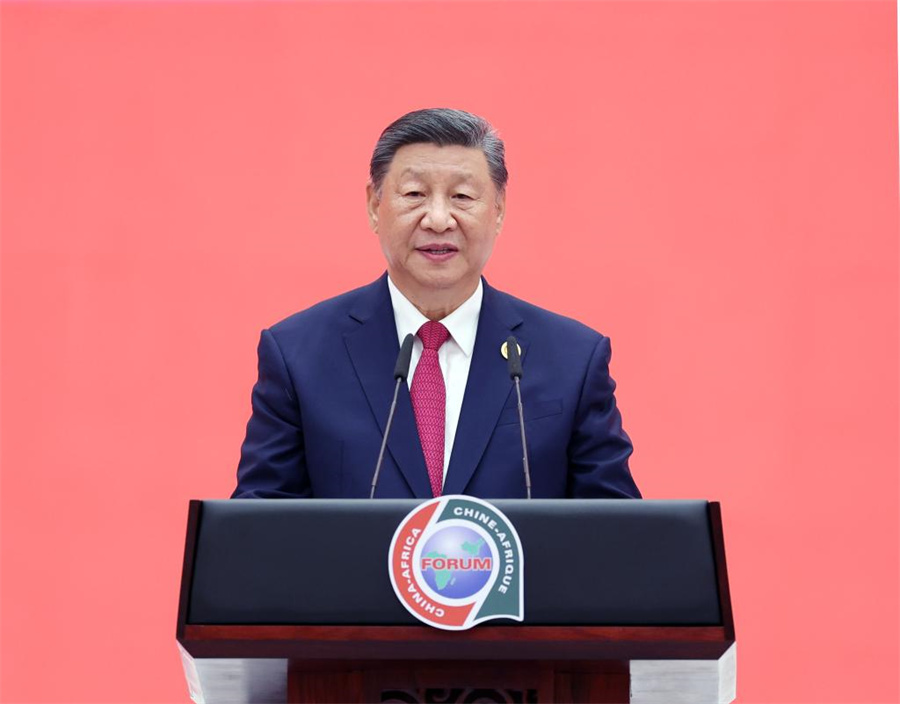
The speech by His Excellence Xi Jinping as the keynote address during the just concluded opening of the 9th FOCAC Ministerial Conference was timely. The contents came at a time when the world is in times fragile relations among countries. The globalization agenda in the early stages of the FOCAC’s formation were equally timely because it set a pace for the foundation of the recent FOCAC Ministerial Conference. As the practice, congratulatory remarks were delivered before recalling the lengthy but worthwhile journey thus far, for the member states. Of all said and done regarding the achievements, the migration to green technology and financing has been the greatest for attention. The world grapples with managing carbon emissions versus survival which is equally essential especially for industrial output much of which goes to domestic consumption.

Ultimately the major goal of the FOCAC was to enable a cross continent partnership but with it had to come great compromise. The Western model has for decades now been contested and formation of global partnership platforms like FOCAC come off as inevitable protest. Emphasis has always been on finding alternatives to the Western model which is one for mutual respect and benefits. In the keynote speech, China understands the balance required and it’s not a surprise that FOCAC membership has grown steadily over the years. The forecast is now enhancing partnership to more factors such as global security, peace and independence. Interesting, about 98% of the FOCAC members are former colonies for most Western world countries who have consistently come off as providing help and support, but with a tricky often unsaid but publicly known secret of underlying strings attached.

China understands that next FOCAC agenda is going to be a determining one because of the threats to thriving that have showcased themselves. Intermeddling at the highest stage of the United States has been reported overtime and most countries shun away from some resolutions because of the believed bias and prejudice in decision making. Then comes the IMF policies regarding funding and other such financial and political wings. Today, China and Africa are saying ‘No’ to some bully tendencies while aware of the prevailing consequences. Empowerment of all partner states versus the dependency syndrome was highlighted in many words of explanation, and it goes to show the cognizance of global affairs. FOCAC continues to seek scheme a way through global politics to reexamine state independence on the world center stage of diplomacy. As at the end of the 9th FOCAC Ministerial Conference, the deals and partnerships struck among the various partners were numerous and more will be reported as time passes compared to the Western model of winner takes it all.

The win-win value has constantly been noted as the most efficient and sustainable in the present world because of the enormous forces of independent thought and recall of histories that sparked antagonisms that accounted for great losses of life and livelihoods. For yet another historic time in FOCAC history, the globalization agenda has included Africa’s interests with the World Bank, the 2063 Africa Union agenda, the World Trade Organization interests, and others alike. Africa has persevered with challenges of connectivity and as resounding, the belt and road initiative is still ongoing, to complement AU’s 2063 agenda of modernization part of which looks at easing cross border cooperation, travel, and exchange of goods and services. Currently, there is still a challenge in realizing these because of (but not limited to) regional conflicts which in most cases have a blessing from Western powers. Regional destabilization of select countries’ internal politics is a tool that has been proved to be working in some colonies.

Because of the foregoing, a new entrant to extended attention is the partnership to security and peace. Xi Jinping’s China understands that there cannot be proper drivers of the modernization agenda and with a shared future with raging conflicts. Therefore, the next phase for FOCAC will be on high alert to possible ending of conflict in member states because that wouldn’t serve any achievement to the FOCAC resolutions. It is a beacon of hope for the people that live in FOCAC’s member states because they rank highest among the priorities of the 9th FOCAC Ministerial Conference. Shared cultures, tolerance for diversities, exploitation of science and technologies, exchange programs in education and pedagogy, enhancement of industrialization and trade, development in agriculture, peace and security, and green development.

As a highlight, the word partnership came up most times, and it is one of the most cited key words signaling the foundation and identity of the diplomacy being exhibited by China and Africa. There cannot be any doubt that what will be achieved in the next chapter will as shall be noted in the next FOCAC Ministerial Conference, be victory in achieving the action points of the adopted declaration of the 9th FOCAC Ministerial Conference.

The writer is a Senior Research Fellow at the Development Watch Center 

China-Africa Relations: An Agreement Built in Glue

By Salim Abila Asuman

Have you ever tried gluing two pieces of paper together that are reluctant to stick together, one hesitant to adhere and prefers to do lumps with the stickier paste? Welcome to the world of building agreements where it is not only about making the glue work, but it is equally important that it must last.

In this article, I explain how China builds agreements with its partners into impenetrable bonds which even the most tenacious of parties cannot tear asunder.

Irrefutably, China is the unsurpassed in international affairs when it comes to the building of agreements. In contrast, Western nations often seem to randomly slap glue on their agreements and then are shocked when their agreements fall apart.

But what is the secret of China regarding the durability of their engagements, while those of Western nations are so easily broken and dissolved?

What worked for China’s approach was applying glue to and on every edge so that each and every corner should stick before going to other pieces. Now, think of the Belt and Road Initiative; it is an all-inclusive Chinese agreement.

The BRI is much more than a high-level infrastructure development undertaking; rather, it constitutes a matrix of associations built upon strategic loans and technological handovers underpinned by long-term cooperation. Each contract in the BRI constitutes one that inscribes an exercise of patience, trenched and designed to benefit both China and its various partners. Such a tie binds them together in mutual embrace from which it is hard to break.

The looming question is why do this agreement last, while those with the West often fail? Look no farther, the answer is in the glue, on how it is applied, the intension of applying it and the strength of the connection it formulates. Agreements with China are based on mutual respect and long-term cooperation.

It is not just an effort to sign the agreements; the effort is in ensuring that it lasts. This itself explains why most of the countries that find themselves involved in the BRI often find themselves in relationships which remain intact even at the face of challenges. China does not walk away after the initial deal but always stays on, reinforcing the bond as needed.

The foundation of Uganda’s rise to progress heights is based on the Agreement on Economic and Technical Cooperation between Uganda and the People’s Republic of China, binding the affluences of Uganda and China together.

The effort is not just in signing the agreements but in the sustainability of those agreements. This perhaps explains why nations absorbed in the BRI often find themselves in ties that last longer than challenges. China does not walk away after the first contract; it stays around, reinforces, and reassures the relationship where needed I repeat.

It is on this premise, that the commitments in each agreement China reaches serve as a foothold to provide solid joint ventures, technology transfer, and capacity building. It is a result of such a setting that with each passing day, Uganda and China’s bond becomes stronger economically thus laying a sound footing for sustainable growth.

However, there is no climb without risks, hence the Uganda-China Bilateral Investment Treaty, or as it were called, the Investment Promotion and Protection Agreement serves as a join, making investments stable and secure. Like a knot tied with precision, this treaty ties the two nations into commitments for building confidence and resilience against the uncertainties of the market.

Compare this to the Western treaties, that so often feel like the equivalent of sticking two pieces of paper together with a cheap glue stick, there is a connection, sure, but it is flimsy and prone to peeling apart under pressure.

Take, for instance, the Paris Climate Agreement, hyped as some sort of grand achievement; in reality, it was not. Some Western countries, perhaps due to altered political affluences or economic compulsions, have rolled back on their commitments or fallen short of their targets. Here, the glue was too thin, put on in rapidity and without consideration for long-term implications.

So, why does this happen? It is because most of the treaties formed in the West stand based on very short-term gains or politicking rather than long-term workable partnership. They may appear firm on the surface, but often there are imbalances in conditions underneath which may favour the more powerful nation with limited regard for the lasting effect on the weaker party. These agreements, in the absence of reinforcement(s), begin to crack and fall apart when circumstances change.

Another reason is due to the absence of a follow-through. In many Western agreements the parties simply walk away once the ink is dry, assuming signing a document is enough to hold it. However, without consistent effort even the best intentions crumble.

China treats agreements as ongoing commitments. It will not refrain from applying more glue if needed; check in, adjust terms, and see that both sides are well glued, no doubt China-Africa Relations is built in glue.

The writer is a research fellow at the Development Watch Centre

Lessons for Africa from China’s development contradictions

By Ernest Jovan Talwana

China is one of the few countries which ruthlessly defined the kind of society they want to have, uninfluenced or forced by foreigners. The creation of a genuinely homegrown social system upon which to build the political economy was the foundation of China’s industrialisation.

The first lesson is that each nation needs to define its course of development, based on its own social characteristics. China chose the socialist relations of production, and they turned out better suited to spark the development of the productive forces in the country. Its experiment with socialist ideas led to an unparalleled speed of growth never known before in the old Chinese society, let alone in the world. Before the CCP assumed power and changed the course of China, the country was plagued by imperialism, feudalism and bureaucrat-capitalism. These systems of rule oversaw extremely slow production in the old China.

Chairman Mao Zedong argued that only socialism could save China. By work or luck, indeed the socialist system promoted the most rapid development of the productive forces of China, a fact undisputed even by Western countries which took hundreds of years to develop to levels that China surmounted in half a century.

Of course, China did not experience transformation as soon as they implemented socialist policies. There were several complaints faced by Mao’s government because large numbers of people led a very hard life. However, Chairman Mao always encouraged his 600 million citizens that the standard of living would improve with time, which it did. He explained that they slow growth of economy was fundamentally the imperialists and their agents had oppressed, exploited and impoverished China for over a century. He promised that China would need several decades of intensive efforts to raise the standard of living of its whole population, step by step. This explanation is relatable in Africa. Often, analysts describe African states as “failed,” forgetting that these are nations under construction, not grown states under destruction. Like China, Africa is curtailed by the enduring legacy of colonialism which still hinders its progress. Therefore, we also need strong leaders to define a new course for our states, to define our future on our own terms, and slowly lift our people out of poverty.

Mao Zedong also argued for the remoulding of Chinese business people and intellectuals, to refine their world outlook and adopt a thinking constructive for their country. This is a very significant undertaking for any country to develop. Western countries mould their elites through decades of ideological persuasion in schools and universities, to make them think in ways that serve Western interests. Unfortunately, in Africa, our elites also undertake Western education and gain the kind of epistemic instruction that inculcates into them Western biases that support Western markets at the expense of our domestic economies. This is a disease suffered by our highest-ranking leaders – presidents, ministers, permanent secretaries, central bank governors, etc. We need to inculcate ideas that promote our domestic interests, just like China did, if we are to develop.

Another front on which Mao’s ideas out performed was on education. Mao argued that China’s educational policy must enable everyone who gets an education, to develop morally, intellectually and physically and become a cultured, socialist-minded worker. He argued for spreading the idea of building China through hard work and thrift. That young Chinese people should understand that China was still a very poor country, and could not radically transform in a short time. He premised that only through the united efforts of the younger generation and all Chinese people working hard could the country be made strong and prosperous over a period of several decades.

One observes from this that Mao was a very patient man. He did not promise unrealistic dreams for his people like most African politicians do. He was a great strategist who analysed his nation’s prospects over the long term.

He observed the establishment of China’s socialist system had opened the road leading to the ideal state of the future, but warned that only through working hard, very hard indeed, would that ideal become a reality. He cautioned young people at the time to avoid thinking that everything ought to be perfect once a socialist society is established, noting that this would be unrealistic. Like Mao’s China, many African nations are burdened and stretched by the ambitions of young people who have unrealistic expectations from their governments.

Our governments lack the resource envelope to finance the aspirations of millions of youths, even if we did not suffer corruption. However, what made Mao’s China stable even under the affliction of youth aspirations was the leadership of Chairman Mao, which consistently encouraged youth to work to better their condition and not expect immediate socio-economic transformation.

The writer is a research fellow at the Development Watch Center.

9th FOCAC summit: A Further Demonstration of China’s commitment to Shared prosperity

By George Musiime

This year’s Forum on China Africa Cooperation (FoCAC) summit in Beijing further underscored China’s commitment to shared prosperity. This message  was driven home through the keynote address of president Xi Jinping at the opening of the FoCAC summit earlier this month. In his speech, president Xi emphasised multiple  key areas for China-Africa cooperation over the next three years. These included; agriculture, health, development and livelihood, green development, security et cetera. Moreover, all of these areas were in perfect alignment with the Africa’s aspiration of becoming a global powerhouse. And not just that, but also, they  tied in well with the African Union’s (AU) Agenda 2063.

Central to the agenda for China-Africa cooperation set at the 2024 FOCAC in Beijing was building on past achievements of  this friendship. China-Africa cooperation  has already been addressing strategic challenges on the continent  including infrastructure, industrialisation, food security, health, security etcetera. Moreover, many of these challenges have for long been bottlenecks in the continent’s pursuit of modernisation. Indeed these challenges needed addressing like yesterday. China through its cooperation with Africa   has thus become a trailblazer in giving this much needed attention to these Cinderella-continental challenges. Therefore, President Xi’s address  backed by China’s pledge of 360-billion-yuan in financial support was a sign of China’s commitment not only to driving shared prosperity but also building mutually beneficial and transformative China-Africa cooperation. Thus the agenda for China-Africa Cooperation set at the 2024 FOCAC is important not only because China and Africa account for one-third of the world’s population. It is also extremely important to Africa and particularly sub-Saharan Africa; a continent that is home to about 60% of global poverty.

Different scholars have tried to explain why China-African Cooperation has been on the rise over the years. Among them is  Gyude Moore, a fellow at the Centre for Global Development. He explains China’s growing foothold in Africa by juxtaposing the western view of Africa with that of China. He contends that whereas the west views Africa as a problem needing to be solved,  China perceived the continent as a place of enormous potential and opportunity. Hence, this and  an appreciation of Africa’s place on the global stage is what informs our dealings and forms the bedrock of China-Africa cooperation .

Conversely , he contrasts this view with  the Western view where Africa is seen as a problem needing a solution and a partner of lesser significance. This has also become a foundation for the preference of interference over intervention. It is this divergence of perception that he contends accounts for growing willingness by Africa to work with China. Even more important, China’s engagement with Africa is not  imposed on Africa. Instead it is  the outcome of aligned aspirations, interests and mutual friendship between the two partners. According to Mr. Moore, other than view Africa through a Rudyard Kipling lens of the “white man’s burden,”   China chooses to view Africa as an equal partner. Indeed, other than exploit the opportunity for unilateral gain, China also works towards a mutually beneficial partnership with Africa.

In his address at the FOCAC summit, president Xi committed to 100% no-tariff treatment to imports from 33 African countries. In light of mutually beneficial cooperation, there is no better display of reciprocity than this. This is a practical move towards turning China’s big market into Africa’s big opportunity. Indeed, it would  also positively impact on  Africa’s participation in global trade. Therefore commitments under the action for trade and prosperity present  huge prospects for Africa and make China the first to make such a commitment.

Relatedly, regarding the Global Security Initiative, the 9th FOCAC summit committed to partnership for common security. This is rooted deeply in China’s strong belief that common prosperity cannot occur in the absence of common peace and security. Indeed one of the major huddles on Africa’s road to progress has forever been peace  and security or the lack thereof. Realising the significant gains under the BRI cooperation, guaranteeing that progress has become top of our list of most important objectives.  In a world where security is a critical ingredient in development,  the commitment of one-billion yuan in military grants, training for 6000 army, and 1000 police and law enforcement officers and exchanges will help to build capacity for peace and  security on the continent. This will in turn fine-tune our capacity for modernisation as a continent.

Most importantly, we can not ignore the reality of  today’s world; the growing competition between the West and China. While this might seem to create options, it also creates a need for Africa to evaluate outcomes and potential for outcomes alike. A wise word from Xi Zhongxun during the reform period was that words alone will not help our people . This is something that President Xi and China understands  very well till today . Indeed there’s already visible and quantifiable benefits of China-Africa Cooperation all across the continent. Moreover the president’s keynote address made more than promises. It went as far as committing   funds for the different  action areas of China-Africa cooperation over the next 3 years.

Thus, from Africa looking inwards, president Xi Jinping’s keynote addressing at the 2024 was the blueprint for strengthening the thriving China Africa-friendship. It was Proof of how seriously china takes it cooperation with Africa. This agenda for China-Africa Cooperation will be the bridge that brings us yet another step closer to a modernised Africa, our aspirations as a continent and a better and more beneficial China-Africa.

The writer is a research fellow at the Sino-Uganda Research Centre

Speak and Place: Where Does President Xi Jinping’s Speech at the 2024 FOCAC Summit Put Africa?

By Ssemanda Abdurahim

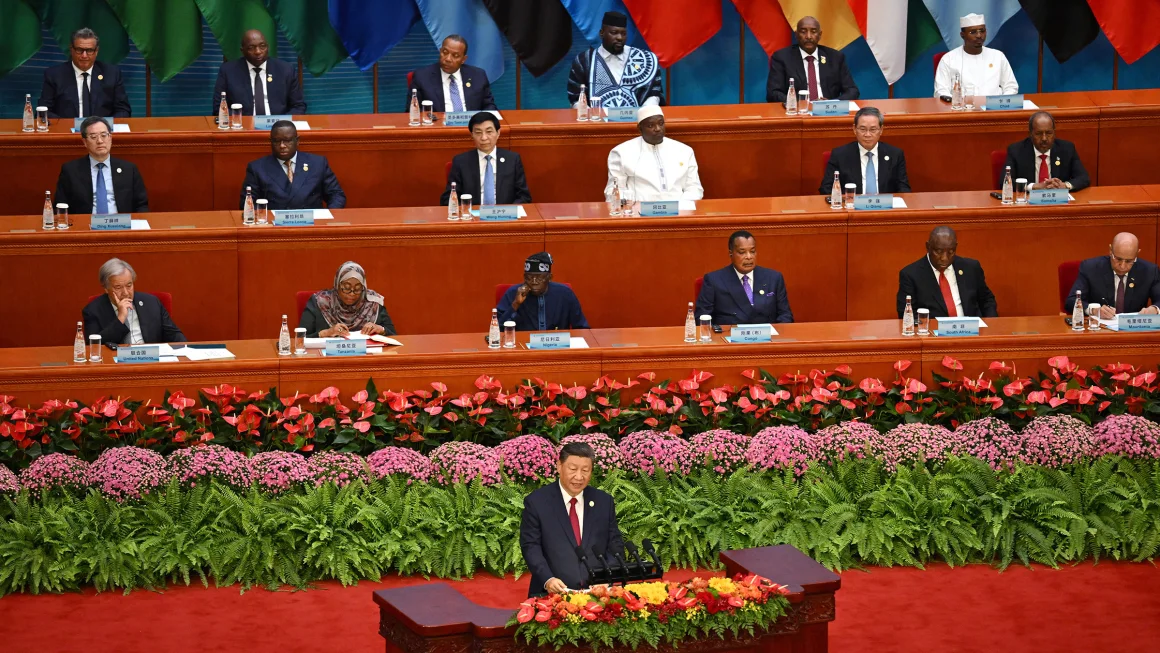
In his book, Moral Grandeur and Spiritual Audacity, Abraham Joshua Heschel remarks that “Words Create Worlds.” By far to moralists, this is not a fallacy. When we speak, we create, and in our creations, we place or put something new somewhere in a place. As a result, it is indisputable that President Xi Jinping’s speech at the Forum on China-Africa Cooperation (FOCAC) summit held in Beijing on 5th September 2024, has a huge implication on Africa and it clearly points out his position and Africa’s position in FOCAC. In this article therefore, I am going to analyse what it actually means for Africa to be in this cooperation and where the cooperation places Africa in relation to President Xi’s speech.

In his keynote address,  the President of the People’s Republic of China remarked that; “as we are about to celebrate the 75th anniversary of the People’s Republic of China, we are going all out to build a great modern socialist country in all respects and pursue national rejuvenation through a Chinese path to modernization. Africa is also awakening again, and the continent is marching in solid strides toward the modernization goals set forth in the AU’s Agenda 2063.” By reference to AU’s Agenda 2063, it clearly indicates that China is purely cognisant of the goals set by Africans in order to achieve development for Africans. This therefore tells us that China willingness to work with African countries to realise their potential is genuine and purely driven by China’s wish to support building a community of shared future for mankind. It means, as a former colony which like African countries suffered injustices of colonial masters, China just chips in to help African countries realise their development goals. Thus, Beijing doesn’t do it by interfering in African affairs but rather, shared developmental ideas, at times funds and leaving final decisions to be taken by African governments.

By this, President Xi clearly indicates that amity, and respect for each other,  is a core value in the cooperation between China and Africa. He shows us that even when there is a need to adopt the means of development just as the Chinese Path to Modernity, it should be an incorporation and blending of African thoughts alongside Chinese thoughts. Put differently, China respects the decisions of African governments, their rights and values. For such, indeed it is an ideal cooperation that Africa has lacked.

With this approach, China excels as the best country ever to cooperate with Africa as far as development is concerned. This is simply because, it makes China to perfectly fit in the analogy of a good curriculum developer who has thoroughly understood what is the problem (The problem or need for Africa), who is facing the problem (Characteristics and the needs of Africans), the intended outcomes or what will the Africans be able to do, the important and relevant means, and ways or methods through which the desired goals can be achieved. Whereas one might argue that China will not do different things to help Africa achieve modernisation and development, another one can argue that it is differently doing those obvious things like funding projects. However, Africa’s problem has always been who it cooperates with. Most of the countries especially those in the West have failed to understand and respect Africa’s and the demands of Africans. However, President Xi’s speech signals a lot of awareness and respect for Africa as far as this cooperation is concerned.

For instance, in a move to promote modernisation, President Xi argued that; We should jointly advance modernisation that is just and equitable. In promoting modernisation, we should not only follow the general rules, but also act in light of our national realities. China is ready to increase exchanges of governance experience with Africa, support all countries in exploring modernisation paths befitting their national conditions, and help ensure equal rights and equal opportunities for all countries. His choice of words clearly indicates that Africa will not be thought and decided for but rather, decisions of modernising Africa shall come on a round table. By this, problems of some powers pretending to know us (Africans) better than we know ourselves shall be solved with the shift to China.

Furthermore, President Xi called for the advancement of modernisation that puts the people first. In this call, he remarked that the ultimate goal of modernisation is the free and full development of human beings. He talked about how China would work vigorously with Africa to promote personnel training, poverty reduction and employment, focused on enhancing the sense of gain, happiness and security of the people in the course of modernisation, and ensure that all will benefit from the process. The concept of personnel training alone shows how China aims at training the Africans to catch the fish themselves rather than giving them the fish. This predictably signals a country with which Africa is cooperating that aims at equipping people with skills of sustaining themselves rather than relying on foreign help and support. To any careful observer, one can clearly see that China is helping Africans to realize that it is possible to stand alone without depending on other powers, especially those we look at as developed countries. This is an idea that the West cannot stand doing for Africans.


The visionary President of China further remarked that China and Africa account for one-third of the world population. Without our modernization, there will be no global modernization. In the next three years, China will work with Africa to take the following ten partnership actions for modernization to deepen China-Africa cooperation and spearhead the Global South modernization. Any person who would have a reason to doubt China’s authenticity as far as cooperating with Africa is concerned now has all the reasons to believe that China is the right country to cooperate with. The president stressed issues that are meant to help the cooperation stand for centuries ahead rather than being focused on how the cooperation would benefit China.

In conclusion, President Xi’s speech clearly places Africa at the forefront of development and clearly reassures Africa that it has got a genuine escort on her journey to development. President Xi’s frequent use of the first person plural pronoun (we) also vividly shows that Africa has got a companion and a brother who understands Africa’s challenges and is willing to help her sail through. The speech emphasizes harmonious cooperation full of respect for culture and values of Africa and its people with harmony being a central pillar in achieving the desired goals.

Ssemanda Abdurahim is a research fellow at the Sino-Uganda Research Centre


FOCAC: Understanding China-Africa Areas of Cooperation

By Ernest Jovan Talwana

The Forum on China–Africa Cooperation (FOCAC) is the official multi-lateral cooperation mechanism within the Belt and Road Initiative (BRI) between several African countries and China. Each FOCAC summit usually results in a three-year action plan, with activities agreed on to be implemented bilaterally between China and individual African Countries and with China pledging support for African countries in several areas of cooperation. Let’s understand the various sectors of cooperation encompassed in this year’s summit, which happened on Wednesday, Sep 4, 2024 – Friday, Sep 6, 2024.

Differently put, one may wonder what is in it for Africa? African countries have various individual and collective development goals which they pursue when they go to the FOCAC meetings. This year, those goals are encapsulated in a number of highlighted commitments between China and African nations to realize mutual cooperation, economic growth and sustainable development. These areas include Mutual learning among civilisations; Trade prosperity; Industrial chain cooperation; Connectivity; Development cooperation; Health; Agriculture and livelihoods; People-to-people exchanges; Green development and lastly Common security.

FOCAC is a critical platform for China-Africa cooperation because of its unique consideration for supporting the Global South’s priorities. In this, it offers an alternative to the restrictive, arrogant, talk-down kinds of aid dependency that African states had endured for decades under the patronage of Western-Bretton Woods institutions like the International Monetary Fund and World Bank. With FOCAC, African leaders can now negotiate mutually beneficial agreements with China in a manner never precedented in history.

Cooperating on common security

No development can happen in a state of insecurity. African countries have been tied back from the course of development because many spend great attention, resources and time while fighting civil wars, terrorism and against Western imperialism. This state of chronic insecurity affects their ability to concentrate on infrastructural development and modernisation while the rest of the world is advancing. China under FOCAC promised to give Africa $140.5M in military assistance. Additionally, Comrade Xi Jinping committed to having training programs, and joint military exercises to create a “mine-free Africa” in order to the safety of people working on developmental infrastructure projects. This is a solid guarantee of peace and security to Africa to set off on its modernisation agendas.

Deepening Industrial Cooperation

Development cannot happen without industrialisation. African economies are currently largely importers of foreign goods which leads to a haemophilic drainage of their foreign reserves due to spending the little they have on buying external goods. To end this parasitic bleeding of African economies, China will support the construction of industrial clusters in Africa to empower Africans to engineer their own products and become industrially self-reliant. It also promised to build a technology cooperation center with 20 digital demonstration projects in Africa.

Providing opportunities for Trade prosperity

About 33 African countries stand to gain from China’s zero-tariff policy. This is good because many less developed countries especially in Africa lack sufficient capacity to trade with rich countries like China due to tariff barriers. Therefore, a zero-tariff policy will not only open China’s market further but also create an opportunity for African states to sell to the Chinese huge market.

Supporting Connectivity

China is already Africa’s biggest infrastructural development financer. Over 100,000 kilometres of road networks and expressways have been built in Africa with Chinese support in order to have connectivity. Additionally, bridges, hydropower dams, railway lines and ports have been built in China. To this, the FOCACsummit came with more promises by China to work on 30 infrastructure projects in Africa. This will further deepen our mutual Belt and Road Initiative (BRI) cooperation.

Cooperating in building robust Public Health

Africa is highly a disease-ridden continent, which puts a heavy burden on our national budgets and eats away at our developmental budget. Poor public health systems also render millions of Africans an economically unproductive constituency of their governments, while at the same time collapsing the public wallet because of the health expenditures. China will build more hospitals under the China-Africa hospital alliance to provide health care to Africans. It will also support us with over 2,000 medical personnel in addition to investing in Africa’s pharmaceutical production. This will go a long way in strengthening public health systems on the continent.

Promoting Agriculture and improving livelihoods

China promises financial support in food assistance as well as building agricultural demonstration areas and sending experts and creating jobs through joint ventures with African entrepreneurs. Some of these projects are already running, and Uganda is one of the exemplary beneficiaries with a robust rice farming scheme supported by China in Butalejja district.

Cooperating on Green development

As the world weans itself off of crude oil due to its deleterious effect on the climate, China is poised to implement 30 clean energy projects in Africa and also support the protection of our rich biodiversity. FOCAC also earned us cooperation on nuclear technology and space exploration, fields which are key to our energy needs and communication.

Promoting People-to-people exchanges

China promised to enable the growth of vocational education in Africa by offering training opportunities for our youth to learn hands-on skills they can use to build industrial products. This is a very constructive area of collaboration since it is where Chinese excellence is – in a large population of skilled people with hands-on capabilities.

In conclusion, there are a lot of opportunities that we look forward to harness from the concluded FOCAC summit. Many commitments and promises were made. It is now time for work to utilise the goodwill China has shown us over the years. Our previous dealings with China have proved that it is a reliable development partner which is keen on real results and practical cooperation. As such, its promises can be banked on.

The writer is a research fellow at the Sino-Uganda Research Center.


By Mpewo Alan Collins

The just concluded Forum on China-Africa Cooperation (FOCAC) gave a new picture of how we should view FOCAC. The conference laid a groundwork for the just concluded 2024 FOCAC Beijing summit attracted foreign and economic ministers from 53 African member countries, and representatives of the African Union and other regional and international organizations were among more than 300 attendees of the meeting.

This conference has held a long standing life since the year 2000, when it came to life. The partner states meet in the FOCAC conference after every 3 years of holding a similar gathering, a tradition until now, that has been maintained registering this year’s as the 9th FOCAC Ministerial Conference.

Because of the growing changes in the international relations environment, China and Africa Continent countries but Eswatini found it fitting in their wisdom to come up with the idea of a coalition where they would keep looking out for the best for their citizens while enhancing multi border cooperation. The FOCAC bases on two major standing values to wit, ‘Mutual Respect’ and ‘Mutual Benefit’. It goes without saying that succeeding the relations among major superpowers of the mid and late 1990’s, China and Africa appreciate a change in direction as regards international cooperation to which, the FOCAC was birthed as a pilot idea, interesting enough, that today its profile of successes and ideals are becoming a model for China’s and Africa’s rivals to emulate.

As all good things, the FOCAC has over the years registered new states joining to also take part in the benefits that come with association. The 9th FOCAC Ministerial Conference is under the theme ‘Joining Hands to Advance Modernization and Build a High-Level China-Africa Community with a Shared Future’. As before, the focus is to build more for the future having significantly realized the 8th FOCAC Ministerial Conference action points. The attention is therefore on extensive focus on modernization as by all standards should be.

But amidst the events that occasioned the success of the conference, the greatest attention snatcher was the Beijing Declaration on Jointly Building an All-Weather China-Africa Community with a Shared Future for the New Era. The declaration was adopted by attendant FOCAC members, and the letter and spirit of each declaration clause gets interesting as to what it speaks to. Three key extracts being international security and human rights; science; and sustainable globalization. In this the African Union and United Nations agendas have been factored in. China has resounded its commitment to an Africa that’s empowered to ending Western power financial trapping into unconscionable interest loans and extended solidarity for the 2026 World Trade Organization conference that will take place on the African continent. The financial independence that understands the balance in negotiation for a win-win situation has never been neglected, and as sustainable globalization became something of concern, the FOCAC members are continuously focusing on materializing it.

These commitments and more come at a time of a fragile international environment (economically and socio-politically) to which major superpowers keep finding their way to a strategic position of leading the apex. Many global powers have made their work plan known over and over again, locking arms topping the list, the consequences of which are forever regrettable. China has maintained course for partnerships with every possible global member and it doesn’t come off as shocking that it is a leading economic superpower in recent decades. Africa stands strategically in the global agenda especially on major subjects such as climate change, global industrialization, and maintaining economic dominance. It is of less wonder therefore that major superpowers keep finding ways of penetrating the continent, but telling enough, is the modus operandi.

Africa member states have a trigger to leverage on now that the First Ten Year Implementation Plan of Agenda 2063 was implemented. The Second Ten Year plan having been launched, the implementation phase is going to detailing because of the much work that will be required by the members. Green financing is something the FOCAC members should look closely to especially in the extensive Belt and Road Initiative program to account for their contribution to the Paris Agreement net zero agenda. Now than before, the FOCAC members are more resolute partly because the 9th FOCAC Ministerial Conference came succeeding major events like the Non-Allied Members Conference where equally important pillars of global security and human rights were a topic of importance.

The economy wheel has maintained Its face but with rejuvenation on the conversation of deeper penetration of markets in China. China has without a doubt extended its influence in industrialization and product accessibility in the African markets, but what has been a constant struggle was the reciprocal ease in accessing some markets by Africa FOCAC Members. With the recent opening of imports and tariff policies by China to their economic partners, it is going to be up to the Africa FOCAC members to take advantage of China’s commitment to share technology and science so as to lessen gaps in Africa’s industrialization. Empowerment will have to remain a pillar of the cooperation to enable independence in running of affairs. Africa FOCAC Members have grappled with imbalances in financial cooperation from external powers who see them as a cash cow, but the storyline has kept drifting to one of a shared future – Trade and Commerce, Global Climate Change, Science and Technology, International Human Rights and Diplomacy, Infrastructure Partnership, Cultural and Traditional exchanges and learning, Education, and more multi phased into a singular composite. The watch remains focused to the next phase before the 10th FOCAC Ministerial Conference.

 The writer is a Senior Research Fellow and Lawyer,at the  Development Watch Center.

FOCAC 2024: Xi’s Speech Attests to China’s Commitment to a Community of Common Prosperity and a Shared Future

By  Allawi Ssemanda

Dear Editor, on Thursday, September 5, 2024, Chinese President Xi Jinping delivered a 10-minute keynote address at the opening ceremony of the Forum on China-Africa Cooperation (FOCAC) summit in Beijing, China. In the address entitled; “Joining Hands to Advance Modernization and Build a Community with a Shared Future,” President Xi explained that “the friendship between China and Africa transcends time and space, surmounts mountains and oceans, and passes down through generations,” and pledged China would support African countries’ endeavours in different sectors with approximately $50.70 billion.

Explaining the 24 years of the FOCAC, Xi emphasized that “China has advanced forward hand in hand with our African brothers and sisters in the spirit of sincerity, real results, amity and good faith…” He explained that China and African countries “…stand shoulder to shoulder with each other to firmly defend our legitimate rights and interests as once-in-a-century changes sweep across the world.” This he emphasized is making the two sides “stronger and more resilient together by riding the tide of economic globalization, delivering tangible benefits to billions of ordinary Chinese and Africans.”

Explaining that “modernization is an inalienable right of all countries,” Xi regretted that “the Western approach to it has inflicted immense sufferings on developing countries.” He pledged China will continue working with African countries and support the continent’s development efforts as laid out in the African Union’s Agenda 2063, which he noted will accelerate the Global South’s transformation. Explaining that “China and Africa account for one-third of the world population, Xi observed that “without our modernization, there will be no global modernization.” He thus pledged that “China is ready to deepen cooperation with Africa in industry, agriculture, infrastructure, trade and investment.”

To be specific, President Xi pledged, “In the next three years, China will work with Africa to take the following ten partnership actions for modernization to deepen China-Africa cooperation and spearhead the Global South modernization.” The ten partnership actions will focus on; Mutual Learning among Civilizations, Trade Prosperity, Industrial Chain Cooperation, Partnership Action for Connectivity, Development Cooperation, Health sector cooperation, and supporting African countries’ Agriculture and Livelihoods. The others are; supporting People-to-People Exchanges, Green Development, and the Partnership Action for Common Security.

When critically analyzed, the ten areas President Xi mentioned that China would work with African areas “deepen China-Africa cooperation and spearhead modernization,” if implemented, will not only reignite Africa’s economic growth but also drive sustainable development.

For example, President Xi listed Partnership Action for Connectivity; specifically, noting that “China is prepared to carry out 30 infrastructure connectivity projects in Africa, promote together high-quality Belt and Road cooperation, and put in place a China-Africa network featuring land-sea links and coordinated development.” China’s offer to further support Africa’s infrastructural development is a welcome move as the continent is still faced with a shortage of funding in this critical sector. He also mentioned Partnership Action for Green Development stressing that “China is ready to launch 30 clean energy projects in Africa, create a China-Africa forum on peaceful use of nuclear technology…” Put differently, Xi promised to cooperate with the continent on nuclear technology which will tackle a power deficit which has been cited as one of the major challenges delaying Africa’s industrialization efforts. A study by the WB titled “Why we need to close the infrastructure gap in sub-Saharan Africa,” underscores this, stressing that infrastructure funding gaps are hindrances to Africa’s economic take-off. The African Development Bank (ADB) notes that to reduce the continent’s infrastructure funding gaps, Africa needs a of budget $130-$170 billion annually. Therefore, China’s support in such a sector is spot-on.

On the Partnership action for development cooperation, and the partnership action for agriculture and livelihoods, President Xi pledged China’s readiness to “implement 1,000 “small and beautiful” livelihood projects. “China will provide Africa with RMB1 billion yuan (approximately $140 million) in emergency food assistance, build 100,000 projects of standardized agriculture demonstration areas in Africa,” stressed President Xi. These programs if implemented will help the continent in addressing key challenges. It is important to note that China has already been supporting livelihood programs in several African countries, Uganda inclusive. For instance, under the arrangement of the South-South Cooperation (SSC) project between China, Uganda and the Food and Agriculture Organization of the United Nations (FAO), China has injected over 30 million USD is Uganda’s agriculture sector and livelihood programs.

On the Partnership Action for Trade Prosperity, Xi promised to ensure trade between the two sides improves, stressing that “China will voluntarily and unilaterally open its market wider. We have decided to give all LDCs having diplomatic relations with China, including 33 countries in Africa, zero-tariff treatment for 100 per cent tariff lines.” This in many ways will continue to support the continent’s social and economic development. Already, China for the last 15 years has been Africa’s largest trading partner. As of the end of 2023, the trade volume between China and Africa reached 282.1 billion USD.

President Xi further proposed to African leaders that “bilateral relations between China and all African countries having diplomatic ties with China be elevated to the level of strategic relations, and that the overall characterization of China-Africa relations be elevated to an all-weather China-Africa community with a shared future for the new era.”

In conclusion, looking at China’s record of fulfilling its pledges, there is no doubt Beijing sees African countries as partners and the cooperation between the two is indeed guided by principles of mutual respect, real results and win-win cooperation. Therefore, as President Xi noted, China and Africa should rally their populations together to become a “powerful force” and write a “new chapter in peace, prosperity and progress.” This is a sure way for Africa to realize her development goals.

Dr. Allawi Ssemanda is a Senior Research Fellow at the Development Watch Centre.