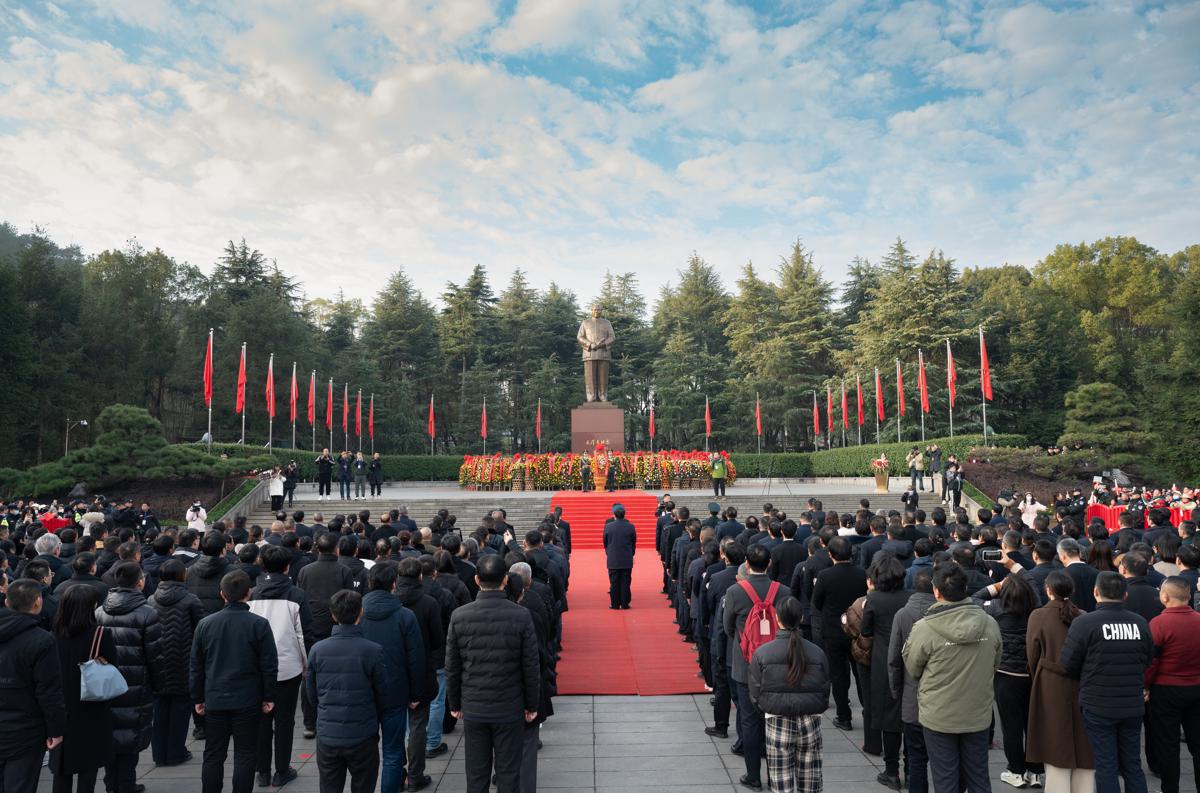
The Paradox of Mao’s Legacy: How Revolutionary Flexibility Shaped China’s Economic Miracle

Different political scientists have argued that the market reforms implemented in China, which explain its great economic success today, were engineered and inherited from Mao Zedong’s theory and practice in guerrilla tactics, which premise flexibility as a key strategy in any exercise. I want to share my thoughts on this idea and argue against the common assertion that Mao was a disaster for China, and that only post-Mao leaders take credit for the country’s economic transformation. I would like to read the Chinese economy as one punctuated by the characteristics of pragmatism, flexibility, experimentation, and adaptability. And these characteristics, I posit, are deeply founded in Mao’s leadership norms as a guerrilla fighter and revolutionary.

During Mao Zedong’s leadership, he faced mainly two opponents – the Nationalists and the Japanese invaders. To defeat them, he employed guerrilla tactics to overcome the overwhelming odds, and thus he had to fight flexibly, improvise for his weaknesses, and adapt to local conditions in order to survive. These practices were embedded in the Chinese Communist Party’s (CCP) organisational culture and survived Mao, thereby finding new applicability when post-Mao CCP leaders embarked on economic reforms. China’s transformation was never inevitable. It is possible that without the influence of Mao’s ideas, CCP leaders might have insisted on the rigidity of Soviet-style central planning, which would have stunted China’s economy longer and further. But to adopt the constant experimentation of what works and flexibly abandoning what didn’t, they managed to spur growth.

It is not fair to judge Mao only based on the catastrophe of the Great Leap Forward and the Cultural Revolution. His legacy was wider than that. And his failures inherently initiated positive outcomes because they made way for pragmatism, flexibility and adaptation. Mao had preceded Deng Xiaoping in pragmatism because he had deviated from the dogmatic application of Marxist-Leninist economic prescription. Therefore, when, in highlighting China’s shift towards result-oriented governance, Deng famously adage(d) in the 1970s that “It doesn’t matter whether a cat is black or white, as long as it catches mice,” he was walking in the footsteps and echoing the voice of Mao. The market reforms that Deng and other post-Mao leaders implemented germinated out of soils tilled and mulched by Mao’s institutional and ideological legacy.

Under Mao, the CCP had to navigate delicate and complex challenges. They faced external threats from the West, dealt with excruciating internal conflicts, got sunk into economic crises, but surmounted them all. It was the resilience acquired in these turbulent times that allowed the flexibility of change that saw the CCP dismiss Mao’s collectivist policies and embark on freer market reforms. Moreover, the framework of ideology and rhetoric that reformers applied to maintain and continue the socialist revolution in China was critical to Mao’s legacy.

Mao’s ideas and practices as a guerrilla can also be traced in the establishment of Special Economic Zones (SEZs) in the 1980s. One can see the tactics of experiment, flexibility and adaptability in the way the SEZs were operated, with cities like Shenzhen working as laboratories in which foreign investments were tested, private enterprises were nursed, and export-led growth was first risked before it was scaled nationwide. This is how economic instability was avoided and instead poverty was reduced, GDP growth was sustained, and China was able to integrate into the world economy without incident. It is not difficult to see consistency in how Mao attempted to industrialise China’s rural areas during the Great Leap Forward with the model of SEZs, which experimented with localised economic reforms, although with the necessary modifications.

We should not fail to analyse the paradox of Mao Zedong’s complex legacy because of his weaknesses and mistakes. History is more complex than that. It is highly possible that the mistakes of a leader play a critical role in the success of her or his successor. And when this happens, one cannot distinguish or remove the “mistakes” from the “success.” This is true of Mao’s legacy. It is hard to imagine the economic success and political resilience of China without the foundation laid by Mao’s ideas and practices, even those judged by history as disastrous failures.

The writer is a senior research fellow at the Development Watch Center.

Lessons for Africa from China’s development contradictions

By Ernest Jovan Talwana

China is one of the few countries which ruthlessly defined the kind of society they want to have, uninfluenced or forced by foreigners. The creation of a genuinely homegrown social system upon which to build the political economy was the foundation of China’s industrialisation.

The first lesson is that each nation needs to define its course of development, based on its own social characteristics. China chose the socialist relations of production, and they turned out better suited to spark the development of the productive forces in the country. Its experiment with socialist ideas led to an unparalleled speed of growth never known before in the old Chinese society, let alone in the world. Before the CCP assumed power and changed the course of China, the country was plagued by imperialism, feudalism and bureaucrat-capitalism. These systems of rule oversaw extremely slow production in the old China.

Chairman Mao Zedong argued that only socialism could save China. By work or luck, indeed the socialist system promoted the most rapid development of the productive forces of China, a fact undisputed even by Western countries which took hundreds of years to develop to levels that China surmounted in half a century.

Of course, China did not experience transformation as soon as they implemented socialist policies. There were several complaints faced by Mao’s government because large numbers of people led a very hard life. However, Chairman Mao always encouraged his 600 million citizens that the standard of living would improve with time, which it did. He explained that they slow growth of economy was fundamentally the imperialists and their agents had oppressed, exploited and impoverished China for over a century. He promised that China would need several decades of intensive efforts to raise the standard of living of its whole population, step by step. This explanation is relatable in Africa. Often, analysts describe African states as “failed,” forgetting that these are nations under construction, not grown states under destruction. Like China, Africa is curtailed by the enduring legacy of colonialism which still hinders its progress. Therefore, we also need strong leaders to define a new course for our states, to define our future on our own terms, and slowly lift our people out of poverty.

Mao Zedong also argued for the remoulding of Chinese business people and intellectuals, to refine their world outlook and adopt a thinking constructive for their country. This is a very significant undertaking for any country to develop. Western countries mould their elites through decades of ideological persuasion in schools and universities, to make them think in ways that serve Western interests. Unfortunately, in Africa, our elites also undertake Western education and gain the kind of epistemic instruction that inculcates into them Western biases that support Western markets at the expense of our domestic economies. This is a disease suffered by our highest-ranking leaders – presidents, ministers, permanent secretaries, central bank governors, etc. We need to inculcate ideas that promote our domestic interests, just like China did, if we are to develop.

Another front on which Mao’s ideas out performed was on education. Mao argued that China’s educational policy must enable everyone who gets an education, to develop morally, intellectually and physically and become a cultured, socialist-minded worker. He argued for spreading the idea of building China through hard work and thrift. That young Chinese people should understand that China was still a very poor country, and could not radically transform in a short time. He premised that only through the united efforts of the younger generation and all Chinese people working hard could the country be made strong and prosperous over a period of several decades.

One observes from this that Mao was a very patient man. He did not promise unrealistic dreams for his people like most African politicians do. He was a great strategist who analysed his nation’s prospects over the long term.

He observed the establishment of China’s socialist system had opened the road leading to the ideal state of the future, but warned that only through working hard, very hard indeed, would that ideal become a reality. He cautioned young people at the time to avoid thinking that everything ought to be perfect once a socialist society is established, noting that this would be unrealistic. Like Mao’s China, many African nations are burdened and stretched by the ambitions of young people who have unrealistic expectations from their governments.

Our governments lack the resource envelope to finance the aspirations of millions of youths, even if we did not suffer corruption. However, what made Mao’s China stable even under the affliction of youth aspirations was the leadership of Chairman Mao, which consistently encouraged youth to work to better their condition and not expect immediate socio-economic transformation.

The writer is a research fellow at the Development Watch Center.
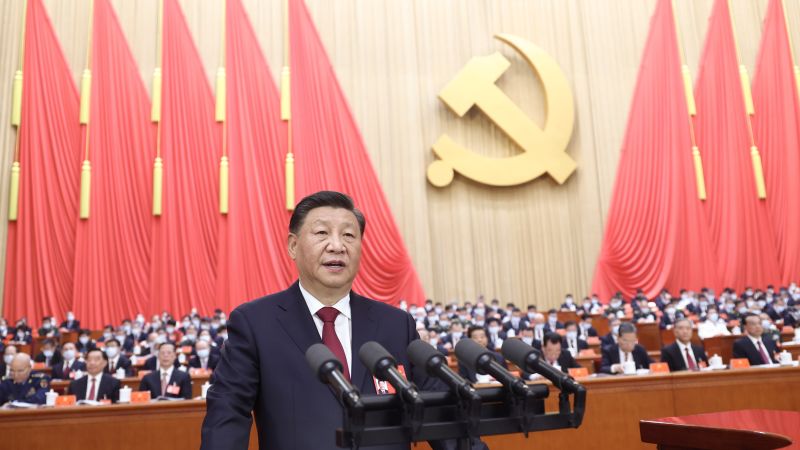
China’s Path to Modernization and its Implications for Uganda and Global South By Moshi Israel

In a 2021 speech marking the CPCs centenary, President Xi Jinping declared; “Through the continued efforts of the whole Party and the entire nation, we have realized the First Centenary Goal of building a moderately prosperous society in all respects. This means that we have brought about a historic resolution to the problem of absolute poverty in China, and we are now marching in confident strides towards the Second Centenary Goal, building China into a great modern socialist country in all respects.”

While addressing media and Ugandan Think Tanks during a Symposium on the Implications of the 20th National Congress of the Communist Party of China (CPC) themed by “Forge Ahead on the New Journey and Work Together for A New Era,” at Chinese Embassy in Uganda, Chinese Ambassador to Uganda, Zhang Lizhong stressed that China’s development path will see China match towards Beijing dream of realizing the Second Centenary Goal and see China advancing into a more modern socialist country. Stressing that the recently concluded CPC National Congress “established the core position of General Secretary Xi Jinping in the Central Committee and the whole Party, laying a solid political foundation for striving for the great success of socialism with Chinese characteristics for a new era,” Ambassador Lizhong expressed confidence China is on right track with its development path.

China’s path to modernization is one rooted in centuries of exploration. Like all journeys, it is not a straight forward path but a long winding curve, a learning curve. China’s path to modernization holds key implications for developing countries around the world, and in this context, Uganda and arguably, many countries in the global south.To understand the path to modernization from a Chinese perspective, going back in time is a necessary step.

During the Qing dynasty (1644-1912), China was a weak Imperial state with rampant civic corrupt infrastructure. The weak Qing empire was reduced to a semi-colonial, semi-feudal society following the opium war of 1840s. China had to endure what came to be known as a century of humiliation as foreign powers ran amok and exploited the Chinese people. The calamities befalling China in this era spurred many people to seek new ways to strengthen and unite a weak China and change their trajectory through development and modernization. The building blocks for a strong independent China started forming in the minds of Chinese people during this tumultuous period.

Fast forward to the 20th century which saw the rise of China’s Communist Party (CCP). China underwent a communist revolution in 1949 that ushered in the birth of the People’s Republic of China (PRC) which subsequently came with a fresh and more determined commitment to modernization. Under the CCP, China has set a clear path to modernization and has made significant strides. In a report delivered by CPC’s Secretary General who is also Chinese President Xi Jinping on the opening ceremony of the 20th CPC National Congress, he reiterated the central purpose of the CPC stressing that; “from this day forward, the central task of the CPC will be to lead the Chinese people of all ethnic groups in a concerted effort to realize the Second Centenary Goal of building China into a great modern socialist country in all respects and to advance the rejuvenation of the Chinese nation on all fronts through a Chinese path to modernization.”

The Chinese model of modernization is similar in some respects to other processes of modernization. However, it is unique in the fact that China pursues modernization with Chinese characteristics. This is important to note for a country like Uganda because it emphasizes the idea of considering national realities while addressing national challenges. China’s model presents an alternative path different from the western world. For many decades, developing countries have applied western generated solutions to their economic, social and political problems and have acquired little to no success. Many times, these solutions such as the Structural Adjustment Programs (SAPs) recommended by the International Monetary Fund (IMF) and the World Bank have outrightly failed. As president Xi, put it, China’s model offers a new direction of modernization.

China’s path to modernization is especially remarkable given the fact that it had to lift billions of its citizens out of absolute poverty. This has had a broad and worldwide impact and has greatly contributed to the cause of human progress.

Furthermore, China’s modernization model it involves material and cultural-ethical advancement and harmony between humanity and nature. The planet is currently facing an existential climate crisis and China wants to lead the way in combating the challenge. China’s commitment to environmental action is not mere words. The country is actively involved in Global Environmental Governance and International Cooperation. China has promised to peak its carbon emissions before 2030 and achieve carbon neutrality before 2060.

Within China, the CPC seeks to adopt new initiatives as indicated by Mr. Han Wenxiu (Official with the CCP Central Committee for Financial and Economic Affairs) to narrow the gap between different regions, rural and urban areas and different income groups. On the world stage, China seeks peaceful development. It supports a world order based on addressing the world’s crises. To China, a multipolar world based on mutual respect and cooperation is an ideal one. The message is simple, a strong China means a better world.

At some point before the founding of the PRC, China tried to achieve modernization through generating material wealth, carrying out institutional reform and trying to copy western development models without success. Instead of running around in circles, the CPC led China on a new path. During the First Session of the Third National People’s Congress, from 21 December 1964 to 4 January 1965, then Premier Zhou Enlai emphasized the importance of turning China into a strong socialist country through the modernization of agriculture, industry, national defense, and science and technology. It wasn’t until 1978, that China paved the way for its reform and opening up through a landmark event of the Third Plenary Session of the 11th CCP Central Committee.

The CCP used a three- step development strategy for China’s modernization. The first step was to double the 1980 GNP and ensure the people had enough food and clothing. That objective had been attained by the late 1980s. The second step was to quadruple the 1980 GNP by the end of the 20th century. This was achieved in 1995, ahead of time. The third step, is to increase the per capita GNP to the level of medium-developed countries by the mid-21st century. At which point, the people will be well off and modernization achieved.

To a developing country like Uganda, China’s path to modernization serves as a blueprint. Uganda has the opportunity to learn from both the west and China and then choose the most suitable path to realizing her own modernization with Ugandan characteristics. The drive to achieve this goal must be people centered with the aim of achieving prosperity for all. China’s path shows that there is hope and much has to be done. These words of president Xi, at the end of this year’s report to the 20th National congress of the CPC should be the unanimous battle cry of every leader in the developing world and particularly ruling political parties’ world-over; “Let us keep in mind that empty talk will do nothing for our country; only solid work will make it flourish. Let us maintain firm confidence, unite as one, and forge ahead with resolve. And let us strive in unity to build a modern socialist country in all respects and advance national rejuvenation on all fronts.”

Moshi Israel is a senior research fellow at the Development Watch Centre.