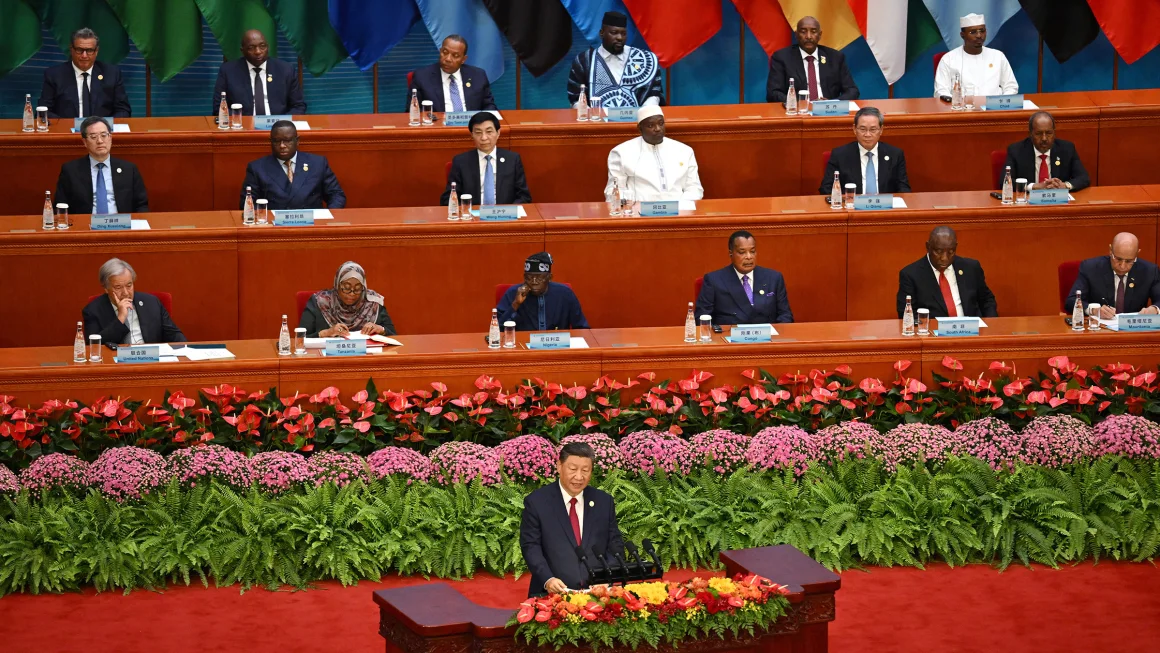
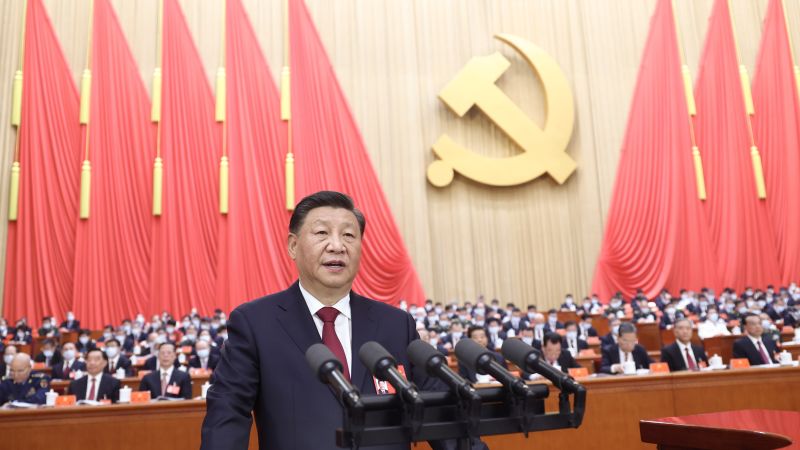
Will China leapfrog itself in the next five-year plan?

Editor’s note: Hussein Askary, a special commentator for CGTN, is the Vice-Chairman of the Belt and Road Institute in Sweden, and a Distinguished Research Fellow in the Guangdong Institute for International Strategies. The article reflects the author’s opinions and not necessarily the views of CGTN.

China’s Premier Li Qiang delivered a government work report (GWR) on Thursday at the fourth session of the 14th National People’s Congress (NPC), in which he outlined what could become history’s largest and most advanced leap in science and technology-driven economic progress and growth in the coming five years.

One of the most extraordinary points Li made, among many interesting ones, is the government’s intention to integrate the best achievements of the past few years in science, technology and innovation with China’s compact industrial system. The government intends to incentivise this process across every sector of the economy to create a consolidated productive force from the many parts of the amazing industrial system China has built so far.

To simplify this transformational process, imagine a football team made of the world’s best goalkeepers, defence players, midfielders and forwards in one team. Then, you train them together in a several-month boot camp to match and integrate their technical qualities with tactical schemes. This is what we may expect to happen to China’s high-quality economic development during the implementation period of the 15th Five-Year Plan (2026-2030).

China has leapfrogged the industrial world in the past decade in many fields of science, technology, engineering and industrial production. Chinese companies, both state-owned and private, have become global top-tier players not only in production capacity and quality but also in innovation. However, while all these sectors might be seen and function as discrete entities acting separately, in the next five years, high-quality development and a new combination of productive forces will make it imperative to integrate them into a single, continuous whole.

This will be the launching pad towards the intermediate goal of “realizing socialist modernization” by 2035 as a stepping stone towards the 2049 Second Centenary Goal of building a “modern socialist country that is prosperous, strong, democratic, culturally advanced, harmonious, and beautiful.”

The above is not a guessing game or speculation, but an assessment based on examining the previous five-year plans of the Central Committee of the Communist Party of China, especially since Chinese President Xi Jinping presented concepts related to high-quality development for years.

What these five-year plans reveal is an incredible level of consistency, unity of long-term vision and ability to deliver even amidst some of the harshest international and domestic ups and downs. The marriage of “high-quality development” with innovation, represented in the concept of “new quality productive forces,” to pursue the long-term vision is what makes the upcoming 15th Five-Year Plan unique.
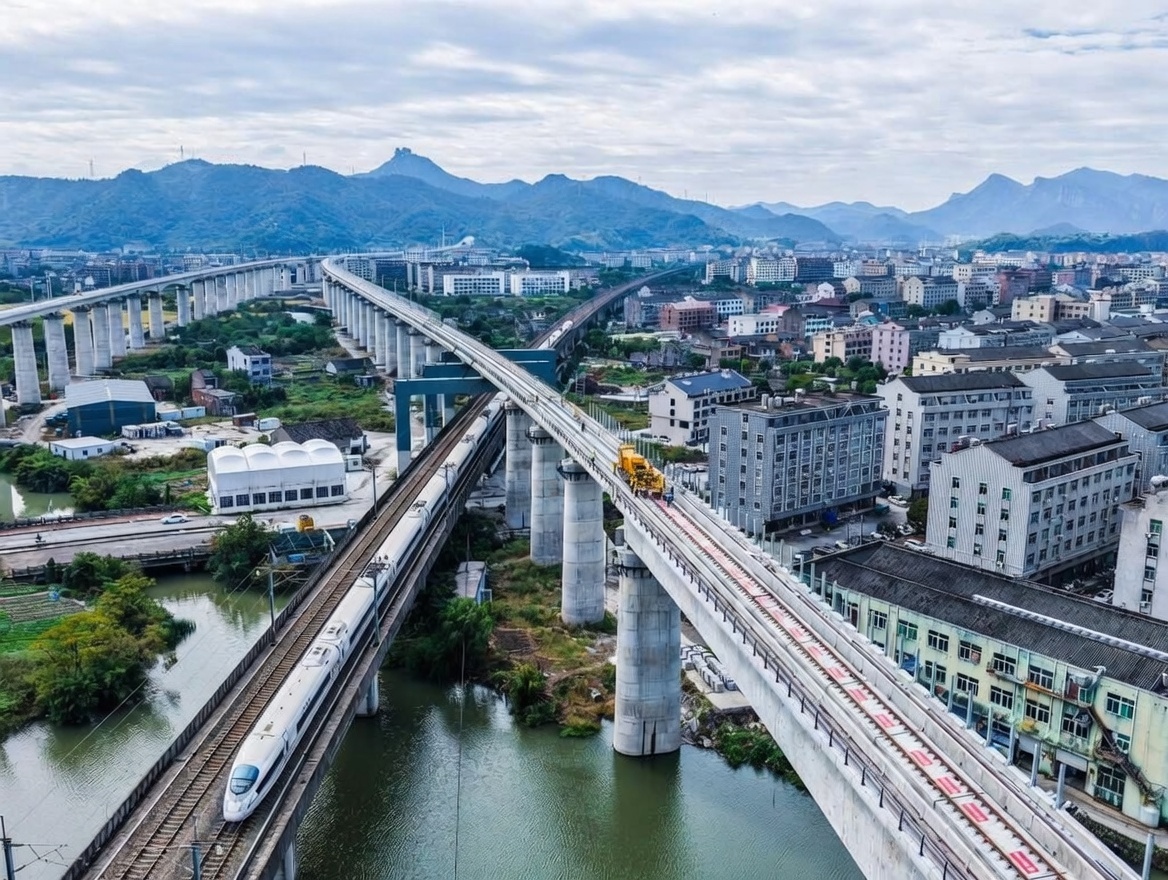
Workers operating at the track laying construction site of the Wenling-Yuhuan section of Hangzhou-Taizhou high-speed railway in Taizhou, east China’s Zhejiang Province, November 5, 2025. /Xinhua

Premier Li strongly emphasized, in delivering the GWR, that among the major strategic tasks of the government over the next five years, a pivotal one will be “the pursuit of high-quality development,” based on a solid modern industrial system that relies on advanced manufacturing as the backbone for achieving greater self-reliance.

He emphasized that science and technology must deliver advanced innovation and breakthroughs in core technologies. One of the main goals is to nurture new industries and future industries, such as new energy, quantum technology, embodied artificial intelligence (AI), brain-computer interfaces, 6G technology and satellite internet. It’s emphasized that state-owned enterprises must take the lead in technological expansion, especially in the fields of aerospace, aviation, biomedicine, and the low-altitude economy.

However, Li reiterated that these developments would take place within a unified national market and productive chains. In this context, market forces and small- and medium-sized enterprises specializing in sophisticated technologies will be supported by the government to become leaders in future technologies, enabling faster application of technologies such as AI to production processes and services. Even traditional industries and agricultural production will be modernized and upgraded within this consolidated system, with new scientific and technological innovations entering these sectors too.

As Li indicated, the key to this process is to push for full integration between technological and industrial innovation. Efforts will be made to integrate the education system and the public culture of innovation into this technological and industrial unified structure. Talent development centers will be established at the national level, with specialized centers in the Beijing-Tianjin-Hubei region and the Guangdong Greater Bay Area to foster world-class innovation engines. These centers will undertake major national science and technology projects in the coming years.

What we will probably witness is that economic growth and progress will no longer be measured by the gross domestic product, but rather by the number of scientific and technological breakthroughs achieved and incorporated into the productive processes of the economy to make them bankable.

China’s success in planning and implementing such a vision is great news not only for the Chinese people but for the world, where the 15th Five-Year Plan dedicates a special place to the integration of the concept of high-quality development into the Belt and Road Initiative and how common prosperity and joint development can lead to a brighter shared future for mankind. This is extremely important at a time when many nations and regions in the world are gazing down a huge precipice of fear and uncertainty.

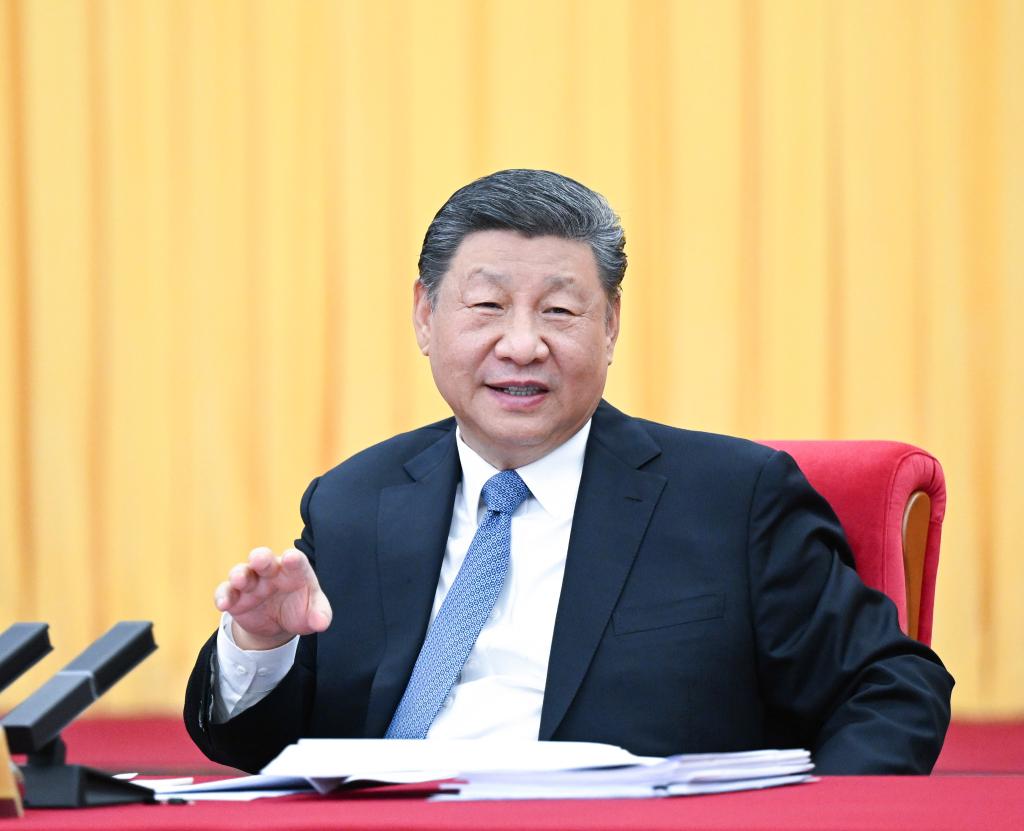
 

On Keir Starmer’s Visit to China

By Nnanda Kizito Sseruwagi

It had been almost eight years since a British Prime Minister had last set foot in Beijing. Keir Starmer’s January 28 visit to China is therefore a pivotal moment that signals a recalibration of UK-China relations, in particular, and British foreign policy generally, especially given the current paradigm shifts Western nations are making in the face of an increasingly fragmented global order. It has now become obvious to middle powers that, in the post-Cold War era, their economic and security concerns may not be permanently and reliably abdicated to the American leadership.

To understand the objective of Starmer’s trip, let’s look at the composition of his delegation to Beijing. Among his nearly 60-member entourage were cultural representatives and business executives from some of Britain’s major corporations, such as HSBC (a British universal bank and financial services group), AstraZeneca (a British-Swedish multinational pharmaceutical and biotechnology company), and Airbus (a European aerospace corporation). Both the entourage and the timing of the visit speak to economic engagement as Starmer’s primary objective at a time when the Labour government he leads is struggling at home to deliver on its economic growth promises. Whereas there is a trade deficit between the UK’s trade with China – the UK, having long-ceased to be the world’s workshop – in the services sector, the UK enjoys a surplus. This implies that there is a demand in the Chinese market for British services if Britain could leverage its expertise in finance, consulting, and professional services.

However, it is not just economic interests at the table for this visit. The past few years and even months have been frosty in the bilateral relations of the two nations. In the past, there were concerns in the UK over allegations of Chinese espionage. The UK also raised queries on claims that China was supporting Russia in the Ukrainian conflict. And of course, in typical Western fashion, the UK has always contested the way China governs in Hong Kong, claiming there is a crackdown on civil liberties. Two months before Keir Starmer’s visit, Jimmy Lai, a British citizen, had also been a subject of conflict between the two states following his conviction under Hong Kong’s national security law. As such, whereas Starmer may pragmatically focus on prioritising economic opportunities for Britain, the issue of human rights will linger in the background.

In order to show a spirit of good faith, which is key in improving relations, Starmer also approved the construction of a mega Chinese embassy in London ahead of his trip, which is one of the trade-offs taken to reset diplomatic relations between the two countries. This is a good move since, in any negotiation, each party needs to make concessions to build trust.

Keir Starmer’s government has articulated its approach to UK-China relations as characterised by a comprehensive and consistent strategy. This strategy is defined by the compartmentalisation of various aspects of the two countries’ relations in order to separate economic cooperation from the often sticky, contentious political concerns. Nevertheless, it is plausibly expected that there will be domestic opposition in the UK over the traditional points of suspicion and accusations regarding human rights violations, espionage, and related concerns, which other political parties in the UK will exploit to undermine the achievements Starmer’s Labour party is trying to realise.

If we take a broader vantage point of the developments in the global geopolitical arena, we find that Starmer’s context is shared by multiple Western leaders who have recently sought to improve relations with China and proactively reconfigure their ties with Beijing. Among the recent guests in the red dragon’s courtyard were French President Emmanuel Macron, Australian Prime Minister Anthony Albanese, and Canadian Prime Minister Mark Carney. Clearly, middle powers have established a pattern of hedging their bets with China in the midst of increasing unpredictability and uncertainty about the next move from Trump’s America. China is a much more “what you see is what you get”, stable, reliable trade partner that any country can aspire to have now. There is no need to pay the cost of navigating America’s tariff-punctuated, transactional economic terrain.

The American-dominated world order has been rapidly turning into a system of unilateralism and protection. It is China that has lit the way in championing multilateralism. With World leaders such as Irish Prime Minister Michael Martin, South Korean President Lee Jae Myung, and Finnish Prime Minister Petteri Orpo successively paying homage to China since this year began, China has demonstrated its indispensability as a resourceful global economic stability partner. It was therefore not surprising that this would spike tensions with the United States.

With Starmer’s visit, the UK has made a profound diplomatic statement in Beijing. Every country now has to engage China. Isolation would be costly. China is not to be ignored or contained but partnered with. Starmer has acknowledged without stammering that “like it or not, China matters for the UK!” This reflects a pragmatic appreciation of the dynamics of economic interdependence as constituting both vulnerabilities and opportunities that must be carefully negotiated.

Nnanda is a Senior Research Fellow, Development Watch Center.

President Xi’s Stand on Education and Talent Development at China’s Two Sessions 2025 is Welcome

Dear editor,

At the ongoing China’s Two Sessions 2025, Chinese President Xi Jinping made very important commitments as he stressed the importance of education in development. President Xi underscored the role of education in supporting scientific and technological development and talent development which he described as important for national and individual development.

This, President Xi who is also the Secretary General of the Communist Party of China (CPC) and the chairman of the Central Military Commission noted that will result into what he described as a steady stream of talent, unlock individual potential and ensure their abilities are fully utilised thereby contributing to efforts of driving Chinese modernisation. 

In a meeting of the third session of the 14th National Committee of the Chinese People’s Political Consultative Conference (CPPCC) – CPC’s top political advisory body, Xi emphasized that to “develope a high quality educational system that meets public expectations, the key lies in deepening comprehensive education reforms.” This he observed can be achieved through granting schools greater autonomy in decision-making, and refining school management systems. The Chinese leader stressed this will contribute to “nurturing a new generation of “capabale young people with moral grounding, intellectual ability, and work skills.”

On science, technology and innovation support, President Xi stressed that to “achieve a sound interaction between independent sci-tech innovation and self-reliant talent training,” education plays a major role and emphasised the need to “refine mechanisms for aligning talent cultivation with the needs of economic and social development. Noting that “boosting education and sci-tech and talent development is a shared responsibility,” Xi urged CPPCC to embrace the idea of leveraging its role.

While one can argue that the two sessions 2025 is a China affair, if critically analysed, full implementation of two sessions policies does not only benefit China but Africa and the entire world stand to benefit from China’s two sessions’ blueprint. This is premised on the fact that today, China is the world’s second largest economy and that almost all countries in the world are benefiting from China’s growing economy and technology growth. As observed by International Monetary Fund’s (IMF) Division Chief researcher Jean-Marc, “the very fact that China is also bigger, it means it has a bigger footprint in the rest of the world.  An increase in the trade surplus might be small from the Chinese perspective, but it could be big from the perspective of the rest of the world.”

Also, considering China’s stated vision of building a community of shared future for mankind in the new era, one can safely argue that a successful China means a successful world. This is more so especially that other major countries are preferring nationalistic and isolation policies; withdrawing foreign support in favour of home development.

For Africa, the two sessions deliberations came at a time after China and African countries  elevated their relations to “all-weather China-Africa Community with a shared future for a new era.”

Also, African countries including Uganda stand to benefit from China’s reformed education that will see sci-tech, innovations and talent development given emphasis. It should be recalled that over the years, the Chinese government has offered tens of thousands of scholarship opportunities to African scholars. The education support China offers to African countries ranges from university degree scholarships, both short and long term for professional and government financials as well as funding research and innovation programs.

Taking Uganda alone as an example,  by the end of 2021, China had provided over 5,000 short-term training opportunities for Ugandan talents, covering a wide range of fields; among others agriculture, medical care, public administration, computer science and infrastructure.

If critically analyzed, Africa-China cooperation in the education sector is strategic and mutually beneficial. Partly, this is because African countries’ capacities to give tertiary and higher education to their energetic and young population are constrained.

The United Nations Educational, Scientific and Cultural Organization (UNESCO) notes that Sub-Saharan Africa is one of the largest regions in the world with a small tertiary education enrollment ratio which stands at 9.4%. This number is  far below the global average of 38%. This figure means that with its 16% of the global population, Africa contributes just 1% of global research.

Relatedly, with China’s promise during the 2024 Forum on China Africa Cooperation where Beijing promised to continue supporting African countries’ education sector, Xi’s remarks at the ongoing two sessions 2025 offers Africa hope that the continent’s scholars will continue benefiting from China’s education. That said, China’s education support to African countries is timely and will go hand in hand in helping the continent make positive strides in  her scientific research capabilities which is also key among the goals of African Union’s Agenda 2063.

The writer is a senior research fellow at the Development Watch Centre.


FOCAC 2024: Xi’s Speech Attests to China’s Commitment to a Community of Common Prosperity and a Shared Future

By  Allawi Ssemanda

Dear Editor, on Thursday, September 5, 2024, Chinese President Xi Jinping delivered a 10-minute keynote address at the opening ceremony of the Forum on China-Africa Cooperation (FOCAC) summit in Beijing, China. In the address entitled; “Joining Hands to Advance Modernization and Build a Community with a Shared Future,” President Xi explained that “the friendship between China and Africa transcends time and space, surmounts mountains and oceans, and passes down through generations,” and pledged China would support African countries’ endeavours in different sectors with approximately $50.70 billion.

Explaining the 24 years of the FOCAC, Xi emphasized that “China has advanced forward hand in hand with our African brothers and sisters in the spirit of sincerity, real results, amity and good faith…” He explained that China and African countries “…stand shoulder to shoulder with each other to firmly defend our legitimate rights and interests as once-in-a-century changes sweep across the world.” This he emphasized is making the two sides “stronger and more resilient together by riding the tide of economic globalization, delivering tangible benefits to billions of ordinary Chinese and Africans.”

Explaining that “modernization is an inalienable right of all countries,” Xi regretted that “the Western approach to it has inflicted immense sufferings on developing countries.” He pledged China will continue working with African countries and support the continent’s development efforts as laid out in the African Union’s Agenda 2063, which he noted will accelerate the Global South’s transformation. Explaining that “China and Africa account for one-third of the world population, Xi observed that “without our modernization, there will be no global modernization.” He thus pledged that “China is ready to deepen cooperation with Africa in industry, agriculture, infrastructure, trade and investment.”

To be specific, President Xi pledged, “In the next three years, China will work with Africa to take the following ten partnership actions for modernization to deepen China-Africa cooperation and spearhead the Global South modernization.” The ten partnership actions will focus on; Mutual Learning among Civilizations, Trade Prosperity, Industrial Chain Cooperation, Partnership Action for Connectivity, Development Cooperation, Health sector cooperation, and supporting African countries’ Agriculture and Livelihoods. The others are; supporting People-to-People Exchanges, Green Development, and the Partnership Action for Common Security.

When critically analyzed, the ten areas President Xi mentioned that China would work with African areas “deepen China-Africa cooperation and spearhead modernization,” if implemented, will not only reignite Africa’s economic growth but also drive sustainable development.

For example, President Xi listed Partnership Action for Connectivity; specifically, noting that “China is prepared to carry out 30 infrastructure connectivity projects in Africa, promote together high-quality Belt and Road cooperation, and put in place a China-Africa network featuring land-sea links and coordinated development.” China’s offer to further support Africa’s infrastructural development is a welcome move as the continent is still faced with a shortage of funding in this critical sector. He also mentioned Partnership Action for Green Development stressing that “China is ready to launch 30 clean energy projects in Africa, create a China-Africa forum on peaceful use of nuclear technology…” Put differently, Xi promised to cooperate with the continent on nuclear technology which will tackle a power deficit which has been cited as one of the major challenges delaying Africa’s industrialization efforts. A study by the WB titled “Why we need to close the infrastructure gap in sub-Saharan Africa,” underscores this, stressing that infrastructure funding gaps are hindrances to Africa’s economic take-off. The African Development Bank (ADB) notes that to reduce the continent’s infrastructure funding gaps, Africa needs a of budget $130-$170 billion annually. Therefore, China’s support in such a sector is spot-on.

On the Partnership action for development cooperation, and the partnership action for agriculture and livelihoods, President Xi pledged China’s readiness to “implement 1,000 “small and beautiful” livelihood projects. “China will provide Africa with RMB1 billion yuan (approximately $140 million) in emergency food assistance, build 100,000 projects of standardized agriculture demonstration areas in Africa,” stressed President Xi. These programs if implemented will help the continent in addressing key challenges. It is important to note that China has already been supporting livelihood programs in several African countries, Uganda inclusive. For instance, under the arrangement of the South-South Cooperation (SSC) project between China, Uganda and the Food and Agriculture Organization of the United Nations (FAO), China has injected over 30 million USD is Uganda’s agriculture sector and livelihood programs.

On the Partnership Action for Trade Prosperity, Xi promised to ensure trade between the two sides improves, stressing that “China will voluntarily and unilaterally open its market wider. We have decided to give all LDCs having diplomatic relations with China, including 33 countries in Africa, zero-tariff treatment for 100 per cent tariff lines.” This in many ways will continue to support the continent’s social and economic development. Already, China for the last 15 years has been Africa’s largest trading partner. As of the end of 2023, the trade volume between China and Africa reached 282.1 billion USD.

President Xi further proposed to African leaders that “bilateral relations between China and all African countries having diplomatic ties with China be elevated to the level of strategic relations, and that the overall characterization of China-Africa relations be elevated to an all-weather China-Africa community with a shared future for the new era.”

In conclusion, looking at China’s record of fulfilling its pledges, there is no doubt Beijing sees African countries as partners and the cooperation between the two is indeed guided by principles of mutual respect, real results and win-win cooperation. Therefore, as President Xi noted, China and Africa should rally their populations together to become a “powerful force” and write a “new chapter in peace, prosperity and progress.” This is a sure way for Africa to realize her development goals.

Dr. Allawi Ssemanda is a Senior Research Fellow at the Development Watch Centre.

Xi Jinping’s Third Five-Year Term is Yet Off the Mark, But What’s in For Africa & Global South

By Alan Collins Mpewo.

Earlier this month on 10th March 2023, Xi Jinping who is the Secretary General of Chinese Communist Party (CPC) was formally reappointed as the president of the World’s second largest economy, China for a third five-year term. This was after the National People’s Congress (NPC), unanimously endorsed Mr. Xi, 69, with all of its 2,952 present members casting votes in favour of his reappointment.

While president Xi’s re-election received significant number of positive comments and congratulatory messages from the globe, some controversial opinions especially from some western pundits in some western capitals shamelessly described Xi’s reappointment as a bad precedent with narrow views that he should have stepped down after two terms which they described as China’s political “tradition.” While they emphasized this weak argument, non-pointed at the fact that President Xi was voted for another term due to his good record of performance and that his re-election reflected the will of majority of Chinese people. Indeed, in the entire process of Xi’s third term re-election, there was zero complaint such as bribing voters, no voter suppression claims or vote rigging. This way, we can conclude and argue that in that people – Chinese People were at the center of President Xi’s re-election and arguably, views and opinions of others are inconsequential and to say the least undemocratic with zero resemblance of the much-desired whole process democracy which China cherishes.

The negative commentaries on Xi’s third term re-election came in a wake of global political events that have many critics posing questions that can barely solved. Well, the electoral forums of China had their say, and hopefully, in the next years, a lot will come to light and life, regarding the international relations question. The Global South still encounters its various challenges, which are generally common for each country there’s. Challenges of infrastructure, economic elevation, security, education, medical, energy, human rights, and climate change lead the charts. China has for decades now been issuing a supportive hand but there can only much done within a short time.

For sustainability, progressiveness has to be paced on a rhythm of care not to antagonize what’s already existent, but also balancing with what’s expected to hatch in a long run. In this pursuit, some forces, both internal and external keep shaping the progression of the relations between China and the global south. Much can’t be said about these forces being supportive, but rather attempts to fail the progression. Be that as it may, the two wings have remained resolute in achieving that which they find noble and beneficial to their citizens.

Xi Jinping’s third term has also arrived at the time when the CPC had announced a laid plan on which it would base to interact with the wider world through its policy of globalization and openness. The CPC has also declared a considerable number of goals it seeks to achieve with the global south in the next decades, prior to the announcement of the Chinese Parliament backing Xi Jinping for a third term. What also remains a reality is the principle of mutual respect that China maintains with its interactions with the global south. Energy access remains a priority and that has been intimidated in the various addresses by Xi Jinping.

For countries especially in the Central and Eastern Africa, this will remain a top priority. The statistics on energy access have become better in recent times, but equally, more is yet to be done to keep filling the void on those that have hardships in access of the same. For West Africa, while it has many partners that are members of FOCAC, their challenges don’t seem different, but for the high hand of inter-meddling from the Western powers. Insecurity has been maintained as a worrying factor on that end. The China rolled out the Global Security Initiative (GSI) proposal which it’s seeking out the UN member states to adopt. With the current trends in the Middle East where China has been key in forging negotiations for peace among some countries that have battled with stability thus far, it’s safe to state that the initiative will broaden to West Africa.

Infrastructure is one of the strongest drivers of development in any country. It connects possibly all units of the economy, and the vice versa is equally true. This informed China and the global south partner states from the very beginning, on the need to relay the infrastructure to human sustainability standards. It’s of no wonder then, that the Belt and Road programme was rolled out. Since other means of transport such as air transportation would seem a long shot for most countries in the global south, road transportation remains the most viable in the circumstances. Infrastructure projects in most nations are still ongoing, with more yet to commence.

With the extension of technological advancements to most corners of the world, industrialization will continue being realized. This will keep healing the ail of unemployment for the fast-growing population in the global south. The win-win mentality is all that can be deduced from this aspect. That notwithstanding, the global south should also brace for complex times of haggling from some external forces, in trying to stop the diplomatic expansion of China.

With this modest assessment relayed above, no Africa countries’ developing partner has been so honest and sincere to Africa than China under president Xi Jinping. Hence, there’s just as much to feel grateful for by the Global South especially in Africa in as far as Xi Jinping’s term renewal is concerned, because unlike the speculation, China has kept their word in regard to China’s engagement with African countries and made FOCAC a priority and wouldn’t seem to be slowing down on achieving the agreed goals amongst the partners.

As Dambisa Moyo, a renowned Economist and Analysis of macroeconomics and global affairs observed in her book EDGE OF CHAOS: Why Democracy Is Failing to Deliver Economic Growth — and How to Fix It one of the major challenges identified in failing meaning full sustainable development and democracy is not leaders staying in power for long time. It is what Moyo called “short-termism” which she ably explains contributes to falling trust in government with rising polarization and gridlock which she argues is due to politicians’ eagerness to win elections which leaves them making decisions to maximize voter support rather than those that would do the most for long-term growth and hence, slowing development action to a crawl. With this, taking a third term from expert’s view is not a crime but rather a necessity for continuity which is key for sustainable development.


Alan Collins Mpewo, Senior Research Fellow, Development Watch Centre.

China’s Path to Modernization and its Implications for Uganda and Global South By Moshi Israel

In a 2021 speech marking the CPCs centenary, President Xi Jinping declared; “Through the continued efforts of the whole Party and the entire nation, we have realized the First Centenary Goal of building a moderately prosperous society in all respects. This means that we have brought about a historic resolution to the problem of absolute poverty in China, and we are now marching in confident strides towards the Second Centenary Goal, building China into a great modern socialist country in all respects.”

While addressing media and Ugandan Think Tanks during a Symposium on the Implications of the 20th National Congress of the Communist Party of China (CPC) themed by “Forge Ahead on the New Journey and Work Together for A New Era,” at Chinese Embassy in Uganda, Chinese Ambassador to Uganda, Zhang Lizhong stressed that China’s development path will see China match towards Beijing dream of realizing the Second Centenary Goal and see China advancing into a more modern socialist country. Stressing that the recently concluded CPC National Congress “established the core position of General Secretary Xi Jinping in the Central Committee and the whole Party, laying a solid political foundation for striving for the great success of socialism with Chinese characteristics for a new era,” Ambassador Lizhong expressed confidence China is on right track with its development path.

China’s path to modernization is one rooted in centuries of exploration. Like all journeys, it is not a straight forward path but a long winding curve, a learning curve. China’s path to modernization holds key implications for developing countries around the world, and in this context, Uganda and arguably, many countries in the global south.To understand the path to modernization from a Chinese perspective, going back in time is a necessary step.

During the Qing dynasty (1644-1912), China was a weak Imperial state with rampant civic corrupt infrastructure. The weak Qing empire was reduced to a semi-colonial, semi-feudal society following the opium war of 1840s. China had to endure what came to be known as a century of humiliation as foreign powers ran amok and exploited the Chinese people. The calamities befalling China in this era spurred many people to seek new ways to strengthen and unite a weak China and change their trajectory through development and modernization. The building blocks for a strong independent China started forming in the minds of Chinese people during this tumultuous period.

Fast forward to the 20th century which saw the rise of China’s Communist Party (CCP). China underwent a communist revolution in 1949 that ushered in the birth of the People’s Republic of China (PRC) which subsequently came with a fresh and more determined commitment to modernization. Under the CCP, China has set a clear path to modernization and has made significant strides. In a report delivered by CPC’s Secretary General who is also Chinese President Xi Jinping on the opening ceremony of the 20th CPC National Congress, he reiterated the central purpose of the CPC stressing that; “from this day forward, the central task of the CPC will be to lead the Chinese people of all ethnic groups in a concerted effort to realize the Second Centenary Goal of building China into a great modern socialist country in all respects and to advance the rejuvenation of the Chinese nation on all fronts through a Chinese path to modernization.”

The Chinese model of modernization is similar in some respects to other processes of modernization. However, it is unique in the fact that China pursues modernization with Chinese characteristics. This is important to note for a country like Uganda because it emphasizes the idea of considering national realities while addressing national challenges. China’s model presents an alternative path different from the western world. For many decades, developing countries have applied western generated solutions to their economic, social and political problems and have acquired little to no success. Many times, these solutions such as the Structural Adjustment Programs (SAPs) recommended by the International Monetary Fund (IMF) and the World Bank have outrightly failed. As president Xi, put it, China’s model offers a new direction of modernization.

China’s path to modernization is especially remarkable given the fact that it had to lift billions of its citizens out of absolute poverty. This has had a broad and worldwide impact and has greatly contributed to the cause of human progress.

Furthermore, China’s modernization model it involves material and cultural-ethical advancement and harmony between humanity and nature. The planet is currently facing an existential climate crisis and China wants to lead the way in combating the challenge. China’s commitment to environmental action is not mere words. The country is actively involved in Global Environmental Governance and International Cooperation. China has promised to peak its carbon emissions before 2030 and achieve carbon neutrality before 2060.

Within China, the CPC seeks to adopt new initiatives as indicated by Mr. Han Wenxiu (Official with the CCP Central Committee for Financial and Economic Affairs) to narrow the gap between different regions, rural and urban areas and different income groups. On the world stage, China seeks peaceful development. It supports a world order based on addressing the world’s crises. To China, a multipolar world based on mutual respect and cooperation is an ideal one. The message is simple, a strong China means a better world.

At some point before the founding of the PRC, China tried to achieve modernization through generating material wealth, carrying out institutional reform and trying to copy western development models without success. Instead of running around in circles, the CPC led China on a new path. During the First Session of the Third National People’s Congress, from 21 December 1964 to 4 January 1965, then Premier Zhou Enlai emphasized the importance of turning China into a strong socialist country through the modernization of agriculture, industry, national defense, and science and technology. It wasn’t until 1978, that China paved the way for its reform and opening up through a landmark event of the Third Plenary Session of the 11th CCP Central Committee.

The CCP used a three- step development strategy for China’s modernization. The first step was to double the 1980 GNP and ensure the people had enough food and clothing. That objective had been attained by the late 1980s. The second step was to quadruple the 1980 GNP by the end of the 20th century. This was achieved in 1995, ahead of time. The third step, is to increase the per capita GNP to the level of medium-developed countries by the mid-21st century. At which point, the people will be well off and modernization achieved.

To a developing country like Uganda, China’s path to modernization serves as a blueprint. Uganda has the opportunity to learn from both the west and China and then choose the most suitable path to realizing her own modernization with Ugandan characteristics. The drive to achieve this goal must be people centered with the aim of achieving prosperity for all. China’s path shows that there is hope and much has to be done. These words of president Xi, at the end of this year’s report to the 20th National congress of the CPC should be the unanimous battle cry of every leader in the developing world and particularly ruling political parties’ world-over; “Let us keep in mind that empty talk will do nothing for our country; only solid work will make it flourish. Let us maintain firm confidence, unite as one, and forge ahead with resolve. And let us strive in unity to build a modern socialist country in all respects and advance national rejuvenation on all fronts.”

Moshi Israel is a senior research fellow at the Development Watch Centre.

China Global Trade Expo: Xi’s promise of opening up China’s domestic market is Good News to Global South

By Alan Collins Mpewo.

Jointly hosted by China’s ministry of Commerce, the China International Import Expo (CIIE) is held every year in Shanghai. The expo is a trade fair and attracts numerous commercial actors (individual and otherwise) from all corners of the world. There are exhibitions of all majorly known legal commercial aspects. It has a world ranking status for being the first national level expo centered on an import theme. Exhibitions go on for a considerable time and it goes without saying that all actors engaged in the expo yield extensively in a business sense. It was first held in 2018 and it partners with reputable world commercial forums such as World Trade Organization, United National Industrial Development Organization, among many others alike.

This year’s expo commenced on 4’th November, 2022, with Chinese president Xi Jinping issuing the flag off speech. Other factors constant, the expo aims at exposing Chinese domestic products and services to the far ends of the world. In his opening ceremony address, President Xi had much to say; much of which revealed opportunities especially to countries in the global South.

It goes without saying, that until recently, most of such members of the global south have had explainable complexities in as far as penetrating the deeper consumer ends of foreign markets.

Uganda and its counterparts can pick from such initiatives to have national platforms held primarily for asserting more visibility of their domestic merchandise and services. Often times, potentially exquisite merchandise and services fall victim to an already uncoordinated market. The potential qualifier would therefore be – setting up such platforms to host players that would have some (and perhaps all) of the present market products penetrate far lands.

Presently, the development paradigm is shifting from a closed and overly gazetted market sphere, to an open border market. While the concept of extensive national domestic product and service marketing may seem novel, its importance shouldn’t be misunderstood. The world converges at one arena, with the national market taking center stage in that pursuit. China has exploited the concept. We can borrow this from them!

The world is at a point of mitigating the consequences of COVID-19 and therefore, Uganda and the other countries in the global South should adopt such ideas of boosting the post COVID recovery process of their economies.

In his speech entitled; “Working Together for a Bright Future of Openness and Prosperity,” President Xi reiterated the idea of openness as one of the founding principles of global human civilization. If critically analyzed, this will certainly help in creating new opportunities for the world with China’s own development, and contributing its share to building an open global economy.

Stressing this this, President Xi explained that China remains committed to the fundamental national policy of opening up to the outside world, pursues a mutually beneficial strategy of opening-up, and adheres to the right course of economic globalization. “Today, the CIIE has become a showcase of China’s new development paradigm, a platform for high-standard opening-up, and a public good for the whole world,” President Xi stressed.

In situations when the world is riding on uncertainties that may befall them, some of which have tolls on world economies, such would be a time for Uganda and her global South counterparts to embrace such concepts as modes of fast-tracking economic growth and reasonable stability even when hit with dangerous circumstances just as COVID-19 did sneak about unnoticed. Striking forces of innovation as these, guarantee a fighting opportunity for lower ranking nations on the world economic radar as regards mitigation of the far-reaching damage.

Globalization as a driver of cordial international relations is another aspect Uganda and her neighboring sister nations should prioritize. Such forums also seek to reassert the resolve of these countries in as far as efforts to achieving such. Quality guarantee would also be in sight. Understanding the global consumer needs is best at such forums. What needs to be improved? Rid of? Adopted… in quality assurance in the market components to realign with global demands. The general trend would always be guessing of the intricate global demands, yet with such platforms, lessons are detailed at a nationally controlled forum for all parties to easily pick lessons.

They are also a center for convergence of International commercial organizations. Not usually do the indigenous actors’ interface with the global commercial market regulators on a dialogue basis.

The other main picks from President Xi’s CIIE speech on the need for extensive multilateralism growth was the unwavering upholding of China’s principle of “mutual respect.” Such commercial establishments invite tendencies of superiority complex over the other countries engaged in such arrangements. China on the other hand, has remained pegged on its foundational ideal of cross-border diplomacy. For Uganda, this is a call to never having to bend its pursuits to intentional harm of other such benefiting parties. The diplomatic impressions born from how the country treats its partners either validates easier paths to establishing deeper relations with such other countries, or catalyze formation of fresh such relations with other countries there’s.

By and large, economic prosperity should be one of every country’s priority, and such initiatives as China’s expo are one of the novel ideas to adopt, benchmark, or learn from, for the global South.

Alan Collins Mpewo is a lawyer and a  Senior Research Fellow, Development Watch Centre.