Seventy six years on, the Chinese project teaches us dynamism

According to U.S. Bank, China’s overall exports have increased in recent months despite Trump’s hostility towards the Asian superpower upon re-ascending to the presidency. This was only possible because of Beijing’s decision to reduce its dependence on Washington when the first tariffs were slapped against it back in 2018. The shift in policy represents a consistence in reimagining circumstances that is now part of the DNA of the Communist Party of China (CPC). Unfortunately, rigidity appears to be the constant in majority of countries there warranting some reflections on the CPC’s journey thus far on this historical day.

True in Beijing as elsewhere, every intending leader worth his salt has a set of principles on which they rally their base; non-violence and self-rule for Gandhi in India, Leninism for Lenin in Soviet Russia, African nationalism for Mandela in South Africa, etc. Having lived in an era during which his country was engulfed in a bitter battle over its soul for close to forty years, high on Mao Zedong’s agenda was stability. Corruption was another given Chiang Kai-shek’s patronage. The trajectory of things for the Chinese Red Army therefore, only began to differ from the common pattern in nation building post-1949.

The first mistake that revolutionaries commit is failing to realize that being the face of a movement that is seeking power is quite different from assuming authority yourself. When Nelson Mandela became President for example, his real challenge shifted from discrimination itself to redress of the damage it caused almost overnight. He could not therefore, continue to operate as he did during his activist days. In China, once the communists effectively took hold of all command, they had to switch gears to.

Importantly, things were never straight in these early days, and they have continued not be in several of the modern endeavours that the world’s second largest economy has embarked on. Deng Xiaoping’s pragmatism best captured by the popular statement “it doesn’t matter if a cat is black or white, as long as it catches mice”, was born of the difficulties that citizens endured following the 1958–1962 reforms. The marker that has seen China transform itself from impoverishment to becoming a first world country hence, lies less in the leadership getting it right all the time but a willingness to correct for errors whenever they appear.

This mentality is difficult for politicians of the world to replicate because it carries within it an admission of making mistakes something which though very human, has come to be associated with incompetence. But as the communist party has persisted with experimentation, the results in the aftermath have been difficult to argue against showing that the predominant narrative could not be further from the truth. Mainly, this owes to the fact that trial-and-error fosters a growth of ideas best optimized for the prevailing social-political atmosphere by throwing out those that they outperformed.

Taking one day at a time also cultivates ground for the emergence of an open-minded set of leaders i.e. those willing to commit to adjusting the status quo in the wake of new conditions to harness. In involving himself and colleagues in lengthy exchanges with among others, President Bill Clinton resulting in which Jiang Zemin agreed to a drastic recalibration of the party’s domestic economic model so as to join the World Trade Organization, the General Secretary at the time was embodying this very spirit back in early 2000s. Had he not, as other Presidents have been known to, China would have missed out on the unprecedented expansion that it has experienced subsequently.

China’s case study has equally shown that when failing to attain set objectives is disentangled from ill-intent (unless of course, one has good evidence to believe otherwise), another go at the same idea can produce spectacular returns. Going back to Mao’s second five-year plan, we can see that despite its unfortunate outcomes, the overall goal of industrialization was not the issue but rather the mechanisation. And admitting this aided those that came after him to devise better ways around the question.

States should as such, not be seen as non-static objects with futures cast in stone but rather targets moving at every opportunity they get. By embracing this uncertainty, societies will give their leaders more room to breathe and they will in return build systems that better anticipate the problems of their times and accordingly devise matching solutions.

The writer is a research fellow at the Development Watch Centre.
 

President Xi’s Stand on Education and Talent Development at China’s Two Sessions 2025 is Welcome

Dear editor,

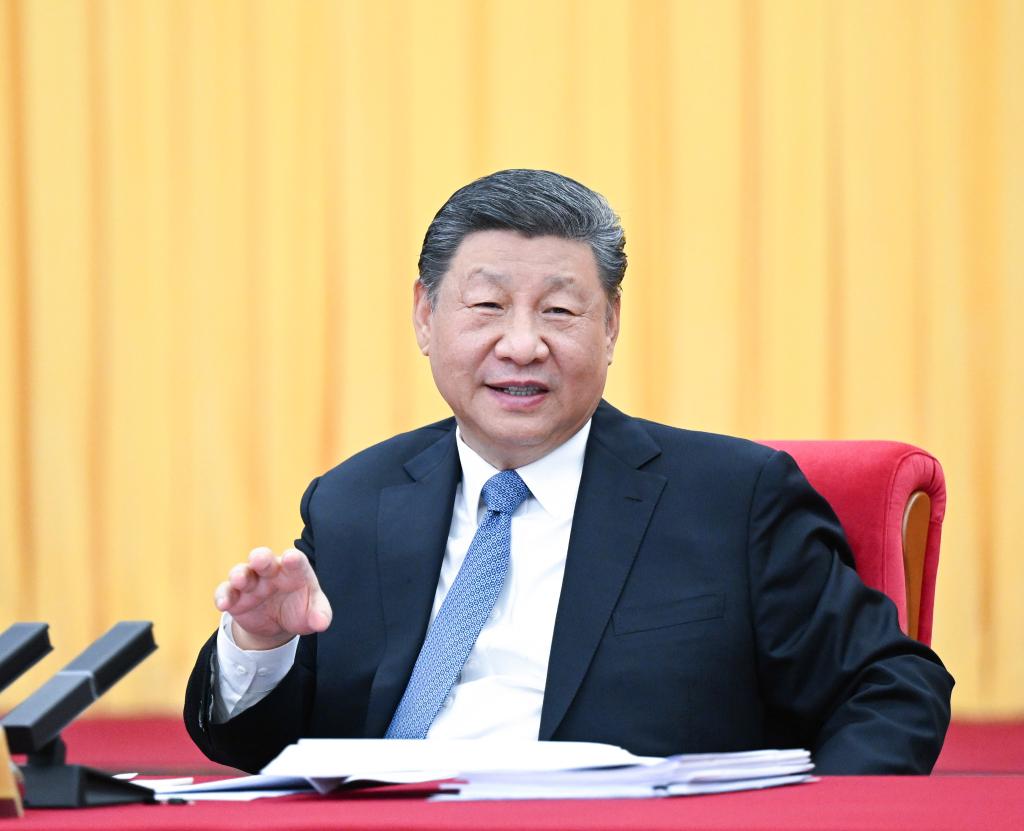
At the ongoing China’s Two Sessions 2025, Chinese President Xi Jinping made very important commitments as he stressed the importance of education in development. President Xi underscored the role of education in supporting scientific and technological development and talent development which he described as important for national and individual development.

This, President Xi who is also the Secretary General of the Communist Party of China (CPC) and the chairman of the Central Military Commission noted that will result into what he described as a steady stream of talent, unlock individual potential and ensure their abilities are fully utilised thereby contributing to efforts of driving Chinese modernisation. 

In a meeting of the third session of the 14th National Committee of the Chinese People’s Political Consultative Conference (CPPCC) – CPC’s top political advisory body, Xi emphasized that to “develope a high quality educational system that meets public expectations, the key lies in deepening comprehensive education reforms.” This he observed can be achieved through granting schools greater autonomy in decision-making, and refining school management systems. The Chinese leader stressed this will contribute to “nurturing a new generation of “capabale young people with moral grounding, intellectual ability, and work skills.”

On science, technology and innovation support, President Xi stressed that to “achieve a sound interaction between independent sci-tech innovation and self-reliant talent training,” education plays a major role and emphasised the need to “refine mechanisms for aligning talent cultivation with the needs of economic and social development. Noting that “boosting education and sci-tech and talent development is a shared responsibility,” Xi urged CPPCC to embrace the idea of leveraging its role.

While one can argue that the two sessions 2025 is a China affair, if critically analysed, full implementation of two sessions policies does not only benefit China but Africa and the entire world stand to benefit from China’s two sessions’ blueprint. This is premised on the fact that today, China is the world’s second largest economy and that almost all countries in the world are benefiting from China’s growing economy and technology growth. As observed by International Monetary Fund’s (IMF) Division Chief researcher Jean-Marc, “the very fact that China is also bigger, it means it has a bigger footprint in the rest of the world.  An increase in the trade surplus might be small from the Chinese perspective, but it could be big from the perspective of the rest of the world.”

Also, considering China’s stated vision of building a community of shared future for mankind in the new era, one can safely argue that a successful China means a successful world. This is more so especially that other major countries are preferring nationalistic and isolation policies; withdrawing foreign support in favour of home development.

For Africa, the two sessions deliberations came at a time after China and African countries  elevated their relations to “all-weather China-Africa Community with a shared future for a new era.”

Also, African countries including Uganda stand to benefit from China’s reformed education that will see sci-tech, innovations and talent development given emphasis. It should be recalled that over the years, the Chinese government has offered tens of thousands of scholarship opportunities to African scholars. The education support China offers to African countries ranges from university degree scholarships, both short and long term for professional and government financials as well as funding research and innovation programs.

Taking Uganda alone as an example,  by the end of 2021, China had provided over 5,000 short-term training opportunities for Ugandan talents, covering a wide range of fields; among others agriculture, medical care, public administration, computer science and infrastructure.

If critically analyzed, Africa-China cooperation in the education sector is strategic and mutually beneficial. Partly, this is because African countries’ capacities to give tertiary and higher education to their energetic and young population are constrained.

The United Nations Educational, Scientific and Cultural Organization (UNESCO) notes that Sub-Saharan Africa is one of the largest regions in the world with a small tertiary education enrollment ratio which stands at 9.4%. This number is  far below the global average of 38%. This figure means that with its 16% of the global population, Africa contributes just 1% of global research.

Relatedly, with China’s promise during the 2024 Forum on China Africa Cooperation where Beijing promised to continue supporting African countries’ education sector, Xi’s remarks at the ongoing two sessions 2025 offers Africa hope that the continent’s scholars will continue benefiting from China’s education. That said, China’s education support to African countries is timely and will go hand in hand in helping the continent make positive strides in  her scientific research capabilities which is also key among the goals of African Union’s Agenda 2063.

The writer is a senior research fellow at the Development Watch Centre.


3rd Plenary Session of the 20th Central Committee of the CPC: Announced New Reforms Will Ignite Global Cooperation

By Allawi Ssemanda

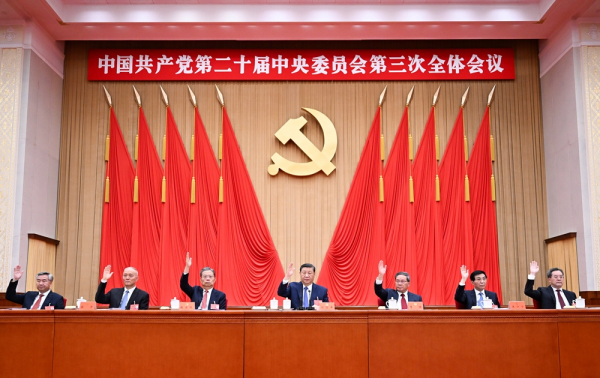
From July 15 to 18, the third Plenary Session of the 20th Central Committee of the Communist Party of China (CPC) was held successfully in Chinese capital, Beijing. This plenum came at a time when the world is faced with grave and complex challenges such as slow economic recovery, confrontation, power politics by some countries, and block formation. It also came at a time when tens of thousands of people have died in avoidable wars like Israel’s war against Gaza which the UN has described as “terrible” and bringing the strip closure to “human catastrophe.”

The plenum saw discussion of a report on the work of the Political Bureau. President Xi Jinping who is also the General Secretary of the CPC Central Committee attended and made some important comments. At the end, the plenum unanimously adopted the Resolution of the Central Committee of the CPC re-affirming on “Further Deepening Reform Comprehensively to Advance Chinese Modernisation.”

While one may argue that the third plenary session of the CPC Central Committee which is normally held once every five years concerns China alone, if critically analysed, it is of great significance not only to China but entire world. This is because, it is during this time that that the world’s second largest economy – China under the CPC leadership meet to plan and strategise for the country’s short and longterm socio-economic policies. As the second largest economy and Africa’s largest trading partner and financier of the continent’s most infrastructure projects, in all ways, policies made in Beijing also have direct bearing on economic development of the rest of the world.

Indeed, just a day after the commencement of the third Plenary Session of 20th Central Committee of the CPC, the International Monetary Fund (IMF) on the 16th July 2024 upgraded China’s 2024 economic growth forecast to 5% beating the U.S’ economic growth projection which IMF downgraded from April’s 2.7% to 2.6%. In the same forecast, IMF put 2024 growth forecast for the 20 Europe’s countries that share the euro currency at just 0.9%, while Japan’s outlook was downgraded from 0.9% to 0.7%!

Noting that Chinese economy has been doing well, the IMF attributed China’s continued good economic performance to among others what the IMF called China’s “program of of trading and equipment upgrade.” Announced in March this year, Beijing says the program will boost consumption and investment and growth at the same time.

When analysed, the adopted resolution which was announced in the communique talks about “Deepening Reform Comprehensively to Advance Chinese Modernisation,” it is an open secret that religiously, China has not been selfish in their development plans and they have consistently executed plans and strategies that also look at the well being and development of the rest of the world. A case in point is the Global Development Initiative (GDI) announced by President Xi Jinping in 2021 to accelerate efforts in achieving the Sustainable Development Goals of 2030. The GDI suggests ways to address key human challenges.

Also, China introduced the Belt and Road Initiative (BRI) which several studies have concluded is helping in sparking economic growth in all implementing countries. Indeed, a World Bank study – “How Much Will the Belt and Road Initiative Reduce Trade Costs?” conducted in 191 countries concluded that BRI projects have made trade easier in BRI participating countries by “reducing shipment times and trade costs at country-sector level.” BRI stands as a testament to China’s commitment to enhancing five connectivities or “five C” experts describe as key drivers of economic take off. The “five Cs” are; Policy Connectivity, Trade Connectivity, Infrastructure Connectivity, Financial Connectivity and; People-to-People Connectivity.

Such is enough evidence that while the 3rd Plenary Session of the 20th Central Committee of the CPC primarily benefit, if well implemented such polices by all means have a significant contribution as far as economic development of the rest of the rest of the world is concerned.

Indeed, while describing China’s economic growth projection as positive on the 16th of July, the IMF observed that led by China, “Asia’s emerging market economies remain the main engine for the global economy” stressing that today, China and India  “accounts for almost half of global growth.”

“The very fact that China is also bigger, it means it has a bigger footprint in the rest of the world.  An increase in the trade surplus might be small from Chinese perspective, but it could be big from the perspective of the rest of the world,” emphasised IMF’s Division Chief researcher Jean-Marc.

Looking at the communique from the plenum, one can safely argue that the new reforms will generate economic growth opportunities and hence, a firm foundation as the country intensify efforts to become a modern socialist country by the mid-century.

From historical perspective, the opportunities these reforms will bring will as well benefit the world as we race to achieve the United Nations’s 2030 SDGs agenda. This is premised on the fact that for the last several decades, China’s economic growth has left different parts of the country enjoying the same benefits. For example, to date, the country remains a major source of  trade, investment, and innovation to the world especially the global south.

It is important to recall that, the  3rd plenary session of the 11th CPC Central Committee of 1978 introduced these reforms, laying a foundation to transform China from a peasantry and made it economic power house as the rest of the world shared benefits of China’s economic growth.

Today, the country’s economic transformation which came as a result of Beijing’s reforms has seen China’s over 800 million people lifted out of extreme poverty – a record praised by different scholars and UN as historic.

To conclude, from historical perspective and the current trend characterised by China’s desire of building a community of shared prosperity and a community of shared future for mankind, one can safely argue that the resolutions adopted at the just concluded 3rd Plenary Session of the 20th Central Committee of the CPC will not only help shape China’s future but will help Ignite Global Cooperation and development in the new era.

The writer is a senior research fellow at the Development Watch Centre.

The 74th Anniversary of the Founding of the People’s Republic of China: Celebrations are in Order

By Moshi Israel

In 1949, then Chinese leader Mao Zedong declared the creation of the People’s Republic of China. A new era in China’s history begun under the stewardship of the Communist Party of China (CPC). A new kind of socialism with Chinese Characteristics took root. A new vision for a better China was still in its infancy and the building blocks were placed on top of one another, one by one. Fast forward, seventy-four years later, and the Peoples Republic of China is an entirely new country, with unprecedented development and a lot of potential for even more growth. The CPC revolutionized the thinking of the Chinese people, and placed them on a path of modernisation, that has been dubbed a miracle by many.

Several factors have contributed to China’s development, prominent among them being strategic government planning, service to the common people and rapid industrialization driven by a unique brand of political organization and mobilisation by the CPC. Opening up of China to the rest of the world put the Country on a healthy development path and by and large the CPC has managed to rid most Chinese of the colonial mindset that has held many developing countries back.

China today is a world giant that has put the rest of the world on a new agenda that emphasizes win-win partnerships, mutual benefits and peaceful development, with the aim of achieving a truly multipolar world. China has created the Belt and Road Initiative (BRI) that has taken the world by storm by increasing connectedness of the global trade routes with the aim of doing mutually beneficial business. Furthermore, the country has published several white papers laying out China’s vision on the Global Security Initiative (GSI), Global Development Initiative (GDI) and the Global Civilization Initiative (GCI). These initiatives, are China’s vision for a better world of today and tomorrow. They aim to achieve the ultimate Chinese ideals of cooperation and peaceful development.

During the celebrations of the 74th anniversary of the founding of China, organised by the Embassy of China in Uganda at Sheraton Hotel, I witnessed a profound display of China’s good will and respectful cooperation with our country – Uganda. There was a marvellous display of cultural fusion and a profound display of how Chinese people have adapted to the Ugandan scene. Both Chinese and Ugandans performed together cultural dances and songs that revealed to me how far our relations with China have come.

The speeches by China and Uganda’s government officials reflected on the already existing cooperation between the two countries and the potential for future engagements. China has proved to be a reliable partner to Uganda especially at a time when the latter is facing an impasse with western governments and their institutions. The issues of same sex relations and the construction of the EACOP pipeline has put Uganda at odds with western powers with the small African country courting the ire of powerful western regimes on grounds of ideological differences.

On a more positive note, the 74th celebrations of the founding of the PRC should serve to remind us of only the good times and encourage us to look further into the future when it comes to Uganda’s relations with China. Through trade and cultural cooperation, Uganda is already an established friend of China. The latter has taken steps to educate all developing countries on what it has been doing that has set it apart from other developing nations without following western models of development.

China is now among the leading countries in sustainable development issues, infrastructure development, trade and digital development. It is the duty of all countries seeking true independence and sustainable development to probe the ‘how and why?’. This is a point the deputy Ambassador, His Excellency Fan Xuencheng emphasized during his speech; China’s development under the Chinese context. That’s the mantra the Ugandan people should accommodate and practice.

As an African, I think there’s much we can learn from China’s development path and apply what we think can work for us. Perhaps, one can only hope that during the next anniversary of the founding of the PRC, that by that time, most of African countries will have taken the necessary steps to put their respective countries on a unique development path with African characteristics. Our Achilles heel lies is rampant corruption, a vice that our partners in China have fought vehemently and defeated.

The African mantra should be the undisputed theme of Adopting, Improvising and overcoming especially under current tensions with the west. Thank goodness, we have an ally like China to learn from.

Moshi Israel is a senior research fellow at the Development Watch Centre.


The 74 Anniversary of The Founding of People’s Republic of China: What It Means to Africa

By Alan Collins Mpewo

The 74th anniversary of the founding of the Peoples Republic of China is a significant date for both China and Africa. It was on October 1st 1949 when then Chinese Communist leader Mao Zedong announced the creation of People’s Republic of China (PRC). This big announcement which in many ways resulted into the birth of Today’s modern China came as a result of the Chinese Communist Party defeating the Nationalists in the civil war, a development that saw the Communist Party of China (CPC) control over China the country fully recognized as nationalists surrendered and a few others fled. While the announcement was seen as China’s, if critically analyzed, it was also significant for Africa, as it signaled the beginning of a new era of Chinese history and Africa’s relations with China. Since that time, the Peoples Republic of China has become one of Africa’s most important partners, providing much-needed economic and political support. The relationship between China and Africa has grown steadily over the past few decades, and today the two sides enjoy close cooperation on a range of issues.

The 74th day of the founding of the Peoples Republic of China thus holds great significance for both China and Africa. It is a day to celebrate the strong ties between our two countries and to look forward to even closer cooperation in the future. But 74 years is not a disposable feat. Since the 1’st of October in the not so past 74 years, the major message that has been sang by the People’s Republic of China has been independence for its partners – Africa states and otherwise.

For African communities, the 74th day of the founding of China marks not only a celebration of Chinese culture, but also provides a glimpse into what the future of African-Chinese exchanges and collaborations could achieve. Through the continued development of enriching bilateral ties, both sides stand to benefit greatly as the years go by. It can not be said in tire that the under the belt and road initiative, China has made an incredible impact on infrastructure in many African countries, with Shanghai based construction engineering firm China State Construction Engineering Corporation building many new rail networks, roads, schools, and hospitals across the continent. This has no doubt had profound impacts on local communities, who now have access to regular healthcare, education, and transportation that wouldn’t have been so easily available without China’s intervention.

The People’s Republic of China has also been an important trading partner for many African countries, particularly those in Southern and Eastern Africa. China’s entrance into the African market has made it a valuable trading partner, with Chinese goods being shipped in to supplement the continent’s domestic markets, creating much-needed jobs and revenues for producers, the distributors, and sellers alike.

For much of the past century, China and its people have made a concerted effort to strengthen relations with African countries, providing aid, opportunities for investment and mutual growth, and trade agreements. This relationship has only grown over time, with officials from both sides recognizing the importance of bolstering cooperation between African and Chinese communities. As such, the founding of the People’s Republic of China represents a landmark moment for Africans, providing hope that the future will bring great economic, political, and social progress.

Besides all the outstanding achievements reached thus far by the two bloc partners, the caution of consciousness has to be elevated past lands and generations ahead. The human race is much more than the political baits that present themselves. Colonialism didn’t end in the final period of the 1900’s. The phenomenon is multifaceted, and presently comes in large scale neocolonialism. The origin of the celebration by the PRC is based on the yearn for independence, and ultimately no other. Independence is not one to be achieved without much effort, and so while it is understandable that there has been much complacency by those supposed to propel the fight, there should be no compromise to achieving the ultimate goals. BRICS has taken out a line of agreement against the leading imperialism and double standards, an initiative that includes a push from China.

Therefore, with the birth of the FOCAC was a clear indication of respect to each State’s sovereignty through partnerships and mutual benefits, it is of no doubt that the relations have attracted more new entrants each year that succeeds another. Uganda has been one of the greatest beneficiaries, and one of the oldest to relate with PRC diplomatically having passed the 60 years mark of diplomacy not so long ago. There is therefore no need to overemphasize what the two blocs have achieved and what stands as an open door yet to be used. But along the way, still stands obstacles of imperialism and self-seeking to navigate past. So, while this period is to be hoisted with significance on the past, it can sincerely be hoped that it will shape the future for the two blocs to more successes.

Alan Collins Mpewo, Senior Research Fellow, Development Watch Centre.