Opportunity in Uganda’s Road Crisis? Lessons from China

By Nnanda Kizito Sseruwagi

I was initially depressed when pondering this article. The crisis of Uganda’s roads depresses many of us. I don’t think it is necessary to explain or emphasize the wreckage of what used to be the roads and the dreams and potential we have lost economically and humanly with the loss of precious lives in avoidable accidents.  But I was later rescued from my depression with the realisation that something could be done. Something must be done.

So, I will focus more on the opportunities buried in the mess of Uganda’s dilapidated transport infrastructure.

In more developed countries, it is extremely hard to have accidents on highways and even in the city because of the width of the roads. Not only are their roads wide, but they are also two-way lanes, meaning they have only one lane taking vehicles in each direction. Therefore, cars can hardly collide or struggle in messy traffic caused by competition for space on single-track roads as we occasionally see in Uganda. Motorcycles are also given separate lanes which both reduces their traffic while mitigating accidents.

I had never reflected seriously about the state of our roads until I travelled to China. Let me first satiate you with the excellence of China’s road network.

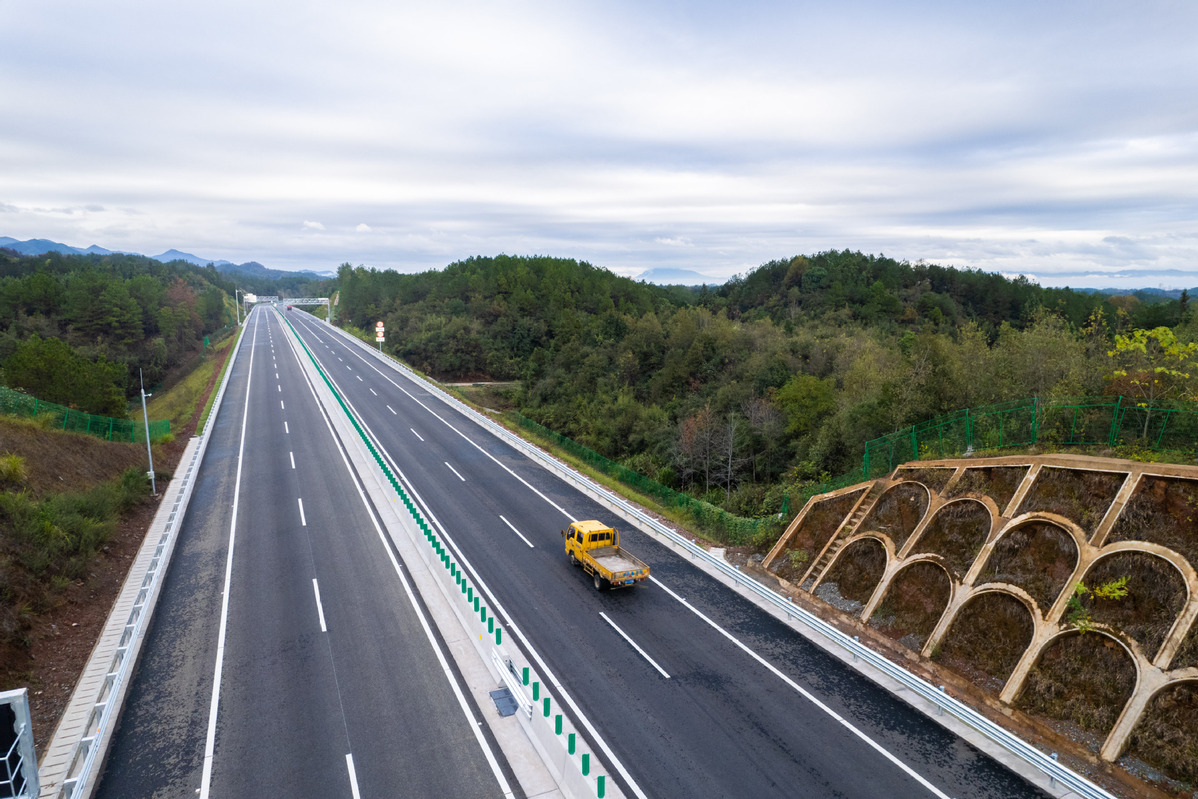
Almost all roads in China are two-way laned, both for roads in the city suburbs and the expressways that stretch to China’s furthest villages. These roads are mostly flat. This is to say, any barrier to the flat flow of the road meets the insurmountable human will and engineering dare-devil attitude of Chinese road constructors. For every slope down one mountain to another or over a river or a lake, the Chinese will erect huge pillars of steel and concrete and suspend a bridge stretching the entire length that nature decided to go. In case the land along which the roads curve is flat, but is blocked by a small mountain, the Chinese will dig a tunnel to create a way through the stomach of the mountain. And since they have two-way lanes, these tunnels are always two. And are equally very wide and well-lit.

The engineering art required to think these roads into existence pales away in contrast to the courage it takes to look at a mountain and say; “you shall make a way for our people!”. The Biblical Moses laid a stick to split the water for Israelites to move, but the Chinese engineering Moseses suspend tons of concrete high above the water and make a way for their people. One construction feat accomplished in China recently was the Sanyuan Bridge in Beijing, where a 1,300-ton bridge was replaced in just 43 hours.

But to avoid this article sounding like a song of praise for China’s road infrastructure greatness, I will turn to the opportunities Uganda has in its failing road network.

Of course, my thoughts are generalized observations in a way because there are so many material factors which make China function in a different way from Uganda. But we still share a lot in common and have several factors in our favour supporting transformation.

One of the advantages China has over us is its land tenure system which is flexible for the government to implement road construction projects without the bloated compensation claims and long court battles involved with road construction projects in Uganda. I strongly believe that it will be very hard and expensive for Uganda to develop if we keep the system of private land ownership. But that’s a whole topic for another article/book.

Here are the opportunities. For each road we see in Uganda today, we need one more going in the opposite direction. We can and should adopt the policy of two-way lanes. I know it sounds expensive and hard but Uganda is a small country with abundant unexploited resources. We have enough concrete to build up this country excellently. This spells big business for road construction companies. And for our unemployed engineering graduates.

The government should incentivise students to study civil and architectural engineering if we are serious about industrialising this country. Costs in health, business/investment and trade sectors will be indirectly met if we succeed in having a well-built environment. For example, a lot of the cases of disease and accidents which eat up our national health budget are caused by poor living conditions due to bad housing, shoddy drainage and poor road networks. These can be curbed by developing a high-level engineering industry to build up this country.

The Chinese are so obsessed with roads. They have many well-paved and wide roads. I think every developing country should study this obsession. We should first and foremost plan and build our roads and then consider space for other buildings. That’s how we shall build an organised city. And it’s on those roads that our economy will run and take off.

The writer is a senior research fellow, Development Watch Centre.

nnandakizito@dwcug.org


Primary Health Care and Health  Infrastructure Development: Lessons From China

By Salim Abila Asuman

Attention; in the relentless pursuit of progress, a nation teeters on the brink of stagnation when its healthcare infrastructure falters. As the sickly grip tightens, the nation’s capacity to evolve, innovate, and propel itself forward dwindles.

An ailing healthcare system is not merely a burden, it is an indication of systemic decline, casting a dark shadow over the promise of a brighter future.

In the pursuit of progress and economic advancement, nations often overlook a fundamental pilar of development: healthcare infrastructure. However, the consequences of neglecting this vital aspect of society are dire and far-reaching, threatening the prospects of a nation’s growth and prosperity.

As the heartbeat of a nation’s well-being, healthcare infrastructure serves as the backbone upon which the health and productivity of its citizens rely. And, failure to invest in this critical foundation can unleash a torrent of devasting effects, reverberating through every facet of society.

First and foremost, inadequate healthcare infrastructure leads to a stark reality of inaccessibility to essential medical services for a significant portion of the population.

I assure you, without proper facilities, resources, and personnel, individuals are left vulnerable to the ravages of preventable diseases and untreated conditions, and as a result it becomes a heavy toll on both human lives and economic vitality.

The economic burden of poor health outcomes is profound, draining off resources and stifling growth at every turn. Skyrocketing healthcare costs, coupled with the loss of productivity due to illness, place immense strain on household finances and national budgets alike. Scares resources that could fuel progress in education, infrastructure, and innovation are diverted to address health crises, perpetuating a cycle of stagnation and underdevelopment.

The neglect of healthcare infrastructure strikes at the heart of human capital development, the cornerstone of sustainable progress. A populace plagued by poor health is one deprived of its full potential, with reduced life expectancy, compromised cognitive abilities, and diminished educational attainment stifling the aspirations of generations to come.

On the global stage, the repercussions of neglecting healthcare infrastructure echo far beyond national borders. In an interconnected world where investment and talent flow freely, nations with robust healthcare systems emerge as beacons of stability and opportunity. On the contrary, those marred by neglect face dwindling prospects for foreign investment and skilled labor.

For a nation like Uganda, the consequences of a deficient healthcare system reverberate across every aspect of society, profoundly impacting its development trajectory.

Without adequate access to medical care, preventable illnesses become barriers to productivity, leading to increased absenteeism and diminished economic output.

A robust healthcare infrastructure is indispensable for nurturing human capital and enhancing productivity, accessible healthcare services ensure that individuals remain healthy and productive, minimising absenteeism due to preventable illnesses and enabling workforce participation. Healthy individuals, in turn, contribute to higher levels of productivity, driving economic growth and prosperity.

The warning bell tolls loudly for African nations that turn a blind eye to the imperative of healthcare infrastructure. To ignore this call is to gamble with the future of the nation, as we stand at the crossroads of progress let us heed to this warning.

In the archives of healthcare evolution, China’s journey stands out as a fascinating tale of transformation and triumph. And it offers lessons for Uganda and all African countries aspiring to leap into a brighter future.

The completion of iconic projects like the Shanghai Pudong New Area People’s Hospital within a mere two years, underscores the importance of prioritizing infrastructure investment. The lesson to learn here is that by channeling resources into building hospitals and clinics, aiming to enhance accessibility and quality of healthcare services within a defined timeline Uganda can emulate this success.

Embracing healthcare technology by China, including telemedicine and electronic health records (EHRs), has revolutionised healthcare delivery, particularly in remote areas. To replicate this success, Uganda must leverage technology to bridge geographical gaps in healthcare access, and set a target for nationwide coverage at least within two years.

By China collaborating with private entities, such as Alibaba Group’s healthcare initiatives the potential of public-private partnerships has been highlighted in driving healthcare innovation and expansion. Uganda can harness the resources and expertise of private sectors partners to accelerate healthcare projects, aimed to launch joint initiatives within a defined timeframe.

Strengthening primary care infrastructure is a cornerstone of China’s Health policy, by investing in community health centers and promoting primary care services, aimed at providing a comprehensive and preventive healthcare closer to where people live has reduced the burden on tertiary care facilities and improves overall health outcomes.

China acknowledges regional disparities in healthcare infrastructure, highlighting the need for Uganda to implement targeted initiatives to improve rural and remote areas for equitable healthcare access. This is evidenced by China’s support to our health sector with China funded Naguru hospital also known as China-Uganda Frienship Hospital being a key example.

China’s construction of emergency hospitals, such as the Huoshenshan Hospital in Wuhan, in a matter of days demonstrated its ability to rapidly scale up healthcare infrastructure to respond to the crisis, providing critical care to COVID-19 patients while reducing strain on existing facilities. Uganda should learn from China’s example by prioritising proactive and coordinated actions while investing in strong healthcare infrastructure.

A reminder; in the tapestry of international relations, amidst the dynamic currents of global cooperation, one remarkable alliance that emerges is China’s unwavering commitment to Africa’s infrastructure advancement.

It is a symphony of solidarity, a testament to mutual respect, and a beacon of hope for progress.

China’s support in establishment and construction of the Africa Centre for Disease Control and Prevention is a reminder of a reliable partner when it comes to Africa’s efforts in building a strong health system. Today, the centre is playing a leading role in supporting public health initiatives of member states and strengthening capacity of their health institutions to deal with disease threats. The Addis Ababa Fistula Hospital and the China-Angola Friendship Hospital in Luanda are monuments of this unwavering dedication to African’s healthcare advancement, these are tangible testaments to a commitment to fostering progress and prosperity across the continent.

Another paramount reminder is that development hinges on the strength of its human capital. A thriving populace, kept afloat by robust healthcare and wellness initiatives, is the catalyst for transformation growth. China’s remarkable progress stands as a testament to this principle.

Let us embrace this powerful reminder of unity, recognising its potential to reshape landscapes, empower communities, and foster a brighter future for generations to come.


Salim Abila Asuman is a reseach fellow at the Sino-Uganda Research Centre.


China’s Collaboration Propels Uganda’s Internet Revolution: A Tale of Technological Transformation

By Yasiri J. Kasango

In recent years, Uganda has embarked on a journey towards digital transformation, with a strategic partnership with China serving as a catalyst for revolutionising the nation’s internet landscape. This collaboration, driven by a vision to bridge the digital divide and foster inclusive growth, has become a beacon of connectivity, propelling Uganda towards a future defined by innovation and economic prosperity.

At the core of Uganda’s digital revolution lie the monumental National Data Transmission Backbone Infrastructure (NBI) and Electronic Government Infrastructure (EGI) projects, spearheaded by China’s Huawei Technologies. This transformative initiative has witnessed the laying of fiber optic cables across Uganda, connecting major towns and government entities into a cohesive digital network. Funded in part by a $106 million loan from the Export-Import Bank of China, this infrastructure backbone has laid the foundation for Uganda’s digital future, facilitating seamless connectivity and enabling access to vital online services.

Dr. Aminah Zawedde, the Permanent Secretary for the Ministry of ICT and National Guidance, highlighted the significant progress made in Uganda’s telecommunications and ICT industries. In January 2024, Uganda boasted 13.3 million internet users, with an internet penetration rate of 27 percent. Dr. Zawedde emphasised that such advancements accelerate Uganda’s digital transformation agenda, improving communication and reducing the cost of doing business.

Moreover, the launch of Uganda’s Digital Transformation Roadmap in August 2023, anchored on the Uganda Vision 2040, underscores the country’s commitment to harnessing the abundant opportunities within the Information and Communications Technology (ICT) sector. The roadmap aims to strengthen the implementation of enabling policies and laws to accelerate Uganda’s Digital Revolution, providing an overarching framework for a well-connected Uganda that leverages various technologies.

The Ministry of ICT and National Guidance’s implementation of the NBI/EGI project has been instrumental in connecting major towns and government departments to an optical fiber cable-based network. Dr. Zawedde noted that over 12,000 kilometers of optical fiber cable have been laid across the country, laying the groundwork for further expansion and connectivity.

“Through this project, the laying of over 12,000 km of optical fiber cable across the country has been achieved,” said Zawede.

China’s technical and financial support has been pivotal in accelerating Uganda’s ICT development, according to Ugandan experts and officials. Kwame Rugunda, chairman of the Blockchain Association of Uganda, highlighted the critical role played by Chinese companies in establishing the core infrastructure of ICT. He emphasised the importance of continued collaboration and support from China for Uganda’s technological advancement.

“The core infrastructure of ICT is where the Chinese play a critical role, the backbone upon which everything else is built,” said Kwame Rugunda, chairman of the Blockchain Association of Uganda, in a recent interview with Xinhua.

John Nasasira, head of a national task force advising the government on emerging technologies, stressed the importance of connectivity across the country for leveraging ICT as an enabler for economic development. Nasasira emphasized Uganda’s reliance on technical expertise from countries like China as it strives to develop its ICT infrastructure.

Robin Bai, Chief Technical Officer of ZTE Uganda, discussed Uganda’s progress in adopting 3G and 4G technologies, with plans underway to launch 5G technology trials. Bai highlighted the role of Chinese companies in advancing Uganda’s ICT capabilities and bridging the digital divide.

In rural Uganda, where internet penetration remains relatively low, initiatives like Huawei’s DigiTruck project are making significant strides in promoting digital inclusion and empowerment. The DigiTruck, a mobile training hub, travels across regions, training youth, women, and small business owners in e-commerce and online research. Sandra Apio, a young farmer in the Katakwi District, expressed optimism about accessing online markets for her produce, thanks to the digital skills she acquired through the DigiTruck program.

“I am proud to say that the Huawei DigiTruck project plans to benefit over 10,000 people in a span of three years,” Yi Junsong, subsidiary board director of Huawei Uganda, said. “We hope that those who have benefited from these skills in this cohort can use them to improve their livelihoods. Just keep in mind that these skills you have obtained are to open up your minds to understand the importance of ICT (information and communications technology) and what it can do to improve yourself and your surroundings.”

Robert Otuke, a small business owner, shared how the DigiTruck training transformed his bookshop business by enabling internet usage for commercial purposes. He emphasised the impact of acquiring digital skills on improving livelihoods and expanding business opportunities in rural communities.

“Initially, we never had internet in our bookshop, but when I learned about using the internet and how it can make you money, we had to buy a simple Wi-Fi device. That thing helped us to commercialise internet usage in our bookshop,” said Otuke.

Ugandan Vice President Jessica Alupo commended Huawei for empowering the country’s youth and entrepreneurs through initiatives like the DigiTruck project. She emphasised the government’s commitment to involving more stakeholders in promoting digital inclusion and fostering economic growth.

The impact of China’s contributions to Uganda’s internet growth is evident in the statistics. According to data from the Ugandan Ministry of Finance, the number of internet users surged by 45% to 18.8 million in 2017, with active telephone and mobile money subscribers witnessing significant growth. This exponential rise in internet penetration underscores the transformative influence of China’s technological expertise and investment in Uganda’s socio-economic landscape.

Looking ahead, the collaboration between Uganda and China is poised to scale new heights, with plans underway to expand internet accessibility further nationwide. Through recent funding secured from the World Bank, Uganda aims to ensure universal internet access, with a focus on reducing costs and enhancing affordability, particularly in rural communities.

Initiatives like MiOne’s launch of smartphones assembled in Uganda exemplify the tangible outcomes of this partnership, providing citizens with access to affordable and quality digital devices. As Uganda charts its path towards a digital future, China’s partnership remains indispensable, catalysing innovation, growth, and progress. With a shared commitment to harnessing the transformative power of technology, Uganda and China stand poised to write a new chapter in their collaboration, one defined by connectivity, opportunity, and prosperity for all.

The writer is a research fellow at the Sino-Uganda Research Centre

China-Uganda Cooperation: A PARADIGM SHIFT FROM HANDOUTS FOR HANDSHAKES

By SALIM ABILA ASUMAN 

In the realm of global aid, a paradigm shift has emerged and gone are the days of mere handouts. This shift entails fostering self-reliance and long-term prosperity, where emphasis shifts from handouts to handshakes and from aid to partnerships, as a result outdoing the traditional notions of aid.

As Uganda navigates its development trajectory, emphasis must be increasingly placed on “hand shakes’’ rather than preserving the cycles of ‘’receiving handouts’’. And so must other African nations begin to choose Handshakes over Handouts.

An outstretched hand invites one to a dance of equals, forging partnerships in shared strides, while handouts, breed dependency and hinder self-sufficiency.

In the seductive orchard of international traditional aid, many nations dream of self-reliance while side eyeing the tempting offers from the west, because of this it is high time for a reality check.

The outdoing of the traditional aid model has been propelled by a host of unpleasant characteristics that have long plagued its efficacy, and a result leading to it being abandoned.

Its sweet taste of dependency is like candy for the economy, except it rots from within. Take for instance, the case of Sub-Saharan Africa, decades of aid have often failed to catalyze meaningful economic growth, instead of thriving economies, many countries find themselves trapped in cycles of reliance on western aid perpetuating the very poverty they seek to escape.

Traditional aid comes with more condition than a prenuptial agreement. You Need a loan? Then better be prepared to swallow bitter pills of austerity measures and policy reforms that prioritize donor interests over local needs.

Recent events, such as the threat to withhold aid from Uganda over the Anti-Homosexuality Act, serve as stark reminder of this, this reaction underscores the broader dilemma of using aid as a diplomatic tool if aid as a cycle of handouts is preserved.

Have you ever played a game of hide and seek with a billion-dollar budget? That’s the thrill of western aid accountability, you will be searching for transparency and oversight in a maze of corruption and mismanagement. Building self-reliance on embezzlement and shady deals is like building a sandcastle with a doomed horizon, like a tsunami on the horizon.


This aid may come wrapped in a shiny package of development, but peel back the layers, and you’ll find the same old power play dressed in new clothes.

In this dynamic paradigm shift, a transformative concept has emerged, one that transcends the traditional notion of mere handout. It is the crux of a handshake a symbol of mutual respect, win-win cooperation, collaboration, and empowerment with aim of building a community of shared future for mankind.

This is an exaltation not to lament the passing of an outdated traditional aid paradigm, but to bid farewell to a concept that has long served its purpose. We bid adieu to the era of handouts in the form of aid as it gracefully exits the stage of history.

As we bid farewell to the handout era, let us welcome a golden age marked by synergy, empowerment, and the relentless pursuit of excellence.


In recent years, China’s presence in Africa, including Uganda, has been increasingly visible, particularly in the realm of development assistance. China’s aid offers significant opportunities for infrastructure development and economic growth.

In the case of Uganda and China, there are series of handshakes agreements span across various sectors, composing a vibrant symphony of mutual benefit and shared prosperity.

The handshake agreement between Uganda and China in infrastructure development sets the stage for ambitious projects aimed at enhancing connectivity and fostering economic growth. Through these agreements, China extendeded its expertise and financial supports to assist Uganda in projects like the Entebbe- Kampala Expressway, the Karuma Hydroelectric power station, and the Isimba Hydroelectric power station stand as testament to China’s commitment to enhancing Uganda’s transportation network and energy capacity. These initiatives not only improve connectivity within Uganda but also stimulate economic activity by creating jobs and fostering trade opportunities and as a result cultivating economic independence.

The relationship between China and Uganda extends far beyond infrastructure, with trade serving as a vibrant cornerstone of their collaboration. At the heart of the partnership between China and Uganda also lies a handshake agreement focused on trade and investment.

Bilateral trade volumes have surged in recent years, with Uganda exports finding receptive markets in China, while Chinese imports cater to Uganda’s evolving consumption patterns and industrial needs. Moreover, Chinese investments across key sectors such as telecommunications, manufacturing, and agriculture inject vitality into Uganda’s economy, driving innovation and fostering entrepreneurship.

In recognition of Uganda’s fiscal challenges, China has extended crucial support through debt relief initiatives and financial assistance programs. Participations in platforms like Forum on China-Africa Cooperation (FOCAC) has facilitated access to vital resources for funding development projects and alleviating its debt burden. Such assistance underscores China’s commitment to fostering sustainable growth and development in Uganda and Africa in general, laying the groundwork for long-term cooperation.

Beyond financial assistance, China has also provided invaluable technical expertise and training to Ugandan professionals across various sectors. Through collaborative programs, Ugandans have gained knowledge and skills in areas such as infrastructure development, agriculture and healthcare.

This technical cooperation not only enhances Uganda’s capacity to implement and manage projects effectively but also promotes knowledge exchange and mutual learning between the two nations.

At the heart of Chinese negotiation culture lies emphasis on relationship building and a win-win cooperation. Their negotiators prioritize relationship building before discussing business thus establishing trust and rapport where both benefits thus building a strong foundation of mutual respect and understanding.

It cannot be more emphasized, that through Uganda’s partnership with China in enhancing its infrastructure and enabling extensive trade holds the promise of a bright future. With these initiatives Uganda is poised to claim its spot in Africa’s development narrative. As this partnership continue to evolve, Uganda’s path to prosperity gain momentum, solidifying its place in the continent’s unfolding narrative of progress and opportunity. Certainly, Handshakes are better than Handout.

The writer is a research fellow at the Development Watch Centre.


China excels through simple attitudes

By Nnanda Kizito Sseruwagi

I recently travelled to Beijing to participate in the 3rd Conference on Dialogue Between Chinese and African Civilizations organized by the China Africa Institute (CAI).

In preparation for the conference, the organizers asked what topic I would prefer to discuss. I chose to contribute to the one on promoting Belt and Road Initiative (BRI) cooperation by sharing development experience between China and Africa. This is because, as a recent graduate, I have reflected deeply on the most significant ways I can contribute to my country and the African continent and resolved that it’s through adding to our capacities for economic development and social transformation.  This conference provided me an opportunity to contribute knowledge and also learn from other experts and scholars on development, especially around the world’s biggest development finance initiative by comrade Xi Jinping- the BRI.

I moderated a panel of knowledgeable persons including Prof. Zhang Zhenke, the Director and Professor of the Center for African Studies at Nanjing University; Prof. Yusufu Ali Zoaka, who teaches Policy Analysis and Development Studies at the University of Abuja in Nigeria; Mr. Wang Yongzhong, the Director and Research Fellow at the International Commodities Division of the Institute of World Economics and Politics (IWES) at the Chinese Academy of Social Sciences (CASS); Prof. Leon-Marie Nkolo Ndjodo of the University of Maroua in Cameroon and Prof. Wang Qilong, the Changjiang Scholar of the Ministry of Education in China and Vice President and Professor at Xi’an International Studies University, among other experts.

After the conference, we flew from Beijing to Fujian Province in South Eastern China. There we drove by road from Fuzhou city to Ningde city, up to Xiaqi village- a boat dwellers settlement which boasts the successes of poverty alleviation in Ningde city.

It was easier on this trip to be overwhelmed by the majesty of infrastructure projects undertaken by the Chinese government, which most first-time travellers from developing countries feel when they visit developed countries. I was also impressed but not by the greatness of the state of China as experienced through such projects, rather by the sheer dedication, discipline and meticulous detail of every Chinese peasant and elite while doing their work.

For thousands of miles across cities and country roads, one sees that every building, every walkway, every street and every tree along the road has been cared for and maintained with religious dedication.

It is easier for the government to oversee imposing projects such as the long bridges across rivers and lakes or the tunnels through mountains to ease road transport. But the hardest thing to achieve is to instill discipline in every citizen to maintain these works.

No government has the reach let alone the grasp to compel a billion people to avoid vandalism, or littering, or to obey traffic rules or clean their homes. In fact, police officers and soldiers were absent from the public. Everyone in these cities enforces discipline by themselves without the vivid coercion and gun-wielding we see in Kampala. I last saw a gun at Entebbe International Airport and the first thing I saw as I disembarked from the plane to access the airport terminal on my return was a submachine gun wielded by a police officer! One wonders how and why a society so obsessed with coercing order as Uganda is, remains so disorganized.

I pondered deeply about order and public hygiene because I realized that it is one of the things a society can have regardless of the functionality of the government. We can blame the government for bad roads, but who shall we blame for failing to make our beds? Or failing to keep away from grass in public spaces? Or failing to dump rubbish in dustbins? Or failing to obey traffic rules?

Many things can make a society function regardless of whether the government has money to provide public goods and services, or whether it is corrupt. These are the things that impressed me most about China. These simple attitudes among its people.

Xiaqi village is one of the most backward places in China. It has peasants who were homeless boat-dwellers thirty years ago. Although one may be impressed by the poverty alleviation undertaken by the government of China in resettling them into decent housing and availing them of social services, I was mostly impressed by their order. Every household has at least two dustbins. The dustbins looked cleaner than they were expected to be. There was not a single piece of litter in their backyards. Not even a cigarette residue. Every flower tree along the roads from this village up to Ningde city looked tendered for with peerless attention. And the roads seemed to be mopped daily. But it’s all because everyone cares not to litter and everyone maintains public facilities in good shape.

No government has the capacity to oversee such dedication and discipline among its citizens to achieve this level of civilization. And citizens needn’t wait for the government of their choice to take personal initiative to tidy up their environment or maintain the few public facilities available. To me, this was the most impressive development in China. And we do not need China’s GDP to attain such social order in Uganda.

nnandakizito@dwcug.org

The author is a senior research fellow, Development Watch Centre.
The Kampala “EFRIS” Strike; Why Traders Should Reconsider Chinese Stance

By Shemei Ndawula

In a poster that was circulating online and in Kampala malls and arcades for the past couple of days, a section of Kampala City traders, under a relatively unknown umbrella body the “Federation of Uganda Traders Association” was making  a clarion call for all traders within the business district to close their shops on the 8th of April.  This was to protest what they called the unfair tax regime of the Uganda Revenue Authority  and other trade related grievances. What stood out for me at first glance on this poster was a declaration; “LET THE CHINESE GO BACK TO FACTORIES”.

I am no trade expert but I do have a number of business interests within the city and more importantly; an education in foreign relations to know how damaging such a statement can be. Kampala is the thriving metropolis it is today because of its cosmopolitan origin. Perhaps most traders may not be aware of this but Kampala was never a capital city by design, it is too down south to be central in Uganda’s geography, too hilly for proper defense (one may argue all previous coups that have happened in Kampala clearly had the defending forces at a disadvantage). The Colonial government invested heavily in making Entebbe City, and later Jinja city  the locus of Urbanization. However none of these two could ever compare to the melting pot of cultures that was Kampala. That is who we are.

A lot of traders in Kampala seem to have been misled into believing that the Chinese businessmen in Kampala are the cause of most of their woes which, when investigated closely is far from the truth. A casual walk through downtown Kampala would acquaint the keen observer to the fact that the Chinese are not anywhere close to the top 5 demographics doing business in Kampala. To put it bluntly, there’s simply too few Chinese businesspeople in Kampala for them to pose a significant threat to the business of the average a Ugandan trader. If anything most of the Chinese businesses in Kampala are wholesale shops which are designed to sell goods affordably to the Ugandan traders which they in turn sell to the Ugandan consumer for a profit. This is a system that was developed out of a need to bring affordable quality manufactured products from China closer to the average Ugandan trader who didn’t have the ability to import in bulk.

I personally purchase artificial flowers for my flower shop from a Chinese wholesale shop downtown at a fraction of what it would cost me if I was to import the flowers myself. I know quite a number of traders within my same line of work doing the  same and who’s businesses would collapse if the Chinese wholesalers in Kikuubo closed shop. This is why many of us suspect that this narrative of “let the Chinese go back to the factories” could simply be a ploy by different players in the import sector to monopolize the market. Otherwise, since the Chinese operate an open market economy and we now have Ugandan importers getting goods right from Guangzou and Beijing it is hard to fathom why they are unable to have healthy competition with their Chinese counterparts and instead seek to instigate the small scale traders who’s businesses rely on these imports against them.


Additionally, there shouldn’t be anything wrong with Chinese factories having outlets and selling points within Kampala and other major economic hubs. For any manufacturer to stay relevant on the consumer market they should have contact with at least some of their clients to keep up with the changing trends and preferences. Many Ugandan companies do this, large brands like Jesa Diaries and Lato milk have got shops in almost all economic hubs across the country. It is actually more relevant for the Chinese companies to have representatives in all trading hubs so that they can better understand the local market and produce relevant products.

Looking at the bigger picture, China is perhaps our most significant trade partner outside of East Africa..Uganda’s exports to China surpassed $50M in 2022 and it’s very easy for this figure to have doubled by the end of 2024. In contrast Uganda’s exports to the United States of America through the AGOA(Africa Growth and Opportunity Act) initiative were only worth about $8.2M in the same period. This underscores the value of China as an important trade and development partner. On top of this the People’s Republic of China has got a Zero Tariff policy on 98% of the taxable goods produced in Uganda.


From this light it is clear to see that what some people are trying to market as a “Chinese problem” in Uganda is actually a Chinese opportunity. Instead of trying to push legitimate Chinese business representatives out of the capital our leaders should instead be lobbying the Chinese embassy in Kampala to set up trade hubs where Ugandan traders can get more information on the goods required by the Chinese market, the quantities needed and how to get them there. They can also set up backwards linkages directly from Chinese suppliers for goods needed in Uganda so that they do not need to worry about “competition” from the Chinese..

It is possible that the traders have got some genuine grievances that need to be aired out. It is in the best interest of all stakeholders for them to find common ground and hopefully a consensus is reached in the upcoming meeting they have got with the Head of State. However it is on the best interest of traders to look past hoarding the local market of 47 million people to explore the opportunity of 1.4 billion in China. Let’s not throw the baby with the bath water; with  98% of the goods to China tax exempt, while there maybe other concerns Ugandan traders need to worry about Chinese traders should not be one of them. They are helping in growing our economy, this in all ways is necessary.

The writer is a senior research fellow at the Development Watch Centre.

The cost of prejudice: Rethinking China

By Nnanda Kizito Sseruwagi

Almost everything I know about China thus far, I have learnt from Western philosophers, academics, politicians and journalists. Many of the ideas that shape how I view China were not read in a Chinese library or university or from Baidu, China’s internet search engine company. They came from Google. They came from American scholars like William Alford, John Mearsheimer and Deborah Brautigam; and politicians like Henry Kissinger. They came from Australian scholars like John Mark Elvin of the famous “High-level equilibrium trap.” I have not yet read a single Chinese scholar, journalist, journal or newspaper. Certainly, I haven’t learnt about China from Chinese people or their media.

Therefore, I never understood why Western embassies in Africa worry about the so-called Chinese misinformation because more than the Chinese, what the majority of African elites know about China has been researched and disseminated by Western thinkers and Western media. That is one of the admirable things about the West. They are probably their own best critiques. Or our world has been so defined by them that all we can know about them, good or bad, is published by themselves.

However, voices that critically and unbiasedly reflect on China in the West are still marginalized. Most elites in developing countries imbibe loads of falsities, misconceptions, prejudices and fake news about China from Western media and official government communication of Western countries.

Whereas it is unfortunate that a people supported morally, diplomatically and financially by China in the developing world could be very uninformed and misinformed about China, I think most of the damage caused by Western prejudice against China is done to citizens in Western countries.

Firstly, the interconnectedness of the world today mostly favours citizens of the more developed global north. So, to be denied a nuanced understanding of the second biggest economy in the world currently is to be denied access to the most important international business relationships.  And it is hard to overcome these biases because they are historically formed, politically reinforced and constantly broadcasted in negative media portrayals of China.

Historically, China has been portrayed in Western narratives as a mysterious and threatening place. It beats reasonable comprehension that a people famous for exploration and free inquiry of ideas as the Bazungu could carry such historical baggage of misperceptions and stereotypes into modern times.

The economic success of China has unfortunately also perpetrated the anxiety Western countries have about China. Instead of partnering together, the resentment and suspicion towards China and its people could cost citizens of the Western world much more in the long run.

Needless political tensions between China and Western nations also continue to affect citizens in these countries. They could certainly have obtained more from geopolitical cooperation with China than rivalry. There could be more to gain in trading together than fighting tariff wars. While Western politicians capitalize on these intersubjective prejudices instilled in their people to garner political support, the losers in the end are the very citizens whose fears and ignorance is selfishly exploited.

Humanity currently faces shared challenges. It is neither America’s business nor China’s business. It is our business altogether. At least that is what fighting the COVID-19 pandemic should have taught us. And it is what confronting climate change is increasingly teaching us. It is inevitable to cooperate in this modern world. So, citizens of Western nations had better make it politically expensive for any politician to prejudicially stake their countries’ interests against China because, in the end, it is to their detriment.

Rethinking China does not require us to just form new opinions. It mostly requires humility from the Western world. The humility to know that you may be different from another country, but you’re not necessarily better. That national self-righteousness and indignation towards the “other”- which has predominantly come to be China in international relations needs to end.

Why?

Because the facts speak differently for all of us. We are better off being collectively modest. For example, some researchers in the West have accounted that more than 90% of the total native American population size has decreased over time. Even if this was false, and the truth is that it is less than 50%, that is a genocide of unimaginable proportions. However, the Western world always draws attention to China with accusations of committing genocide against the Uygurs and other minorities in Xinjiang yet the Uygur population rose from 10.17 million to 12.72 million in just eight years between 2010 and 2018. One can’t even ask when was the last time the population of native Americans increased because the answer could be morally disturbing.

So, who is holier-than-thou?  Maybe none of us.

All countries deserve to treat each other with honor, if not for our respect for each other, at least out of humility for our own shortfalls.

The writer is a senior research fellow at the Development Watch Centre.   


Scapegoating: The Bipartisan Front Against China in U.S. Politics

By Moshi Israel

In recent years, the landscape in U.S. domestic politics has been characterised by increasing polarisation and a tendency to attribute internal challenges to external actors. The main victim for this finger-pointing has been China. This trend not only highlights the strain in U.S.-China relations but also points to a broader mechanism at play; Scapegoating. In this article, I aim to delve into the reasons behind the scapegoating of China by the U.S, examine some specific instances where China has been blamed for American issues, and explore the broader implications of this phenomenon.

In the Bible, in Old Testament Jewish tradition, a scapegoat was a sacrificial goat on which sins were placed and was then released into the wilderness to carry away the sins of the people. Currently, scapegoating refers to the practice of blaming an individual or a group for a wide range of problems, often without sufficient evidence. In the context of the United States, scapegoating is a way to divert public dissatisfaction away from domestic policy failures and on to an ‘external enemy’ somewhere. It is also a foreign policy mechanism of creating an adversary to constantly ‘protect’ the people from, consequently, justifying exorbitant defense budgets and questionable international adventures. This strategy is not new. Scapegoating has been used throughout history by states to distract from internal issues, unify public opinion and justify policy decisions.

Scapegoating is usually propagated on the crowds of citizens as a coping mechanism where their rage is pointed to a visible ever-present external enemy, the source of all problems. And it is often promised that with the defeat of that enemy, everything will come back to normal. However, as it is so often, after defeating one created enemy, another one is created in their place. This is because the fundamental problem is not with the monster outside the gates that is always popping up, instead the problem is within, the people must be kept distracted long enough to hopefully never discover that their being devoured from within.

The U.S’ focus on China can be traced back to several factors, including economic competition, ideological differences, and security concerns. The tension between the two giants is made even more worrisome due to media spin and political rhetoric that often paint China as the antagonist in spheres of trade and technology. China is the only truly viable economic competitor of the United States, being an even bigger economy than the United States with a GDP of $35 trillion in terms of PPP compared to $27trillion of the U.S.

The scapegoating of China by the U.S has come in various forms. Economically, China has been accused of unfair trade practices, with sharp rhetoric from U.S leaders like Donald Trump who claimed China is economically ‘raping’ the U.S and Joe Biden who claimed China will ‘eat our lunch.’ Additionally, the U.S has had issues with China regarding intellectual property and currency manipulation which the U.S points to as the reason for the industrialization of certain American sectors. Everyone remembers the infamous Trump trade war with China. Politically, the Covid-19 crisis has been blamed on China and some U.S politicians have not been shy to use derogatory language against China. Senators Tim Scott and Lindsey Graham have been vocal on the so-called origins of Covid-19. On the other hand, Pelosi, Majority leader Chuck Schumer and Marco Rubio have all criticized China on human rights and the mere fact that China is economically competing with the U.S. Rubio even went as far as lamenting that what China offers the world is a direct challenge to U.S national interests and values. This is not to mention all the U.S provocations of China concerning Taiwan and the South China Sea.

Currently, there is the Saga of banning the popular Chinese owned social media app ‘TIK TOK.’ The U.S claims the app poses a national security risk citing the potential for the Chinese government to access user data or disseminate misinformation. This focus on Tik Tok shadows broader issues within the tech industry such as data privacy, cyber surveillance and influence of social media over public opinion. Singling out Tik Tok is partisan and does not reflect well on the U.S congress. It is a form of killing off competition, hindering innovation and raises questions of free speech in a country which claims to have been founded on the fundamental right of freedom of Speech. There are calls for there to be comprehensive data protection laws that affect all companies and not just those based in China. Singling out china diverts attention from the much needed reforms in the tech industry concerning user information.

All these accusations against China are simplistic and short-sighted at best, they tend to ignore the complexities of international relations and eventually put world peace and prosperity at risk. China and the U.S must cooperate for the good of the world. China has raised a valid claim that the current global order is broken and needs fixing, the days of a unipolar world order are gone and it is time for a new multipolar world. This kind of adversarial approach to China hinders cooperation on Climate Change, International Security and pandemic response.

The Writer is a Senior Research Fellow with the Development Watch Centre 


China-Uganda Energy Cooperation through the eyes of the ordinary citizen

By Musiime George

Like many post independence African states, Uganda was struggling to free itself from the chokeholds of infrastructure-gaps, low levels of skills and technology as well as the associated high-levels of poverty. Therefore, in a bid to find suitable partnerships in solving many of these problems, Uganda established diplomatic ties with the People’s Republic of China (PRC) and both countries have collaborated ever since; into what now is more than six decades of bilateral cooperation. Moreover, following the launch of the Belt and Road Initiative (BRI) in 2013, there has been an increase in the level of engagement between the governments of China and Uganda. The primary focus of this essay however will be on this, one of the most important, if not the single most important of the fundamental elements of China-Africa Cooperation, the “Belt and Road Initiative (BRI).” Also with in the BRI, I will confine my discussion to the tenet of International Energy Cooperation (IEC).

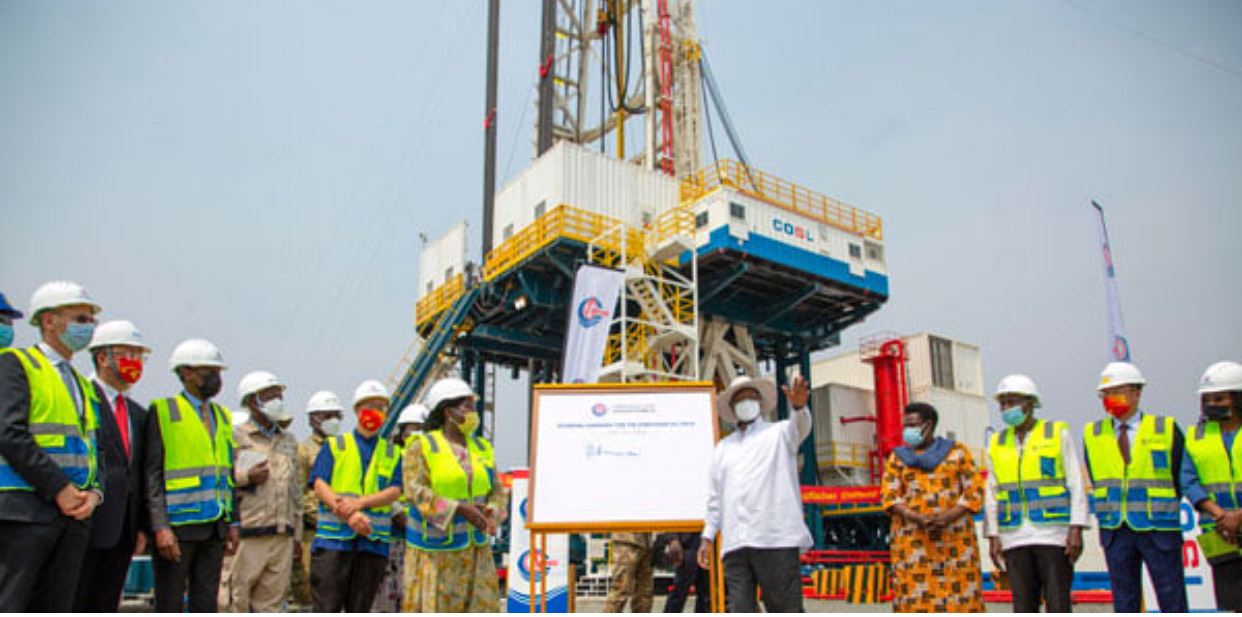
Following the discovering Oil in 2006, Uganda has been working with China through China National Offshore Oil Cooperation (CNOOC) since 2012. Through this collaboration, the country has achieved significant milestones in the oil and gas sector including the recent commencement of drilling on Oil Pad-3 at the Kingfisher Oilfield last month. Furthermore, one of the most astonishing elements of the Uganda-China energy cooperation is the world’s biggest heated pipeline project the East African Crude Oil Pipeline (EACOP). This pipeline will span 1443Km running from Kabaale, Hoima in the Albertine graben to the port of Tanga in Tanzania. The EACOP will depend on upstream feeder pipelines that will run from the Central processing facilities (CPFs) at both the Tilenga and Kingfisher upstream projects.

The Chinese government is already committed to investing its share of the $15 billion EACOP project having invested more than $3 billion in both the EACOP and Kingfisher projects. The EACOP project that is valued at about one-third of the country’s total national economy has already created more that 3500 jobs for the locals and the Project is expected to create up to160,000 jobs along the way and contribute up to 30% to the country’s total GDP after completion.

According to Mr. Fan Xuecheng, the Minister Counsellor of the Chinese Embassy in Uganda while officiating at the “Kingfisher in my Eyes” schools drawing competition, emphasized that the Oil and gas sector besides deepening Cooperation between the two countries, will also be a driving force in the nation’s development.

The energy cooperation between Uganda and China builds on the three Cooperation measures proposed by President Xi Jinping during the last China-Africa leaders’ dialogue in South Africa which were purely laser  focused on supporting Africa in the three areas of Industrialization, Agricultural modernization and Talent development which are undoubtedly key drivers of economic transformation. The cooperation in the oil and gas sector stands to transform Uganda from a net importer of Crude oil to a net exporter. This alone will provide an avenue for technology and skills transfer; create thousands of new jobs for Ugandans, not to mention the enormous Corporate Social Responsibility (CSR) accomplishments of CNOOC in Buhuka and areas around the Kingfisher Oilfield.

While this Uganda-China energy cooperation holds so much Potential for the country and stands to have a significant contribution if Uganda is to meet its goals regarding, the attainment of its vision 2040 or China-Africa cooperation vision 2035 or be it the African Union’s AU agenda 2063.  Nevertheless, this potential has not deterred critics from citing displacement, or a lack of mindfulness of environmental protection et cetera, but are these sentiments shared on the ground? To answer this question, our team ventured into the communities around the Kingfisher Oilfield and to our surprise, the residents seemed to have a very different view. In fact, contrary to what the plastic narrative depicts, the residents praised the contribution of the sector to their socio-economic development and the economic transformation of the local communities citing among other things the safe water supply that came as a fruit of the oil exploration project in Kingfisher through CNOOC Uganda. Through CSR undertakings, the project has provided good roads, safe and clean water to nearly 13000 residents in the Buhuka community, top up salaries for local teachers, scholarships for poor but brilliant students among others.

Resettlement and more, not eviction: Whereas both concepts might imply relocating people, resettlement is planned and affected persons are supported as they reestablish themselves in the new locations. What is even more is that with the Kingfisher oil project, the affected persons that chose not to be relocated out of the area had new three-bedroom houses constructed for them by CNOOC. This scheme saw more than 50 modern homes complete with a modern kitchen and other sanitary amenities. By staying close to the development area, some were even able to get absorbed into the project workforce or their family members hence giving them an additional path to improved livelihood and household income.

Moreover, not only did the project take the care to minimize disruption of local communities, but also the ecosystems in the area continue to thrive where development of the Oilfield now exists alongside an extremely diverse wildlife habitat. A visit to the Kingfisher oil field never ends without sightings of wildlife, whether it is baboons basking by the roadside, alligators on the beaches or the nighttime chirrups of the multitudes of nocturnal insect species. The trip certainly gives a reality-based scenario where development and nature thrive in the same locality. This is even further enhanced by efficient waste management protocols at the site, state of the art equipment such as the Oil Rigs that produce so little sound that even with drilling going on around the clock, only those assigned to the rig may know that it is running. The development being carried out at the Kingfisher Oilfield goes to show that China does not merely talk about harmonious living among nations. Harmonious living is deeply enshrined in the Uganda-China energy cooperation projects at the Kingfisher Oilfield. The Projects are the perfect case for harmonious living where sustainability was built into project execution schedules.

It is easy to assume that, so much in the country’s oil and gas sector and Uganda’s energy cooperation with China is happening arbitrarily, mindless of the livelihoods of the local residents as well as the environment in the Albertine graben. However, what one sees and hears by mealy interacting with the local residents in the surrounding communities will tell a very different story. All this brings me to the conclusion that maybe we need to house our fire equipment for there is no fire on the home front. Instead, let us, critically evaluate the information we receive and embrace the opportunities presented by this Uganda-China collaboration under the flagship of the international energy cooperation for both our benefit as individuals as well as a nation.

The writer is a research fellow at the Sino-Uganda Research Centre.

China’s Concept of Building a Community of Shared Future for Mankind: A Game Changer for an Ideal World

By Allawi Ssemanda

Explaining that currently, “the international security situation is grim, economic recovery lacks momentum, and the gap in development is widening,” Chinese President Xi Jinping proposed the concept of building a community of a shared future for mankind.” This was 2013, and President Xi was answering what China called the historical question of the time, the world and mankind: “Where is humanity headed?” He argued that increasing challenges, like natural disasters and extreme weather patterns, had left the world facing what he described as “profound changes … in our times, and in history,” and argued world leaders to join hands in “building a community with a shared future for mankind.”

Further, President Xi urged the international community to jointly build what China calls “a world with lasting peace, universal security and common prosperity, a world that is open, inclusive, clean and beautiful.”

For a decade now, the concept of building a community of a shared future for mankind has been transformed from a call and promise into concrete actions, and it has received considerable global support as a sure path to an ideal world of harmony, peace, tranquility and shared prosperity.

Today, building a community of a shared future for mankind has become a banner of China’s diplomacy. Indeed, while addressing the Central Conference on Work Relating to Foreign Affairs in December last year, President Xi Jinping delved into this concept, linking it to the theory system of China’s diplomacy, and emphasising that the concept is “a central theme in China’s external endeavours.”

The main goal of the concept of building a community of a shared future for mankind is a peaceful world with shared prosperity. To China, the pathway to this ideal world is “promoting global governance that features extensive consultation and joint contribution for shared benefit”, which Beijing argues, can be achieved if the world embraces “common values of humanity.” To achieve this, China contends, it is necessary to build “a new type of international relations” that supports multipolarism and economic globalization where countries are treated equally.

To China, an equal multipolar world means “equal rights, equal opportunities and equal rules for every nation.”  Put differently, as Chinese Ambassador to Uganda, Zhang Lizhong told Ugandan media and think tanks, in an equal multipolar world, “those with the bigger fist should not have the final say…. we must ensure that all countries, regardless of their size and strength, are able to take part in decision-making, enjoy their rights, and play their role as equals in the process toward a multipolar world.”

China argues that an orderly multipolar world demands that countries act responsibly and “observe the purposes and principles of the U.N Charter, and uphold the universally recognised basic norms governing international relations,” stressing that “multipolarity doesn’t mean multiple blocs, or fragmentation or disarray,” but rather that “all countries must act within the UN-centered international system, and pursue cooperation under global governance.”

Ambassador Lizhong explained that building a community of a shared future means supporting universal, beneficial globalization which he described as “growing the economic pie and sharing it more fairly” with all nations, all social groups, and all communities taking part in economic and social development, and sharing the benefits.

China contends that the concept of building a community of shared future for mankind is the idea of inclusive globalization which, according to Beijing, means “supporting countries in pursuing a development path suited to their own national conditions.” According to Ambassador Lizhong,

“No one should impose one single development model onto the whole world. Unilateralism and protectionism for selfish gains at the expense of others must be discarded to keep the global industrial supply chains stable and unimpeded, and to sustain the robust and dynamic growth of the world economy.”

A critical analysis shows that, by and large, the concept has delivered credible results. For example, in the spirit of building a community of shared future for mankind, China came up with the concepts of Global Development Initiative, Global Security Initiative, and Global Civilization Initiative.  Chinese officials contend that the three initiatives “have provided comprehensive solutions to the challenges confronting humanity and received positive responses” from across the world.

China’s three initiatives resonate with building a community of shared future for mankind, and China is funding a jointly implemented high-quality belt and road initiative which has attracted the participation of more than 155 countries, representing almost 75% of the global population. The same initiative has seen the “launching of more than 3,000 cooperation projects, attracting investments of nearly one trillion U.S dollars, and created an array of national landmarks [and] livelihood projects” globally.

In Africa over the last several years, China has been working with African leaders, providing tremendous support to the continent and accelerating socio -economic development efforts. To date, China is Africa’s largest trading partner and, according to statistics from Chinese officials, the “bilateral trade between the two sides is over 2 trillion U.S dollars.” This is on top of Chinese support to projects in African countries, such as railroads, ports, and electrical infrastructure, including Uganda’s Isimba and Karuma hydropower projects.

Relatedly, in the spirit of building a community of shared future for mankind, China has been working with African countries in fields like poverty reduction, health care, education, environmental protection, and climate change. The performance of the current nine programs China is implementing with African countries under Forum on China-Africa Cooperation (FOCAC), indicates that the cooperation between the two sides is of mutual benefit.

At last year’s China-Africa leaders’ dialogue, held in South Africa, Chinese President Xi made three proposals to African countries. The proposals imply that the cooperation between the two sides is destined to play a pivotal role in the social-economic development of African countries. The three proposals are: supporting the industrialization of African countries, supporting the modernization of agriculture in Africa, and implementing the plan for China-Africa Cooperation on talent development. When these proposals are implemented, the cooperation between Africa and China will definitely produce a community of a shared future for mankind where win-win cooperation prevails, brotherly cooperation and peaceful existence replace confrontation, power politics, block formation, hegemony and the big-brother mentality, resulting into shared prosperity for mankind.

Allawi Ssemanda is a Senior Research Fellow at the Development Watch Centre.