Dying Empires and Shifting Powers: Western Nightmares of the Ascendant Dragon

By Moshi Israel

The world is undergoing rapid transformation, a reality of which nearly everyone is acutely aware, thanks in large part to the advanced technologies at our disposal that capture these shifts in real time. This has led to a palpable sense of alarm over the intensity and pace of these changes. Many current and Traditional World powers are coming to terms with a noticeable shift in global political dynamics, as control seems to be gradually eluding their grasp. This situation can be likened to the precariousness of clinging to the sharp edge of a skyscraper to prevent a fall. While this might seem like a natural progression from the viewpoint of the average citizen, from the perspective of established authorities, the scenario unfolds with far-reaching implications.

Observing that the Western bloc is experiencing a decline does not constitute an assault on its integrity, although there is justification for assaulting western integrity. Moreover, such acknowledgments have even been made by Western leaders themselves. Josep Borrell, the European Union’s chief diplomat, has starkly proclaimed that the “era of Western dominance has definitively ended.” However, my perspective is not as bleak as Mr. Borrell’s. I maintain that there is still an opportunity for Western nations to reassess their approach towards global political governance. The essence of Borrell’s argument hints at a potential solution to the swift decline of the West. He cautions against dividing the world into ‘the West against the Rest’, highlighting accusations from many in the ‘Global South of double standards.’ This insight underscores the need for a more inclusive and equitable international framework that eschews divisive narratives.

Regrettably, certain Western governments are persistently engaging in divisive tactics, particularly targeting China. The underlying motivation for such actions, despite various ‘moral’ justifications presented by the West, stems from China’s rapid ascent. A number of Western political analysts and policymakers are unwilling to coexist in a world where China assumes a leading role in political, military, cultural, and economic spheres. They position themselves as the defenders of Western ‘exceptionalism,’ yet often, their views do not reflect the sentiments of the broader populace within their nations. Nonetheless, their relentless quest for perpetual dominance and their constant fixation on the potential threats posed by China’s growth have contributed to a global environment steeped in turmoil.

The global landscape is currently fraught with challenges, from the ascendancy of gangs in Haiti and the humanitarian crisis stemming from the Gaza conflict, to ongoing hostilities in Ukraine and heightened tensions across the Middle East – including in Yemen, Syria, Iran, Iraq, and Lebanon. Additionally, unrest in the Sahel region, renewed conflicts in the Democratic Republic of the Congo, and the looming menace of climate change, seemingly present a formidable agenda for global leaders. Unfortunately, there is no clear plan or indication that all of these crises are being managed cooperatively within the United Nations framework. Instead, everyone is either choosing sides or completely turning a blind eye to these issues, with the notable exception being China which has overly sung the chorus of strategic cooperation to a disinterested crowd.

Recent reports indicate that Niger has severed military relations with the United States, following a similar disengagement from France, which has been increasingly displaced by Russia across Africa. Furthermore, Russia has been actively eroding Western influence globally, while efforts to manage Netanyahu have proven futile, and threats from Iran and North Korea are escalating. As Josep Borrell, European Union’s High Representative for Foreign Affairs noted, the Global South is reevaluating its perspective on the West, and the outlook is far from favorable. The BRICS+ continuous growth is also chipping away at Western dominance. In this context, it is imperative for Western policies to evolve, focusing on genuine promotion of Western exceptionalism of democracy without hypocrisy, moral standards without double standards, Global prosperity with active Global South participation. The West indeed needs to ‘build back better’ but this time with entirely new and different construction material because the existing system is damaged beyond repair.

Many of today’s global crises could be resolved through compromise and negotiation, particularly when the parties involved hold no malice towards each other. Indeed, simplicity often underpins the solution in such scenarios. Notably, among the world’s major powers, China stands out as the most committed to pacifism.

At present, the immediate concerns for Western nations primarily revolve around Russia and Iran. Yet, in a long-term perspective, political leaders in the West have consistently identified China as the most significant security challenge to the prevailing global order. China’s ascendancy is undeniable, and in the context of its cultural symbolism, the dragon—a figure believed in Chinese lore to govern water phenomena—serves as a metaphor for the potential impact of China’s rise on the West. Depending on the West’s approach, China’s advancement could be perceived either as beneficial rainfall or as overwhelming floods.

This raises a critical question: faced with a binary choice between relinquishing global dominance or precipitating a cataclysmic Third World War, what decision will certain Western governments make?

The Writer is a Senior Research Fellow at DWC.


Africa-China Cooperation: Dar-Es-salaam Consensus is Right Step to Building a Community of Shared Future

By George Musiime

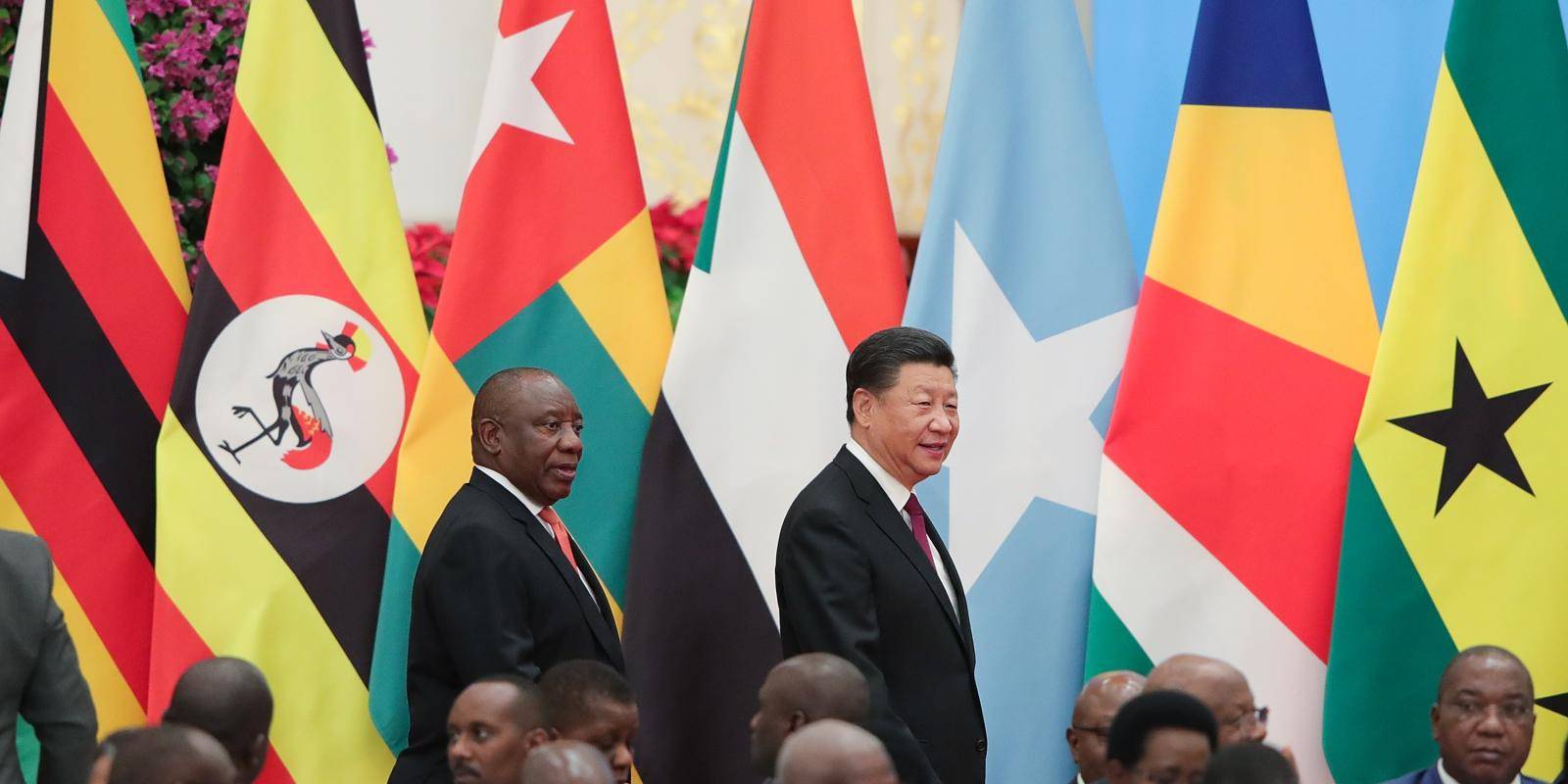
While describing China-Africa cooperation, Chinese officials have always argued that there are two fundamental thrust forces  to the thriving cooperation between China and Africa. The two are;  one, the Belt and Road Initiative (BRI) and two, the Forum on China-Africa Cooperation (FOCAC). The FOCAC, is also the flagship vehicle for people to people exchanges between Africa and China. China’s emphasis on people to people connections is premised in an understanding that, Amity between people is the bedrock of state-to-state cooperation which one can argue is the foundation of win-win cooperation China emphasises.

It is therefore no wonder that China has been standing at the forefront of putting people to people connection first in all its diplomatic undertakings. In line with this commitment to promote people to people connections, China and Africa have held sub forums of the FOCAC including the China-Africa peace and security forum, people forum, poverty reduction and development forum, young leaders’ forum, Think Tanks Forum, the ministerial forum on China-Africa health Cooperation, forum on China-Africa local government Cooperation and the FOCAC legal forum.

In effort to advance this agenda, in collaboration with Chinese Embassy in Tanzania, Zhejiang Provincial People’s Government, Jinhua Municipal People’s Government, Zhejiang Normal University and University of Dar es Salaam organised the thirteenth edition of the China-Africa Think Tanks Forum (CATTF) which was held in Dar-Es-salaam under the theme; “China-Africa Practice: Building a Community with a Shared Future.”  The During  his key note address at the opening of the forum, Mr. James Mdoe the Permanent Secretary in Tanzania’s ministry of education pointed out that the goal of the forum was to  focus on exploring China-Africa cooperation mechanisms, strategic initiatives, and practical actions in the fields of industrialisation, agricultural modernisation, and human resources training. Moreover,  the Deputy Vice chancellor University of Dar-Es-salaam made a call for increased  Cooperation especially in the area of research across a diversity of fields adding that this would set Africa on a fast track to modernisation.

The CATTF brought together more than 300 members from the Academia, Think Tanks, as well as government officials from both China and at least 49 African countries with the objective of discussing China-Africa relations in the broader global context. The thirteenth edition of the forum came up in a unified China-African voice on numerous geopolitical matters afflicting the world but most prominently Africa today in what has been termed as the “Africa-China Dar-Es-salaam Consensus.” This document was the brainchild of African and Chinese experts in which they shared insights on how to address not just the many  geopolitical challenges facing the world today but also injustices that have been suffered by Africa in the corridors of international relations.

Among other things, the forum called on the world to deepen development cooperation explaining that,  such cooperation to be beneficial to all especially the developing world, it must be built on mutual understanding, solidarity, with the goal of shared prosperity in mind.  Additionally, the consensus further made a call to all countries to endeavour to build and uphold a people centered approach to development. Ideally, “a people centered approach to development” is one that priorities the needs, aspirations and wellbeing of people and communities throughout the entire process of development. Such an approach must believe in ensuring that development initiatives are responsive to the concerns, values and priorities of the people and beneficiary communities. The spirit of the consensus is that only through fostering participatory development processes are we able to achieve meaningful and equitable development outcomes.  This is exactly what Africa and the rest of the global south needs; the creation of a sound institutional environment that will enable all citizens of the world to work towards a better life unimpeded.

In light of responding to the tumultuous global security landscape, the consensus urged the world to promote dialogue over conflicts. China for example has been a strong voice for negotiated solution to two of today’s major conflicts because of the understanding that the price of conflict is way to high for us to pay. In fact, the more we fan conflicts, whether it is by providing armaments for the warring parties or frustrating attempts at dialogue we are practically turning people on both sides of the conflict into Canon fodder and this can never be the blueprint for building a prosperous world.  Such is the background of the Dar-Es-salaam Consensus’s  call for dialogue over conflict. Moreover, building on the understanding that globalisation must coexist in the same space with diversity,  the consensus also called for the respect of everyone’s culture, history, and traditions.  Even in a global village, people must be allowed to live and practice their culture. It is attempts to overrun or water down the culture, history and identity of people that has in some instances resulted into resistance and eventually some of the world’s bloodiest  conflicts. In fact this call is more in alignment with multilateralism over hegemony as a path to  global peace and harmony.

Furthermore, the imposition of a prearranged pathway to modernisation was referenced as a major challenge that the south has struggled with for decades because what has worked for one country may not necessarily work for the next. Thus in response to this divergence between development aspirations and strategies, the Dar-Es-salaam Consensus called for giving countries a chance to pursue their own path to modernisation. These are paths that take into account their culture, history,  traditions, and are tailored to their unique development needs. Accordingly, the Dar-Es-salaam consensus called for strengthening global economic governance and pushed for reforms in the global financial systems in order to create an environment where all nations of the world big or small, developed or developing will be able to thrive and to reach the universal goal of shared prosperity.

The output of the 13th CATTF therefore is a document that seeks redress or at least limit the chance that Africa will suffer the same injustices that the continent has suffered over and over again in the space of International Relations. The Dar-Es-salaam  Consensus is the tool that has been used to communicate this position and  call the rest of the world to cease trying to take advantage of Africa in order to build sustainable development bonds with Africa and the global south.

George Musiime is a Research Fellow at The Development Watch Centre.

Build Back Better World v BRI: Can Africa Benefit From Development Finance Competition?

By Nnanda Kizito Sseruwagi

There is a competition. A spending competition. The spending is in trillion dollars. Developing countries are participants. Participating from an interesting position. Participating as recipients. Imagine that. Being at the receiving end of a spending competition!

Whereas both foreign aid and development finance are projects that pursue development objectives in developing countries, we should distinguish them. Unlike foreign aid, development finance comprises an extensive range of financial instruments and interventions intended to support long-term economic growth and infrastructure development in underdeveloped countries.

Foreign aid often tends to address immediate humanitarian needs, support social welfare programs and alleviate poverty in poor countries. It has also suffered profound criticism as deleterious and counterproductive to the development of African countries.

The biggest foreign aid providers are historically Western countries including the countries under the European Union, the United States, Germany, United Kingdom, France, Sweden, Netherlands, Italy, Canada and Norway. Japan is also a major foreign aid giver. China is noticeably absent from this list. It has unwaveringly pursued a unique strategy borne out of its shared historical experience with Africa. This was partly the spirit in which the Belt and Road Initiative (BRI) was initiated.

While the G7 countries launched the Build Back Better World (B3W) in 2021, they were reactively ushering in an alternative to China’s BRI. It had been almost a decade earlier since China had recognised the primacy of infrastructure development in low- and middle-income countries. Observed, that it could also have been a quiet concession that foreign aid was not as impactful as it had been magnified to be.

The B3W initiative focuses on addressing infrastructure needs in developing countries. It is planned that by 2035, this initiative will have contributed about $40 trillion worth of infrastructure in recipient countries.

By contrast, the cumulative BRI engagement in the 147 countries undertaking the project since its inauguration in 2013 is $962 billion. Out of that, about $573 billion was invested in construction contracts while $389 billion went into non-financial investments. It is also estimated that BRI will likely increase the world GDP by $7.1 trillion per annum by 2040. Its benefits are also expected to be “widespread” because of the efficiency likely to be experienced in world trade as a result of improved infrastructures across the world.

But here is the catch. Whereas both initiatives sound ambitious, a close examination of their current contribution is very revealing. Out of the gigantic promise of $40 trillion, the B3W has so far yielded a paltry $6 million in global infrastructure construction. Whereas China’s BRI did not promise trillions of funds to China’s friends and allies, it has already sunk almost a trillion dollars in brick-and-mortar infrastructure projects around the world.

Let’s turn the focus to Africa. The majority of the world’s poorest and developing countries are spread across this continent. We are the central focus of this development finance competition between the West and China. If we need to choose a reliable partner, given the above delineation of how the B3W and BRI promise versus how they have performed, where should we fall?

As we seek to unlock our development potential by tapping into financial assistance to jumpstart our industrialisation, let us not lose sight of the dynamics involved by the two major development finance funders, China and the United States.

The BRI is already directly seen to be bridging the gap of Africa’s infrastructure deficit which is reported to be about $130-170 billion annually. We need all the financing we can find to close this gap since our development needs are many.

This is where the B3W initiative would come in. It presents us with an opportunity to diversify our sources of development finance. The problem only arises from the signature conditions that come with Western funding. The well-meaning, well-sounding terms that espouse democratic governance values and transparency as prerequisites for qualifying to receive this finance. A lot has been written and said about the mismatch between the focus on these values as opposed to the impact which that focus makes on the ground. Unless the West is capable of learning from the futility of its conditional foreign aid to Africa and is willing to risk a blind investment with the understanding that different societies evolve with different norms and habits which may change as they achieve economic development, insisting on these preconditions will yield nought.

As Africa, we need to leverage both the BRI and the B3W initiatives by aligning the investment that comes from them with our national development priorities. If we are not clear on those priorities, it doesn’t matter how much money will be thrown at us, it won’t impact our people. But the choice is in our hands.

The Writer is a senior research fellow at the Development Watch Centre.


Uganda-China Should Collaborate on Climate Financing

By Nnanda Kizito Sseruwagi

I wish to first pre-empt the scepticism shared by some people about the feasibility of different modes of climate finance and the efficacy of their impact on mitigating climate change. The climate finance architecture easily seems to be capitalism’s mode of commercializing climate change without solving it. I am partly doubtful of the impact of offsetting emissions through buying carbon credits. However, I believe that to abstain from partaking in this business would only guarantee us a double loss. We lose nothing by being involved, yet we miss out on so many opportunities to raise capital to finance our other development needs if we boycott these international climate change mitigation efforts.

Uganda currently lacks a clear climate financing strategy despite the urgent need to meet its growing cost of addressing climate challenges. We stand to suffer serious economic consequences if we do not act. The recent decades have seen an increase and the frequency of arbitrary climate events in the country which have affected agriculture- the breadwinner industry for the majority of our population.

We are particularly at extreme risk of economically suffering from climate change due to the heavy dependence on farming, a very sensitive sector to our livelihood yet it’s highly vulnerable to climate change. With Agriculture affected, 40% of our GDP could be significantly reduced and 80% of our labour force could be rendered unemployed. A random destabilization of rain seasons could put our economy on its knees since less than 2 % of farming in this country depends on irrigation.

I do not want to imagine a scenario of a hungry and jobless population and its likely effect on our security and political stability. Many Ugandans might be governable for now because of the high and reliable supply of food and water across the country. We are a country of subsistence farmers. Ugandans may not highly be impacted by the cost of clothes, sugar, spices, cooking oil or gas. These are considered luxury goods in our villages. But a serious decline in food production could detonate a time bomb of incipient political disgruntlement in our people. Therefore, just like Uganda partners with powerful countries on security, it is time we partnered with China on addressing climate change as though it were a security matter; because it is.

China has dedicated a serious stake in our infrastructure development, with a vision to contribute to our industrialization and consequently our development. This is a strategic investment, with a broad shared vision for both Uganda and China. However, the two states cannot blind themselves from factors that could potentially sabotage their grand strategy for development. We need to keep working together to tie any loose ends where our investment in development could be upset.

We would need this partnership because we lack the financial and human resources to adequately invest in the Carbon Credit Market. Just like with the oil industry where we partnered with international firms to negotiate and design our oil and gas agreements, we reasonably need some help here. The global Carbon Credit Market was valued at $103.8 billion in 2023 with a predicted growth at a CAGR (Compounded Annual Growth Rate) of 14.8% from 2024 to 2032. Last year, the value of this market hit a record of $949 billion. This is a market we cannot be indifferent about!

China would find financing us worthwhile because we have one of the most attractive carbon market profiles on the continent. Our carbon market portfolio boasts a total of over 33 million carbon credits issued from the Clean Development Mechanism (CDM) and Voluntary Carbon Market (VCM) standards. A carbon credit is worth about $40 to $80, on average. However, if Uganda sits on its potential in this market, it could fluctuate greatly since just like any other market, it depends on demand and supply.

It is therefore urgent that we collaborate with a major global climate finance funder. China already contributes about $1.2 billion annually to climate finance through multilateral development banks and also contributes $1.4 billion bilaterally. This would be a strong partner to work with on this. The added advantage of working with China, as President Museveni normally quips, is that “…they don’t waste our time.” So, we would efficiently work through the modalities of a partnership in time to find the market still fertile.

The good news is that China has already initiated steps meant to address climate change in Uganda and Africa in general. For example, among other reasons, China’s support for bamboo growing is that it will help in addressing climate change.

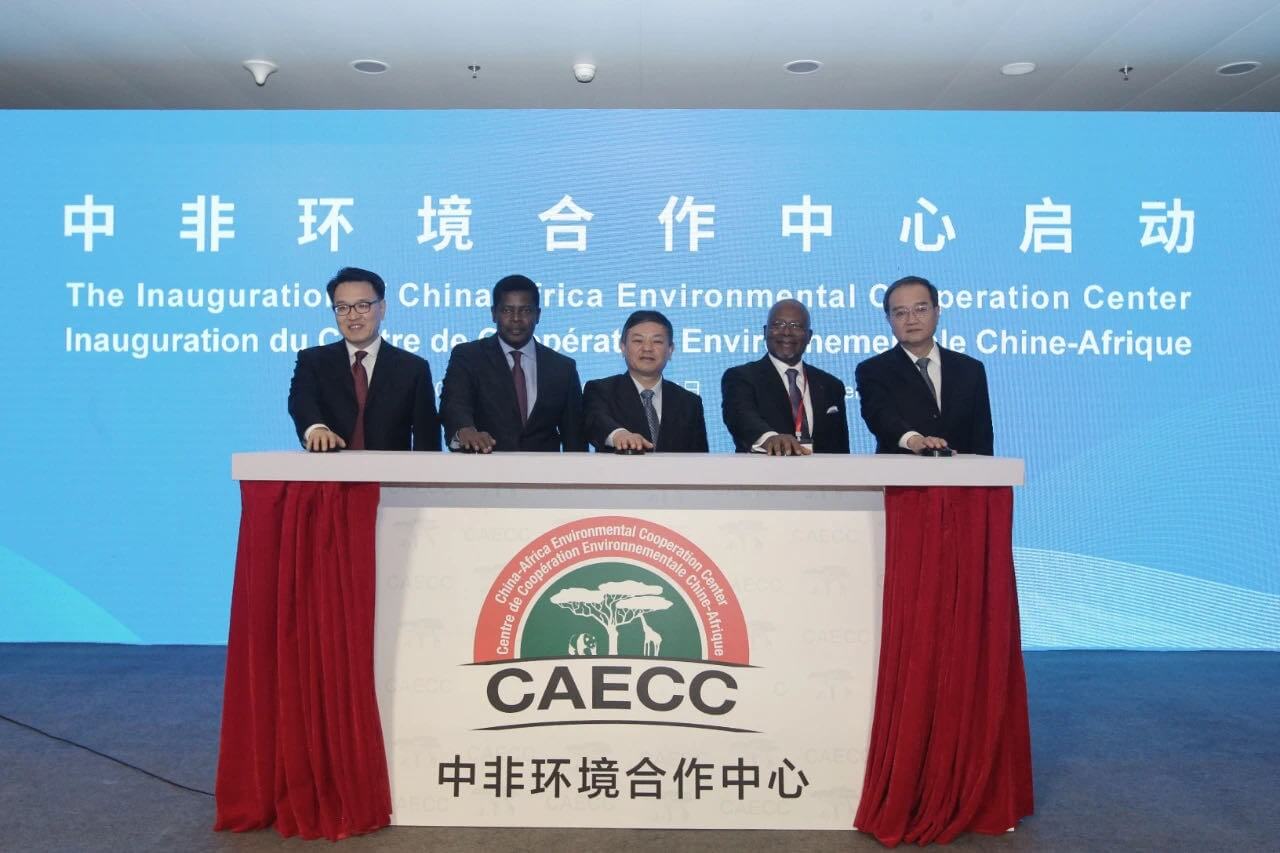
Also, the Eighth Ministerial Conference of the Forum on China-Africa Cooperation (FOCAC) held in Dakar, Senegal (29-30th November 2021) adopted a consensus in which 53 African countries and the African Union Commission (AUC) and China agreed on “China-Africa Cooperation on Climate Change.” The two sides further committed to “support efforts to vigorously develop the green economy, advocate a green, low-carbon, circular and sustainable way of  development, and work actively to build an environment-friendly society.” With the already functioning China-Africa Environmental Cooperation Center which was established to advance  policy dialogue, exchanges and cooperation on environmental protection, Uganda and indeed other African countries should leverage it to advance climate mitigation policies including collaboration on climate financing.

We need to act early to meet the twin challenges and opportunities presented by climate change. On the one hand, we need to mitigate it because it threatens us economically and politically. Secondly, we need to participate in the booming climate change industry as espoused in the Carbon Credit Market. we need a reliable partner to face both challenges. Uganda’s vision for 2040 on achieving upper middle-income status and reducing poverty to 5% could dissipate into the wind if we only focus on infrastructure and energy and forget about potential subversive factors like climate change. Harnessing climate finance should thus be primary to our development agenda.

The writer is a senior research fellow at the Development Watch Centre

Africa Must Leverage China Cooperation and Elevate or Stay the Arena for Great Power Rivalries

Africa Must Leverage China Cooperation and Elevate or Stay the Arena for Great Power Rivalries

By George Musiime

Today, we live in a very challenging world, a world desperately in need of sound global moral-leadership.  While this might not happen today, Africa is not lacking in potential. The African continent could actually provide this global-leadership, if only it could capitalise on its wealth of God given resources, brilliant citizenry, and development partnerships in its pursuits. However, we cannot provide global leadership, lest we fix our own leadership crises first. The concern of this essay however isn’t about global moral-leadership but rather to adumbrate on the possibility that Africa could actually overcome the challenges and stereotypes it faces today to achieve what all the other civilisation throughout history have been able to accomplish. To put this into perspective, let us take a bird’s eye view of human civilisation through time.

There was a time Egyptians were at the helm of global civilisation, creating engineering marvels such as the pyramids, with worlds flocking to the region to experience and learn from the groundbreaking innovations that were prevalent in the region at the time. Then, there came the Arabs in Baghdad with their scientific discoveries and achievements in Mathematics, philosophy, physics, and astronomy, all of which laid the groundwork for many of the scientific breakthroughs that would follow.  However, human civilisation did not rest in Baghdad or we would still be thousands of years away from where we are today. After the golden age of the Arabs, there came the Europeans and building on the previous knowledge and achievements, they gave us the industrial revolution.  This gave the Europeans so much power that they literally reached a point of sitting around a table in Europe with a map and began to share the rest of the world amongst them, and what an egotistical thing that was! It is no wonder that this would later contribute to the slump in their pace up the hill of civilisation but does the story end here? Of course not, because at the beginning of the 20th century, the United States was mostly an Agricultural country just like Africa is today. It was nothing like France or Britain, yet through deliberately walking the Science and Technology path, it was able to elevate to a point where it has been able to run the world for the past century.

Moreover, following the Second World War and decolonisation in the global south, we have witnessed countries like China take enormous strides that Africa cannot any more, doubt the possibility of economic progress and transformation.

In his famous book “The Evolution of Civilisations” the American Historian Carrol Quigley posits that civilisation is a cyclical phenomenon which might give a reasonable explanation to the earlier passing on of the torch of civilisation from one civilisation to another throughout history. Nonetheless, regardless of some scholars faulting Quigley’s analysis as being too simplistic in as far as explaining the rise and fall of civilisations, he puts forth two points that will be the focus of this essay among the forces behind the rise and fall of civilisations. This essay will discuss these two points in relation to China-Africa relations i.e. the role of what Quigley terms as “the Instrumental Elite,” on one hand and Science and Technology on the other, in the rise of civilisations.

The instrumental Elite are a small group of people wielding enormous influence and having the power to steer the course of a society. Despite usually being a small group, they hold enough power to steer societies to progress, stagnation or destruction depending on their motives, intentions and consciousness.  Once again, one can argue that an instrumental elite with a clear vision is what has enabled China to make so much progress, becoming the world’s biggest economy over the past six decades.

Whereas most of Africa chose western democracy, China chose a different path and built a meritocratic society. Democracy by its nature rewards the popular regardless of their motives, intentions or consciousness unlike meritocracy, which rewards performance. Those that ride on popularity, tend to bring on board their kin and kind and in some unfortunate instances, form administration’s that are so incompetent that they can only get young nations on a crash-course with whatever tragedy is waiting at the end of incompetence avenue! On the contrary, China has adopted a system that rewards doers based on performance. This kind of “the instrumental elite” has enabled China to make huge leaps on the path of economic progress and transformation over such a short period. Moreover, right in there, lies the lesson and probably a model that Africa could borrow and adapt to its own journey to economic transformation.

However, Quigley does not only mention the role of the instrumental elite, he also talks about Science and technology as another factor that fuels the rise of civilisations and only God knows how strongly a deficiency in Science and Technology has held back the continent’s progress. In fact, even with the vast wealth of natural resources, Africa has not been able to make much progress due to a Science and Technology gap created by an education system designed during the colonial era with the goal of providing clerks and at the very best administrators that would implement the colonial model of governance. Therefore, we have ended up with an independent Africa, run according to the colonial rulebook and unable to make much Technological headway for the continent’s transformation. Luckily, through the continent’s friendship with China, a country that aside from its different approach was where Africa is today just a few decades ago gives Africa the hope that the goal is attainable. Additionally, China is not simply sharing skills, knowledge, expertise and technology with the continent but it is also increasing Africa’s productive capacity through investing in infrastructure.

China’s investment in infrastructure on the continent is not just to connect the periphery to the center, which was a model designed with facilitating colonial administration in mind during the colonial period. Chinese backed infrastructure projects aim to connect nations and nation-capitals facilitating cross border and intra-Africa trade and development. Therefore, all that remains now is for Africa’s instrumental elite to take decisive and deliberate actions to steer their different countries in the right direction; and that is the direction of economic transformation.

China brings to its relations with Africa the understanding that economic transformation cannot happen unless there are certain preconditions for economic progress. Conversely, the absence of these preconditions is what has become well known as  “development bottlenecks.” These same bottlenecks have grossly accounted for the continents transformation or the lack thereof. China does not necessarily have to promise Africa development and economic transformation, but through the win-win approach to its dealings with Africa, and investing in crucial infrastructure projects, China is practically setting the stage for Africa’s economic take-off. Therefore, the onus now remains on Africans to choose conscientious and enlightened leaders with the right motivation. More to that, Africa’s leadership requires a paradigm shift from the old-colonial administrator mentality that did not care much about accountability to the citizens and towards leadership that will work towards improving the livelihoods of their citizens, economies of their nations, and the economy of the continent as a whole. This way the continent will be able to advance on the ladder of civilisation, and even assume its position on the big table of the multipolar world.

George Musiime is a Research Fellow at the Sino-Uganda Research Centre.

China-Africa cooperation is more than just a silver lining, it is the blue sky

By George Musiime

In an interview with CGTN last year, Mr. Wu Peng, director general of the department of African affairs in the Chinese foreign affairs ministry summed up the Chinese government’s view of its interactions with Africa in a single memorable statement in which he noted that “Africa is a big stage for international cooperation, not an arena for major power rivalry.” Such is the spirit that directs Chinese foreign policy towards Africa that is based on the five principles of mutual respect for sovereignty and territorial integrity, mutual non-aggression, non-interference in each other’s internal affairs, equality and mutual benefit and peaceful co-existence. It is this overriding principle that has not only made China such a significant development partner for Africa over the past few decades, but also why it will continue to play a key role on the continent.

Towards the end of the first half of the last century, Africa witnessed a wave of awakening that swept across the continent in the form of decolonization struggles, yet soon after the attainment of independence, these flames seemed to have fizzled out. Nevertheless, the cooperation between China and Africa still stayed albeit being with a measured scale of involvement. The turning point however came at the turn of the new millennium when, the then President of the Peoples Republic of China Jiang Zemin, announced China’s “going out strategy” in March 2000 followed by the first Forum on China-African Cooperation (FoCAC) Summit. Following these two events, China’s involvement in Africa began to increase and has continuously been on the raise ever since.

The African continent being home to  majority of the world’s developing countries was suffering from a multitude of challenges and bottlenecks that impeded economic progress across the continent  ranging from disease burden, peace and security, infrastructure deficits and food security among many others.  At the same time, the continent was striving to disentangle itself from this array of development bottlenecks. Meanwhile, the developed world mainly viewed Africa as a problem-riddled continent that only required interventions which would come in the form  of development aid. At the same time, China showed up with a very different perception of the continent. Following the announcement of the going out strategy in 2000, china saw Africa as an opportunity other than a problem needing solving. This was followed by more Chinese companies getting involved in Africa. As a result, the continent saw increasing Chinese investment in infrastructure including highways, railways, power generation plants, industry and manufacturing, agriculture and production etcetera. These investments revitalized the continent’s development efforts, setting Africa on a path to modernization-something that had eluded most of the continent since independence.

Confining myself to the Ugandan context, the fruits of Chinese cooperation with Uganda are far reaching spreading across such areas as infrastructure development, peace and security, food security, trade and general improvement of livelihoods of ordinary Ugandans. In fact, government of Uganda has been able to complete several infrastructure projects under the flagship of the Belt and Road Initiative BRI cooperation including the 183MW Isimba dam and 600MW Karuma power plants adding almost 800MW of clean power sources to the nation’s power generation capacity. Furthermore, there has been several completed road projects in partnership with China including but not limited to the Entebbe Express High way, which has significantly eased travel to and from the Entebbe International Airport, also completed are the Hoima-Kyenjojo, Kakumiro Kyenjojo roads. These roads made transportation of both personnel and equipment to the oil rich Albertine region much easier hence facilitating all manner of ongoing development work being carried out in the region. These and similar projects are responsible for pushing the length of paved roads in Uganda up by 1334Km from 4257.00m in 2016/17 financial year to 5591Km in the 2020/21 financial year. However, one other significant development has happened in the agricultural sector under the South-South Cooperation working with the UN’s Food and Agricultural Organization (FAO). The south-south cooperation, aimed at improving agricultural production capacity through the tri-factor of knowledge, skills and technology transfer and building the capacity of local farmers in Uganda. This project went from demonstration farms in 2012 to the establishment of hubs with the primary focus of increasing agricultural production and value addition. The south-south cooperation has been instrumental in increasing production, ensuring food security, creating more jobs along the agricultural value chain and improving the livelihoods of individual farmers in Uganda.

Therefore, China’s cooperation with Africa has been immensely beneficial to the continent in as far as addressing the different development challenges previously faced by the continent. In fact China has been directly involved in projects aimed at not only addressing the national development goals of the host countries but also helping African Countries  in their quest to attain their targets with regards to the UN’s agenda 2030 whether it be poverty eradication or zero hunger, affordable clean energy or climate action, industry, innovation and infrastructure or sustainable cities etcetera. It does not matter whether one is looking at BRI related road or power projects in Uganda, Wind and solar farms in Ethiopia or South Africa, Railway projects in Kenya or Ethiopia, Housing projects in Tanzania or Angola, it is growing increasingly hard to miss the Chinese hallmark on the current trend of economic growth across the continent.

George Musiime is a research fellow at the Development Watch Centre.

georgemusiime@dwcug.org

Understanding Chinese Contribution to BUBU

By Nnanda Kizito Sseruwagi

It is easy to assume that the imbalance of trade between Uganda and China translates into an unfair play in the long-term development relationship shared by the two friendly states. It’s an understandable misunderstanding. This is despite the marked improvement in the balance of trade between us over the years. By balance of trade, I mean the difference between the monetary value of Uganda’s exports versus imports to China.

However, let us not mistake the “imbalance” in our balance of trade with China to be inherently a bad thing. Whereas Uganda suffers pressure on our external payments to China due to this trade imbalance, we can neither wish away nor miss the benefit of ensuring the availability of Chinese goods such as Construction vehicles which topped our imports from China last year. These are primary tools in driving our industrialisation.

The Observatory of Economic Complexity (OEC), analysed the dynamics of economic activities between Uganda and China in the last 28 years and established that the exports of Uganda to China have increased at an annualised rate of 25.6%, from $115k in 1995 to $54M in 2022. Additionally, in December 2023, China exported $116M and imported $5.75M from Uganda, making a positive trade balance of $110M. This gradual increase in our exports to China over time is the first promise of a better trade relationship between us, but there is more.

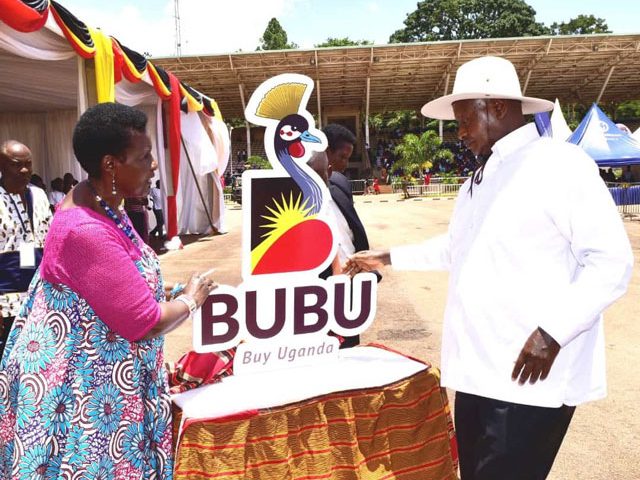
The idea behind the Buy Uganda Build Uganda (BUBU) policy is a brilliant one. Responding to the Private Sector’s appeal to make policy decisions that promote and encourage practices of consuming locally-produced products, the Government of Uganda unveiled the BUBU policy in 2014. It aimed to spur economic growth by giving prominence to domestically manufactured goods.

The number and weight of reasons for encouraging domestic consumption as a means to bolster economic growth are endless. China is an instructive example of this. In 2023, the government of China issued measures to boost domestic consumption which included subsidizing Chinese consumers to buy electric cars, expanding access to social housing and putting more spending cash into Chinese pockets. This is an essential step in stimulating economic growth.

Whereas countries develop through participating in international trade, they need to first anchor themselves in high domestic consumption of their own manufactured goods. How could you sell to foreigners what you can’t consume yourself anyway? We must first excel at BUBU before succeeding in international trade. In fact, although the term now sounds like a local cliché, I think it is our gateway to going international.

International trade is important primarily because it opens for us access to larger markets beyond our narrow borders. This provides opportunities for Ugandan businesses and industries to expand their customer base hence leading to economic growth and development. This is the only way we can guarantee increased productivity and competitiveness for our local industries.

BUBU should be a nursery bed for growing more industries like Mukwano Industries Limited, which has a deep penetration of its products in almost every Ugandan household. This domestic success explains why it’s one of the few Ugandan companies that have penetrated the regional and international market, exporting products to over 20 countries in East and Central Africa.

However, there remains a fear and suspicion amongst some Ugandans that foreign capital might be simply camouflaging to partake of Uganda’s efforts at promoting domestic products while excluding the intended local beneficiaries.

One of the firms criticized for this is Goodwill (Uganda) Ceramic Co. Ltd, whose shareholders are majorly Chinese. The profound question to ask, however, is what is the definition of a “local” or “domestic” or “Ugandan” company which BUBU intends to promote?

Legally understood, a “Ugandan company” is one originally incorporated in Uganda notwithstanding having majority of shareholders being foreigners. This makes Goodwill a Ugandan firm. It is even better to understand the “domesticness” of a company based on the location of its most valuable operations.

What primarily determines the origin of a business, economically speaking, is the domicile where the most central part of the highest value in the production chain of its goods falls. That is why the iPhone remains understood as an American product yet it is manufactured in China. The highest value of the iPhone is its design and marketing, which happens in California, making its highest value return to the United States.

For a country lacking fundamentally in financing, we cannot do away with foreign capital. However, our hook is in domesticating that capital. By incorporating companies locally, transferring their production systems to Uganda, employing/training Ugandans to work in all levels of manufacturing, and selling the products from Uganda as exports, we do not lose much even if the owners of the business are non-Ugandan nationals. Local ownership should not be narrowly understood as exclusive ownership by Ugandan nationals. That will limit our access to development capital.

The Chinese are investing so much money in Uganda, co-owning firms with Ugandans, employing Ugandan labourers, training them, transferring technology to Uganda and doing a lot to support Uganda in ultimately supporting herself. They are not importing Chinese experts and labourers to establish colonies here to feed China. This is a relationship that supports BUBU.  It’s a relationship we can exploit to grow our economy.

The writer is a Senior Research Fellow at the Development Watch Centre.


Should We Celebrate ICC’s Award to LRA Victims?

By Nnanda Kizito Sseruwagi

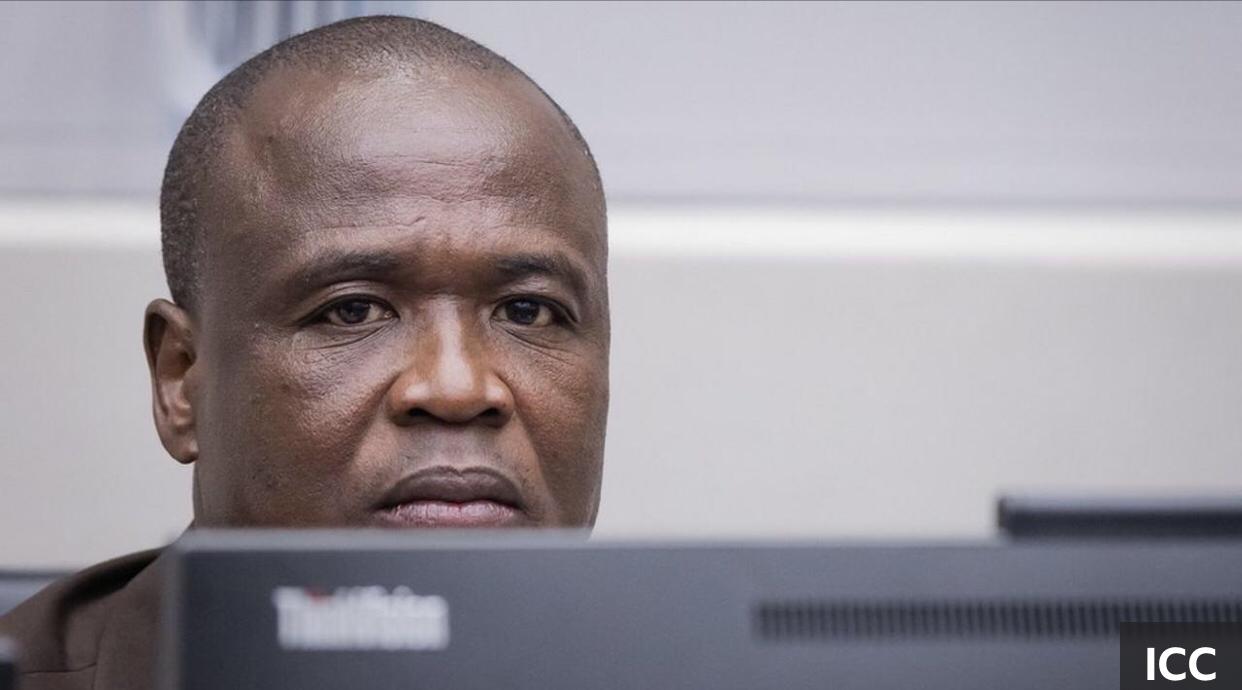
Towards the close of February 2024, the International Criminal Court (ICC) issued a record reparations order, compensating about 50,000 victims of the Lord’s Resistance Army (LRA) up to $56 million (Shs.222 billion). Most of those compensated were particularly victims of LRA’s former rebel commander Dominic Ongwen who was convicted in 2021 on 60 counts of war crimes and crimes against humanity.

Whereas this reparations award is a bold statement especially to the victims of this LRA insurgency in denouncing their plight, it remains problematic in many ways.

Firstly, the Trust Fund for victims where this sum- the largest the ICC has ever awarded in a case- is expected to come from, relies on voluntary contributions and could actually fail to raise enough money to meet the compensation order. This in itself is problematic as I will explain later. But one should wonder how Ongwen, who is the person against whom the compensation order falls, or criminals like him, could be deterred yet they know that the ICC will upon their conviction find them indigent and consequently shoulder their burden of compensation.

Secondly and most importantly, I think that this award is precisely a tool and technique for legitimizing the ICC. By celebrating this award, Uganda would be ordaining the legitimacy of the ICC hence sanctioning it to undertake other decisions which might be ulterior and deleterious to our national interests in the end.

What is wrong with legitimising ICC? Or why should we consciously and proactively discredit the ICC?

This international tribunal was established in 2002 under the Rome Statute. It promised to foster justice and human rights on the international landscape. Uganda was one of the naïve states which ratified the Rome Statute as early as June 2002.

It was naïve because how could we have bought the lie that an international organisation could dispense criminal justice in the absence of a political jurisdiction? The vague description of the magic with which the ICC claims to effectively administer justice on an international scale without the backing of a state establishment only raises suspicion about the invisible state powers to which it provides cover like a magician’s sleight. It is realistically impossible to dispense criminal justice and order without the backing of a political order. In the case of ICC, that order becomes the narrowly interested cartel of great powers at the Security Council.

It now goes with saying that the ICC is a political body bidding for the interests of great powers. Under Article 15 of the Rome Statute, the Security Council is empowered to set the agenda for ICC in several material ways.

The impunity of veto-holders practically emasculates the court. For example, it cannot investigate the criminal culpability of individuals without the consent of the Security Council. Into the bargain, the Security Council has powers to deter any ICC investigation as long as it wishes to.

Therefore, whereas jurists of international law and unsuspecting members of the international community such as the victims of the LRA war in Northern Uganda may celebrate these historical reparations awards as a mark of the success of the ICC in implementing international law, we shouldn’t be blinded from the sinister grand framing of this body.

The essence of this award is to restore the tainted image of the ICC. It is staged to make ICC seem effective in delivering justice internationally. But on the other hand, the legitimization of the ICC by virtue of our celebration of such awards plays right into the hands of some great powers which are wielding neo-colonial power through the ICC. Under the guise of international law, these powers subtly shape and reshape the political order especially in developing countries by claiming to enact law behind ICC. Even worse, they shamelessly exclude themselves from the jurisdiction of this “international law”.

It is not that we do not wish for peace, stability and order in Africa and other developing countries. We do. But the effect of interventions by international well-wishers like the ICC and its attendant wheeler-dealers only play gimmicks with us politically without solving the real problems of Africa. By projecting the ICC as the go-to body to resolve political crimes in Africa, we are disarmed from cultivating the indigenous incentives for holding political criminals accountable to the people they wrong. Right now, Dominic Ongwen is beyond the reach of his victims; in a cosy prison cell in Norway. It is the global powers now waving the flag of success in dealing with the crimes he committed in Uganda and neighbouring countries. Back home, his victims watch him on television like a Hollywood movie star. The state of Uganda is merely a bystander watching its criminal serving a 25-year jail sentence about 6,919 km away from his crime scene.

This form of justice will never solve political problems in Africa. In fact, it is not intended to solve them. Instead, it is meant to postpone our agency in solving these problems ourselves, and as such, perpetually create a lacuna for “powerful states” to intervene in our “troubled countries” as messianic international liberators.

Unless we as African states manage these crises ourselves and pay the price for earning the means to contain political violence and dispensing political justice for political criminals by ourselves, we shall permanently be victimized by global powers through such bodies as the ICC under the guise of alleviating anarchy in Africa.

The writer is a Senior Research Fellow at the Development Watch Centre.