Global South Partnership: China-Africa Cooperation is Good for Global Diplomacy

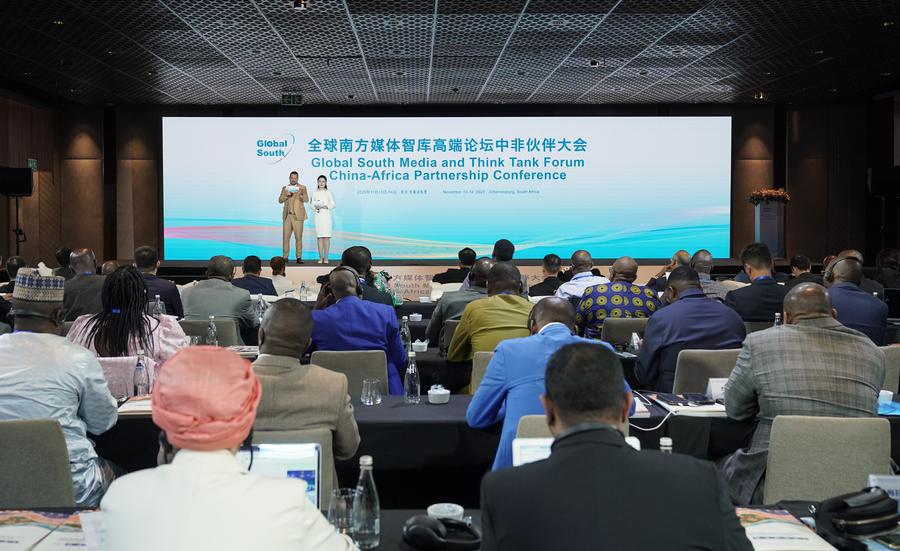
The Global South Media and Think Tank Forum China-Africa Partnership Conference which was held in South Africa-Johannesburg on November 13, 2025, was a perfect step made at a perfect time. For some bold reasons as elaborated below, I will confidently say that this is yet another great step of China-Africa partnership whose results must help a lot to shape Global diplomacy.

Reechoing the words of America’s author and entrepreneur, Amy Jo Martin, “ Social media is the ultimate equalizer. It gives a voice and a platform to anyone willing to engage,” I can emphatically say that social media had ruined and is ruining global diplomacy and such a conference, plays a big role in restoring order.

For instance, the conference whose theme was “ Reforming Global Governance: New Roles and Visions for China-Africa Cooperation,” the conference’s main target was to analyze how the collaboration between media and think tanks could result into a better-for-all global governance.

This implies that the conference created enough room for mass awareness of the roles of think tanks vis-à-vis media, especially print media like newspapers. Culturally, newspapers have been one of the most dropped sources of providing information over the ages as civilization advances. This has made the print media to be left aside for a few elites, topped by digital media like TikTok and Facebook. This ultimately points out the view that the conference’s masterminds identified a crucial problem of information disorders largely engineered by digital media.

The simplest response to the why-question that has popped up into your mind especially after my opinion on digital media is; the reading culture is decaying. People, especially the biggest percentage of the world’s population which is made up of the youth prefer scrolling up and down on their devices to watch short videos for information, and tapping other pieces of information from platforms like Facebook than reading newspapers.

How this is a constraint to global diplomacy can easily be seen through the lens of foreign policy, aware that foreign policy feeds global diplomacy. As reflected in the words of Amy Jo earlier, social media especially digital media, “ Gives a voice and a platform to anyone willing to engage.” This makes it the easily manipulated type of media because “anyone” is given a voice and platform to engage. It does not matter whether you are academically qualified to discuss pertinent issues as long as you are able to speak. This trend cannot be found within the print media where think tanks and media houses must write and research in order to provide thoroughly analyzed and well backed up information.

Two forms of information disorders heavily influence how information trends under digital media because it is often mishandled in the name of “content” yet it is greatly consumed by the biggest number of audiences who believe that such information is true without verification.

Misinformation is the biggest problem in Uganda and it greatly affects diplomatic ties of several countries. This is where the information being spread is false, but the person disseminating it believes it is true. In other words, they also do not know if the information is true or not, but for the love of likes from the audience, they go ahead and circulate such information. Remember social media gives a voice and platform to “anyone.”

I cite China-Uganda relations as a key example where social media has for some good number of times sabotaged the relations of these two states. In 2021, earth-quaking headlines emerged on various social media platforms and on social media handles of prominent bloggers in Uganda. The invalid but widely believed news that Chinese bank had taken Uganda’s only international airport spread like wildfire.

The misinformers picked on an interesting bit of information, clung on it, and made the public to believe them. HUEN—which is an International Civil Aviation Organization location indicator code for Entebbe international airport, became their mask of support. Since the airport had been expanded to fit the international standards with the help of loans from the Exim Bank of China under the Belt and Road Initiative, upon its completion, the airport gained that code.

However, to the misinformers, the code sounded like a Chinese name replacing “Entebbe”. Maybe we could say “Chen,” one of the commonest Chinese names. Little did they know or bother to make research to realize that each letter in that code implies something. For instance, “H” is a locator for all airports in Africa according to ICAO. “U” indicates Uganda as the main location of the airport. “EN” represents the real name of the airport (Entebbe) since ICAO normally uses the first two letters of the airport to award it a code.

Such information was easily believed owing to the nature of the code’s pronunciation and given the fact that by then, the Western narrative of “debt trap” slapped against China was waving across the globe.


With disinformation, where the information is false and the person disseminating it knows it, but intentionally goes ahead to lie, is also common. We can refer to the previous example. Since 2021 was a season of politics in Uganda, some political opportunists saw this as an advantage to achieve their agendas. Of course, this affected the least informed biggest percentage of people on ground who depend on social media as their source of information.

Previously, the same issue has reappeared. On 17th August 2025, President Museveni comissioned the Wagagai gold mining project in Busia District. The project is believed to achieve 99.9% purity in gold processing locally and create over 5,000 jobs for Ugandans. To achieve this, Uganda collaborated with China, seeking provision of capital-intensive infrastructure and resource extraction projects to secure access to critical minerals, foster economic ties, and promote local value addition. However, bloggers were too quick to say that a clique of people in power were secretly selling gold to China.

This was based on the assumption that there was little information available about this project. Little did they know that official handles of China’s embassy in Uganda had already provided this information. The only problem was—such information was provided on twitter where there is fewer audience unlike on Facebook and TikTok where the audience is big and exploited by bloggers.

Therefore, the Johannesburg conference was remarkably important for letting the audience know of other sources of information like think tanks where one can find trusted information. It also gave a green light to think tanks to know that they are also trusted pillars to the media towards shaping coherent and inclusive global diplomacy. In the end, this will not support China and Africa alone, foreign policy feeds global diplomacy.

The writer is a research fellow at the Development Watch Centre.


Wang Yi is Spot-on; The Global South is Growing Stronger

The former President of the European Commission, Professor Jose Manuel Barroso once observed; “in the age of globalisation, pooled sovereignty means more power, not less.” There was a time when Africa recorded a growth in globalisation. But that time was many centuries ago. Societies have been organised in various ways, most of which have been classified depending on the politics of the day. So were the Empires of the times. Kingdoms, Queendoms, Chiefdoms, and extended clans that followed.

Globalisation comes from the understanding that it needs to be done with neighbours, because as far as history has registered, borders and boundaries were established from many factors. What remained certain were the people. They have been the most plausible justification as to why the trend should never stop. The people of the global south today have understood that there is an international lag in the intentional relations with the other global north countries. Oftentimes, it has been using the global south for selfish gains. Here, one can even argue that West Africa has all justification for suspending French military presence. Democratic Republic of Congo, Gabon, and more on that list. That said, if critically analysed, the global north has been strategic besides its countless faults. The European Union, the confederation of the USA, the rise of the Asian Tigers, all these and more were from the same view – harnessing the power of concerted strength.

There is a reason as to why today, the global south has become a centre of attraction. From the Paris Agreement on Climate Change, to political alliances, the global south is undeniable. On the other hand, China has been standing shoulder to shoulder with almost all global south countries. Today, as Beijing doubles down efforts to support building a community of a shared future for mankind,  her close cooperation with developing countries especially in Africa are visible. For Africa, the greatest symbolism of what bloc unity can produce became a reality when the Economic Community of West African States (ECOWAS) in 2017 spoke in union and forced then the Gambian strongman, Yahya Jammeh who had lost election but refused to peacefully handover power. Therefore, when we talk about unity in efforts of development and achieving greater good for humanity, it is not far-fetched.

China’s Foreign Minister, Wang Yi put this in a better perspective as he addressed the press in Beijing where he stressed the importance of unity and cooperation of the Global South. Noting that today the Global South accounts for over 40 percent  of the global GDP, he underscored the role of the grouping  in ensuring world peace. “The Global South should stand together in unity….We should speak in one voice to the world, safeguard our common interests, and steadily increase our representation and voice in global governance,” stressed Wang Yi.

This comes from the disunity today that is being cited globally. Whereas the Global South has issues, most of them are arising from the inadequacies in governance. Wang’s idea has been backboned by the expansion of the BRICS where he believes that more global south countries joining will not only strengthen the alliance but also increase the opportunities members enjoy, one being the trade exchanges in this era of growing sanctions and tariffs from the West especially in Trump’s United States of America which is on rampage of using tariffs against others despite many experts warning that such tariffs are not only a threat to international trade but are also against international trade rules. Indeed, the Wall Street Journal described the Trump Administration’s use of tariffs as a “dumb” decision.

It therefore goes to show the double standards that have always shown up and called out. The West is predominantly only loyal to its interests. To expand the re-echo by Jeffrey Sachs on a quote from Henry Kissinger that “to be an enemy of America (insert – WEST) can be dangerous, but to be America’s (insert – WEST’s) friend is fatal.”

In recent decades, conversations have been around fighting hegemonies and to form an alternative to the powers of neo-colonialism that are not afraid to show their fangs whenever an opportunity shows itself. The comments from Wang are timely. The global south has high potential but for a few inadequacies. It is going to take visionary stewards towards ensuring realising the unity that the Global South deserves, and not just what it wants to see.

Today, the expanse of mineral deposits and natural resources that the West enjoyed is gradually diminishing, and as such the Global South holds the odds of power. The current century has proved that it is not just military might that is going to be the better of growth and development. Today’s fruits of international diplomacy were not merely achieved through the barrel of the gun, but decades of continuous middle ground formulation and genuine resource sharing, although history is littered with events of use of force. That is no longer sustainable because the world has learnt from the mistakes that led to the massive destruction of World War II. The alternatives raised by the BRICS are so practical and viable. The economic development of the Global South that has been recorded today is just an indicator of what economic unity bears as fruits.

Alan Collins Mpewo is a Senior Research Fellow, Development Watch Centre.


Global South & China’s interests at the G20 2024 Summit

By Nnanda Kizito Sseruwagi

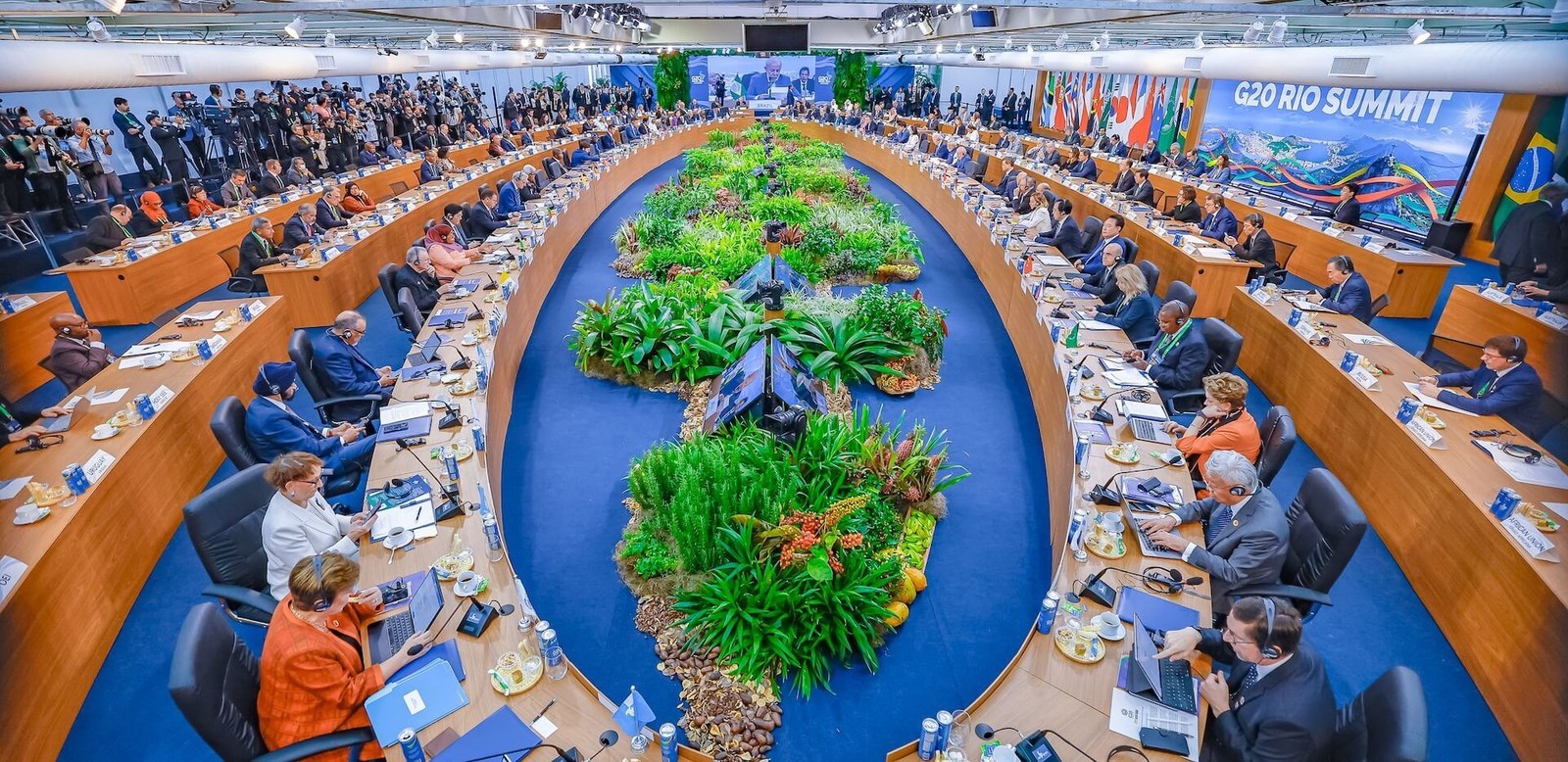
On November 21st -22nd 2024, world leaders from the world’s biggest economies will convene at the 2024 G20 Summit in Rio de Janeiro, Brazil, to discuss pressing global issues. The Development Watch Center, a Uganda – based think tank focused on international relations, foreign policy and diplomacy is one of the think tanks representing at the G20’s social participation forum constituted as “Think Tanks (T20),’’ which produces, discusses, consolidates and presents ideas on how to engage contemporary challenges that may be addressed by the Group of 20 (G20). The T20 is also constituted by G20 research institutes and countries invited by the rotating presidency.

A number of six topics were provided by the T20 Brasil organizing committee to be addressed at the summit. These include: Combatting inequality, poverty and hunger; sustainable climate action and inclusive and fair energy transitions; reform of the international financial architecture; trade and investment for sustainable and inclusive growth; inclusive digital transformation; and strengthening multilateralism and global governance.

The foregoing topics are not all there is at the G20 2024 Summit. They are only part of several other dialogues that were shaped by the Brazilian presidency, of course alongside other topics that are traditionally addressed in the T20 in the successive presidencies of the G20 forum.

China and the global south share several development priorities, and have shared concerns about global economic and geopolitical issues. Some of our shared interests are well captured in the topics above provided by the T20 Brasil organizing committee.

On the issue of climate change and sustainability, I see global south countries seeking greater partnership with China in the form of climate finance and technology transfer to address the impacts of climate change. It is a common fact and common knowledge now that our countries have contributed the least to global emissions yet are the most vulnerable to climate change. Therefore, partnering with a stronger but more understanding country like China would have us in a better place to negotiate better deals for climate financing.

Additionally, China may bolster its relationship with global south countries on distributing green technology, since it is a leading global actor in the technological advancements of green energy.

Another shared interest between the global south and China is reforming global governance. It is clear to many global south nations today that international institutions, especially the International Monetary Fund and the World Bank are biased in favor of Western interests and were designed to perpetrate Western domination over the global economy and political dispensation. Through alliance with China and other countries, we can push for reforms in the organization of international organizations, or even challenge their entire legitimacy and have them replaced with a much fairer and equitable order or form of organizations that would better represent our interests and give us a better place in influencing the decision-making processes at the world level.

It is also in China’s interest as a founding member of the BRICS Block (Brazil, Russia, India, China, and South Africa) to encourage greater cooperation among BRICS countries with their wider global southern cousins to challenge the dominance of the Western powers in global governance.

The global south also stands to leverage China’s leadership in digital innovations for instance in 5G technology to help global southern countries improve their digital infrastructure and expand connectivity, which will be essential for our development and modernization efforts. We also need and indeed have a vested interest as late industrialisers, in a more equitable access to emerging technologies especially Artificial Intelligence, and China remains a global leader in this field, with the highest registered patents in Artificial Intelligence innovations. It would thus be a great partner in supporting us to bridge this digital divide between us and the developed world.

One of the most enduring phenomena in the political crises afflicting the global south has historically been Western interference in their affairs. This has been the case from slavery to colonialism, up to today under globalization and its deleterious effects on our nations. As such, the G20 Summit in Rio this year presents global southern states & China an opportunity to counterbalance the Western hegemony in global affairs. China’s non-interventionist foreign policy and emphasis on respect for sovereignty also resonates with the interests of many of our global southern states which are trying to shape their way in a world policed by Western rules.

With the recent COVID 19 pandemic experience fresh to our memory, the global south also stands interested in improving its health care infrastructure and ensuring equitable access to vaccines and medical supplies. China stands as a reliable partner on this front, having exhibited exceptional vaccine diplomacy during the recent pandemic when most Western states hoarded millions of vaccines while Africans suffered the brunt of the pandemic.

The world is changing, and also the ways in which it changes is changing. The 2024 G20 Summit in Brasil presents a number of shared interests between the global south and China and is likely to be one of the new platforms through which international change happens.

The writer is a senior research fellow at the Development Watch Center.


President Xi Jinping’s Remarks at G20 Shows China’s Commitment for a Fairer World

By Allawi Ssemanda

This week, leaders from the world’s leading 20 economies or the G20 met in the Brazilian Capital, Rio de Janeiro from 18th – 19th to discuss global challenges including addressing hunger and poverty. The alliance which was launched after the 2007-2008 global financial crisis to help stabilize the global economy at the time saw different world leaders make commitments and suggestions on how to address today’s challenges.

Addressing the second session of the Summit, Chinese President Xi Jinping decried what he described as unfair and unequal global governance order and called for reforming the said institutions. This he explained is key in ensuring a fair and just world which is important in building a community of shared future for mankind in the new era.

Xi further suggested that for the world to have peace and tranquility, G20 members should stop looking at other’s development as a challenge but rather as opportunities and view each other as partners rather than rivals. If critically analysed, this is important because it can help in addressing acts like protectionism, unilateralism, and arbitrarily sanctions which all are impendement especially to global supply chain.

The other important area President Xi addressed was the need to ensure that no matter the size of a country either in size or economic terms, that countries are treated equally and rules applied in the same measure. He reasoned that upholding basic norms of international relations is key, stressing that this is the heart and guiding principles of the UN Charter.  The Chinese leader further backed his call stressing that, a world where countries irrespective of size or economic power everyone respects basic norms of international relations, reaching consensus on important issues is possible which is key in building an equal, and orderly multipolar world which Xi stressed is key if we are to have an inclusive economic globalization.

He then proposed 5 areas to help improve global governance. The five are; first, the need to improve global economic governance and create a world economy characterised by cooperation.  Secondly, Xi asked developed countries to fulfill their responsibilities of ensuring that the grouping improves global financial governance where “the voice and representation of developing countries should be increased.” Third, President Xi argued the G20 to improve trade governance, and build a world economy characterised by openness.  Fourth, Xi highlighted the need for G20 to improve global digital governance and fifth, he urged the grouping to improve global ecological governance and argued for developed countries to support developing countries with necessary funding and technology in this regard.

Closer analysis of the five areas President Xi proposed for the G20 to improve, the Global South and specifically African countries will gain more from this. For example, the first proposal called on the G20 to ensure there is improved economic governance characterized by cooperation.  “G20 should stay committed to strengthening global economic partnerships,… and fostering an open, inclusive, and nondiscriminatory environment for international economic cooperation,” stressed President Xi. This is important for African countries because unfair practices, protectionism have always locked out African countries. The call to ensure non discriminatory environment means, if implemented, African countries will also have a chance to sit on table while key issues are and decisions are being made rather than waiting to be told what the brothers are proposing. The same proposal called on G20 to support efforts meant to end corruption by not providing safe heaves to corrupt individuals. Aware that corruption is one of the major problems African countries are struggling with, if implemented, this will help the continent in addressing corruption.

The second proposal in which President Xi called on the G20 to improve global financial governance and ensure that the voice and representation of developing countries should be increased is very timely especially for African countries. For a long time, analysts in the global south have complained that the Bretton Woods Institutions are not favourable to the Global South, especially African countries. Indeed, in his 2003 remarks at the Paris Summit for a New Global Financing Pact, UN Secretary General Antonio Guterres was clear stressing that the current global financial system has “failed mission to provide developing countries with a safety net.” “The Global Financial architecture is outdated, dysfunctional, and unjust. It is no longer capable of meeting the needs of the 21st Century world,” Guterres observed. Therefore, President Xi reminding the G20 leaders to ensure that the current financial global system is restructured is a timely call and an indication that indeed, China is committed to speaking against issues affecting the global south, especially African countries.

Also, if implemented, Africa will stand to gain more from President Xi’s call  for the G20 to improve global trade governance and build a world economy that is open and free to all countries. Specifically, president Xi proposed that the G20 “should further promote the reform of the World Trade Organisation, oppose protectionism, avoid politicising economic issues… and taking protectinionst moves in the name of green and low-carbon development. If implemented, many developing countries including Uganda will benefit from this move. For example, the European Union’s European Union Deforestation Regulation (EUDR) which announced a raft of measures that would see African countries’ coffee banned from EU markets on claim that the production process was not environmentally friendly. This has been criticized as extension of old colonial control and resource exploitation in a new form of environment and social governance. Therefore, president Xi calling on the G20 to ensure that it is not used to advance protectionist moves in the name of green and low carbon development is timely and should be lauded.

Lastly, President Xi’s commitment that China will continue supporting Global south development efforts and specifically proposing 8 actions which included a “high quality Belt and Road Initiative, which will ensure more Chinese investments in Infrastructure sector in developing world is also a commitment of China’s support in building a community of shared future for mankind and a win-win cooperation. It also shows that China is indeed a strong ally of the Global south and that Beijing is committed to working together with African countries to attain sustainable development. “China has always been a member of the Global South, a reliable and long-term partner of developing countries and an activist and doer in support of global development,” stressed President Xi.

The writer is a senior Research fellow at the Development Watch Centre.
Dying Empires and Shifting Powers: Western Nightmares of the Ascendant Dragon

By Moshi Israel

The world is undergoing rapid transformation, a reality of which nearly everyone is acutely aware, thanks in large part to the advanced technologies at our disposal that capture these shifts in real time. This has led to a palpable sense of alarm over the intensity and pace of these changes. Many current and Traditional World powers are coming to terms with a noticeable shift in global political dynamics, as control seems to be gradually eluding their grasp. This situation can be likened to the precariousness of clinging to the sharp edge of a skyscraper to prevent a fall. While this might seem like a natural progression from the viewpoint of the average citizen, from the perspective of established authorities, the scenario unfolds with far-reaching implications.

Observing that the Western bloc is experiencing a decline does not constitute an assault on its integrity, although there is justification for assaulting western integrity. Moreover, such acknowledgments have even been made by Western leaders themselves. Josep Borrell, the European Union’s chief diplomat, has starkly proclaimed that the “era of Western dominance has definitively ended.” However, my perspective is not as bleak as Mr. Borrell’s. I maintain that there is still an opportunity for Western nations to reassess their approach towards global political governance. The essence of Borrell’s argument hints at a potential solution to the swift decline of the West. He cautions against dividing the world into ‘the West against the Rest’, highlighting accusations from many in the ‘Global South of double standards.’ This insight underscores the need for a more inclusive and equitable international framework that eschews divisive narratives.

Regrettably, certain Western governments are persistently engaging in divisive tactics, particularly targeting China. The underlying motivation for such actions, despite various ‘moral’ justifications presented by the West, stems from China’s rapid ascent. A number of Western political analysts and policymakers are unwilling to coexist in a world where China assumes a leading role in political, military, cultural, and economic spheres. They position themselves as the defenders of Western ‘exceptionalism,’ yet often, their views do not reflect the sentiments of the broader populace within their nations. Nonetheless, their relentless quest for perpetual dominance and their constant fixation on the potential threats posed by China’s growth have contributed to a global environment steeped in turmoil.

The global landscape is currently fraught with challenges, from the ascendancy of gangs in Haiti and the humanitarian crisis stemming from the Gaza conflict, to ongoing hostilities in Ukraine and heightened tensions across the Middle East – including in Yemen, Syria, Iran, Iraq, and Lebanon. Additionally, unrest in the Sahel region, renewed conflicts in the Democratic Republic of the Congo, and the looming menace of climate change, seemingly present a formidable agenda for global leaders. Unfortunately, there is no clear plan or indication that all of these crises are being managed cooperatively within the United Nations framework. Instead, everyone is either choosing sides or completely turning a blind eye to these issues, with the notable exception being China which has overly sung the chorus of strategic cooperation to a disinterested crowd.

Recent reports indicate that Niger has severed military relations with the United States, following a similar disengagement from France, which has been increasingly displaced by Russia across Africa. Furthermore, Russia has been actively eroding Western influence globally, while efforts to manage Netanyahu have proven futile, and threats from Iran and North Korea are escalating. As Josep Borrell, European Union’s High Representative for Foreign Affairs noted, the Global South is reevaluating its perspective on the West, and the outlook is far from favorable. The BRICS+ continuous growth is also chipping away at Western dominance. In this context, it is imperative for Western policies to evolve, focusing on genuine promotion of Western exceptionalism of democracy without hypocrisy, moral standards without double standards, Global prosperity with active Global South participation. The West indeed needs to ‘build back better’ but this time with entirely new and different construction material because the existing system is damaged beyond repair.

Many of today’s global crises could be resolved through compromise and negotiation, particularly when the parties involved hold no malice towards each other. Indeed, simplicity often underpins the solution in such scenarios. Notably, among the world’s major powers, China stands out as the most committed to pacifism.

At present, the immediate concerns for Western nations primarily revolve around Russia and Iran. Yet, in a long-term perspective, political leaders in the West have consistently identified China as the most significant security challenge to the prevailing global order. China’s ascendancy is undeniable, and in the context of its cultural symbolism, the dragon—a figure believed in Chinese lore to govern water phenomena—serves as a metaphor for the potential impact of China’s rise on the West. Depending on the West’s approach, China’s advancement could be perceived either as beneficial rainfall or as overwhelming floods.

This raises a critical question: faced with a binary choice between relinquishing global dominance or precipitating a cataclysmic Third World War, what decision will certain Western governments make?

The Writer is a Senior Research Fellow at DWC.


Xi Jinping’s Third Five-Year Term is Yet Off the Mark, But What’s in For Africa & Global South

By Alan Collins Mpewo.

Earlier this month on 10th March 2023, Xi Jinping who is the Secretary General of Chinese Communist Party (CPC) was formally reappointed as the president of the World’s second largest economy, China for a third five-year term. This was after the National People’s Congress (NPC), unanimously endorsed Mr. Xi, 69, with all of its 2,952 present members casting votes in favour of his reappointment.

While president Xi’s re-election received significant number of positive comments and congratulatory messages from the globe, some controversial opinions especially from some western pundits in some western capitals shamelessly described Xi’s reappointment as a bad precedent with narrow views that he should have stepped down after two terms which they described as China’s political “tradition.” While they emphasized this weak argument, non-pointed at the fact that President Xi was voted for another term due to his good record of performance and that his re-election reflected the will of majority of Chinese people. Indeed, in the entire process of Xi’s third term re-election, there was zero complaint such as bribing voters, no voter suppression claims or vote rigging. This way, we can conclude and argue that in that people – Chinese People were at the center of President Xi’s re-election and arguably, views and opinions of others are inconsequential and to say the least undemocratic with zero resemblance of the much-desired whole process democracy which China cherishes.

The negative commentaries on Xi’s third term re-election came in a wake of global political events that have many critics posing questions that can barely solved. Well, the electoral forums of China had their say, and hopefully, in the next years, a lot will come to light and life, regarding the international relations question. The Global South still encounters its various challenges, which are generally common for each country there’s. Challenges of infrastructure, economic elevation, security, education, medical, energy, human rights, and climate change lead the charts. China has for decades now been issuing a supportive hand but there can only much done within a short time.

For sustainability, progressiveness has to be paced on a rhythm of care not to antagonize what’s already existent, but also balancing with what’s expected to hatch in a long run. In this pursuit, some forces, both internal and external keep shaping the progression of the relations between China and the global south. Much can’t be said about these forces being supportive, but rather attempts to fail the progression. Be that as it may, the two wings have remained resolute in achieving that which they find noble and beneficial to their citizens.

Xi Jinping’s third term has also arrived at the time when the CPC had announced a laid plan on which it would base to interact with the wider world through its policy of globalization and openness. The CPC has also declared a considerable number of goals it seeks to achieve with the global south in the next decades, prior to the announcement of the Chinese Parliament backing Xi Jinping for a third term. What also remains a reality is the principle of mutual respect that China maintains with its interactions with the global south. Energy access remains a priority and that has been intimidated in the various addresses by Xi Jinping.

For countries especially in the Central and Eastern Africa, this will remain a top priority. The statistics on energy access have become better in recent times, but equally, more is yet to be done to keep filling the void on those that have hardships in access of the same. For West Africa, while it has many partners that are members of FOCAC, their challenges don’t seem different, but for the high hand of inter-meddling from the Western powers. Insecurity has been maintained as a worrying factor on that end. The China rolled out the Global Security Initiative (GSI) proposal which it’s seeking out the UN member states to adopt. With the current trends in the Middle East where China has been key in forging negotiations for peace among some countries that have battled with stability thus far, it’s safe to state that the initiative will broaden to West Africa.

Infrastructure is one of the strongest drivers of development in any country. It connects possibly all units of the economy, and the vice versa is equally true. This informed China and the global south partner states from the very beginning, on the need to relay the infrastructure to human sustainability standards. It’s of no wonder then, that the Belt and Road programme was rolled out. Since other means of transport such as air transportation would seem a long shot for most countries in the global south, road transportation remains the most viable in the circumstances. Infrastructure projects in most nations are still ongoing, with more yet to commence.

With the extension of technological advancements to most corners of the world, industrialization will continue being realized. This will keep healing the ail of unemployment for the fast-growing population in the global south. The win-win mentality is all that can be deduced from this aspect. That notwithstanding, the global south should also brace for complex times of haggling from some external forces, in trying to stop the diplomatic expansion of China.

With this modest assessment relayed above, no Africa countries’ developing partner has been so honest and sincere to Africa than China under president Xi Jinping. Hence, there’s just as much to feel grateful for by the Global South especially in Africa in as far as Xi Jinping’s term renewal is concerned, because unlike the speculation, China has kept their word in regard to China’s engagement with African countries and made FOCAC a priority and wouldn’t seem to be slowing down on achieving the agreed goals amongst the partners.

As Dambisa Moyo, a renowned Economist and Analysis of macroeconomics and global affairs observed in her book EDGE OF CHAOS: Why Democracy Is Failing to Deliver Economic Growth — and How to Fix It one of the major challenges identified in failing meaning full sustainable development and democracy is not leaders staying in power for long time. It is what Moyo called “short-termism” which she ably explains contributes to falling trust in government with rising polarization and gridlock which she argues is due to politicians’ eagerness to win elections which leaves them making decisions to maximize voter support rather than those that would do the most for long-term growth and hence, slowing development action to a crawl. With this, taking a third term from expert’s view is not a crime but rather a necessity for continuity which is key for sustainable development.


Alan Collins Mpewo, Senior Research Fellow, Development Watch Centre.