Merz’s High-Stakes China Balancing Act

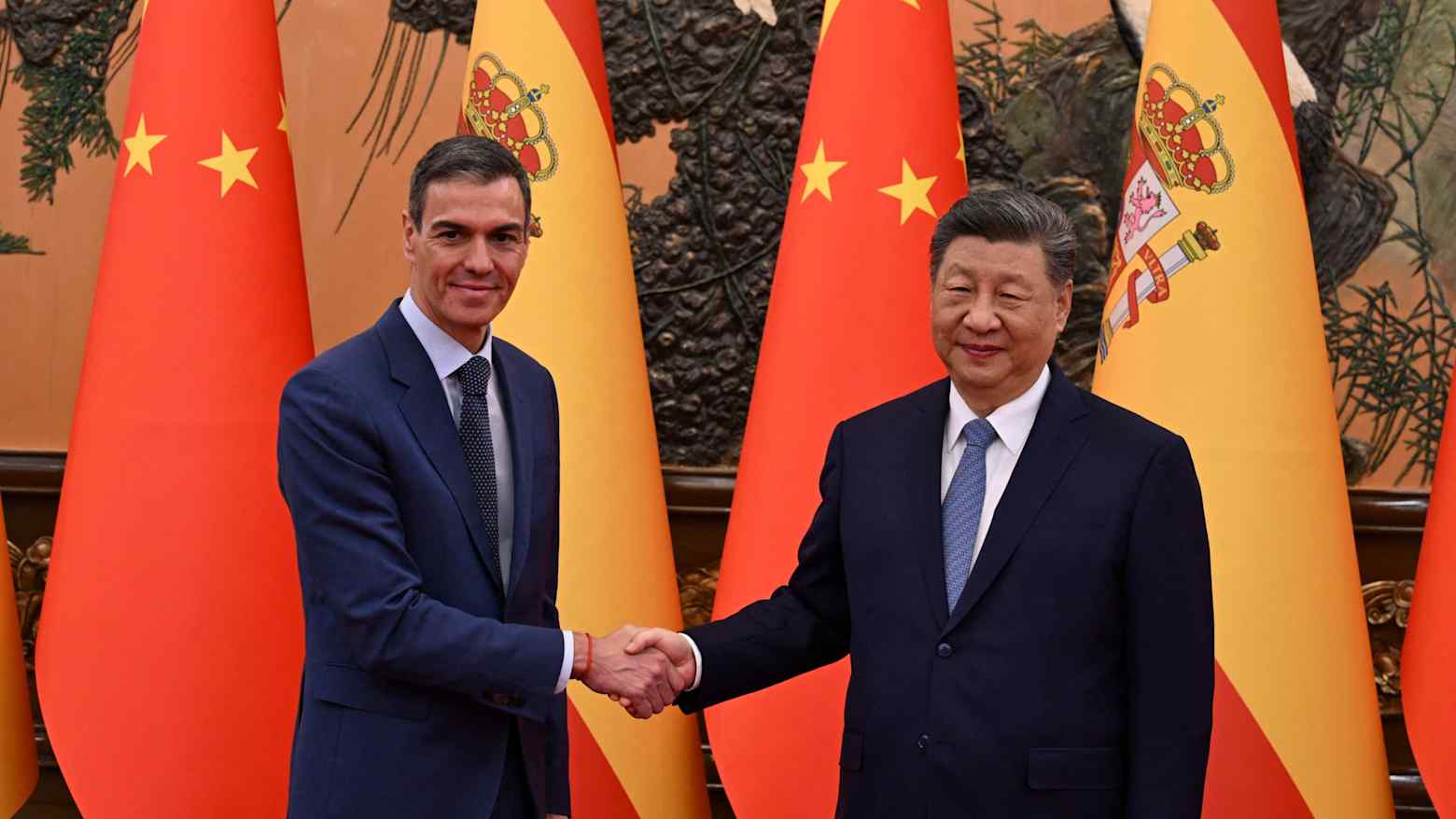
In February this year, the German Chancellor Friedrich Merz arrived in China. This was his first visit there since taking office, and he’s the latest Western leader seeking to reset ties with Beijing. The trip came amid warnings from German industry of growing competition from China. It is clear that both countries now want to pursue increasingly practical cooperation.

Any curious observer of China knows that the country is currently celebrating the year of the horse. It is therefore symbolically significant for Germany that the first high-profile visitor to Beijing during this highly auspicious lunar year has been their Chancellor.

One of the difficult asks Merz had for President Xi Jinping was that China should encourage Russia, its key ally, to end the war in Ukraine. But that will be a topic for another piece. For this trip, the primary focus for Germany was on seeking closer cooperation with Beijing as a hedge against rising global trade protectionism and tariffs.

Ahead of his journey to the Land of the Dragon, Merz remarked thus: “Foreign policy and economic policy belong together just as much as defence policy and domestic policy. We can no longer separate them today. That’s why I’ll be travelling to China to discuss future cooperation between Europe and Germany on the one side and China on the other…”

Remember, Merz is the latest leader to trip his way to China, seeking to stabilise economic ties and navigate geopolitical shifts. Countries which in the past had blocked China during its trade dispute are now impatiently knocking at the Middle Kingdom’s door, all keen to strike business deals. The British, Canadian, and South Korean leaders have all visited Beijing this year, yet we have not even moved half of the year!

Firstly, it is obvious, even common sensical that Merz should tread carefully not to cause a rift with Washington over China. President Trump recently threatened 100% tariffs on Canada for holding trade talks with Beijing. Germany will be aiming to strengthen ties without triggering a similar retaliation from the US.

Secondly, there is apparent domestic pressure for Merz, too. Over the past year, German politicians and business groups have increasingly warned about intensifying industrial competition with China and the risk of a new China shock. Even European/Western experts have spoken out and recognise that China has become a sophisticated manufacturer and is advancing rapidly in key technologies, a growing challenge for Germany’s export-driven economy. Last year, China sold a trillion dollars more overseas than it imported. Germany’s economy is highly export-driven, but exports to China fell more than 9% in 2025. Overall, car exports to China have dropped by a staggering 2/3 since 2022.

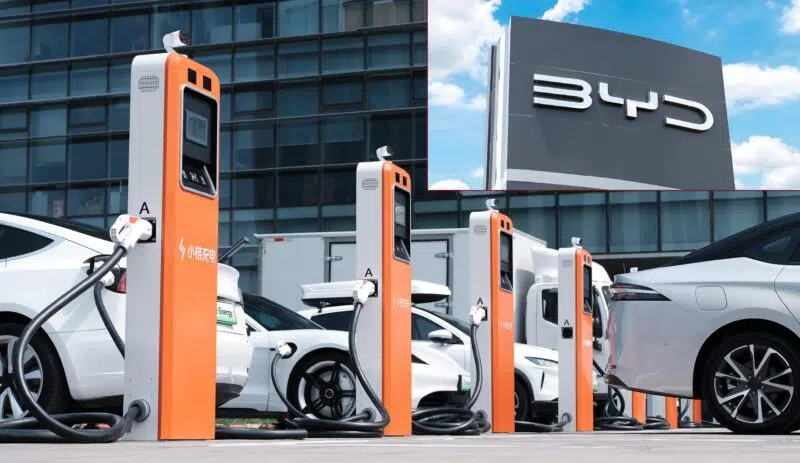
The other concern on Merz’s hands is that he needs to balance the need to protect vulnerable German industries from cheap Chinese goods while repairing strained ties. This would be a defining challenge for him. German automakers are already feeling the pinch from Chinese competition, since China is now the global leader in EVs, and a distant number one for that matter. This is something that Merz has to navigate along with the whole question of where rare earths will come from in the future, as China becomes more and more restrictive and is very open that it wants to use this as a political instrument as well. The other key challenge on Merz’s table is the pressure from the United States. America, of course, wants to see its European partners take a tough line on the Chinese government and particularly on their trade deficit.

Therefore, whereas Merz may want to have a stable, prosperous relationship with China, the foregoing issues I have highlighted are real concerns for him to deal with. The reality of the time is that Germany is exporting less to China. German brands in China have less of a market share, and Chinese brands are increasingly competing with Germany in third countries around the world. Merz travelled with several European manufacturers on this trip, and they all had/have serious concerns that this is costing jobs in Germany. The business people are definitely critical of what they may find to be unfair practices by China, such as things like government subsidies, although basic knowledge of economic history would reveal that this is the same process by which Western industries accumulated significant growth and came to dominate the global market.

For President Xi Jinping, it must be a very great experience hosting yet another powerful Western leader. Xi has effortlessly been positioned by Western leaders themselves as a stable partner compared to the US, whose leader, Donald Trump, seems to be as fragile to rely on as the weather.

These events have also added to the image of China as the true leader of the new multipolar world order. And since Germany and Europe in general are important markets for China, Xi must be glad to welcome more European leaders to China to strike trade deals. This is even more urgent now, when the Chinese economy’s domestic demand has been slowing down. China, therefore, needs to rely increasingly on the export market.

We should remember that the relationship between Germany and China has really flipped over the years. It had been the case that Germany was a big exporter to China, with China having to rely significantly on German machinery and German expertise. However, in recent years, China has become the one exporting a lot to Germany. There is a lot of dependency on Chinese manufacturing for the German economy to survive. Nevertheless, China still relies heavily on German imports for materials and other chemicals and manufacturing, although Germany is the most dependent of the two countries.

The writer is a senior research fellow – Development Watch Center.


China’s Bid for Global Leadership

The level of Chinese modernization is going to be the defining marvel of our time, if isn’t already. China has made great strides in economic strength, and in advancing scientific and technological capabilities.

The country has demonstrated an ability to sustain and consolidate progress in several measures. It has increased gross domestic product (GDP) to 134.9 trillion yuan, which averages a year-on-year increase of 5 percent. China continues to contribute about 30 percent to global economic growth. China consistently creates a total of 12 million urban jobs annually, and surveys of urban unemployment rates estimates it at just about 5.1 percent.

Almost every year that comes, China’s foreign trade strikes a record high, and the global market share of China’s exports continues to increase. Last year, China’s foreign exchange reserves surpassed 3.2 trillion US dollars.

The country has registered steady progress in the wellbeing of its people. As you read this, the per capita disposable income of China has grown by 5.1 percent in real terms. Whatever achievements the state registers in poverty alleviation are further consolidated and expanded. There is now greater support rendered to compulsory education, basic old-age insurance, basic medical insurance, and social assistance in China.

In the field of industrial output and new advancements, China has continued to dominate. It has registered grain output at a new record high of 700 million metric tons, with the yield per hectare rising by 75.75 kilograms. The value added of high-tech manufacturing and equipment manufacturing has appreciated by 8.9 percent and 7.7 percent respectively, and the output of new-energy vehicles passed the 13 million mark. China has recorded an increase in the value added in the sectors of information transmission, software, and IT services by 10.9 percent and by 10.4 percent in leasing and business services.

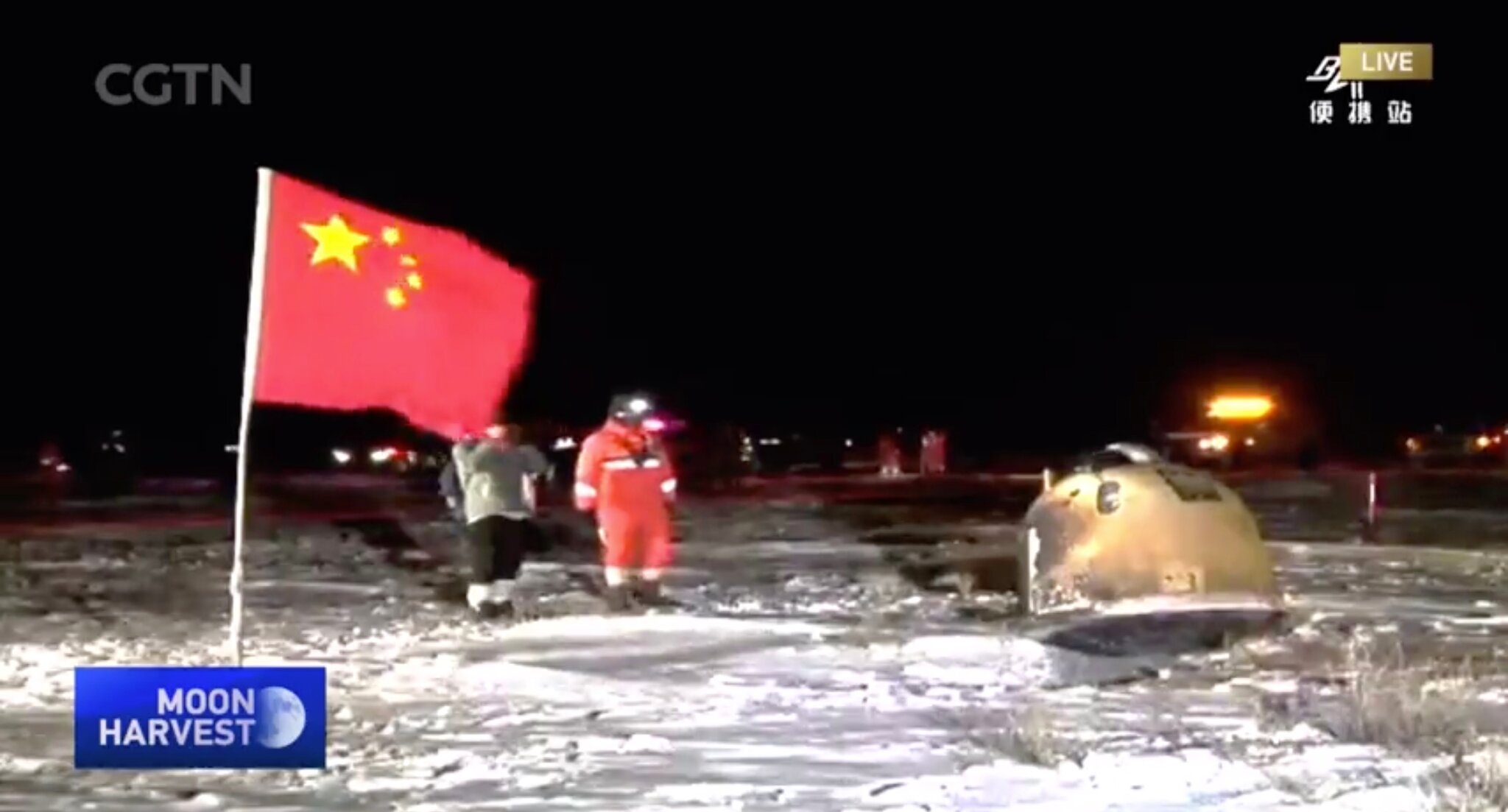
The enhancements made in innovation capacity in China are peerless. The country has recorded new achievements in integrated circuits, artificial intelligence (AI), quantum technology, and other areas. One of the recent highlights of Chinese technological superiority was when the Chang’e-6 mission completed humanity’s first-ever sample collection from the far side of the moon, and the delivery and commission of the Mengxiang ocean drilling vessel. The total value of China’s technology contract transactions increased by 11.2 percent.

China is also making new breakthroughs in reform and opening up. It has completed the reform of government institutions across the board, adopted major reform measures for building a unified national market, and gradually raised the statutory retirement age.

China has lifted all market access restrictions on foreign investment in the manufacturing sector, while also further expanding and upgrading investment cooperation under the Belt and Road Initiative.

At the beginning of March 2026, China published its 15th Five-Year Plan (2026-2030) in which it invited the world to share prosperity. The plan shows China to be a stable anchor for the world economy and a reliable partner in addressing common challenges. As the beacon of modernization, and with a population of 1.4 billion people, China’s posture now is of a reliable and stable partner to both advanced and developing countries alike, marking it out as the bearer of the torch to an alternative path in a growingly turbulent world.

China is likely going to create a new demand for international talent, technology, and partnerships through its massive investments in artificial intelligence, quantum computing, smart economy, and advanced manufacturing. China is no longer merely the leading producer of EVs, but now promises to be the world leader in green transport in general.

The country’s Transport Ministry has unveiled plans to promote the digital and green transition of its transport sector during the 15th Five-Year Plan period. It will facilitate the development of zero-carbon transport corridors and stations as part of efforts to boost low-carbon development of the transport sector.

Domestically, China is also keen on addressing unbalanced and inadequate development, to expand the middle-income group and broaden access to basic public services across its population. Common prosperity in China is not what the West portrays it to be in negative frames of egalitarianism or a redistribution-first model that suppresses market incentives. China’s common prosperity follows a dual-track strategy — expanding the economic “pie” while improving its distribution, so that growth gains are shared more broadly.

The writer is a senior research fellow | Development Watch Center.

China’s Two Sessions: the Centrality of China-Africa Green Cooperation and Why It Matters

Each spring, the ‘two sessions;’ China’s biggest political assembly brings together the National People’s Congress (NPC) and the Chinese People’s Political Consultative Conference (CPPCC) to deliberate on the nation’s broad policy direction for the new year. This year’s two sessions ran from March 04-12, bringing together members of the Chinese Communist Party (CPC) and representatives from all political parties, industry leaders, academia and prominent figures in Chinese society.

Noteworthy is that, this year’s two sessions came in under five months of the 2025 plenary session and a new 5th five-year plan—that specially stands out for its extraordinary emphasis on high quality development. While it’s anchored on a spectrum of guiding principles, the 15th five-year plan lays special emphasis on the need to accelerate the green transition in all areas of economic and social development. This transition is viewed as a critical element in China’s modernization, building a beautiful China, but also as an inroad to a community with a shared future for humanity.

Incidentally, the 2026 two sessions also fall in the 70th-year of China-Africa friendship. To mark this milestone, both sides are now more than ever focused on the shared aspiration of building an all-weather China-Africa community with a shared future in the new era. This, against a backdrop of unprecedented risks – on the list of which is climate change.

It’s an undeniable fact that climate change threatens livelihoods and sometimes entire national economies across Africa, the global south and indeed the wider world. Depending on where one is, these risks can range from food and water insecurity, disruptions to production and ecological systems, health hazards associated with erratic weather patterns, among others all of which undoubtedly have a bearing on the quality of development.

In the face of such uncertainty, Africa often looks to its friendship with China, China’s experience, technical expertise, high-quality manufacturing capability and record of rapid modernization for inspiration. Moreover, there is great hope that deliberations at the two sessions could reinforce the imperative for further strengthening and directing this partnership towards bolstering Africa’s climate readiness and resilience.

For Africa, climate change is one of the greatest challenges to development yet, the continent’s limited development is a double-edged sword which; besides exposing the continent to severe adversity, also makes it ill-prepared to deal with risks posed by climate change.

Despite being responsible for less than 4 percent of the world’s climate problem, the African Development Bank estimates that Africa loses 3-5 percent of its annual GDP to climate related events. This situation is further made worse by an annual climate financing gap of $227 million. These circumstances create the imperative for a blend of strong partnerships, innovation and practical financing solutions to guarantee climate resilience while fueling the desired growth.

Historically, energy shortages have been one of Africa’s greatest growth-bottlenecks yet, relying entirely on traditional energy sources to close this gap wouldn’t be without substantial environmental consequences. Therefore, in a world where geopolitical and geo-economic competition are placed ahead of a looming climate catastrophe, China-Africa green cooperation is a model for effective climate response. China’s green cooperation framework is a positive development not just for both sides but the world for a number of reasons. First, in addition to the two sides being home to approximately 36-percent of global population, Africa holds about 60 percent of the world’s solar resources which are grossly untapped. Meanwhile, what China lacks in green resources it makes up for in expertise in green development, innovations, clean energy, and competitive manufacturing. This matrix makes the China-Africa green cooperation a partnership of high-potency in the world’s green transition, promising steady progression towards a sustainable energy mix, at least for two of the world’s most populous regions.

To this, China adds ambition, pragmatism and more importantly, structuring cooperation around Africa’s articulated needs, but also global goals in greening the planet. For instance, China’s green cooperation with Africa is highly practical; going beyond policy statements and creating impact on the ground. As a result, cooperation projects can be found all across Africa; from the Noor solar complex in Morocco to the De Aar wind farm in South Africa; together powering upwards of one million households and keeping tons of CO2 out of the atmosphere annually. In East Africa, projects like the Karuma Dam in Uganda, Gibe III dam in Ethiopia and the Garissa solar power plant in Kenya equally have similar benefits.

Away from infrastructure projects, significant progress is visible in areas of capacity building, knowledge and experience sharing aimed at greening the continent. In this regard, there’s no better example than the China-Africa environmental cooperation center (CAECC) established in 2020 under the [Great Green Wall] initiative.  This initiative besides being a hub for sharing knowledge and experience is an avenue for conducting joint research on combating desertification on the continent. The great green wall has played a key in reinforcing the “frontline defense” in Nigeria’s Kano state – a local effort in containing the expansion of the Sahara Desert southwards not to mention its role in carbon sequestration. The great green wall initiative has been influential in reclaiming tens of millions of hectares of land in a region that was previously losing more than 30 hectares to desertification annually.

But the China-Africa green cooperation isn’t a new or an anticipated outcome of the 2026 two sessions because it has been ongoing and growing through time. Even before the United Nations Environmental Program (UNEP) backed CAECC, the Forum on China-Africa cooperation FoCAC framework had produced the Sharm El Sheik, Beijing, and Addis-Ababa Action Plans, setting the tone for ecological cooperation and sustainable development before 2016. The CAECC has incrementally been given agency through FoCAC where both sides have adopted several Action Plans namely; the Johannesburg Action Plan in 2016-2018, Beijing Action Plan 2019-2021, and Dakar Action Plan 2022-2024. Indeed, besides the series of action plans, the 8 major initiatives and 9 programs during the 2018 FoCAC summit in Beijing also stressed Green transition as a significant pillar of China’s relationship with the continent.

China continues to demonstrate its commitment to working with Africa to tackle its challenges by sharing experiences for accelerated growth through infrastructure and capacity building, human capital training and supporting Africa’s industrialization. Its policy on cooperation with Africa addresses both sustainability and the continent’s articulated aspirations, such as market access and industrialization, as evidenced by President Xi Jinping’s three measures announced at the 2023 BRICS summit in South Africa. Uganda for instance, is working on cooperation arrangements with Cherry automobiles, CHTC, and Zhongtong in the area of electric vehicles (EVs) while Egypt’s Suez Economic Zone with its five solar production establishments is emerging as a solar manufacturing hub on the continent.

As China-Africa green cooperation expands in the era of high quality development, we can expect climate conscious industrialization and green manufacturing to grow simultaneously with economic zones and industrial parks. This will most certainly bring with it — more green industrialization, green jobs for the continent’s youthful population, while ensuring a sustainable path to growth and modernization across the continent.

The writer is a research fellow at the Development Watch Centre

Strategic Alignment for Prosperity: How to Deepen China-Uganda Ties in the 15th Five-Year Plan Era

On March 17th 2025, the Development Watch Centre (DWC) in partnership with her sister organizations (Sino-Uganda Research Centre, Centre for Contemporary China-Africa Studies, and Centre for BRICS Studies Uganda) hosted a half-day symposium at Fairway Hotel in Kampala that analysed the implications of the newly adopted 15th Five-Year Plan for Uganda hence the theme “Strategic Alignment for Prosperity: Deepening China-Uganda Ties in the 15th Five-Year Plan Era.”

Appreciating how immense China’s contribution towards Africa’s development in the last couple of decades has been, and strongly believing that this fact is not about to change, the underlying thread to most of what was said at the event tied things back to what the Communist Party of China’s (CPC) 2026-2030 policy framework means for Uganda― particularly as it relates to the country’s fourth National Development Plan (NDP IV).

In his address therefore, H.E FAN Xuecheng the Chargé d’affaires at the Embassy of the People’s Republic of China in Uganda assured Kampala as well as other African countries that his homeland viewed their prosperity as integral to the welfare of her domestic economy. The Diplomat went on to explain that as such, Beijing would continue to position her strengths in trade, green energy, science and technology etc. in ways that best set the ground for their development.

The Day’s Guest of Honour, the Managing Director of Uganda Broadcasting Corporation (UBC), Mr David Winston Agaba concurred citing that China’s cooperation with Africa is further bolstered by history given that the Asian super power has always been cordial in her involvements with the continent going as far back as the dispensation of colonialism in which the attitude of western countries was to openly rampage and pillage Africa. The UBC manager then went on to express enthusiasm for DWC’s work saying that it was vital that researchers continue to actively engage with the most pressing issues of our times.

Coming prior to the speeches of the two dignitaries, DWC’s Executive Director Dr Allawi Ssemanda spoke about the unfortunate state of foreign relations that Uganda finds itself in decrying how possible it can be that our leadership has been boxed into partnerships that expressly couch their terms in language that points to the nations on the other side of things as the masters on whom Kampala is at their mercies. In contrast, the academic asserted that China’s win-win model whose spirit guides the 15th five-year plan was far much better all things considered.

Two guests joined the conversation virtually. First is Prof Timothy Kerswell, Distinguished Research Fellow at DWC who laid the ground for the day’s topics. Addressing the conference from Australia, he explained that the Two Sessions was the most important function on China’s political calendar emphasizing that this year’s National People’s Congress and National Committee of the Chinese People’s Political Consultative Conference meetings were even more so because they drew Beijing’s governance road map for the next five years.

Dr Vuyo Mjimba the Chief Research Specialist in the Human Sciences Research Council’s Africa Institute of South Africa is the other having made his presentation live from Johannesburg via zoom. Among other things, the South African scholar intimated that it was high time to view research and policy as inseparable cautioning that a lot of the dilemmas that plague Africa had something to do with the fact that very little attention was given to collecting and disseminating critical data. He then pointed out that given China’s track record of respecting Africa’s priorities, African Union member states can seek to synchronize their synergies with her through sectors where they have the comparative advantage e.g. minerals and natural resources.

The symposium closed with two panel sessions starting with one constituted by Hon. Simon Mulongo an international relations consultant together with Counsel Ssemambo Rashid of Ssemambo and Ssemambo Advocates. The latter centred his presentation on the Global Governance Initiative expressing admiration for the reforms that China has been trying to push thereunder not least, the proposal to reimagine the United Nations’ position. The Advocate posited that Beijing’s example was a breath of fresh air for the developing world especially if one looks at the prevailing attitude of other global powers. To illustrate his point, he quoted President’s Trump’s latest remarks on Cuba (i.e. “Taking Cuba, I mean, whether I free it, take it. I could do anything I want with it.”).

Mr Arthur Atuha’s presentation was the very last. Therein, he shared about the promise that lies in the 15th five-year plan for Ugandan export industry. Understood well, the DWC Research Fellow contended that the prospects of NDP IV could be attuned to harness projections of increased consumption in Beijing for the next half a decade.

There you have it, the overwhelming consensus from the day was that the 15th five-year plan had a lot in it for Uganda and that if the moment is seized by Kampala, a lot of the country’s goals set under NDP IV would be realized come 2030.


Will China leapfrog itself in the next five-year plan?

Editor’s note: Hussein Askary, a special commentator for CGTN, is the Vice-Chairman of the Belt and Road Institute in Sweden, and a Distinguished Research Fellow in the Guangdong Institute for International Strategies. The article reflects the author’s opinions and not necessarily the views of CGTN.

China’s Premier Li Qiang delivered a government work report (GWR) on Thursday at the fourth session of the 14th National People’s Congress (NPC), in which he outlined what could become history’s largest and most advanced leap in science and technology-driven economic progress and growth in the coming five years.

One of the most extraordinary points Li made, among many interesting ones, is the government’s intention to integrate the best achievements of the past few years in science, technology and innovation with China’s compact industrial system. The government intends to incentivise this process across every sector of the economy to create a consolidated productive force from the many parts of the amazing industrial system China has built so far.

To simplify this transformational process, imagine a football team made of the world’s best goalkeepers, defence players, midfielders and forwards in one team. Then, you train them together in a several-month boot camp to match and integrate their technical qualities with tactical schemes. This is what we may expect to happen to China’s high-quality economic development during the implementation period of the 15th Five-Year Plan (2026-2030).

China has leapfrogged the industrial world in the past decade in many fields of science, technology, engineering and industrial production. Chinese companies, both state-owned and private, have become global top-tier players not only in production capacity and quality but also in innovation. However, while all these sectors might be seen and function as discrete entities acting separately, in the next five years, high-quality development and a new combination of productive forces will make it imperative to integrate them into a single, continuous whole.

This will be the launching pad towards the intermediate goal of “realizing socialist modernization” by 2035 as a stepping stone towards the 2049 Second Centenary Goal of building a “modern socialist country that is prosperous, strong, democratic, culturally advanced, harmonious, and beautiful.”

The above is not a guessing game or speculation, but an assessment based on examining the previous five-year plans of the Central Committee of the Communist Party of China, especially since Chinese President Xi Jinping presented concepts related to high-quality development for years.

What these five-year plans reveal is an incredible level of consistency, unity of long-term vision and ability to deliver even amidst some of the harshest international and domestic ups and downs. The marriage of “high-quality development” with innovation, represented in the concept of “new quality productive forces,” to pursue the long-term vision is what makes the upcoming 15th Five-Year Plan unique.

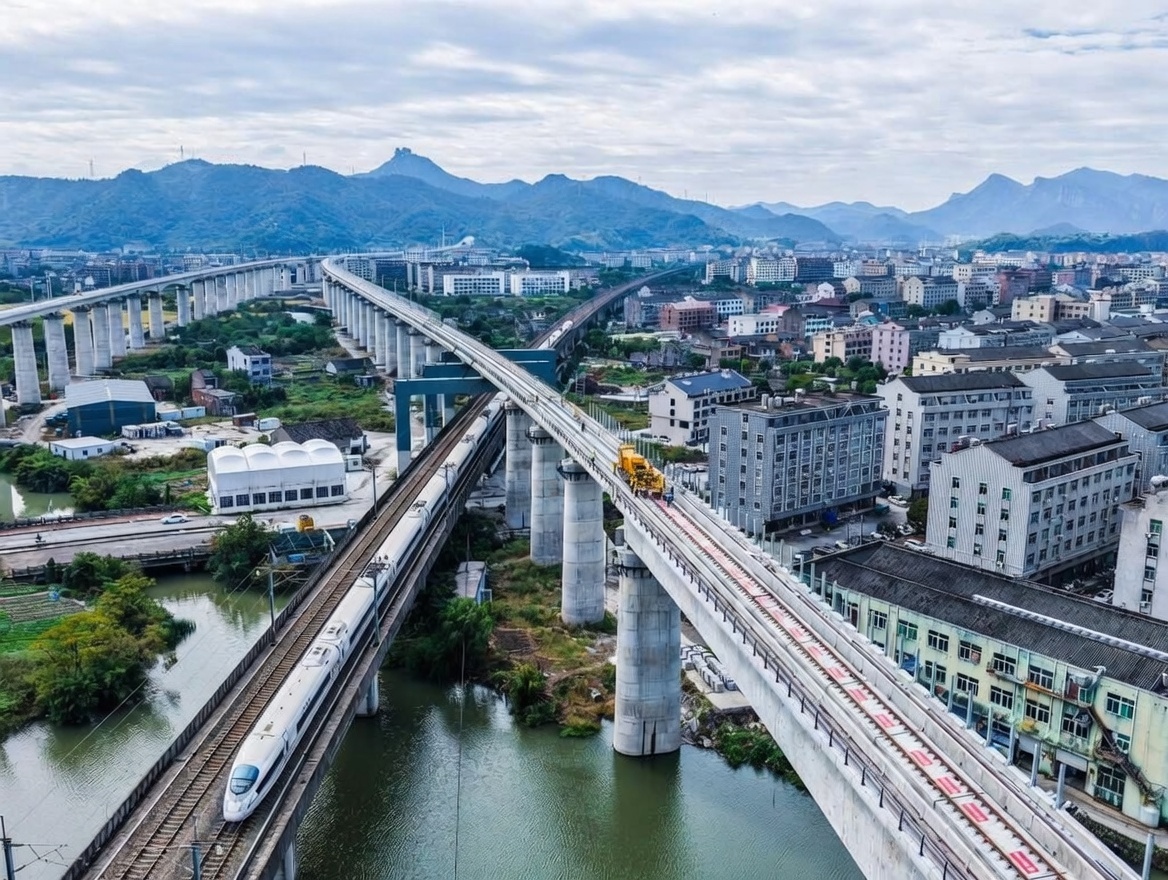
Workers operating at the track laying construction site of the Wenling-Yuhuan section of Hangzhou-Taizhou high-speed railway in Taizhou, east China’s Zhejiang Province, November 5, 2025. /Xinhua

Premier Li strongly emphasized, in delivering the GWR, that among the major strategic tasks of the government over the next five years, a pivotal one will be “the pursuit of high-quality development,” based on a solid modern industrial system that relies on advanced manufacturing as the backbone for achieving greater self-reliance.

He emphasized that science and technology must deliver advanced innovation and breakthroughs in core technologies. One of the main goals is to nurture new industries and future industries, such as new energy, quantum technology, embodied artificial intelligence (AI), brain-computer interfaces, 6G technology and satellite internet. It’s emphasized that state-owned enterprises must take the lead in technological expansion, especially in the fields of aerospace, aviation, biomedicine, and the low-altitude economy.

However, Li reiterated that these developments would take place within a unified national market and productive chains. In this context, market forces and small- and medium-sized enterprises specializing in sophisticated technologies will be supported by the government to become leaders in future technologies, enabling faster application of technologies such as AI to production processes and services. Even traditional industries and agricultural production will be modernized and upgraded within this consolidated system, with new scientific and technological innovations entering these sectors too.

As Li indicated, the key to this process is to push for full integration between technological and industrial innovation. Efforts will be made to integrate the education system and the public culture of innovation into this technological and industrial unified structure. Talent development centers will be established at the national level, with specialized centers in the Beijing-Tianjin-Hubei region and the Guangdong Greater Bay Area to foster world-class innovation engines. These centers will undertake major national science and technology projects in the coming years.

What we will probably witness is that economic growth and progress will no longer be measured by the gross domestic product, but rather by the number of scientific and technological breakthroughs achieved and incorporated into the productive processes of the economy to make them bankable.

China’s success in planning and implementing such a vision is great news not only for the Chinese people but for the world, where the 15th Five-Year Plan dedicates a special place to the integration of the concept of high-quality development into the Belt and Road Initiative and how common prosperity and joint development can lead to a brighter shared future for mankind. This is extremely important at a time when many nations and regions in the world are gazing down a huge precipice of fear and uncertainty.


Two Sessions 2026: 14th National People’s Congress holds press conference

The 14th National People’s Congress has held a news conference, briefing the public on key concerns and policy signals that may ripple across the globe. Our reporter Feng Yilei has the latest.

14th National People’s Congress is ready for its fourth session starting Thursday.

Deliberation on China’s social and economic plan for the next half-decade sits high on the agenda.

It’s not just about numbers or growth targets, but about growth quality – as China doubles down on future industries and a 1.4 billion-strong market.

LOU QINJIAN Spokesperson, Fourth Session of the 14th NPC “This year, we will expand domestic demand and boost consumption to build a strong domestic market. We will upgrade consumption, improve the international environment, and host the ‘Buy in China’ campaign, while linking people’s wellbeing with consumption.”

The top legislature is positioning its legislative agenda as a guarantee.

National legislators will review the National Development Planning Law to cement long-term strategic goals during the two sessions.

New legislation in healthcare, childcare is also on the table throughout the year, with the aim to turn social security into a catalyst for consumption.

Meanwhile, China remains wide open for foreign businesses and investors and vows to expand institutional opening-up and defend multilateral trade, and deepen Belt and Road cooperation in the next five years, to grow the global pie and sharing opportunities guaranteed by a more transparent legal framework.

LOU QINJIAN Spokesperson, Fourth Session of the 14th NPC “China stands ready to strengthen communication with the US at all levels to expand bilateral cooperation, while firmly safeguarding its sovereignty, security, and development interests.

We will work with Europe to uphold our partnership, properly handle economic and trade differences, expand cooperation, and jointly address global challenges.

Guided by the Central Conference on Work Related to Neighboring Countries, we will build a community with a shared future with neighboring countries, following the principles of amity, sincerity, mutual benefit, and inclusiveness, to jointly create a peaceful, prosperous, and friendly home.”

Despite external headwinds, China has reaffirmed its stance to immediate halt to military action, and called for a return to dialogue to prevent further escalation in safeguarding the Middle East’s stability.

LOU QINJIAN Spokesperson, Fourth Session of the 14th NPC “No country has the right to control international affairs, dictate the fate of others, or monopolize development advantages – still less to act as it pleases on the world stage.

As a major country and permanent member of the UN Security Council, China stands ready to work with all nations to firmly safeguard the authority and standing of the United Nations, uphold the purposes and principles of the UN Charter, and practice true multilateralism, contributing further to reforming and improving global governance and building a community with a shared future for humanity.”

FENG YILEI Beijing “Against a backdrop of escalating regional flashpoints and a volatile global trade environment, observers here appear to be eager to see one thing above all else from the sessions over the coming week–certainty. China is trying to prove that its roadmap is not merely to solidify its foundation for socialist modernization by 2035; but also intended to be a reliable engine for the globe through the geopolitical storm. Feng Yilei, CGTN, Beijing.”

Source CGTN

Protect Taiwan Act Escalates Tensions, Interference in China’s Internal Affairs

On February 9th, the House of Representatives in Washington passed bill H.R. 1531 a law which if it comes into force will by far be the most extreme action that the United States government has undertaken in as regards to China-Taiwan affairs in a long while.

Also known as the Protect Taiwan Act (PTA), the legislation that was introduced by Representative Frank Lucas stipulates among other things, that in the event that USA determines that certain activities by Beijing threaten “the security or the social or economic system of the people of Taiwan”, it shall acting through the Board of Governors of the Federal Reserve, the Secretary of the Treasury, the Securities and Exchange Commission etc. take all measures possible to see to it that the perceived antagonist is cut out of the International Organization of Securities Commissions, the Group of Twenty (G20), the Basel Committee on Banking Super-vision, the Bank for International Settlements, the Financial Stability Board, and the International Association of Insurance Supervisors. In other words, if successful, such a move would see China become completely isolated by the international monetary system.

That the United States of America opted to further escalate its Taiwan position without provocation is not surprising as it has in recent years shown that it is capable of crossing redlines that even the least hopeful analysts imagined if one goes back a decade or so. In 2025 for instance, the House increased its security support for the Province of China by more than threefold (from $300 million to $1 billion).

What is concerning instead, is that the modality that H.R 1531 takes is so extreme that it is literally the last step to war. Given the stakes involving Taipei when it comes to technology, anyone looking on should be gravely concerned. The island’s involvement with the manufacturing of computer chips employed in the artificial intelligence industry has brought about what has come to be understood as the “Silicone Shield” making Taiwan a national security issue for Washington.

Further important to underscore is that PTA was by all estimations bipartisan (395 representatives voted in its favour as opposed to the 2 that opposed it). It also arrived in a time when the US is doing all that it can to downplay its already existing obligations both under acceptable geopolitical norms but also in international law when it comes to Taiwan. A September 2025 publication by the Congressional Research Service thus sought to portray “one-China policies”― which is what the US is supposedly involved in― as different from the one-China principle.

This is of course, is a clear bending of history. At least if one looks at the three joint communiques (1971, 1979, and 1982) which are understood to be the bedrock of modern diplomatic relations between the United States and China. Respectively, they provide that; “the U.S. acknowledges that all Chinese on either side of the Taiwan strait maintain that there is but one China and that Taiwan is a part of China”, that “the government of the USA acknowledges the Chinese position that there is but one China and Taiwan is part of China”, and finally that “(USA) has no intention of infringing on Chinese sovereignty and territorial integrity, or interfering in China’s internal affairs, or pursuing a policy of ‘two Chinas’ or ‘one China, one Taiwan”.

Finally, as long as UN Resolution 2758 adopted in October 1971 still takes precedence over any other claim regarding the subject of our inquiry today, the US may do as it pleases albeit its actions will remain contrary to the general assembly instrument. By recognizing the government of the People’s Republic of China “as the only legitimate representative of China”, the United Nations settled once and for all any questions pertaining to whether Taiwan is a sovereign state or not. And because of this, her leadership lost their seat in New York and they have never regained it to date.

To pretend otherwise would be to undermine declarations such as the one on the Inadmissibility of Intervention and Interference in the Internal Affairs of States (1981) which have reinstated the fact post World War II, when it comes to inter-state relations, the international dispensation is governed by mutual respect.

The US then has two options; either it proceeds to ignore the law whilst being aware of the violations or it does the right thing and tone down. What it cannot do is eat her cake and have it at the same time.

The writer is a reserch fellow at the Development Watch Centre.
China’s FDI Pivot is Uganda’s Road to Real Growth

By Shemei Ndawula

The Chinese Belt and Road Initiative has defined Africa’s relationship with China for over a decade. Within this time the average Ugandan’s interaction with China was largely limited to the importation of “cheap” Chinese goods and the Entebbe Expressway. The latter has always been an infamous scapegoat in conversations of the fictitious “Debt trap diplomacy” while the former also triggered misgivings with a belief that lower prices construe a compromise on quality.

Fortunately, these narratives have greatly been discredited with the Entebbe Express still standing as one of Ugandas most ambitious infrastructure projects (the detractors of this development always conveniently forget that Mandela National Stadium was also constructed in the early 2000s with a Chinese loan but the debt has never trapped us). Additionally, Chinese imports have switched the moniker of “cheap” for “reliable value for money” and we now have Chinese brands like the Sinotruck that have become synonymous with construction sites in the Kampala metropolitan. This is exactly how Uganda’s relationship with China has been reshaped, with real work, real progress and mutual benefit.

Now China is taking on it’s biggest challenge yet, the shift from infrastructure development to Foreign Direct Investment (FDI) into the Ugandan economy. This does not simply represent a change in policy; it’s restructuring Uganda’s path to development with a focus on building the industrial and processing capacity of the nation.

China’s dialing down on the big loans and ramping up foreign direct investment fast tracks all development because it means Chinese companies are putting their own cash on the line, becoming partners and not just lenders. It’s definitely a pragmatic approach for China; securing resources and markets, but from the Ugandan perspective it’s a breath of fresh air. In the oil and gas sector the China National Oil Company has invested billions of US Dollars into the Kingfisher field, not as a loan but for an equity stake in the project that will define Ugandas economy for at least the next decade.

This is also a large boon for our national GDP because FDI isn’t money that vanishes after a project is wrapped up,  it’s a long term vote in the country’s future. This is evident in the industrial parks being set up, like  Mbale which Chinese investment has turned into a buzzing industrial hub with factories and assembly lines producing clothes, gadgets, cutlery among others. This puts approximately 10,000 Ugandans on payroll, excluding  auxiliary and support industries such as transporters. The slice of manufacturing in our GDP is pushing 27%  and wiyh this strategy we can expect more impressive numbers because we’re not shipping out raw materials anymore but we’re adding value, processing ores, assembling products for the East African market and beyond.

And the best part is this model builds skills that last. In these joint ventures, Ugandans are learning the ropes from high-tech assembly lines to supply chain tricks. It’s helping us adapt to global market turbulence. When coffee prices tank, having a diverse economy with factories humming along is west keeps the lights on. The government only needs to regulate local content policies so that more of the money stays in Uganda.

The reduced debt burden is also not something to complain about, a huge portion of our national budget is already going to debt repayment so China’s new policy could not have come at a better time. This way, China can meet its commitment to invest in renewable energy like solar panel plants and its bamboo research which matters when climate change hits our farmers hard(Uganda is a frontline state in Global Warming effects). With a population as young as ours (over half under 25) this job creation is crucial and foreign direct investment is the most sustainable approach to facilitate this.

As we gear up for talks like FOCAC next year, we need to keep pushing for deals that put us first. China’s shift in strategy to Foreign Direct Investment could be Uganda’s ticket to high-tech sectors, innovation hubs, all fueled by smart partnerships and technology sharing (Rwanda already got a great deal in its e-vehicle manufacturing plant). It matches our drive for self sustainability and solid growth that does not erase what makes us Ugandan.


China’s Trade Surplus: A Signal of Economic Resilience and Engineering Stable Global Systems

Last year, China registered a $ 1.2 trillion trade surplus the largest in the history of any economy; a scenario that would have made president Trump right in using the favorite phrase “Like nothing anyone has seen before.” Surprisingly, the record surplus came at a time of unprecedented uncertainty and policy hostility that appeared destined to break global supply chains and the global economy. Indeed, last year was the pinnacle of Newman and Farrell’s hypothesis on the “Age of weaponized interdependence.”

With an administration acting more like a rogue state in Washington, Trump II showed no restraint in using control over critical nodes in global economic systems to hold the world at ransom. Meanwhile, despite criticism of China’s surplus as a vulnerability linked to overreliance on Chinese production, there’s more to it than can be heard in mainstream sources. For instance, China’s focus on climate conscious technology; EVs, clean energy, AI products and high tech production systems which are the technologies of the future. In addition, for the global south, the resulting reshoring, and technological leakages mean diversified production sources, an increased role in the global economy and eventually paving the way for a more stable economic system.

The tiny but significant blemish with the argument that China’s trade surplus is a result of over-subsidizing exports to fix slowing domestic consumption is that it overlooks the country’s growing manufacturing capacity over decades. China’s manufacturing sector has not only been transitioning from a low cost, labor intensive model to a more sophisticated one, specializing in new technology and high-end products. In terms of volume for example, China’s manufacturing output had by 2023 reached $4.6 trillion surpassing the next three largest manufacturing economies namely, the US, Japan and Germany. The massive surplus is thus more about the expanding manufacturing capacity than it is about slowing domestic consumption. And whereas global consumption is not about to slow down, shifts towards new technology, and hi-tech production systems are strategies to counter pitfalls on the cost to the consumer side of the equation.

Moreover, the narrative of returning manufacturing jobs to some places also falls flat on its face when examined against China’s current trajectory. A case in point is the pivot from climate conscious technology and energy sources back towards fossil fuels – ‘beautiful coal’ which might as well have cleared the way for the surplus given a substantial portion of it came from Electric Vehicles, batteries and solar panels. Conversely, a focus on high tech production systems means jobs being lost to Chinese people is a thing of the past. Any jobs being lost today will be to technology and the benefit of efficient production systems.

Therefore, what is been framed as salient vulnerability associated with a ‘less visible but still central role’ of China could as well be the beginning of a new dynamic. What we noticed in 2025 was the moving of production processes to new countries in the global south, in a bid to route around the mounting geopolitical pressure. While this has been faulted for its reliance on Chinese intermediate inputs, technology and sometimes expertise, it also means diffusion of jobs, technology and skills to the new economies. Ultimately, this reinforces the production capacity of destination economies in the global south, and provides cushioning against similar shocks in the future. Resilience might be a result of systems stability however; such stability must be engineered by evenly distributing risk across multiple nodes as a safeguard against cascading failure starting in a single dominant node.

The events of the past year and the fallout from a global surge in economic nationalism and protectionism were a warning sign against the implications of concentrating risk in a single dominant hub. The tariff wars by Washington indeed highlighted how vulnerable global supply chains were under the old West-dominated configuration.  Additionally, in the event of the kind of shocks as instigated by the geopolitical strife seen through the tariff wars, the developing parts of the world risked taking the biggest blow. This is why China’s reshoring, and diversification albeit not breaking global dependence on Chinese manufacturing immediately, breaks ground for more stable supply chains in the long run.

However, with globalization on the raise and a more interconnected global system, a strong multilateral foundation becomes ever more important for its emphasis on mutual cooperation. Otherwise, unilateral action towards geostrategic outcomes that chokes a single critical node could jeopardize or even crash the entire system. Obviously, China’s surplus is not a sign of a win in the geopolitical standoff primarily because we are only in the very initial stages of system readjustment.

Moreover, as bellicosity becomes internationalized, targeting gray-area nodes in the supply systems could eliminate the second country of origin option unless any tethering to the parent corporations is severed. We saw this last year with threats of 50% tariffs on nations allied with China and BRICS and more recently a 100% tariff on Canada over trade with China.

In the ultimate end, China’s Trade surplus may not be a direct win in the geo-economic contest but it signals the initial stages of readjustments in the global system. As corporations move operations to other economies, the diffusion of technology, skills, and risk is dispersion that follow provide cushioning against failures of the kind the world was threatened with during the peak of last year’s tariff war. Reshoring and routing against pressure might have produced resilience that resulted into China’s surplus, but in the long term the same could reduce reliance on a single dominant hub enhancing economic stability.

George Musiime is a Research Fellow, Development Watch Center.

On Keir Starmer’s Visit to China

By Nnanda Kizito Sseruwagi

It had been almost eight years since a British Prime Minister had last set foot in Beijing. Keir Starmer’s January 28 visit to China is therefore a pivotal moment that signals a recalibration of UK-China relations, in particular, and British foreign policy generally, especially given the current paradigm shifts Western nations are making in the face of an increasingly fragmented global order. It has now become obvious to middle powers that, in the post-Cold War era, their economic and security concerns may not be permanently and reliably abdicated to the American leadership.

To understand the objective of Starmer’s trip, let’s look at the composition of his delegation to Beijing. Among his nearly 60-member entourage were cultural representatives and business executives from some of Britain’s major corporations, such as HSBC (a British universal bank and financial services group), AstraZeneca (a British-Swedish multinational pharmaceutical and biotechnology company), and Airbus (a European aerospace corporation). Both the entourage and the timing of the visit speak to economic engagement as Starmer’s primary objective at a time when the Labour government he leads is struggling at home to deliver on its economic growth promises. Whereas there is a trade deficit between the UK’s trade with China – the UK, having long-ceased to be the world’s workshop – in the services sector, the UK enjoys a surplus. This implies that there is a demand in the Chinese market for British services if Britain could leverage its expertise in finance, consulting, and professional services.

However, it is not just economic interests at the table for this visit. The past few years and even months have been frosty in the bilateral relations of the two nations. In the past, there were concerns in the UK over allegations of Chinese espionage. The UK also raised queries on claims that China was supporting Russia in the Ukrainian conflict. And of course, in typical Western fashion, the UK has always contested the way China governs in Hong Kong, claiming there is a crackdown on civil liberties. Two months before Keir Starmer’s visit, Jimmy Lai, a British citizen, had also been a subject of conflict between the two states following his conviction under Hong Kong’s national security law. As such, whereas Starmer may pragmatically focus on prioritising economic opportunities for Britain, the issue of human rights will linger in the background.

In order to show a spirit of good faith, which is key in improving relations, Starmer also approved the construction of a mega Chinese embassy in London ahead of his trip, which is one of the trade-offs taken to reset diplomatic relations between the two countries. This is a good move since, in any negotiation, each party needs to make concessions to build trust.

Keir Starmer’s government has articulated its approach to UK-China relations as characterised by a comprehensive and consistent strategy. This strategy is defined by the compartmentalisation of various aspects of the two countries’ relations in order to separate economic cooperation from the often sticky, contentious political concerns. Nevertheless, it is plausibly expected that there will be domestic opposition in the UK over the traditional points of suspicion and accusations regarding human rights violations, espionage, and related concerns, which other political parties in the UK will exploit to undermine the achievements Starmer’s Labour party is trying to realise.

If we take a broader vantage point of the developments in the global geopolitical arena, we find that Starmer’s context is shared by multiple Western leaders who have recently sought to improve relations with China and proactively reconfigure their ties with Beijing. Among the recent guests in the red dragon’s courtyard were French President Emmanuel Macron, Australian Prime Minister Anthony Albanese, and Canadian Prime Minister Mark Carney. Clearly, middle powers have established a pattern of hedging their bets with China in the midst of increasing unpredictability and uncertainty about the next move from Trump’s America. China is a much more “what you see is what you get”, stable, reliable trade partner that any country can aspire to have now. There is no need to pay the cost of navigating America’s tariff-punctuated, transactional economic terrain.

The American-dominated world order has been rapidly turning into a system of unilateralism and protection. It is China that has lit the way in championing multilateralism. With World leaders such as Irish Prime Minister Michael Martin, South Korean President Lee Jae Myung, and Finnish Prime Minister Petteri Orpo successively paying homage to China since this year began, China has demonstrated its indispensability as a resourceful global economic stability partner. It was therefore not surprising that this would spike tensions with the United States.

With Starmer’s visit, the UK has made a profound diplomatic statement in Beijing. Every country now has to engage China. Isolation would be costly. China is not to be ignored or contained but partnered with. Starmer has acknowledged without stammering that “like it or not, China matters for the UK!” This reflects a pragmatic appreciation of the dynamics of economic interdependence as constituting both vulnerabilities and opportunities that must be carefully negotiated.

Nnanda is a Senior Research Fellow, Development Watch Center.