The Remarkable Story of the Global Governance Initiative’s First Year

Today, 1st September marks one year since President Xi Jinping first unveiled the Global Governance Initiative (GGI) to the world. Speaking to attendees of the Shanghai Cooperation Organization Plus meeting last year, the Chinese statesman’s remarks (and subsequently the proposals advanced therein) at the time can only be looked back upon as becoming more prescient today.

President Xi’s address advanced five tenets that have now been concretized by the GGI concept paper as the initiative’s “core principles” the first of the batch being a commitment to sovereign equality. The idea is that when relating, nations ought to respect one each other “regardless of size, strength or wealth.” This means among others, that no country should poke its nose into the domestic affairs of another and that when participating in activities that involve multiple states, the parties involved should do so as equals.

Unfortunately, since the launching of GGI, there has been numerous instances on the world stage by those who see themselves as most powerful and therefore, having the right to play arbiters of who does what including when the issues at hand rise outside their countries’ borders. Perhaps the most extreme example here was the ousting of Venezuela’s Nicolás Maduro by the current United States administration. In an operation dubbed “Absolute Resolve” (AR), the United States army laid siege on the presidential palace in Caracas in the morning hours of 3rd January, 2026 the result of which was the abduction of both the then President of Venezuela and his wife Cilia Flores. Unsurprisingly, the ousting drew wide condemnation from political leaders in the region including their excellences; Gabriel Boric (Chile), Claudia Sheinbaum (Mexico), and Luiz Inácio Lula da Silva (Brazil). The United Nations Human Rights Office did not mince words either explaining that AR undermined the very foundations of global security.

Most disturbingly, AR is far from being a stand-alone act. From President Trump’s rhetoric but also from military interventions he has orchestrated elsewhere, the emerging patterns are there for everyone to see. While the ongoing war with Iran has hit a stalemate to much of his frustration thus, one worries what the US head of state could have done if he had had his way. To remind ourselves, it is the same world leader who in April this year took to his Truth Social account writing that “A whole civilisation will die tonight, never to be brought back again.” Most people agree that this is but a genocidal statement (a crime that is outlawed by the Rome Statute). For GGI, it is here that core principle 2 comes in as it is all about adherence to the rule of law. In asserting that international law has to be “upheld unwaveringly”, the Global Governance Initiative’s concept paper makes no exception for any individual or actor on this matter.

GGI has also been crafted to avoid a common pitfall for many otherwise good causes i.e. implementation. This is possible because of core principle five: “commitment to real results.” On this front, the initiative seeks to bolster international organizations particularly the United Nations through championing reforms that these institutions urgently need in order to match the challenges of our age. For instance, GGI highlights the persisting neglect of the interests of the global south by the aforementioned platforms. Other concerns raised by the initiative are misdiagnosis of the problems at hand with much of the focus being placed on “symptoms” rather than the “root causes” as well as the sluggishness with which pressing needs are handled. Indeed, the concept paper’s background indicates that “the U.N. 2030 Agenda for Sustainable Development is seriously lagging behind.”

That said, unlike UN members who have only dwelt on the system’s downsides with some going as far as withdrawing their membership from a host of its agencies, Beijing’s approach under GGI has been that of carrot and stick. In that sense, China’s attitude can be seen as criticism done not for its sake but because GGI’s architects view the United Nations as integral to the realization of the initiative’s goals and that consequently, its betterment directly translates into success for them too. To this end, core principle three reads in part as follows; “The U.N. is the core platform for practicing multilateralism and advancing global governance, whose role must be enhanced, not weakened.” This stance of realism is driven in part by a deep appreciation of history. Crucial in this case, is an understanding that the UN was established in the aftermath of a bitter war of global magnitude. The Global Governance Initiative hence carries within it an exercise of precaution. Eighty years later, GGI insists that diplomacy remains the wisest path to take in the pursuit of humanity’s common interests.

Beautiful as it is in theory, GGI ultimately has to be judged by what it has accomplished on ground. For most endeavours of this stature, it often requires anywhere between two and five years before a proper picture of the direction that they are taking begins to take shape. In testament of the Global Governance Initiative’s triumph however, we do not have to wait this time around. The full details of the milestones that GGI has arrived at in her first twelve months can be found in the State Council Information Office’s June 2026 white paper titled “More Just and Equitable Global Governance: China’s Principles, Proposals and Actions.” To give the reader an idea of what I mean though, two of these achievements are; Beijing being the biggest contributor of troops to UN peace keeping missions amongst the permanent members of the Security Council and the country’s establishment of the China-UN Global South-South Development Facility in September last year alongside the UN.

In the year that followed the unveiling of GGI, the initiative has become more relevant (not less). As the international community continues to debate about the course that things should take moving forward, GGI has presented diplomats the world over with a model to learn from. Importantly, as this piece has argued, the Global Governance Initiative’s way of doing things does not just look elegant. It has already garnered significant momentum an attribute that has in turn enabled it to bring forth meaningful results in its short life span.

Joshua Kingdom is a lawyer and a Research Fellow at the Development Watch Centre
 

China’s Vision for an AI World Order

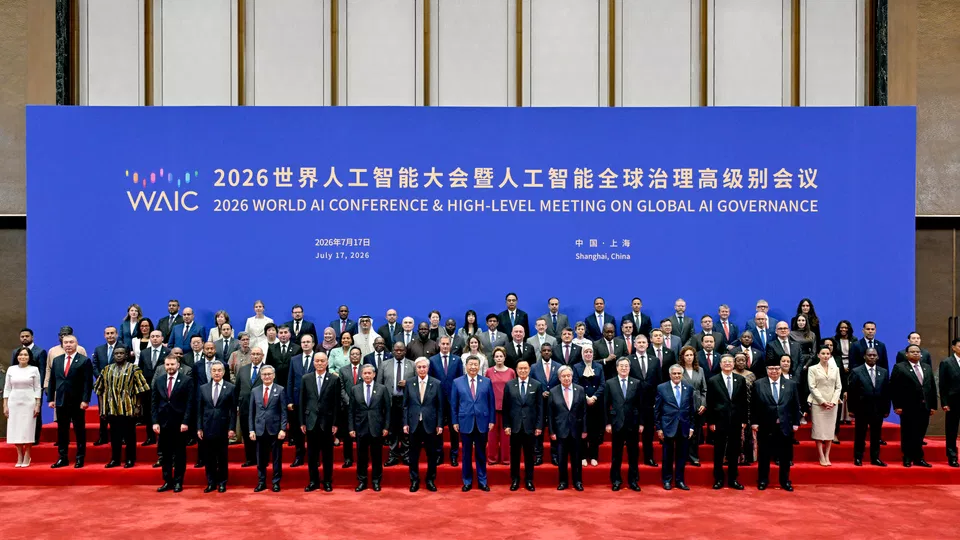
Seventy years since the composition of the term Artificial Intelligence (AI), the world has made significant progress in making that technology a reality, turning what seemed science fiction into “science friction” with ethics and safety. A new wave of systemic change driven by AI is washing across all the continental shores of Earth. At the recent July 17 World Artificial Intelligence Cooperation Organisation (WAICO) summit in Shanghai, China stepped up to lead the world in devising joint strategies for building a just and equitable system for global AI governance.

China recognises the utility of promoting AI for the positive and beneficial application of its power for humanity. Various technological leaps have reshaped the course of human history. The Industrial Revolution was heralded by the invention of the steam engine. Modern society was transformed greatly by the widespread extension of electricity. The entire world was closely connected and linked by the birth of the internet. With the AI revolution, we are witnessing major changes never before comprehended. Industrial transformation is beginning to increase at scales off the charts. We are entering a period of unprecedented global innovation supported by AI.

Therefore, we now face critical governance responsibilities that are carried by the immense opportunities and challenges of AI. The questions of our time, as asked with clarity by Chinese President Xi Jinping, are:

How to get along with thinking machines?

How to ensure security when the algorithm is part of decision-making?

How to tackle ethical challenges through technologies through adaptive governance? and

How to realise AI for all when the divide keeps widening?

These questions cannot be answered by any single country. They deserve the attention of the whole global community.

China proposes that the world should take a people-centred approach in developing AI for the good of humanity, whereby AI is treated as a key enabler of shared prosperity and common security. Xi is keen to join hands with other leaders to build a just and equitable global AI governance system.

China has a few propositions to make this vision a reality, as eloquently articulated by the insightful Xi Jinping.

The first proposition is on adhering to the principle of openness and win-win cooperation to boost innovation-driven development. There is a recognition that AI is moving from just being a digital tool to having a real-world impact in physical application, making it a new engine of world economic growth and an accelerator for the shift of growth drivers. China proposes that we harness this rare, historic opportunity to encourage open source, openness, collaboration and sharing of AI power. It suggests the coordination of efforts in transforming and upgrading traditional industries, the cultivation and growth of emerging industries and forward-looking planning for future industries, so that all sectors and businesses can benefit from AI.

The second proposal is for the strengthening of risk awareness and ensuring that AI is secure and controllable. This involves a critical handling of the inherent and secondary risks of AI. Beijing proposes that we establish laws and regulations, technological monitoring, early warning and emergency response systems in order to strengthen the line of security, prevent abuses and malicious use, and ensure that AI is always under the oversight and direction of humans.

Thirdly, China is championing the principle of inclusiveness rather than inclusivity and the promotion of mutual learning between civilisations. This will uphold the diversity of world civilisations and the uniqueness of cultures around the world, and also inhibit the risk of AI eroding this diversity.

The final proposition China has unveiled is advocating for solidarity and improving global governance. It recognises AI as an invaluable asset that encapsulates humanity’s collective wisdom. It is encouraging for multilateralism and the recognition of the important role of the UN. It is calling for alignment and coordination in the strategies for developing AI. This will enable us to build a consensus-based global governance framework with rules and technical standards guiding AI development. President Xi has more particularly argued that the world “must carry out extensive international cooperation and help Global South countries with capacity building to bridge the AI and digital divides, promote sustainable development, and prevent creating new historical injustice in AI.”

The writer is a research fellow at the Development Watch Centre.

China’s Bid for Global Leadership

The level of Chinese modernization is going to be the defining marvel of our time, if isn’t already. China has made great strides in economic strength, and in advancing scientific and technological capabilities.

The country has demonstrated an ability to sustain and consolidate progress in several measures. It has increased gross domestic product (GDP) to 134.9 trillion yuan, which averages a year-on-year increase of 5 percent. China continues to contribute about 30 percent to global economic growth. China consistently creates a total of 12 million urban jobs annually, and surveys of urban unemployment rates estimates it at just about 5.1 percent.

Almost every year that comes, China’s foreign trade strikes a record high, and the global market share of China’s exports continues to increase. Last year, China’s foreign exchange reserves surpassed 3.2 trillion US dollars.

The country has registered steady progress in the wellbeing of its people. As you read this, the per capita disposable income of China has grown by 5.1 percent in real terms. Whatever achievements the state registers in poverty alleviation are further consolidated and expanded. There is now greater support rendered to compulsory education, basic old-age insurance, basic medical insurance, and social assistance in China.

In the field of industrial output and new advancements, China has continued to dominate. It has registered grain output at a new record high of 700 million metric tons, with the yield per hectare rising by 75.75 kilograms. The value added of high-tech manufacturing and equipment manufacturing has appreciated by 8.9 percent and 7.7 percent respectively, and the output of new-energy vehicles passed the 13 million mark. China has recorded an increase in the value added in the sectors of information transmission, software, and IT services by 10.9 percent and by 10.4 percent in leasing and business services.

The enhancements made in innovation capacity in China are peerless. The country has recorded new achievements in integrated circuits, artificial intelligence (AI), quantum technology, and other areas. One of the recent highlights of Chinese technological superiority was when the Chang’e-6 mission completed humanity’s first-ever sample collection from the far side of the moon, and the delivery and commission of the Mengxiang ocean drilling vessel. The total value of China’s technology contract transactions increased by 11.2 percent.

China is also making new breakthroughs in reform and opening up. It has completed the reform of government institutions across the board, adopted major reform measures for building a unified national market, and gradually raised the statutory retirement age.

China has lifted all market access restrictions on foreign investment in the manufacturing sector, while also further expanding and upgrading investment cooperation under the Belt and Road Initiative.

At the beginning of March 2026, China published its 15th Five-Year Plan (2026-2030) in which it invited the world to share prosperity. The plan shows China to be a stable anchor for the world economy and a reliable partner in addressing common challenges. As the beacon of modernization, and with a population of 1.4 billion people, China’s posture now is of a reliable and stable partner to both advanced and developing countries alike, marking it out as the bearer of the torch to an alternative path in a growingly turbulent world.

China is likely going to create a new demand for international talent, technology, and partnerships through its massive investments in artificial intelligence, quantum computing, smart economy, and advanced manufacturing. China is no longer merely the leading producer of EVs, but now promises to be the world leader in green transport in general.

The country’s Transport Ministry has unveiled plans to promote the digital and green transition of its transport sector during the 15th Five-Year Plan period. It will facilitate the development of zero-carbon transport corridors and stations as part of efforts to boost low-carbon development of the transport sector.

Domestically, China is also keen on addressing unbalanced and inadequate development, to expand the middle-income group and broaden access to basic public services across its population. Common prosperity in China is not what the West portrays it to be in negative frames of egalitarianism or a redistribution-first model that suppresses market incentives. China’s common prosperity follows a dual-track strategy — expanding the economic “pie” while improving its distribution, so that growth gains are shared more broadly.

The writer is a senior research fellow | Development Watch Center.