SQUEEZE OR SYMBIOSIS? WEST’S BAD BET ON CHINA-AFRICA RELATIONS

By Steven Akabwayi

During my high school years, music wasn’t just an entertainment to me ,it was the air I breathed, I had a taste for different music genres but more remarkably, I held Bob Marley’s Reggae  and Pharrell William’s RnB so dearly.

Bob and Pharell’s hits were not just a mere sound to me but a gateway to my discovery and a  map to the world, one of the music lyrics that got ingrained in my mind were from Pharrell Williams an American award-winning singer,  songwriter, and producer with his hit song titled” get lucky” .

It appears to me China and Africa are dancing to my favorite song’s rhythm  “Get Lucky” given their current state relations commonly referred to as “win-win relations”.

In his “Get Lucky” song Pharrell sings “We have come so far, to give up who we are so let’s raise the bar and our cups to the sky”.

Indeed China and Africa have come so far to give up their relations and like the song lyrics further go, I feel like this is the time for the two of them to raise their bar and cups to the skies given their significant achievements through the reciprocated relations they have had.

The two civilizations ( China and Africa)  have a long-standing history that cannot be easily undermined despite the attempts by external forces.  contrary to what many assume that China and Africa relations date only a few decades ago, there is supporting evidence that suggests contact between the two dates back to 202 BC to 220AD Han dynasty.

During the Han dynasty, this was the period when trade flourished between China and Africa along the Silk Road through the exchange of Chinese ceramics, textiles, and spices among others with Africa offering ivory, rhinoceros horn, and precious metals. This trade continued to flourish even in the era when China got caught up in its internal conflicts whereas  Africa was limited by its internal political landscape.

Despite this upheaval, the interaction between the two civilizations was being conducted indirectly through Arabs and Indians that mostly resided at the coastal towns of East Africa.

In the 20th century as President Museveni often reminds the “the Bazzukulu” the acronym for the young generation, China actively supported Africa’s struggle for independence strengthening their ties against Western imperialism which explains their inherent unity against Western imperialists.

This also signifies that the relations between the two are highly solidified and hard to undermine, this can be observed r through the mutual support China and Africa have ascribed to each other, especially on a global stage such as the UN.

It should be noted that Chinese ascendancy to the UN was due to Africa’s backup and the two have cooperated on peacekeeping missions and initiatives aimed at promoting stability and security on the continent.

One of the arguments fronted by the Western scholars which I consider unfounded is that China is self-centered and inconsiderate citing that China wins all major contracts in Africa Outcompeting African domestic engineering firms. In  my counterargument I always remind them that “ as the West is sending troops in Africa, China is sending engineers”.

Among the major reasons Chinese engineering firms are awarded contracts in Africa is due to China’s long history of civilisation and the top-notch expert evidenced in building long-lasting infrastructure such as the Great Wall of China built from 3rd BC to 17th century AD, Canton Tower 604 m tall multipurpose tower in Guangzhou province, Macau bridge among others.

On the other hand, Africa has a vast infrastructure deficit requiring extensive construction Chinese companies come in to fill the gap with low-cost alternatives to European companies and higher quality work than most African-owned companies.

While speaking at the Sino-Uganda cooperation symposium themed “The Harmony of Civilization and Responsibilities for a Better World”,  Timothy Kersewell a professor at the Chinese University of Hong Kong Shenzhen referred to the recent sanctions by the Biden administration on Uganda as abnormal further questioning the western regard of what  constitute a sovereign state.

Much as I sympathise with every marginalised individual or group in whichever part of the world he or she inhabits, I also strongly agree with Professor Timothy as it has always left me with so many questions answered on the procedures and mechanisms the US follows when it decides to play the sanction card.

Theoretically, the West regards itself as a custodian of international law yet these unlawful sanctions undermine its credibility in that regard.

International law upholds the principle of sovereignty without any classification of teacher-student kind of relationship which hegemonic countries want to impose when they interfere in other sovereign country’s internal affairs.

Over time US has been using sanctions as a tool Of punishment with whoever violates their ideals although the effectiveness of the sanctions towards achieving their intended goals can be debated.

Steven Akabwayi is a Research fellow at Sino-Uganda research centre.
Sudan and D.R Congo: In The Wake Of Biases By Global Actors, What Hope Has The African Union For Its Abandoned Members?

By Alan Collins Mpewo

Africa is, without a doubt, a make of extraordinary wonders. It even gets better when persons not so well conversant with its make have to speculate of what exactly the continent really bears. And sometimes it sours into controversy as to what really means to be Africa. It is not to be exonerated for its shortfalls however, considering the line of some of their origins. The Africans, the latest known descendants of this very wealthy continent have graced all known ends of the continent either with fury or admiration. It perhaps explains the pains of belaboring with climate change talks, which were recently concluded. Africa has many countries as sliced out and defined by their colonialists who in doing so, were careless of what could later turn out in the succeeding years. And with the growth in population of the humans that made of the continent, relations of all forms became a reality.

The talk of diplomacy in Africa is not dated closely to the immediate yesterday. The talk has carefully sneaked through decades that form the continent’s glorious and sometimes as it were, terror days. With the relations amongst the humans of Africa’s past, civilizations emerged. Small communities became chiefdoms. Chiefdoms metamorphosed into Kingdoms (sometimes led by women). Empires closely rose. And from those, gave way to countries that have significantly engulfed the surviving Chiefdoms and Kingdoms of the past Africa. Taking from the failed Organization of African Unity that commenced in 1963, the African Union was born in 2001 in Ethiopia to extend the talk of diplomacy. The agitation was informed by necessary confrontation aimed at the ills that led to the demise of the Organization of African Unity.

Among its many objectives were these two that form pivotal to this opinion i.e. To promote peace, security, and stability on the continent; and, to promote and protect human and peoples’ rights in accordance with the African Charter on Human and Peoples’ Rights and other relevant human rights instruments. The wholesomeness of these objectives were to be the perfect cure for the then fast changing Africa. Many events later shaped the African Union although some were fairly written off. Today, two questions stand in the way of the wheels of administration at the Commission of this well-meaning body. Sudan and the Democratic Republic of the Congo.

Sudan is plunged in conflict and some might say, unending in many respects if not checked. Calls, cries, and advocacy have seen their way through the ever changing telecommunication landscape from all persons for an expedited solution. The African Union on the 18th day of December, 2023 issued a statement condemning the continued conflict in Sudan. The conflict that commenced at large scale in April, 2023, has seen a crisis in the country. It has gone to also claim lives of refugees, people that are in Sudan as escapees of similar horrors from wherever they ran. But similar statements have constantly been issued for similar or sometimes worse conflicts by the African Union. Statements! Will the situation ever change? What proactive steps other than the failed modus of relief has the union to its members! There isn’t much for propositions.

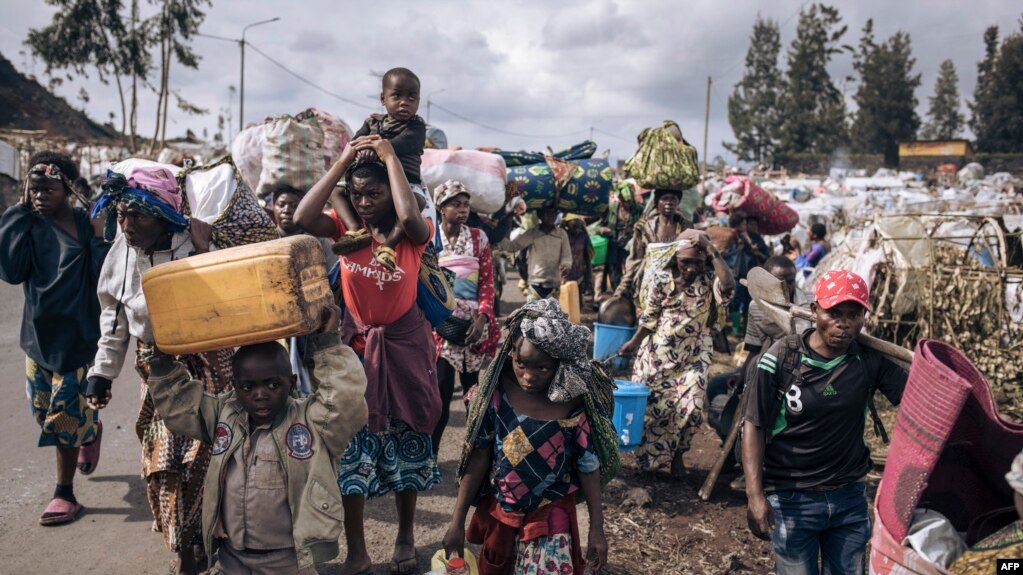
The Democratic Republic of the Congo has equally had a rather unfortunate run of a genocide that has attracted sympathy from all well-meaning persons. The victims as reported, are forcefully laid to rest at the hands of their captors who are instigated by international criminals. This former Zaire, has for decades been a bedrock for conflict despite its abundance of wealth by nature’s gift of kindness. Not much has yet to be felt by the African Union in the quest for relief to the victims. As for months to come, the trends show that more horror will rain down on the bloodlines of Zaire’s ancestors. Deaths, poverty, diseases, hunger, and calamities fit to be placed in that line.

The two events are happening at a time when international stakeholders have darlings to whom sympathy is addressed. Ukraine! Israel! Taiwan! But for these two nations. The best the African Union can out-do its past shortfalls is to understand that whenever there are competing sympathy demands from an African with a non African global actor, the African is on their own. While the foregoing’s truthfulness remains a point of contention, facts aren’t biased. The African Union might get estimates of potential downfall like its predecessor or far worse, when some (as the historical scribes have it) members reach agitation levels to assess its significance in the times today. To ask the African Union to draw its hands to its actual work as for what it was born seems a mountain to supply. Its challenges notwithstanding, it stands crippled or so it seems. It just should never have been the continent’s own, forsaking its kin.

Is there hope? So it might seem. The wheels of time are spinning so fast that demographics at all levels are not spared. Geopolitics is changing. Scales of power keep shifting. Alliances of old are growing and new ones emerging. Economies are changing face. Conflicts are becoming complex. However, the African Union remains static. A switch up to adapt is the relief at the end of the tunnel. Without it, Sudan and the Democratic Republic of the Congo will not be the last.

Alan Collins Mpewo Senior Research Fellow, Development Watch Center


Navigating the Trade Imbalance: Increased Cooperation with China Benefits Uganda and Africa

By Shemei Ndawula

Recently, the European Union(EU) Parliament issued a formal complaint against the Chinese People’s Republic regarding its trade deficit with China. This complaint has sparked global debate about the nature and impact of China’s economic engagement with the world especially with  developing nations. While the EU’s concerns are not without merit, in the new multipolar world, the continental body seems to often fallen short of the economic flexibility that previously made it an economic powerhouse.

In this Uganda presents a contrasting perspective; a nation often lauded as the most entrepreneurial in the world,  the potential of China’s unique approach to development in bridging Africa’s infrastructure gap and fostering inclusive economic growth could be the defining factor for our nation’s economic prosperity for the coming decades.

Trade Deficit: A Stepping Stone, Not a Stumbling Block

Uganda’s trade deficit with China is undeniable, with imports significantly exceeding exports. However, unlike the European Union, Uganda’s situation presents a unique opportunity where we can leverage China’s infrastructure development focus to accelerate our  own economic progress.

The Eurocentric model of development aid, often plagued by bureaucratic hurdles and limited tangible outcomes has proven largely ineffective in addressing Africa’s critical needs. In contrast, China’s investment in infrastructure projects like the Kampala-Entebbe Expressway and the Karuma Hydropower Plant directly improve Uganda’s transportation network, energy security, and overall economic activity. These investments create skilled jobs, stimulate local businesses, and lay the foundation for long-term economic growth.

To maximize the benefits of our relationship with China while minimizing the trade deficit, Uganda should adopt a multi-pronged approach by making strategic investments especially in these key areas;

We should further explore our economic diversification by moving beyond the current dependence on exporting raw agricultural commodities and minerals. This can involve processing agricultural goods locally, focusing on value-added products, and exploring latent potential in sectors like tourism in which we are abundantly gifted. With China’s success at poverty alleviation, it provides a potential tourism market of more than a billion people.

Additionally, we should comprehensively develop our national industrial capacity. China owes it’s rise to prowess in manufacturing and industrial development. This prowess through technology sharing can be leveraged to build Uganda’s own industrial capacity.Attracting Chinese companies to establish production facilities in Uganda can also create jobs, facilitate knowledge transfer,and reduce reliance on imported goods.

We will also need to strengthen trade facilitation which is the backbone of bilateral trade.The custom procedural process in the country needs to be streamlined with our foreign embassies and ambassadors. There’s hundreds of Ugandan importers in China facilitating the export of tons of Chinese made goods to the continent every day. The reason this is not two way traffic is because of the bureaucratic and expensive export process within the country. We will certainly need to streamline the export process if we ever hope for our goods to reach the Chinese markets.

The win-win approach which defines China’s foreign policy methods has already seen several Chinese companies setup shop in Uganda an outstanding example being the Chinese industrial hubs in Kapeeka and Mbale catalysing joint ventures between Ugandan and Chinese businesses can unlock new opportunities for both sides. Sharing expertise, resources, and market access would lead to innovative products, improved services, and increased trade flows.

A Balanced Approach: The Key to Success 

While Uganda and other African nations must capitalize on the benefits of their relationships with China, adopting a balanced approach is crucial. Diversifying partnerships beyond China, ensuring fair and transparent trade practices, and promoting responsible investment are essential to safeguarding Africa’s long-term economic interests.

The debate surrounding China’s economic engagement with developing nations is complex and multifaceted. While concerns about trade imbalances tend to look at the traditional indicators imports and exports, Uganda’s experience demonstrates the potential of China’s unique approach to development. By strategically leveraging this partnership, Uganda and other African countries can accelerate their economic growth, bridge their infrastructure gap, and create a more prosperous future for their citizens. Ultimately, the key to success lies in a balanced approach that acknowledges both the benefits and challenges of China’s economic presence while ensuring that Africa’s long-term economic interests are protected and advanced.

Shemei Ndawula is a Research Fellow at the Development Watch Centre.


China’s ‘Win-Win’ Cooperation with Global South Signals Shared Vision

China’s ‘Win-Win’ Cooperation with Global South Signals Shared Vision

By Abubakar M. Zirabamuzale

The term North/South divide, so often described by economists and scholars alike as the “Brandt Line”, has been around for 40 years now.  Initially, it didn’t seem to mean much since it was coined by the former German Chancellor Willy Brandt in his famous Brandt commission report.

Today, with the tectonics of the global order—multilateralism—fast changing, the North/South divide is polarising often carrying wide-ranging overt political connotations including extrapolation and exhibition of the global south as the poorest region.

The global south comprises of the 55 countries that comprise Africa, Latin America, and Central and South East Asia. Rightly so, the poorest countries in the world today lie within this axis occasioned by among others, decades of colonialism by European powers after which came decades of civil wars, internal strife, and back-to-back coups propelled by the same powers as part of the Cold War contest.

During the same 40 years since the Brant Line was coined, a lot has happened. The Cold War ended 30 years ago.  Along came the rise of China, the world’s second largest economy after the US, and the rise of loose multilateral cooperation groupings such as the BRICS+—acronym for Brazil, Russia, India, China, and South Africa and other 6 countries admitted to the grouping during this years BRICS summit in South Africa.

In the same vein, Africa, once written off by the British magazine, The Economist, as “Dark Continent” and later shifting position to “Africa Rising” is home to some of the fastest growing economies in the world, from Nigeria to Ethiopia to Tanzania.

Amid these fast-paced developments, countries in the global south as they have come to be collectively known, have been soul searching for feasible development models on which to model their respective paths to the much-sought economic development. There is a consensus that the Western (American/European) model isn’t working, after been first imposed on developing countries especially in Africa.

In early November, more 300 delegates, economists, scholars, business representatives, policy experts and alike from 50 countries of the developing world gathered in the Chinese city of Xiamen for the Global South Think Tank dialogue to further discussions on the place of the global south in the world today. China, which fended off colonialism and went on lift nearly 1b out of abject poverty by the turn of last century, has translated word into action of holding hand of many countries in their own development quest.

The dialogue under the theme “Global South: Working Together To Advance Modernisation” was jointly hosted by the International Department of the CPC Central Committee, the Fujian Provincial People’s government, and the Chinese Council for BRICS Think Tank Cooperation.

I was among the attendees at the forum opened by Mr Liu Jianchao, Minister of the International Department of the CPC Central Committee. Several high-ranking officials in and out of China gave key note addresses too, underscoring the need for “win-win” approach to the development of the global south, which Beijing has long committed to.

Mr Jianchao highlighted that the Chinese President, also the General Secretary of the CPC, Xi Jinping clearly pointed out that China is a member of the Global South. He stressed; “China was born in the South, cares about the South, takes root in the South, and has always shared the same destiny with the southern countries. In the face of the ever-changing international situation, China will adhere to the development concepts of “amity, sincerity, mutual benefit and inclusiveness,” Jianchao quoted president Xi.

Ms Paula Makonyane, the First Deputy Secretary General of the ruling South African, African National Congress (ANC), underscored that the destiny of Africa is closely related to the destiny of the world, especially the global South. “We are willing to learn from China’s experience in depth, work hard to resolve limitations in policy implementation, and achieve lasting peace, security, and sustainable development,” she noted.

Specifically, China has not just offered the global south billions of dollars for key infrastructure such as roads, railway, fiber optic lines, hydropower dams, and technical assistance in establishment of economic free trade zones including industrial parks, it also went a notch higher to push Sino-Africa trade to grow to corresponding levels.

Available records for example indicate that by 1990 China-Africa trade was estimated at Shs3.6 trillion ($1b) but by 2000 had surged to Shs36 trillion ($10b). By end of 2017 according to China’s ministry of Commerce, the China-Africa import-export trade had risen to Shs626 trillion ($170b)—in effect becoming Africa’s biggest trading partner.

Sadly, studies conducted by us (Sino-Uganda Research Centre) have found that people in Uganda positively view China but most lack enough information and knowledge to understand the importance of China. Many China-funded projects are relatively unknown and yet they exist almost everywhere in the country. This points to a communication gap which can be bridged by think tanks. I invited the Chinese Council for BRICS Think Tank Cooperation to  urgently attend to the need for China to win the information war through thorough research that exposes truth and defeats false notions by working collectively with other like minded think thanks like us.

Key also was the call for China to further promote world peace and development through technological transfer to the group members. The good news is that China is already leading calls for inclusive development and supporting peace and diaolgue as means of addressing misunderstandings as indicated in Global Development Initiative and Global Security Initiatives respectively.

As such, there was wider consensus at the forum and officials reiterated that such “win-win” cooperation was key in realising a shared vision—gathering strength for the realisation of modernisation and shared future for mankind.

Zirabamuzale is a journalist and researcher at the Sino-Uganda Research Centre.

What is Good Governance? The Case of China

By Moshi Israel

China’s governance system has long been a source of contention among Western political leaders. This microscopic focus on China has been fuelled by Washington’s excessive fear of everything communist. Many in the West believe that in a world dominated by capitalism and neoliberalism, a so-called communist or socialist country cannot and should not succeed. Capitalism’s entire existence as an infallible economic system is dependent on the public shaming and failure of other alternative economic systems. Furthermore, the West sees itself as having been the most successful democratic experiment since the inception of the democratic idea in Ancient Greece. As a result, unless it is an exact replica of Western conceptions of democracy, any other political system is a sham.

Under the leadership of the Communist Party of China (CPC), the People’s Republic of China (PRC) unexpectedly emerged as the exception to the norm, challenging existing conventional wisdom about how a country should develop and be governed. China’s success lies at the heart of its uniqueness, and it would not have been on the radar of the West if it had failed, as most other countries that have experimented with alternate forms of governance have.

However, China has arrived, demonstrating unequivocally that capitalism and Westernization are not the only roads to prosperity, nor is Western democracy the only good system of governance. There is nothing wrong with Western democracy; the fault is with the Western political class, which believes that their form of government is the only correct one.

To resolve this dispute, people must first ask themselves, “What is governance?” What, more specifically, is good governance?  If, as many in the West believe, China’s system of governance is flawed, we should apply the good governance test to it. To do so, we must first define what good governance is, what it includes, and how China measures up to it. The purpose of this article is to demonstrate that China is a democratic and well-governed country; this is not to imply that China’s style of government is flawless, just as it is absurd for the West to argue that their system is the only right one.

Most rational individuals and groups would like to live in a society that is well-governed. Good governance is a continuous process that needs to be pursued consistently. Therefore, no country is perfect because good governance requires constant improvement which adapts to contemporary realities and anticipates future challenges. We can all agree that a well-governed country should be developed or developing, its citizens should be fairly prosperous and well-provided for in most aspects of their lives, its institutions should be efficient, the country’s administration should be inclusive and participatory, the country should be stable and governed by the rule of law, development should be sustainable and environmentally friendly, and the government should have a strategic vision for the future and must be able to build consensus.

China has been governed by a single party, the CPC, since the revolution. The CPC’s manner of governance combines Marxist concepts, traditional Chinese customs, and elements of Western systems to establish a socialist government with Chinese characteristics. The CPC has presided over China’s remarkable economic progress, and one of its major successes has been the emancipation of nearly a billion people from absolute poverty. The CPC has succeeded in establishing political consensus in China, with its policies widely supported and the majority of its inhabitants satisfied with the country’s course. The party is a coherent body that is led from the top but has a strong grassroots core. Every decision is decided by the party, with other democratic parties serving as consultants.

China considers itself a developing country, even though it is the second largest economy in the world, it is a global manufacturing hub with about 28% of global output and is largely known as the world’s factory. This has enabled the country to be relatively rich.

China’s whole process people’s democracy is an effective system of governance that ensures everyone is included and participates in the administration of the country. Cities in China, for example, have suggestion boxes where residents can leave their concerns and recommendations for public officials. These issues are frequently resolved in a timely manner. Within 48 hours after expressing their concerns, the complainant is contacted, and a further 48 hours are employed to examine the issue and uncover viable remedies. Few other governments, if any, can do this, demonstrating the effectiveness of Chinese public institutions and the effective responsiveness of public officials. Public authorities may be promoted or recognized for each problem satisfactorily resolved.

Furthermore, China is a technology powerhouse, with 5G and significant expenditures in renewable energy technologies. The country has committed to reaching carbon neutrality and peaking by 2030, and it is continually cleaning up its air. Chinese society is increasingly being constructed for long-term green growth. China leads in the adoption of EVs, accounting for about 60% of all newly registered electric vehicles in 2022. Moreover, China is very competitive when it comes to the development of AI technology, second only to the United States. Recent US sanctions against China over chip-making technology have mostly backfired, and China is now becoming self-sufficient in the chip-making market. The CPC’s emphasis on green development is the essence of good governance since it shows that the government prioritizes the long-term safety and well-being of its citizens. Because the climate change threat is existential, it demands dedicated political will to address and alleviate and China has shown exceptional readiness.

China is a politically stable country that is secure both internally and externally. Every citizen wishes to live in a mostly crime-free society regulated by the rule of law, which is equitably applied. China’s crime rate is quite low, and I don’t think anyone will feel comfortable invading China very soon. The infrastructure is first-rate and modern, effectively serving the people and contributing to economic development. In comparison to the United States and other European countries, China’s subway system is cutting-edge. It also has well-built, clean roads, airports, and bridges that have boosted connection throughout the country.

China’s population is properly educated, with the government providing 9 years of free education to all Chinese children. Its higher education is centered on graduating as many students as possible in STEM topics, ensuring that the next generation leads the country in science, technical innovation, and mathematics. This exemplifies the CPC’s long-term strategic strategy for its young people.

Overall, China checks the majority of the boxes for excellent governance. As the government’s leader, the CPC qualifies as a legitimate party with the people’s mandate. The right to a dignified life is the most important human right. It makes no sense to be allowed to vote but never receive the services for which you vote. What good is a democracy if it cannot meet the demands of its citizens?  The ultimate purpose of any democratic society is to ensure that its people are prosperous and happy and that they can look forward to the future with hope, assurance, and security. China performs quite well on this parameter, and hence, to any sensible person, the CPC runs a well-governed democratic country, the Chinese way.

The Writer is a Senior Research Fellow with the Development Watch Centre