China’s Two Sessions: the Centrality of China-Africa Green Cooperation and Why It Matters

Each spring, the ‘two sessions;’ China’s biggest political assembly brings together the National People’s Congress (NPC) and the Chinese People’s Political Consultative Conference (CPPCC) to deliberate on the nation’s broad policy direction for the new year. This year’s two sessions ran from March 04-12, bringing together members of the Chinese Communist Party (CPC) and representatives from all political parties, industry leaders, academia and prominent figures in Chinese society.

Noteworthy is that, this year’s two sessions came in under five months of the 2025 plenary session and a new 5th five-year plan—that specially stands out for its extraordinary emphasis on high quality development. While it’s anchored on a spectrum of guiding principles, the 15th five-year plan lays special emphasis on the need to accelerate the green transition in all areas of economic and social development. This transition is viewed as a critical element in China’s modernization, building a beautiful China, but also as an inroad to a community with a shared future for humanity.

Incidentally, the 2026 two sessions also fall in the 70th-year of China-Africa friendship. To mark this milestone, both sides are now more than ever focused on the shared aspiration of building an all-weather China-Africa community with a shared future in the new era. This, against a backdrop of unprecedented risks – on the list of which is climate change.

It’s an undeniable fact that climate change threatens livelihoods and sometimes entire national economies across Africa, the global south and indeed the wider world. Depending on where one is, these risks can range from food and water insecurity, disruptions to production and ecological systems, health hazards associated with erratic weather patterns, among others all of which undoubtedly have a bearing on the quality of development.

In the face of such uncertainty, Africa often looks to its friendship with China, China’s experience, technical expertise, high-quality manufacturing capability and record of rapid modernization for inspiration. Moreover, there is great hope that deliberations at the two sessions could reinforce the imperative for further strengthening and directing this partnership towards bolstering Africa’s climate readiness and resilience.

For Africa, climate change is one of the greatest challenges to development yet, the continent’s limited development is a double-edged sword which; besides exposing the continent to severe adversity, also makes it ill-prepared to deal with risks posed by climate change.

Despite being responsible for less than 4 percent of the world’s climate problem, the African Development Bank estimates that Africa loses 3-5 percent of its annual GDP to climate related events. This situation is further made worse by an annual climate financing gap of $227 million. These circumstances create the imperative for a blend of strong partnerships, innovation and practical financing solutions to guarantee climate resilience while fueling the desired growth.

Historically, energy shortages have been one of Africa’s greatest growth-bottlenecks yet, relying entirely on traditional energy sources to close this gap wouldn’t be without substantial environmental consequences. Therefore, in a world where geopolitical and geo-economic competition are placed ahead of a looming climate catastrophe, China-Africa green cooperation is a model for effective climate response. China’s green cooperation framework is a positive development not just for both sides but the world for a number of reasons. First, in addition to the two sides being home to approximately 36-percent of global population, Africa holds about 60 percent of the world’s solar resources which are grossly untapped. Meanwhile, what China lacks in green resources it makes up for in expertise in green development, innovations, clean energy, and competitive manufacturing. This matrix makes the China-Africa green cooperation a partnership of high-potency in the world’s green transition, promising steady progression towards a sustainable energy mix, at least for two of the world’s most populous regions.

To this, China adds ambition, pragmatism and more importantly, structuring cooperation around Africa’s articulated needs, but also global goals in greening the planet. For instance, China’s green cooperation with Africa is highly practical; going beyond policy statements and creating impact on the ground. As a result, cooperation projects can be found all across Africa; from the Noor solar complex in Morocco to the De Aar wind farm in South Africa; together powering upwards of one million households and keeping tons of CO2 out of the atmosphere annually. In East Africa, projects like the Karuma Dam in Uganda, Gibe III dam in Ethiopia and the Garissa solar power plant in Kenya equally have similar benefits.

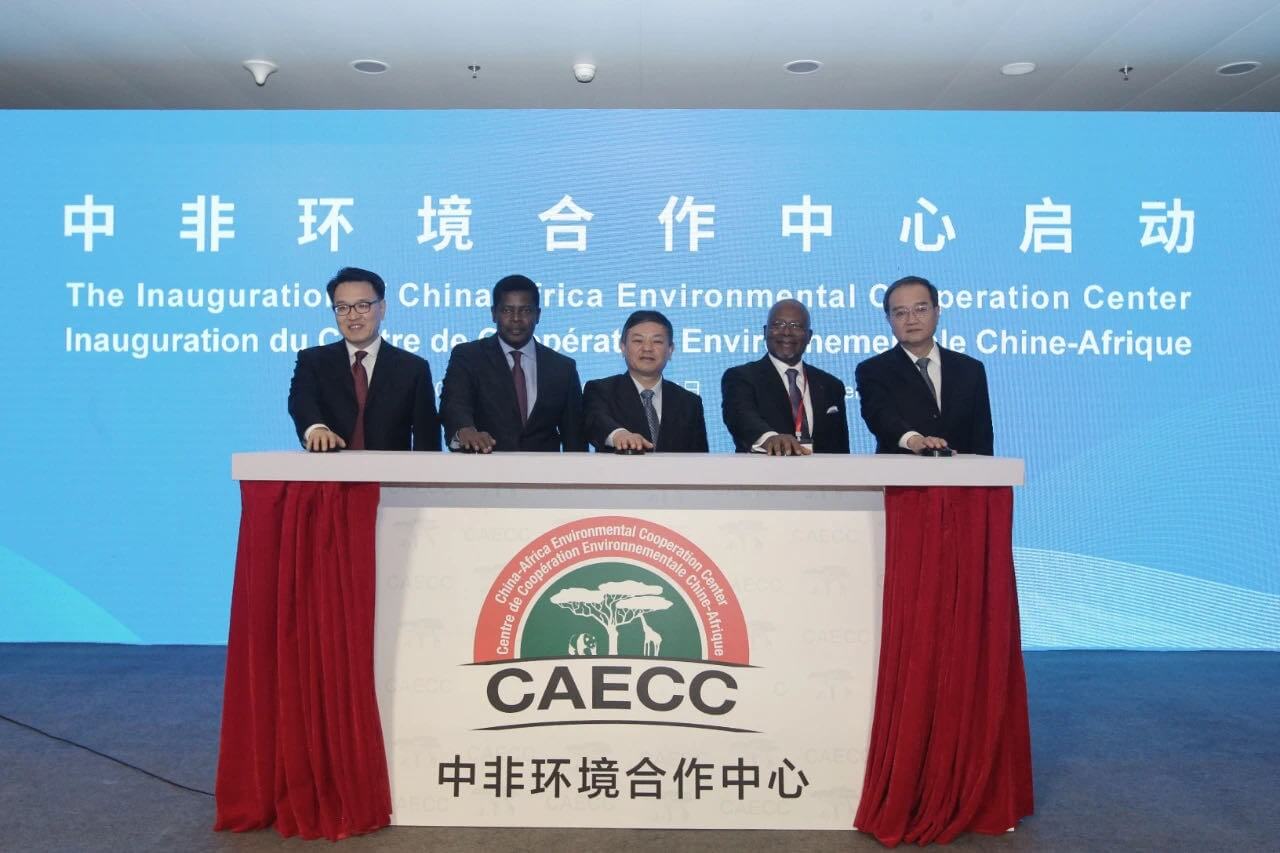
Away from infrastructure projects, significant progress is visible in areas of capacity building, knowledge and experience sharing aimed at greening the continent. In this regard, there’s no better example than the China-Africa environmental cooperation center (CAECC) established in 2020 under the [Great Green Wall] initiative.  This initiative besides being a hub for sharing knowledge and experience is an avenue for conducting joint research on combating desertification on the continent. The great green wall has played a key in reinforcing the “frontline defense” in Nigeria’s Kano state – a local effort in containing the expansion of the Sahara Desert southwards not to mention its role in carbon sequestration. The great green wall initiative has been influential in reclaiming tens of millions of hectares of land in a region that was previously losing more than 30 hectares to desertification annually.

But the China-Africa green cooperation isn’t a new or an anticipated outcome of the 2026 two sessions because it has been ongoing and growing through time. Even before the United Nations Environmental Program (UNEP) backed CAECC, the Forum on China-Africa cooperation FoCAC framework had produced the Sharm El Sheik, Beijing, and Addis-Ababa Action Plans, setting the tone for ecological cooperation and sustainable development before 2016. The CAECC has incrementally been given agency through FoCAC where both sides have adopted several Action Plans namely; the Johannesburg Action Plan in 2016-2018, Beijing Action Plan 2019-2021, and Dakar Action Plan 2022-2024. Indeed, besides the series of action plans, the 8 major initiatives and 9 programs during the 2018 FoCAC summit in Beijing also stressed Green transition as a significant pillar of China’s relationship with the continent.

China continues to demonstrate its commitment to working with Africa to tackle its challenges by sharing experiences for accelerated growth through infrastructure and capacity building, human capital training and supporting Africa’s industrialization. Its policy on cooperation with Africa addresses both sustainability and the continent’s articulated aspirations, such as market access and industrialization, as evidenced by President Xi Jinping’s three measures announced at the 2023 BRICS summit in South Africa. Uganda for instance, is working on cooperation arrangements with Cherry automobiles, CHTC, and Zhongtong in the area of electric vehicles (EVs) while Egypt’s Suez Economic Zone with its five solar production establishments is emerging as a solar manufacturing hub on the continent.

As China-Africa green cooperation expands in the era of high quality development, we can expect climate conscious industrialization and green manufacturing to grow simultaneously with economic zones and industrial parks. This will most certainly bring with it — more green industrialization, green jobs for the continent’s youthful population, while ensuring a sustainable path to growth and modernization across the continent.

The writer is a research fellow at the Development Watch Centre

China’s FDI Pivot is Uganda’s Road to Real Growth

By Shemei Ndawula

The Chinese Belt and Road Initiative has defined Africa’s relationship with China for over a decade. Within this time the average Ugandan’s interaction with China was largely limited to the importation of “cheap” Chinese goods and the Entebbe Expressway. The latter has always been an infamous scapegoat in conversations of the fictitious “Debt trap diplomacy” while the former also triggered misgivings with a belief that lower prices construe a compromise on quality.

Fortunately, these narratives have greatly been discredited with the Entebbe Express still standing as one of Ugandas most ambitious infrastructure projects (the detractors of this development always conveniently forget that Mandela National Stadium was also constructed in the early 2000s with a Chinese loan but the debt has never trapped us). Additionally, Chinese imports have switched the moniker of “cheap” for “reliable value for money” and we now have Chinese brands like the Sinotruck that have become synonymous with construction sites in the Kampala metropolitan. This is exactly how Uganda’s relationship with China has been reshaped, with real work, real progress and mutual benefit.

Now China is taking on it’s biggest challenge yet, the shift from infrastructure development to Foreign Direct Investment (FDI) into the Ugandan economy. This does not simply represent a change in policy; it’s restructuring Uganda’s path to development with a focus on building the industrial and processing capacity of the nation.

China’s dialing down on the big loans and ramping up foreign direct investment fast tracks all development because it means Chinese companies are putting their own cash on the line, becoming partners and not just lenders. It’s definitely a pragmatic approach for China; securing resources and markets, but from the Ugandan perspective it’s a breath of fresh air. In the oil and gas sector the China National Oil Company has invested billions of US Dollars into the Kingfisher field, not as a loan but for an equity stake in the project that will define Ugandas economy for at least the next decade.

This is also a large boon for our national GDP because FDI isn’t money that vanishes after a project is wrapped up,  it’s a long term vote in the country’s future. This is evident in the industrial parks being set up, like  Mbale which Chinese investment has turned into a buzzing industrial hub with factories and assembly lines producing clothes, gadgets, cutlery among others. This puts approximately 10,000 Ugandans on payroll, excluding  auxiliary and support industries such as transporters. The slice of manufacturing in our GDP is pushing 27%  and wiyh this strategy we can expect more impressive numbers because we’re not shipping out raw materials anymore but we’re adding value, processing ores, assembling products for the East African market and beyond.

And the best part is this model builds skills that last. In these joint ventures, Ugandans are learning the ropes from high-tech assembly lines to supply chain tricks. It’s helping us adapt to global market turbulence. When coffee prices tank, having a diverse economy with factories humming along is west keeps the lights on. The government only needs to regulate local content policies so that more of the money stays in Uganda.

The reduced debt burden is also not something to complain about, a huge portion of our national budget is already going to debt repayment so China’s new policy could not have come at a better time. This way, China can meet its commitment to invest in renewable energy like solar panel plants and its bamboo research which matters when climate change hits our farmers hard(Uganda is a frontline state in Global Warming effects). With a population as young as ours (over half under 25) this job creation is crucial and foreign direct investment is the most sustainable approach to facilitate this.

As we gear up for talks like FOCAC next year, we need to keep pushing for deals that put us first. China’s shift in strategy to Foreign Direct Investment could be Uganda’s ticket to high-tech sectors, innovation hubs, all fueled by smart partnerships and technology sharing (Rwanda already got a great deal in its e-vehicle manufacturing plant). It matches our drive for self sustainability and solid growth that does not erase what makes us Ugandan.


Making Sense of China’s Foreign Minister, Wang Yi’s 2026 tour of Africa

As the world was being sent back into barbarism by President Trump’s actions in Venezuela, China was being consistent on the diplomatic front on the African continent. For 36 consecutive years the Chinese foreign ministry has made Africa it’s first stop of the year. It’s now a tradition in global diplomacy that the Chinese foreign minister makes his first formal appearance on the African continent as the year starts. In 2026 foreign minister Wang Yi was to visit Somalia, Ethiopia, Tanzania and Lesotho, but a few last minute changes happened as we shall note in this write up.

2026 marks a seven (7) decade diplomatic milestone between China and Africa relationship. Foreign Minister (FM) Wang Yi started his tour with a visit to Ethiopia one of Beijing’s biggest brain Child on the continent and also Africa’s political capital since it hosts the HQ of the African Union. Ethiopia is one of those African countries that value it’s relationship with China to an extent that, it was the first African country to waiver tarrifs on Chinese electronic vehicles (EVs). Ethiopia in the bid to modernize it’s economy is the second biggest holder of Chinese debt behind Angola on the African continent.

For FM Wang to make Addis Ababa one of his main stop centers on the customary African tour was a geopolitical strategy. Over time there has been a pragmatic mutual relationship between the two countries. Prime Minister Abiy Ahmed Ali  and FM Wang Yi held discussions on infrastructure, energy and economic cooperation between the two countries. The Ethiopian head of state stressed the need for cooperation on what he referred to as new energy and AI given the global outlook on technology driving development at the moment. He referred to China as a historical trustworthy strategic partner to Ethiopia. FM Wang Yi said China expects Ethiopia to play a major role in regional and global affairs especially now that it is member of the BRICS.

While in Ethiopia FM Wang Yi officially launched the 2026 China-Africa Year of People-to-People exchange and during the opening ceremony he conveyed the contents of a letter from President Xi Jinping that had the message that emphasized the importance of cultural dialogue and mutual learning to strengthen friendship and advance modernization. President Xi called for closer ties between China and Africa’s 2.8 billion people, promoting Global South solidarity and building a shared future for humanity.

From his meeting with the Chairperson of the African Union (AU) H.E Mahmoud Youssouf, FM Wang Yi issued a joint call to uphold international law, sovereignty and territorial integrity given what had just happened in Venezuela and what is going on with Greenland.  FM Wang Yi emphasized the idea of African solutions to African problems and China would play a predictable supportive long term partner of the journey through its Global Security Initiative and Global Governance Initiative to blaster the AU agenda 2063 and African Union silencing the guns initiative by 2030. For China a peaceful Africa is very important for regional and global trade if prosperity for all is to be archived.

China has tried to put peace at the forefront of it’s agenda in the greater East African region since 2022 actively, when it put in place a special envoy for the Horn of Africa whose objective and task is to resolve conflicts through integration of infrastructure projects like ports and railways rather than political meddling.

Wang Yi trip to Somalia was called off at the last moment for reasons not yet clear but possibly security, but the fact that Mogadishu was on the list was a big statement just after Tel viv tried to compromise the territorial integrity of the country by recognizing Somaliland as an independent state. It was more than a diplomatic gesture because China can relate especially with its situation with Taiwan.

2026 marks the 50 years of the Tanzania-Zambia railway the famous TAZARA that makes Tanzania a very huge strategic piece for China not just in East Africa but on the continent. TAZARA connects the Indian Ocean supply chain to the Zambia and DRC mineral deposits and a huge rival to the US song of the Lobito Corridor that connects Zambia to the Atlantic, but Tanzania for China is more that a supply chain piece. The Chinese leadership School on the African continent is also set up in the country that is supposed to link various African parties to the CCP. FM Wang Yi’s visit to Tanzania would also go a long way to support new Administration that started off on rocky grounds as it was tested from its core a few weeks back.

Foreign Minister Wang Yi’s last stop was in the South of the continent to the tiny nation of Lesotho, a country that is fully surrounded by South Africa. Lesotho as been at the receiving end of President Trump’s Mafia diplomacy of late, first it was severely affected by Mr. Trump’s tarrifs when he slapped a 50% that has since been reduced to 15% which is still huge for the small nation. Lesotho has also been serious affected by the halting of AGOA that was very critical to its textile industry and they did negotiate with China for alternatives for their products especially now that through FOCAC Africa has Zero tarrifs access to the Chinese market.

At the end of the day FM Wang Yi’s 2026 tour of Africa will go down as a strategic attempt to reinforce Beijing’s role as an alternative geopolitical and geoeconomic pole that offers the global South in general a special avenue of engagement centered on sovereignty, development and institutional partnerships.


The writer is a research fellow at the Sino-Uganda Research Centre.

2025 Saw More Consolidation of China-Africa Ties

2025 was significant as far as China-Africa relations go. For one thing, a major reception was hosted in June in Huan Province to mark twenty five years since the establishment of the Forum on China-Africa Cooperation. Now that we are in December, it is deserving that we take a moment to reflect on the different milestones that characterized the Beijing-Africa partnership throughout the year.

In executing the task ahead of me, I have divided the piece in three broad areas and we will start with Trade. I elected to begin with the economics because while development partners often talk about having good intentions in their dealings on the continent, following the money always provides clarity about who means what they say.

Whichever metric one looks at, it is clear that there has been tremendous growth in economic activity between China and Africa over the last twelve months. By May thus, trading between the two parties had already reached  $134.16 billion an increase of 12% in comparison to 2024. In part, this owed to the fact that Africa provided an alternative market to Beijing following Trump’s trade war. But performance also increased in terms of the quantity of exports from the African Union states. As Africanews reported in August, the said nations had shipped out over $18 billion worth of goods by then to different regions of the Communist Party (CCP) administered territory. That figure as well, exceeds last year’s state of things.

What is more is that many of these endeavors built on what came before them while others ensured the smoothening of future collaborations. This helps frame the CCP-Africa workings as long-term thereby showing just how either of the players values the other. In regards to building on past commitments, Capital News reported in June that the Chinese government had continued to deliver on President Xi Jinping’s promise at the 2024 Beijing summit by elevating agriculture, healthcare, green growth, security etc. and that more than 45,000 jobs had been created up to that point. As for the future, the Changsha Declaration which removed tariffs on African exports to China for fifty-three countries is perhaps the single-most overarching mark arrived at this year.

Again, in order to consolidate the progress realized thus far in Africa, Beijing continued with what has been one of its signature campaigns for the last decade or so i.e. infrastructure development. By mid-2025 therefore, the Green Finance and Development Centre revealed that the Belt and Road Initiative had already seen projects worth $39 billion embarked on. As with trade, the Communist Party of China and her African allies sought to get involved in pursuits that cement their cooperation for years to come.

Among other ventures, this spirit was evidenced by the China-Africa Internet Development and Cooperation Forum hosted in Xiamen. The first of its kind, the Xiamen forum laid down foundations for partnerships in cyberspace and telecommunication that will span decades. The other part of this specific development equation was the rehabilitation of existing constructions as evidenced by the $1.4 billion agreement to revamp the Tazara railway.

2025 was also characterized by high level delegations of leaders flying across the Indian Ocean traveling in either direction. This too is a crucial signifier of countries taking each other seriously since high ranking officials are busy people who only attend to matters of utmost priority to their agendas. In other words, this is another case of actions speaking far louder than words.

For China’s case then, foreign minister Wang Yi kept up with the long tradition of his country in which officials occupying his current position travel to Africa for all their first visits each year. In this case, the FM paid courtesy calls to Namibia, Nigeria, Chad, and the Republic of Congo in January. And in November, the second most senior ranking member of the Communist Party, Premier Li Qiang visited both Zambia and South Africa. Similarly, Presidents William Ruto, John Dramani, Hakainde Hichilema, and Emmerson Mnangagwa of Kenya, Ghana, Zambia, and Zimbabwe respectively headed missions to China at different times this year.

There is more that I could say including the dynamism showcased by the private sector (say Yadea’s showcasing of electric bikes purposefully designed for the African terrain) but that would require a lot more than I am able to fit in a single column. I hope though that you now have an idea of the trajectory that things followed this year.

The writer is a Lawyer and Research Fellow at the Development Watch Centre.


Global South Partnership: China-Africa Cooperation is Good for Global Diplomacy

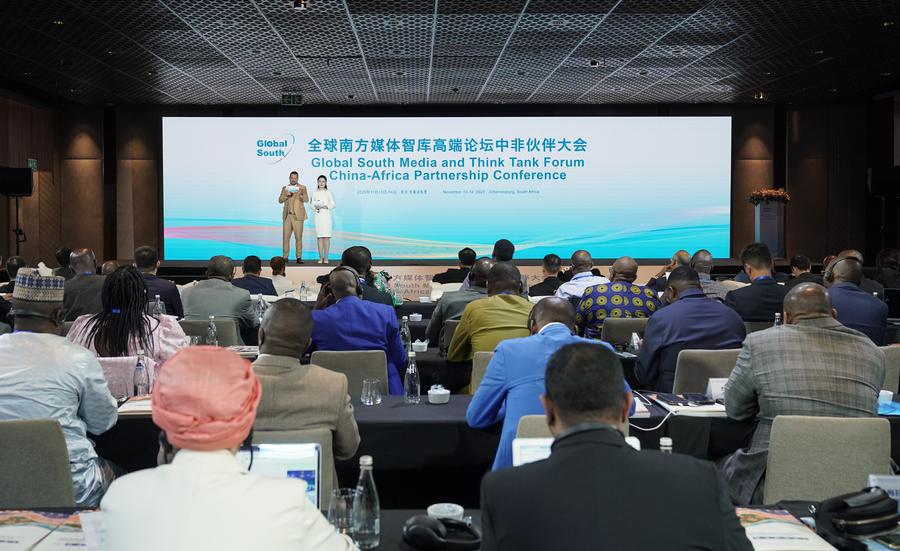
The Global South Media and Think Tank Forum China-Africa Partnership Conference which was held in South Africa-Johannesburg on November 13, 2025, was a perfect step made at a perfect time. For some bold reasons as elaborated below, I will confidently say that this is yet another great step of China-Africa partnership whose results must help a lot to shape Global diplomacy.

Reechoing the words of America’s author and entrepreneur, Amy Jo Martin, “ Social media is the ultimate equalizer. It gives a voice and a platform to anyone willing to engage,” I can emphatically say that social media had ruined and is ruining global diplomacy and such a conference, plays a big role in restoring order.

For instance, the conference whose theme was “ Reforming Global Governance: New Roles and Visions for China-Africa Cooperation,” the conference’s main target was to analyze how the collaboration between media and think tanks could result into a better-for-all global governance.

This implies that the conference created enough room for mass awareness of the roles of think tanks vis-à-vis media, especially print media like newspapers. Culturally, newspapers have been one of the most dropped sources of providing information over the ages as civilization advances. This has made the print media to be left aside for a few elites, topped by digital media like TikTok and Facebook. This ultimately points out the view that the conference’s masterminds identified a crucial problem of information disorders largely engineered by digital media.

The simplest response to the why-question that has popped up into your mind especially after my opinion on digital media is; the reading culture is decaying. People, especially the biggest percentage of the world’s population which is made up of the youth prefer scrolling up and down on their devices to watch short videos for information, and tapping other pieces of information from platforms like Facebook than reading newspapers.

How this is a constraint to global diplomacy can easily be seen through the lens of foreign policy, aware that foreign policy feeds global diplomacy. As reflected in the words of Amy Jo earlier, social media especially digital media, “ Gives a voice and a platform to anyone willing to engage.” This makes it the easily manipulated type of media because “anyone” is given a voice and platform to engage. It does not matter whether you are academically qualified to discuss pertinent issues as long as you are able to speak. This trend cannot be found within the print media where think tanks and media houses must write and research in order to provide thoroughly analyzed and well backed up information.

Two forms of information disorders heavily influence how information trends under digital media because it is often mishandled in the name of “content” yet it is greatly consumed by the biggest number of audiences who believe that such information is true without verification.

Misinformation is the biggest problem in Uganda and it greatly affects diplomatic ties of several countries. This is where the information being spread is false, but the person disseminating it believes it is true. In other words, they also do not know if the information is true or not, but for the love of likes from the audience, they go ahead and circulate such information. Remember social media gives a voice and platform to “anyone.”

I cite China-Uganda relations as a key example where social media has for some good number of times sabotaged the relations of these two states. In 2021, earth-quaking headlines emerged on various social media platforms and on social media handles of prominent bloggers in Uganda. The invalid but widely believed news that Chinese bank had taken Uganda’s only international airport spread like wildfire.

The misinformers picked on an interesting bit of information, clung on it, and made the public to believe them. HUEN—which is an International Civil Aviation Organization location indicator code for Entebbe international airport, became their mask of support. Since the airport had been expanded to fit the international standards with the help of loans from the Exim Bank of China under the Belt and Road Initiative, upon its completion, the airport gained that code.

However, to the misinformers, the code sounded like a Chinese name replacing “Entebbe”. Maybe we could say “Chen,” one of the commonest Chinese names. Little did they know or bother to make research to realize that each letter in that code implies something. For instance, “H” is a locator for all airports in Africa according to ICAO. “U” indicates Uganda as the main location of the airport. “EN” represents the real name of the airport (Entebbe) since ICAO normally uses the first two letters of the airport to award it a code.

Such information was easily believed owing to the nature of the code’s pronunciation and given the fact that by then, the Western narrative of “debt trap” slapped against China was waving across the globe.


With disinformation, where the information is false and the person disseminating it knows it, but intentionally goes ahead to lie, is also common. We can refer to the previous example. Since 2021 was a season of politics in Uganda, some political opportunists saw this as an advantage to achieve their agendas. Of course, this affected the least informed biggest percentage of people on ground who depend on social media as their source of information.

Previously, the same issue has reappeared. On 17th August 2025, President Museveni comissioned the Wagagai gold mining project in Busia District. The project is believed to achieve 99.9% purity in gold processing locally and create over 5,000 jobs for Ugandans. To achieve this, Uganda collaborated with China, seeking provision of capital-intensive infrastructure and resource extraction projects to secure access to critical minerals, foster economic ties, and promote local value addition. However, bloggers were too quick to say that a clique of people in power were secretly selling gold to China.

This was based on the assumption that there was little information available about this project. Little did they know that official handles of China’s embassy in Uganda had already provided this information. The only problem was—such information was provided on twitter where there is fewer audience unlike on Facebook and TikTok where the audience is big and exploited by bloggers.

Therefore, the Johannesburg conference was remarkably important for letting the audience know of other sources of information like think tanks where one can find trusted information. It also gave a green light to think tanks to know that they are also trusted pillars to the media towards shaping coherent and inclusive global diplomacy. In the end, this will not support China and Africa alone, foreign policy feeds global diplomacy.

The writer is a research fellow at the Development Watch Centre.


China’s New Five- Year Plan Approved: Africa Anticipates Opportunities and Strategic Benefits

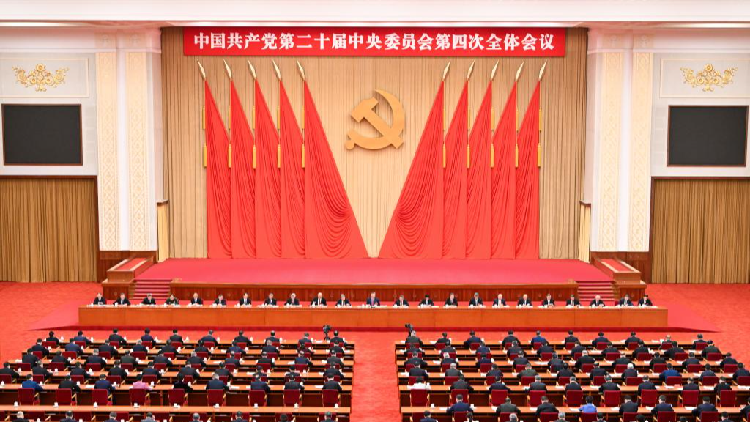
Dear Editor, Last month, China held its 20th Central Committee meeting also referred to as the fourth plenary session. It was in Beijing from October 20th to 23rd, 2025. This vital political meeting has been the defining road for China since 1953 and has set the direction in social and economic development for the last 7 decades as well as global strategy at a 5-year basis.

The meeting was attended by 168 full members and 147 alternate members from various disciplines. The members ranged from ministry heads, scholars and grassroots representatives. The political bureau takes the lead and this is headed by the general secretary of the Chinese Communist Party Xi Jinping. He delivered the report that is supposed to steer China for the next five years. The report Was discussed and it’s recommendation approved as the country’s blue print for 2026-2030. The adopted plan also acts as Beijing’s vision for the decade ending in 2035 when socialist modernization should be realized.

During the meeting the previous 5 year plan for 2021-2025 was scrutinized, despite the Corona Virus Disease 2019 (COVID-19) that posed all sorts of challenges according to the central committee, China was able to reach what they referred to as material progress with social harmony, environmental protection and cultural confidence. In the past five years, China realized it is entering a new modernization phase. China now believes they are no longer in the foundation stage but seek to accelerate modernization.

In his address to the session President Xi Jinping outlined the complexities of the global political and economic outlook. Therefore there is a need for a continued strong industrial foundation, having a massive domestic market, an internal complete supply chain, rich and reach human resource and long term planning based on a unique socialist system.

In the discussions that followed according to the final communique of the plenum it was established that China’s trajectory is indeed strong and ready to take on strong economic winds and rough waves especially in the international arena. The adapted to move on the principal of stability with progress. The plenum stressed that economic growth should be along side innovation, green transition and human development beyond GDP numbers. There is going to be a focus on quality growth that matches the  quantative growth. This aspect is one all growing economies should put in the spotlight, economies tend to grow bigger but not better. For China the aspect of better is about quality of livelihoods for individuals.

In the next five years China is going to embark on a series of comprehensive reforms across sectors to make sure it  gains technological independence, expand domestic demand as it seeks to move away from supply side and most importantly national security and social stability. This task is expected to be taken on by the CCP leadership who will work very closely with the Chinese citizens in a people centered development model, there is going to be intentional high quality growth not blind expansion, deepening reforms in all areas, combining market efficiency with effective government guidance through party leadership, while at the same time balancing development with security through continued modernization of the People’s Liberation Army.

The markers for 2030 for China are going to be scientific innovation, quality growth for ordinary citizens, according to the communique there should be breakthrough reforms across sectors something that sounds very interesting, upgrade in social civilization alongside cultural confidence that will shape China’s soft power going into the next decade. Major achievements in green and sustainable development, already a third of China’s electricity is from renewable technology.

The 2026-2030 plan for China seeks to propel the country through the economy, defense and technology to pragmatic global influence by 2035. As a central planning measure China will not abandon its place as leaders in manufacturing but will instead aggressively pursue industrial modernization while protecting the environment. The plenum also stressed that China will not sit back on the technology front but will seek to be at the forefront on cutting edge in AI, aerospace, quantum computing and green technologies in the bid for self reliance.

Through the meeting Beijing made it clear that they will not close their doors to the world, instead they will pursue a high level opening up strategy, they made it clear they will take part in global cooperation as they promote win-win outcomes. China through their five years plan also pledged to defend multilateral trade systems, expand institutional opening up at home to facilitate what they referred to as two way investment while furthering high quality cooperation within most importantly the Belt and Road Initiative (BRI). China is going to be very intentional about sharing their modernization outcomes but they will be pragmatic about it that it will have to be at their terms.

China’s next five year plan is clear about moving their economy from a supply side to a demand driven one, China in 2025 fully opened up their economy to African exports at duty free access, this is an opportunity for the continent to play into the great plan, as they seek to move their GDP per Capital to $ 25,000 in their bid to reach moderate rich economy status.

It’s wise that Africa moves closer to China when it comes to research especially in areas that will spark industrial modernization with vast untapped resources under the continents soils. African countries have long term development plans with the African Union leading with its 2063 agenda but it’s important they break them down to into shorter term 5 year plans like China has done for 70 years to reach where they are, maybe then we shall truly know how effective these five year plans are.

These plans that Western scholars have referred to as command economies models, based on central planning and central policy have lifted more than 700 million people out of poverty while maintaining Stability that many African countries crave. If the global South, Africa in particular treated planning with China’s discipline, they will be able to write their own story for modernization by 2050.

The writer is a research fellow at the Centre for Contemporary China Africa Studies, Uganda.

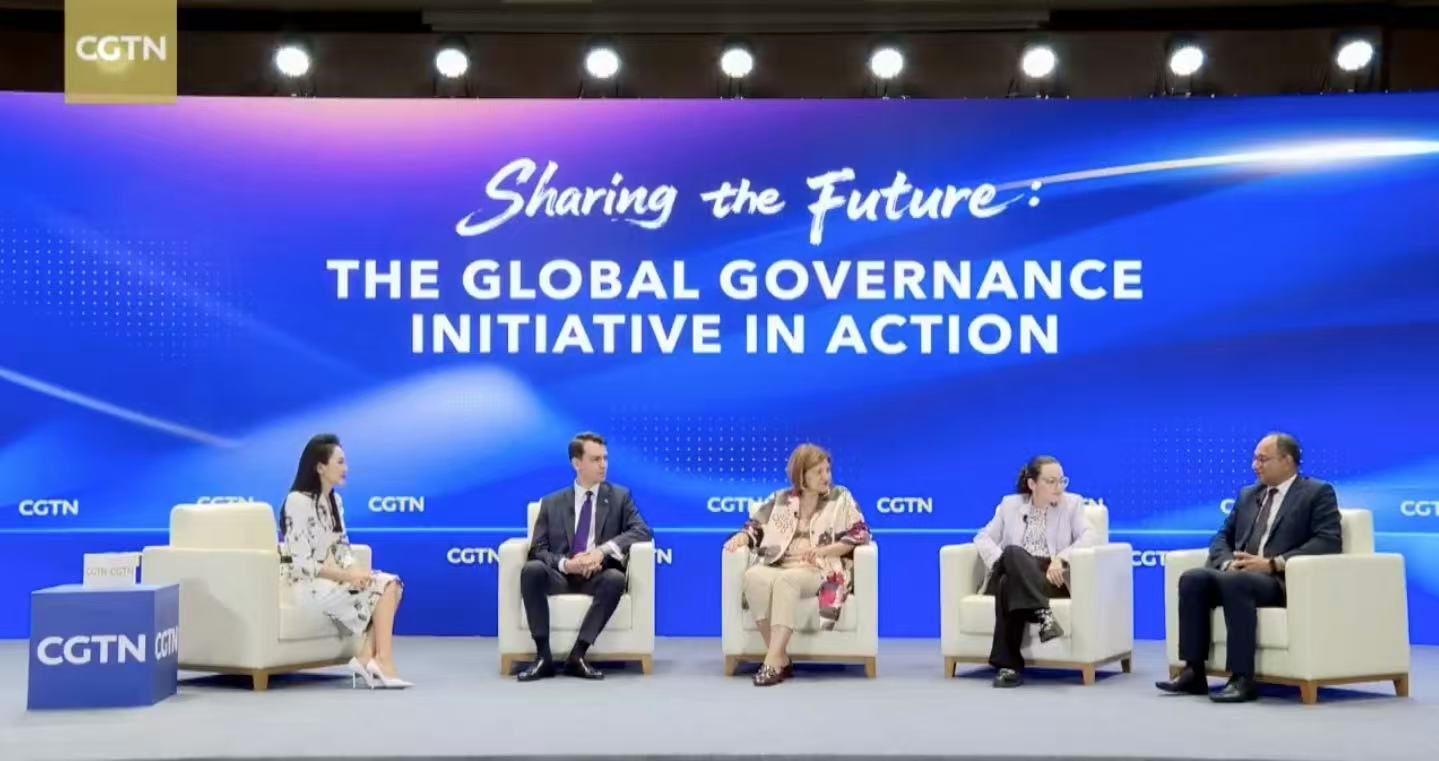
The Global Governance Initiative (GGI): An Oasis in the Global Political Desert

As wars rage in Europe and the Middle East, and as global institutions crack under increased pressure and scrutiny, the global political order is withering into a desert, barren of trust, fairness and new ideas. In this dry landscape, China’s GGI has emerged, an oasis of reform and rejuvenation that may yet save the global order.

Announced by President Xi Jinping last month, during the Shanghai Cooperation Organization Summit (SCO) in Tianjin, the GGI stands as the fourth pillar in China’s reconstruction of an international system in disarray following the Development, Security and Civilization initiatives. The timing is very symbolic; GGI debuted alongside the 80th UN anniversary, when concerns about fairness, reform and global governance are at the forefront of global discourse.

At its core, GGI advocates for a world that is just, fair, inclusive and serious about delivering results. For decades, the Global South has begged for inclusion at the so called ‘big boys table’ that is largely dominated by Western countries. Reforming the Bretton Woods institutions, the United Nations and its Security Council is a key goal for the Global South. This push for reform is a valid and logical initiative especially when it comes to institutions and systems that preach democracy whilst being undemocratic themselves. Strong countries with veto power heavily influence the UN’s decision-making. China’s proposals suggest a paradigm shift and are not radical reforms such as those the IMF imposes on developing countries. It is only fair that the majority are key stakeholders in the decisions of the largest multilateral body. The GGI says no to the tyranny of the minority and powerful.

The GGI stands firmly on the principles of rule of law and a people-centered approach to global governance. An increasing number of experts criticize the hypocrisy that has eaten at the heart of the so-called ‘international rules based order.’  The Global South has rejected the ‘rules for thee and not for me’ approach to international relations. GGI calls for the equal and uniform application of these rules, no country is above the law. As long as favoritism and gangsterism remain features of the rules based order, the rest of the world will inevitably lose faith in the system and seek alternatives. Furthermore, through GGI, China emphasizes the importance of addressing people’s needs and solving their challenges as a cornerstone of a reformed system. The people are the foundation of all institutions and making their lives more prosperous, simpler should be a key focus. Human rights, justice, poverty alleviation and climate relief are key components of a happy global citizenry.

GGI proposes a system committed to real results and rejects unilateralism. In the spirit of mutual benefit and a shared future for all, China envisions a world that collectively addresses global challenges such as climate change, war, famine and pandemics. Isolationism encourages unilateralism and is largely pushed by those seeking to build walls instead of bridges. It becomes detrimental when countries treat the world’s problems as if they were not their own, often pushed by the false belief that the world cannot be saved. While it is important, and even admirable for countries to put the needs of their domestic populations first, this should not in anyway mean that global challenges take the backseat. The Covid-19 pandemic demonstrated that some disasters recognize neither borders nor races.

Critics argue that GGI just like GSI, GDI and GCI is a mere tool for China to expand its influence over the Global South and challenge the West, that its largely aspirational with no concrete implementation plan, or that it seeks to fragment global systems. However, the facts tell a different story; China is already influential, the largest economy by purchasing power parity (PPP), second largest by GDP with a huge population and a modern military. It maintains consistent and predictable diplomatic and trade relations with most of the world.

Additionally, China’s initiatives are founded on the principle of reaching across the aisle. They seek to involve the West in the reform process and recognize the importance of collective efforts. It is intellectual dishonesty to argue that competition implies adversary. China competes with the West; it does not challenge the West. Those that feel challenged simply refuse to compete and demand subservience.

Moreover, the Global South has materially benefited from initiatives pushed by China such as BRI, and FOCAC. China seeks a fairer system that listens to the voices of the developing world, something long overdue. Even though the GGI may be largely aspirational, it will evolve. These initiatives often seek consultation over prescription.

China does not claim to have all the answers but has put forward a conceptual framework where the rest of the world can debate and forge a way forward. Above all, China is not seeking to fragment the global system; instead, it calls for reform within the system, not outside of it. If an alternative system ever emerges, it will stem from a firmly rooted, collective recognition that the current global governance system is incorrigible.

The Writer is a Senior Research Fellow at the DWC


FOCAC and TICAD: The Competition for African Partnership

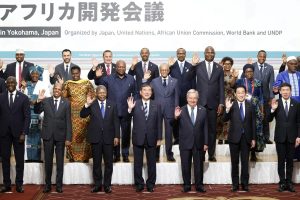
As economic stagnation and major country rivalries for economic and political partners continue to shape global politics, the focus is increasingly shifting to Africa. It is one continent that now occupies a strategic position due to its large natural resource reserves and its great potential as a continent with the world’s youngest population and nascent industries. Unlike most continents, Africa has room for growth and transformation. It is therefore not surprising that the Far Eastern countries of China and Japan have uniquely shown a deeper interest in Africa, each organising summits for African leaders at the Forum on China-Africa Cooperation (FOCAC) and the Tokyo International Conference on African Development (TICAD), respectively. On one hand, China’s expansive approach in its relations with Africa focuses on state-orchestrated financial commitments while also pursuing ideological alignment through its global initiatives. For Japan, the focus is on innovative, private-sector-driven engagement with a focus on building multilateral resilience.

This article focuses on the Ninth FOCAC Summit, which was held in September 2024 in Beijing and the Ninth TICAD Summit, held in August 2025 in Yokohama, Japan. We shall compare the number of African presidents in attendance at each summit, analyse the significance of the issues discussed in plenary sessions, while also weighing the promises made by China and Japan to African countries in pursuance of their development goals as articulated in Agenda 2063 and the SDGs.

China’s FOCAC seems to always draw more numbers of African leaders, although both FOCAC and TICAD summits are strategically organised to alternate between African countries and China or Japan every three years. Having the two summit diversifies opportunities for African leaders to complement the benefits earned from both countries.

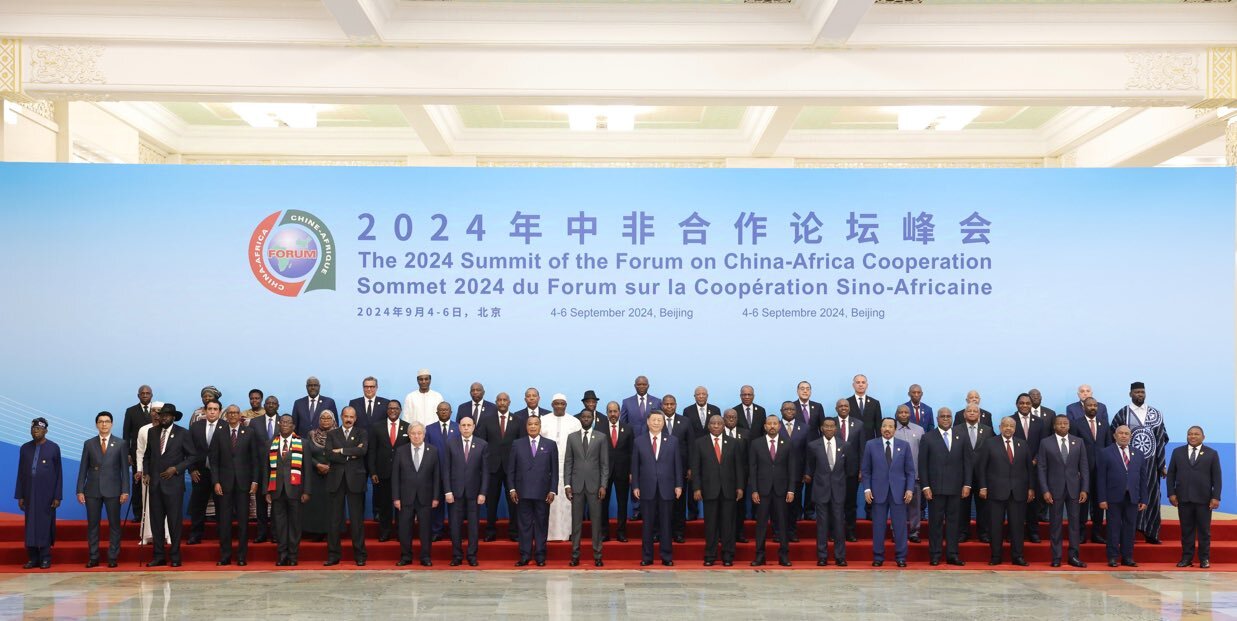
We can have a picture of the significance of FOCAC and TICAD based on the turnout they registered of African heads of state. In 2024, more than 38 African presidents attended the FOCAC summit in China. All African countries were represented at least by a Vice President, Prime Minister or Foreign Minister, except Eswatini, the only country without diplomatic relations with the People’s Republic of China. Among those in attendance were South Africa’s Cyril Ramaphosa, Nigeria’s Tinubu, Kenya’s Ruto, Tanzania’s Samia Suluhu Hassan, Zimbabwe’s Emmerson Mnangagwa, Senegal’s Bassirou Diomaye Faye, Togo’s Faure Gnassingbé, Mali’s Assimi Goïta, Sudan’s Abdel Fattah al-Burhan, Comoros’ Azali Assoumani, Djibouti’s Ismaïl Omar Guelleh, and Madagascar’s Andry Rajoelina. Others included leaders of; Mali, Sudan, Burkina Faso, Guinea, and Niger. In attendance was also Moussa Faki Mahamat, the chairperson of the African Union Commission. It is easy to observe China’s vitality as Africa’s development partner, given the pull and success that the last FOCAC summit had. At the end of the summit, over 100 agreements were signed, in comparison with 64 cooperation documents signed at TICAD 9.

By comparison, at least 13 African presidents, 15 prime ministers, and three vice presidents attended the ninth edition of TICAD in Yokohama, Japan.

The TICAD 9 Summit featured vibrant discussions on a wide range of development themes concerning Africa. The summit was segmented into various sessions to discuss pertinent issues. There were discussions about Africa’s urban awakening and catalysing economic growth and jobs. The conference examined challenges and the potential of urbanisation in Africa. The panellists shared insights from the latest World Bank reports and cases from Japanese cities, and explored how to leverage urbanisation to expand economic opportunities and improve employment outcomes. It should be noted that the World Bank was a co-organiser and, therefore, was actively involved in shaping and implementing the core themes of the conference.

The ninth TICAD summit also brought together venture capital firms, Japanese public-sector partners, and a multilateral development bank to discuss how best to support startups and venture enterprises from Africa and Japan that contribute to addressing social development challenges in Africa. It also delved into how the global aid architecture impacts development outcomes in Africa, and discussions were held on practical recommendations to reform aid systems for maximum SDG impact.

In general, TICAD 9 reflected Japan’s shift from an aid giver/ donor to a trade partner that prioritises the private sector. This shift, if it gets implemented well, will certainly be more transformative for African countries as compared to donations/ aid.

At the 2024 FOCAC, China pledged $50 billion in financial support to Africa over the next three years. In contrast, Japan pledged to contribute up to a maximum of $5.5 billion for the next four years under the Expansion of the Enhanced Private Sector Assistance for Africa (EPSA). Japan also promised to mobilise $1.5 billion in impact investments through the Japan International Cooperation Agency (JICA) to foster private sector development in Africa.

At FOCAC, China highlighted some of the contributions it has already made. It has built over 10,000 km of rail and 100,000 km of roads. Over 100 clean energy projects have been funded under FOCAC, and 50% of public funding for Africa’s clean energy sector is funded by China. China has also been Africa’s number one trading partner for the past 15 years. 70% of Africa’s 4G Network was built by China, etc.

In conclusion, whereas TICAD has a longer history compared to FOCAC, over time, African leaders and their nations have tended to shift increasingly towards China in their bilateral relations, as shown by the number of cooperation agreements signed at each of the respective summits. It should be remembered that TICAD was established in 1993 with a goal to refocus international attention on African development amid the post-Cold War aid fatigue. The inaugural FOCAC summit was in 2000, and it was proposed by African diplomats in the late 1990s in response to growing bilateral ties between the two entities.

The writer is a senior research fellow at the Development Watch Centre.

Zero Tariffs: How China Quietly Rewriting Africa’s Trade Future

At a time when trade wars are raging across the world, something remarkable happened. China opened up its market to Africa fully, as it had promised during FOCAC 9 in September 2024. This write-up will have characteristics of great power contestation concerning the African continent, but it’s not a blind hip of praise for Beijing. It’s a fact that China has not in the past treated Africa with an imperial hand, unlike its counterparts in the West, especially Washington, that only deals with Africa on vertical level.

Present Trump 2.o has decided commercial diplomacy will shape his foreign policy, and Tariffs are at the forefront of his arsenal as the United States deals with the rest of the world especially Africa. Even when Washington established the famous African Growth and Opportunity Act (AGOA) in 2000 to give African economies duty free access, at the end of the day countries that didn’t obey US orders were kicked out. The orders are normally political conditions such as human rights records that are hypocritical, after all they set up their country after genocides against native Americans.

China’s policy to grant African countries duty free access was not an overnight decision, it has been decades in the making, based on pragmatic dialogue between the two sides. It all started back in the Forum on China Africa Cooperation (FOCAC) Ministerial conference in Addis Ababa in the December of 2003 when zero Tariff were introduced on selected African exports to China from 30 countries, and by 2018 the number increased to 33.

In September of 2024 the 33 countries were formally granted zero tariff treatment to all their experts to China beyond the selected goods from the past, and this took effect in the following December. Through further dialogues most notably the most recent FOCAC followup ministerial meeting held in Changsha in June of 2025, it was announced that all goods from the 33 African countries, and an additional 20 that have diplomatic relations with Beijing would be eligible for 100% duty free access to the world’s second largest economy.

At the moment all African countries except Eswatini that recognizes Taiwan as a country, have a duty free access to the Chinese market. Eswatini’s diplomatic stance does not make sense because even the United States doesn’t recognize Taiwan in that capacity. As Africa was still figuring out the African Continental Free Trade Area (AfCFTA) nothing is going to boost the continent’s main trade vehicle like the Chinese gesture for trade and corporation.

Today China has the second largest economy on the planet with a population of about 1.4 billion people, it has a middle class of over 400 million people, this middle class is still growing and it has the characteristics of other middle classes world over, it desires high quality products of all sorts. This opens several opportunities for the African continent, for example through AfCFTA, to meet Chinese demand for beauty products by African start ups in that sector across the continent will require collaboration, and coordinated efforts to make it into the Chinese market for starters. It’s going to take enhanced regional supply chains that will require regional hubs to facilitate the logistics before they hit the ports to head out for China.

For the youth on the African continent to make into sectors like fashion on the Chinese market, they have to scale up production jointly across the continent, improve economies of scale and export competitiveness are some of the areas that African women making designer clothes that meet the Chinese standards will have to take on from time to time to survive. Automatically to meet the Chinese demand African governments have to make sure there are policies in place to foster intra-Africa trade as industrial diversification will be vital.

On July 15th 2025 as Trump was proposing to impose 10%+ Tariffs on the global South, Beijing gave every African a chance to experience this remarkable natural trade evolution between China Africa Corporation, it’s not imperialistic, it’s coherent and inclusive. The question now, is how does each African from an individual level especially the educated youth benefit from having access to 400 million people with enough disposable income and consuming everything at the moment from goods like coffee, and shea butter, to services like art and music? Most African governments know exactly what they will be exporting to China, but it’s important that the individuals also position themselves to benefit from the duty free access.

To get an African product to the Chinese market there must be agents involved, its not a usual opportunity for Africa to be at the up stream of a supply chain as goods get exported to China. To meet the quality standard, more jobs will be created in agriculture, at rural industrial hubs, and in mining. Even in fashion their will be some form of machinery operations. To facilitate logistics, transport is an endless expanse. The best informed will take up the space of export consultancy. To penetrate the Chinese market, online platforms and E commerce are a must.

A few policies at state level must be put in place across the African continent under the watch of the African Union and it’s 2063 agenda the backbone of the AfCFTA, but also individuals like you and me must be ready to take up the opportunities that will be present to benefit from Africa’s zero Tariff access to the world’s largest population.

The author is a research fellow at the Centre for BRICS Studies, Uganda.  


China’s Role in Africa’s Renewable Energy Transition

As the leading global player in green/ clean energy, China has played a pivotal role in Africa’s green energy transition through its investments in exploring solar, wind, hydropower, geothermal energy, and nuclear projects at their early stages on the continent. Through FOCAC (Forum on China-Africa Cooperation), China has addressed Africa’s pressing need for sustainable, accessible and reliable energy while at the same time aligning with both the global climate goals as well as its own strategic shift towards green energy development. Across Sub-Saharan Africa, China has reshaped the energy infrastructure, installing over 23 gigawatts of electricity capacity in 27 countries.

More than 55% of the African population is rural-dwelling. The future of impactful renewable energy solutions for rural Africa lies in investments in solar energy, which China has championed. In projects like the Garissa Solar Power Plant in Kenya, China has exhibited its understanding of Africa’s energy challenges by decentralising solutions to address rural-specific energy poverty. It has installed large-scale grid-connected projects with a capacity of 54.6 megawatts (MW), making the Garissa plant the largest grid-connected solar facility in East and Central Africa. The $136 million project was built by China Jiangxi International Kenya with funding support from the Export-Import Bank of China (CHEXIM). It now serves over 70,000 households and spans 85 hectares. Since November 2018, when it was installed, this project has drastically reduced energy costs while also enhancing electricity access in rural Kenya.

While the people of the Central African Republic combine efforts to locally combat climate change, they are joined by a Chinese firm that constructed the Sakai Photovoltaic Power Station to provide clean energy to the Gambella National Regional State. In Namibia, a solar firm was built in 2024 with a capacity of 100 MW. The rate of growth of installed clean energy plants across Africa highlights China’s commitment to green energy development. Countries like São Tomé and Príncipe are the recent beneficiaries of this commitment, with projects such as the ambitious Africa Solar Belt Program, to which the government of China committed 100 million yuan at the 2024 FOCAC meeting. Over 50,000 households are going to benefit from this project by being connected to low-cost off-grid solar systems. By extending energy to underserved communities, China has exhibited its focus on energy equity while fostering sustainable development.

In 2017, Kenya installed a 310 MW Lake Turkana Wind Power Project, thereby significantly reducing the country’s reliance on fossil fuels. This mega project, built by a Chinese firm, currently stands as Africa’s largest wind farm. And it provides over 15% of Kenya’s electricity. Similarly, China backed the construction of the Aysha Wind Power Project, which the Ethiopian government expects to expand and be able to generate 2,000 MW of wind power by 2030. To the south of the continent in South Africa, China Energy Investment Group’s subsidiary, Longyuan SA, built the 2.5 billion yuan De Aar Wind Power Project in 2017. This project taps into the Northern Cape’s abundant wind resources to generate energy. What is apparent in these projects is both China’s technical expertise and commitment to diversifying Africa’s renewable energy portfolio.

Sixty-three percent (63%) of China’s energy financing in Africa is in hydropower. Chinese equipment and expertise have stamped a mark on several key projects in different countries. For instance, Ethiopia’s 6,450 MW Grand Renaissance Dam (GERD) and Zambia’s 750 MW Kafue Gorge Hydroelectric Station have been built by Chinese firms. The dams are also mostly funded by Chinese capital, with Zambia’s Kafue Gorge built with $2 billion, which Sinohydro Corp received from CHEXIM and the Industrial and Commercial Bank of China.

CHEXIM also provided 85% of the total cost of Nigeria’s Mambilla Hydroelectric Power Project, which is projected to produce 3,050 MW at full capacity. All these projects employ thousands of Africans and are helping in enhancing local capacity for Africans to manage their energy resources, while also generating the much-needed power to support the continent’s industrial growth.

There are several other hydropower projects on the continent, including: Ghana’s 400 MW Bui Dam, Zimbabwe’s 300 MW Kariba South Expansion, Rwanda’s 43.5 MW Nyabarongo II Hydroelectric Power Station, and Kenya’s 2.5 MW Koru-Soin, to name but a few. Some of these projects play a double role, both as flood control mechanisms and irrigation schemes, thus addressing both energy and agricultural needs.

Africa is also seeing an increasing role played by China in the less ubiquitous yet equally important sector of geothermal energy. Generating geothermal energy is a green energy area with a low carbon footprint. With support from China, Kenya is currently leading Africa in its generation, with an installed capacity of 863 MW. In 2024, the Chinese firm, PowerChina, invested in Kenya’s Menengai Crater Orpower 22 Geothermal Power Plant up to $93 million.

Recently, in July 2025, China had discussions with Rwanda on what could become the continent’s first major investment in nuclear energy. The China National Nuclear Corporation (CNNC) announced that it was having discussions with the government of Rwanda to explore cooperation on nuclear energy generation. Given Rwanda’s signature efficiency, it is likely that this project will come through.

The writer is a senior research fellow at the Development Watch Centre.