Understanding the Belt and Road Initiative

By Nnanda Kizito Sseruwagi

Probably you have heard about it. Probably not. What is it? Let us first understand what it isn’t. Many initiatives from China suffer from being misunderstood, even at the highest echelons of policy experts around the world. This is due to the saturation in public media internationally by Western propaganda and culture, which has bred most of us. We are therefore predisposed to be suspicious of any agenda, idea, initiative or policy from “others” i.e. not the collective West. That’s why it’s important to begin by explaining what the Belt and Road Initiative (BRI) has been disarticulated to be.

Firstly, it isn’t about Debt Trap Diplomacy. BRI has been grossly misrepresented in the media as China’s means to propagate an empire across the globe by intentionally loaning developing countries sums of money they cannot repay. And that in default, China will turn around and attach national assets and gain strategic control of countries’ resources. Not only is this an oversimplification of the complexities involved in the financial architecture of BRI, but there is also no evidence found for a single national asset auctioned to China by any developing country that defaulted on a loan.

What is widely available is eveidence where China has written off billions of loans owed to China by African countries including forgiving interest free loans that reach maturity. For example, in 2022,  China announced debt cancellation of 23 loans for 17 African countries. Also, a study by Deborah Brautigam, the director of the China-Africa Research Initiative at Johns Hopkins University concluded that between 2000 and 2019, China restructured about $15 billion in African debt adding that to date, no evidence that China has been involoved in any asset seizures.

Secondly, some critics have expressed concerns that misunderstand the BRI as a subtle strategy that China is employing to pursue military interests. This might be more a reflection of what those critics would have done and less to do with China’s primary goal. It is in China’s interest and strategy for long-term success as a nation to maintain its founding ideals of peaceful coexistence and mutual respect for all nations. Building its military muscle would threaten a global conflict with America and it has nothing to gain from such a catastrophe, yet it has everything to gain in pursuing economic success.

Having dispelled the major misconceptions and misrepresentations of what BRI isn’t, let’s understand what it is. The Belt & Road Initiative is ironically China’s promotion of a Western-born idea and process of globalization. It is generally agreeable that globalization is synonymous with global Westernization, which might be why the West generally criticises China for BRI because it is a way of China overtaking them on their own game. The BRI is a restorartion of the ancient Silk Road Economic Belt and 21st-Century Maritime Silk Road Development Strategy.

This initiative is designed to increase global connectivity, primarily through constructing gigantic infrastructure projects. Its broader aim is to link Asia, the Middle East, Africa, and Europe via railways, highways, sea ports and other infrastructure and trade channels. By 2023, over 150 countries and about 75 percent of the global population had signed up under the initiative.

BRI’s stated objectives include; constructing a unified large market, making full use of both international and domestic markets through cultural exchange and integration, enhancing mutual understanding and trust of member nations, and creating innovative patterns of capital inflows, talent pools, and technology databases. The project also intends to fill the infrastructure gap in developing countries which promises us increased economic growth.

To become a member of BRI, countries sign a memorandum of understanding with China regarding their participation in it. The Government of China maintains a profile of all member countries and Xinhua News Agency, China’s state media house, releases a press statement whenever a memorandum of understanding related to the Belt and Road Initiative is signed with a new country.

Financing of BRI mainly comes from the Chinese government. It has injected billions of dollars into Chinese public financial institutions, such as the Chinese Development Bank (CDB), the Silk Road Fund (SRF) and the Export-Import Bank of China (EXIM). As policy banks, these enjoy low borrowing costs given that their bonds are Chinese government debt with very low interest rates.

The Central Bank of China also lends cheaply to both Chinese and foreign companies working on BRI projects. Multilateral financial institutions, such as the Asian Infrastructure and Investment Bank (AIIB) and the New Development Bank (NDB), Commercial banks, such as the Industrial and Commercial Bank of China (ICBC), China Construction Bank, and the Agricultural Bank of China also provide loans and financial services for this initiative. China has also established bilateral agreements with some member states to finance BRI projects through concessional loans (loans characterized by more generous terms than market loans e.g. below-market interest rates, long-term grace periods etc.), grants, or other financial instruments. It should be noted that BRI projects’ financing mechanisms may vary per project specification, the country involved or the type of infrastructure being developed.

Cynics have not spared critiquing the BRI. Most of its critics are policymakers from non-participant countries, especially the United States. They have called it a plan for a Chinese-centered international trade network to make it unpopular. In fact, panicking about the success of BRI, the United States, Japan, and Australia formed the Blue Dot Network (BDN) in 2019 to support infrastructure investments around the world. As though BDN wasn’t effective, in 2021, Western nations comprised under the G7 introduced another initiative called Build Back Better World (B3W). As developing countries, let us cautiously navigate how to achieve our own interests from this project finance competition among global powers.

The writer is a Lawyer and Research Fellow at the Development Watch Centre.
Belt And Road Initiative: 10 Years of Transforming Africa

By Steven Akabwayi

In 2013, Chinese President Xi Jinping launched the Belt and Road Initiative (BRI) which emerged to be one of the most significant and greatest projects of the 21st century according to experts.  By June 2023, over 152 countries and organizations had signed agreements related to BRI including the African Union as bloc.

The BRI was primarily established to link East Asia and Europe through physical infrastructure but was later expanded to Africa and other continents by the Chinese government significantly broadening the Chinese economic foothold on the continent.

Just two weeks ago, world leaders gathered in Beijing for China’s Belt and Road initiative, this was its third event of this kind since its official flag-off by President Xi Jinping in 2013, over 130 countries participated in this summit with analysts noticing China’s ambitions to solidify its relations and engagements more towards the global south as ties between Western countries and Beijing continue to take a drastic rift.

From the African perspective, the Belt and Road Initiative is beyond major infrastructure projects, Africans view the Belt and Road Initiative as a vehicle for improving people’s livelihoods and standards of living and a way of sharing China’s development dividends with other countries especially those in Africa where there is great hunger for development.

The Belt and Road initiative also embodies China’s vision of a win-win foreign policy approach that envisions building a global community of shared future as President Xi Jinping proclaimed in this years BRI summit.

While speaking at the second Belt and Road Initiative Forum for International Cooperation in 2019, UN Secretary-General Antonio Guterres acknowledged the critical linkage of the Belt and Road Initiative with the 2030 agenda.

He noted that the scale of the Belt and Road Initiative’s planned investments offers a meaningful opportunity to contribute to the creation of a more equitable prosperous world for all given that the five pillars of the Belt and Road Initiative are intrinsically linked to 17 sustainable development goals, these are conceptual pillars that can be translated to real world progress for all people mostly in Africa addressing poverty, hunger, climate change among others.

As one way of addressing climate change which ranks number 13 on the UN’s 17 Sustainable Development Goals(SDGs), China has expressed commitment to green development and promoting environmentally friendly projects.

“It doesn’t matter whether the cat is white or black, for as long as it catches the mice” This was the point of view Deng Xiaoping put forward as a guiding philosophy to develop the economy and restore productivity, however, when Xi Jinping took over in 2013, he reversed this view citing that for the cat to catch the mice, the later has to be green. This potrays  the emphasis and priority he accords to a sustainable clean green environment.

Currently, China is the world’s leading investor in Greenfield energy and infrastructure systems across the developing world the same climate-friendly developments have been intensified under the Belt and Road initiative by promoting renewable energy and clean sustainable transportation systems.

On the issue of poverty, China has facilitated a reduction of unemployment in Africa with the Belt and Road initiative projects established, recently china’s leading television CGTN released a documentary that starred a 29-year-old Ugandan youth named Bless whose life was transformed after securing an entry job at karuma hydroelectric power station in Kiryadongo district . According to the documentary, while working at the station Bless gained a set of professional skills that laid a solid foundation for his future development and light a path to a better future for other Ugandan youth.

Contrary to the Western narrative, China’s Belt and Road Initiative is not a debt trap for African countries, china a developing country Sees African countries as its fellows given their shared history, and the Asian economic giant comes intending to provide the assistance that is necessary for Africa development,, through its journey of development, China has identified infrastructure as a critical component for any countries development .

China contributes significantly to the development of infrastructure in Africa which has been for long been the main constraint of achieving economic transformation on the continent.

In less than a decade, Africa has witnessed the establishment of mega airports, roads, and railways to overlapping bridges that run overseas and across rivers connecting faraway places, ports, and large cities.

As far as infrastructure is concerned in the East African Community, China has been a key player through connective finances and technology exchange.

Some of the recent famous projects that have been launched under the Belt and Road Initiative in Africa as a whole include the Bagamoyo port in Tanzania which aims at enhancing Tanzania’s maritime capabilities and facilitating regional trade.

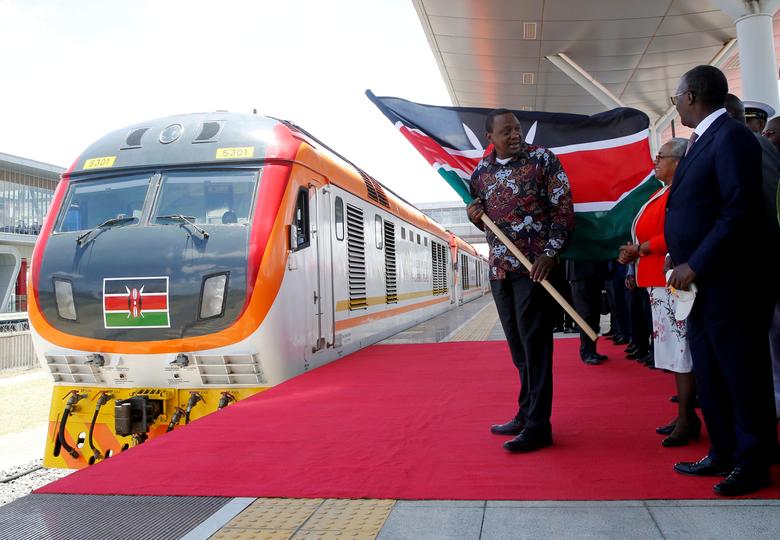
There is also a standard gauge railway in Kenya connecting port Mombasa to the capital Nairobi, the Lamu Port that aims at connecting Kenya with South Sudan and Ethiopia, Suez Canal Economic Zone in Egypt, port of Djibouti among others.

Steven Akabwayi is a Research Fellow at the Sino-Uganda Research Centre


Xi’s Third Belt & Road Forum Speech Re-affirms China’s Commitment to Building a Community of Shared Prosperity

By Allawi Ssemanda

Last week, the world leaders gathered in Chinese capital Beijing as leaders from over 150 countries, and representatives of international organisations met in Beijing for the Third Belt and Road Forum for International Cooperation. The event also marked 10 years of the Belt and Road Initiative (BRI). Jointly implemented by participating partners, BRI which was initiated by China in 2013 is a high quality public good whose benefits are shared by the world. The project delivers high-standard, sustainable and livelihood-enhancing outcomes globally appreciated.

The project is highly commended for its contribution towards global infrastructure development which has greatly contributed to global connection and easing of trade and the movement of goods and services which has contributed to uplifting of 40 million people out of extreme poverty across BRI economies. This makes the initiative a textbook example of win-win cooperation and shared prosperity which China has always advocated for.

Stressing that the Belt and Road cooperation is based on the principles of “planning together, building together, and benefiting together,” President Xi explained that the BRI “transcends differences between civilizations, cultures, social systems, and stages of development,” adding that “it has opened up a new path for exchanges among countries, and established a new framework for international cooperation.”  “The BRI represents humanity’s joint pursuit of development for all,” observed President Xi.

With this, one can argue that President Xi was spot-on considering study reports about BRI conducted by different independent organisations including major think tanks and the World Bank (WB) whose conclusions contend that BRI is contributing to global development.

The other key area President Xi noted in his speech is the progress the BRI has achieved in green and low-carbon development and addressing climate change challenges. He revealed that this huge public good initiative does not only look at addressing today’s needs by improving connectivity through infrastructure development but it is also keen to addressing environmental concerns as a way of addressing climate change which is key for sustainable development as China continues her efforts of ensuring shared prosperity for mankind. “China has issued documents such as the Guidance on Promoting Green Belt and Road and the Guidelines on Jointly Promoting Green Development of the Belt and Road, and set itself the ambitious goal of forming a basic framework of green development through BRI cooperation by 2030,” Xi announced.  While critics of the BRI have always wrongfully claimed that the initiative is silent about environment, President Xi revealed; “China has also signed an MoU with the United Nations Environment Programme on building a green Belt and Road, reached environmental cooperation agreements with more than 30 countries and international organizations, launched the Initiative for Belt and Road Partnership on Green Development together with 31 countries, formed the Belt and Road Initiative International Green Development Coalition with more than 150 partners from 40-plus countries, and established the Belt and Road Energy Partnership with 32 countries.

Further, President Xi also talked about debt sustainability among BRI economies (countries that signed up for the BRI). He explained different ways China has put in place through consultations with partner countries as a way of managing debts so that the project supports wholesomely partner countries without causing economic stress. He stressed that basing “on the principle of equal participation and benefit and risk sharing, China and 28 countries approved the Guiding Principles on Financing the Development of the Belt and Road, encouraging the governments, financial institutions and enterprises of participating countries to attach importance to debt sustainability and improve their debt management capability.”

With aim of avoiding debt burden to BRI economies, China came up with debt sustainability framework for low-income countries. This framework which is endorsed by the World Bank and International Monetary Fund when extending funding and loan facilities looks at among others actual conditions of individual countries. Additionally, while implementing BRI projects, “China has prioritized economic and social benefits and provided loans for project construction based on local needs and conditions. The key areas of investment are infrastructure projects designed to increase connectivity, and projects for public wellbeing urgently needed in participating countries. These have brought effective investment, increased high-quality assets, and boosted development momentum,” Xi stressed.

It is not a surprise that several studies continue to credit BRI projects as catalysts for social-economic development of not just BRI economies but also countries that did not sign up for it but are in corridors of the BRI.  For example, a study by WB conducted in 191 countries, titled “How Much Will the Belt and Road Initiative Reduce Trade Costs?concluded that the Belt and Road Initiative projects have made trade easier in BRI participating countries by “reducing shipment times and trade costs at country-sector level.”

Examining trade figures from 191 BRI economies and those in BRI corridors and 1,818 cities in BRI economies only, the study concluded that “for Belt and Road economies, the change in shipment times and trade costs will range between 1.7 and 3.2 percent and 1.5 and 2.8 percent, respectively.” Further, the study found that non BRI economies or countries that did not sign up for the BRI are equally benefiting from the initiative stressing that it has led to “reduction in shipment time ranging between 1.2 and 2.5%,” and reduced “trade costs of up to 2.2%.” Also observed by the study was that BRI economies and those countries where BRI projects go through or BRI corridors benefited the most with “shipment times along these corridors decline by up to 11.9% and trade gains by 10.2%,” noted the WB study.

Generally, there is a consensus that the BRI is a public good whose benefits are being enjoyed by a great percentage of mankind irrespective of our respective countries. For example, between 2013 and 2022, the cumulative value of imports and exports between China and BRI economies reached US $19.1 trillion which translates to 6.4% average annual growth, according to a white paper (WT), “The Belt and Road Initiative: A Key Pillar of the Global Community of Shared Future” released by China’s State Council Information Office this month. In this WT, figures indicate steady growth in two-way investments between BRI economies and China which reached USD $280 billion. As of 2022, the value of both imports and exports between BRI economies and China reached USD 2.9 trillion translating to 45.4% of China’s overall foreign trade which represents 6.2% increase if compared with 2013; while the overall value of imports and exports of Chinese private enterprises to BRI economies grew past USD 1.5 trillion which translates to 53.7% of trade between China and BRI economies for the said period.

From her successful experience, China understands the role infrastructure plays while pursuing sustainable development. As two Chinese adage contend; “要想富” , “先修路”; “Better roads lead to better life.” and “Build roads if you want to get rich,” it is clear that it is China’s thirst to contribute in building a community of shared future for mankind in the new era, that with hope of mutual benefits, Beijing embarked on funding this huge public good project  the Belt and Road Initiative to fasten efforts of achieving shared prosperity for mankind in the new era.

Allawi Ssemanda, PhD is Executive Director Sino-Uganda Research Centre and a Senior Research Fellow at the Development Watch Centre.
Belt And Road Initiative at 10: A Decade of Connectivity and Shared Prosperity

By Dr. Allawi Ssemanda

This month marks 10 years since Chinese President, Xi Jinping put forward the idea of the Belt and Road Initiative (BRI). In October 2013, President Xi who doubles as the Secretary General of Chinese Community Party (CPC) explained that the initiative then seen as restoration of the ancient maritime silk road would help in facilitating trade by easing movement of goods and services, and connecting the world through infrastructure development.

Today, from Latin America to Caribbean, Middle East to Asia, Africa to Europe, more than 150 countries and over 30 international organizations have signed up for the project. This means, more than a third of the world’s GDP and more than three-fourths of the countries in the world are part of the BRI. Such support is not a surprise; extensive consultation, joint contribution and emphasis on shared benefits are key principles of the BRI.

It is now clearer that BRI is a high-quality public good initiated by China, and jointly built by all participating partners. Its wide reception is a testimony; it is delivering high standard, sustainable and livelihood-enhancing projects to all people; treating all participating countries as equal partners, promoting economic integration and connection.

BRI has become a household name due to its contribution of connecting the world and easing trade and movement of goods and service resulting into investments of nearly one trillion USD, brought over 3000 cooperation projects, and created over 420,000 jobs in countries along the routes of the project with multiplier effect helping lift 40 million people out of absolute poverty.

Driving on the five Connectivities or “five Cs”; policy connectivity, infrastructure connectivity, trade connectivity, financial connectivity, and people-to-people connectivity, BRI has positively contributed to the well-being of humanity world-over. Recent empirical study shows that the BRI has significantly improved global trade and reduced costs involved. A World Bank (WB) study conducted in 191 countries, entitled “How Much Will the Belt and Road Initiative Reduce Trade Costs?concluded that BRI projects have made trade easier in BRI participating countries by “reducing shipment times and trade costs at country-sector level.”

Analysing trade figures from 191 countries (those that signed up for BRI and those in corridors of BRI projects), 1,818 cities for BRI economies only (cities from countries that signed up for BRI), the WB concluded that “for Belt and Road economies, the change in shipment times and trade costs will range between 1.7 and 3.2 percent and 1.5 and 2.8 percent, respectively.” Interestingly, the same study observed that even countries which did not sign up for BRI are benefiting. BRI projects world-over have seen “reduction in shipment time ranging between 1.2 and 2.5%,” and reduced “trade costs of up to 2.2%.” The study observed that in countries where BRI projects are located and or along the corridors, those countries gained the most with “shipment times along these corridors decline by up to 11.9% and trade gains by 10.2%”. While it notes that positive results of BRI projects “are magnified by policy reforms that reduce border delays and improve corridor management,” all is possible because BRI exist.

From Africa to Asia, to Europe, Middle East and Americas, under the Belt and Road Initiative, the economic cooperation between China and the rest of the world has by and large withstood the test of uncertain factors against the backdrop of the pandemic time and by all standards, it is safe to say BRI is still enjoying a good momentum of steady progress of enabling factors that are key for the world to enjoy shared prosperity.

Despite all the positive contribution of BRI, the project has been a target of the West especially the U.S. Strangely, without facts, Washington has consistently tried to promote narrative of the so-called debt trap and claims of lack of transparency from Chinese side on financing of BRI projects. However, critics claims remain baseless as different studies from independent bodies and researchers continue to rate the project positively. For example, while critics accused BRI of carrying risks, a World Bank study entitled; “Belt and Road Economics: Opportunities and Risks of Transport Corridors” concluded that there are more benefits for BRI participating countries and the entire world and that risks involved were minimal compared to benefits.

In Africa for example, projects under the BRI have greatly contributed to both social and economic growth of a number of countries. A study by the Africa Policy Institute found that, under BRI, a number of modern infrastructure projects in the Horn of Africa (HoA) and other parts of the continent increased, contributing to thousands of employment opportunities and other multiplier effects. The study also highlights Kenya’s modern Standard Gauge Railway (SGR) connecting Mombasa and inland port of Naivasha funded under BRI. Ethiopia-Djibouti standard gauge railway which connects the landlocked Ethiopia to Djibouti port is also credited for improving transport in the region. The project is already showing greater signs of sustainability with the 752.7-km railway line credited for contributing over 86.13 million U.S. dollars in revenue in 2021, which was up by 37.5% if compared to 2020 revenue collections.

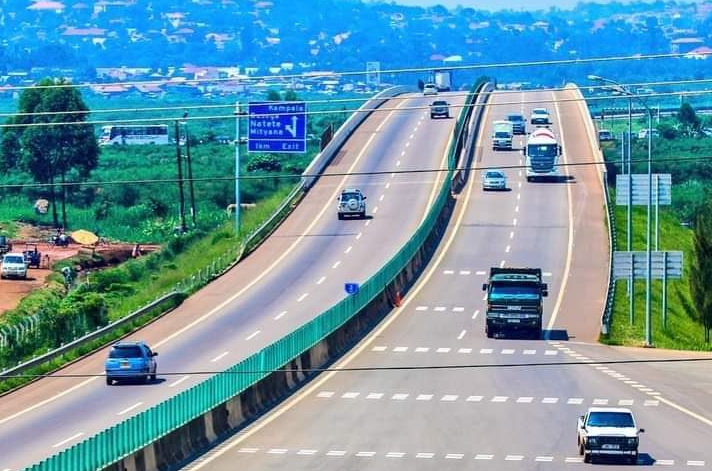
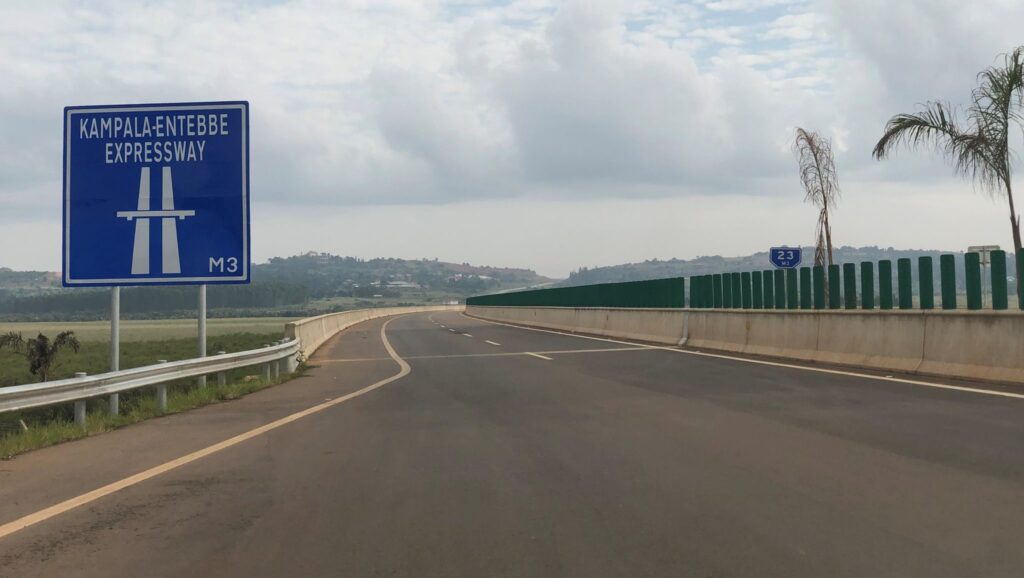
In Uganda, infrastructure connectivity is visible with Kampala-Entebbe Expressway, (KEE) the country’s gateway to the rest of the world being operational. the completion of KEE cut commuting route between the country’s capital, Kampala and Entebbe international airport from a two-hour long drive within long queues of traffic jam to just 30 minutes. This is not to mention other projects funded under the same arrangements such as expansion of Entebbe International Airport, two hydropower mega projects; Isimba and Karuma among others.

Aside, critics of BRI on account of what they call putting more funds into infrastructure project should recognise that developing countries are faced with challenges of infrastructure funding. According to the African Development Bank (ADB), to meet her infrastructure funding deficits which is key for the continent to plan for its growing population and replace their ageing infrastructure, annually, the continent needs between $130-170 billion. This means; countries need allies willing to help in funding their infrastructure projects which BRI is exactly doing.

WB study “Why We Need to Close the Infrastructure Funding Pag in Sib-Saharan Africa” contends; if the region shrinks its infrastructure funding gaps, the region’s GDP per capital will grow by 1.7%. In otherwards, by implementing BRI in the region, China is already supporting Sub-Saharan African countries GDP growth by 1.7%. Should we castigate China or BRI for such because the U.S or a few politicians in Western capitals are “worried” or because they have refused to understand that BRI is a global public good? My answer is a resounding No.

As Bent Flyvbjerg, a Danish professor taught us; “Infrastructure is the great space shrinker, and power, wealth and status increasingly belong to those who know how to shrink space.” Now that BRI is with here, we should embrace it to improve infrastructure in our respective countries as we strive with allies like China to build a community of shared future for mankind in the new era of win-win cooperation.

Allawi Ssemanda, PhD is Executive Director the Development Watch Centre and Senior Research Fellow at Sino-Uganda Research Centre

Belt & Road Initiative at 10: International Relations Through the Lens of Economic Development

By Marvin Hannington Kalema

Often times, many people’s answers to a question on the purpose or importance of International Relations in the global scene would be primarily along the lines of maintenance of global peace by fostering mutual respect and goodwill among global states. This despite being somewhat an incomplete answer is not wrong at all upon a perusal of the prime article in the charter of the United Nations (UN), the globally recognized institution charged with the responsibility of fostering and promoting peaceful international relations.

However, article 3 of the abovementioned charter espouses, as one of the aims of the UN, a desire to achieve international co-operation in the solving of global problems of economic, cultural or humanitarian nature. In essence, the article outlines an additional role or purpose played by international relations aside from promoting global peace and that is addressing global economic challenges.

It can be argued that, the founders of the UN believed that countries relating peacefully with one another could easily work together to counter their common challenges, one of the most notorious being poverty and economic inequality among global states. The World Inequality Report as of 2022 portrayed a disparity in that the richest 10% of the global population owns over 76% of global wealth and the poorest half of the global population owns a meagre 2% of the global wealth cake. Staggering revelations at that.

In light of the figures above, it is clear that global states need to participate more in a unified effort of economic development. Some countries like the People’s Republic of China have through projects like the Belt and Road Initiative (BRI) undertaken efforts to give effect to, and realize article 3 of the UN charter. This year, as the initiative celebrates a decade of existence, it is imperative that an assessment of its achievements is briefly established.

The BRI, initiated in 2013 is a development initiative developed by China but belonging to the rest of the world as the white paper on the project released by Beijing’s State Council Information Office opines. It is actually believed to carry on the spirit of dynasty era China where maritime silk routes were developed opening up the East and West to each other under the guidance of Chinese Emperors.

As the maritime silk routes increased trade at the time, the BRI project was also expected and organized to facilitate trade, communication, culture among member countries with the hope of realizing global economic growth.

The BRI is founded on the principles of extensive consultation, joint contribution, and shared benefits. It advocates win-win cooperation in pursuit of the greater good and shared interests. It emphasizes that all countries are equal participants, contributors and beneficiaries, and encourages economic integration, interconnected development, and the sharing of achievements.

The principle of extensive consultation implies that countries from across the economic development scale (low, high, middle) could all get an opportunity to participate in economization of the global community through bilateral or multilateral communication forums where all ideas of economic development are to be raised, debated upon and implemented where viable.

The principle of shared benefits underscores the importance of win-win cooperation. It aims to identify common interests and grounds for cooperation, meet the development needs of all parties, and address the real concerns of the people. This principle emphasizes sharing development opportunities and outcomes among all participating countries, ensuring that none of them is left behind.

As of today, the initiative comprised of more than 150 participant member countries from a number of global regions including Latin America, Caribbean, Sub-Saharan Africa (Uganda joining in 2018), Middle and Eastern Africa and with over 30 in Europe.

Beijing maintains that in pursuit of global economic development, the BRI theoretically operates through a triad of concepts namely the open, green, and clean co-operation concepts in that the openness refers to the initiative welcoming any global states interested in joint efforts to eradicate common problems, the green concept opining that development projects under the BRI are designed with a respect of the nature and environment through prioritizing low-carbon emitting development projects the clean co-operation concept outlining non-toleration of corruption from any member in respect of the project.

In a brief analysis of the achievements, the BRI prioritizes infrastructure development with a view to establish routes that connect members states as this is believed to facilitate trade, transportation thus boosting member state economies. In Africa, railways such as the Mombasa-Nairobi Railway and the Addis Ababa-Djibouti Railway are now operational and have become important drivers of in-depth development not only in East Africa but across the entire continent.

The Mombasa-Nairobi railway, the nation’s largest infrastructure project since Independence is as of 2023 reported to have transported a total of 28 million tonnes of goods since its opening in 2017, reportedly contributing a 2% growth to Kenya’s economy.

In Uganda, the country has successfully completed Entebbe Express which is under BRI projects. Other undertaken under BRI include the 99.8% complete Karuma Hydropower project and the nearly complete Entebbe international airport expansion.

In Western Africa, Nigeria’s maritime sector has also benefited from the BRI project due to the completed Lekki Deep-sea port that has since become a major and modern deep-water port not only for Nigeria but Central Africa as well.

Furthermore, trade between BRI member states is steadily on the rise in that between 2013-2022 the annual growth rate of such trade is recorded at 6.4% with the total value of exports and exports between China and other BRI for that period standing at 19.1 trillion.

Notable in this period is also the fact that the BRI project has facilitated educational co-operation among members states. For instance, China has opened over 300 Confucius Institutes in 132 member states, in addition to the Chinese Government Scholarship scheme through which over 200 Masters and Doctoral students from BRI partner states have been educated in the peaceful use of nuclear energy through the Atomic Energy Scholarship of China.

In conclusion, the BRI project despite repeated criticisms from majorly western powers as a new form of debt-trap for developing economies continues to be one of the most viable avenues through which intentional and systematic global economic development may be achieved and also prove that aside from maintaining global peace, solid international relations between global states can be a tool through which the common problem of economic inequality is addressed. At the turn of the project’s decade, the burden falls on Beijing to ensure continued mutual respect, communication and transparency among members states if the true goals and aims of the initiative are to be realized

Marvin Hannington Kalema is a Senior Research Fellow at the Development Watch Centre and a Law Student at University of Johannesburg, South Africa.


China’s BRI and a formidable AfCFTA in the face of Globalisation

By Musanjufu Benjamin Kavubu

After many years of planning, discussion and negotiations on the 1st day of 2021, the African Continental Free Trade Area (AfCFTA) came into existence. Now the basis for a free trade area is free movement of people and free movement of goods and commodities across countries’ borders. This whole process revolves around transportation. There is talk that “it’s easier to fly to France than fly directly to West Africa from East Africa” because there is barely any infrastructure to support intra African travels.

The Trans African highway system can easily come off as a myth if you looked at the figures for Intra-African trade.  For example, in East Africa, Kenya Exports about $ 1 billion worth of goods to the United States and $ 500 million to EU but it only exports $ 69 million to Ethiopia who they share a land border with. Of course, we can’t water down the impact of tariffs amongst African countries but there is need for ground infrastructure to foster an African free trade area.

We are yet to see the benefits of AfCFTA but in the last 10 years, there is something that has sprang up and it’s a remarkable vehicle for the African Free trade area. In September 2013 China’s President Xi Jinping put in place his grand political-economic project and in it came the Belt and Road Initiative (BRI) and at the moment it links about 155 countries and 32 International organisations. AfCFTA on paper brings together 55 markets of 1.2 billion people with a total GDP OF $ 2 trillion. The BRI project at the moment has 52 African countries out of its total 155 worldwide.

A close look at the BRI, one will understand how much China is subconsciously putting in an African Free trade area that benefits the European Union more since Exports to Africa stand at 36% against China’s 9%, EU imports from Africa including uranium for their weapons and energy are at 33% against China’s 5% but its China that is blamed to over invest in Africa’s infrastructure. One would say China uses its Silk Road history to link to Europe and maximise the African supply chain but then that would fit the definitions of Globalisation which is the future.

In China’s bid to facilitate free movement of goods and services Beijing set up $ 3.3 billion in the Nador Med West industrial port in Algeria and it’s said that route is the North African link to West Africa through the Trans-Saharan Highway. In West Africa we have witnessed China set its foot on projects like the Abuja-Kaduna railway line that was done by China Civil Engineering Construction Company (CCECC) as Africa’s giant embarks on setting up a standard gauge across the country. In 2023, we saw China sign a deal that would see oil pipeline in Niger and set up an industrial park.

The El Hamdania Central Port is one of the largest in Africa and its part of the BRI in Algeria on top of it China has done a 750 mile East-West road that connects Algeria, Morocco and Tunisia. At the peak of the resent Ethiopian civil war, the Addis Ababa-Djibouti Railway was a source of contest but no one ever mentioned that it was a BRI by-product that links Landlocked Ethiopia to the Sea and the Ethiopia-Djibouti Water Pipeline all financed by EXIM Bank.

There is a 10,228 KM road that starts from the many ports of Egypt and ends in Cape Town. The great Trans African Highway. This route is full of Chinese projects that are bettering transportation and industrial infrastructure. It’s said Egypt could be the most important part of the BRI with projects like the Chinese Industrial zone in the Gulf of Suez, the electric train system for Egypt’s new capital. Of course, geopolitically, Egypt has always been a prize for world powers and China is not being left behind. Apart from the African Cup of Nations there, nothing that has made Egypt more active in African affairs like the AfCFTA.

Down The great Trans African Highway in Sudan, China has been part of the rehabilitation of railway lines by the Chines Company CRRC Ziyang. China is at the forefront of the oil industry in Sudan and it has promised to have a nuclear power station be set up in future.

Along the great Trans African Highway is the East African Community and the BRI has seen the development of the Mombasa-Nairobi Standard Gauge Railway and also Kenya’s biggest infrastructure project since Independence that spans 470 km in 4 hours and half, boosting the GDP by 1.5% and creating about 40,000 jobs for Kenyans. In Tanzania, the BRI has put in place a 2,561 km line that links Dar es Salaam to Mwanza on Lake Victoria and will further go to Burundi, Rwanda and Democratic Republic of Congo. In Uganda, there is the Entebbe-Kampala Expressway that connects Uganda to the world in a shortened time.

The BRI could be China’s plan to speed up trade with Africa but at the end of the day chokepoints are eliminated they in turn benefit the African Continental Free Trade Area (AfCFTA) since there is this new mix of rail, road and water transport infrastructure being put in place. As China tries to reach more so called less developed countries, Africa is being opened up for Intra-African trade. Then AfCFTA will be able to lift 30 million African from poverty in no time.

Musanjufu Benjamin Kavubu is a Junior Research Fellow at Sino-Uganda Research Centre.


BRICS should focus on big issues to build ideal world

By Moshi Israel.

The highly anticipated meeting between president of China Xi Jinping and the Russian President Vladmir Putin at the Shanghai Cooperation Summit (SCO) took place in Uzbekistan on the backdrop of deteriorating relations between the two leaders and the collective west. President Xi and Putin generally showed support for each other and encouraged further cooperation in trade. Moscow is very much in need of a new market for its energy and China welcomes the opportunity to acquire cheap gas. An oil and gas pipeline deal were discussed between Russia, China and Mongolia and it is supported by the president of Mongolia.  Important on the agenda were security concerns for the two nations and their allies. President Putin was more interested in addressing what he considers the unwarranted dominance of the collective west in the international arena and it is no surprise that he is actively seeking for challengers to the status quo.

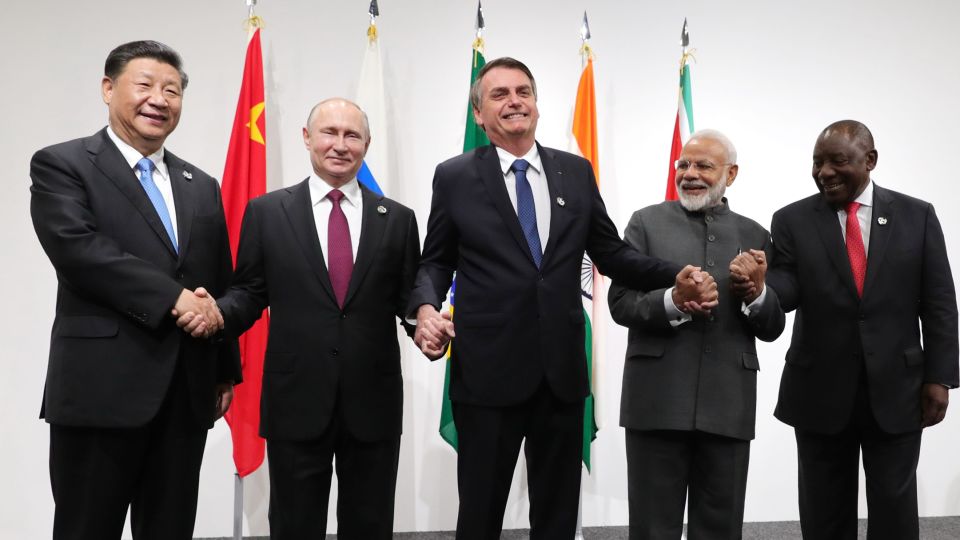
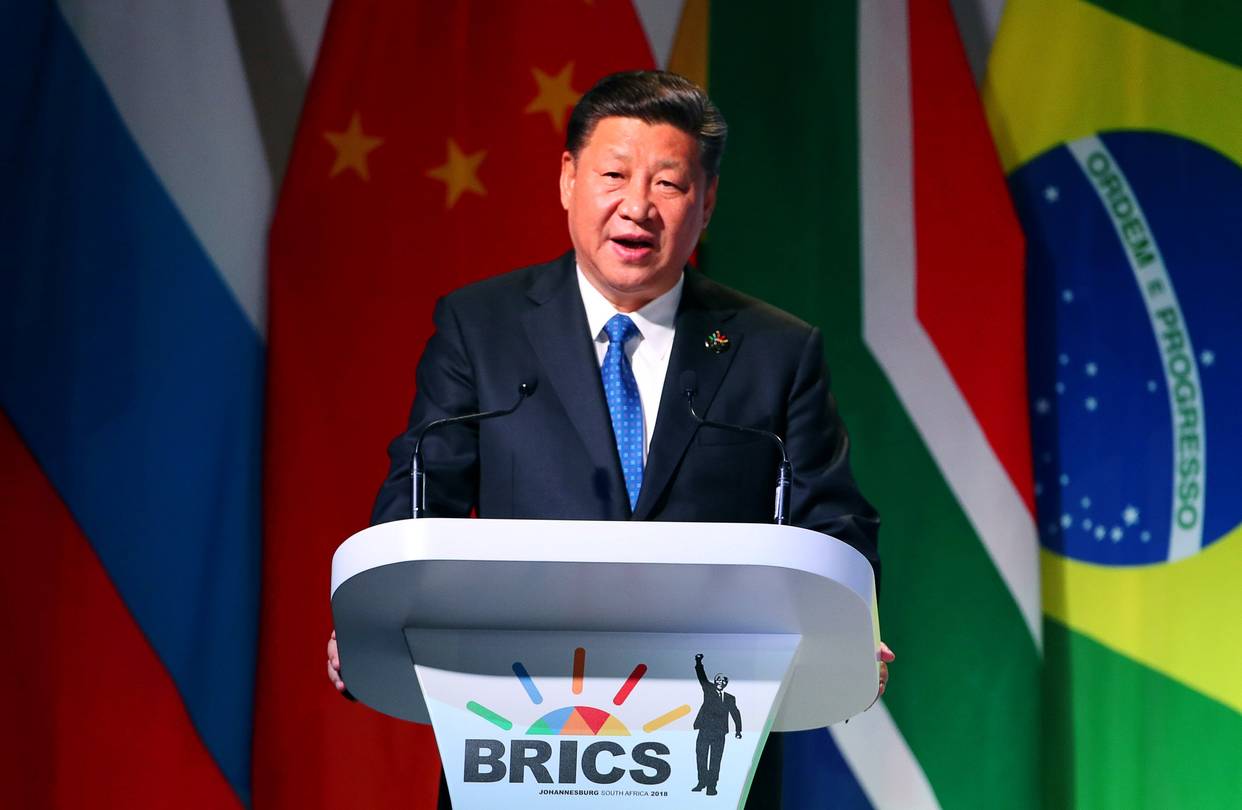
This meeting, however, is especially vital for a whole other reason since three of the five core members of BRICS were present. It is significant for the future of BRICS, a coalition of five states, namely; Brazil, Russia, India, China and South Africa. In the last BRICS summit hosted virtually by China, BRICS members committed to expanding the bloc and being more inclusive. Notably, countries like Iran, Argentina and other African nations signaled interest to join the bloc. At the moment the future of the bloc seems assertive enough to challenge the dominance of the western coalition led by the United States in global politics. BRICS members have wide and ambitious objectives that surmise into restructuring the current global political and economic order. However, the vital task at hand is that the bloc should not morph into a mere anti-western hegemony coalition and according to the stated objectives of BRICS, the alliance is well poised to aim beyond that.

Therefore, the expansion of BRICS should be strategically based on a careful review of a potential member’s profile. Being hostile to western hegemony should never become the only qualifying quality for any potential member. It is a fact that unilateral decisions by USA with the often-expected assistance from her allies have caused havoc and crippled entire regions, from the Middle East, Eentral and Southern America, Eastern Europe to Northern and sub-Saharan Africa.

These unilateral and sometimes short-sighted actions have earned the United States a fair number of aggrieved enemies seeking to settle scores and they might view BRICS as a stepping stone to that goal. However, this fact may render BRICS a home to less-than-ideal candidates that may not have the long-term interests of the bloc in mind. Neutral states like India are a necessary ingredient for the bloc long-term even though they might seem like a risky partner in the coalition. This is due to India’s close partnership with the collective west.  However, the risk that India poses to the bloc does not lie in her close partnership with the west but in her belligerent and rocky relationship with China. And this relationship is an important chapter in the bloc’s evolution story.

Though leaders of China and India have proven their capacity to address grievances of the two by meeting and talking, a lasting solution to issues of each side’s concern is much needed and will boast the cooperation and trust of the two largest members of the BRICS. Once such differences are sorted, which is not an easy task but it is one task that must be accomplished, then the bloc will have skipped a major hurdle that stifles many promising partnerships in their infancy.

BRICS should make as priority the political and social integration of all its members, moving past the limiting economic partnerships if it is to challenge the west in any meaningful manner. It takes one look across the aisle to notice that most countries in the western coalition, share almost similar socio-political and economic values despites being geographically and ethnically diverse. Avoiding the trap of being merely anti-west is important because, some western allies can be lured into joining the bloc if the latter has a recognizable and meaningful positive impact on global politics. A meaningful impact on the world ranges from having a comprehensive global security framework that ensures world peace, an economic system that is balanced and beneficial to all encompassing detailed and practical solutions to protecting the environment and tackling the crisis of climate change.

Many challenges lie ahead for BRICS in different pockets of the world and members of BRICS+ will need institutions both financial and political to guide in the implementation of the bloc’s policy goals and objectives. This must be done with expected resistance form the western coalition and her institutions. Observing current statements and ambitions of BRICS member states, it is quite clear that in the long-run the bloc must create a separate financial system form the current western one and this involves convincing potential members and the rest of the world that the BRICS alternative is much better. New Development Bank (BRICS bank) can help in selling this agenda by offering financial assistance to different sectors than its current focus of infrastructure and energy.

This is where developing countries in Africa, South America and Asia can play an important role. China has already made significant in-roads on the African continent economically, Russia is making in-roads militarily in places like Mali, Sudan, Central African Republic and in other west African countries.

One key recipe missing is media presence to foster people-to people diplomacy and strengthen cultural ties, an area where the west has excelled. The west has managed to endear herself to Africa despite all their past atrocities on the continent during and after colonialism. The west has achieved this by opening up opportunities within western borders for talented and ambitious individuals from the African continent and overtime this number of western educated and influenced Africans has significantly increased.


When it comes to presence of media from BRICS member states on the continent, there is no competition because the west dominates this area. Though gaining, still China’s CGTN is yet to be felt on ground. For Russia’s RT, arguably, very few know it exist. Advanced Television.com found that in 2020, BBC news in Africa increased its reach to 132 million people a week.

BRICS alliance mechanism aims to promote peace, security, development and cooperation and the surest way to this is through adopting new, unique and innovative approaches to developing alliances and solving problems around the world. This to be felt on ground, as a group or individual member countries, BRICS must invest more in media and sell their ideas of their ideal world they aspire to bring.

BRICS still has an open advantage to expand strategically and create a whole different world, it is made up of emerging economies, a trait that gives its founding members relatability to other developing nations. The alliance, accounts for over 3 billion people which is over 40% of the world’s population and just over a quarter of the global GDP. Therefore, on face value, the alliance has immense potential and this potential has to be realized through strategic expansion. Most importantly, this expansion should not be solely fueled by grievances against the collective west but by a genuine concern for global affairs and a resolute desire to challenge and change the status quo.

The Writer is a Research Fellow at Development Watch Centre