China’s development model: Lessons for Uganda and Africa

By Allawi Ssemanda.

Dear Editor, during a symposium on the implication of the 20th National Congress of the Communist Party of China (CPC) under the theme, “Forge Ahead on the New Journey and Work Together for A New Era,” Chinese ambassador to Uganda Zhang Lizhong introduced Chinese path to development to Ugandan think tanks and journalists describing it as the major engine that saw China transform from a poor developing country to become the world’s second largest economy.  Ambassador Lizhong explained that as a developing country, China decided to not to move with the so-called common model of modernisation and embraced path of modernisation with Chinese characteristics.

Following a Chinese development path with Chinese characteristics, China ‘has united and led the whole country, and the people in solving many challenging problems that were long on the agenda but never resolved, making many achievements that concerned the nation’s future. As we completed the building of a moderately prosperous society in all respects and achieved the first centenary Goal, China’s economic strength, scientific and technological strength, comprehensive national strength and international influence continued to grow. In 2021, China’s economic aggregate reached 114.4 trillion-yuan, accounting for more than 18 percent of the global economy,’ ambassador Lizhong emphasised.

With glaring achievements China has registered which includes being the first country globally to eliminate absolute poverty at a record time, arguably, such a path is way to go for developing countries like Uganda which is still grappling with poverty and key social service delivery.

Following Chinese path to modernisation with Chinese characteristics, China under leadership of CPC has been able to “accomplished the arduous task of eliminating extreme poverty. We have built the world’s largest education system, social security system and medical system, Chinese people’s lives have improved in all respects,” stressed ambassador Lizhong.

Upon that background and recalling the failed structural adjustment programs (SAPs) which International Monetary Fund (IMF) imposed on Africa, it looks clear that China’s path to development if considered may be the magic bullet for African countries to attain development and modernisation, more importantly, modernisation with “African characteristics”.

But how does China’s path to modernisation look like? What are some of its characteristics? Does it really suit African countries needs or, is it best model for African countries?

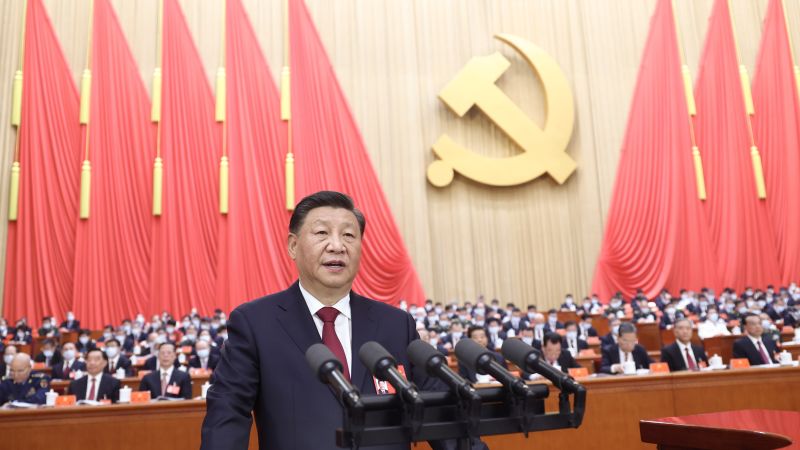
In his report to CPC’s 20th national assembly, Sectary General Xi Jinping highlighted what he described as systematic exposition of the unique features and essential requirements of China’s modernisation:

Firstly, the Chinese path is the modernisation of a huge population of the more than 1.4 billion people in china; Secondly, China’s path is the modernisation of common prosperity for all. Explaining that the immutable goal of China’s modernisation drive is to meet the people’s aspirations for a better life, Beijing stresses that China “will endeavour to maintain and promote social fairness and justice, bring prosperity to all, and prevent polarisation.” China argues that achieving common prosperity is a defining feature of socialism with Chinese characteristics and involves a long historical process; thirdly, China’s emphasises that “while continuing to consolidate the material foundation for modernisation and improve the material conditions for people’s wellbeing, we will strive to develop advanced socialist culture, foster strong ideals and convictions, and carry forward China’s cultural heritage.”

The other key characteristics of China’s development path are; the modernisation of harmony between humanity and nature. Here, China commitment that its modernisation “lies in building a beautiful homeland for man and nature to live in harmony.” Lastly, China’s path to development stresses modernisation of peaceful development. Ambassador Lizhong argues thatChinese path to modernisation emphasises mutual benefit and win-win cooperation with other countries including Uganda, promotes the building of a community with a shared future for mankind, and strives to contribute to peace and development of mankind. China will not tread the old path of war, colonisation, and plunder taken by some countries. That brutal and blood-stained path of enrichment at the expense of others caused great suffering for the people of developing countries.”

From the above, we learn that in pursuit for her development, China put her national interests first; focused on internal political concerns; and maintained firm strategic resolve with determination to never yield to coercive power as the country sought its development.

Also, from China’s path to modernisation, Uganda and Africa in general can learn that you don’t loose your identity in order to modernise. China blended modernisation to its traditions. For example, despite modernisation the country is going through, to date, family hierarchy in China is respected. It is the same rational spread throughout other institutions in context of respect.

Put differently, Chinese development path has Chinese characteristics that “to developed as a country and people they have to drink from Chinese traditions in order to tap modernity. Not to just take modernity for its sake which would leave their country at risk of losing their identity through socialisation.

For Uganda and Africa in general, in Chinese development model we have an opportunity to learn from them but we must ask questions like; Yes, we need to be modern but what is it that it speaks to our minds and our hearts in this modernisation? What is in that is Ugandan/African? This way, Uganda and African can study from Chinese model and pick lessons from what can work for Uganda or Africa to develop.

Good enough is that China does not force other countries to take what they do not believe in. At the Embassy’s symposium, ambassador Lizhong explained that “China’s modernisation goes beyond copying others” stressing that “it is an independent path to development. For modernisation, there does not exist a single definitive model. Copying mechanically is not the solution. China’s modernisation is socialist modernisation pursed under the leadership of the CPC. It has broken down the stereotyped thinking of equating to the modernisation with Westernisation, proving irrefutably that developing countries are capable of independently treading the path to modernisation that works.”

Personally, if asked, western or Chinese modernisation? I definitely would say as Africans we can choose to learn from Chinese model and we blend it with African characteristics.

Allawi Ssemanda is a senior research fellow at the Development Watch Centre.
 

China’s Path to Modernization and its Implications for Uganda and Global South By Moshi Israel

In a 2021 speech marking the CPCs centenary, President Xi Jinping declared; “Through the continued efforts of the whole Party and the entire nation, we have realized the First Centenary Goal of building a moderately prosperous society in all respects. This means that we have brought about a historic resolution to the problem of absolute poverty in China, and we are now marching in confident strides towards the Second Centenary Goal, building China into a great modern socialist country in all respects.”

While addressing media and Ugandan Think Tanks during a Symposium on the Implications of the 20th National Congress of the Communist Party of China (CPC) themed by “Forge Ahead on the New Journey and Work Together for A New Era,” at Chinese Embassy in Uganda, Chinese Ambassador to Uganda, Zhang Lizhong stressed that China’s development path will see China match towards Beijing dream of realizing the Second Centenary Goal and see China advancing into a more modern socialist country. Stressing that the recently concluded CPC National Congress “established the core position of General Secretary Xi Jinping in the Central Committee and the whole Party, laying a solid political foundation for striving for the great success of socialism with Chinese characteristics for a new era,” Ambassador Lizhong expressed confidence China is on right track with its development path.

China’s path to modernization is one rooted in centuries of exploration. Like all journeys, it is not a straight forward path but a long winding curve, a learning curve. China’s path to modernization holds key implications for developing countries around the world, and in this context, Uganda and arguably, many countries in the global south.To understand the path to modernization from a Chinese perspective, going back in time is a necessary step.

During the Qing dynasty (1644-1912), China was a weak Imperial state with rampant civic corrupt infrastructure. The weak Qing empire was reduced to a semi-colonial, semi-feudal society following the opium war of 1840s. China had to endure what came to be known as a century of humiliation as foreign powers ran amok and exploited the Chinese people. The calamities befalling China in this era spurred many people to seek new ways to strengthen and unite a weak China and change their trajectory through development and modernization. The building blocks for a strong independent China started forming in the minds of Chinese people during this tumultuous period.

Fast forward to the 20th century which saw the rise of China’s Communist Party (CCP). China underwent a communist revolution in 1949 that ushered in the birth of the People’s Republic of China (PRC) which subsequently came with a fresh and more determined commitment to modernization. Under the CCP, China has set a clear path to modernization and has made significant strides. In a report delivered by CPC’s Secretary General who is also Chinese President Xi Jinping on the opening ceremony of the 20th CPC National Congress, he reiterated the central purpose of the CPC stressing that; “from this day forward, the central task of the CPC will be to lead the Chinese people of all ethnic groups in a concerted effort to realize the Second Centenary Goal of building China into a great modern socialist country in all respects and to advance the rejuvenation of the Chinese nation on all fronts through a Chinese path to modernization.”

The Chinese model of modernization is similar in some respects to other processes of modernization. However, it is unique in the fact that China pursues modernization with Chinese characteristics. This is important to note for a country like Uganda because it emphasizes the idea of considering national realities while addressing national challenges. China’s model presents an alternative path different from the western world. For many decades, developing countries have applied western generated solutions to their economic, social and political problems and have acquired little to no success. Many times, these solutions such as the Structural Adjustment Programs (SAPs) recommended by the International Monetary Fund (IMF) and the World Bank have outrightly failed. As president Xi, put it, China’s model offers a new direction of modernization.

China’s path to modernization is especially remarkable given the fact that it had to lift billions of its citizens out of absolute poverty. This has had a broad and worldwide impact and has greatly contributed to the cause of human progress.

Furthermore, China’s modernization model it involves material and cultural-ethical advancement and harmony between humanity and nature. The planet is currently facing an existential climate crisis and China wants to lead the way in combating the challenge. China’s commitment to environmental action is not mere words. The country is actively involved in Global Environmental Governance and International Cooperation. China has promised to peak its carbon emissions before 2030 and achieve carbon neutrality before 2060.

Within China, the CPC seeks to adopt new initiatives as indicated by Mr. Han Wenxiu (Official with the CCP Central Committee for Financial and Economic Affairs) to narrow the gap between different regions, rural and urban areas and different income groups. On the world stage, China seeks peaceful development. It supports a world order based on addressing the world’s crises. To China, a multipolar world based on mutual respect and cooperation is an ideal one. The message is simple, a strong China means a better world.

At some point before the founding of the PRC, China tried to achieve modernization through generating material wealth, carrying out institutional reform and trying to copy western development models without success. Instead of running around in circles, the CPC led China on a new path. During the First Session of the Third National People’s Congress, from 21 December 1964 to 4 January 1965, then Premier Zhou Enlai emphasized the importance of turning China into a strong socialist country through the modernization of agriculture, industry, national defense, and science and technology. It wasn’t until 1978, that China paved the way for its reform and opening up through a landmark event of the Third Plenary Session of the 11th CCP Central Committee.

The CCP used a three- step development strategy for China’s modernization. The first step was to double the 1980 GNP and ensure the people had enough food and clothing. That objective had been attained by the late 1980s. The second step was to quadruple the 1980 GNP by the end of the 20th century. This was achieved in 1995, ahead of time. The third step, is to increase the per capita GNP to the level of medium-developed countries by the mid-21st century. At which point, the people will be well off and modernization achieved.

To a developing country like Uganda, China’s path to modernization serves as a blueprint. Uganda has the opportunity to learn from both the west and China and then choose the most suitable path to realizing her own modernization with Ugandan characteristics. The drive to achieve this goal must be people centered with the aim of achieving prosperity for all. China’s path shows that there is hope and much has to be done. These words of president Xi, at the end of this year’s report to the 20th National congress of the CPC should be the unanimous battle cry of every leader in the developing world and particularly ruling political parties’ world-over; “Let us keep in mind that empty talk will do nothing for our country; only solid work will make it flourish. Let us maintain firm confidence, unite as one, and forge ahead with resolve. And let us strive in unity to build a modern socialist country in all respects and advance national rejuvenation on all fronts.”

Moshi Israel is a senior research fellow at the Development Watch Centre.

China Global Trade Expo: Xi’s promise of opening up China’s domestic market is Good News to Global South

By Alan Collins Mpewo.

Jointly hosted by China’s ministry of Commerce, the China International Import Expo (CIIE) is held every year in Shanghai. The expo is a trade fair and attracts numerous commercial actors (individual and otherwise) from all corners of the world. There are exhibitions of all majorly known legal commercial aspects. It has a world ranking status for being the first national level expo centered on an import theme. Exhibitions go on for a considerable time and it goes without saying that all actors engaged in the expo yield extensively in a business sense. It was first held in 2018 and it partners with reputable world commercial forums such as World Trade Organization, United National Industrial Development Organization, among many others alike.

This year’s expo commenced on 4’th November, 2022, with Chinese president Xi Jinping issuing the flag off speech. Other factors constant, the expo aims at exposing Chinese domestic products and services to the far ends of the world. In his opening ceremony address, President Xi had much to say; much of which revealed opportunities especially to countries in the global South.

It goes without saying, that until recently, most of such members of the global south have had explainable complexities in as far as penetrating the deeper consumer ends of foreign markets.

Uganda and its counterparts can pick from such initiatives to have national platforms held primarily for asserting more visibility of their domestic merchandise and services. Often times, potentially exquisite merchandise and services fall victim to an already uncoordinated market. The potential qualifier would therefore be – setting up such platforms to host players that would have some (and perhaps all) of the present market products penetrate far lands.

Presently, the development paradigm is shifting from a closed and overly gazetted market sphere, to an open border market. While the concept of extensive national domestic product and service marketing may seem novel, its importance shouldn’t be misunderstood. The world converges at one arena, with the national market taking center stage in that pursuit. China has exploited the concept. We can borrow this from them!

The world is at a point of mitigating the consequences of COVID-19 and therefore, Uganda and the other countries in the global South should adopt such ideas of boosting the post COVID recovery process of their economies.

In his speech entitled; “Working Together for a Bright Future of Openness and Prosperity,” President Xi reiterated the idea of openness as one of the founding principles of global human civilization. If critically analyzed, this will certainly help in creating new opportunities for the world with China’s own development, and contributing its share to building an open global economy.

Stressing this this, President Xi explained that China remains committed to the fundamental national policy of opening up to the outside world, pursues a mutually beneficial strategy of opening-up, and adheres to the right course of economic globalization. “Today, the CIIE has become a showcase of China’s new development paradigm, a platform for high-standard opening-up, and a public good for the whole world,” President Xi stressed.

In situations when the world is riding on uncertainties that may befall them, some of which have tolls on world economies, such would be a time for Uganda and her global South counterparts to embrace such concepts as modes of fast-tracking economic growth and reasonable stability even when hit with dangerous circumstances just as COVID-19 did sneak about unnoticed. Striking forces of innovation as these, guarantee a fighting opportunity for lower ranking nations on the world economic radar as regards mitigation of the far-reaching damage.

Globalization as a driver of cordial international relations is another aspect Uganda and her neighboring sister nations should prioritize. Such forums also seek to reassert the resolve of these countries in as far as efforts to achieving such. Quality guarantee would also be in sight. Understanding the global consumer needs is best at such forums. What needs to be improved? Rid of? Adopted… in quality assurance in the market components to realign with global demands. The general trend would always be guessing of the intricate global demands, yet with such platforms, lessons are detailed at a nationally controlled forum for all parties to easily pick lessons.

They are also a center for convergence of International commercial organizations. Not usually do the indigenous actors’ interface with the global commercial market regulators on a dialogue basis.

The other main picks from President Xi’s CIIE speech on the need for extensive multilateralism growth was the unwavering upholding of China’s principle of “mutual respect.” Such commercial establishments invite tendencies of superiority complex over the other countries engaged in such arrangements. China on the other hand, has remained pegged on its foundational ideal of cross-border diplomacy. For Uganda, this is a call to never having to bend its pursuits to intentional harm of other such benefiting parties. The diplomatic impressions born from how the country treats its partners either validates easier paths to establishing deeper relations with such other countries, or catalyze formation of fresh such relations with other countries there’s.

By and large, economic prosperity should be one of every country’s priority, and such initiatives as China’s expo are one of the novel ideas to adopt, benchmark, or learn from, for the global South.

Alan Collins Mpewo is a lawyer and a  Senior Research Fellow, Development Watch Centre.