Xi Jinping’s Third Five-Year Term is Yet Off the Mark, But What’s in For Africa & Global South

By Alan Collins Mpewo.

Earlier this month on 10th March 2023, Xi Jinping who is the Secretary General of Chinese Communist Party (CPC) was formally reappointed as the president of the World’s second largest economy, China for a third five-year term. This was after the National People’s Congress (NPC), unanimously endorsed Mr. Xi, 69, with all of its 2,952 present members casting votes in favour of his reappointment.

While president Xi’s re-election received significant number of positive comments and congratulatory messages from the globe, some controversial opinions especially from some western pundits in some western capitals shamelessly described Xi’s reappointment as a bad precedent with narrow views that he should have stepped down after two terms which they described as China’s political “tradition.” While they emphasized this weak argument, non-pointed at the fact that President Xi was voted for another term due to his good record of performance and that his re-election reflected the will of majority of Chinese people. Indeed, in the entire process of Xi’s third term re-election, there was zero complaint such as bribing voters, no voter suppression claims or vote rigging. This way, we can conclude and argue that in that people – Chinese People were at the center of President Xi’s re-election and arguably, views and opinions of others are inconsequential and to say the least undemocratic with zero resemblance of the much-desired whole process democracy which China cherishes.

The negative commentaries on Xi’s third term re-election came in a wake of global political events that have many critics posing questions that can barely solved. Well, the electoral forums of China had their say, and hopefully, in the next years, a lot will come to light and life, regarding the international relations question. The Global South still encounters its various challenges, which are generally common for each country there’s. Challenges of infrastructure, economic elevation, security, education, medical, energy, human rights, and climate change lead the charts. China has for decades now been issuing a supportive hand but there can only much done within a short time.

For sustainability, progressiveness has to be paced on a rhythm of care not to antagonize what’s already existent, but also balancing with what’s expected to hatch in a long run. In this pursuit, some forces, both internal and external keep shaping the progression of the relations between China and the global south. Much can’t be said about these forces being supportive, but rather attempts to fail the progression. Be that as it may, the two wings have remained resolute in achieving that which they find noble and beneficial to their citizens.

Xi Jinping’s third term has also arrived at the time when the CPC had announced a laid plan on which it would base to interact with the wider world through its policy of globalization and openness. The CPC has also declared a considerable number of goals it seeks to achieve with the global south in the next decades, prior to the announcement of the Chinese Parliament backing Xi Jinping for a third term. What also remains a reality is the principle of mutual respect that China maintains with its interactions with the global south. Energy access remains a priority and that has been intimidated in the various addresses by Xi Jinping.

For countries especially in the Central and Eastern Africa, this will remain a top priority. The statistics on energy access have become better in recent times, but equally, more is yet to be done to keep filling the void on those that have hardships in access of the same. For West Africa, while it has many partners that are members of FOCAC, their challenges don’t seem different, but for the high hand of inter-meddling from the Western powers. Insecurity has been maintained as a worrying factor on that end. The China rolled out the Global Security Initiative (GSI) proposal which it’s seeking out the UN member states to adopt. With the current trends in the Middle East where China has been key in forging negotiations for peace among some countries that have battled with stability thus far, it’s safe to state that the initiative will broaden to West Africa.

Infrastructure is one of the strongest drivers of development in any country. It connects possibly all units of the economy, and the vice versa is equally true. This informed China and the global south partner states from the very beginning, on the need to relay the infrastructure to human sustainability standards. It’s of no wonder then, that the Belt and Road programme was rolled out. Since other means of transport such as air transportation would seem a long shot for most countries in the global south, road transportation remains the most viable in the circumstances. Infrastructure projects in most nations are still ongoing, with more yet to commence.

With the extension of technological advancements to most corners of the world, industrialization will continue being realized. This will keep healing the ail of unemployment for the fast-growing population in the global south. The win-win mentality is all that can be deduced from this aspect. That notwithstanding, the global south should also brace for complex times of haggling from some external forces, in trying to stop the diplomatic expansion of China.

With this modest assessment relayed above, no Africa countries’ developing partner has been so honest and sincere to Africa than China under president Xi Jinping. Hence, there’s just as much to feel grateful for by the Global South especially in Africa in as far as Xi Jinping’s term renewal is concerned, because unlike the speculation, China has kept their word in regard to China’s engagement with African countries and made FOCAC a priority and wouldn’t seem to be slowing down on achieving the agreed goals amongst the partners.

As Dambisa Moyo, a renowned Economist and Analysis of macroeconomics and global affairs observed in her book EDGE OF CHAOS: Why Democracy Is Failing to Deliver Economic Growth — and How to Fix It one of the major challenges identified in failing meaning full sustainable development and democracy is not leaders staying in power for long time. It is what Moyo called “short-termism” which she ably explains contributes to falling trust in government with rising polarization and gridlock which she argues is due to politicians’ eagerness to win elections which leaves them making decisions to maximize voter support rather than those that would do the most for long-term growth and hence, slowing development action to a crawl. With this, taking a third term from expert’s view is not a crime but rather a necessity for continuity which is key for sustainable development.


Alan Collins Mpewo, Senior Research Fellow, Development Watch Centre.

President XI Jinping’s Russia Trip is Crucial for Global Stability

By Moshi Israel

On Monday, the 20th of this month the Leader of China President Xi Jinping landed in Moscow on his first trip out of China since his re-election for a third term as President. Choosing Moscow as his first foreign trip re-affirms the close friendship between Russia and Beijing. President Xi’s long-awaited visit to Moscow inspired a lot of background noise around major capitals of the world. A close partnership between Moscow and Beijing is not in the geopolitical interests of most western countries. However, many other regions of the world that are eager for a new era of global politics in which multi-polarity is the norm, anticipated and hoped for the best outcomes from the meeting.

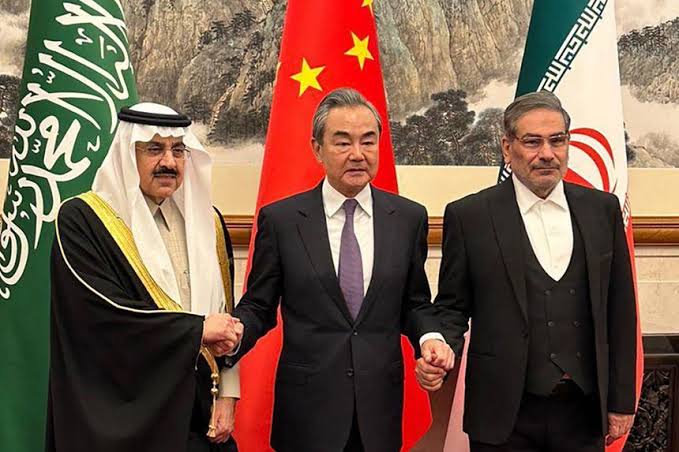
China, with President Xi at the helm, has taken up the mantle of peacemaker. After successfully brokering a peace deal between Saudi Arabia and Iran, China is increasingly being seen as a credible global power capable of prioritizing cooperation over confrontation. This comes as no surprise since the CPC has always championed win-win partnerships and diplomacy around the world. The evidence of this is embedded within China’s Belt and Road Initiatives (BRI), and Global Security Initiative (GSI) concept paper that encourages the Chinese tradition of peace above everything else.

China’s peace plan for Ukraine closely follows the core concepts and principles of its GSI. These concepts include but are not limited to, respecting the sovereignty and territorial integrity of nations, commitment to taking the legitimate security concerns of countries seriously, and abiding by the purposes and principles of the UN charter. These principles are crucial in maintaining global stability. Therefore, President Xi’s visit to Moscow can be seen as an extension of these principles and China’s role as a peace broker. China has proposed to Moscow a twelve-point peace plan that seeks to end hostilities in Ukraine. President Putin has welcomed China’s efforts to solve the crisis in Ukraine and proclaimed that Russia is ready for peace when Ukraine and its western backers are. Most of the world cannot wait for this conflict to be over with and welcomes common sense solutions to the conflict.

Washington for so long has proclaimed that the decision to negotiate for peace and end the war is for Ukraine to make. However, it did not come as a surprise when the White House through its national security spokesperson John Kirby rejected any idea of a cease-fire. The white house anticipated that China might seek to broker a cease-fire in Ukraine and rejected it two weeks ahead of Xi’s visit to Moscow on grounds that it would allow Russia to consolidate its gains in the Donbas. The International Criminal Court (ICC) even went further and indicted President Putin for war crimes in Ukraine ahead of President Xi’s visit. This move by the court has been interpreted by many as largely symbolic and an attempt to murky the waters and complicate Xi’s visit to Moscow.

China has a very large presence around the world, economically, diplomatically, and technologically and has used this power to support peace. This should be applauded by all responsible citizens of the world. World leaders should oppose any attempt to escalate conflicts by nefarious actors on the global stage. President Xi has insisted that the conflict in Ukraine should end at the negotiating table and that the concerns of the conflicting parties be addressed.

At a time when the world is under serious economic and political strain, China is standing up to be counted as the global power that has a practical plan to lead the world into a new era. China’s neutrality on the Ukrainian conflict despite deep ties with Moscow, and its goal of peace are testament to the country’s genuine desire for a functional multi-polar and anti-war world. The global south, itself a victim of proxy wars should support China’s efforts in the framework of the United Nations to promote peace in Ukraine and around the world. The years of lacking a coherent and independent foreign policy in the global south should be forgotten and dumped in the dustbin of history. China under the CPC has managed to uplift itself from a century of humiliation to a global power worth taking seriously. The same can be replicated in the global south and particularly here in Africa.

The writer is a Senior Research Fellow with DWC

China’s Soft Power: An Effective Approach & A Lesson to The Rest of The World

By Balongoofu Daniel

The created rift between the west and a huge percentage of the rest of the world implies of how the western assertive approach to some realities in the international system may not be good for the west and the world at large. The United States with its allies were best positioned to attract and keep nonwestern countries on side if they understood what motivates them and stopped their wrong claim of acting like ‘big brother” of the house.

In a wider perspective, if we use Ukrainian crisis example, although 141 of the members of the United Nations General Assembly voted to condemn Russia’s military operation in Ukraine, it should be noted that most nonwestern countries have not imposed economic sanctions on Russia amidst calls by the west to completely isolate Russia.

The hardliner response by the west in form of military equipment supplies to Ukraine, sanctions to Russia and Russian led institutions have evidently not been bought by the rest of the world especially by the global south with countries like Brazil, China, India, Mexico, South Africa among others choosing intellectual pragmatism view that unilateral sanctions against Russia cannot help in resolving this crisis.

These countries which are arguably guided by principles of intellectual pragmatism and nonhegemonic aspirations have rightly refrained from signing onto resolutions that criticize Russia in UN forums and have suggested more binding and practical solutions in relation to respect to sovereignty, non-interference and the geopolitics of that region to mention but not limited to the Ukrainian question, actors that have sought indifferent means to the western led assertive, non-binding mechanisms to pressing issues in the international arena have been pooled to common ground leading to a birth of a much needed multipolar global order and formulation of new strategic partnerships and the most recent one being China that has been advocating for peace with the most recent proposal being Global Security Initiative (GSI) and the pivotal role Beijing played in ending several years of animosity between Tehran and Riyadh which Beijing blocked and saw two former arch enemies resuming diplomatic ties, a development international community welcomed as a step in bringing sustainable peace in the Gulf region.

Actors in the global south have increasingly sought for more binding resolutions as opposed to a more assertive global order, speaking of China, Beijing has mastered the art of seeking binding resolutions and softer means to power in the international system being good for the rest of the world because it limits contestation and the bleach of peace hence forth. Evidently, in the joint statement released by the Kingdom of Saudi Arabia, the Islamic Republic of Iran and the Peoples Republic of China on the 10th of March highlighting what Saudi Arabi described as “the noble initiative of His Excellency President Xi Jinping, President of the Peoples Republic of China,” to restore diplomatic relations between the two nations. The statement as well highlights the series of coordinal meetings in Beijing over seen by the Chinese government between the Iran and Saudi foreign envoys. Actually, Saudis’ statement mentions President Xi twice and 5 times China underscoring the role played by President and China as a country played in this deal.  It should be noted that the two nations were at the verge of war in the recent past as a result of the assertive notion that the prevailing global order ascertains. This is however challenged by Beijing’s soft power, a liberal tool that saw the normalization of diplomatic ties and a structure laid for the two nations to fully resume healthy diplomatic relations. This however, speaks volumes if subjected to the ends-based theory justified by the results if juxtaposed by the assertive means of the prevailing global order.

It should be noted that Beijing has heavily invested in soft power in the past decade notably evident through trade relations as a liberal approach to under guard the importance of peace and order in the international system., Beijing holds the biggest trade share in trade partnerships across the globe evidently being Europe’s biggest trade partner with trade worth 46.6 billion euros and the maximum being 55.5 billion euros as per September last year. China is also Africa’s biggest trade partner, with trade mounting to 282 billion dollars according to the Chinese customs authorities as per last year’s data. That said, in terms of trade, Beijing and Washington need each other for today, it is impossible for any single country to stand on its own and isolate China – the world’s second largest economy and arguably, the home of innovations. Therefore, with such a strong economic relation with actors in the international system, actors are bound to under guard their economic interests and underscoring the importance of peace limiting further contestation and a bleach of peace.

Another successful testament to Beijing’s soft power was on the 1st of July 1997 when Hongkong reverted back to China. It should be noted that in 1839, Britain invaded China and as a result, the Hong Kong occupation by the British. As a sparsely in habited island off the coast of southeast China. Beijing sought for more binding solutions to this problem evidently by the series of meetings undertaken to have Hongkong back under the main land China administration. Later in 1842, the treaty of Nanking was signed formally to end the war however British rule and occupation of the island was to continue for another 99years as agreed upon by the Chinese mainland authorities, this was however absolute evidence of the soft power tool that the Chinese authorities opted for and refrained from contestation which would result into further bleach of peace. Hong Kong at the time, with a bustling economy bigger than the Chinese mainland as a result of the British occupation was so important to Chinese mainland for economic cooperation and growth, therefore as a result, the Chinese authorities chose a more binding resolution with the British to safe guard their economic development and avoid the bleach of peace. This approach limited contestation till Hongkong was won back peacefully without military confrontation and notably with all the economic gains that the British had established in Hong Kong for the time.

Today, as Washington seems boxed in cold war mentality, power politics and block formation, Beijing is moving with their head high as an advocate of peace, and meaningful partnership which the world needs to attain sustainable peace and development which are key for if the world is to realize a community of shared future for mankind. Such efforts must be supported by all peace-loving citizens of the world.

Balongoofu Daniel is a Research Fellow with Sino-Uganda Research Centre.

Saudi-Iran Pact Brokered by China points to a New Era of Peace and Budding New Global Order

During Modi-Putin heart-to-heart talk held on the on the sidelines of the Shanghai Cooperation Organization’s Summit in Samarkand last year, Indian Prime Minister Narendra Modi expressed to the Russian president that ‘today’s era is not of war…’ This comment was made in an effort by India to broker peace between Russia and Ukraine. Sadly, war hawkers in some Western Capitals and the Media hysterically ran with the phrase and used it to reprimand Russia over Ukraine Crisis.

However, it is naïve to believe that this reaction came out of an honest aversion to war, rather than a grand opportunity to virtue signal against the wars that do not serve Washington’s interests. However, it didn’t take long before Washington’s embrace of a ‘war free era’ came to a screeching halt once China put the ‘not an era of war’ mantra into practice by brokering the Saudi-Iranian deal to restore diplomatic relations between the two countries. Both countries have had no diplomatic relations for seven years after Iranian protestors stormed the Saudi embassy in Teheran following the execution of a Shi’ite cleric in Saudi Arabia in 2016. The two rivals have since fought a proxy war in Yemen and brought a catastrophic humanitarian crisis in the region. Therefore, a pact promising peace between the two heavy weights in the middle east is a step in the right direction.

This agreement goes further than just the normalization of relations between the two, and also includes a drive towards enhancing regional and international peace and security. To any layman who is neither a political bureaucrat nor a media propagandist, the deal presents a historic milestone towards the stabilization of the middle East, a region that has suffered innumerable conflicts that have cost the lives of many innocents. Furthermore, the involvement of Iraq and the Sultanate of Oman is an indication of an inclusive peace. No peace is long lasting without the input of well-wishing neighbors. The two states also agreed to re-open their embassies within two months. Furthermore, Iran and Saudi Arabia will restore a 22-year-old security pact that requires them to cooperate on issues of terrorism, drug smuggling and money laundering. A renewal of the 1998 trade and technology deal was also agreed upon.

It is not helpful to jump the gun and declare that the middle east shall be all roses and no guns from now on. The road to a peaceful middle east is long and winding. Fortunately, China has decided to be the adult in the room and start walking the road to peace. The brokering of this deal should be a pointer to the significance of a multi-polar world and the urgent need for powerful countries to champion peace and put an end to the destructive war machine. China’s pursuit of win-win partnerships maybe scoffed at in several western capitals, but that means nothing if the strategy is yielding undeniable results.

Many in Washington hold the wrong view that the Saudi-Iran pact is a challenge to US hegemony because it was brokered by China. This mindset needs to drastically change among certain circles in Washington. A peace deal is a peace deal and should be praised. So far, it is a good sign that the European Union has welcomed the resumption of ties between the two countries. It is important that regional powers possess an independent foreign policy that serves the interests of their respective regions rather than have other countries dictate to them foreign policies that only bring destruction.

As Chinese President Xi Jinping observed while advocating for China’s proposal of Global Security Initiative (GSI), for the world to attain sustainable peace, “we need to work together to maintain peace and stability in the world. The Cold War mentality would only wreck the global peace framework, hegemonism and power politics would only endanger world peace, and bloc confrontation would only exacerbate security challenges in the 21st century.” Therefore, as President Xi emphasized, all efforts that focus at creating conducive environment for harmony must be supported by all peace-loving people of the world and firmly “oppose unilateralism, and say no to group politics and bloc confrontation; stay committed to taking the legitimate security concerns of all countries seriously, uphold the principle of indivisible security, and oppose the pursuit of one’s own security at the cost of others’ security; stay committed to peacefully resolving differences and disputes between countries through dialogue and consultation.”

While Saudi-Iran peace deal is a diplomatic victory for China in the gulf region, instead of painting it as anything else, all other countries should observe and embrace the correct order of conducting international relations. Perhaps, the next step should be to involve Israel in a daring middle eastern peace framework that would suspend hostilities in the region for the next 100 years. If any country can achieve this, it is China under the current CCP and president Xi Jinping’s objective of playing a ‘constructive role in appropriately handling hotspot issues in today’s world in accordance with the wishes of all countries’ and demonstrate China’s ‘responsibility as a major country.’ This very sentiment was expressed by China’s State Councilor and top diplomat Mr. Wang Yi who was deeply involved in the entire process.

African countries should keenly observe the events in the middle east and seek to learn from them. One of the major takeaways, is the fact that China is here to advance peace and cooperation within the framework of a multi-polar global order. The other lesson is that any hostilities between nations can be resolved diplomatically if the parties involved do not allow countries with harmful ulterior motives to take part in a peace-seeking process. Finally, African countries should make it clear to Washington, Paris, and London that the continent is not a playground for political games, Africa values genuine partnerships based on mutual respect and the continent’s embrace is large enough for both the west and China. Therefore, our cooperation with one bloc is not a rejection of the other but rather an indication of goodwill politics in a new multi-polar world order.

Mosh Israel is a Research Fellow with Development Watch Centre.

Learning from the best: Lessons from China’s Development Path

By Daniel Balongoofu and Ndamaje Francis

Just like Uganda, China was predominantly an agricultural economy with basic traits of home consumption right before the country started to undergo a series of guided reforms that ushered the economy into a modern-day market-based economy that China inherits. However, China’s success story paints an independent model of transitioning alien to the largely western fronted capitalistic reform strategy by the I.M.F and World Bank which on the contradictory registered some shortfalls in underscoring the agendas of how a market-based economy is groomed. This henceforth invited criticism for example the Poland and Soviet Union implementation in 1990-91. Just like the end’s-based strategy, a notion that emphasizes the results to justify the means, China’s economic might as of present is worth bench marking.

The world’s second largest economy has evolved from events not so alien to Uganda and Africa at large. Right from colonialism, socialism and being war tone by civil wars. Following Uganda’s story in a time like 1986 right after the civil war, Uganda’s economy had literally collapsed with inflation levels up to 240% and the economy literally depending on mostly coffee which contributed 50% of tax revenues and 90% of export earnings. With the private sector contributing only 9% to the general G.D.P, hence a huge need to revamp the economy henceforth leading to economic reforms of 1987 by the government.  The worldwide reformist strategy followed a delegate meeting from 44 countries at Bretton Woods in the United States to discuss the future of the world economies right after the devastations of World War II chaired by the International Monetary Funds and World Bank in 1944 which fronted reforms like mass privatization and neutralizing institutionalism in the economies of the world as some of the mechanisms to revive the already failing economies around the world.

However, I take interest in some of the alien mechanisms Beijing took that are indifferent with the I.M.F and World Bank Standard. In the 1950’s, China was a largely capital scarce country prior the reforms that gave birth to a market economy with the nation pre-dominantly being socialist, the economy was state centric, institutionalized and with large productive firms governed by the state, within this system, production was monitored and profit maximization not being the ultimate driver. Here, a number of commodities were to be produced as stipulated by the state and the market and supply of commodities still dictated and implemented by the state with no consideration for the surplus market.

To begin with, China implemented several micro-management reforms and the most notable ones being the replacement of collective farming with house hold based system that agriculture was now done at a family level as opposed to the previous community- socialistic kind. This was later accompanied by up to a 15year lease to the land for cultivation and by 1993, this reform had widely been implemented across the country and for the record, buffer harvests were noted and empirical estimates show that almost half of the 42.2%  growth of output in the cropping sector in the years 1978-84 was driven by productivity  brought by the reforms hence highlighting loopholes in the prior-existing socialist farming strategy that was characterized by mis-management and had discouraged most famers.

Beijing further took reforms in the state- owned enterprises with the first gradual process being from 1979 that emphasized several experimental initiatives that were intended to enlarge enterprise autonomy and to expand the role of financial incentives within the traditional economic systems, for example the state-owned enterprises were then allowed to produce outside the mandatory state plan. This was pivotal that it begun to encourage competitiveness and urged to occupy virgin markets hence breeding the profit-oriented capitalism economy. To note however, is the double price track strategy that state owned enterprises in the bid to occupy new markets had to agree on the price policy according to the population and the privately owned enterprises for a favorable price. This was aimed to deter out competition by the rich state funded enterprises hence promoting competitiveness with favorable prices and environment.

State owned enterprises were also allowed to produce for export with the government at the helm of marketing the produce. The state as well monitored re-investment of the surplus profit retained from both exports and new markets with an idea that capital resettlement was done in those specific locations of the very state-owned enterprises. The state introduced a reward strategy that was based on merit and productivity that productive state-owned enterprises were awarded quarterly and annually with more incentives for example with more improved machinery.  To the employees, salary increment policies were introduced as opposed to the old standard that now increment was based on how productive individuals were to profit maximization. Recruitment was also based on merit, education and skills as opposed to the prior mechanism that was based on the relationships, political affiliation and age.

The increase in enterprise autonomy put pressure on the distribution system hence a driver for resource allocation mechanism reforms that now the state started to decentralize credit rationing to the local banks. This was a major turning point for the sprouting private enterprises that needed some capital stimulation for healthy competition. The steady progress in competition between state owned enterprises and private entities became the major driver for tapping into other competitive but rather virgin sectors like energy production for the successful privately owned that had accumulated capital and other mechanized sectors while other private entities as a result of competition opted for more labor-intensive small industries hence creating a balance for development that these also employed a huge percentage of the countries labor force.

In conclusion, it should be noted that the Chinese model entailed a serries of guided gradual steps that struck a balance in preserving and the special socialistic traits of the nation with a larger capitalistic out look to the realization of a market economy, highlighting faint state visibility that the state at every point granted more autonomy to enterprises especially to the state-owned enterprises.

With the largest number of developing countries, Africa has a lot to learn from China, not necessarily copying and pasting everything, but the Chinese model has proved to be the most ideal to developing countries.  Most important to note is that Chinese path to modernization offers a new type of development option for the countries seeking development while maintaining independence and self-reliance at the same time.

Daniel Balongoofu is  a Research fellow at Sino-Uganda Research Centre, Ndamaje Francis is Board Chairman, Isimba Community Hub


Unilateralism is a Knife to the Throat of Global Order

By Moshi Israel.

The international system, best represented by the body of the United Nations and enforced by its Charter is testament to how unity builds strong relationships. The international community runs on relationships among states and a relationship is by default based on mutual respect and cooperation. Therefore, any overtly individualistic and unilateral decisions by one partner only serve to antagonize the relationship because such random actions betray trust. It is obvious that not all countries are economically or socially on the same footing, but the UN charter emphasizes the equality of all sovereign states under international law.

The United States being the sole hegemon after the collapse of the Soviet Union has become the very embodiment of unilateralism in a world best served by a multipolar order. Most of the US’ unilateral actions stem from a short-term strategic desire for self-preservation as the only hegemon on the global stage, a status increasingly being challenged by countries like China. Unfortunately, the relentless desire by the US to be ‘the man’ has placed the entire global system in a choke hold with the United States holding a knife to its throat. The international system is trapped under a hostage situation and the US is not willing to relinquish her grip because that would result in surrendering a huge amount of leverage that leaves her weak and exposed. In other words, the US is also held hostage by its own ambitions which threatens global security and international law.

Realistically, every superpower has had the tendency to act unilaterally to achieve its own
interests. From the Roman empire up to the British empire and now the United States. What is unique about the US is the fact that there is an international system in place that is a direct
consequence of countries going rogue and acting solely on their interests regardless of how the pursuit thereof affects all others who must share the world with them. The current international system based on the equality and sovereignty of states exists as a lesson learned about the past and as an attempt to never again repeat the evils of the two World Wars. The United States has used its economic and military might to pursue its interests and punish perceived enemies. From the unilateral intervention in Iraq, against protests from the UN to Unilateral sanctions on Iran, Libya, Syria and unsanctioned regime changes in Africa and Latin America. There seems to be no end to the pursuit of American interests.

Charles W. Maynes, a lifelong American Diplomat identified four major reasons why there is
concern towards American Unilateralism. First is its lack of restraint. This is mainly because of the military and economic reach of the United States. The US rarely consults its allies or takes into account their interests when going on a unilateral rampage. A good example is the recent position Europe was placed in due to the US’ grudge with Russia in Ukraine. Nothing that is happening in Ukraine benefits any European nation, but the US has gone all in, making sure Russia is defeated in Ukraine no matter the cost to the continent.

Second reason Maynes identifies as a source of concern for US unilateralism is its growing
sweep. When the US acts against a country, everyone else is expected to fall in line. And the number of countries targeted have been increasing over the years. The sweeping sanctions over Iran, Cuba, Syria don’t end with them but also punish those that would collaborate with
sanctioned regimes. Today the US and allies have placed sanctions on Russia that have thrown global markets in turmoil. Additionally, Donald Trump’s personal trade war with China left collateral damage around the globe.

Another source of concern for US unilateralism is its intrusive character. Maynes employs the
example of Jimmy Carter, who after being elected president set a doctrine that no states should consider their human rights record an internal matter. This would be fine if it did not have the potential of being used as pretext to start meddling in other state’s internal affairs. Case in point is Libya, where on pretext of the Responsibility to Protect norm, the United States and NATO overthrew the Ghaddafi Regime. The consequences of this intervention are still being felt across Libya.

The final cause of concern regarding US unilateralism is it’s a historical thrust. This has to do
with the US’ indifference to history or historical context. As the US aims to achieve its interests no matter the cost, it spits on history in the long run. The US forgets or does not care that the current multipolar world exists as evidence that Unilateralism does not work. Eventually, someone will stand up. Germany and Japan as allies of the US should serve as examples of the consequences of pursuing one’s interests at the expense of everyone else’s.

It is not a coincidence that China, Russia, Iran are only getting closer because they see the United States as a common threat. Slowly, African nations are looking to the east and away from the west because they are tired of being bullied. How long before the allies in Europe decide that the US has gone too far? Will the United States keep listening to its most extreme policy pundits and bureaucrats such as former National Security Advisor to President Lyndon B. Johnson, Zbigniew Brzezinski? who in his book on geostrategy encouraged an imperialistic geostrategy whose purpose is “to prevent collusion and maintain security dependence among the vassals, to keep tributaries pliant and protected, and to keep the barbarians from coming together.” Or will the US change course and adapt a more cooperative foreign policy based on mutual respect and win-win partnership? As things stand, Washington is dancing to Brzezinski’s tune and the world wants to change the music.

The Writer is a Research Fellow at DWC