Training Day in America: Washington’s Denzel Moment The Strait of Hormuz, China, Russia and the Limits of the World’s Police

The United States is approaching eight decades at the centre of the postwar international order. From the economic institutions built after 1945 to its cultural influence, military alliances and technological leadership, Washington has exercised a level of global influence unmatched by any other nation. Yet American primacy has never been as uncontested as its most ardent champions would have the world believe. The Cold War placed clear limits on American power, and the so-called unipolar moment only truly emerged after the collapse of the Soviet Union in 1991.

Today, that unipolar moment is visibly under strain. The war in Ukraine, China’s steady rise, the confrontation around Iran, North Korea’s deepening relevance to Eurasian security, and tensions surrounding the Strait of Hormuz all point to a world in transition. This is not yet a stable multipolar world. It is a world caught in between, where Washington remains extraordinarily powerful but can no longer assume that allies will simply fall in line, that rivals can be easily isolated, or that military pressure will automatically deliver political results.

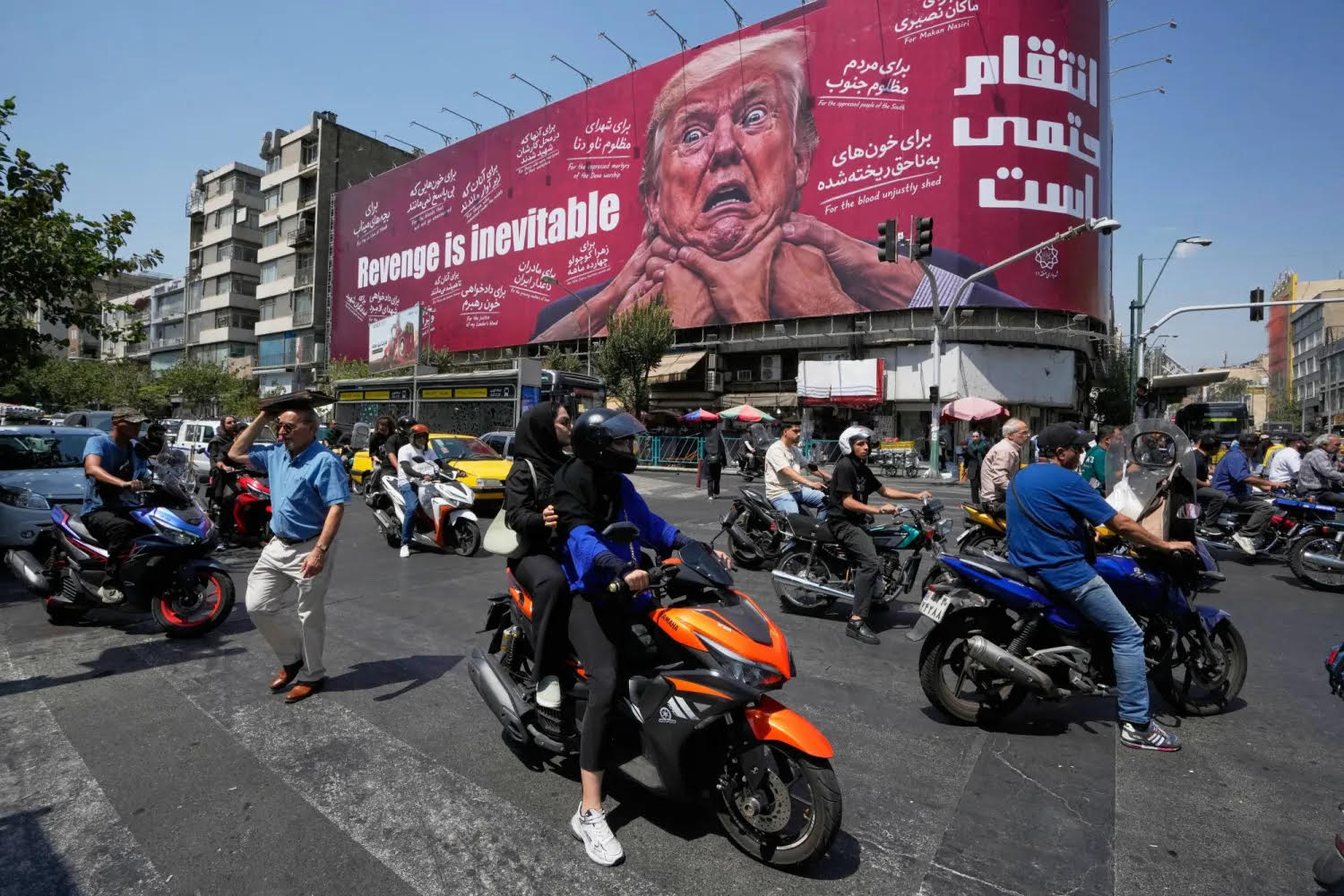
The Strait of Hormuz captures this dilemma. For decades, the United States has presented itself as the guarantor of open sea lanes and the ultimate protector of global commerce. Yet it now finds itself calling on countries it considers strategic competitors, particularly China, to help manage a crisis with consequences for the entire global economy. Trump’s public appeals to oil-dependent states to help secure the Strait reveal more than a desire for burden-sharing. They expose the uncomfortable limits of unilateral American command in a world that is increasingly unwilling to be commanded.

Washington’s problem is not that it lacks power. It retains unmatched military reach, deep financial influence, strong alliances and a central role in the global technology ecosystem. Its problem is that power exercised through threats, maximalist demands and public humiliation can slowly weaken the coalitions needed to make that power effective. A country can have the strongest military in the world and still struggle to lead if its allies no longer trust its judgement, and its rivals no longer fear isolation.

This is where the Training Day metaphor becomes useful. Alonzo Harris’s authority rests on intimidation, performance and the belief that everyone else must accept his rules. But his bravado does not prevent isolation. It accelerates it. In the same way, declarations of strength cannot replace a credible strategy to end wars, secure commercial routes or bring competing powers into workable diplomatic arrangements.

The point is that, in a changing world, being a ‘King Kong’ does not necessarily mean that one remains in control. Other powers are rising, other interests are hardening, and old assumptions about obedience are breaking down. Such a world needs stable rules of engagement, and those can only emerge through cooperation rather than intimidation.

For the Global South, this is not a spectator sport. A prolonged conflict around the Strait of Hormuz can raise energy and shipping costs, intensify inflation, disrupt food supply chains and place further pressure on already fragile public budgets. Yet a more contested global order can also create diplomatic room for countries that have long been expected to choose between Western security arrangements and alternative partnerships. The opportunity is not to celebrate instability or American decline. It is to demand a more representative international order, without allowing the Global South to become the economic casualty or geopolitical battlefield of major-power rivalry.

The first signs of this shift are emerging among Washington’s own allies. Across Europe, the response to Iran and the Strait of Hormuz has been shaped by a growing insistence that support for maritime security should not mean surrendering political judgement to Washington. Germany, France and Italy have backed diplomacy, the reopening of the Strait and a defensive multinational mission to protect commercial shipping and conduct mine-clearance operations. France and the United Kingdom have moved to lead that effort, while Germany has indicated that it could participate once the necessary political and constitutional conditions are in place. What is taking shape is not a European retreat from security, but a European demand to define security on its own terms. The distinction is significant. Instead of simply joining an American campaign, European capitals are placing their emphasis on international law, freedom of navigation, diplomatic settlement and a limited defensive mission. The old habit of automatic alignment is giving way to something more conditional: cooperation where interests converge, and distance where Washington’s methods risk widening the conflict, placing European security at risk and undermining the principles of international law Europe claims to defend.

For a long time, the United States has had the privilege of brandishing its ‘police badge’ and bringing others into line. It still holds much of that authority, but its grip is weakening. We are now at a moment when countries once expected to follow Washington are setting their own terms, and the world is beginning to question who gets to define order, security and legitimacy.

At a time when seasoned diplomacy is needed, the current administration has too often preferred the language of the schoolyard. This is a true Alonzo Harris moment. The United States does not need more threats, more theatrical displays of power or louder claims to global authority. It needs the political courage to recognise that this is a deeply diplomatic moment, one that could shape the future of the Middle East and the wider international order for years to come.

A stable global order does not have to produce winners and losers. It need not be a zero-sum contest among the world’s great powers. A more secure and equitable order remains possible, but it will require restraint, dialogue and an acceptance that no country, however powerful, can carry the world’s police badge forever.


The Writer is a Senior Research Fellow with DWC
Saudi-Iran Pact Brokered by China points to a New Era of Peace and Budding New Global Order

During Modi-Putin heart-to-heart talk held on the on the sidelines of the Shanghai Cooperation Organization’s Summit in Samarkand last year, Indian Prime Minister Narendra Modi expressed to the Russian president that ‘today’s era is not of war…’ This comment was made in an effort by India to broker peace between Russia and Ukraine. Sadly, war hawkers in some Western Capitals and the Media hysterically ran with the phrase and used it to reprimand Russia over Ukraine Crisis.

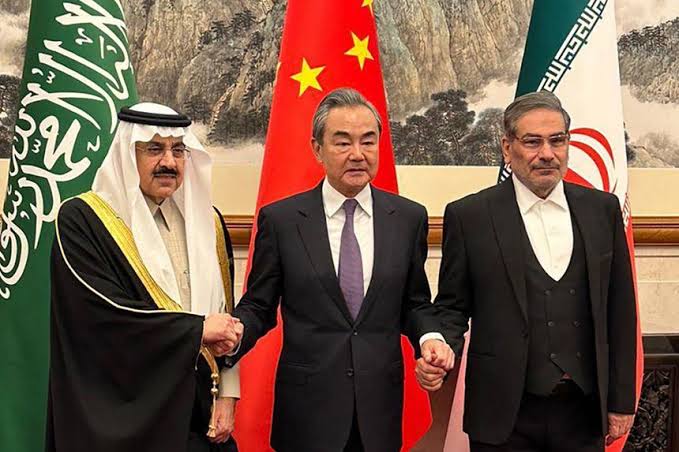
However, it is naïve to believe that this reaction came out of an honest aversion to war, rather than a grand opportunity to virtue signal against the wars that do not serve Washington’s interests. However, it didn’t take long before Washington’s embrace of a ‘war free era’ came to a screeching halt once China put the ‘not an era of war’ mantra into practice by brokering the Saudi-Iranian deal to restore diplomatic relations between the two countries. Both countries have had no diplomatic relations for seven years after Iranian protestors stormed the Saudi embassy in Teheran following the execution of a Shi’ite cleric in Saudi Arabia in 2016. The two rivals have since fought a proxy war in Yemen and brought a catastrophic humanitarian crisis in the region. Therefore, a pact promising peace between the two heavy weights in the middle east is a step in the right direction.

This agreement goes further than just the normalization of relations between the two, and also includes a drive towards enhancing regional and international peace and security. To any layman who is neither a political bureaucrat nor a media propagandist, the deal presents a historic milestone towards the stabilization of the middle East, a region that has suffered innumerable conflicts that have cost the lives of many innocents. Furthermore, the involvement of Iraq and the Sultanate of Oman is an indication of an inclusive peace. No peace is long lasting without the input of well-wishing neighbors. The two states also agreed to re-open their embassies within two months. Furthermore, Iran and Saudi Arabia will restore a 22-year-old security pact that requires them to cooperate on issues of terrorism, drug smuggling and money laundering. A renewal of the 1998 trade and technology deal was also agreed upon.

It is not helpful to jump the gun and declare that the middle east shall be all roses and no guns from now on. The road to a peaceful middle east is long and winding. Fortunately, China has decided to be the adult in the room and start walking the road to peace. The brokering of this deal should be a pointer to the significance of a multi-polar world and the urgent need for powerful countries to champion peace and put an end to the destructive war machine. China’s pursuit of win-win partnerships maybe scoffed at in several western capitals, but that means nothing if the strategy is yielding undeniable results.

Many in Washington hold the wrong view that the Saudi-Iran pact is a challenge to US hegemony because it was brokered by China. This mindset needs to drastically change among certain circles in Washington. A peace deal is a peace deal and should be praised. So far, it is a good sign that the European Union has welcomed the resumption of ties between the two countries. It is important that regional powers possess an independent foreign policy that serves the interests of their respective regions rather than have other countries dictate to them foreign policies that only bring destruction.

As Chinese President Xi Jinping observed while advocating for China’s proposal of Global Security Initiative (GSI), for the world to attain sustainable peace, “we need to work together to maintain peace and stability in the world. The Cold War mentality would only wreck the global peace framework, hegemonism and power politics would only endanger world peace, and bloc confrontation would only exacerbate security challenges in the 21st century.” Therefore, as President Xi emphasized, all efforts that focus at creating conducive environment for harmony must be supported by all peace-loving people of the world and firmly “oppose unilateralism, and say no to group politics and bloc confrontation; stay committed to taking the legitimate security concerns of all countries seriously, uphold the principle of indivisible security, and oppose the pursuit of one’s own security at the cost of others’ security; stay committed to peacefully resolving differences and disputes between countries through dialogue and consultation.”

While Saudi-Iran peace deal is a diplomatic victory for China in the gulf region, instead of painting it as anything else, all other countries should observe and embrace the correct order of conducting international relations. Perhaps, the next step should be to involve Israel in a daring middle eastern peace framework that would suspend hostilities in the region for the next 100 years. If any country can achieve this, it is China under the current CCP and president Xi Jinping’s objective of playing a ‘constructive role in appropriately handling hotspot issues in today’s world in accordance with the wishes of all countries’ and demonstrate China’s ‘responsibility as a major country.’ This very sentiment was expressed by China’s State Councilor and top diplomat Mr. Wang Yi who was deeply involved in the entire process.

African countries should keenly observe the events in the middle east and seek to learn from them. One of the major takeaways, is the fact that China is here to advance peace and cooperation within the framework of a multi-polar global order. The other lesson is that any hostilities between nations can be resolved diplomatically if the parties involved do not allow countries with harmful ulterior motives to take part in a peace-seeking process. Finally, African countries should make it clear to Washington, Paris, and London that the continent is not a playground for political games, Africa values genuine partnerships based on mutual respect and the continent’s embrace is large enough for both the west and China. Therefore, our cooperation with one bloc is not a rejection of the other but rather an indication of goodwill politics in a new multi-polar world order.

Mosh Israel is a Research Fellow with Development Watch Centre.