The United States is approaching eight decades at the centre of the postwar international order. From the economic institutions built after 1945 to its cultural influence, military alliances and technological leadership, Washington has exercised a level of global influence unmatched by any other nation. Yet American primacy has never been as uncontested as its most ardent champions would have the world believe. The Cold War placed clear limits on American power, and the so-called unipolar moment only truly emerged after the collapse of the Soviet Union in 1991.
Today, that unipolar moment is visibly under strain. The war in Ukraine, China’s steady rise, the confrontation around Iran, North Korea’s deepening relevance to Eurasian security, and tensions surrounding the Strait of Hormuz all point to a world in transition. This is not yet a stable multipolar world. It is a world caught in between, where Washington remains extraordinarily powerful but can no longer assume that allies will simply fall in line, that rivals can be easily isolated, or that military pressure will automatically deliver political results.
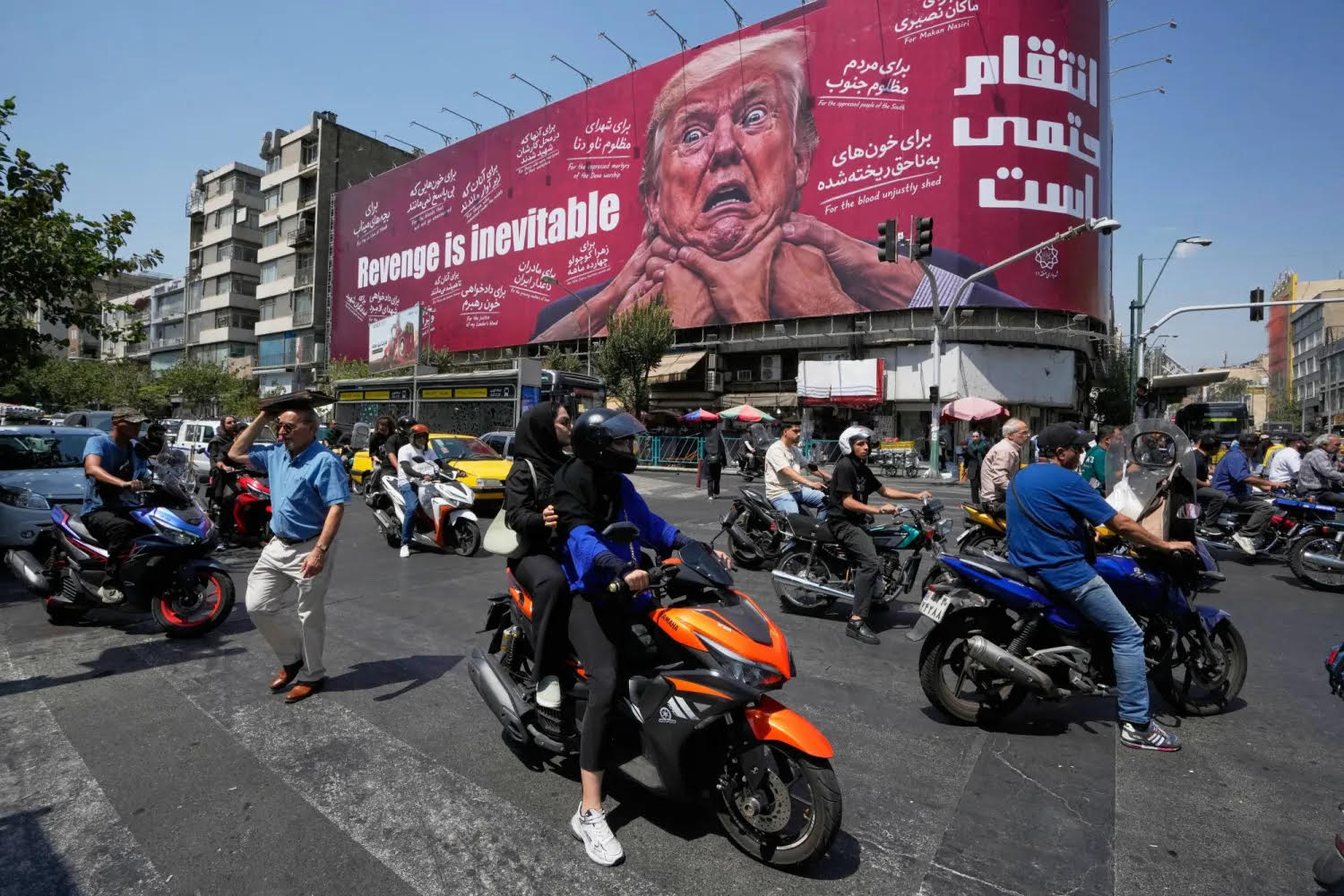
The Strait of Hormuz captures this dilemma. For decades, the United States has presented itself as the guarantor of open sea lanes and the ultimate protector of global commerce. Yet it now finds itself calling on countries it considers strategic competitors, particularly China, to help manage a crisis with consequences for the entire global economy. Trump’s public appeals to oil-dependent states to help secure the Strait reveal more than a desire for burden-sharing. They expose the uncomfortable limits of unilateral American command in a world that is increasingly unwilling to be commanded.
Washington’s problem is not that it lacks power. It retains unmatched military reach, deep financial influence, strong alliances and a central role in the global technology ecosystem. Its problem is that power exercised through threats, maximalist demands and public humiliation can slowly weaken the coalitions needed to make that power effective. A country can have the strongest military in the world and still struggle to lead if its allies no longer trust its judgement, and its rivals no longer fear isolation.
This is where the Training Day metaphor becomes useful. Alonzo Harris’s authority rests on intimidation, performance and the belief that everyone else must accept his rules. But his bravado does not prevent isolation. It accelerates it. In the same way, declarations of strength cannot replace a credible strategy to end wars, secure commercial routes or bring competing powers into workable diplomatic arrangements.
The point is that, in a changing world, being a ‘King Kong’ does not necessarily mean that one remains in control. Other powers are rising, other interests are hardening, and old assumptions about obedience are breaking down. Such a world needs stable rules of engagement, and those can only emerge through cooperation rather than intimidation.
For the Global South, this is not a spectator sport. A prolonged conflict around the Strait of Hormuz can raise energy and shipping costs, intensify inflation, disrupt food supply chains and place further pressure on already fragile public budgets. Yet a more contested global order can also create diplomatic room for countries that have long been expected to choose between Western security arrangements and alternative partnerships. The opportunity is not to celebrate instability or American decline. It is to demand a more representative international order, without allowing the Global South to become the economic casualty or geopolitical battlefield of major-power rivalry.
The first signs of this shift are emerging among Washington’s own allies. Across Europe, the response to Iran and the Strait of Hormuz has been shaped by a growing insistence that support for maritime security should not mean surrendering political judgement to Washington. Germany, France and Italy have backed diplomacy, the reopening of the Strait and a defensive multinational mission to protect commercial shipping and conduct mine-clearance operations. France and the United Kingdom have moved to lead that effort, while Germany has indicated that it could participate once the necessary political and constitutional conditions are in place. What is taking shape is not a European retreat from security, but a European demand to define security on its own terms. The distinction is significant. Instead of simply joining an American campaign, European capitals are placing their emphasis on international law, freedom of navigation, diplomatic settlement and a limited defensive mission. The old habit of automatic alignment is giving way to something more conditional: cooperation where interests converge, and distance where Washington’s methods risk widening the conflict, placing European security at risk and undermining the principles of international law Europe claims to defend.
For a long time, the United States has had the privilege of brandishing its ‘police badge’ and bringing others into line. It still holds much of that authority, but its grip is weakening. We are now at a moment when countries once expected to follow Washington are setting their own terms, and the world is beginning to question who gets to define order, security and legitimacy.
At a time when seasoned diplomacy is needed, the current administration has too often preferred the language of the schoolyard. This is a true Alonzo Harris moment. The United States does not need more threats, more theatrical displays of power or louder claims to global authority. It needs the political courage to recognise that this is a deeply diplomatic moment, one that could shape the future of the Middle East and the wider international order for years to come.
A stable global order does not have to produce winners and losers. It need not be a zero-sum contest among the world’s great powers. A more secure and equitable order remains possible, but it will require restraint, dialogue and an acceptance that no country, however powerful, can carry the world’s police badge forever.
The Writer is a Senior Research Fellow with DWC