Analysing China-US Relations Under Trump’s Second Term

By Nnanda Kizito Sseruwagi

One of the most significant and highly complex bilateral relationships in the world today is the diplomatic relationship between the United States and China. Over the years of changing administrations and presidents, China might have come to the conclusion that US-China strategic competition is to endure, almost in similar characteristics, irrespective of who swings in the chair in the Oval Office. But certainly, Donald Trump is a president characteristically like no other. Despite the structural interests of US foreign policy that would make it predictable regardless of who the president is, there is room to analyse what Trump’s second presidency would hold out for China-US relations.

For the two countries and the entire world, cooperation between each other is paramount, lest we would have devastating implications altogether as a globe. Mismanaging China-US relations could potentially yield consequences of historically unprecedented proportions.

President Trump and President Xi Jinping’s characters are important to this analysis because of the person-centeredness of foreign policy action. Trump, and all his “isms” carries ambiguities in his foreign policy approach, and generally lacks structured placement of administrative thought to predict him as likely to hold a certain standard. His worldview is often described as transactional and business-oriented based on his entrepreneurial background. On the other hand, Xi is a man of calm, perceptive and grounded thought. He has written deeply and broadly about his world view; his commitment to a shared future for mankind, and his determination to ensure peaceful co-existence with all countries – big or small. Xi Jinping is unprejudiced by any personal political biases. His clarity of the kind of future for mankind is not selfish for China only as Trump’s is on “America First.”

In his first term, Trump pursued quite a confrontational foreign policy towards China. He rejected the Trans-Pacific Partnership, which Obama had reached with China. He waged an unprecedented tariff war against Chinese exports, negatively impacting the US’s own economy. He attempted to halt the development of Huawei’s 5G network for allegedly being a means of Chinese cyberaggression, among many other policies that caused deep friction between China-US relations.

Based on the foreign policy mistakes of the first Trump presidency, it seems he was genuinely ignorant of the reasonable fact that cooperation between the USA and China, as the world’s two largest economies, is fundamental to collective global stability.

The theory of realism is key in foreign policy analysis. It states that the state is the main unitary actor and rational actor seeking to maximize and expand its national interest and objectives, usually from the standpoint of promoting international security. The wisdom Trump requires in his second term is how to pursue the US national interests and ambitions without provoking China with the same confrontation and hostility he exhibited in his first term.

Trump and the West should make peace with a multipolar world and resist the urge to slow down the progress of countries like China and force them to respect American priorities. That world—the world where such a possibility resides—may still linger in the imagination of Western leaders, but it is now behind us.

The future of global stability is in win-win cooperation which is championed by President Xi, not President Trump’s worldview of a zero-sum approach to bilateral relations. I do not see why it should burden Western leaders to embrace Xi’s vision of the global community as sharing a common destiny where all nations benefit from cooperating instead of seeking global domination.  The ideological differences between the USA and China are becoming clearer to the world audience and more nations are starting to prefer China’s ideological policy standpoints and reading through the selfishness and unsustainability of the American self-righteous belief systems.

A state cannot have a sound foreign policy if it sits on a shaky domestic public policy. This was one of Trump’s undoings in the first term, and if he did not learn his lessons, might come to haunt him again. If his second term is also punctuated by weaknesses in domestic policy and scuffles with democrats, China is likely to enjoy more productive foreign policy. Xi Jinping is a popular leader at home and the Chinese Communist Party enjoys resounding appeal, is well-organised and disciplined. The more Trump will likely pull ropes with democrats at home, the more likely China’s Belt and Road Initiative will expand as China enjoys stability at home and respect abroad.

If Trump continues pursuing his isolationist agenda full-throttle as he did in the first term, he is likely to benefit China by driving the US’ traditional allies, especially the European Union, towards China. Many American and EU companies are already highly dependent on China’s high-scale, high-precision manufacturing prowess. In further pursuing decoupling from China, Trump will be glueing the EU economically tighter with China, because there will be less diversion of Chinese trade from the EU to the US.

So, Trump needs to understand that the EU lacks an inherent and plausible interest in geostrategically containing China. It is rather in their interest to harness a reciprocal primarily economic and technological interdependency with China based on reciprocity and jointly agreed-upon principles and rules.

Above all, as stated earlier, Trump and the Western world generally need to embrace the changes happening globally. The world is inclined towards multipolarity. The political ideologies of Western nations need to change shape, from the traditional neocolonial obsession with their own way of doing things and controlling the world to a more respectful one, like China’s commitment to peaceful co-existence and mutual respect for all the world’s nations.

The writer is a Senior Research Fellow at the Development Watch Center.
Africa’s Historic Moment at the G20 and What it Means for You

By Musanjufu Benjamin Kavubu

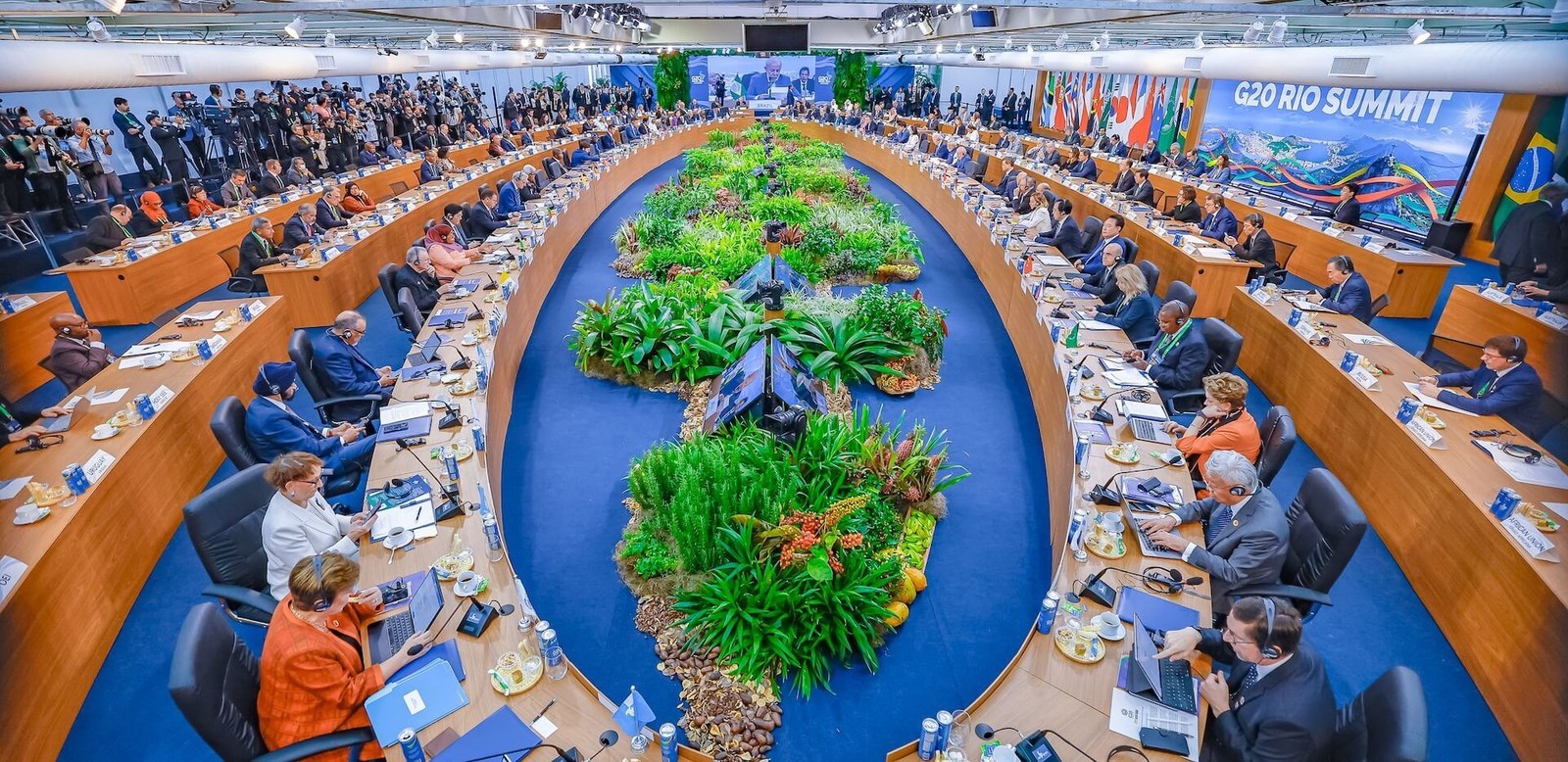
It turns out the global South was able to score big at the G20 Summit in Rio de Janeiro Brazil going by the Leaders’ Declaration at the end of the event that happened from the 18th to the 19th of November. For Africa, it was a historical summit because the African Union was attending for the first time as a permanent member after being admitted into the grouping at the 2023 G20 Summit in New Delhi, India.

For 24 years, South Africa was the sole African member of the G20, having joined at the start of the club in 1999. That meant they basically represented the rest of the continent and with the assistance of China that strongly advocated for an inclusive and effective G20. Beyond rhetoric, China was the first major power to explicitly endorse African Union’s bid for membership as from time to time President Xi Jinping and his Foreign Minister Wang Yi repeatedly voiced the importance of Africa in global governance. The BRICS Summit in Johannesburg as recent as 2023 was one such incident when Xi highlighted the need for Africa’s enhanced role in global decision making. China worked closely with Indonesia and South Africa to lobby for support for Africa Union to be admitted as they leveraged multilateral diplomacy to build consensus.

Africa now has its seat at the table represented by South Africa and the African Union. The G20 has evolved since it’s foundation in 1999 from being responsible for global financial crisis of the late 1990s to now taking on broader political, environmental and security issues that the world faces at the moment. The G20 represents about 66.6% of the world’s population and Africa Union takes 1.5 billion people to that table meaning that is about 28% of the blocks population according to population today and Worldmeters’ data. These numbers can mean markets for the rest of the 19 members of the G20 especially with the African Continental Free Trade Area (AfCFTA ) being the biggest trade area in the world.

Africa Union’s 1.5 billion people are also the least advantaged in the G20 and would benefit from the development frameworks that are being advanced within the club. Africa’s voice is guaranteed to be amplified in the G20 and all other international fora. The leaders’ declaration at the G20 2024 Brazil reiterated the formations strong support to Africa including through the Compact with Africa and the G20 initiative on supporting industrialization in Africa and LDCs, and support the African Union to realize the trade and economic integration and aspirations under its Agenda 2063 as it enters its second decade of implementation.

Africa can now take advantage of the 85% GDP of the G20 and the 75% of global trade that make up the club through the multinational avenues that are available and the myriads of working groups within the formation. It’s no secrets that despite Africa’s abundant resources be it natural or human resources the continent is still struggling with feeding itself, huge loans that have led to debt vulnerabilities, a climate crisis that the continent knows nothing about because they didn’t cause it, a failing health sector and education system that is in a state of inertia and struggling intra-African trade even with trans-African solutions like the Belt and Road Initiative (BRI) by China and the AfCFTA by African Union.

The G20 comes with avenues like the Development Working Group that focuses on implementing the sustainable development goals (SDGs) of the United Nations through sourcing finances and capacity building for infrastructure to tackle health, education and poverty eradication which are also part of the goals for the AU Agenda 2063. The G20 also has a Finance Track Working Group called the Global Partnership for Financial Inclusion (GPFI) that deal with financial literacy and access to inclusive financing. This framework is for the citizens to have access to banking and it supposed to go a long way to support small and medium businesses in the effort to boast commerce.

For the 55 countries with the African Union the International Financial Architecture Working Group can be a vital opportunity because it’s sole responsibility is to address debt sustainability and resources mobilization. It’s through this working group that better debt treatment mechanism and better access to concessional loans is lobbied for by the G20 permanent members. For the African Continental Free Trade Area (AfCFTA) the Trade and Investment working Group can be utilized to improve Africa’s Geoeconomic competitiveness as the working group aims at open trade, investment flows and global integration into supply Chains.

Africa sent some of the biggest delegations to Azerbaijan for the Conference of Parties 29 (COP29) because of the continent’s dedication to take on climate change in any means possible. G20 Summit through the Leaders’ declaration is looking forward to a successful New Collective Quantified Goal (NCQG) outcome in Baku. The formation pledged it’s support to the COP29 Presidency and committed to successful negotiations in Baku. The G20 also pledged to support the COP30 Presidency, in 2025. Further the formation committed to accelerating clean, sustainable, just, affordable and inclusive energy transitions, in line with SDG7, the Paris Agreement and the outcome of the GST-1, adopted at the UN Climate Change Conference in Dubai (COP28), that leave no one behind, especially the poor and those in vulnerable situations (like Africa), taking into account different national circumstances. It’s now up to the African Union members to take advantage of the G20 Climate Sustainability Working Group to take on the climate crisis through securing funding for climate-resilient infrastructure and environmental conservation projects especially in the renewable energy field and again the Energy Transitions Working Group comes in closely on the environmental front. If Africa goes by the energy sector and environment concerns crossroads then the continent will have figured out it’s path to industrialization.

For a while Africa’s place on the United Nations Security Council has been making headlines and some hollow offers have been made by the West. The G20 2024 did clearly outline the need to reform the UNSC and the United Nations as a whole to meet today’s problems. This was a win for the global South and now that Africa Union is a permanent member of the formation they can lobby the great powers to see this through to create global balance. Now that Africa has a seat at the table there is hope for the continent on the global stage.

The writer is a research fellow at the Development Watch Center.  

Global South & China’s interests at the G20 2024 Summit

By Nnanda Kizito Sseruwagi

On November 21st -22nd 2024, world leaders from the world’s biggest economies will convene at the 2024 G20 Summit in Rio de Janeiro, Brazil, to discuss pressing global issues. The Development Watch Center, a Uganda – based think tank focused on international relations, foreign policy and diplomacy is one of the think tanks representing at the G20’s social participation forum constituted as “Think Tanks (T20),’’ which produces, discusses, consolidates and presents ideas on how to engage contemporary challenges that may be addressed by the Group of 20 (G20). The T20 is also constituted by G20 research institutes and countries invited by the rotating presidency.

A number of six topics were provided by the T20 Brasil organizing committee to be addressed at the summit. These include: Combatting inequality, poverty and hunger; sustainable climate action and inclusive and fair energy transitions; reform of the international financial architecture; trade and investment for sustainable and inclusive growth; inclusive digital transformation; and strengthening multilateralism and global governance.

The foregoing topics are not all there is at the G20 2024 Summit. They are only part of several other dialogues that were shaped by the Brazilian presidency, of course alongside other topics that are traditionally addressed in the T20 in the successive presidencies of the G20 forum.

China and the global south share several development priorities, and have shared concerns about global economic and geopolitical issues. Some of our shared interests are well captured in the topics above provided by the T20 Brasil organizing committee.

On the issue of climate change and sustainability, I see global south countries seeking greater partnership with China in the form of climate finance and technology transfer to address the impacts of climate change. It is a common fact and common knowledge now that our countries have contributed the least to global emissions yet are the most vulnerable to climate change. Therefore, partnering with a stronger but more understanding country like China would have us in a better place to negotiate better deals for climate financing.

Additionally, China may bolster its relationship with global south countries on distributing green technology, since it is a leading global actor in the technological advancements of green energy.

Another shared interest between the global south and China is reforming global governance. It is clear to many global south nations today that international institutions, especially the International Monetary Fund and the World Bank are biased in favor of Western interests and were designed to perpetrate Western domination over the global economy and political dispensation. Through alliance with China and other countries, we can push for reforms in the organization of international organizations, or even challenge their entire legitimacy and have them replaced with a much fairer and equitable order or form of organizations that would better represent our interests and give us a better place in influencing the decision-making processes at the world level.

It is also in China’s interest as a founding member of the BRICS Block (Brazil, Russia, India, China, and South Africa) to encourage greater cooperation among BRICS countries with their wider global southern cousins to challenge the dominance of the Western powers in global governance.

The global south also stands to leverage China’s leadership in digital innovations for instance in 5G technology to help global southern countries improve their digital infrastructure and expand connectivity, which will be essential for our development and modernization efforts. We also need and indeed have a vested interest as late industrialisers, in a more equitable access to emerging technologies especially Artificial Intelligence, and China remains a global leader in this field, with the highest registered patents in Artificial Intelligence innovations. It would thus be a great partner in supporting us to bridge this digital divide between us and the developed world.

One of the most enduring phenomena in the political crises afflicting the global south has historically been Western interference in their affairs. This has been the case from slavery to colonialism, up to today under globalization and its deleterious effects on our nations. As such, the G20 Summit in Rio this year presents global southern states & China an opportunity to counterbalance the Western hegemony in global affairs. China’s non-interventionist foreign policy and emphasis on respect for sovereignty also resonates with the interests of many of our global southern states which are trying to shape their way in a world policed by Western rules.

With the recent COVID 19 pandemic experience fresh to our memory, the global south also stands interested in improving its health care infrastructure and ensuring equitable access to vaccines and medical supplies. China stands as a reliable partner on this front, having exhibited exceptional vaccine diplomacy during the recent pandemic when most Western states hoarded millions of vaccines while Africans suffered the brunt of the pandemic.

The world is changing, and also the ways in which it changes is changing. The 2024 G20 Summit in Brasil presents a number of shared interests between the global south and China and is likely to be one of the new platforms through which international change happens.

The writer is a senior research fellow at the Development Watch Center.