Building a Community With a Shared Future: A Liberal view of Sino-Uganda Relations

To understand Sino-Uganda relations and Sino-Africa relations in general, the role of China to the economic development of Uganda can be best understood by evoking liberalism as profound theory in understanding mainstream international relations. Today, mutual benefit philosophy and common prosperity are central in when describing the relations between
Kampala and Beijing and broadly, Sino-Africa cooperation. It should be noted that the two countries have enjoyed fruitful relations that have fostered economic development in Uganda. Sadly, and arguably due global politics, some Sino-Africa skepticist especially in Global north often view Sino-Uganda and broadly Sino-Africa relations in colonial motifs which definitely is wrong and miss presentation of historical facts since China has never colonized any country!

While it is true, that the end game of international relations is fostering selfish interests, it is now common knowledge that with China’s philosophy of common prosperity, China’s relations with other countries like Uganda is purely not selfish but a win-win cooperation which Beijing firmly believe is key in ensuring and building a community with shared prosperity for mankind.

China’s Belt and Road Initiative (BRI) is a vivid example show casing the win-win nature of relations Uganda and Africa in general are enjoying with China. It should be noted that BRI mothers lots of projects aiming at mutual benefit of the two sides. Through infrastructure development, BRI is connecting Asia with Africa, Middle East, Europe and the Americas. This in many ways will and in some countries is already facilitating transportation of goods and services. With expansion of Entebbe international airport near complete, Uganda is one of many countries already enjoying fruits of BRI. Also, a recent report by the Africa Policy Institute noted that since the BRI was initiated proposed in 2013, China has boasted African countries’ infrastructure by funding modern infrastructure projects such as railways, roads, ports, dams, industries, and digital connectivity, injecting vitality in the region. These projects also left thousands of Africans getting employment opportunities, sparking economic growth in the long run.

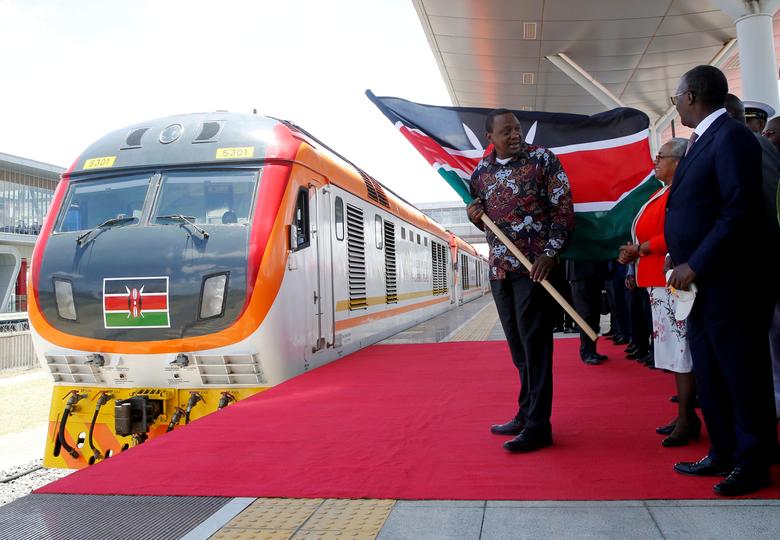
Giving example of Kenya, Africa Policy Institute report pointed at several multiplier effects of Kenya’s China funded and constructed 670-kilometer modern Standard Gauge Railway (SGR) connecting the port of Mombasa and the inland port of Naivasha. The Ethiopia-Djibouti’s standard gauge railway which connects landlocked Ethiopia to Djibouti port also constructed under BRI also improved transport in the region. The Chinese-built 752.7-km line recorded about 86.13 million U.S. dollars in revenue in 2021, which is up 37.5% compared to 2020 revenue collections.

In production and industry sector, Chinese investments in Uganda have greatly boasted Uganda’s capacity. For example, today Uganda boasts of a number of industrial parks that are contributing to the country’s economic growth and development. Industrial parks such as in Namanve, Kapeeka, and Mbale have liberated Uganda from losing foreign exchange in purchasing commodities that were not produced in Uganda. These parks have also contributed to skill enrichment of Ugandans who are employed there! The goods being products of high tech ensuring good quality, Uganda can also favorably compete at the regional market brining more foreign exchange to the country Cooperation being at the core of China-Uganda relations, it has been evident in the construction of infra-structures for example the hospitals like the China-Uganda friendship hospital in Naguru.

Liberalism understood as cooperation in this case is evident in the education and cultural exchange program as part of relations. Education and culture being at the core of negotiations at the Beijing summit in 2020 it’s absolutely evident that the matter is centric of China-Uganda relations. Through the Confucius Institute at Makerere university, it should be noted that the institute has a memorandum of understanding between Xiangtan university, an institution in Hunan province in China which offers 30 scholarships annually to Ugandan students.

In terms of Trade, the good cooperation between China and Uganda has seen Uganda gain from trading with China. In his book: Introducing Liberalism in International Relations Theory, Jeffrey W Meiser emphasizes the role of good relations between countries if favorable trading conditions are to be realized. It is not a surprise that China has been working to increase trade quotas to Uganda and entire African continent as a way of ensuring both sides benefit from their cooperation.

Also, for over a decade, China has always been one of not only Uganda’s but many of African countries’ foreign direct investments. A report by the United Nations COMTRADE database on international trade that analyzed trade between the states with statistics in the year 2020 shows that Uganda exports quiet a number of products to the Chinese market that include oilseed, oleagic fruits, grain seed, fruits, plastic, wood products, gums and so many others that totally amounted to US$39.61million. Therefore, with this important aspect in economic growth, Uganda’s economic growth has been greatly fueled by diverse trade the two countries guided by China’s philosophy of win-win cooperation as Beijing works with other countries to build a community with shared prosperity for mankind as well as common development.

By Balongoofu Daniel is a Junior Research Fellow at Sino-Uganda Relations Research Centre

China-Uganda 60 Years Of Diplomatic Relations

China and Uganda have a long diplomatic history dating back to the post-independence era. China is among the few countries that recognized Uganda as sovereign country just days after independence. Since then, Beijing has been cooperating well with Uganda, offering Kampala support in different sectors that we cannot discuss the journey of Uganda’s socio-economic development without mentioning the role of China.

In education sector, China continues to do a tremendous work offering training opportunities to different Ugandans at different levels. By end of 2021, Beijing had offered Ugandans hundreds of undergraduate and postgraduate scholarships and over 5000 Ugandans benefited from China’s short course training opportunities covering different key areas such as agriculture, medical care, infrastructure, information and technology among others.  China is also collaborating with African universities funding research and other learning opportunities. Makerere University’s Confucius institute is among the many examples. Aware that human capital and well-educated and skilled people are essential to facilitate development of the country, one cannot discuss development of Uganda’s education sector and human capital development without mentioning China’s contribution.

In the field of agriculture, China has been playing a key role for more than 40 years. In 1973 and 1987, China invested and established the Kibimba Rice Scheme (Now Tilda Uganda) and Doho Rice Schemes which have increased rice production and provided employment opportunities to many Ugandans. Additionally, the South to South Co-operation has boosted agriculture in Mbarara, Kabale, Amuria, Wakiso, and Budaka. Agricultural technology demonstration hubs have been established in Kabale to boost horticulture. China has also been supporting fish farming by funding the construction of the Wakawaka fish landing site and the Kajjansi Aquaculture Training and Development Centre which is a national center for aquaculture research in Uganda. This has led to increased and sustained fish production.

In 2009 under the South-South Cooperation (SSC), in coordination with United Nation’s Food and Agriculture Organization (FAO), China launched FAO-China South-South Cooperation (FAO-China SSC) and established FAO-China Trust Fund. China invested $30 million in this program to to support agriculture in Uganda. China has since been supporting this program injecting $100 million in 2015 and 2021 for phase II and phase III respectively.

During phase II of China-FAO SSC, China sent 47 agricultural experts and technicians have to train Ugandans in the same field. During the expert’s two year stay in Uganda, they trained many Ugandans and helped to improve technologies used to in farming of various crops such as rice, foxtail millet, maize, grapes, apples and cherry tomatoes, as well as animal reproduction.

In energy sector, China’s contribution in Uganda’s energy is also visible. The Karuma dam hydropower station with capacity of 600 MW which under construction in Kiryandongo District is an example of China’s contribution in Uganda’s energy sector. The project is 85% funded by China’s Exim Bank and Uganda government is meeting the remaining 15 percent. The project is being constructed by a Chinese firm Sinohydro Corporation and is expected to be completed in June 2023. Isimba power station which became operational in 2019 was also funded by with a loan from China’s Exim Bank. Karuma and Isimba hydropower plants are identified in Uganda’s Vision 2040 as key projects to Uganda’s economic development.

In infrastructure development, China directly funded US $ 350 million for the construction of the Kampala-Entebbe express highway, which is the first express highway in Uganda. The expressway is a 51km, four-lane, dual carriage toll road linking Kampala to Entebbe airport. The stated intention of the highway was to; reduce congestion and increase the commercial viability of the Greater Kampala Metropolitan area, improve mobility and reduce travel times and vehicle operating costs, and provide better access to local facilities for communities and jobs.

The expressway has helped to improve mobility and travel times to the airport. The US $ 350 million loan will be paid in 13 years and current statistics from Uganda National Roads Authority indicate Ugandans have embraced using the road with average daily passages of 20,000 which is far higher than projected daily passage which UNRA had put at 13,000 passages.  This also means daily collections have risen which is a good sign that the road can sustain itself in terms of maintenance and paying back construction loan. Indeed, Joy Nabasa the spokesperson of Egis which was hired to maintain the road collecting the toll on behalf of UNRA recently told journalists that the number of passages is increasing daily. Last month, media reports indicated that the road toll had collected 13 billion shillings in 4 months alone.

Good road network is key in transportation of goods and services which is key for development. As two Chinese say; “Better roads lead to better life.” and “Build roads if you want to get rich” with more good road network, Uganda’s social-economic growth and match to middle-income status is a matter of time.

In health sector, China continues to play a key role in supporting Uganda’s health sector. For example, as a result of good relations between the two countries, China funded the construction of China-Uganda Friendship hospital at Naguru. The hospital offers health services to people, for instance, paediatrics, gynaecology, dental, and laboratory services.

On 10th June this year, a team of Chinese medical personnel arrived in the country and will stay in Uganda providing medical services to citizens. Since 1983, China has been sending a team of doctors and experts to help work with Ugandans in extending medical serves to Ugandans.,

In the wake of COVID-19, China has supported Uganda in the fight against the pandemic. China donated COVID-19 test kits to boost efforts against the virus. Additionally, Beijing donated up to one million doses of COVID-19 vaccines.

Considering the positive contribution, the two countries have witnessed over the last 60 years, it is a living a testimony that China and Uganda are good comrades, good equal partners and good brothers always working hand shoulder to shoulder with major aim of building a community of shared future and prosperity for mankind. Considering enormous opportunities that comes with this brotherly relation should be natured by people of both countries. This to happen, as a Chinese saying goes, “amity between the people holds the key to state-to-state relations,” with the bilateral relations between our countries were elevated to the level of Comprehensive Cooperative Partnership three years ago in late June 2019, our two peoples must guard these relations jealously.

Vianney Sebayiga is a research fellow at Development Watch Centre and a Student at the Kenya School of Law.

Sixty Years of China-Uganda Diplomatic Relations: What Are The Benefits?

China and Uganda have a long diplomatic history. Just days after Uganda gained independence, China recognized Uganda as sovereign nation. Consequently, the two countries’ diplomatic journey started. In 1964, China invited and offered leadership training to several Ugandan youth. In the same year, a Ugandan minister Grace Ibingira was also invited to Beijing to discuss how China would support a newly independent country, Uganda.  This visit was followed by Uganda’s Prime Minister, then Milton Obote who held talks with leadership in Beijing that saw China giving Uganda a grant of $3 Million and $12 million loan to help a newly independent Uganda.

Between 1962 and 1985, bilateral relations between the two nations remained steady despite the regime changes in Uganda. Since then, the government of China has continued to provide developmental assistance to Uganda in form of interest-free loans and grants, technical training to Ugandans, supporting Uganda’s health sector and other vital fields of development. To date, one can argue that this kind of assistance between the two is now a tradition.

In a way of reciprocation, during the 26th General Assembly of the United Nations (UN) in 1971, Uganda voted in favor of the resolution on the restoration of China’s lawful seat in the world body.

Bilateral relations between the two countries entered a new stage of development after the National Resistance Movement came to power in 1986, with bilateral co-operation expanding and mutual high-level exchanges increasing. Since then, China’s contribution toward Uganda’s economic and social development has been on rise.

China’s contribution has mainly been directed towards infrastructural development in form of technical assistance, project aid, and business-related services. The sectors that have benefited from this include; transport, agriculture, manufacturing among others.

Today, China is Uganda’s largest source of Foreign Direct Investment (FDI). China’s investment footprint in Uganda became visible as early as 1991 with mostly small-scale restaurants and health clinics. This has transformed significantly over the years with investment now ranging widely from industries in the manufacturing sector to road construction projects.

In developing countries like Uganda, Foreign Direct Investment is a significant source of private finance, accumulation of physical capital and complementing adequate domestic savings. This is key to Economic Development owing to the low private sector capital and investment capacity in a developing country like Uganda. The entry of such investment has played an important role in improving livelihoods of many Ugandans.

China’s investment in Uganda’s industrial sector is also playing a key role in Uganda’s Economic Development. The introduction of several industrial parks such as in Mbale, Kapeeka, Jinja among others present a sample of China’s contribution. It is also estimated that Uganda’s industrial sector has expanded by over 6.2 percent attributed to construction and agro-processing industries and recovery in the mining and quarrying sub-sectors, a role that can be attributed to astute setting up of industries in Uganda by China and its nationals.

China’s contribution to infrastructural development particularly in the areas of transport, energy and Information technology has also facilitated economic development. In transport sector, with funding from Chinese government, Uganda has been able to construct several roads and other important infrastructural projects. For example, the Kampala-Entebbe expressway and Entebbe international airport were constructed with funds from China. Infrastructural development is a major catalyst for economic development.

Furthermore, trade between Uganda and China has also soared which has directly facilitated the economic development of the country. Trade in the form of imports from China widens the tax base of Uganda’s government and is later important in improving the physical quality of life of Ugandans. With further growth in Uganda’s industrial sector bred by China and abilities to trade in finished goods, the market of China also presents opportunities to Uganda and its nationals to achieve even more economic development.

China’s funding of projects in Uganda’s energy sector has addressed the issue of power shortage and high tariffs that initially affected Uganda’s potential and in turn boosted economic development. Key among these Chinese funded projects are the 600 MW Karuma Hydropower plant constructed along the River Nile in Northern Uganda and Isimba hydropower dams. Prior to this ambitious funding, Uganda faced a power crisis whose peak was in 2014 leading the government to resort to using diesel generators to power the country’s economy which raised the cost of power. High cost of power led to increase of prices of commodities which later affected the industrial growth and people in equal measure. Therefore, projects like Karuma and Isimba hydropower dams have been important because industrialization which is earmarked to ensure continued economic development thrives in increased electricity capacities.

It is also important to note that the provision of loans to Uganda to enhance her development is also a way China has contributed to Uganda’s economic development. Although it is often argued that debt cripples an economy, where handled rightly, visible achievements of loans can be enjoyed by a country. Uganda’s relationship with China has facilitated occasional facilities extended through China herself or her financial institutions. A case in point where economic development can be said to have been influenced through loans is a 482.5 million US dollars Isimba Hydroelectricity Power Station project.  The project is now complete thanks to loan from the Export-Import Bank of China which will be repaid over a period of twenty years at a two percent annual interest with a five-year grace period.

It is without a doubt therefore that good diplomatic relations between China and Uganda have not gone to waste. In terms of economic development, Uganda has gained in all aspects. Despite areas that need improvement, the relations between China and Uganda will continue to bear not only economic but also social transformation of Uganda.

Katende Arnold Ricky is a junior research Fellow at Development Watch Centre.

Chinese infrastructure loans: not debt trap but catalyst for Economic Development and Growth

Africa’s biggest challenge, especially Sub-Saharan region, is poor and aging infrastructure.
According to a recent study by McKinsey and Company, unless addressed, infrastructure
deficits in key sectors such as roads and energy will continue to hinder African countries’
economic growth and development especially in Sub-Saharan Africa. The study further
reveals that the region’s attempts to reduce this gap have not yielded largely due to lack of
funding which leaves many planned infrastructure projects stuck at planning stages: “80% of
infrastructure projects fail at the feasibility and business-planning stages,” a phenomenon the
study branded “Africa’s infrastructure paradox,” stressing that despite high demand for
infrastructure funding, there are few partners or investors willing to provided huge amounts
needed for such projects.

Limited funding for important projects at a time when the continent has severely been
impacted by the Covid-19 pandemic, the continent has less options to make an economic
rebound. In 2020, the region’s DGP according to African Development Bank, fell by 3.4%
which is about 7% if compared with pre-pandemic estimates.

To recover from this pandemic induced recess, African countries must include more funds in
infrastructure development for any stimulus plan the continent is thinking of. Sectors such as
roads, energy, and information communications technology must be given priority for they
can stimulate economic performance through supporting creation of jobs, boosting supply
chain and trade. It is only through funding and investing in infrastructure that our much-
hyped Africa Continental Free Trade Area will realise its anticipated goals.

It is important to note that while African countries need to close infrastructure funding gaps,
Official Development Assistance (ODA) and the so-called traditional funders continue to
decline. While this decline may be attributed to budget constraints in Western capitals, we
cannot ignore factors like liberal market ideology that in the end makes livelihood projects a
more likely beneficiary of ODA. This leaves Africa’s much needed infrastructure projects
with little attention. Aware that infrastructure projects require big amounts of money and
there are high risks involved, ODA providers are steadily pulling out their funding while
commercial institutions consider these projects a no-go area given the risks.

On the other hand, over the last two decades, China has been providing bilateral loans to
almost all African countries to cover their infrastructure funding deficits through commercial
and policy loans. Arguably, such funding is vital in supporting growing of African countries
economies, industrialization and employment opportunities.

Though often criticised by some western capitals branding China’s funding as “debt trap,” it
is very clear that China’s funding goes beyond West’s binary aid model of “government
versus markets” for it has helped reduce funding gaps and revolutionised the concept of
funding developing countries’ projects on basis of mutual benefits and “equal partnerships.”
This is a complete paradigm shift from where funders would dictate on how a receiving
country should use availed loan.

While China seems ready to offer a hand to African countries to improve their infrastructure
sector, some African countries seem swamped in what one may call western media narrative
and opinion. This narrative is mainly pushed for geopolitical reasons or the need, by the west
to maintain their influence over African countries. This eventually drifts the continent into
unfounded old frameworks and colonial motifs. It is the fear of their wanning influence that
drive western pundits to claim, warn and make all sorts of allegations that China has hidden
interests in Africa. The other example is West’s misinterpretation of Beijing’s support to
African as a new ‘Scramble for Africa,’ claiming that Africa is falling victim once more to an
outside global power. Maybe we should ask ourselves, why does the West brand Chinese
development assistance and loans to Africa as “debt trap” and “debt diplomacy” and their
own loans and assistance to Africa is considered ‘good loan(s)?’

Another example that seems illogical is Sino-Africa sceptics’ uncritical branding of China’s
funding and developmental loans to Africa as “debt trap” and “debt diplomacy” which is
arguably meant to undermine Sino-Africa relations and present it in a negative form. Another
intriguing example is U.S.A’s former Assistant Secretary of State for Africa, Tibor Peter
Nagy who on 5 th October 2021 cautioned African countries to be worry about China,
branding Beijing a bully by tweeting: “China's aggressive flying aircraft over Taiwan should
be an alarm for Africa. Country Bullies are more dangerous than people bullies. Beware of
their hegemonistic arrogance. Africa is 21st century's treasure house – and should benefit
Africans.” When critically analysed, one can confidently conclude that Nagy’s tweet was
simply political. While heading African affairs at the State department, President Trump
called African countries “s*t holes” and Nagy did not apologise to Africans neither did he
resign for such disrespect, but is the same person trying to lecture Africans who they should
trust!

While it is important that African countries must not take debts and loans beyond their
capacity, there is nothing wrong with taking loans to support infrastructure development. As
Bent Flyvbjerg, a Danish professor at Harvard University once noted; “Infrastructure is the
great space shrinker, and power, wealth and status increasingly belong to those who know
how to shrink space, or know how to benefit from space being shrunk.”

Therefore, criticizing African countries like Uganda for taking Chinese loans to improve our
infrastructure is unwise and broadly selfish. As J.P Morgan taught us, “a man always has two
reasons for doing anything: A good reason and the real reason.” In Uganda’s case and other
African countries’, seeking infrastructure loans the two reasons are simple – it is to shrink all
our linkages and supporting other factors of production that comes with good infrastructure.
Actually, taking loans has never been bad provided debtor countries are “responsible”

borrowers and meet their obligations of paying back. It is ironical that Countries which have
taken over 60 years to pay their loan which helped them to take off are the ones accusing
African countries of taking developmental loans. For example, it took United Kingdom 61
years to pay its loan $4.34 billion the country borrowed from the U.S and Canada in 1945.
Some analysts argue it is this loan that saved U.K from financial crisis shortly after the
second world war.

In conclusion, African countries should use the opportunity of China’s willingness to offer
financial support to improve their infrastructure for it is one of the sure ways they will unlock
their potential. The good thing is that Beijing has always been kind enough on many
occasions agreeing to do debt restructuring. Also, African countries, Uganda inclusive, can

invest more in infrastructure. The other sure way African countries can ensure payment of
loans is through asset recycling. This enables authorities to reuse capital invested in strategic
and profitable infrastructure assets like fibre optic networks, road tolls, airports and power
plants. Under this arrangement, such assets can be offered to private sector investors under
concession model but ensure private sector does not over exploit citizens using them.

Allawi Ssemanda is a research Fellow with Development Watch Centre, a Foreign Policy
Think Tank.

Building A Prosperous Society of People Free From Toil And Want: Lessons From China

The government of the People’s Republic of China began to work for a moderately prosperous society, one they called xiaokang in 1980. This was a fight against poverty with aim of achieving decent life and improvement of human rights in the country. The major aim wasn’t necessarily being rich but so that the people are free from want and toil. The Chinese Communist Party of China (CPC) and the government basically wanted the people to have peace, stability and happiness.  They pushed for growth in all aspects of economic development whilst leaving no individual element like social, economic, cultural etc lacking.

It didn’t come with their hands folded, they had to input a lot which can be as well be emulated by developing countries like Uganda. Interestingly, 770 million people below China’s poverty line have been raised from poverty. Indeed, in February this year, Chinese president, Xi Jinping announced that the country had eradicated extreme poverty one of its main objectives in the last twenty years and stressed that “complete victory” that would “go down in history” had been realized. “According to the current criteria, all 98.99 million poor rural population have been taken out of poverty, and 832 poverty-stricken counties as well as 128,000 villages have been removed from the poverty list,” noted president Xi.

All the above happened 10 years ahead of the projected time of 2030 by the UN. For anyone interested in learning, the first lesson would be the possibility of this seemingly impossible venture with China as the evidence to its feasibility. Most of the problems China had then are the ones many developing countries like Uganda face now. Its therefore more logical for us to implement solutions that have been tested and trusted to work elsewhere other than going about experimenting as this would waste resources and time without guaranteeing outcome.

Foremost, the government has put advancing its people’s rights above everything else. All the people enjoy their human rights, with equal opportunities and the rules affect all the people equally. The people are not favoured nor marginalised on grounds of ethnicity, gender, race, color etc. Also, Beijing fronted rewarding merit (meritocracy) other than kakistocracy. As a result of this, government’s programs are realised as set and the people are unified, patriotic and are willing to work together for the better of the whole country. This is a step several developing African countries can look at and incorporate it into their systems.

According to this month’s official document issued by China’s State Council Information Office entitled; “Moderate Prosperity in All Respects: Another Milestone Achieved in China’s Human Rights,” the government of China offered free compulsory education for its citizens. All primary and secondary schools can access the internet, financial aid has been offered to over 150 million students. There is also a system where those who drop out of school are identified and helped back into school. in developing countries like Uganda, very few and lucky people can afford to pay higher institutions tuition with easiness which has increased on number of those dropping out of higher institutions before completion. Such challenges can be addressed by government waiving tuition or and or textbook fees to reduce burden parents and students face.

China also put-up special teaching posts in villages to ensure that university graduates got to teach in the rural areas. Though such arrangements are in place her – hard to reach areas, strengthening them will see developing countries like Uganda ensuring  that the students in rural areas also acquire a good quality education. Remarkably, China has over 3,000 public libraries where scholars can access reading materials that may not be in their school libraries. Uganda has only of which very few are well stocked.

China has put up places where people can go and do exercises, encouraged the people to do them and has also educated the mases on good nutrition. They have also promoted preventive services like cardiovascular screening and cancer screening. China’s rural areas have access to basic medical insurance. This ensures that the people don’t sell their belongings or die as a result of failing to access medical care. China has also made rehabilitation services generally available for the disabled and mentally ill. During this pandemic, they have pulled numerous resources to build 1000 and 14000 bed health facilities in 10 and 12 days respectively. They have made efforts to vaccinate all the people and on top of offering free treatment for COVID-19 patients. China’s commitment to the health of their citizens has had their life expectancy increasing while most of the world especially in developing countries is decreasing. If Uganda could borrow the whole tree (apparently a leaf might not be enough), we would have reduced mortalities and the unending challenges like strikes of health workers would be history.

China built an agrotechnology system that has greatly improved their productivity. Uganda being an agriculture-based country could benefit umpteen times from such a system. In China, the right to be free from hunger is guaranteed by the nutrition improvement program for children in poor areas and people having access to food through poverty alleviation. China has also ensured safe housing for the poor and put-up programs such as renovation of rural homes. If replicated here, Uganda would as well greatly benefit.

To address the problem of un employment, China has put up 45,800 employment agencies. Though Uganda is trying with programs like skilling youth, extra efforts will help make a big difference.

China has also strengthened the legal protection of human rights and increased the public awareness of the constitution and the law. Consequently, many people understand laws governing them and as they enjoy their much-protected human rights, they also understand what is required of them and hence, many are patriotic and always work to defend interests of their country which is key for development to take place.  Most Ugandans don’t even know their rights or even the constitution. China has as well put-up internet-based government services, the public supreme court has publicized judicial protection of private enterprises. All these have in a way led to the achievement of the desired goals and arguably, all Chinese have peace, stability and happiness which is key for a holistic prosperous society. Perhaps, developing countries like Uganda should embrace such, we shall be on wheels swiftly moving towards a xiaokang too.

Dr. Joseph Nyero is a Ugandan medical doctor and a research fellow at Sino-Uganda Relations Research Centre.

China’s Medical Diplomacy Reflects President Xi’s Philosophy Of Community With Shared Future For Mankind

My favorite Chinese saying is; “if you want happiness for an hour, take a nap. If you want happiness for a day, go fishing. If you want happiness for a year, inherit a fortune. If you want happiness for a life time, HELP SOMEBODY.” This is a saying that they have taken very seriously!

I needn’t say it but for emphasis I will, a sick nation cannot develop! Imagine you had to go to work with fever, difficulty in breathing, sore throat, aches, pain and cough. Currently, the world is faced with the COVID-19 pandemic that has brought the entire world to its knees. We have been taught that prevention is better than cure and we agree but what if we can’t entirely prevent a disease because its airborne and yet we still have to walk around looking for food. The next option would be going for a cure except there isn’t one and that’s why high-income countries with sophisticated medical systems that a country like Uganda can only admire have terribly crushed down. If something befalls the jungle and leaves the lions down, the sheep don’t go running around, they take shelter. It brings us down to the only shelter that we have learnt with time about the noble disease, vaccinating. What this does is to reduce transmissibility and mortality and prevent the severe form of the disease.  All that has to be done is to vaccinate the highest percentage of the population so that even those that haven’t been vaccinated benefit from herd immunity.

Unfortunately for developing countries like Uganda, purchasing covid-19 vaccines has proved to be a very difficult, since developed countries pre-ordered almost all produced vaccines and others opted to hoard them until all their citizens are fully immunized. This has left many countries including Uganda unable to access these vaccines on market on top of the vaccines being super expensive. Even Covax facility which was started to help developing countries vaccinate their citizens experts say it vaccines at their disposal now cannot even vaccinate 20% of population in developing countries. This means developing countries like Uganda cannot fully vaccinate their citizens without support of other developed countries.

This means many developing countries are going to continue struggling in terms of health capacity and hence, the need for support. In sprit of Ubuntu and Chinese president’s philosophy of a community with shared future for mankind, also known as community of common destiny for mankind, China has embraced medical diplomacy by donating 300,000 doses of the vaccine to Uganda. Also earlier donated to support Uganda’s health sector in the wake of Covid-19 pandemic are; 20 tons of cornmeal, mattresses, sanitizers, blankets, masks, gloves. Even Chinese individual citizens such as Jack Ma himself, a successful entrepreneur that has inspired many Ugandans donated medical supplies. All the above extended in times of need is a clear evidence that friends in need are our friends indeed!

These vaccines are going to go a long way in relieving the effects of COVID-19 in Uganda. The cases began as numbers which shortly turned into names of people we know. With no particular selection criteria, rich or poor, families have broken down leaving behind orphaned children. The people are mostly senior citizens like Uganda’s ambassador to Sudan that are not only important to their families as bread winners but also crucial to the development of the country. The people they leave behind commonly drop out of school, can’t find food and its not rare that they become depressed. These are gaps that will never be filled. We have all been depressed because of loosing someone we know. These vaccines are a strong thread of hope to ending this otherwise unending nightmare.

Currently, Uganda is under lockdown. During the recent presidential address, schools will remain closed and the situation reassessed after 60 days. Before this second lockdown, millions of students did not report to school despite the opening of schools meaning that these dropped out. These are children who are highly motivated with dreams that they wanted to see through. Some of them like me, are the only educated people in their families with a strong desire to finish school and break their families free from the chains of poverty. The awareness that some of the young girls are ending up with teenage pregnancies or being married off as early as 14 years breaks me down to the bones. The opening of schools has been coupled to the vaccination of a significant percentage of the teachers and students. These vaccines will give a huge forward push towards opening up of schools.

A high proportion of Ugandans meet their expenses from their daily incomes. Having a lock down therefore means that they will run short of food, rent, name it. It would really be unfortunate for such a person to catch the severe form of the disease which the vaccine prevents. How can someone who is struggling to find the days food afford 5 million Uganda shillings which is the daily bill of a private hospital to manage someone who is critically ill? This is why we are so thankful for the vaccines from China.

They haven’t only began boosting the medical system of Uganda since the pandemic. China has over the past 36 years donated medical equipment worth $8 million. They didn’t just dump the equipment here! They likewise sent 21 teams of over 200 doctors to show us how to use these equipment and work in our hospitals too. China has also been a significant part of the Ebola emergency prevention and control program that has prevented Ebola outbreaks in Uganda or the spread of outbreaks from Congo. China built the center for disease control. This puts Uganda at a better position, a head of local epidemics due to the preventive nature of the facility. The china-Uganda friendship hospital built in 2012 has reduced maternal mortality rate by 99%, operated on over 7,000 patients and delivered 22,000 mothers annually. These are people who walked into the gates of the hospital full of agony, desperation, uncertainty and trying to find something to hold onto. They walked out of the gates as though reborn, with smiles and full of hope ready to pursue their dreams. As a medical student, I haven’t known more joy than that of patients improving because that’s the call and nobility of the medical profession.

Thanks to China, Uganda is now slowly but steadily crawling out of a poor medical system as they are donating very expensive medical equipment, teaching us how to use them and bringing in expertise and practices that made them breakthrough. It won’t be long till we are there. A dream becoming true!

 Joseph Nyero is a fourth-year medical student at Makerere University and a research fellow at Development Watch Centre, a Foreign Policy Think Tank.

China-Africa Relations: What to expect 2022 and beyond

The year 2021 ended on a very good note for African countries in context of Sino-Africa relations with
Beijing showing readiness and commitment to double down its development support and cooperation to
African countries.

Looking at Action Plan for the year 2022-2024 produced from November 2021 Forum on China-Africa
Co-operation (FOCAC) ministerial conference held Senegal, it is clear that China is ready to increase its
development support to African countries. One can also confidently argue that this Action Plan which
details how China and African countries will co-operate in the next three years will highly succeed
considering the fact that it was generated through consensus which reflects China’s relationship with
African countries – mutual respect and the partnership of equals!

The nine areas identified in this action plan namely; peace and security, digital innovation, promotion of
trade, people-to-people relations, promotion of investments in African countries, supporting medical and
health programs, poverty reduction, supporting agricultural programs, green development, and capacity
building are all key to African countries economic and sustainable development.

Despite striking similarities in some sections of 2018-2021 action plan, the 2022-24 action plan has
packages that if well implemented will spur economic, social and sustainable development.
For example, the 2022-2024 action plan has a package of $40 billion financial commitments of which $10
billion will be invested in specific sectors, namely; manufacturing industries, agriculture and digital
economy. Aware that the 2018-2021 action plan did not specify which sectors would benefit, this time
workplan singles out sectors to benefit from China’s partnership.

Also, in this workplan, Beijing earmarked $10 of her International Monterey Fund (IMF) drawing rights
share to assist development in African countries, $10 billion will go to supporting trade with aim of
boosting African countries exports to China a development expected to increase volume of China’s
imports from African countries to a whopping $300 billion while $10 billion has been set aside to
facilitate credit lines to African financial institutions to be accessed by several African countries.
Considering effects of covid-19 pandemic on global economy which saw major economies growth reduce
with China’s growing at 2.3% in 2020 which is the lowest since 1976, China committing $40bn to
African countries is evidence of China’s commitment to support her allies.

Fighting Covid-19 Pandemic Together.
The 2021 FOCAC ministerial came at a time when the world is battling Covid-19 – the worst
pandemic of our times which has devastated the world for two years and its defeat remains
elusive, with over 326-million people infected, and claimed lives of over 5.54 million people.
In all this uncertainty, using their financial muscle, Western Countries chose vaccine

nationalism-buying almost all produced vaccines on markets, and leaving poor and developing
countries especially in Africa with less no vaccines, putting the continent far from the needed
60% vaccination for its population needed for herd immunity. Even with Covax facility, today,
only 14% of African countries have vaccinated their citizens, 76% in Canada and the U.S.A,
66% in Europe, 72% Asian Pacific, 72% Latin America and 51% in Middle East.

However, as developed countries hoarded vaccines, working with African countries, China organized a
novel extraordinary China-Africa summit to devise means of containing the pandemic. Consequently,
China and African countries have been working together in fighting the pandemic by donating thousands
of tonnes of materials required in fighting covid-19 which include facemasks, ventilators, testing kits,
ventilators, financial assistance and sending experts to work with African counterparts among others.
China has also worked with some African countries like Morocco and Egypt to locally produce Covid-19
vaccines.
Addressing the 2021 FOCAC ministerial conference, President Xi Jinping announced China will supply
one billion vaccines to African countries of which 600 million will come as donations while 400 million
doses will be produced locally through joint vaccine production arrangement between China and African
countries. It is important to note that Morocco have already started producing vaccines with support from
a Chinse pharmaceutical firm Sinopharm. President Xi’s promised 1 billion vaccines to Africa is enough
to vaccinate 40% of continent’s population which will be a big boost. If fully implemented, this will be
the largest bilateral vaccine support to African countries if compared with U.S.A’s. 500million vaccine
pledges promised to poor and developing countries world over.

While China’s critics accuse Beijing of the so-called Vaccine Diplomacy, arguably, to compare China’s
assistance to African countries in building a functioning health system with politics is an insult to
Africans and ignorance of facts like African countries’ need in building a robust public health system that
will be able to withstand any future pandemics. This is what China is doing. The construction of the
Headquarters Building Phase I Project of the Africa Centers for Disease Control and Prevention (Africa
CDC) funded by China is ongoing in Addis Ababa, Ethiopia.

Revolutionizing digital economy and green development      
The 2022-2024 action plan for China-Africa cooperation also points at digital and green economy. To
show emphasis, digital economy is presented as an independent subsection under economic cooperation
and green development is presented in its section signifying China’s commitment to support African
countries in the two sectors.

Aware that digital revolution is the way to go, China and African countries have come up an initiative to
work together and jointly build a China-Africa Community with a shared future in Cyberspace, a
development that will see both sides working together in areas like artificial intelligence, big data internet,
mobile internet, cloud computing, among others. In Uganda for example, Huawei is already implementing
this program and hence, supporting African countries technological transfer, digital infrastructure and
digital innovation.

In green development, focus is given to ecological and climate change mitigation which can be achieved
through clean energy which China is supporting in Africa. This initiative is spot-on for one can argue that
it directly responds to China’s critics who often claim that China does not consider environmental issues
when supporting developmental projects in Africa.

All in all, China-Africa cooperation if measured from the success of FOCAC, in its 21 years, the
cooperation has achieved a lot for the African countries and much more is in pipeline! Going by
commitments released by Chinese government in its FOCAC whitepaper of November 26 th 2021, China is
ready to double down her support to African countries to realise a China-Africa Community with a shared
future. From 2022-2024, FOCAC’s focus will be on cooperation like digital economy, supporting medical
and health programs, poverty reduction, green development, capacity building, peace and security,
promotion of trade, people-to-people relations, financial assistance, supporting agriculture sector, among others. One can therefore confidently argue that China is and continue to be Africa’s desired development partner.

However, African countries should not just sit and wait to be spoon-fed, they must be pro-active and use
the opportunity of China’s willingness to work with them as “equal partners” so as to further gain from
Beijing. As of today, despite having FOCAC in place, there seems not to be a coordinated engagement
with China with no single African country having a clear “China strategy.”

As of today, China has
released comprehensive three Africa policy papers since 2006 yet, despite having many experts on China
including thousands with highest education thanks to Chinese government scholarships, there no single
policy paper on China has been developed by Africa as a continent either under the African Union or even
FOCAC.

Critics of China’s Exim Bank – Entebbe Airport Agreement and “debt trap” talk lack facts

This week, Ugandans on social media have been discussing China’s infrastructure loan terms particularly default clauses and escrow accounts with some making wrong conclusions of how Uganda “surrendered” airport to China. Of course, the claims that Uganda negotiated a bad deal lack international lending facts and so are wrong.

I will start with debt clauses. Critics argue that some provisions in financing agreement between Exim Bank of China and Uganda put our airport and other government assets at risk of being sized by China should Uganda fail to pay. Some reason that this is because, the agreement gives Chinese side advantage over the borrower and therefore should be renegotiated.

This issue of default clause is not new and should not be the basis of criticizing Uganda-Exim bank deal. It is important to note that infrastructure financing is an expansive venture which involves huge amounts of funds and hence, increased risks. Therefore, default clauses in official credit market are not new and in this particular case are not meant to leverage Chinese creditors but rather to simply safeguard creditor’s funds.

A March 2021 study by Peterson Institute for International Economics, Kiel Institute for the World Economy of Germany, Georgetown Law and AidData observed that default clauses are not only used by Chinese creditors but have also been adopted by some members of Organizations for Economic Co-operation and Development (OECD), one of major groups that extend development assistance in form of loans to developing countries.

In this debate, it is important to recall that infrastructure financing is a very expansive venture which involves huge amounts of funds and hence, increased risks. According to African Development Bank (ADB), African countries especially in Sub-Saharan Africa including Uganda, to reduce the region’s infrastructure funding gap and sustain its growing population, the region must spend $130-$170 billion annually. This is re-emphasized by World Bank’s study: “why we need to close the infrastructure gap in sub-Saharan Africa,” which underscores infrastructure funding gaps as a bottleneck to African countries’ growth.

Despite this dire need for infrastructure funding, international creditors and commercial loans meant to fund infrastructure projects in developing countries for decades has been declining. Also, the so-called traditional funders who may appear generous are not interested in Africa’s pressing needs like infrastructure financing but prefer to finance other sectors like administration and so-called democracy programmes.   Using World Bank as an example, at first 70% of its funding went to infrastructure and has been reducing to now 30%. Experts argues that the decline of western countries support to African countries infrastructure is because infrastructure financing requires significant capital input, involves high risks such as defaults and takes a long period to payback.

Despite urgently needed financing for infrastructure projects in African countries, these projects continue to attract little attention from traditional funders while very few commercial institutions are willing to take them in due to high risks involved.

But China is funding these seemingly risky projects. However, like any serious creditor, to ensure safety of their sovereign loans, Chinese creditors include commonly-accepted clauses like cross default and cross cancellation in their agreements. Key to note is that the text in these agreements is generally the same which is accepted by the market. Also, terms included in contracts offered by of Chinese creditors represent principles of fairness and balances well rights and responsibilities of involved parties. That said, China has on many occasions written off debts of several African countries and renegotiate some where the borrower finds genuinely fails to meet contract terms. Also, in Entebbe airport – Exim Bank contract for example, clause 15.5 of the contract offers solution in such scenario: “The parties hereto undertake to use their best efforts to resolve any dispute arising out of or in connection with this agreement through consultations in good faith and mutual understanding…” Therefore, the talk of Uganda surrendering airport to China are unfounded.

There has also been criticism that Uganda has no full rights for funds on escrow account Uganda Civil Aviation Authority (UCAA) agreed to open. As discussed earlier, financing infrastructure projects is an expansive venture and infrastructure loans take longer period to be paid back. Understandably, in this case, creditors try to ensure they minimise likely risks. However, escrow account is commonly acceptable practice since it helps to ensure safety of creditor’s capital. Also, setting up a revenue account based on the proceeds of the project helps both parties involved in the agreement since the practice is meant to provide additional funding for debt repayment. The borrower benefits since it relieves the pressure on the borrower or government’s budget. This practice is not only for China but other countries including OECD have it. The Peterson Institute for International Economics, Kiel Institute for the World Economy of Germany, Georgetown Law and AidData study revealed that 7% of OECD member countries have similar options which acts as their repayment security devices.

Put differently, such default clauses are not brought to leverage the debtor but rather to constrain them to fulfil their obligations and become a responsible “borrower” in this case paying your loan/debt which is the main essence of signing an agreement when one is taking loan.

China-Africa brotherhood has stood a test of time that no one should doubt the other. Arguably, inspirit of a shared future, shared prosperity and South-South cooperation heart, China has not been hesitant to take risks other lenders feared. Indeed, in the past two decades, Beijing has provided almost all African countries with concessional and bilateral loans as well as commercial funds giving these countries support needed to improve infrastructure sector, grow their economies, and create jobs through industrialisation among others.

While some claim that this is Beijing’s long-term to strategy to grow her influence over Africa, this is not the first time China is offering infrastructure and developmental assistance to African countries.

For a fact, China unequivocally supports sovereignty of developing countries that one insinuating that Beijing is interested in seizing national assets of a sovereign country is not just a joke but it is an insult to China. While under colonial bondage, many African countries received support from China thereby contributing to their struggles to snap the shackles of colonial minority humiliation. In 1960s while China’s per capita GDP was less than that of Sub-Saharan Africa, China supported and southern Africa’s infrastructure with $400 million which helped in construction of the famous Tanzania-Zambia Railway (TAZARA).

Lastly, those claiming Uganda surrendered the airport, their argument is simply pessimistic. Why would one think a country with functioning government like Uganda will default meeting her loan obligations?

 Also, critics of China’s development assistance to African countries claim that Chinese loans to African countries are not transparent due to confidentiality clauses. It is important to note that, globally, there is no standard public disclosure when it comes to bilateral official lending. This is a common practice with sovereign debtors and creditors. Indeed, 2021 March study by Peterson Institute for International Economics, Kiel Institute for the World Economy of Germany, Georgetown Law and AidData observed that “almost all OECD official creditors and non-OECD creditors have not publicly released their loan contracts.” Other official lenders that have confidential clauses include; African Development Bank, the OPEC Fund for International Development, The Arab Bank for Economic Development in Africa also known as (BADEA), the Kuwait Fund for Arab Economic Development among others.

From above, one can argue that Sino-Uganda and Sino-Africa relations in general has been tested and no side can work to injure the other’s interests! Therefore, critics of these engagements are arguably driven by West’s narrative who seem to be worried that empowered African countries will not stand their hegemonic interests and hence, framing of Sino Africa relations with claims of “debt trap.” With the current trend of giving attention to so-called China’s “debt trap” and so-called Chinese hidden interests in Africa, I am tempted to think as Africans, we are again falling in West’s old playbook – divide and rule.

The writer is Executive Development, Watch Centre; a Foreign Policy Think Tank, and author of: Global Governance and Norm Contestation: How BRICS is Reshaping World Order.


FOCAC and Its Benefits to Uganda and African Countries in General

As November comes to an end, the eighth edition of the Forum on China-Africa Cooperation
(FOCAC) is due to be held in Dakar, Senegal from 29th to 30th November 2021. The theme
of this year’s summit will be “Deepen China-Africa Partnership and Promote Sustainable
Development to build a China-Africa community with a shared future in the new era.”

FOCAC is an official forum between the People’s Republic of China and the African States and it was
established in 2000 when the first ministerial conference was held in Beijing. Since then, there have
been seven ministerial conferences and three FOCAC summits held over the years. This has
strengthened the ties between the People’s Republic of China and the African countries through this
interaction. The FOCAC deliberations have brought African and Chinese leaders closer and crafted a
shared vision for policy coordination, expanded commercial interaction, and common prosperity.

FOCAC has been very beneficial to the development of African countries in different sectors. This is
engrained in the central appeal of FOCAC as its focus on cultivating close partnerships. Strategic
priorities are laid down in 12 policy forums such as the China-Africa Defence and security forum and
the ministerial forum on China-Africa Health cooperation. These forums help in developing the
respective sectors such as the defense, security, and health sectors. Technical organs like the China-
Africa Local Government Cooperation Forum and the China-Africa Think Tanks Forum organize
short-term training.

FOCAC’s in-country training model focuses on training and capacity building in Africa and consists
of four main areas namely: Multiyear programs for public servants with managerial and policy
responsibilities; Mentorship programs linking African and Chinese institutions; Political party
exchanges to train cadres and diffuse norms and Vocational education workshops.

Roughly 50,000 training slots are distributed to African Union (AU) members across these 4
categories triennially. An additional 60,000 go toward educating civilian and military students,
including several thousand at the leadership level. By 2020, China was providing more training for
Africans than any other country, having overtaken India, Germany, Japan, and the United States.
These training programs are driven by Chinese institutions.

China’s cultural presence has also grown. In 2000, China had no cultural institutes in Africa and
educated less than 2,000 African students. Presently, China has the second-largest number of cultural
institutes in Africa. The number of African students studying in China has ballooned to 60,000,
making China the top destination for English-speaking students. This has enabled many African
students to acquire much needed knowledge and education from China.

In 2009, China displaced the United States as Africa’s largest trade partner, with total trade topping
$200 billion in 2020. Chinese imports from Africa constitute between 20 to 30 percent of this trade
volume. China is therefore a big trade partner of African countries and this trade cooperation is
expected to grow in the coming years. This has contributed to Africa’s economic development to a
large extent.

One of the important initiatives to emerge out of FOCAC was the establishment of the China-Africa
Business Council (CABC) which was launched in Beijing in March 2005 with broad stakeholder
participation. This has greatly boosted trade and economic cooperation between the two partners.

In the infrastructure and telecommunications sector, China is a big financier of projects. In 2000,
China’s investment stock in Africa was just 2% of U.S. levels, with fewer than 200 Chinese firms on
the ground. This soared to over 55% of U.S. levels by 2020, and the number of Chinese firms
expanded to over 10,000, of which about 10 percent are state-owned. In construction alone, China’s
state-owned firms have generated over $40 billion in revenues annually since 2012 in Africa. They
finance one in five and build one in three projects, making China the single largest player in African
infrastructure. Transport and energy infrastructure dominate Chinese foreign direct investment (FDI),
along with utilities, technology, and real estate. These sectors play a huge role in the economic
development of African countries.

FOCAC has also stimulated the attention of the whole world on Africa, led the international
communities to pay more attention to Africa, and increase the investment in Africa. FOCAC also
effectively serves as a giant lobbying forum for economic interests to discuss and sign contracts under
the umbrella of political “comrade-ship”.

Through the FOCAC process, China has cancelled African debt, facilitated expanded market access,
and provided a wide range of new opportunities for positive engagement. This has given African
countries a chance to expand the market for their exports and relieved them of their debts.
Besides the economic dimension, China and Africa are linked by the common objective of advancing
the South-South agenda. In this context, China and Africa are seeking a stronger voice for the
developing world on the world stage and in international institutions such as the United Nations,
World Trade Organisation (WTO), International Monetary Fund (IMF), and World Bank. China is
seen as a partner of Africa in the struggle to democratize international forum and reshape global
development agendas.

FOCAC has promoted a process of mutually beneficial interdependence between China and Africa of
which Uganda is part, underpinned by China’s commitment to peaceful co-existence, equality, and
respect for sovereign independence. Africa has gained significantly from this and stands to gain
further through on-going interaction and diplomatic exchanges. The regular and structured interaction
provides a mechanism for identifying and developing new opportunities.

Ngabo Octave  is a research fellow with Development Watch Centre and a health education enthusiast.

Secretary Blinken, Acknowledge China’s Positive Contribution to Africa’s Development

This month, United States of America’s top diplomats visited a number of African countries in what some American analysts described as Washington’s attempt to counter what the US sees as growing Sino-Africa cooperation. Secretary Anthony Blinken’s visit is the latest. It follows earlier visit by US’ Ambassador to the United Nations, Linda Thomas-Greenfield.

During the visit which included countries like South Africa, the Democratic Republic of Congo and Rwanda, Secretary Blinken unveiled the so-called U.S-Sub-Saharan Africa strategy. In his public lecture in Pretoria South Africa, Secretary Blinken praised it that it will enhance the US-African relations by creating what he called creating open societies, supporting economic cooperation, promotion of democracy and addressing climate change concerns.

Despite Secretary Blinken’s claim that “absolutely, this is about our relationships in Africa. It’s not about other geopolitical issues,” if critically analysed, not any of US diplomat in Africa or even Washington believe those talking points. Even in the little two-page executive summary of this strategy which White House released a head of Blinken’s visit, geographical issues are mentioned. It references China and Russia’s engagement in Africa.

While the US wants its Africa strategy play that Washington’s foreign policy in Africa is not driven by broader geopolitical issues, it is evident the endgame is not what works for Africa but, how can the US re-assert its failing hegemony in Africa. The 2022 US Competes Act says it all. US’ foreign policy key goal is to Counter China.

Whereas Blinken emphasized that the US will “not dictate” African countries, his diction is telling. He claimed that “African nations have been treated as instruments of other nations’ progress, rather than the authors of their own.” Of course, he was diplomatically saying leave those countries for treating you as instruments of their progress.

If we compare the US and China’s method on how the two shape their relations with African countries, the US’ method is selfish and dictatorial. It is a ‘big-brother’ affair while China’s is equal-partners style. For example, the 17page US Strategy Toward Sub-Saharan Africa was developed without the input of African countries. On the other hand, through The Forum on China- Africa Cooperation (FOCAC), China engages African stakeholders on any initiative the country is to take. Put differently, China’s method is participatory while the US’ sort of dictates.

If we analyse recent speeches by US’ top diplomats, it is naïve one to believe the US is ready to end dictating Africa countries on how to run their foreign policies. While in Africa, US Ambassador to the United Nations Linda Thomas-Greenfield made this much pretty plain. While in Uganda, Linda warned African countries against dealing with Russia claiming this would be against US’ unilateral sanctions. “If a country decides to engage with Russia, where there are sanctions, then they are breaking those sanctions. And we caution countries not to break those sanctions because then, if they do, they stand the chance of having actions taken against them,” Linda warned.

During his Pretoria lecture where he elaborated US’ Sub-Saharan Africa strategy, secretary Blinken discussed what he described as Africa’s strategic importance and singled out the continent’s voting bloc in international bodies like United Nations, continents minerals, a vibrant youthful population. Blinken explained that among others, these three attributes makes Africa a priority in US’ foreign policy.

However, if critically analysed, at best, the diction of this strategy seems like some aesthetic improvements. It almost seems like its authors were trying, but they just couldn’t quite get past US’ strategic ambiguous language. Hence, it does not offer concrete commitments. In other words, it comes out as a lecture to Africa on how the continent should run its affairs.

This makes one to imagine that diplomats in the US are yet to understand global south moods.

African leaders lost interest in US lectures on the so-called values, democracy and human rights which despite preaching them, the US has spectacularly failed to live by. Blinken’s consistent presumption that African governments are autocratic is informed by what can be described as Washington’s think tanks dubious metrics in defining what democracy is. From a critical perspective, relying on Western epistemic communities to draw conclusions about Africa the home of over 1.4 billion people is not only a disregard of Africa’s agency but also an insult.

Washington should understand that while its governance systems maybe ideal for the US, it cannot be used as a gold standard for the rest of the world.

Going through this strategy, the US presents Africa as a place of competition presenting the continent as a pawn in what US considers competition between Washington and Beijing and recently Moscow. Three times Blinken described Sino-Africa relations negatively. The “People’s Republic of China (PRC), by contrast, sees the region (Africa) as an important arena to challenge the rules-based international order, advance its own narrow commercial and geopolitical interests, undermine transparency and openness, and weaken U.S. relations with African peoples and governments,” Blinken claimed. Blinken added that the US is committed to “Countering harmful activities by the PRC, Russia and other foreign actors.” He added that “the (U.S.) Department of Defense will engage with African partners to expose and highlight the risks of negative PRC and Russian activities in Africa.”

This shows that US’ strategy toward Sub-Saharan Africa is not win-win but rather seeks to help Washington advance its selfish interests by dividing the world through cold war mentality of bloc formation while forcing countries to choose and take sides.

Blninken also talked about US’ Partnership for Global Infrastructure and Investment (PGII) which is backed by G7 countries. While PGII is a good development since it will help to address infrastructure funding gaps in global south, the sprit in which the US brought this idea is negative. Many analysists see PGII as a rival against China’s Belt and Road Initiative (BRI), which has helped in addressing Africa’s infrastructure funding deficits. US criticise it claiming it is not open and is likely to undermine African countries’ sovereignty.

However, such claims if put to fact-checks, non would stand. Some analysts argues that criticism is nothing but US’ political smear campaign against China-Africa relations.

Historically, Sino-Africa relations have stood test of time, and these relations are based on mutual respect and win-win cooperation. China’s contribution to Africa in context of trade, investments, development finance and social development cannot be ignored.

In addressing challenges like COVID-19, while developed countries like the US chose vaccine nationalism, President Xi Jinping declared COVID-19 vaccines a global public good. China made millions of vaccine doses available to Africa and other developing countries, on top of offering financial assistance.

Blinken emphasized that their strategy will address challenges like insecurity in Africa. While security is a prerequisite for sustainable development, China has always walked the talk. Early this year, Beijing appointed special envoy for the Horn of Africa and mid this year, a security summit was held in Ethiopia to address the region’s security challenges. Also, China proposed two initiatives namely, Global Development Initiative and the Global Security Initiative which if critically analyzed, are in line with Africa’s interests.

Relatedly, under UN peacekeeping missions, China remains the biggest peacekeeping contributor in Africa under. Compared with the US, China has over 1,400 peacekeeping troops in Africa compared to 29 personnel.

In conclusion, the US should learn that Africa is a continent with over 50 independent  countries. They should stop taking Africa to be a paw and area where Washington believes it should counter other countries Africans choose to relate well with.

Allawi Ssemanda, PhD is a Senior Research Fellow at Sino-Uganda Relations Research Centre.