CHINA-AFRICA RELATIONS: A WIN-WIN FOR ALL

By Steven Akabwayi

Increasingly, China is becoming a beacon of hope for the African continent. Now that the BRICS is here bigger, and better than before with the addition of two African countries with Egypt and Ethiopia joining South Africa, China will leverage this opportunity to strengthen its economic foothold on the African continent.

Speaking at the BRICS summit,  South African President Cyril Ramaphosa who was the summit’s chair envisioned a community of shared development and progress between China and Africa referring to it as “ a win-win” partnership.

“Our relationship with China will be one of promoting win-win outcomes based on important projects that we have initiated such as the African continental free trade area that is going to be the engine of our economic development”, noted South African leader, Cyril Ramaphosa.

On the other hand, his Chinese counterpart President Xi Jinping expressed commitment to supporting Africa’s industrialization aspirations which will be achieved by rolling out the required initiatives. “China will launch an initiative in support of Africa’s industrialization”, Xi said adding that the Chinese government will also harness its resources for cooperation with Africa and initiate business to support Africa in growing its manufacturing sectors so as to realise industrializationand economic diversification.

Indeed, on the eve of the summit, in an Op-Ed, President Xi emphasised importance of mutual win-win cooperation between China and African countries which he emphasised will always be a guiding principle for China’s cooperation with African countries, writing that, it is “ten years since I put forth “sincerity, real results, amity and good faith” as the principles for China to develop its relations with Africa. The past decade has witnessed our joint pursuit of a China-Africa community with a shared future in the new era, and the completion and handover of a host of projects including the Africa CDC Headquarters, the Foundiougne Bridge in Senegal, the Nairobi Expressway and the Mombasa-Nairobi Railway, renewing China-Africa friendship across the vast lands of China and Africa…”

China has had several initiatives and interventions on the African continent one of them being the Belt and Road Initiative (BRI). The BRI that was launched in 2013 by President Xi Ping was based on the Silk Road that existed many centuries ago and acted as a global pathway for trade in goods and services also serving as a channel for sharing ideas and culture.

The BRI was primarily established to link East Asia and Europe through physical structure but was later expanded to Africa and other continents by the Chinese government significantly broadening the Chinese economic foothold on the continent.

Barely marking its first decade this year, the BRI’s impact have already been felt on the continent. Under the BRI there has been the establishment of railway networks in Eastern African countries connecting Addis Ababa and Djibouti, and other infrastructures such as ports in Kenya, and Karuma dam in Uganda among others.

These projects will accelerate regional integration by improving transportation and logistics which will boost economic development.

At the BRICS summit, member states expressed concern relating to trade-restrictive measures and inconsistencies stemming from international financial institutions such as the World Trade Organisation and the World Bank that are dominated by Western powers.

In his letter issued on 17th August, President Museveni with bitter concern condemned Bretton Woods institutionsafter the World Bank announced that it was freezing approval of new aid and loans towards Uganda the move that he described as an act an act of “provocation and arrogance”.

Many African countries have expressed resentment towards skewed financing arrangements from Western countries and institutions. These often come with stringent conditions that borrowers from developing economies must meet, the conditions which some observers say are always divorced from African realities and needs.

The harsh borrowing conditions by Western financial institutions have made most African countries turn towards China given its financing strategy that comes in the form of grants, aid, and loans at free or low interest rates.

The Chines loans are always directed on essentials sectors such as mining, transport and construction among others which boost Africa’s economies.

There has also been growing criticism and debates about unfair policies and practices by the Bretton Woods institutions.

Emerging economies have continuously called out America for holding unequal powers and favoritism towards Bretton Woods institutions weaponizing dollar currency for example through unfair sanctions.

It’s against this backdrop that the BRICS leaders tasked their respective finance ministries and Central Banks to come up with a viable plan for the use of local currencies, payment instruments, and platforms by the time they report back for the next BRICS summit.

Steven Akabwayi is a Research Fellow at Sino-Uganda Research Centre.

China-Africa Cooperation Accelerates African Countries’ Development Goals

By Alan Collins Mpewo

In the wake of fast racing multilateral relations, the world countries have kept mowing their paths of prosperity and in scaling their economic stability, they’ve molded sustainable modules to attain that worthwhile goal. The industrial module keeps raising through the ranks and many countries that have globally harnessed it, are gradually appreciating its economic impact. Uganda is equally taking on the challenge in a flagship project the country’s government termed as “Vision 2040.” Among other schemes, are the Chinese built Industrial Parks that will harbor these gigantic projects. However, in the same journey to attain the vision, criticism and talk about the ever-growing China-Uganda economic relations keep streaming. The Chinese modern colonialism of the Global South is verbally being attached to the People’s Republic of China. But is the talk warranted?

Many don’t get to look at it or even think about it this way, but realising the historical background and understanding of the term “Colonialism,” many wouldn’t apply it lightly. That understanding of the generic meaning of the term would just be an honest step to realisation that its application as regards most of its economic policies towards Africa, is utterly a smearing spree to water down those good relations. It’s fair to state that what the China government is doing or establishing in the African continent, and whether that befits the term “colonisation,” should be a reserve for Africa’s inhabitants to determine and propagate a deserving response. Usually, when several foreigners talk about the African continent as a whole, that sheds a light on the fact that they know not or perhaps know minimal about the continent. The African continent harbours 54 countries, each with national sovereignty, autonomy in its domestic affairs, policies and impressions about the People’s Republic of China. Interestingly, unlike many western countries, China which some critics claim is harbouring colonialism or neocolonial interest has never colonised any country. It instead suffered the same. Therefore, one claiming that China’s support to African countries is due to the countries hidden interests is nothing but propaganda and a clear smear campaign meant to taint Sino-Africa relations.

A sneak peek at what the actual colonialists did would point to indigenous settlers of Africa having forced to labour with figuratively no payment. Selling them as slaves, among other regrettable undertakings. That there, is a slight showcase of what colonialism is. The People’s Republic of China is supportive to African countries in as far as investing greatly in modern infrastructure to mention of, such as roads, airports, and buildings. Actually, while western colonialists were being forced to grant African countries independence and others still under colonial bondage, many African countries received support from China thereby contributing to their struggles to snap the shackles of colonial minority humiliation. In 1960s for example, while China’s per capita GDP was less than that of Sub-Saharan Africa, China supported and southern African countries’ infrastructure development with $400 million which helped in construction of the famous Tanzania-Zambia Railway (TAZARA). This is enough to conclude that for long, China’s interest has been not to develop alone but rather building a large successful community with a shared successful future. With such record, one is right to conclude that China’s continued development assistance to African countries comes at a time when much of the African continent continues suffering from decades of entrenched neocolonialism, stinking poverty, sociopolitical instability and deplorable corruption, which in many ways all have connections to colonialism African countries suffered.

China looks at the world composed of numerous nations, all having own customs, socioeconomic systems, distinct in many forms, and are not inquisitive to alter. Its conception can fairly be seen as interested in finding a place in the middle kingdom. Being able to reach out so as offers can trade by them, perhaps as a World Trade Organ originating from the ancient silk route to the modern belt and road, or else they are in the middle of nowhere. African nations need direct foreign investment, compared to various other places. So, China has massively impacted building infrastructure. Importantly to note, is that these projects by China in the African countries in which it has some presence, are endorsed as coming without political adversities. That stands out especially as regards the respect granted for national sovereignty of partner states.

In a report recently by the notable AidData research lab, College of William and Mary, Virginia, the Chinese Belt and Road projects are fundamental in reduction of income imbalances and inequality among regions in the nations in which they are set-up. China has seen the implementation of various infrastructure projects like the construction of energy dams, roads, and the expansion of the country’s National Airport – Entebbe International Airport, plus the development of industrial parks. Regarding the Industrial parks, these are gradually taking shape with new ones cropping up. Soon or later, the Standard Gauge Railway construction, a focus project for East African Countries, will finally get its long-awaited completion. The construction of several of the above projects is Chinese financed.

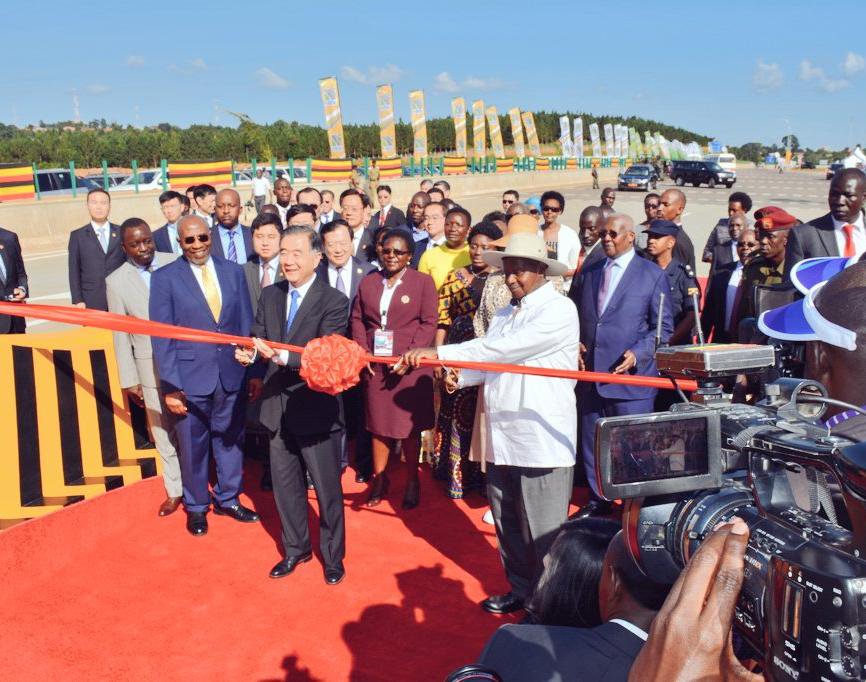
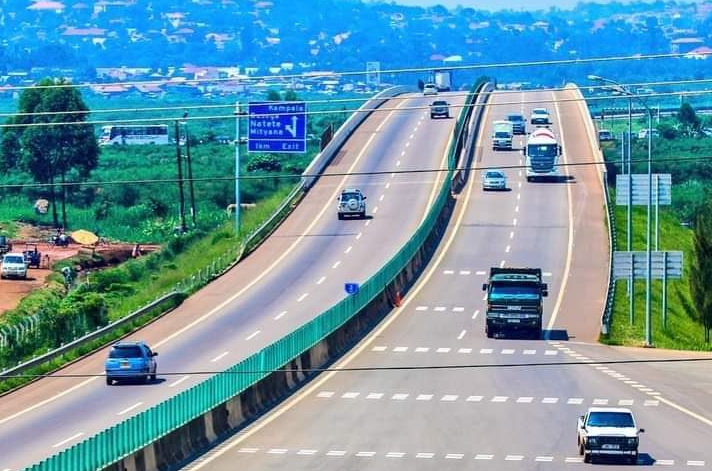
In energy sector, the 183MW Isimba Hydro Power Plant is complete, and this has been done by China’s Exim Bank that has funded about 85 percent of two major Ugandan energy projects — Isimba and Karuma dams. Meanwhile, construction works of the 600MW Karuma Hydro Power Plant is still ongoing. It furthermore financed and foresaw the building of Kampala’s $476 million Entebbe Express Highway that leads to the National Airport – Entebbe International Airport, which has greatly minimised driving time to more than half the time before its construction.

These Chinese funded projects’ impact cannot be taken lightly, because enhancement of transportation routes is an inevitable stepping stone to trade. However, the Uganda government has much more to offer and directly delve in, especially with the energy support systems that have since been launched. The Isimba and Karuma Dams escorted by the gradual construction of Industrial parks in different parts of the country calls for the need to expeditious ignition of an industrial module of achieving economic prosperity. Uganda’s exports to China are majorly agricultural, yet it imports much more finished goods from the People’s Republic of China. According to UN COMTRADE database on international trade, the Republic of Uganda exports to China were $39.61 Million in 2020. Much of it was in Oil seed, fruits, grain, and seed, to a tune of $18.01 Million. This creates a great void of trade imbalance, something that is constantly affecting Uganda’s economy. Such incredible relations between the two countries – Uganda and China, should be a stepping stone for Uganda.

The advantages of an industrial module, especially in a developing country with promising growth of major transport systems can not be overemphasised. The job pool to the various Ugandans with distinct skills and expertise, the retention of much money that goes to waste on imports, among others. Such an industrial model would also give justification for the loans acquired, whose outcomes would setoff a significant portion of the debt burden. In addition to Industrial support systems are peripheral projects by The People’s Republic of China like its financing of an oil pipeline project valued to over $4 billion, presently undergoing construction. The project will connect the western region of Uganda to the port at Tanga in the Republic of Tanzania. This will give Uganda – a landlocked country, access to the Indian Ocean. That access to the wide East of the globe will possibly streamline the chain of export from the full functional industries to world markets. The returns would accomplish enormous development for the Republic of Uganda.

Alan Collins Mpewo is a Senior Research Fellow, Development Watch Center.


China-Uganda Relations Cooperation: A Michael Jordan Philosophy– we all win

By Ssemanda Abdurahim

Talking of China-Uganda diplomatic relations which were established way back in 1962, and now almost 63 years, you can practically realise that they have been strongly operating on a Michael Jordan principle. The ranked “greatest basketball player of all time” who played for fifteen seasons in the National Basketball Association (NBA), winning six NBA championships with the Chicago Bulls, Michael Jordan once remarked that “there is no ‘I’ in team but there is in win.” Similarly, China-Uganda diplomatic relations have always had this Jordan principle as their wheel of operation. Critically analysing this, China and Uganda work together and mutually as a team without any aspect of individualism other than winning together as a team. Put differently, as Chinese President Xi Jinping has repeatedly observed, China-Africa cooperation is founded on principle of mutual benefit.

For instance, when the construction of Entebbe Express Highway which was constructed with funds from China’s Exim Bank of China, the ministry of works and transport in Uganda clearly stated that the main project’s objective was to provide efficient mass-transit route between the vital cities of Kampala and Entebbe in the Greater Kampala Metropolitan Area (GKMA) and decongest Kampala. Upon its completion, the 49.56km project sparked off a manifestation of 2,206,558 users between January and April 2022 as registered by Uganda National Roads Authority (UNRA). While one may argue that it was not a grant but a loan, still, the completion of this mega project which has improved in mobility of goods and services plus other multiplier effects that comes with easiness in mobility of goods and services in multiple ways makes the project a double win to the country and to us as citizens.

Additionally, UNRA collected a total of 13 billion Uganda shillings from tolling the Kampala expressway between January 8, 2022 and May 24, 2022. In that same year, UNRA’s communications officer indicated that the average daily 20,000 passages had surpassed the projected daily average of 13,000 passages. These included the incoming and outgoing passengers, taxi operators, visitors and Entebbe residents. With this manifestation of the project’s great usage by Ugandans, the immediate questions in one’s mind include; is China’s development assistance needed in African countries’ infrastructure projects? do projects developed with Chinese assistance meet and answer needs of users? Are such projects able to sustain themselves? In contexts of Uganda’s Entebbe Express Highway, the answer to these questions is a resounding YES. However, if all such questions are skipped, there is no way we are never going to be vulnerable to negative framing and narratives which are not backed but often brands China’s development assistance especially infrastructure as debt-trap. We will not have the required immunity to realise that China has efficiently played its part.

It should also be remembered that the Entebbe expressway is not the only project that has been funded by the People’s Republic of China in Uganda. Between the years 2009 and 2012, a one hundred beds capacity hospital, Naguru was built at an approximate cost of US$8 million by the Government of China as a gift to Uganda. Its other name, China-Uganda Friendship Hospital stands as an emblem to reflect the existence of good diplomatic ties between the two countries. On continental level, China has funded similar projects in countries such as South Sudan, Sierra Leone Zimbabwe among many others.

However, China has not stopped at only establishing such projects but also severally provides medical assistance by sending medical experts to different African countries. To be specific in Uganda, China has been sending medical teams to Uganda since 1983 to share knowledge and skills with Ugandan counterparts apart and also treating Ugandan patients. Relatedly, China has also been a key and reliable partner to African countries while battling epidemic sand pandemics. A case in point is during Ebola outbreak in West Africa which ended in 2016. In Uganda, China’s contribution in battling Ebola and Covid-19 pandemic are still fresh among many.

It is therefore paramount that the critics of China-Africa cooperation and their disciples first pay attention to questions like; are China funded projects in Africa helping African countries to realise their development aspirations? Are such projects helping citizens? Otherwise, China should be seen as a player who promises his coach that he will score a goal for his club and indeed he scores. Whether the player’s club loses or not, this should not be a blame on him. For he promised and fulfilled . The rest should be examined by trying to understand what made the team lose yet it had a goal other than why did the player fail to make his team win. If this kind of analysis is paid attention to, then everyone will realise how China-Africa diplomatic relations operate on a Michael Jordan principle – the min-win cooperation.

Ssemanda Abdurahim is a junior research fellow at Sino-Uganda Research Centre.

Building a Community With a Shared Future: A Liberal view of Sino-Uganda Relations

To understand Sino-Uganda relations and Sino-Africa relations in general, the role of China to the economic development of Uganda can be best understood by evoking liberalism as profound theory in understanding mainstream international relations. Today, mutual benefit philosophy and common prosperity are central in when describing the relations between
Kampala and Beijing and broadly, Sino-Africa cooperation. It should be noted that the two countries have enjoyed fruitful relations that have fostered economic development in Uganda. Sadly, and arguably due global politics, some Sino-Africa skepticist especially in Global north often view Sino-Uganda and broadly Sino-Africa relations in colonial motifs which definitely is wrong and miss presentation of historical facts since China has never colonized any country!

While it is true, that the end game of international relations is fostering selfish interests, it is now common knowledge that with China’s philosophy of common prosperity, China’s relations with other countries like Uganda is purely not selfish but a win-win cooperation which Beijing firmly believe is key in ensuring and building a community with shared prosperity for mankind.

China’s Belt and Road Initiative (BRI) is a vivid example show casing the win-win nature of relations Uganda and Africa in general are enjoying with China. It should be noted that BRI mothers lots of projects aiming at mutual benefit of the two sides. Through infrastructure development, BRI is connecting Asia with Africa, Middle East, Europe and the Americas. This in many ways will and in some countries is already facilitating transportation of goods and services. With expansion of Entebbe international airport near complete, Uganda is one of many countries already enjoying fruits of BRI. Also, a recent report by the Africa Policy Institute noted that since the BRI was initiated proposed in 2013, China has boasted African countries’ infrastructure by funding modern infrastructure projects such as railways, roads, ports, dams, industries, and digital connectivity, injecting vitality in the region. These projects also left thousands of Africans getting employment opportunities, sparking economic growth in the long run.

Giving example of Kenya, Africa Policy Institute report pointed at several multiplier effects of Kenya’s China funded and constructed 670-kilometer modern Standard Gauge Railway (SGR) connecting the port of Mombasa and the inland port of Naivasha. The Ethiopia-Djibouti’s standard gauge railway which connects landlocked Ethiopia to Djibouti port also constructed under BRI also improved transport in the region. The Chinese-built 752.7-km line recorded about 86.13 million U.S. dollars in revenue in 2021, which is up 37.5% compared to 2020 revenue collections.

In production and industry sector, Chinese investments in Uganda have greatly boasted Uganda’s capacity. For example, today Uganda boasts of a number of industrial parks that are contributing to the country’s economic growth and development. Industrial parks such as in Namanve, Kapeeka, and Mbale have liberated Uganda from losing foreign exchange in purchasing commodities that were not produced in Uganda. These parks have also contributed to skill enrichment of Ugandans who are employed there! The goods being products of high tech ensuring good quality, Uganda can also favorably compete at the regional market brining more foreign exchange to the country Cooperation being at the core of China-Uganda relations, it has been evident in the construction of infra-structures for example the hospitals like the China-Uganda friendship hospital in Naguru.

Liberalism understood as cooperation in this case is evident in the education and cultural exchange program as part of relations. Education and culture being at the core of negotiations at the Beijing summit in 2020 it’s absolutely evident that the matter is centric of China-Uganda relations. Through the Confucius Institute at Makerere university, it should be noted that the institute has a memorandum of understanding between Xiangtan university, an institution in Hunan province in China which offers 30 scholarships annually to Ugandan students.

In terms of Trade, the good cooperation between China and Uganda has seen Uganda gain from trading with China. In his book: Introducing Liberalism in International Relations Theory, Jeffrey W Meiser emphasizes the role of good relations between countries if favorable trading conditions are to be realized. It is not a surprise that China has been working to increase trade quotas to Uganda and entire African continent as a way of ensuring both sides benefit from their cooperation.

Also, for over a decade, China has always been one of not only Uganda’s but many of African countries’ foreign direct investments. A report by the United Nations COMTRADE database on international trade that analyzed trade between the states with statistics in the year 2020 shows that Uganda exports quiet a number of products to the Chinese market that include oilseed, oleagic fruits, grain seed, fruits, plastic, wood products, gums and so many others that totally amounted to US$39.61million. Therefore, with this important aspect in economic growth, Uganda’s economic growth has been greatly fueled by diverse trade the two countries guided by China’s philosophy of win-win cooperation as Beijing works with other countries to build a community with shared prosperity for mankind as well as common development.

By Balongoofu Daniel is a Junior Research Fellow at Sino-Uganda Relations Research Centre

Secretary Blinken, Acknowledge China’s Positive Contribution to Africa’s Development

This month, United States of America’s top diplomats visited a number of African countries in what some American analysts described as Washington’s attempt to counter what the US sees as growing Sino-Africa cooperation. Secretary Anthony Blinken’s visit is the latest. It follows earlier visit by US’ Ambassador to the United Nations, Linda Thomas-Greenfield.

During the visit which included countries like South Africa, the Democratic Republic of Congo and Rwanda, Secretary Blinken unveiled the so-called U.S-Sub-Saharan Africa strategy. In his public lecture in Pretoria South Africa, Secretary Blinken praised it that it will enhance the US-African relations by creating what he called creating open societies, supporting economic cooperation, promotion of democracy and addressing climate change concerns.

Despite Secretary Blinken’s claim that “absolutely, this is about our relationships in Africa. It’s not about other geopolitical issues,” if critically analysed, not any of US diplomat in Africa or even Washington believe those talking points. Even in the little two-page executive summary of this strategy which White House released a head of Blinken’s visit, geographical issues are mentioned. It references China and Russia’s engagement in Africa.

While the US wants its Africa strategy play that Washington’s foreign policy in Africa is not driven by broader geopolitical issues, it is evident the endgame is not what works for Africa but, how can the US re-assert its failing hegemony in Africa. The 2022 US Competes Act says it all. US’ foreign policy key goal is to Counter China.

Whereas Blinken emphasized that the US will “not dictate” African countries, his diction is telling. He claimed that “African nations have been treated as instruments of other nations’ progress, rather than the authors of their own.” Of course, he was diplomatically saying leave those countries for treating you as instruments of their progress.

If we compare the US and China’s method on how the two shape their relations with African countries, the US’ method is selfish and dictatorial. It is a ‘big-brother’ affair while China’s is equal-partners style. For example, the 17page US Strategy Toward Sub-Saharan Africa was developed without the input of African countries. On the other hand, through The Forum on China- Africa Cooperation (FOCAC), China engages African stakeholders on any initiative the country is to take. Put differently, China’s method is participatory while the US’ sort of dictates.

If we analyse recent speeches by US’ top diplomats, it is naïve one to believe the US is ready to end dictating Africa countries on how to run their foreign policies. While in Africa, US Ambassador to the United Nations Linda Thomas-Greenfield made this much pretty plain. While in Uganda, Linda warned African countries against dealing with Russia claiming this would be against US’ unilateral sanctions. “If a country decides to engage with Russia, where there are sanctions, then they are breaking those sanctions. And we caution countries not to break those sanctions because then, if they do, they stand the chance of having actions taken against them,” Linda warned.

During his Pretoria lecture where he elaborated US’ Sub-Saharan Africa strategy, secretary Blinken discussed what he described as Africa’s strategic importance and singled out the continent’s voting bloc in international bodies like United Nations, continents minerals, a vibrant youthful population. Blinken explained that among others, these three attributes makes Africa a priority in US’ foreign policy.

However, if critically analysed, at best, the diction of this strategy seems like some aesthetic improvements. It almost seems like its authors were trying, but they just couldn’t quite get past US’ strategic ambiguous language. Hence, it does not offer concrete commitments. In other words, it comes out as a lecture to Africa on how the continent should run its affairs.

This makes one to imagine that diplomats in the US are yet to understand global south moods.

African leaders lost interest in US lectures on the so-called values, democracy and human rights which despite preaching them, the US has spectacularly failed to live by. Blinken’s consistent presumption that African governments are autocratic is informed by what can be described as Washington’s think tanks dubious metrics in defining what democracy is. From a critical perspective, relying on Western epistemic communities to draw conclusions about Africa the home of over 1.4 billion people is not only a disregard of Africa’s agency but also an insult.

Washington should understand that while its governance systems maybe ideal for the US, it cannot be used as a gold standard for the rest of the world.

Going through this strategy, the US presents Africa as a place of competition presenting the continent as a pawn in what US considers competition between Washington and Beijing and recently Moscow. Three times Blinken described Sino-Africa relations negatively. The “People’s Republic of China (PRC), by contrast, sees the region (Africa) as an important arena to challenge the rules-based international order, advance its own narrow commercial and geopolitical interests, undermine transparency and openness, and weaken U.S. relations with African peoples and governments,” Blinken claimed. Blinken added that the US is committed to “Countering harmful activities by the PRC, Russia and other foreign actors.” He added that “the (U.S.) Department of Defense will engage with African partners to expose and highlight the risks of negative PRC and Russian activities in Africa.”

This shows that US’ strategy toward Sub-Saharan Africa is not win-win but rather seeks to help Washington advance its selfish interests by dividing the world through cold war mentality of bloc formation while forcing countries to choose and take sides.

Blninken also talked about US’ Partnership for Global Infrastructure and Investment (PGII) which is backed by G7 countries. While PGII is a good development since it will help to address infrastructure funding gaps in global south, the sprit in which the US brought this idea is negative. Many analysists see PGII as a rival against China’s Belt and Road Initiative (BRI), which has helped in addressing Africa’s infrastructure funding deficits. US criticise it claiming it is not open and is likely to undermine African countries’ sovereignty.

However, such claims if put to fact-checks, non would stand. Some analysts argues that criticism is nothing but US’ political smear campaign against China-Africa relations.

Historically, Sino-Africa relations have stood test of time, and these relations are based on mutual respect and win-win cooperation. China’s contribution to Africa in context of trade, investments, development finance and social development cannot be ignored.

In addressing challenges like COVID-19, while developed countries like the US chose vaccine nationalism, President Xi Jinping declared COVID-19 vaccines a global public good. China made millions of vaccine doses available to Africa and other developing countries, on top of offering financial assistance.

Blinken emphasized that their strategy will address challenges like insecurity in Africa. While security is a prerequisite for sustainable development, China has always walked the talk. Early this year, Beijing appointed special envoy for the Horn of Africa and mid this year, a security summit was held in Ethiopia to address the region’s security challenges. Also, China proposed two initiatives namely, Global Development Initiative and the Global Security Initiative which if critically analyzed, are in line with Africa’s interests.

Relatedly, under UN peacekeeping missions, China remains the biggest peacekeeping contributor in Africa under. Compared with the US, China has over 1,400 peacekeeping troops in Africa compared to 29 personnel.

In conclusion, the US should learn that Africa is a continent with over 50 independent  countries. They should stop taking Africa to be a paw and area where Washington believes it should counter other countries Africans choose to relate well with.

Allawi Ssemanda, PhD is a Senior Research Fellow at Sino-Uganda Relations Research Centre.


China-Africa Relations: What to expect in 2022 and beyond

The year 2021 ended on a very good note for African countries in context of Sino-Africa relations with Beijing showing readiness and commitment to double down its development support and cooperation to African countries.

Looking at Action Plan for the year 2022-2024 produced from November 2021 Forum on China-Africa Co-operation (FOCAC) ministerial conference held Senegal, it is clear that China is ready to increase its development support to African countries. One can also confidently argue that this Action Plan which details how China and African countries will co-operate in the next three years will highly succeed considering the fact that it was generated through consensus which reflects China’s relationship with African countries – mutual respect and the partnership of equals!

The nine areas identified in this action plan namely; peace and security, digital innovation, promotion of trade, people-to-people relations, promotion of investments in African countries, supporting medical and health programs, poverty reduction, supporting agricultural programs, green development, and capacity building are all key to African countries economic and sustainable development.

Despite striking similarities in some sections of 2018-2021 action plan, the 2022-24 action plan has packages that if well implemented will spur economic, social and sustainable development.

For example, the 2022-2024 action plan has a package of $40 billion financial commitments of which $10 billion will be invested in specific sectors, namely; manufacturing industries, agriculture and digital economy. Aware that the 2018-2021 action plan did not specify which sectors would benefit, this time workplan singles out sectors to benefit from China’s partnership.

Also, in this workplan, Beijing earmarked $10 of her International Monterey Fund (IMF) drawing rights share to assist development in African countries, $10 billion will go to supporting trade with aim of boosting African countries exports to China a development expected to increase volume of China’s imports from African countries to a whopping $300 billion while $10 billion has been set aside to facilitate credit lines to African financial institutions to be accessed by several African countries.

Considering effects of covid-19 pandemic on global economy which saw major economies growth reduce with China’s growing at 2.3% in 2020 which is the lowest since 1976, China committing $40bn to African countries is evidence of China’s commitment to support her allies.

Fighting Covid-19 Pandemic Together.

The 2021 FOCAC ministerial came at a time when the world is battling Covid-19 – the worst pandemic of our times which has devastated the world for two years and its defeat remains elusive, with over 326-million people infected, and claimed lives of over 5.54 million people.

In all this uncertainty, using their financial muscle, Western Countries chose vaccine nationalism-buying almost all produced vaccines on markets, and leaving poor and developing countries especially in Africa with less no vaccines, putting the continent far from the needed 60% vaccination for its population needed for herd immunity. Even with Covax facility, today, only 14% of African countries have vaccinated their citizens, 76% in Canada and the U.S.A, 66% in Europe, 72% Asian Pacific, 72% Latin America and 51% in Middle East.

However, as developed countries hoarded vaccines, working with African countries, China organized a novel extraordinary China-Africa summit to devise means of containing the pandemic. Consequently, China and African countries have been working together in fighting the pandemic by donating thousands of tonnes of materials required in fighting covid-19 which include facemasks, ventilators, testing kits, ventilators, financial assistance and sending experts to work with African counterparts among others. China has also worked with some African countries like Morocco and Egypt to locally produce Covid-19 vaccines.

Addressing the 2021 FOCAC ministerial conference, President Xi Jinping announced China will supply one billion vaccines to African countries of which 600 million will come as donations while 400 million doses will be produced locally through joint vaccine production arrangement between China and African countries. It is important to note that Morocco have already started producing vaccines with support from a Chinse pharmaceutical firm Sinopharm. President Xi’s promised 1 billion vaccines to Africa is enough to vaccinate 40% of continent’s population which will be a big boost. If fully implemented, this will be the largest bilateral vaccine support to African countries if compared with U.S.A’s. 500million vaccine pledges promised to poor and developing countries world over.

While China’s critics accuse Beijing of the so-called Vaccine Diplomacy, arguably, to compare China’s assistance to African countries in building a functioning health system with politics is an insult to Africans and ignorance of facts like African countries’ need in building a robust public health system that will be able to withstand any future pandemics. This is what China is doing. The construction of the Headquarters Building Phase I Project of the Africa Centers for Disease Control and Prevention (Africa CDC) funded by China is ongoing in Addis Ababa, Ethiopia.

Revolutionizing digital economy and green development

The 2022-2024 action plan for China-Africa cooperation also points at digital and green economy. To show emphasis, digital economy is presented as an independent subsection under economic cooperation and green development is presented in its section signifying China’s commitment to support African countries in the two sectors.

Aware that digital revolution is the way to go, China and African countries have come up an initiative to work together and jointly build a China-Africa Community with a shared future in Cyberspace, a development that will see both sides working together in areas like artificial intelligence, big data internet, mobile internet, cloud computing, among others. In Uganda for example, Huawei is already implementing this program and hence, supporting African countries technological transfer, digital infrastructure and digital innovation.

In green development, focus is given to ecological and climate change mitigation which can be achieved through clean energy which China is supporting in Africa. This initiative is spot-on for one can argue that it directly responds to China’s critics who often claim that China does not consider environmental issues when supporting developmental projects in Africa.

All in all, China-Africa cooperation if measured from the success of FOCAC, in its 21 years, the cooperation has achieved a lot for the African countries and much more is in pipeline! Going by commitments released by Chinese government in its FOCAC whitepaper of November 26th 2021, China is ready to double down her support to African countries to realise a China-Africa Community with a shared future. From 2022-2024, FOCAC’s focus will be on cooperation like digital economy, supporting medical and health programs, poverty reduction, green development, capacity building, peace and security, promotion of trade, people-to-people relations, financial assistance, supporting agriculture sector, among others. One can therefore confidently argue that China is and continue to be Africa’s desired development partner.

However, African countries should not just sit and wait to be spoon-fed, they must be pro-active and use the opportunity of China’s willingness to work with them as “equal partners” so as to further gain from Beijing. As of today, despite having FOCAC in place, there seems not to be a coordinated engagement with China with no single African country having a clear “China strategy.”  As of today, China has released comprehensive three Africa policy papers since 2006 yet, despite having many experts on China including thousands with highest education thanks to Chinese government scholarships, there no single policy paper on China has been developed by Africa as a continent either under the African Union or even FOCAC.

Allawi Ssemanda is Research Fellow Sino-Uganda Relations Research Centre

tank.

Building a Community With a Shared Future: A Liberal view of Sino-Uganda Relations

To understand Sino-Uganda relations and Sino-Africa relations in general, the role of China to the economic development of Uganda can be best understood by evoking liberalism as a profound theory in understanding mainstream international relations. Today, mutual benefit philosophy and common prosperity are central in when describing the relations between Kampala and Beijing and broadly, Sino-Africa cooperation. It should be noted that the two countries have enjoyed fruitful relations that have fostered economic development in Uganda. Sadly, and arguably due global politics, some Sino-Africa skepticist especially in Global north often view Sino-Uganda and broadly Sino-Africa relations in colonial motifs which definitely is wrong and miss presentation of historical facts since China has never colonized any country!

While it is true, that the end game of international relations is fostering selfish interests, it is now common knowledge that with China’s philosophy of common prosperity, China’s relations with other countries like Uganda is purely not selfish but a win-win cooperation which Beijing firmly believe is key in ensuring and building a community with shared prosperity for mankind.

China’s Belt and Road Initiative (BRI) is a vivid example show casing the win-win nature of relations Uganda and Africa in general are enjoying with China. It should be noted that BRI mothers lots of projects aiming at mutual benefit of the two sides. Through infrastructure development, BRI is connecting Asia with Africa, Middle East, Europe and the Americas. This in many ways will and in some countries is already facilitating transportation of goods and services. With expansion of Entebbe international airport near complete, Uganda is one of many countries already enjoying fruits of BRI. Also, a recent report by the Africa Policy Institute noted that since the BRI was initiated proposed in 2013, China has boasted African countries’ infrastructure by funding modern infrastructure projects such as railways, roads, ports, dams, industries, and digital connectivity, injecting vitality in the region. These projects also left thousands of Africans getting employment opportunities, sparking economic growth in the long run.

Giving example of Kenya, Africa Policy Institute report pointed at several multiplier effects of Kenya’s China funded and constructed 670-kilometer modern Standard Gauge Railway (SGR) connecting the port of Mombasa and the inland port of Naivasha. The Ethiopia-Djibouti’s standard gauge railway which connects landlocked Ethiopia to Djibouti port also constructed under BRI also improved transport in the region. The Chinese-built 752.7-km line recorded about 86.13 million U.S. dollars in revenue in 2021, which is up 37.5% compared to 2020 revenue collections.

In production and industry sector, Chinese investments in Uganda have greatly boasted Uganda’s capacity. For example, today Uganda boasts of a number of industrial parks that are contributing to the country’s economic growth and development. Industrial parks such as in Namanve, Kapeeka, and Mbale have liberated Uganda from losing foreign exchange in purchasing commodities that were not produced in Uganda. These parks have also contributed to skill enrichment of Ugandans who are employed there! The goods being products of high tech ensuring good quality, Uganda can also favorably compete at the regional market brining more foreign exchange to the country

Cooperation being at the core of China-Uganda relations, it has been evident in the construction of infra-structures for example the hospitals like the China-Uganda friendship hospital in Naguru.

Liberalism understood as cooperation in this case is evident in the education and cultural exchange program as part of relations. Education and culture being at the core of negotiations at the Beijing summit in 2020 it’s absolutely evident that the matter is centric of China-Uganda relations. Through the Confucius Institute at Makerere university, it should be noted that the institute has a memorandum of understanding between Xiangtan university, an institution in Hunan province in China which offers 30 scholarships annually to Ugandan students.

In terms of Trade, the good cooperation between China and Uganda has seen Uganda gain from trading with China. In his book: Introducing Liberalism in International Relations Theory, Jeffrey W Meiser emphasizes the role of good relations between countries if favorable trading conditions are to be realized. It is not a surprise that China has been working to increase trade quotas to Uganda and entire African continent as a way of ensuring both sides benefit from their cooperation. Also, for over a decade, China has always been one of not only Uganda’s but many of African countries’ foreign direct investments. A report by the United Nations COMTRADE database on international trade that analyzed trade between the states with statistics in the year 2020 shows that Uganda exports quiet a number of products to the Chinese market that include oilseed, oleagic fruits, grain seed, fruits, plastic, wood products, gums and so many others that totally amounted to US$39.61million. Therefore, with this important aspect in economic growth, Uganda’s economic growth has been greatly fueled by diverse trade the two countries guided by China’s philosophy of win-win cooperation as Beijing works with other countries to build a community with shared prosperity for mankind as well as common development.

By Balongoofu Daniel is a Junior Research Fellow with Development Watch Centre, a Foreign Policy Think Tank.

China-Uganda 60 years of Diplomatic Relations

China and Uganda have a long diplomatic history dating back to the post-independence era. China is among the few countries that recognized Uganda as sovereign country just days after independence. Since then, Beijing has been cooperating well with Uganda, offering Kampala support in different sectors that we cannot discuss the journey of Uganda’s socio-economic development without mentioning the role of China.

In education sector, China continues to do a tremendous work offering training opportunities to different Ugandans at different levels. By end of 2021, Beijing had offered Ugandans hundreds of undergraduate and postgraduate scholarships and over 5000 Ugandans benefited from China’s short course training opportunities covering different key areas such as agriculture, medical care, infrastructure, information and technology among others.  China is also collaborating with African universities funding research and other learning opportunities. Makerere University’s Confucius institute is among the many examples. Aware that human capital and well-educated and skilled people are essential to facilitate development of the country, one cannot discuss development of Uganda’s education sector and human capital development without mentioning China’s contribution.

In the field of agriculture, China has been playing a key role for more than 40 years. In 1973 and 1987, China invested and established the Kibimba Rice Scheme (Now Tilda Uganda) and Doho Rice Schemes which have increased rice production and provided employment opportunities to many Ugandans. Additionally, the South to South Co-operation has boosted agriculture in Mbarara, Kabale, Amuria, Wakiso, and Budaka. Agricultural technology demonstration hubs have been established in Kabale to boost horticulture. China has also been supporting fish farming by funding the construction of the Wakawaka fish landing site and the Kajjansi Aquaculture Training and Development Centre which is a national center for aquaculture research in Uganda. This has led to increased and sustained fish production.

In 2009 under the South-South Cooperation (SSC), in coordination with United Nation’s Food and Agriculture Organization (FAO), China launched FAO-China South-South Cooperation (FAO-China SSC) and established FAO-China Trust Fund. China invested $30 million in this program to to support agriculture in Uganda. China has since been supporting this program injecting $100 million in 2015 and 2021 for phase II and phase III respectively.

During phase II of China-FAO SSC, China sent 47 agricultural experts and technicians have to train Ugandans in the same field. During the expert’s two year stay in Uganda, they trained many Ugandans and helped to improve technologies used to in farming of various crops such as rice, foxtail millet, maize, grapes, apples and cherry tomatoes, as well as animal reproduction.

In energy sector, China’s contribution in Uganda’s energy is also visible. The Karuma dam hydropower station with capacity of 600 MW which under construction in Kiryandongo District is an example of China’s contribution in Uganda’s energy sector. The project is 85% funded by China’s Exim Bank and Uganda government is meeting the remaining 15 percent. The project is being constructed by a Chinese firm Sinohydro Corporation and is expected to be completed in June 2023. Isimba power station which became operational in 2019 was also funded by with a loan from China’s Exim Bank. Karuma and Isimba hydropower plants are identified in Uganda’s Vision 2040 as key projects to Uganda’s economic development.

In infrastructure development, China directly funded US $ 350 million for the construction of the Kampala-Entebbe express highway, which is the first express highway in Uganda. The expressway is a 51km, four-lane, dual carriage toll road linking Kampala to Entebbe airport. The stated intention of the highway was to; reduce congestion and increase the commercial viability of the Greater Kampala Metropolitan area, improve mobility and reduce travel times and vehicle operating costs, and provide better access to local facilities for communities and jobs.

The expressway has helped to improve mobility and travel times to the airport. The US $ 350 million loan will be paid in 13 years and current statistics from Uganda National Roads Authority indicate Ugandans have embraced using the road with average daily passages of 20,000 which is far higher than projected daily passage which UNRA had put at 13,000 passages.  This also means daily collections have risen which is a good sign that the road can sustain itself in terms of maintenance and paying back construction loan. Indeed, Joy Nabasa the spokesperson of Egis which was hired to maintain the road collecting the toll on behalf of UNRA recently told journalists that the number of passages is increasing daily. Last month, media reports indicated that the road toll had collected 13 billion shillings in 4 months alone.

Good road network is key in transportation of goods and services which is key for development. As two Chinese say; “Better roads lead to better life.” and “Build roads if you want to get rich” with more good road network, Uganda’s social-economic growth and match to middle-income status is a matter of time.

In health sector, China continues to play a key role in supporting Uganda’s health sector. For example, as a result of good relations between the two countries, China funded the construction of China-Uganda Friendship hospital at Naguru. The hospital offers health services to people, for instance, paediatrics, gynaecology, dental, and laboratory services.

On 10th June this year, a team of Chinese medical personnel arrived in the country and will stay in Uganda providing medical services to citizens. Since 1983, China has been sending a team of doctors and experts to help work with Ugandans in extending medical serves to Ugandans.,

In the wake of COVID-19, China has supported Uganda in the fight against the pandemic. China donated COVID-19 test kits to boost efforts against the virus. Additionally, Beijing donated up to one million doses of COVID-19 vaccines.

Considering the positive contribution, the two countries have witnessed over the last 60 years, it is a living a testimony that China and Uganda are good comrades, good equal partners and good brothers always working hand shoulder to shoulder with major aim of building a community of shared future and prosperity for mankind. Considering enormous opportunities that comes with this brotherly relation should be natured by people of both countries. This to happen, as a Chinese saying goes, “amity between the people holds the key to state-to-state relations,” with the bilateral relations between our countries were elevated to the level of Comprehensive Cooperative Partnership three years ago in late June 2019, our two peoples must guard these relations jealously.

Vianney Sebayiga is a research fellow at Sino-Uganda Relations Research Centre and a Student at the Kenya School of Law.


Sino-Uganda Relations: The Upside Story from a liberal perspective

Overtime, it’s increasingly evident that International Relations can be used for more than preserving world peace through amicable settlement of disputes or stopping international conflicts, but to also foster economic development between global states. Various states are realizing socio-economic development amongst themselves as far as trade, infrastructure is concerned by capitalizing on the favorable relations held with each other.

China and Uganda can be singled out as an example of such states. The two countries have enjoyed good diplomatic relations for close to 60 years with the first diplomatic contact being made by China shortly after Uganda attained Independence in 1962. Since then, this relationship built on mutual respect and cooperation has produced positive developments, the crux of the author’s discussion today.

Generally, while studying the relationship between China and any African country today, one may find it difficult to ignore the effect of the Belt and Road Initiative (BRI) on such a relationship. The aforementioned project was initiated in 2013 to promote infrastructure development among growing nations using funds from China.

Uganda having pre-existent relations with China and having signed an MOU to join BRI, has been one of the beneficiaries of this initiative. A peek into the UNRA national roads project status report for May 2022 indicates that funding from China has been used to complete road projects like the Munyonyo spur, Kampala-Entebbe expressway among others. It also indicates several future projects to be undertaken by secured Chinese funding.

Furthermore, these bilateral relations have realized significant development in Uganda’s energy sector. For instance, the twin Hydro Power Plant projects on river Nile, namely Karuma and Isimba, generating a combined 800MW of electricity were funded and built by funding secured from the Chinese government in addition to local revenue. Electricity is a major factor of production and industrialization, two sectors that can propel developing countries into economic stability. Additionally Chinese companies have undertaken major investments to develop the mining sector in Uganda, an example being the planned establishment of a $200 million gold refinery in Busia district. Such projects and investments increase employment opportunities for Ugandans as well as sourcing revenue for the country in form of taxes.

The continued good relations between China and Uganda have seen the latter nation record developments in its health sector. The earliest notable Chinese health aid to Uganda was through the establishment of the Development Aid for Health from China to Uganda (DAHCU) in the 80’s where Chinese medical teams were sent to the African nation to assist in the country’s ailing health sector. The China-Uganda Friendship Hospital Naguru, a modern health facility built by the Chinese government as a gift to Uganda, is one of the new health projects realized as a result of the good long-standing relations between the two countries. Mahatma Gandhi once opined that health, and not pieces of gold and silver is the real wealth.

Industrialization is argued to be one of the most viable routes toward economic development and transformation and is believed to be the spur behind China’s rise to an economic powerhouse in the last 35 years. Perhaps, in light of that transformation, China’s spirit of good will towards Uganda’s development has driven it to taking center in what one would describe as the African nation’s modern industrial revolution. This is evidenced by the establishment of Industrial parks such as Kapeeka in Central Uganda as well as the Sino-Uganda Mbale Industrial Park in the Eastern region, both funded by Chinese investment groups. Such establishments not only encourage and promote a shift towards a goods production-based economy but also create employment for citizens. With more planned similar parks in Uganda, it is evident that Kampala stands to further benefit more from its good relations with China.

Over 65% of Ugandans, as per a 2017 study by the Uganda National Household Survey, are engaged in agriculture making it the major source of livelihood in Uganda. The relations between China and Uganda have seen the former nation invest to modernize and improve the agricultural sector in the latter to enhance the livelihood of the locals. The Kajjansi Aquaculture Research and Development Centre is a project funded and established with support from the Chinese government as a specialized research center for fish species and modern fish farming methods. Famous for its fresh water lakes, Uganda is a major fish exporter hence such projects improve the country’s export earnings. Additionally, the two countries have significantly promoted trade amongst each other as result of their relations. Although Uganda currently imports more than it exports to China, the significant increase in the volume of exports is a positive indicator of the continuous growth and expansion of the African nation’s economy.

Additionally, the gains of Uganda from relations with China can be noted in the education sector. Annually, China has been offering education opportunities to Ugandans offering higher education scholarships and exchange programs to Ugandan students and hence, boosting the country’s human capital. China has some of the world’s leading institutions in fields like health, engineering and technology hence such an arrangement ensures Uganda’s acquisition of highly trained nationals that can return and contribute to the socio-economic development.

The Sino-Uganda relations have also resulted into developments and transformation of Uganda’s Information Technology sector. In 2006, Uganda secured funding from Exim Bank of China for establishment of the country’s data transmission infrastructure. This included installation of optical fiber cables around the country. As a major techno- innovative country, China has sought to inspire and challenge Ugandan youth to become technological innovators through the Huawei ICT Global Competition. Given the immense role played by technology in development today, Uganda stands to benefit from such an initiative.

In conclusion, the relations between Uganda and China can be described as mostly beneficial to the former as far as socio-economic development is concerned. The existing developmental projects, in addition to future projects have the potential, if well managed to significantly transform and empower Uganda’s economy. Concerns over claims of the socalled national debt burden that may be incurred through loan facilities to develop the country do not necessarily water down the benefits Uganda stands to enjoy if such borrowed money is put to effective use. In sprit of win-win cooperation, terms included in contracts of Chinese loans represent principles of fairness and balances well rights and responsibilities of involved parties. China has on many occasions written off debts of several African countries and renegotiated some where the borrower genuinely fail to pay. Chinese president Xi Jinping, defines the relations between Africa and China as a ‘distinctive path of win-win cooperation’. It is such development partners, keen on upholding values of mutual respect and co-operation that Africa needs.

Marvin H Kalema is a research Fellow at Sino-Uganda Relations Research Centre, and a law student at University of Johannesburg, South Africa.