China-Africa Cooperation Accelerates African Countries’ Development Goals

By Alan Collins Mpewo

In the wake of fast racing multilateral relations, the world countries have kept mowing their paths of prosperity and in scaling their economic stability, they’ve molded sustainable modules to attain that worthwhile goal. The industrial module keeps raising through the ranks and many countries that have globally harnessed it, are gradually appreciating its economic impact. Uganda is equally taking on the challenge in a flagship project the country’s government termed as “Vision 2040.” Among other schemes, are the Chinese built Industrial Parks that will harbor these gigantic projects. However, in the same journey to attain the vision, criticism and talk about the ever-growing China-Uganda economic relations keep streaming. The Chinese modern colonialism of the Global South is verbally being attached to the People’s Republic of China. But is the talk warranted?

Many don’t get to look at it or even think about it this way, but realising the historical background and understanding of the term “Colonialism,” many wouldn’t apply it lightly. That understanding of the generic meaning of the term would just be an honest step to realisation that its application as regards most of its economic policies towards Africa, is utterly a smearing spree to water down those good relations. It’s fair to state that what the China government is doing or establishing in the African continent, and whether that befits the term “colonisation,” should be a reserve for Africa’s inhabitants to determine and propagate a deserving response. Usually, when several foreigners talk about the African continent as a whole, that sheds a light on the fact that they know not or perhaps know minimal about the continent. The African continent harbours 54 countries, each with national sovereignty, autonomy in its domestic affairs, policies and impressions about the People’s Republic of China. Interestingly, unlike many western countries, China which some critics claim is harbouring colonialism or neocolonial interest has never colonised any country. It instead suffered the same. Therefore, one claiming that China’s support to African countries is due to the countries hidden interests is nothing but propaganda and a clear smear campaign meant to taint Sino-Africa relations.

A sneak peek at what the actual colonialists did would point to indigenous settlers of Africa having forced to labour with figuratively no payment. Selling them as slaves, among other regrettable undertakings. That there, is a slight showcase of what colonialism is. The People’s Republic of China is supportive to African countries in as far as investing greatly in modern infrastructure to mention of, such as roads, airports, and buildings. Actually, while western colonialists were being forced to grant African countries independence and others still under colonial bondage, many African countries received support from China thereby contributing to their struggles to snap the shackles of colonial minority humiliation. In 1960s for example, while China’s per capita GDP was less than that of Sub-Saharan Africa, China supported and southern African countries’ infrastructure development with $400 million which helped in construction of the famous Tanzania-Zambia Railway (TAZARA). This is enough to conclude that for long, China’s interest has been not to develop alone but rather building a large successful community with a shared successful future. With such record, one is right to conclude that China’s continued development assistance to African countries comes at a time when much of the African continent continues suffering from decades of entrenched neocolonialism, stinking poverty, sociopolitical instability and deplorable corruption, which in many ways all have connections to colonialism African countries suffered.

China looks at the world composed of numerous nations, all having own customs, socioeconomic systems, distinct in many forms, and are not inquisitive to alter. Its conception can fairly be seen as interested in finding a place in the middle kingdom. Being able to reach out so as offers can trade by them, perhaps as a World Trade Organ originating from the ancient silk route to the modern belt and road, or else they are in the middle of nowhere. African nations need direct foreign investment, compared to various other places. So, China has massively impacted building infrastructure. Importantly to note, is that these projects by China in the African countries in which it has some presence, are endorsed as coming without political adversities. That stands out especially as regards the respect granted for national sovereignty of partner states.

In a report recently by the notable AidData research lab, College of William and Mary, Virginia, the Chinese Belt and Road projects are fundamental in reduction of income imbalances and inequality among regions in the nations in which they are set-up. China has seen the implementation of various infrastructure projects like the construction of energy dams, roads, and the expansion of the country’s National Airport – Entebbe International Airport, plus the development of industrial parks. Regarding the Industrial parks, these are gradually taking shape with new ones cropping up. Soon or later, the Standard Gauge Railway construction, a focus project for East African Countries, will finally get its long-awaited completion. The construction of several of the above projects is Chinese financed.

In energy sector, the 183MW Isimba Hydro Power Plant is complete, and this has been done by China’s Exim Bank that has funded about 85 percent of two major Ugandan energy projects — Isimba and Karuma dams. Meanwhile, construction works of the 600MW Karuma Hydro Power Plant is still ongoing. It furthermore financed and foresaw the building of Kampala’s $476 million Entebbe Express Highway that leads to the National Airport – Entebbe International Airport, which has greatly minimised driving time to more than half the time before its construction.

These Chinese funded projects’ impact cannot be taken lightly, because enhancement of transportation routes is an inevitable stepping stone to trade. However, the Uganda government has much more to offer and directly delve in, especially with the energy support systems that have since been launched. The Isimba and Karuma Dams escorted by the gradual construction of Industrial parks in different parts of the country calls for the need to expeditious ignition of an industrial module of achieving economic prosperity. Uganda’s exports to China are majorly agricultural, yet it imports much more finished goods from the People’s Republic of China. According to UN COMTRADE database on international trade, the Republic of Uganda exports to China were $39.61 Million in 2020. Much of it was in Oil seed, fruits, grain, and seed, to a tune of $18.01 Million. This creates a great void of trade imbalance, something that is constantly affecting Uganda’s economy. Such incredible relations between the two countries – Uganda and China, should be a stepping stone for Uganda.

The advantages of an industrial module, especially in a developing country with promising growth of major transport systems can not be overemphasised. The job pool to the various Ugandans with distinct skills and expertise, the retention of much money that goes to waste on imports, among others. Such an industrial model would also give justification for the loans acquired, whose outcomes would setoff a significant portion of the debt burden. In addition to Industrial support systems are peripheral projects by The People’s Republic of China like its financing of an oil pipeline project valued to over $4 billion, presently undergoing construction. The project will connect the western region of Uganda to the port at Tanga in the Republic of Tanzania. This will give Uganda – a landlocked country, access to the Indian Ocean. That access to the wide East of the globe will possibly streamline the chain of export from the full functional industries to world markets. The returns would accomplish enormous development for the Republic of Uganda.

Alan Collins Mpewo is a Senior Research Fellow, Development Watch Center.


Building a Community With a Shared Future: A Liberal view of Sino-Uganda Relations

To understand Sino-Uganda relations and Sino-Africa relations in general, the role of China to the economic development of Uganda can be best understood by evoking liberalism as profound theory in understanding mainstream international relations. Today, mutual benefit philosophy and common prosperity are central in when describing the relations between
Kampala and Beijing and broadly, Sino-Africa cooperation. It should be noted that the two countries have enjoyed fruitful relations that have fostered economic development in Uganda. Sadly, and arguably due global politics, some Sino-Africa skepticist especially in Global north often view Sino-Uganda and broadly Sino-Africa relations in colonial motifs which definitely is wrong and miss presentation of historical facts since China has never colonized any country!

While it is true, that the end game of international relations is fostering selfish interests, it is now common knowledge that with China’s philosophy of common prosperity, China’s relations with other countries like Uganda is purely not selfish but a win-win cooperation which Beijing firmly believe is key in ensuring and building a community with shared prosperity for mankind.

China’s Belt and Road Initiative (BRI) is a vivid example show casing the win-win nature of relations Uganda and Africa in general are enjoying with China. It should be noted that BRI mothers lots of projects aiming at mutual benefit of the two sides. Through infrastructure development, BRI is connecting Asia with Africa, Middle East, Europe and the Americas. This in many ways will and in some countries is already facilitating transportation of goods and services. With expansion of Entebbe international airport near complete, Uganda is one of many countries already enjoying fruits of BRI. Also, a recent report by the Africa Policy Institute noted that since the BRI was initiated proposed in 2013, China has boasted African countries’ infrastructure by funding modern infrastructure projects such as railways, roads, ports, dams, industries, and digital connectivity, injecting vitality in the region. These projects also left thousands of Africans getting employment opportunities, sparking economic growth in the long run.

Giving example of Kenya, Africa Policy Institute report pointed at several multiplier effects of Kenya’s China funded and constructed 670-kilometer modern Standard Gauge Railway (SGR) connecting the port of Mombasa and the inland port of Naivasha. The Ethiopia-Djibouti’s standard gauge railway which connects landlocked Ethiopia to Djibouti port also constructed under BRI also improved transport in the region. The Chinese-built 752.7-km line recorded about 86.13 million U.S. dollars in revenue in 2021, which is up 37.5% compared to 2020 revenue collections.

In production and industry sector, Chinese investments in Uganda have greatly boasted Uganda’s capacity. For example, today Uganda boasts of a number of industrial parks that are contributing to the country’s economic growth and development. Industrial parks such as in Namanve, Kapeeka, and Mbale have liberated Uganda from losing foreign exchange in purchasing commodities that were not produced in Uganda. These parks have also contributed to skill enrichment of Ugandans who are employed there! The goods being products of high tech ensuring good quality, Uganda can also favorably compete at the regional market brining more foreign exchange to the country Cooperation being at the core of China-Uganda relations, it has been evident in the construction of infra-structures for example the hospitals like the China-Uganda friendship hospital in Naguru.

Liberalism understood as cooperation in this case is evident in the education and cultural exchange program as part of relations. Education and culture being at the core of negotiations at the Beijing summit in 2020 it’s absolutely evident that the matter is centric of China-Uganda relations. Through the Confucius Institute at Makerere university, it should be noted that the institute has a memorandum of understanding between Xiangtan university, an institution in Hunan province in China which offers 30 scholarships annually to Ugandan students.

In terms of Trade, the good cooperation between China and Uganda has seen Uganda gain from trading with China. In his book: Introducing Liberalism in International Relations Theory, Jeffrey W Meiser emphasizes the role of good relations between countries if favorable trading conditions are to be realized. It is not a surprise that China has been working to increase trade quotas to Uganda and entire African continent as a way of ensuring both sides benefit from their cooperation.

Also, for over a decade, China has always been one of not only Uganda’s but many of African countries’ foreign direct investments. A report by the United Nations COMTRADE database on international trade that analyzed trade between the states with statistics in the year 2020 shows that Uganda exports quiet a number of products to the Chinese market that include oilseed, oleagic fruits, grain seed, fruits, plastic, wood products, gums and so many others that totally amounted to US$39.61million. Therefore, with this important aspect in economic growth, Uganda’s economic growth has been greatly fueled by diverse trade the two countries guided by China’s philosophy of win-win cooperation as Beijing works with other countries to build a community with shared prosperity for mankind as well as common development.

By Balongoofu Daniel is a Junior Research Fellow at Sino-Uganda Relations Research Centre

China-Africa Relations: What to expect in 2022 and beyond

The year 2021 ended on a very good note for African countries in context of Sino-Africa relations with Beijing showing readiness and commitment to double down its development support and cooperation to African countries.

Looking at Action Plan for the year 2022-2024 produced from November 2021 Forum on China-Africa Co-operation (FOCAC) ministerial conference held Senegal, it is clear that China is ready to increase its development support to African countries. One can also confidently argue that this Action Plan which details how China and African countries will co-operate in the next three years will highly succeed considering the fact that it was generated through consensus which reflects China’s relationship with African countries – mutual respect and the partnership of equals!

The nine areas identified in this action plan namely; peace and security, digital innovation, promotion of trade, people-to-people relations, promotion of investments in African countries, supporting medical and health programs, poverty reduction, supporting agricultural programs, green development, and capacity building are all key to African countries economic and sustainable development.

Despite striking similarities in some sections of 2018-2021 action plan, the 2022-24 action plan has packages that if well implemented will spur economic, social and sustainable development.

For example, the 2022-2024 action plan has a package of $40 billion financial commitments of which $10 billion will be invested in specific sectors, namely; manufacturing industries, agriculture and digital economy. Aware that the 2018-2021 action plan did not specify which sectors would benefit, this time workplan singles out sectors to benefit from China’s partnership.

Also, in this workplan, Beijing earmarked $10 of her International Monterey Fund (IMF) drawing rights share to assist development in African countries, $10 billion will go to supporting trade with aim of boosting African countries exports to China a development expected to increase volume of China’s imports from African countries to a whopping $300 billion while $10 billion has been set aside to facilitate credit lines to African financial institutions to be accessed by several African countries.

Considering effects of covid-19 pandemic on global economy which saw major economies growth reduce with China’s growing at 2.3% in 2020 which is the lowest since 1976, China committing $40bn to African countries is evidence of China’s commitment to support her allies.

Fighting Covid-19 Pandemic Together.

The 2021 FOCAC ministerial came at a time when the world is battling Covid-19 – the worst pandemic of our times which has devastated the world for two years and its defeat remains elusive, with over 326-million people infected, and claimed lives of over 5.54 million people.

In all this uncertainty, using their financial muscle, Western Countries chose vaccine nationalism-buying almost all produced vaccines on markets, and leaving poor and developing countries especially in Africa with less no vaccines, putting the continent far from the needed 60% vaccination for its population needed for herd immunity. Even with Covax facility, today, only 14% of African countries have vaccinated their citizens, 76% in Canada and the U.S.A, 66% in Europe, 72% Asian Pacific, 72% Latin America and 51% in Middle East.

However, as developed countries hoarded vaccines, working with African countries, China organized a novel extraordinary China-Africa summit to devise means of containing the pandemic. Consequently, China and African countries have been working together in fighting the pandemic by donating thousands of tonnes of materials required in fighting covid-19 which include facemasks, ventilators, testing kits, ventilators, financial assistance and sending experts to work with African counterparts among others. China has also worked with some African countries like Morocco and Egypt to locally produce Covid-19 vaccines.

Addressing the 2021 FOCAC ministerial conference, President Xi Jinping announced China will supply one billion vaccines to African countries of which 600 million will come as donations while 400 million doses will be produced locally through joint vaccine production arrangement between China and African countries. It is important to note that Morocco have already started producing vaccines with support from a Chinse pharmaceutical firm Sinopharm. President Xi’s promised 1 billion vaccines to Africa is enough to vaccinate 40% of continent’s population which will be a big boost. If fully implemented, this will be the largest bilateral vaccine support to African countries if compared with U.S.A’s. 500million vaccine pledges promised to poor and developing countries world over.

While China’s critics accuse Beijing of the so-called Vaccine Diplomacy, arguably, to compare China’s assistance to African countries in building a functioning health system with politics is an insult to Africans and ignorance of facts like African countries’ need in building a robust public health system that will be able to withstand any future pandemics. This is what China is doing. The construction of the Headquarters Building Phase I Project of the Africa Centers for Disease Control and Prevention (Africa CDC) funded by China is ongoing in Addis Ababa, Ethiopia.

Revolutionizing digital economy and green development

The 2022-2024 action plan for China-Africa cooperation also points at digital and green economy. To show emphasis, digital economy is presented as an independent subsection under economic cooperation and green development is presented in its section signifying China’s commitment to support African countries in the two sectors.

Aware that digital revolution is the way to go, China and African countries have come up an initiative to work together and jointly build a China-Africa Community with a shared future in Cyberspace, a development that will see both sides working together in areas like artificial intelligence, big data internet, mobile internet, cloud computing, among others. In Uganda for example, Huawei is already implementing this program and hence, supporting African countries technological transfer, digital infrastructure and digital innovation.

In green development, focus is given to ecological and climate change mitigation which can be achieved through clean energy which China is supporting in Africa. This initiative is spot-on for one can argue that it directly responds to China’s critics who often claim that China does not consider environmental issues when supporting developmental projects in Africa.

All in all, China-Africa cooperation if measured from the success of FOCAC, in its 21 years, the cooperation has achieved a lot for the African countries and much more is in pipeline! Going by commitments released by Chinese government in its FOCAC whitepaper of November 26th 2021, China is ready to double down her support to African countries to realise a China-Africa Community with a shared future. From 2022-2024, FOCAC’s focus will be on cooperation like digital economy, supporting medical and health programs, poverty reduction, green development, capacity building, peace and security, promotion of trade, people-to-people relations, financial assistance, supporting agriculture sector, among others. One can therefore confidently argue that China is and continue to be Africa’s desired development partner.

However, African countries should not just sit and wait to be spoon-fed, they must be pro-active and use the opportunity of China’s willingness to work with them as “equal partners” so as to further gain from Beijing. As of today, despite having FOCAC in place, there seems not to be a coordinated engagement with China with no single African country having a clear “China strategy.”  As of today, China has released comprehensive three Africa policy papers since 2006 yet, despite having many experts on China including thousands with highest education thanks to Chinese government scholarships, there no single policy paper on China has been developed by Africa as a continent either under the African Union or even FOCAC.

Allawi Ssemanda is Research Fellow Sino-Uganda Relations Research Centre

tank.

A Review of China’s Support to Uganda’s Agriculture Sector

“Only when the granary is full will people learn etiquette; only when people are well-fed will they know honor and shame,” says an ancient Chinese adage. One can argue that China put this saying in practice while nurturing her Sino-Africa relations by supporting agriculture sector.

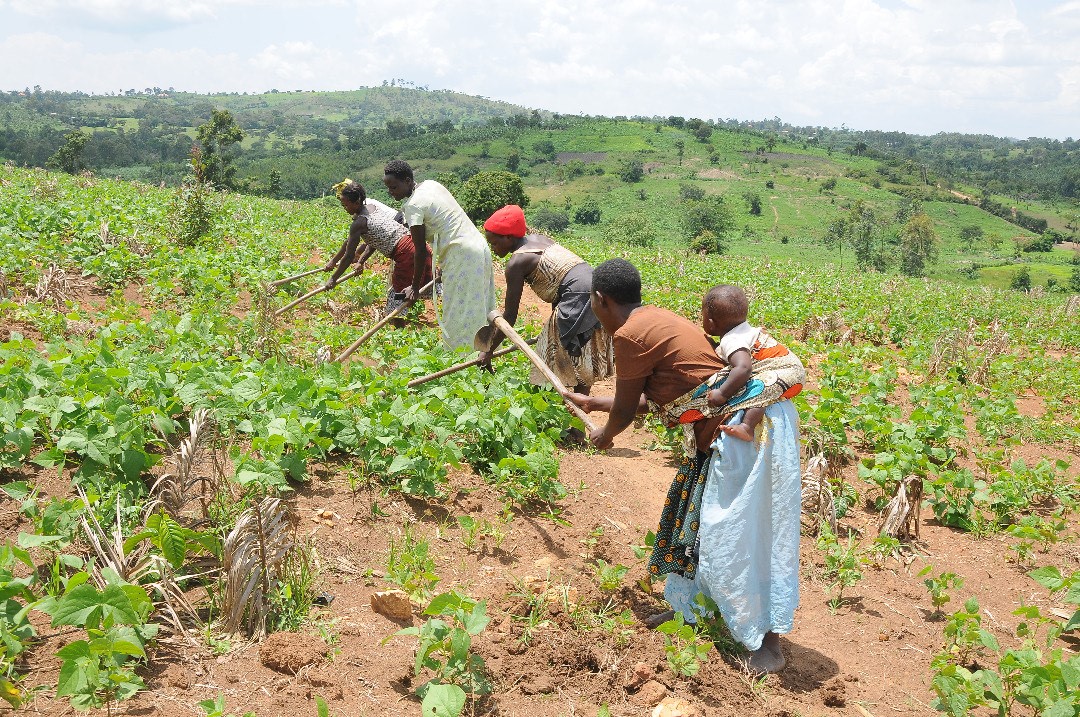
In Uganda’s context, China has been playing a key role for almost 50 years. Indeed, in 1973 and 1987, China invested and supported establishment of Kibimba (Now Tilda Uganda) and Doho Rice Schemes. This increased Uganda’s rice production capacity on top of creating employment opportunities for the many people.

Through the South-to-South Co-operation, China has invested heavily and supported the Uganda’s agriculture sector. In 2009, working with United Nations’ Food and Agriculture Organization (FAO), China introduced a new programme FAO-China South-South Cooperation (SSC). Beijing backed this program and created a FAO-China Trust Fund with $30 million to support agriculture in Uganda.

In 2015, China launched Uganda’s FAO-China South-South Cooperation (SSC) phase II and injected $50million further supporting the country’s agriculture sector. This program received another $50million boost in phase III which was launched in 2021.

During the first two China-FAO SSC phases, China sent 47 Chinese agricultural experts and technicians on a two years mission. The experts are credited to have helped in skills development and exchanges. In particular, they helped to improve technologies used in production of rice, grapes, cherry tomatoes, foxtail millet, and apples. Also, the experts exchanged skills with Ugandan farmers in animal reproduction such as goats, pigs, and in fisheries. This project focused on exchanging mechanization, agro-processing and value-addition.

A June 2020 study entitled “Access and Adoption of Hybrid Seeds: Evidence from Ugandapublished in Journal of African Economies credited Chinese agriculture support to Uganda that it has improved innovated agricultural practices. The study further reveals this has helped in addressing poverty challenges in Uganda’s rural areas.  

In October this year, working with Ugandan authorities, China will be Launching phase III of China-FAO SSC. This time, China will inject 2.39 million U.S. dollars in the program. Under phase III, China will send to Uganda 18 Chinese agricultural experts and technicians to agriculture sector. This project seeks to advance and support appropriate and effective technologies with aim of boosting the countries food security. More than 9,600 farmers of whom at least 30 percent will be women are expected to benefit during this phase while more than 200 Ugandan agricultural personnel will receive technical training.

From grassroots, several Ugandan farmers have already benefited from China funded Phase I and II of China-FAO SSC. Under the said two phases, farmers in districts such as Amuriat, Budaka, Kabale, Mbarara, and Wakiso among others. In Kabale, agricultural technology demonstration hubs have been established there which is boosting horticulture. China has also been supporting fish farming in the country. For example, China funded the construction of Kajjansi Aquaculture Training and Development Centre which is key in aquaculture research in Uganda.

Also, China funded construction of Wakawaka fish landing site. All this has seen increase and sustained fish production in Uganda. Uganda’s Fisheries sector is one of Uganda’s leading foreign exchange earners. The sector accounts for about US$200 million annually. The sector is also employing estimated 1.5 million people such as fishermen, boat owners, fish mongers, transporters and processors among others.

On Continental level, China’s support to African countries agriculture sector is also visible. During the 8th Ministerial Conference of the Forum on China-Africa Cooperation (FOCAC) held on 29th November 2021 in Senegal, supporting African countries agriculture was among the nine key areas Chinese president Xi Jinping pointed at where China would cooperate with African countries. The other eight areas are health, poverty reduction and trade promotion, investment promotion, digital innovation, green development, capacity building, cultural and people-to-people exchange, and peace and security.

Globally, China’s voice in promoting and advancing programs meant to fight famine has been loud. While attending this year’s G20 summit in Bali, Indonesia, China’s State Councillor and Foreign Minister Wang Yi made a plea calling for a strong cooperation to ensure a successful global food security agenda and reduce suffering of many due to hunger. Today, many countries are struggling with hunger. Recently, United Nations Secretary General Antonio Guteres expressed concern stressing that global hunger levels are at a new high. Guteres observed that in two years, the number of severely food insecure people has doubled from 135m to 276m today.

Also, among others, China’s Global Development Initiative seeks to address challenges like famine to ensure continuous development, with the aim of helping all people realize their dreams. The discussion above is a pointer that food security is key for national and global security and development. Aware that we can only attain food security by supporting and improving agriculture sector, recognising China’s contribution in supporting Uganda’s and Africa’s agriculture sector is prudent.

Ssemanda Abdurahim is a Research Fellow at Sino-Uganda Relations Research Centre.