China Expands Africa’s International Trade Potential

By Nnanda Kizito Sseruwagi

Any country’s development plays out based on its participation in international trade. Countries with higher participation in global trade are comparatively wealthier than those with lower participation. Therefore, for African countries to develop, they must increase their business involvement with other countries on the international market. Several factors determine this. One of those is the availability of cheap long-term financing for infrastructure that supports production such as roads, dams, etc.

Chinese lending in Africa can be observed to increase the participation of borrowing countries, especially in Sub-Saharan Africa, in international trade. Whereas other major funders in Africa such as the World Bank concentrate their resources on social sectors like education and health, which are equally important, China focuses more extensively on infrastructure, particularly transport, energy and communications.

Research shows that funding towards these sectors which China is keen on achieves practical, significant results for African countries by increasing their potential to share in global value chains.

Over time, Chinese funding for roads, railways and hydropower dams in Africa can be seen to immensely reduce trade costs for African countries while at the same time enhancing their connection to international markets by linking landlocked areas to the coast and connecting seaports.

Since African countries are still limited in their manufacturing capacities, it is difficult for them to have an immediate advantage over more developed countries in the entire value chain of international goods. Those developed countries have centuries of efficient production techniques under their belt. However, by enabling Africa to access markets, China pushes us one step towards competitively playing in the international market.

Of course, we cannot avoid contrasting the disparity in approach between Western funders and China. I think as a recent comer to the scene of developed countries, China has a more practical appreciation of what developing countries need to spur development. It also has a fresh memory of poverty, which aligns its development experience closer to Africa’s. therefore, whereas Western funders are hellbent on dictating moral environments upon African societies as a pre-requisite for their funding, and stage-managing the results, which are often smaller than they are projected and reported to be, China on the other hand is culturally less arrogant but more practical on making results.

Chinese development finance institutions like China Development Bank and China Export-Import Bank (Eximbank) can be observed to respond to African countries’ industrialization agendas. They fund public infrastructure that supports value-added production and international trade.

This funding comes both through Chinese Development Lending (particularly concessional loans) and from China’s Belt and Road Initiative under which China directly builds infrastructure that removes trade inefficiencies like slow production and costly transportation of goods often caused by poor transport and communication networks.

Efficient transport infrastructure is very important for African countries to access the international market. Research shows that each day a good spends in transit translates into a taxation cost based on the value of the good. We should avoid unnecessary delays of our goods in transit if we are to compete better.

African countries also produce mostly raw materials and trade more in parts and components rather than final products. Such goods are much more affected by time delays than final goods. Therefore, for African countries to benefit more in international trade and reduce costs, efficient transport and communication infrastructure is fundamental.

Another area supported by Chinese funding is domestic industrialization in various African countries. Uganda is a key example, with several industrial parks established with China’s support, such as Mukono Industrial Park, Shandong Industrial Park, and Sino-Uganda Industrial Park in Mbale. By supporting the industrial capabilities of Africa, China helps us reduce imports and increase value-added exports, thus transforming our economies toward upstream positions in international production networks.

Additionally, having strong domestic industrial capacities lowers Africa’s need to import inputs used in the production of exported goods. It also reduces our dependence on foreign industries for goods which sometimes are unavailable or become very expensive due to production disruptions. We cannot forget that during the COVID-19 pandemic, we suffered “vaccine discrimination” while most countries hoarded tons of vaccines. That was a crisis we must never suffer again. We must therefore invest in our industries and also enhance the production of domestic value-added goods, which will buy us a higher place in the global value chain.

With the support of non-politicized Chinese funding, we can mitigate liquidity constraints which often limit our exporting capacity since exporters usually need the push of external capital to enter foreign markets. Africa’s weak financial institutions can never reasonably support our development because they are very risk-averse. We need to complement the little funding they are willing to provide with China’s generous, long-term credit.

Lastly, educating our children and youth is very important if we are to compete in the highly innovative and competitive international world. African governments should invest in a highly educated labour force to increase their chances to access global markets and participate more in higher value-added activities. Only by investing in innovation can African States help domestic producers meet the international standards required by global buyers.

The author is a senior research fellow at the Development Watch Centre.

Authorized Economic Operator (AEO) Arrangement Between China and Uganda Will Improve Trade and Help URA in Revenue Collections

By Alan Collins Mpewo

 Technology has been prioritised by many countries allover the world because of the advantages and potential hacks that can be exploited. Often times the exploitation has been used to wage war, spying and propaganda. Other nations to the contrary have taken a distant trajectory from the usual, and used technology to outlive the blocks that avail themselves. Much as technology keeps improving and it still gets so much threat from people’s perception, it should be underscored that technology is the future.

Recently, China together with the Uganda Revenue Authority, a public body in charge of Revenue collection in Uganda, had a commemoration of a memorandum of understanding, that the two parties entered into in 2021. The spirit of the memorandum of understanding was the Authorised Economic Operator (AEO) Mutual recognition arrangement and this was signed at the 5th AEO Global Conference that was held in Dubai.

Uganda would be able to benefit from the arrangement in terms of streamlining trade finance and revenue collection which is aligned to China’s Revenue collection practices and enhancement of trade framework. If critically analysed, the main informing aspect for Uganda to enter this mutual arrangement was on a basis of China’s stand on the global floor of trade. The arrangement was also meant to further the corporation between Uganda and China on the basis of the Forum on China-Africa Cooperation (FOCAC). This way, Preferential treatment will be accorded to the goods coming from China to Uganda and vice versa. Therefore, this will be a wake-up call for companies that engaged in supply of goods, works, and services to and from Uganda and this can be confirmed to thus far have been achieved on great strides.

Numerous companies have taken part in registration and confirming participation in this great initiative and it can safely be said that there have been more than 5,000 Chinese companies and over 150 from Uganda adapting to this new trade arrangement. The good news with this is that over 230 companies from both countries have since engaged and participated in trade together using the arrangement and about 130 billion have been collected by the Uganda Revenue Authority for the trading done by those companies along the border and within the boundaries of Uganda. The value of the trade between the companies in both countries has also increased in the recent financial year to over 750 billion Ugandan shillings. This goes back to the objectives set out in the various Corporation agreements that two countries have been engaged in, in the recent years.

The most known modern way the countries worldwide are able to facilitate state activities and governments is through revenue collection and this is the main basis for engaging into this kind of arrangement by the two players. Therefore, each country twice as much to simplify not only ways of generating more revenue but also without inconveniencing the taxpayer while maintaining stable means of putting such finances to productive use. As far as application of the revenue is concerned, Uganda still grapples with all possible forms of corruption and should therefore seek as much of lessons from China to make sure that their education of the vice is also a major objective if it wants to make proper realisation of the revenue’s benefits.

The two countries also realised the adverse effects of delay in transportation of goods and services across boundaries and therefore since data is one of the most important resources in a government can have grip on, since this arrangement is also meant to enable easy data sharing on various cargo that would be transported to and from the two countries.

However, with multi border trade comes risks and therefore imperative to come up with risk assessment to measures. In this case, the arrangement was also meant to provide for better grip on the control of the Trade Practices between all key players during transportation and find a delivery of the goods to the consumers. On another bright side, the arrangement has since helped to increase competitiveness among the companies involved in the platform in as far as manufacturing, packaging, delivery, and response to consumer feedback. With clearance now eased, goods and services will be able to reach their final destination in the shortest possible time and also enable the companies involved to compete and set up themselves for better and bigger deals in the trade sector. Presently, more than 20% is being benefited from only the companies that are participating in this arrangement which is a great side and commendable initiative by the two countries. The figures from China are equally promising and therefore an indicator of why good international relations is important and a stable means of achieving much of the goals amongst various nations.

Tax evasion is a crime that many countries grew up with fighting to the nail to make sure that its effects are greatly eradicated. Otherwise, failure to combat such vices undermines efforts that would have been invested. Therefore, this calls for possible forms of compliance with the day’s tax laws, regulations, and practices. The benefits of this arrangement can not be overemphasized, but ultimately, with furthered sensitization, there will be more players joining along the way.

Alan Collins Mpewo, is a Senior Research Fellow, Development Watch Centre.

Building a Community With a Shared Future: A Liberal view of Sino-Uganda Relations

To understand Sino-Uganda relations and Sino-Africa relations in general, the role of China to the economic development of Uganda can be best understood by evoking liberalism as profound theory in understanding mainstream international relations. Today, mutual benefit philosophy and common prosperity are central in when describing the relations between
Kampala and Beijing and broadly, Sino-Africa cooperation. It should be noted that the two countries have enjoyed fruitful relations that have fostered economic development in Uganda. Sadly, and arguably due global politics, some Sino-Africa skepticist especially in Global north often view Sino-Uganda and broadly Sino-Africa relations in colonial motifs which definitely is wrong and miss presentation of historical facts since China has never colonized any country!

While it is true, that the end game of international relations is fostering selfish interests, it is now common knowledge that with China’s philosophy of common prosperity, China’s relations with other countries like Uganda is purely not selfish but a win-win cooperation which Beijing firmly believe is key in ensuring and building a community with shared prosperity for mankind.

China’s Belt and Road Initiative (BRI) is a vivid example show casing the win-win nature of relations Uganda and Africa in general are enjoying with China. It should be noted that BRI mothers lots of projects aiming at mutual benefit of the two sides. Through infrastructure development, BRI is connecting Asia with Africa, Middle East, Europe and the Americas. This in many ways will and in some countries is already facilitating transportation of goods and services. With expansion of Entebbe international airport near complete, Uganda is one of many countries already enjoying fruits of BRI. Also, a recent report by the Africa Policy Institute noted that since the BRI was initiated proposed in 2013, China has boasted African countries’ infrastructure by funding modern infrastructure projects such as railways, roads, ports, dams, industries, and digital connectivity, injecting vitality in the region. These projects also left thousands of Africans getting employment opportunities, sparking economic growth in the long run.

Giving example of Kenya, Africa Policy Institute report pointed at several multiplier effects of Kenya’s China funded and constructed 670-kilometer modern Standard Gauge Railway (SGR) connecting the port of Mombasa and the inland port of Naivasha. The Ethiopia-Djibouti’s standard gauge railway which connects landlocked Ethiopia to Djibouti port also constructed under BRI also improved transport in the region. The Chinese-built 752.7-km line recorded about 86.13 million U.S. dollars in revenue in 2021, which is up 37.5% compared to 2020 revenue collections.

In production and industry sector, Chinese investments in Uganda have greatly boasted Uganda’s capacity. For example, today Uganda boasts of a number of industrial parks that are contributing to the country’s economic growth and development. Industrial parks such as in Namanve, Kapeeka, and Mbale have liberated Uganda from losing foreign exchange in purchasing commodities that were not produced in Uganda. These parks have also contributed to skill enrichment of Ugandans who are employed there! The goods being products of high tech ensuring good quality, Uganda can also favorably compete at the regional market brining more foreign exchange to the country Cooperation being at the core of China-Uganda relations, it has been evident in the construction of infra-structures for example the hospitals like the China-Uganda friendship hospital in Naguru.

Liberalism understood as cooperation in this case is evident in the education and cultural exchange program as part of relations. Education and culture being at the core of negotiations at the Beijing summit in 2020 it’s absolutely evident that the matter is centric of China-Uganda relations. Through the Confucius Institute at Makerere university, it should be noted that the institute has a memorandum of understanding between Xiangtan university, an institution in Hunan province in China which offers 30 scholarships annually to Ugandan students.

In terms of Trade, the good cooperation between China and Uganda has seen Uganda gain from trading with China. In his book: Introducing Liberalism in International Relations Theory, Jeffrey W Meiser emphasizes the role of good relations between countries if favorable trading conditions are to be realized. It is not a surprise that China has been working to increase trade quotas to Uganda and entire African continent as a way of ensuring both sides benefit from their cooperation.

Also, for over a decade, China has always been one of not only Uganda’s but many of African countries’ foreign direct investments. A report by the United Nations COMTRADE database on international trade that analyzed trade between the states with statistics in the year 2020 shows that Uganda exports quiet a number of products to the Chinese market that include oilseed, oleagic fruits, grain seed, fruits, plastic, wood products, gums and so many others that totally amounted to US$39.61million. Therefore, with this important aspect in economic growth, Uganda’s economic growth has been greatly fueled by diverse trade the two countries guided by China’s philosophy of win-win cooperation as Beijing works with other countries to build a community with shared prosperity for mankind as well as common development.

By Balongoofu Daniel is a Junior Research Fellow at Sino-Uganda Relations Research Centre

Sixty Years of China-Uganda Diplomatic Relations: What Are The Benefits?

China and Uganda have a long diplomatic history. Just days after Uganda gained independence, China recognized Uganda as sovereign nation. Consequently, the two countries’ diplomatic journey started. In 1964, China invited and offered leadership training to several Ugandan youth. In the same year, a Ugandan minister Grace Ibingira was also invited to Beijing to discuss how China would support a newly independent country, Uganda.  This visit was followed by Uganda’s Prime Minister, then Milton Obote who held talks with leadership in Beijing that saw China giving Uganda a grant of $3 Million and $12 million loan to help a newly independent Uganda.

Between 1962 and 1985, bilateral relations between the two nations remained steady despite the regime changes in Uganda. Since then, the government of China has continued to provide developmental assistance to Uganda in form of interest-free loans and grants, technical training to Ugandans, supporting Uganda’s health sector and other vital fields of development. To date, one can argue that this kind of assistance between the two is now a tradition.

In a way of reciprocation, during the 26th General Assembly of the United Nations (UN) in 1971, Uganda voted in favor of the resolution on the restoration of China’s lawful seat in the world body.

Bilateral relations between the two countries entered a new stage of development after the National Resistance Movement came to power in 1986, with bilateral co-operation expanding and mutual high-level exchanges increasing. Since then, China’s contribution toward Uganda’s economic and social development has been on rise.

China’s contribution has mainly been directed towards infrastructural development in form of technical assistance, project aid, and business-related services. The sectors that have benefited from this include; transport, agriculture, manufacturing among others.

Today, China is Uganda’s largest source of Foreign Direct Investment (FDI). China’s investment footprint in Uganda became visible as early as 1991 with mostly small-scale restaurants and health clinics. This has transformed significantly over the years with investment now ranging widely from industries in the manufacturing sector to road construction projects.

In developing countries like Uganda, Foreign Direct Investment is a significant source of private finance, accumulation of physical capital and complementing adequate domestic savings. This is key to Economic Development owing to the low private sector capital and investment capacity in a developing country like Uganda. The entry of such investment has played an important role in improving livelihoods of many Ugandans.

China’s investment in Uganda’s industrial sector is also playing a key role in Uganda’s Economic Development. The introduction of several industrial parks such as in Mbale, Kapeeka, Jinja among others present a sample of China’s contribution. It is also estimated that Uganda’s industrial sector has expanded by over 6.2 percent attributed to construction and agro-processing industries and recovery in the mining and quarrying sub-sectors, a role that can be attributed to astute setting up of industries in Uganda by China and its nationals.

China’s contribution to infrastructural development particularly in the areas of transport, energy and Information technology has also facilitated economic development. In transport sector, with funding from Chinese government, Uganda has been able to construct several roads and other important infrastructural projects. For example, the Kampala-Entebbe expressway and Entebbe international airport were constructed with funds from China. Infrastructural development is a major catalyst for economic development.

Furthermore, trade between Uganda and China has also soared which has directly facilitated the economic development of the country. Trade in the form of imports from China widens the tax base of Uganda’s government and is later important in improving the physical quality of life of Ugandans. With further growth in Uganda’s industrial sector bred by China and abilities to trade in finished goods, the market of China also presents opportunities to Uganda and its nationals to achieve even more economic development.

China’s funding of projects in Uganda’s energy sector has addressed the issue of power shortage and high tariffs that initially affected Uganda’s potential and in turn boosted economic development. Key among these Chinese funded projects are the 600 MW Karuma Hydropower plant constructed along the River Nile in Northern Uganda and Isimba hydropower dams. Prior to this ambitious funding, Uganda faced a power crisis whose peak was in 2014 leading the government to resort to using diesel generators to power the country’s economy which raised the cost of power. High cost of power led to increase of prices of commodities which later affected the industrial growth and people in equal measure. Therefore, projects like Karuma and Isimba hydropower dams have been important because industrialization which is earmarked to ensure continued economic development thrives in increased electricity capacities.

It is also important to note that the provision of loans to Uganda to enhance her development is also a way China has contributed to Uganda’s economic development. Although it is often argued that debt cripples an economy, where handled rightly, visible achievements of loans can be enjoyed by a country. Uganda’s relationship with China has facilitated occasional facilities extended through China herself or her financial institutions. A case in point where economic development can be said to have been influenced through loans is a 482.5 million US dollars Isimba Hydroelectricity Power Station project.  The project is now complete thanks to loan from the Export-Import Bank of China which will be repaid over a period of twenty years at a two percent annual interest with a five-year grace period.

It is without a doubt therefore that good diplomatic relations between China and Uganda have not gone to waste. In terms of economic development, Uganda has gained in all aspects. Despite areas that need improvement, the relations between China and Uganda will continue to bear not only economic but also social transformation of Uganda.

Katende Arnold Ricky is a junior research Fellow at Development Watch Centre.

China-Uganda 60 years of Diplomatic Relations

China and Uganda have a long diplomatic history dating back to the post-independence era. China is among the few countries that recognized Uganda as sovereign country just days after independence. Since then, Beijing has been cooperating well with Uganda, offering Kampala support in different sectors that we cannot discuss the journey of Uganda’s socio-economic development without mentioning the role of China.

In education sector, China continues to do a tremendous work offering training opportunities to different Ugandans at different levels. By end of 2021, Beijing had offered Ugandans hundreds of undergraduate and postgraduate scholarships and over 5000 Ugandans benefited from China’s short course training opportunities covering different key areas such as agriculture, medical care, infrastructure, information and technology among others.  China is also collaborating with African universities funding research and other learning opportunities. Makerere University’s Confucius institute is among the many examples. Aware that human capital and well-educated and skilled people are essential to facilitate development of the country, one cannot discuss development of Uganda’s education sector and human capital development without mentioning China’s contribution.

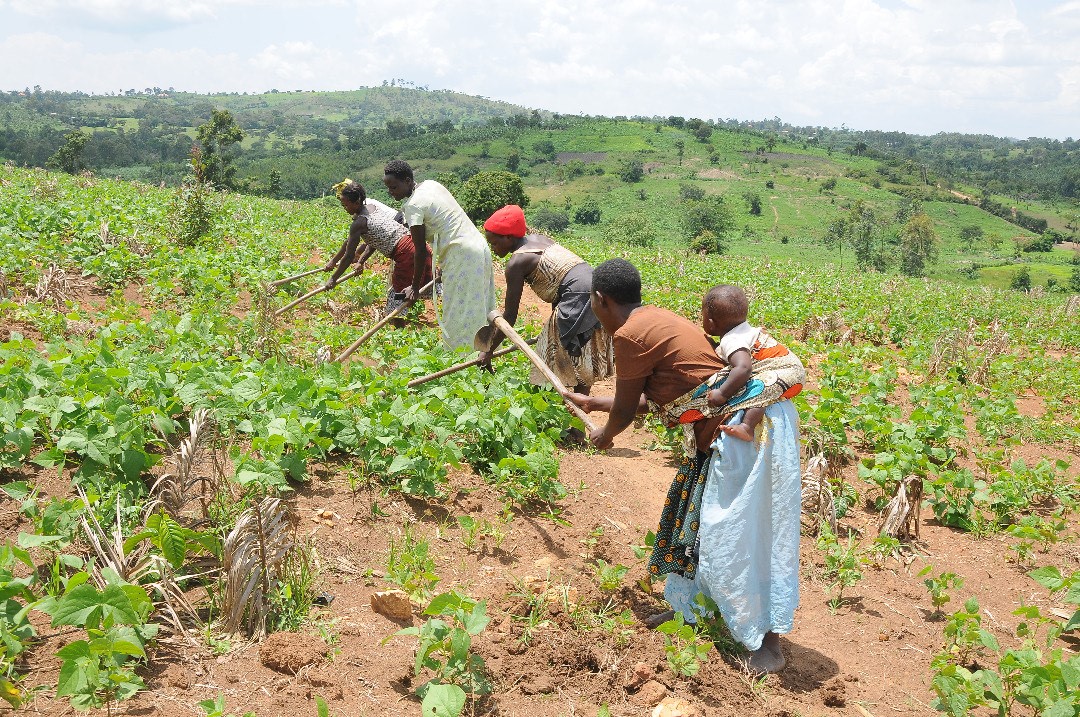
In the field of agriculture, China has been playing a key role for more than 40 years. In 1973 and 1987, China invested and established the Kibimba Rice Scheme (Now Tilda Uganda) and Doho Rice Schemes which have increased rice production and provided employment opportunities to many Ugandans. Additionally, the South to South Co-operation has boosted agriculture in Mbarara, Kabale, Amuria, Wakiso, and Budaka. Agricultural technology demonstration hubs have been established in Kabale to boost horticulture. China has also been supporting fish farming by funding the construction of the Wakawaka fish landing site and the Kajjansi Aquaculture Training and Development Centre which is a national center for aquaculture research in Uganda. This has led to increased and sustained fish production.

In 2009 under the South-South Cooperation (SSC), in coordination with United Nation’s Food and Agriculture Organization (FAO), China launched FAO-China South-South Cooperation (FAO-China SSC) and established FAO-China Trust Fund. China invested $30 million in this program to to support agriculture in Uganda. China has since been supporting this program injecting $100 million in 2015 and 2021 for phase II and phase III respectively.

During phase II of China-FAO SSC, China sent 47 agricultural experts and technicians have to train Ugandans in the same field. During the expert’s two year stay in Uganda, they trained many Ugandans and helped to improve technologies used to in farming of various crops such as rice, foxtail millet, maize, grapes, apples and cherry tomatoes, as well as animal reproduction.

In energy sector, China’s contribution in Uganda’s energy is also visible. The Karuma dam hydropower station with capacity of 600 MW which under construction in Kiryandongo District is an example of China’s contribution in Uganda’s energy sector. The project is 85% funded by China’s Exim Bank and Uganda government is meeting the remaining 15 percent. The project is being constructed by a Chinese firm Sinohydro Corporation and is expected to be completed in June 2023. Isimba power station which became operational in 2019 was also funded by with a loan from China’s Exim Bank. Karuma and Isimba hydropower plants are identified in Uganda’s Vision 2040 as key projects to Uganda’s economic development.

In infrastructure development, China directly funded US $ 350 million for the construction of the Kampala-Entebbe express highway, which is the first express highway in Uganda. The expressway is a 51km, four-lane, dual carriage toll road linking Kampala to Entebbe airport. The stated intention of the highway was to; reduce congestion and increase the commercial viability of the Greater Kampala Metropolitan area, improve mobility and reduce travel times and vehicle operating costs, and provide better access to local facilities for communities and jobs.

The expressway has helped to improve mobility and travel times to the airport. The US $ 350 million loan will be paid in 13 years and current statistics from Uganda National Roads Authority indicate Ugandans have embraced using the road with average daily passages of 20,000 which is far higher than projected daily passage which UNRA had put at 13,000 passages.  This also means daily collections have risen which is a good sign that the road can sustain itself in terms of maintenance and paying back construction loan. Indeed, Joy Nabasa the spokesperson of Egis which was hired to maintain the road collecting the toll on behalf of UNRA recently told journalists that the number of passages is increasing daily. Last month, media reports indicated that the road toll had collected 13 billion shillings in 4 months alone.

Good road network is key in transportation of goods and services which is key for development. As two Chinese say; “Better roads lead to better life.” and “Build roads if you want to get rich” with more good road network, Uganda’s social-economic growth and match to middle-income status is a matter of time.

In health sector, China continues to play a key role in supporting Uganda’s health sector. For example, as a result of good relations between the two countries, China funded the construction of China-Uganda Friendship hospital at Naguru. The hospital offers health services to people, for instance, paediatrics, gynaecology, dental, and laboratory services.

On 10th June this year, a team of Chinese medical personnel arrived in the country and will stay in Uganda providing medical services to citizens. Since 1983, China has been sending a team of doctors and experts to help work with Ugandans in extending medical serves to Ugandans.,

In the wake of COVID-19, China has supported Uganda in the fight against the pandemic. China donated COVID-19 test kits to boost efforts against the virus. Additionally, Beijing donated up to one million doses of COVID-19 vaccines.

Considering the positive contribution, the two countries have witnessed over the last 60 years, it is a living a testimony that China and Uganda are good comrades, good equal partners and good brothers always working hand shoulder to shoulder with major aim of building a community of shared future and prosperity for mankind. Considering enormous opportunities that comes with this brotherly relation should be natured by people of both countries. This to happen, as a Chinese saying goes, “amity between the people holds the key to state-to-state relations,” with the bilateral relations between our countries were elevated to the level of Comprehensive Cooperative Partnership three years ago in late June 2019, our two peoples must guard these relations jealously.

Vianney Sebayiga is a research fellow at Sino-Uganda Relations Research Centre and a Student at the Kenya School of Law.


A Review of China’s Support to Uganda’s Agriculture Sector

“Only when the granary is full will people learn etiquette; only when people are well-fed will they know honor and shame,” says an ancient Chinese adage. One can argue that China put this saying in practice while nurturing her Sino-Africa relations by supporting agriculture sector.

In Uganda’s context, China has been playing a key role for almost 50 years. Indeed, in 1973 and 1987, China invested and supported establishment of Kibimba (Now Tilda Uganda) and Doho Rice Schemes. This increased Uganda’s rice production capacity on top of creating employment opportunities for the many people.

Through the South-to-South Co-operation, China has invested heavily and supported the Uganda’s agriculture sector. In 2009, working with United Nations’ Food and Agriculture Organization (FAO), China introduced a new programme FAO-China South-South Cooperation (SSC). Beijing backed this program and created a FAO-China Trust Fund with $30 million to support agriculture in Uganda.

In 2015, China launched Uganda’s FAO-China South-South Cooperation (SSC) phase II and injected $50million further supporting the country’s agriculture sector. This program received another $50million boost in phase III which was launched in 2021.

During the first two China-FAO SSC phases, China sent 47 Chinese agricultural experts and technicians on a two years mission. The experts are credited to have helped in skills development and exchanges. In particular, they helped to improve technologies used in production of rice, grapes, cherry tomatoes, foxtail millet, and apples. Also, the experts exchanged skills with Ugandan farmers in animal reproduction such as goats, pigs, and in fisheries. This project focused on exchanging mechanization, agro-processing and value-addition.

A June 2020 study entitled “Access and Adoption of Hybrid Seeds: Evidence from Ugandapublished in Journal of African Economies credited Chinese agriculture support to Uganda that it has improved innovated agricultural practices. The study further reveals this has helped in addressing poverty challenges in Uganda’s rural areas.  

In October this year, working with Ugandan authorities, China will be Launching phase III of China-FAO SSC. This time, China will inject 2.39 million U.S. dollars in the program. Under phase III, China will send to Uganda 18 Chinese agricultural experts and technicians to agriculture sector. This project seeks to advance and support appropriate and effective technologies with aim of boosting the countries food security. More than 9,600 farmers of whom at least 30 percent will be women are expected to benefit during this phase while more than 200 Ugandan agricultural personnel will receive technical training.

From grassroots, several Ugandan farmers have already benefited from China funded Phase I and II of China-FAO SSC. Under the said two phases, farmers in districts such as Amuriat, Budaka, Kabale, Mbarara, and Wakiso among others. In Kabale, agricultural technology demonstration hubs have been established there which is boosting horticulture. China has also been supporting fish farming in the country. For example, China funded the construction of Kajjansi Aquaculture Training and Development Centre which is key in aquaculture research in Uganda.

Also, China funded construction of Wakawaka fish landing site. All this has seen increase and sustained fish production in Uganda. Uganda’s Fisheries sector is one of Uganda’s leading foreign exchange earners. The sector accounts for about US$200 million annually. The sector is also employing estimated 1.5 million people such as fishermen, boat owners, fish mongers, transporters and processors among others.

On Continental level, China’s support to African countries agriculture sector is also visible. During the 8th Ministerial Conference of the Forum on China-Africa Cooperation (FOCAC) held on 29th November 2021 in Senegal, supporting African countries agriculture was among the nine key areas Chinese president Xi Jinping pointed at where China would cooperate with African countries. The other eight areas are health, poverty reduction and trade promotion, investment promotion, digital innovation, green development, capacity building, cultural and people-to-people exchange, and peace and security.

Globally, China’s voice in promoting and advancing programs meant to fight famine has been loud. While attending this year’s G20 summit in Bali, Indonesia, China’s State Councillor and Foreign Minister Wang Yi made a plea calling for a strong cooperation to ensure a successful global food security agenda and reduce suffering of many due to hunger. Today, many countries are struggling with hunger. Recently, United Nations Secretary General Antonio Guteres expressed concern stressing that global hunger levels are at a new high. Guteres observed that in two years, the number of severely food insecure people has doubled from 135m to 276m today.

Also, among others, China’s Global Development Initiative seeks to address challenges like famine to ensure continuous development, with the aim of helping all people realize their dreams. The discussion above is a pointer that food security is key for national and global security and development. Aware that we can only attain food security by supporting and improving agriculture sector, recognising China’s contribution in supporting Uganda’s and Africa’s agriculture sector is prudent.

Ssemanda Abdurahim is a Research Fellow at Sino-Uganda Relations Research Centre.

Sino-Uganda Relations: The Upside Story from a liberal perspective

Overtime, it’s increasingly evident that International Relations can be used for more than preserving world peace through amicable settlement of disputes or stopping international conflicts, but to also foster economic development between global states. Various states are realizing socio-economic development amongst themselves as far as trade, infrastructure is concerned by capitalizing on the favorable relations held with each other.

China and Uganda can be singled out as an example of such states. The two countries have enjoyed good diplomatic relations for close to 60 years with the first diplomatic contact being made by China shortly after Uganda attained Independence in 1962. Since then, this relationship built on mutual respect and cooperation has produced positive developments, the crux of the author’s discussion today.

Generally, while studying the relationship between China and any African country today, one may find it difficult to ignore the effect of the Belt and Road Initiative (BRI) on such a relationship. The aforementioned project was initiated in 2013 to promote infrastructure development among growing nations using funds from China.

Uganda having pre-existent relations with China and having signed an MOU to join BRI, has been one of the beneficiaries of this initiative. A peek into the UNRA national roads project status report for May 2022 indicates that funding from China has been used to complete road projects like the Munyonyo spur, Kampala-Entebbe expressway among others. It also indicates several future projects to be undertaken by secured Chinese funding.

Furthermore, these bilateral relations have realized significant development in Uganda’s energy sector. For instance, the twin Hydro Power Plant projects on river Nile, namely Karuma and Isimba, generating a combined 800MW of electricity were funded and built by funding secured from the Chinese government in addition to local revenue. Electricity is a major factor of production and industrialization, two sectors that can propel developing countries into economic stability. Additionally Chinese companies have undertaken major investments to develop the mining sector in Uganda, an example being the planned establishment of a $200 million gold refinery in Busia district. Such projects and investments increase employment opportunities for Ugandans as well as sourcing revenue for the country in form of taxes.

The continued good relations between China and Uganda have seen the latter nation record developments in its health sector. The earliest notable Chinese health aid to Uganda was through the establishment of the Development Aid for Health from China to Uganda (DAHCU) in the 80’s where Chinese medical teams were sent to the African nation to assist in the country’s ailing health sector. The China-Uganda Friendship Hospital Naguru, a modern health facility built by the Chinese government as a gift to Uganda, is one of the new health projects realized as a result of the good long-standing relations between the two countries. Mahatma Gandhi once opined that health, and not pieces of gold and silver is the real wealth.

Industrialization is argued to be one of the most viable routes toward economic development and transformation and is believed to be the spur behind China’s rise to an economic powerhouse in the last 35 years. Perhaps, in light of that transformation, China’s spirit of good will towards Uganda’s development has driven it to taking center in what one would describe as the African nation’s modern industrial revolution. This is evidenced by the establishment of Industrial parks such as Kapeeka in Central Uganda as well as the Sino-Uganda Mbale Industrial Park in the Eastern region, both funded by Chinese investment groups. Such establishments not only encourage and promote a shift towards a goods production-based economy but also create employment for citizens. With more planned similar parks in Uganda, it is evident that Kampala stands to further benefit more from its good relations with China.

Over 65% of Ugandans, as per a 2017 study by the Uganda National Household Survey, are engaged in agriculture making it the major source of livelihood in Uganda. The relations between China and Uganda have seen the former nation invest to modernize and improve the agricultural sector in the latter to enhance the livelihood of the locals. The Kajjansi Aquaculture Research and Development Centre is a project funded and established with support from the Chinese government as a specialized research center for fish species and modern fish farming methods. Famous for its fresh water lakes, Uganda is a major fish exporter hence such projects improve the country’s export earnings. Additionally, the two countries have significantly promoted trade amongst each other as result of their relations. Although Uganda currently imports more than it exports to China, the significant increase in the volume of exports is a positive indicator of the continuous growth and expansion of the African nation’s economy.

Additionally, the gains of Uganda from relations with China can be noted in the education sector. Annually, China has been offering education opportunities to Ugandans offering higher education scholarships and exchange programs to Ugandan students and hence, boosting the country’s human capital. China has some of the world’s leading institutions in fields like health, engineering and technology hence such an arrangement ensures Uganda’s acquisition of highly trained nationals that can return and contribute to the socio-economic development.

The Sino-Uganda relations have also resulted into developments and transformation of Uganda’s Information Technology sector. In 2006, Uganda secured funding from Exim Bank of China for establishment of the country’s data transmission infrastructure. This included installation of optical fiber cables around the country. As a major techno- innovative country, China has sought to inspire and challenge Ugandan youth to become technological innovators through the Huawei ICT Global Competition. Given the immense role played by technology in development today, Uganda stands to benefit from such an initiative.

In conclusion, the relations between Uganda and China can be described as mostly beneficial to the former as far as socio-economic development is concerned. The existing developmental projects, in addition to future projects have the potential, if well managed to significantly transform and empower Uganda’s economy. Concerns over claims of the socalled national debt burden that may be incurred through loan facilities to develop the country do not necessarily water down the benefits Uganda stands to enjoy if such borrowed money is put to effective use. In sprit of win-win cooperation, terms included in contracts of Chinese loans represent principles of fairness and balances well rights and responsibilities of involved parties. China has on many occasions written off debts of several African countries and renegotiated some where the borrower genuinely fail to pay. Chinese president Xi Jinping, defines the relations between Africa and China as a ‘distinctive path of win-win cooperation’. It is such development partners, keen on upholding values of mutual respect and co-operation that Africa needs.

Marvin H Kalema is a research Fellow at Sino-Uganda Relations Research Centre, and a law student at University of Johannesburg, South Africa.