Celebrating Fruits of China’s South-South Cooperation Projects in Uganda

In June this year, a three year South-South Cooperation (SSC) agriculture project between the governments of Uganda and China as well as the Food and Agricultural Organization of the United Nations (FAO) will come to a close. As we look to a renewal that is almost certain, we can take a moment to reflect on the remarkable milestones arrived at during the years in which the partnership has run.

Having commenced by the agreement titled “Technical Assistance Under the South-South Cooperation with the People’s Republic of China in Support of the Development Strategy and Investment Plan 2010/11-2015/16 in the Republic of Uganda” back in 2012, and further extended one more time before its current dispensation, the SSC’s endurance owes to its results which cannot be overstated.

During the first and second phases therefore, there was an introduction of crop varieties that best responded to the needs of local farmers, the most impressive of which is perhaps proso millet. Its attributes made it more suitable for planting than the local finger millet– it grows for a shorter time (75 days rather than 90), requires less grains in planting (5kg per acre instead of 25), bares more yield (up to three times), and is drought resistant. Also witnessed, was astounding realizations in cases that involved diary farming where cows are reported to provide at least seven liters each per day up from just two.

The present SSC is not only interesting because it builds on these numbers however, but also because it makes part of a broader framework in which China has in recent years led an effort of helping contribute to the faster realization of the Sustainable Development Goals (SDGs). Dubbed the Global Development Initiative (GDI), this program singles out eight SDGs that Beijing feels require specific attention for the sake of the developing economies post Covid-19. This is further true now that 2030 is not far off.

In his 2022 address to the ministerial meeting of the Group of Friends i.e. the umbrella of nations and organizations that support the GDI cause, Chinese Foreign Minister (FM) Wang Yi, among other things outlined improvement in agricultural practices as key in realizing SDG 1 (ending poverty). To this end, he highlighted that, his country would world over restart the SSC which had up to that point concluded.

The FM further spelled out bold measures to accompany this arrangement that Uganda has since benefited from e.g. an agreement for technical support entered by China’s Academy of Agricultural Sciences and its International Research Center of Big Data for Sustainable Development with FAO along with donation of data imperative for policy making to the United Nations like on arable land and forest coverage provided by the SDGSAT-1 satellite.

Interwoven around four objectives (development of aquaculture value chain, supporting livestock improvement, establishment of a technological transfer base, and development of high yield rice and foxtail rice) thus, it comes as no surprise that the period between 2022 and 2025 has been even more successful.

The SSC project during this time in the country has ensured that farmers in the areas of focus have very highly educated experts at their disposal for consultation something that greatly turned around their fortunes. In terms of the broader picture, there have been several collaborations between in-line institutions and their colleagues in China. Most notably, joint research by Shanghai Agro Biological Gene Center and the National Agricultural Research Organization resulted into the release of WDR-73, a genetically modified variety of rice that is incredible in its yield and doubles as drought resistant.

There has also been several sponsored visits of Ugandan officials to different regions of China for purposes of benchmarking best practices as well as in brokerage of associated policies. While attending the Forum on China-Africa Cooperation last year thus, the Minister of Agriculture, Animal Husbandry, and Fisheries Hon. Frank Tumwebaze entered an agreement with the General Administration of Customs of the Republic of China that allowed Uganda to export aquatic life and Chilies to the over 1.4 billion people market of China.

According to the minister, this was also the first time that Uganda would be exporting the second product to any part of the world there demonstrating China’s commitment to walk the talk. Therefore, as we approach the end of this partnership, considering the multitudes of success it came with, celebrations are in order. Viva  China-Uganda Cooperation.

The writer is a research fellow at the Development Watch Centre.


How to Modernize Uganda? Lessons from China’s Agrarian Change

Mathias Walukaga in Ekyatusomosa Lweera, Herman Basudde in Mweraba Ngenze, and Kazibwe Kapo in Sigwa Jajja Wo all sing about a common Ugandan phenomenon – the migration of people, often as individuals, on a lonely search for economic opportunity, from rural to urban centers. Whereas the central message in each of their songs is different, they all sing about work and in the process aspects of rural-urban migration filter through the message, showing how one’s fortunes usually change for the better when one leaves their villages to work in towns.

In the broader processes of national development and transformation, massive rural-urban migration, as opposed to individual migration, facilitates structural transformation in the economy, society, and politics. No country developed without experiencing increased migration of people from rural areas to urban centers with the attendant shift from subsistence agriculture to industry and service delivery as the major sources of employment and livelihood. The message in Walukaga, Basudde and Kazibwe’s songs is that rural-urban migration is economically transformative.

China is a notable example of a country which developed by systematically organising its rural–peasant population within national projects of state modernization which saw its rapid socio-economic transformation.

China harnessed its vast rural labour force for national development to enable it to transition from an agrarian economy to a global industrial powerhouse in what is known as the Great Leap Forward. Whereas the social and human consequences of the Great Leap Forward were an astronomical failure, in the end, the Leap set China on a course for long-term industrial growth. I am not suggesting the adoption of a Great Leap Forward for Uganda, but I carry the understanding that forms of violence have been central to the development process in all nations. Karl Marx, by far the greatest political economist, was cognisant of the brutality of the process of development as involving forced dispossession and coerced transformation of peasants into providers of free labourers in the process of “primitive accumulation.” Marx did not think that the peasant should be saved from this fate since the peasantry was “a relic of a past mode of production now on its way out: unproductive and, mostly, politically backward.”

More recently in the early years of this century, China set out to stimulate economic growth with rapid urbanization as its key strategy. How did China turn rural land into urban centers at an accelerated pace?

Firstly, unlike in Uganda where leaders are preoccupied with politics and power, one of the most preoccupying issues among leaders in the People’s Republic of China is solving “China’s Agrarian Question.” China’s leaders share a long-standing ideological goal of driving industrialization and urbanization.

Like China, Uganda urgently needs to modernize the countryside, reduce poverty and transfer rural peasants into the urban economy. This process will enable us to shift large droves of our population from tilling the earth in villages to being integrated into higher-value employment in industry and service sectors.

Countries which have most of their people employed in sectors of service delivery and industry are wealthier as opposed to those reliant on agriculture for employment. The current disaster in Uganda and many African countries is that agriculture still employs over 70 percent of our labour force which definitely contributes the least to our national wealth/GDP. In contrast, the world’s biggest economy – the United States has over 77% of its GDP derived from the service sector, 20% from industry and just 1-2% from Agriculture. In China, the GDP is distributed between the service sector, industry and agriculture at approximately 54.6%, 38.3% and 7% respectively.

To return to the question of how China increased urbanization in recent decades, let’s first observe the fiscal reforms of the early 1990s. The Chinese government reorganized national budget allocations by reducing the financial support it extended to local governments. This forced lower-level governments to find means to be financially self-sufficient. This consequently fundamentally altered how local governments managed revenue generation and land use in the countryside.

Additionally, local governments turned to land as a primary source of revenue. In China, rural land is collectively owned by village communities whereas land in urban areas is owned by the state. Under the new fiscal system, local authorities began systematically converting rural land into urban land which allowed them to lease the newly classified land to developers for a profit. This became an essential strategy for generating revenue since land sales to private investors and construction companies provided large sums of money that could be used for local development projects.

These policies increased pressure on rural land and the consequent economic challenges in the countryside propelled more people to migrate to cities in search of better opportunities. Indeed, this was a migration trend that had already been underway with China’s broader economic reforms, which opened it to foreign investment and turned the country into the “factory of the world.” As industrialization expanded, the cities became economic hubs that offered higher job opportunities and wages compared with the countryside. The mixture of rural economic distress and the pull of urban job opportunities accelerated rural-urban migration.

The rapid urbanization fuelled by land conversion and migration contributed to China’s economic boom, as its cities became the centers of industrial production, commerce, and innovation that we know today.

Whereas these processes faced widespread resistance from villagers, as would be expected, they were and are inevitable and necessary processes of modernisation. This is how China uprooted its peasants from agrarian modes of livelihood.

The more I commit to understanding development discourse, I find that the only way for underdeveloped countries to achieve socio-economic transformation is through undergoing ruthless processes of converting their mass populations of peasants involved in farming into workers in industries and service sectors. I have not yet known any process where this happened in peace and harmony. Except for a handful of countries that sat on mega oil reserves which simply pumped oil out of the ground to grow their economies, all the world’s nations, regardless of how much mineral resources they had, had to undertake significant land reforms in the process of “depeasantization.” That’s the missing conversation in Uganda’s political talk.

The writer is a senior research fellow at Development Watch Center.


Green Beans, Red Tape: EU Climate laws may have unintended effects on Ugandan Coffee Farmers

By Shemei Ndawula

For the past three years the European Union has been drafting and polishing a set of legislations that will potentially have great impact on the lives of many Ugandan coffee farmers once they come into effect at the end of this year. As a country, we have relied on Coffee as our major export cash crop for decades. Right from colonial times when Uganda boosted of a surplus budget most of the national revenue came from agricultural exports of coffee and Cotton. At the moment we export close to 1 billion USD worth of coffee annually mainly to the European markets (Italy alone takes up to 33% of coffee exports).

The legislation, a result of climate change campaigns seeks to implement a stringent import cap on goods like coffee, cloves, rubber from non European countries if their importers can not prove that the land on which they are grown is a product of deforestation. This is definitely a good idea because the rate of deforestation across the globe is worrying. Uganda; thrust to the forefront of the war on climate change because of our location along the equator needs to take more intentional steps towards mitigating widespread deforestation. We are already experiencing record breaking levels of water rising in Lake Victoria as well as flash floods and mud slides in different parts of the country.

However, what this legislation misses out on is that most coffee growers in Uganda are smallholder farmers who are already struggling to meet the quality controls in regards to bean quality and organic farming practices. It will be impossible for the same farmers to put in place the necessary tracking mechanisms to prove that their farmlands comply with the legislation and convince the European Union that they meet the required standards. Needless to say that many of the smallholder farmers are either semiliterate or illiterate and will require a significant amount of time for training and adjustment of their farming practices to fully comprehend the purpose and subject of the legislation let alone implement them.

In fact, many of the prominent coffee producing regions like the Bugisu sub-region and the Kasese region are surrounded by forest reserves with the farmlands coexisting within the trees. In many ways this is a standard farming practice because the root system of the trees holds the soil so that the fertilisers used in the coffee are not swept away by the rain and the fallen foliage from the trees acts as mulch. My family has had a similar agricultural scheme for decades  at our farm in Kasangati(in the outskirts of Kampala) where the coffee is grown alongside timber trees.

It is imperative for the European governments to understand that the most likely scenario that will play out when the legislation comes into effect may not be increased compliance in Africa but rather most multinational coffee exporters will shift their focus to more developed countries like Brazil which can comply with the necessary red tape.  This can spur a domino effect with coffee farmers when deprived of the coffee market resorting to cutting down the trees on the farms to cover their daily needs.

As a profession relying heavily on nature, Ugandan and African farmers have got all the reasons to lead the war on climate change. Our agricultural systems are heavily dependent on weather patterns and many farmers are one or two bad weather seasons from a crisis.

Additionally, setting up these traceability mechanisms will also come with unprecedented compliance costs to provide verifiable proof that the coffee supplied to the European market comes from none deforested areas. This will involve adopting traceability systems, certification processes and quite possibly new farming methods.

The European Union may be better served by simply equipping the farmers with the necessary skills and technology to implement sustainable farming practices. European research has made leaps and bounds in sustainable high impact farming and technological sharing between the two countries would be a huge boon for the coffee sector.

This has been done before by the Chinese in Uganda who set up a large rice growing scheme in Lukaya along the Lwera stretch to set a practical farming standard for Ugandan rice growers to emulate. In the end, Ugandan farmers earn better from their agricultural investment while the Chinese import better quality grain for their population.

The EU’s legislation banning coffee imports from deforested areas is a commendable step towards global environmental sustainability. It unfortunately however;  presents significant challenges for Ugandan coffee farmers  who must navigate increased compliance costs, potential loss of market access, and broader socio-economic implications. To address these concerns, the European Union countries need to implement a multifaceted approach involving international aid, government support, and market diversification strategies. If together we can foster sustainable agricultural practices and provide the  necessary support, it is possible to mitigate the adverse impacts on Ugandan farmers and ensure a more resilient and sustainable future for the coffee industry.

Shemei Ndawula is a senior research fellow at the Development Watch Centre.
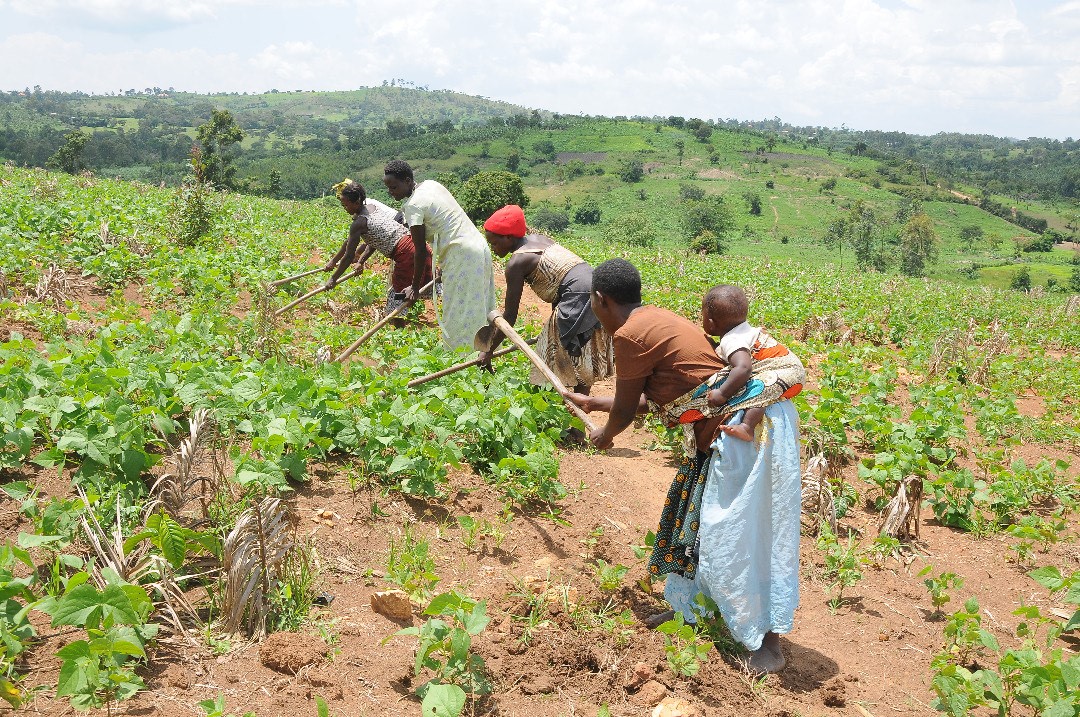
Ugandans Increasingly Benefitting from China’s Agricultural Initiatives

By Moshi Israel

Development assistance comes in many forms and at various levels. It can be extended to governments and its institutions, to private institutions and to local communities. China has been involved in all forms of development assistance to Uganda.

It is important for local communities to benefit from development aid because they are at the center of national development strategies. The local communities in Uganda largely depend on Agriculture to make ends meet. It is the reason why Agriculture is the backbone of Uganda’s economy. Agriculture is a lucrative venture in Uganda despite obvious obstacles. The sector employs 70% of the population, contributes half of Uganda’s export earnings and a quarter of its gross domestic product (GDP).  Therefore, investment in local communities and in Agriculture is paramount to shaping Uganda’s economic development.

The Chinese government and private sector are having a profound imprint on Uganda’s progress to a middle-income country. China’s extended hand of friendship has touched the very core of Ugandan society and testimonies from the beneficiaries are everywhere for all to see.

China has strengthened its already cordial relationship with Uganda by increasing its presence in the country and injecting much needed aid into the very backbone which keeps Uganda’s economy standing straight. Uganda has received project aid in form of interest free loans and grants from her Chinese friends.  Projects like Kibimba and Doho rice schemes, are one of many initiatives that validate Uganda-China Partnership.

Rice farming has been a leading project of interest by china in Butaleja district in Uganda. Here, the local communities attest to milestones achieved due to direct collaboration with China.  A number of local farmers have benefited from hybrid rice farming in the district. Rice farming has radically shifted the fortunes of local farmers and enriched the community. Locals have attested to being elevated from absolute poverty. Some have been able to build homes, educate their children and purchase previously unaffordable luxuries. Women are also increasingly contributing to household incomes by participating in rice farming. China has also purchased state of the art machinery to further modernize farming in the area. This machinery is set to arrive in Butaleja district anytime. Farmers are also supplementing rice farming with the growing of fruits such as mangoes and water melons for commercial purposes. Butaleja has become a reputable hub for rice and is supplying their products to other regions.

Additionally, as they say, one good turn deserves another. The best practices of rice farming in Butaleja have the potential to be replicated in other regions of Uganda which would boost the Agricultural sector nationally. Besides, some farmers in Butaleja already export their products to neighbouring Kenya.

Then there is the tripartite partnership Uganda has with China and FAO. The three partners plan to implement phase three of the FAO China-Uganda South-South Cooperation (SSC).This three-year $12m (Shs44b) project would benefit over 9000 farmers. The project aims at improving crop, livestock and fish production. Consequently, 3000 women, 1,000 livestock farmers and 100 fish farmers in 30 districts are set to gain from technical instruction and knowledge-sharing with Chinese experts. According to the project head, Mr. Zhang Xiaoqiang, the beneficiaries will be selected in collaboration with the Ministry of Agriculture, Animal Industry and Fisheries and district agriculture officials. Furthermore, during the event at the Kajjansi Aquaculture Research and Development Center, H.E the Ambassador, Zhang Lizhong, assured Ugandans that the project is one of many vital collaborations between Uganda and China, and the latter will continue to support Uganda by sending experts to share knowledge with local farmers.

In the long term, thousands of youths and women will have improved livelihoods by earning an income without overcrowding the already bloated formal job market that has left many Ugandans frustrated.

China has also aided in the setup of Wakawaka fish landing site and] Kajjansi Aquaculture Training Center. Coffee, fish, cotton, tea and various food products are among Uganda’s major exports. The country is a food basket in the region.

China has a very good eye for opportunities and identifying the agriculture sector of Uganda as a major recipient of development assistance is a wonderful exhibition of their mature diplomacy and tact. This is how local communities tell the difference between serious allies and opportunists. A true friend seeks to improve those areas about you that are vital for your progress. This is what the agriculture partnership between Uganda and China is yielding.

Once, every local farmer can access modern ways of farming and implement them to their logical end, then Uganda is on its merry way to unprecedented economic development. Uganda’s tax base is limited due to rampant poverty. However, if the common people can utilise their naturally endowed land and earn a living with a decent income, then the tax base dramatically changes for the best and the country at large benefits.

The partnership between Uganda and China underlines one important tenet; there is no national development without uplifting local communities. It is good news that China understands and appreciates this fact.

The Writer is a Research Fellow with Development Watch Centre


China-Uganda 60 Years Of Diplomatic Relations

China and Uganda have a long diplomatic history dating back to the post-independence era. China is among the few countries that recognized Uganda as sovereign country just days after independence. Since then, Beijing has been cooperating well with Uganda, offering Kampala support in different sectors that we cannot discuss the journey of Uganda’s socio-economic development without mentioning the role of China.

In education sector, China continues to do a tremendous work offering training opportunities to different Ugandans at different levels. By end of 2021, Beijing had offered Ugandans hundreds of undergraduate and postgraduate scholarships and over 5000 Ugandans benefited from China’s short course training opportunities covering different key areas such as agriculture, medical care, infrastructure, information and technology among others.  China is also collaborating with African universities funding research and other learning opportunities. Makerere University’s Confucius institute is among the many examples. Aware that human capital and well-educated and skilled people are essential to facilitate development of the country, one cannot discuss development of Uganda’s education sector and human capital development without mentioning China’s contribution.

In the field of agriculture, China has been playing a key role for more than 40 years. In 1973 and 1987, China invested and established the Kibimba Rice Scheme (Now Tilda Uganda) and Doho Rice Schemes which have increased rice production and provided employment opportunities to many Ugandans. Additionally, the South to South Co-operation has boosted agriculture in Mbarara, Kabale, Amuria, Wakiso, and Budaka. Agricultural technology demonstration hubs have been established in Kabale to boost horticulture. China has also been supporting fish farming by funding the construction of the Wakawaka fish landing site and the Kajjansi Aquaculture Training and Development Centre which is a national center for aquaculture research in Uganda. This has led to increased and sustained fish production.

In 2009 under the South-South Cooperation (SSC), in coordination with United Nation’s Food and Agriculture Organization (FAO), China launched FAO-China South-South Cooperation (FAO-China SSC) and established FAO-China Trust Fund. China invested $30 million in this program to to support agriculture in Uganda. China has since been supporting this program injecting $100 million in 2015 and 2021 for phase II and phase III respectively.

During phase II of China-FAO SSC, China sent 47 agricultural experts and technicians have to train Ugandans in the same field. During the expert’s two year stay in Uganda, they trained many Ugandans and helped to improve technologies used to in farming of various crops such as rice, foxtail millet, maize, grapes, apples and cherry tomatoes, as well as animal reproduction.

In energy sector, China’s contribution in Uganda’s energy is also visible. The Karuma dam hydropower station with capacity of 600 MW which under construction in Kiryandongo District is an example of China’s contribution in Uganda’s energy sector. The project is 85% funded by China’s Exim Bank and Uganda government is meeting the remaining 15 percent. The project is being constructed by a Chinese firm Sinohydro Corporation and is expected to be completed in June 2023. Isimba power station which became operational in 2019 was also funded by with a loan from China’s Exim Bank. Karuma and Isimba hydropower plants are identified in Uganda’s Vision 2040 as key projects to Uganda’s economic development.

In infrastructure development, China directly funded US $ 350 million for the construction of the Kampala-Entebbe express highway, which is the first express highway in Uganda. The expressway is a 51km, four-lane, dual carriage toll road linking Kampala to Entebbe airport. The stated intention of the highway was to; reduce congestion and increase the commercial viability of the Greater Kampala Metropolitan area, improve mobility and reduce travel times and vehicle operating costs, and provide better access to local facilities for communities and jobs.

The expressway has helped to improve mobility and travel times to the airport. The US $ 350 million loan will be paid in 13 years and current statistics from Uganda National Roads Authority indicate Ugandans have embraced using the road with average daily passages of 20,000 which is far higher than projected daily passage which UNRA had put at 13,000 passages.  This also means daily collections have risen which is a good sign that the road can sustain itself in terms of maintenance and paying back construction loan. Indeed, Joy Nabasa the spokesperson of Egis which was hired to maintain the road collecting the toll on behalf of UNRA recently told journalists that the number of passages is increasing daily. Last month, media reports indicated that the road toll had collected 13 billion shillings in 4 months alone.

Good road network is key in transportation of goods and services which is key for development. As two Chinese say; “Better roads lead to better life.” and “Build roads if you want to get rich” with more good road network, Uganda’s social-economic growth and match to middle-income status is a matter of time.

In health sector, China continues to play a key role in supporting Uganda’s health sector. For example, as a result of good relations between the two countries, China funded the construction of China-Uganda Friendship hospital at Naguru. The hospital offers health services to people, for instance, paediatrics, gynaecology, dental, and laboratory services.

On 10th June this year, a team of Chinese medical personnel arrived in the country and will stay in Uganda providing medical services to citizens. Since 1983, China has been sending a team of doctors and experts to help work with Ugandans in extending medical serves to Ugandans.,

In the wake of COVID-19, China has supported Uganda in the fight against the pandemic. China donated COVID-19 test kits to boost efforts against the virus. Additionally, Beijing donated up to one million doses of COVID-19 vaccines.

Considering the positive contribution, the two countries have witnessed over the last 60 years, it is a living a testimony that China and Uganda are good comrades, good equal partners and good brothers always working hand shoulder to shoulder with major aim of building a community of shared future and prosperity for mankind. Considering enormous opportunities that comes with this brotherly relation should be natured by people of both countries. This to happen, as a Chinese saying goes, “amity between the people holds the key to state-to-state relations,” with the bilateral relations between our countries were elevated to the level of Comprehensive Cooperative Partnership three years ago in late June 2019, our two peoples must guard these relations jealously.

Vianney Sebayiga is a research fellow at Development Watch Centre and a Student at the Kenya School of Law.

A Review of China’s Support to Uganda’s Agriculture Sector

“Only when the granary is full will people learn etiquette; only when people are well-fed will they know honor and shame,” says an ancient Chinese adage. One can argue that China put this saying in practice while nurturing her Sino-Africa relations by supporting agriculture sector.

In Uganda’s context, China has been playing a key role for almost 50 years. Indeed, in 1973 and 1987, China invested and supported establishment of Kibimba (Now Tilda Uganda) and Doho Rice Schemes. This increased Uganda’s rice production capacity on top of creating employment opportunities for the many people.

Through the South-to-South Co-operation, China has invested heavily and supported the Uganda’s agriculture sector. In 2009, working with United Nations’ Food and Agriculture Organization (FAO), China introduced a new programme FAO-China South-South Cooperation (SSC). Beijing backed this program and created a FAO-China Trust Fund with $30 million to support agriculture in Uganda.

In 2015, China launched Uganda’s FAO-China South-South Cooperation (SSC) phase II and injected $50million further supporting the country’s agriculture sector. This program received another $50million boost in phase III which was launched in 2021.

During the first two China-FAO SSC phases, China sent 47 Chinese agricultural experts and technicians on a two years mission. The experts are credited to have helped in skills development and exchanges. In particular, they helped to improve technologies used in production of rice, grapes, cherry tomatoes, foxtail millet, and apples. Also, the experts exchanged skills with Ugandan farmers in animal reproduction such as goats, pigs, and in fisheries. This project focused on exchanging mechanization, agro-processing and value-addition.

A June 2020 study entitled “Access and Adoption of Hybrid Seeds: Evidence from Ugandapublished in Journal of African Economies credited Chinese agriculture support to Uganda that it has improved innovated agricultural practices. The study further reveals this has helped in addressing poverty challenges in Uganda’s rural areas.  

In October this year, working with Ugandan authorities, China will be Launching phase III of China-FAO SSC. This time, China will inject 2.39 million U.S. dollars in the program. Under phase III, China will send to Uganda 18 Chinese agricultural experts and technicians to agriculture sector. This project seeks to advance and support appropriate and effective technologies with aim of boosting the countries food security. More than 9,600 farmers of whom at least 30 percent will be women are expected to benefit during this phase while more than 200 Ugandan agricultural personnel will receive technical training.

From grassroots, several Ugandan farmers have already benefited from China funded Phase I and II of China-FAO SSC. Under the said two phases, farmers in districts such as Amuriat, Budaka, Kabale, Mbarara, and Wakiso among others. In Kabale, agricultural technology demonstration hubs have been established there which is boosting horticulture. China has also been supporting fish farming in the country. For example, China funded the construction of Kajjansi Aquaculture Training and Development Centre which is key in aquaculture research in Uganda.

Also, China funded construction of Wakawaka fish landing site. All this has seen increase and sustained fish production in Uganda. Uganda’s Fisheries sector is one of Uganda’s leading foreign exchange earners. The sector accounts for about US$200 million annually. The sector is also employing estimated 1.5 million people such as fishermen, boat owners, fish mongers, transporters and processors among others.

On Continental level, China’s support to African countries agriculture sector is also visible. During the 8th Ministerial Conference of the Forum on China-Africa Cooperation (FOCAC) held on 29th November 2021 in Senegal, supporting African countries agriculture was among the nine key areas Chinese president Xi Jinping pointed at where China would cooperate with African countries. The other eight areas are health, poverty reduction and trade promotion, investment promotion, digital innovation, green development, capacity building, cultural and people-to-people exchange, and peace and security.

Globally, China’s voice in promoting and advancing programs meant to fight famine has been loud. While attending this year’s G20 summit in Bali, Indonesia, China’s State Councillor and Foreign Minister Wang Yi made a plea calling for a strong cooperation to ensure a successful global food security agenda and reduce suffering of many due to hunger. Today, many countries are struggling with hunger. Recently, United Nations Secretary General Antonio Guteres expressed concern stressing that global hunger levels are at a new high. Guteres observed that in two years, the number of severely food insecure people has doubled from 135m to 276m today.

Also, among others, China’s Global Development Initiative seeks to address challenges like famine to ensure continuous development, with the aim of helping all people realize their dreams. The discussion above is a pointer that food security is key for national and global security and development. Aware that we can only attain food security by supporting and improving agriculture sector, recognising China’s contribution in supporting Uganda’s and Africa’s agriculture sector is prudent.

Ssemanda Abdurahim is a Research Fellow at Sino-Uganda Relations Research Centre.