On China’s Lunar Ambitions

As I write this, one country is leading the world in application of robotics, not just on earth, but also on the moon. China’s robots are currently scrubbing the surface of the moon, harvesting and returning materials of scientific experiments. China is still the only nation to have performed robotic rendezvous and docking at the Moon.

In 2025, China’s Long March 5 rocket launched the world’s first spacecraft capable of retrieving samples from the far side of the moon. The Chang’e 6 spacecraft is revolutionary. Not only is it beneficial to China alone, but to other countries and collectively, for the survival of human consciousness. On its May 2025 mission, Chang’e 6 deployed Pakistan’s iCube-Q orbiter, which carries two optical cameras and a magnetometer designed to detect potential signs of water ice on the Moon’s poles.

The engineering excellence that makes Chang’e 6 possible is as mind-blowing as the engineering used in other lunar landers. To safely land on the moon, it uses a combination of technologies including; a variable thrust engine, optical imagery, onboard maps, hover phases to detect hazards, and shock-absorbing crush-core legs for the final freefall. It also uses a laser-based LiDAR sensor to map the local landing area in 3D before the final landing phase.

The accomplishments of Chang’e 6 from the 2025 mission are already registered. It collected up to 2 kg of soil and rock samples using a drill and a movable surface scoop, and deployed context-providing instruments including cameras, a ground-penetrating radar, and a mineral spectrometer. It then used its arm to move the samples to a sealed container, deployed a small 5 kg rover to photograph the landing area, and launched the samples to lunar orbit as part of an ascent module, which autonomously determined its position and orientation with aid from the Queqiao-2 communications relay lunar orbiter, then docked with the Chang’e 6 orbiter.

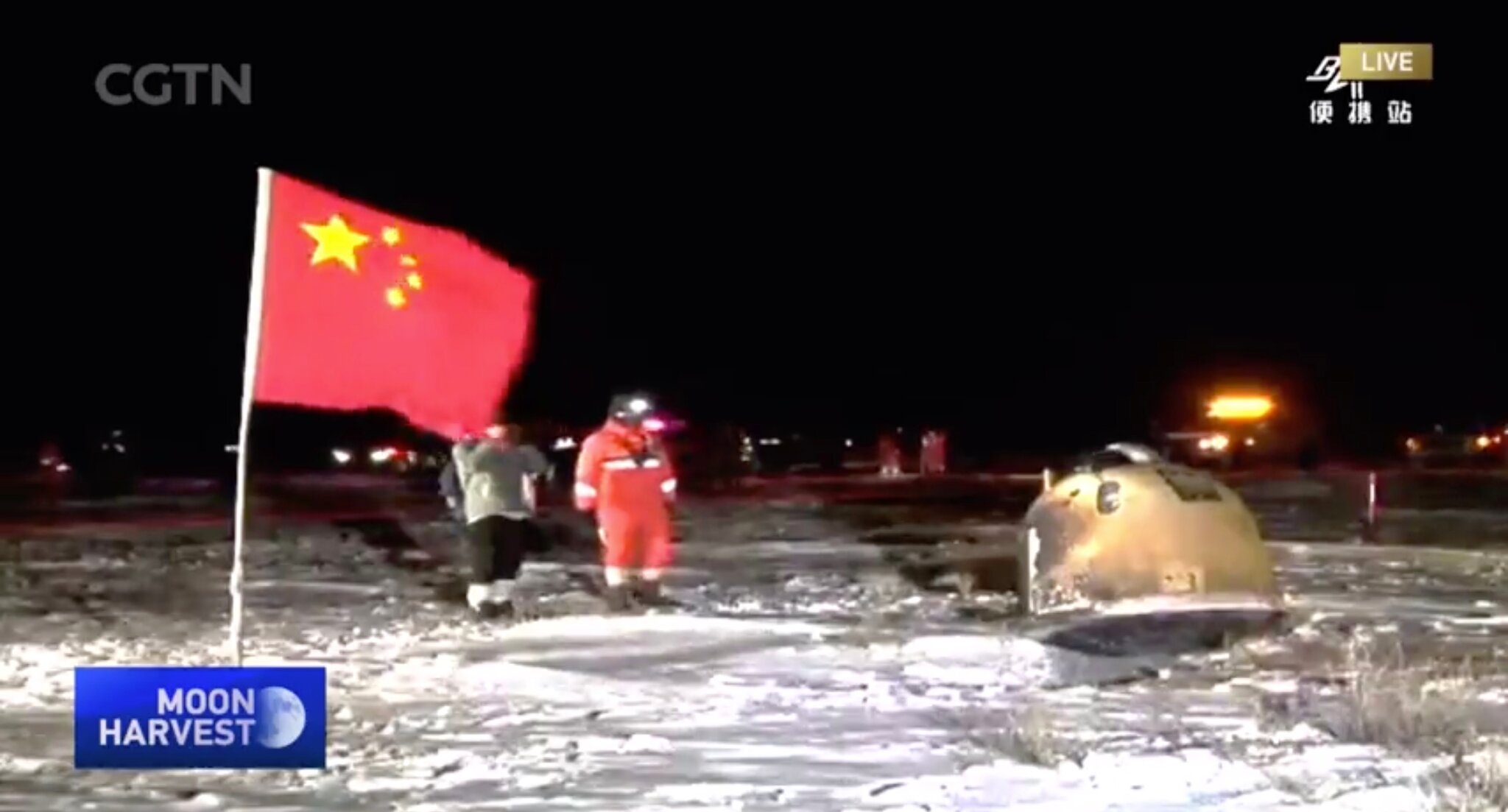
The samples were later transferred to the Earth return capsule, which safely descended and landed in China’s northern Inner Mongolia Autonomous Region. The successful execution of this complex mission raises hopes for the capabilities of China to eventually land humans on the Moon in the next few years.

Perhaps the most useful achievement from this mission is the in the study of volcanic activity on the moon’s far side, which is necessary in the wider understanding of the evolution of not just the moon but our solar system too.

The mission also led to the very first, and successful detection of negatively charged particles on the Moon’s far side. Experts explain that particles are produced when highly energetic solar wind particles slam the Moon’s surface and kick up secondary particles.

It is also inspiring that the instruments that made that detection belonged to European parties under NILS who collaborated with China on the mission, marking Europe’s first such collaboration with China. Lunar exploration is as such a uniting adventure, and we should work to keep it that way, for the long-term unity of humanity.

The China National Space Administration (CNSA) has also hinted on further collaborations with other world countries on space missions with the upcoming Chang’e 7 this year.  The orbiter is planned to carry a hyperspectral mineral mapping camera made by Egypt and Bahrain, a 3 kg instrument duo from Thailand to study solar storms and cosmic rays, and a Swiss AED radiation monitor to measure incoming and outgoing radiation to and from Earth. This will also be Egypt, Bahrain, and Thailand’s first missions to study of the Moon. The lander will carry a Russian lunar dust and plasma analyzer, a telescope from the International Lunar Observatory Association, and another retroreflector from Italy-based SCF Lab.

According to China’s plans, after Chang’e 7 helps scientists get a tactile sense of the true nature and accessibility of water ice deposits on the Moon’s south pole, it will launch Chang’e 8 in 2028, comprising a lander, a rover, and an operations robot, to collectively explore the local geology and environment with 14 instruments. The CNSA also aims to test technologies most relevant to sending crew to the Moon at the end of the decade using the Chang’e 8 mission.

China’s crewed Moon landing plan involves building a giant new rocket called Long March 10, capable of sending 27,000 kg of payload on a trajectory to the Moon, tripling China’s current best capacity from the Long March 5, from which the 10 is derived.

Following China’s first crewed Moon landing, estimated to happen in 2030, the country will focus on building the surface phase of the ILRS by 2035. Key to realizing this is a new super-heavy lift and eventually reusable rocket called the Long March 9. The rocket can put 50,000 kg of spacecraft hardware on a Moon-ward trajectory. Once the Long March 9 is operational, China intends to use it to deliver large amounts of cargo — and possibly even more crew — to the ILRS Moonbase. The rocket will deliver critical infrastructure via missions named ILRS 1 through 5, including infrastructure for energy, communications, transportation services (landers, rovers, hoppers, and ascent vehicles), scientific research equipment, and more.

Senior Research Fellow, Development Watch Center
China’s Meritocratic System Challenges Western Monopoly on Political Legitimacy

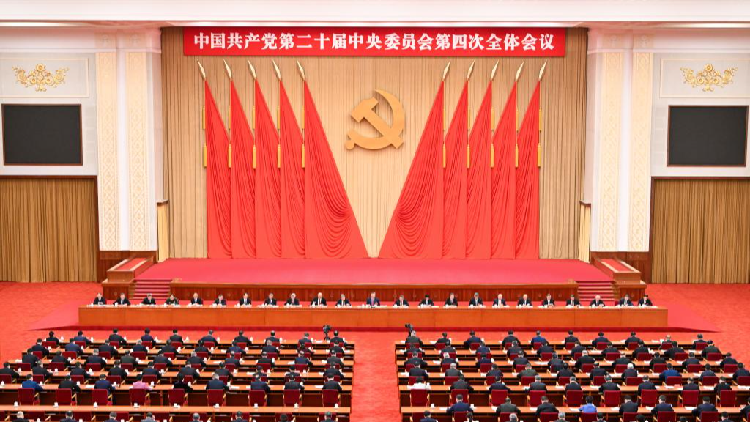
In the global governance discourse, Western epistemological colonisation has led us to believe, unquestioningly, that electoral democracy is the only process through which a political system can gain legitimacy. I disagree. China is one country whose political leadership challenges the applicability of democracy in a universal fashion, as an obvious truism. The Chinese Communist Party (CCP) is uniquely adaptive to Chinese realities, and derives its credibility and legitimacy among the over a billion citizens through a political model engineered around meritocracy. China stands as the most meritocratic political system in the world, but we never hear about this, because, well, according to the Western media we consume, the CCP is an authoritarian regime without electoral democracy.

Western universalist narratives assume that the kind of political evolution that must occur in any given society must follow a linear progression, whereby adult individuals, upon attaining the age of universal suffrage, can rationally vote and bring about good governance, which would ultimately guarantee prosperity for their nations.

If the foregoing assumptions were correct, there would be no way China would have lifted 650 million people out of poverty in three decades without implementing all the stated prerequisites of progress, i.e., holding regular multi-party elections, and practising other democratic rituals in the form of Western democratic experience. If anything, China disproves the Western narrative that it has a rigid system incapable of accommodating complex social change, is morally illegitimate and politically closed.

Across various CCP leaderships since the founding of the People’s Republic of China (PRC), China has exhibited a very agile political system, accommodating often disparate policies from Mao Zedong’s radical collectivisation, to the pragmatic market reforms overseen by Deng Xiaoping, and the formal institution of private business people into the ranks of the party by Jiang Zemin. These smooth transitions in the CCP across decades speak to the adaptability of the party as opposed to its rigidity. It is a system that functions flexibly, contrary to the dysfunction that Western narratives predict from it.

China also has the most meritocratic political system in the world. Popularly known as “the largest human resources department in the world”, the Central Organisation Department (COD) of the Communist Party is a pillar of CCP power. It plays a key role in maintaining the integrity of China’s governing system and helps the CCP rule by controlling the nation’s vital human resources. The COD manages the appointments and assignments of 5,000 provincial ministerial-level officials to various positions in the government, business firms, non-profit and other types of organisations. It also compiles detailed, confidential reports on potential leaders of the Party. It not only matches talents with positions as in ordinary human resource functions, but also ensures the loyalty of appointees to the Party, safeguards the integrity of the cadre corps, and runs programmes of cadre grooming and training. It is the COD’s job to see that the cadre corps is always in good shape in terms of age structure, education level, the right mix of expertise and work experiences, among other factors. The COD is notorious for stress-testing promising officials by rotating them through jobs in diverse parts of the country and in different administrative units, before hauling them back to Beijing if they pass the test. The current president of China, Xi Jinping, had served in various positions in five provinces, from county level to provincial party secretary for four decades before becoming president. No Western government comes even distantly close to this level of meticulousness in selecting competent leaders.

Whereas it is often the claim of Western critics that China’s government is illegitimate because it is not regularly subjected to democratic elections, as is signature practice in the West, an observation of the Chinese public opinion on this says the opposite. According to research conducted by the Ash Center and published by Havard University, which provided a long-term view of how Chinese citizens view their government at the national, regional and local levels, the survey team found that compared to public opinion patterns in the U.S., in China there was very high satisfaction with the central government. The survey established that 95.5 per cent of respondents were either “relatively satisfied” or “highly satisfied” with Beijing, compared to findings by Gallup on American citizens, where only 38 per cent of respondents were satisfied with the federal government. What does this say about legitimacy? Should the legitimacy of a government be judged based on holding an election or voter/citizen satisfaction with the political order?

My goal here is not to say that China’s system is without its flaws. The CCP faces significant challenges. Corruption is still a big problem, just like in most countries. However, we must be cognisant of the peculiar cultural and historical contexts in which nations operate. We are not walking the same, linear journey. Western nations should not impose their journey on us. We are walking in different footsteps. China recognises this and never seeks to impose or export its model. Our shared future as humanity will be more stable when we follow plurality, not universalism.

The writer is a senior research fellow at the Development Watch Center.

Spain’s PM China Trip: A Cobweb of Politics and Geopolitical Re-alignment

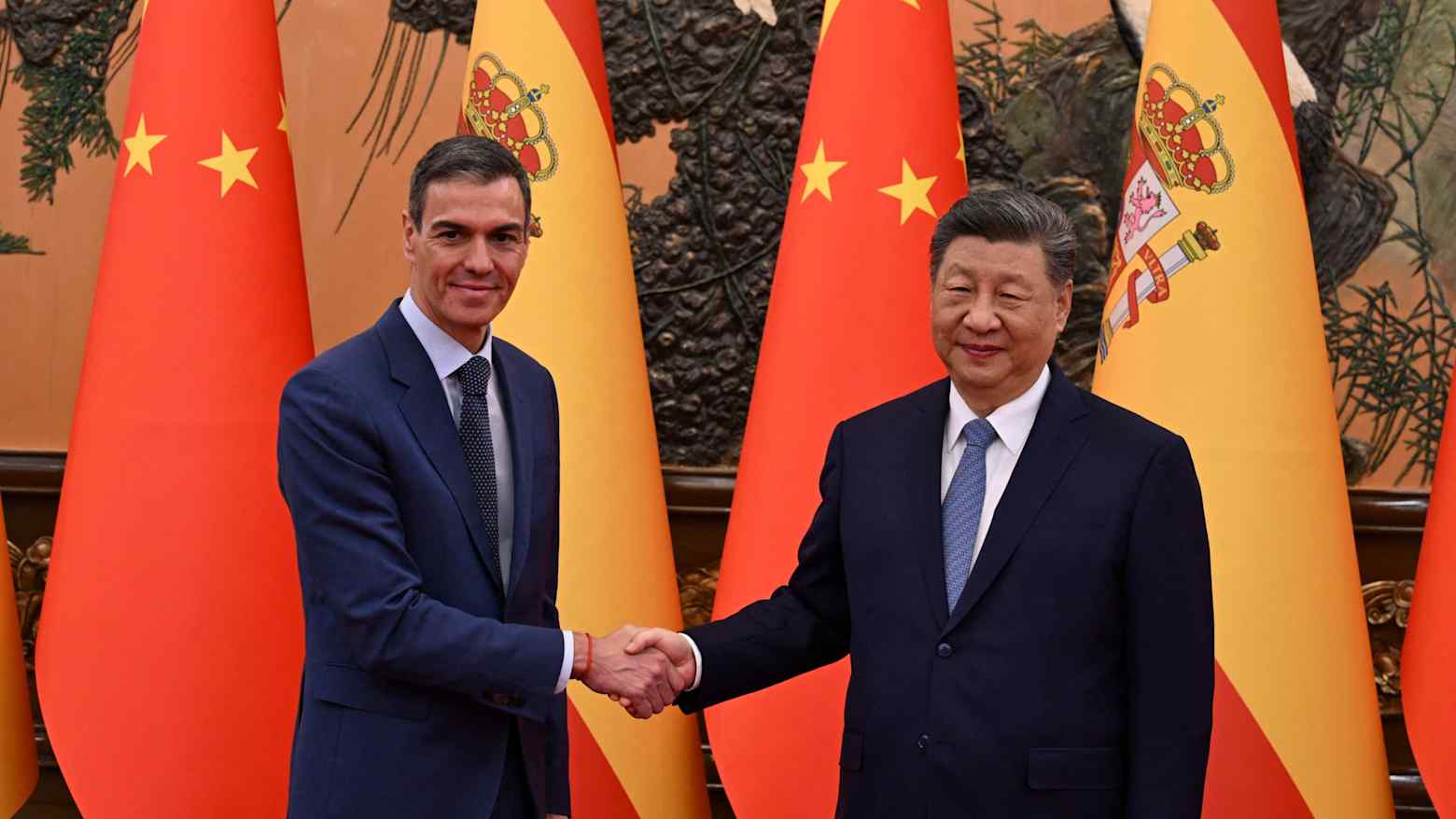
On Sunday April 12th, Spain’s Prime Minister (PM) Pedro Sánchez landed in China for a five days state visit making him the sixth European statesman to do so between December 2025 and April 2026. The leaders coming before him were; Emmanuel Macron of France, Keir Starmer of the United Kingdom (UK), Friedrich Merz of Germany, Petteri Orpo of Finland, and Taoiseach Micheal Martin of the Republic of Ireland. In January, Mark Carney also headed a high level Canadian delegation to China.

In part then, PM Sánchez’s mission can be understood as falling in the emerging trend of European Union (EU) member states opting to collaborate more with Beijing in a bid to hedge themselves against the increased unpredictability in Washington following the re-entry of President Trump on the international political scene. Stopping at that however, would be to miss the most important aspect of Sino-Madrid relations in recent years.

In order to have a better grasp of the dynamics at play, one has to go back to 2023 starting from which, the Spanish Socialist Workers Party’s Secretary General has put it upon himself to embark on an annual diplomatic sojourn to China. This places him in a category of his own. What is even more fascinating is that King Felipe VI and Queen Letizia travelled to the Asian nation too towards the end of last year.

Looking at things from this perspective, the capacities that PM Sánchez’s relationship with Secretary Xi Jinping has brought about overtime become a point of inspiration for other heads of states (both within Europe and outside of it) who are only awakening to the current moment in geopolitics now about the opportunities that become available to harness once a country establishes strong ties with  China. A concrete example in this regard is trade between China and Spain which increased by almost 10% in 2025 alone (the final figure stood at $55 billion). Specifically for Madrid, her exports under this bilateral framework grew by 7%.

By working more closely, the two parties have been able to set in place conditions that facilitated the realization of each other’s comparative advantage. In 2024 hence, Prime Minister Sánchez alongside Prime Minister Li Qiang entered agreements on green development, science research, education, culture etc. Two years down the road, Chinese manufacturer Chery announced that it would be setting up a plant targeting to serve the European continent at large in Barcelona.

The Chinese and Spanish political establishments have also been able to provide an alternative model to interstate relations which though cognizant of the fact that national interests can never be aligned across the board, is at the same time sophisticated enough to bypass the same to emphasize areas of common ground. The reigning President of Socialist International addressed this phenomenon in a speech delivered at Tsinghua University during the 2026 official visit saying that; “A multipolar world is not an assumption or an ideal, but a new reality. We cannot change it; we can only deny it or embrace it.”

Unfortunately, when Spain has exemplified this spirit more broadly, her efforts have been treated with contempt. Having denied the United States of America access to the Morón and Rotafor military bases for instance (cautioning instead that “you cannot answer one illegality with another, because that is how the great catastrophes of humanity begin”), the country’s 47th President responded with threats of imposing a full trade embargo on the EU state. The good news is that Donald Trump has not treated less vocal parties kindly either a move that has tested their patience significantly such that as it stands, UK and Paris have both made public the fact that they will not partake in the Strait of Hormuz blockade that America recently announced.

From here, it is not difficult to see them seek to consolidate their cooperation with Beijing given what Spain has managed to achieve by doing so. When he met with President Xi thus, Pedro Sánchez made no secret of the fact that he thought that it was necessary that the China takes a more proactive role in geopolitics and that if the party, it would have the full support of his government.

The writer is a Lawyer and Research Fellow at the Development Watch Centre


China’s Playbook for Global Industrial Dominance

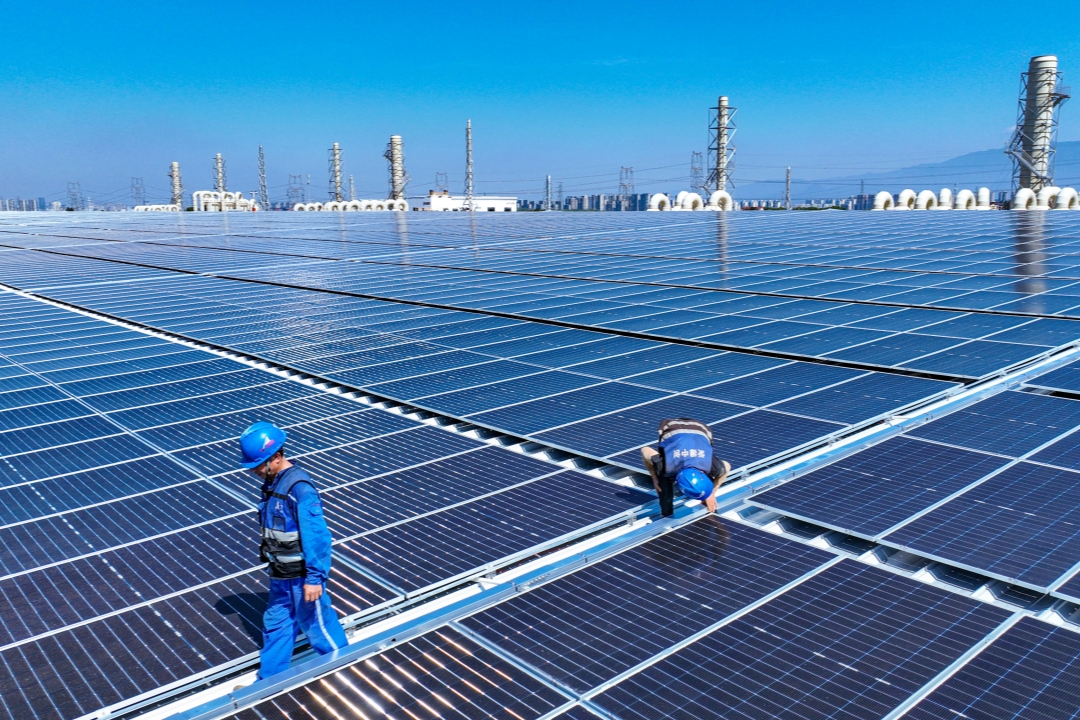
China’s Qinghai Province hosts the world’s largest solar power plant, Gonghe Talatan Solar Park. Experts claim that at full capacity, it can power a country such as Norway. Sprawling across China’s deserts is not just sand but also vast solar and wind projects. Both the world’s largest solar plants and wind farms are all located in China.

China invests an average of $940 billion in clean energy technology per year. In comparison, China invests almost as much in renewable energy as the rest of the world invests in fossil fuels. The benefits of China’s investments will, in the short and long term, not only benefit the country but also fundamentally transform the global economy. We are increasingly entering an era where Chinese domestic policy is effectively global policy.

When Chairman Mao died in 1976, he was succeeded by one of the most transformational leaders of the 20th century, Deng Xiaoping. Upon assuming power, Deng saw the need for profound economic reform through market pragmatism. Under the slogan “Reform and opening up”, Deng began a process of gradual economic liberalisation throughout the 80s. As his reforms took hold in the 90s, China’s economic growth started quintupling, stimulated by surging exports from Chinese factories to foreign markets. China also started testing out the opening up of domestic markets to foreign direct investments through special economic zones.

As recently as 1995, China’s GDP per capita was just over $600, much lower than South Korea’s, which was at more than 12,000 and Japan’s at 44,000.

At the dawn of the 21st Century, China’s rapid economic rise continued to soar under the leadership of Jiang Zemin and Hu Jintao. A defining moment in modern economic history was in 2001, when China joined the World Trade Organisation. It was defining because it opened up access for Chinese goods to global markets. Experts observe that China’s GDP per capita surged by another fivefold in the ten years following its accession to the WTO, and merchandise exports jumped to account for around 60% of GDP by 2007 as a result of the economic liberalisation along international principles.

This was the commencement of an age where more affordable Chinese goods started saturating foreign markets, and China started to build up large trade surpluses with most of the world’s previously leading exporters. By 2010, China had overtaken Japan as the world’s second-largest economy. Nevertheless, China’s export economy remained largely focused on lower-end, labour-intensive manufacturing.

President Xi Jinping came to power in 2012, and three years later, in 2015, announced a new economic strategy: “Made in China 2025.” It was a blueprint for the next stage of China’s economic development. It outlined the weaknesses of China’s economy and set out goals to eliminate them. It said that China’s manufacturing industry was large but not strong, lacked innovation, and was dependent on foreign countries for core technologies and high-end equipment.

The strategy was a clear directive for the state to back key modern industries that had begun emerging in the early 2010s, on which the country’s future as a manufacturing powerhouse depended. These included robotics, aerospace, biotech, electric vehicles, and renewable energy technology.

Is it still surprising that by 2026, China will be the global leader in the clean energy supply chain?

It the recent years, China installs on average 244GW of new solar and wind energy capacity. Chinese green technology companies are the most cost-effective and innovative you can find in the world. Chinese EV brands are rapidly becoming the largest automakers in the world. China accounts for 80% of global solar panel production capacity. It represents 60% of global wind turbine production and up to 90% of global lithium battery production. If there is an industrial race of our time, China is winning it. Chinese technology companies are likely to be competing against themselves in the near future.

It’s not like how Chinese companies became so competitive is a secret for the rest of our countries to borrow a leaf from. The Chinese government provides them with tax incentives and credits to help them grow and operate, and to enable their R&D. Sometimes, it provides them with cheap land and manages the prices of other input costs like electricity. The largest way, perhaps, it supports these companies is by offering cheap loans. However, that is only possible because China has a highly centralised banking sector, with state-owned banks owning 60% of all assets in the sector. This implies they can lend extensively to help favoured industries grow, calculated not by risk and return, but by the government’s own priorities.

Ugandan factories and industries need the same support; unfortunately, most banks in Uganda are commercially owned by multinational capital, whose interest is in profit repatriation, not long-term development of our country. Ugandan companies cannot operate and produce more cheaply without state subsidies and banking support. They need to have lower rent costs, lower tax burden, lower borrowing costs, and subsidised demand in our domestic market.

The writer is a senior research fellow at the Development Watch Center.

Merz’s High-Stakes China Balancing Act

In February this year, the German Chancellor Friedrich Merz arrived in China. This was his first visit there since taking office, and he’s the latest Western leader seeking to reset ties with Beijing. The trip came amid warnings from German industry of growing competition from China. It is clear that both countries now want to pursue increasingly practical cooperation.

Any curious observer of China knows that the country is currently celebrating the year of the horse. It is therefore symbolically significant for Germany that the first high-profile visitor to Beijing during this highly auspicious lunar year has been their Chancellor.

One of the difficult asks Merz had for President Xi Jinping was that China should encourage Russia, its key ally, to end the war in Ukraine. But that will be a topic for another piece. For this trip, the primary focus for Germany was on seeking closer cooperation with Beijing as a hedge against rising global trade protectionism and tariffs.

Ahead of his journey to the Land of the Dragon, Merz remarked thus: “Foreign policy and economic policy belong together just as much as defence policy and domestic policy. We can no longer separate them today. That’s why I’ll be travelling to China to discuss future cooperation between Europe and Germany on the one side and China on the other…”

Remember, Merz is the latest leader to trip his way to China, seeking to stabilise economic ties and navigate geopolitical shifts. Countries which in the past had blocked China during its trade dispute are now impatiently knocking at the Middle Kingdom’s door, all keen to strike business deals. The British, Canadian, and South Korean leaders have all visited Beijing this year, yet we have not even moved half of the year!

Firstly, it is obvious, even common sensical that Merz should tread carefully not to cause a rift with Washington over China. President Trump recently threatened 100% tariffs on Canada for holding trade talks with Beijing. Germany will be aiming to strengthen ties without triggering a similar retaliation from the US.

Secondly, there is apparent domestic pressure for Merz, too. Over the past year, German politicians and business groups have increasingly warned about intensifying industrial competition with China and the risk of a new China shock. Even European/Western experts have spoken out and recognise that China has become a sophisticated manufacturer and is advancing rapidly in key technologies, a growing challenge for Germany’s export-driven economy. Last year, China sold a trillion dollars more overseas than it imported. Germany’s economy is highly export-driven, but exports to China fell more than 9% in 2025. Overall, car exports to China have dropped by a staggering 2/3 since 2022.

The other concern on Merz’s hands is that he needs to balance the need to protect vulnerable German industries from cheap Chinese goods while repairing strained ties. This would be a defining challenge for him. German automakers are already feeling the pinch from Chinese competition, since China is now the global leader in EVs, and a distant number one for that matter. This is something that Merz has to navigate along with the whole question of where rare earths will come from in the future, as China becomes more and more restrictive and is very open that it wants to use this as a political instrument as well. The other key challenge on Merz’s table is the pressure from the United States. America, of course, wants to see its European partners take a tough line on the Chinese government and particularly on their trade deficit.

Therefore, whereas Merz may want to have a stable, prosperous relationship with China, the foregoing issues I have highlighted are real concerns for him to deal with. The reality of the time is that Germany is exporting less to China. German brands in China have less of a market share, and Chinese brands are increasingly competing with Germany in third countries around the world. Merz travelled with several European manufacturers on this trip, and they all had/have serious concerns that this is costing jobs in Germany. The business people are definitely critical of what they may find to be unfair practices by China, such as things like government subsidies, although basic knowledge of economic history would reveal that this is the same process by which Western industries accumulated significant growth and came to dominate the global market.

For President Xi Jinping, it must be a very great experience hosting yet another powerful Western leader. Xi has effortlessly been positioned by Western leaders themselves as a stable partner compared to the US, whose leader, Donald Trump, seems to be as fragile to rely on as the weather.

These events have also added to the image of China as the true leader of the new multipolar world order. And since Germany and Europe in general are important markets for China, Xi must be glad to welcome more European leaders to China to strike trade deals. This is even more urgent now, when the Chinese economy’s domestic demand has been slowing down. China, therefore, needs to rely increasingly on the export market.

We should remember that the relationship between Germany and China has really flipped over the years. It had been the case that Germany was a big exporter to China, with China having to rely significantly on German machinery and German expertise. However, in recent years, China has become the one exporting a lot to Germany. There is a lot of dependency on Chinese manufacturing for the German economy to survive. Nevertheless, China still relies heavily on German imports for materials and other chemicals and manufacturing, although Germany is the most dependent of the two countries.

The writer is a senior research fellow – Development Watch Center.