China’s Meritocratic System Challenges Western Monopoly on Political Legitimacy

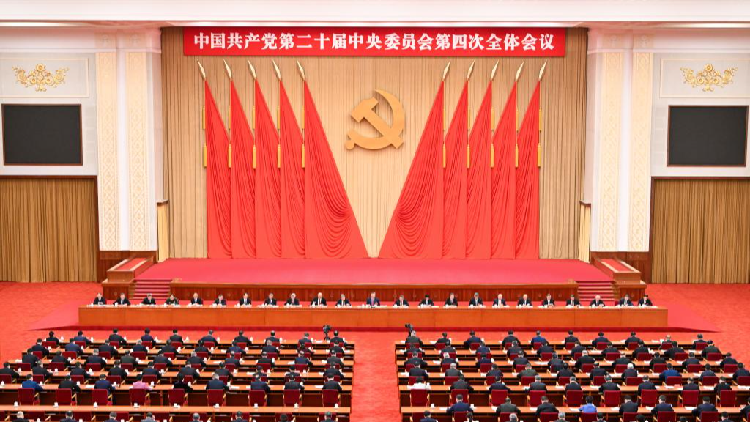
In the global governance discourse, Western epistemological colonisation has led us to believe, unquestioningly, that electoral democracy is the only process through which a political system can gain legitimacy. I disagree. China is one country whose political leadership challenges the applicability of democracy in a universal fashion, as an obvious truism. The Chinese Communist Party (CCP) is uniquely adaptive to Chinese realities, and derives its credibility and legitimacy among the over a billion citizens through a political model engineered around meritocracy. China stands as the most meritocratic political system in the world, but we never hear about this, because, well, according to the Western media we consume, the CCP is an authoritarian regime without electoral democracy.

Western universalist narratives assume that the kind of political evolution that must occur in any given society must follow a linear progression, whereby adult individuals, upon attaining the age of universal suffrage, can rationally vote and bring about good governance, which would ultimately guarantee prosperity for their nations.

If the foregoing assumptions were correct, there would be no way China would have lifted 650 million people out of poverty in three decades without implementing all the stated prerequisites of progress, i.e., holding regular multi-party elections, and practising other democratic rituals in the form of Western democratic experience. If anything, China disproves the Western narrative that it has a rigid system incapable of accommodating complex social change, is morally illegitimate and politically closed.

Across various CCP leaderships since the founding of the People’s Republic of China (PRC), China has exhibited a very agile political system, accommodating often disparate policies from Mao Zedong’s radical collectivisation, to the pragmatic market reforms overseen by Deng Xiaoping, and the formal institution of private business people into the ranks of the party by Jiang Zemin. These smooth transitions in the CCP across decades speak to the adaptability of the party as opposed to its rigidity. It is a system that functions flexibly, contrary to the dysfunction that Western narratives predict from it.

China also has the most meritocratic political system in the world. Popularly known as “the largest human resources department in the world”, the Central Organisation Department (COD) of the Communist Party is a pillar of CCP power. It plays a key role in maintaining the integrity of China’s governing system and helps the CCP rule by controlling the nation’s vital human resources. The COD manages the appointments and assignments of 5,000 provincial ministerial-level officials to various positions in the government, business firms, non-profit and other types of organisations. It also compiles detailed, confidential reports on potential leaders of the Party. It not only matches talents with positions as in ordinary human resource functions, but also ensures the loyalty of appointees to the Party, safeguards the integrity of the cadre corps, and runs programmes of cadre grooming and training. It is the COD’s job to see that the cadre corps is always in good shape in terms of age structure, education level, the right mix of expertise and work experiences, among other factors. The COD is notorious for stress-testing promising officials by rotating them through jobs in diverse parts of the country and in different administrative units, before hauling them back to Beijing if they pass the test. The current president of China, Xi Jinping, had served in various positions in five provinces, from county level to provincial party secretary for four decades before becoming president. No Western government comes even distantly close to this level of meticulousness in selecting competent leaders.

Whereas it is often the claim of Western critics that China’s government is illegitimate because it is not regularly subjected to democratic elections, as is signature practice in the West, an observation of the Chinese public opinion on this says the opposite. According to research conducted by the Ash Center and published by Havard University, which provided a long-term view of how Chinese citizens view their government at the national, regional and local levels, the survey team found that compared to public opinion patterns in the U.S., in China there was very high satisfaction with the central government. The survey established that 95.5 per cent of respondents were either “relatively satisfied” or “highly satisfied” with Beijing, compared to findings by Gallup on American citizens, where only 38 per cent of respondents were satisfied with the federal government. What does this say about legitimacy? Should the legitimacy of a government be judged based on holding an election or voter/citizen satisfaction with the political order?

My goal here is not to say that China’s system is without its flaws. The CCP faces significant challenges. Corruption is still a big problem, just like in most countries. However, we must be cognisant of the peculiar cultural and historical contexts in which nations operate. We are not walking the same, linear journey. Western nations should not impose their journey on us. We are walking in different footsteps. China recognises this and never seeks to impose or export its model. Our shared future as humanity will be more stable when we follow plurality, not universalism.

The writer is a senior research fellow at the Development Watch Center.
Is China a Democracy?

By Ernest Jovan Talwana

One of the hardest – and perhaps most controversial definitions in political literature today is democracy. What is democracy? Who decides what is democratic? Is there a universal value attached to democracy? Do all people, from all cultures, from all histories, and from all social-economic conditions, share common perspectives on what is or is not “democratic?” Is democracy about the processes of governance or the purposes and/or results of governance?

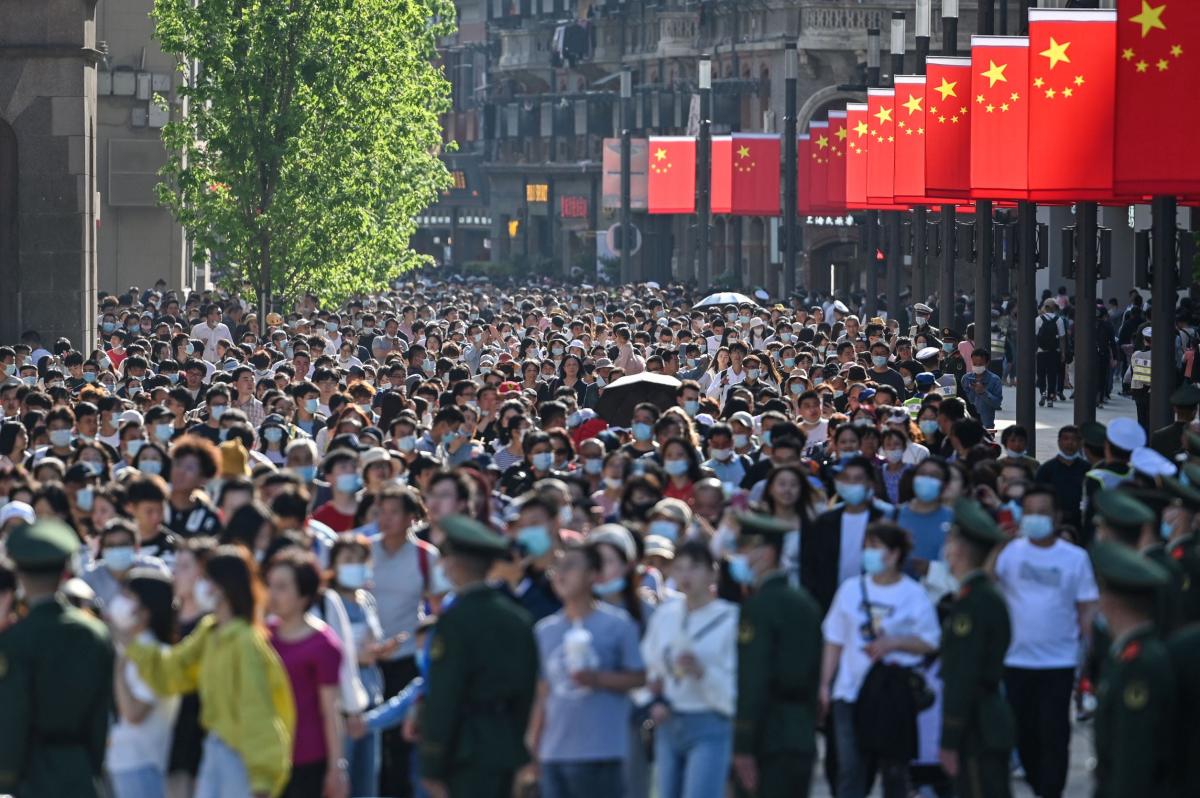
These are relevant and hard questions to settle in our contemporary political world. China is an interesting country to discuss on this topic because it is internationally considered to be among the least democratic countries in the world. (Here, I use the word “internationally” loosely to mostly mean the Western international community.) Out of 176 countries indexed in 2023, China ranked the 172nd least democratic country in the world, with a label of being a “Hard Autocracy.” This is a claim worth inquiring into, and consequently deconstructing. Often, when we talk about a country being “democratic,” we are referring to the values we cherish and thus attach to democracy. But those values are neither universal nor permanently fixed. They are values appreciated differently in different societies.

Every society’s experience, both historical and contemporary, shapes its national value systems, which inform its politics. As such, it would be misleading to assess every country’s political system based on the yardstick of Western understanding on democracy and autocracy. In fact, forcing a particular society’s political-value-standard onto every other society, is the quintessential embodiment of undemocratic behaviour. Therefore, before we understand whether China is a democracy or not, we need to first inquire into whether the label of China being a “Hard Autocracy” is from the billion Chinese people or from the mind of a guy working for a think tank or government agency in a Western capital somewhere.

Indeed, some studies challenge some western main scholarships findings on this topic. For example, Tony Saich, a Daewoo Professor of International Affairs and director of the Ash Centre explains that their 15 years quest to build a firmer understanding of Chinese opinion “found that compared to public opinion patterns in the U.S., in China there is very high satisfaction with the central government” with 95.5% of respondents saying “were either “relatively satisfied” or “highly satisfied” with Beijing. Compared to Gallup’s findings which revealed that only 38% of U.S citizens were satisfied with the American federal government, and aware that democracy is about majority, one can conclude that to brand China “hard autocracy” is nothing but a smear campaign.

China is a very different society from the United States of America, Britain, Norway, or even Uganda. The Chinese have diverse opinions on many things—just like all people in all places—but they share a common set of ideals, interests, or values that they pursue and want to realize. Their ideals shape what is democratic for them, and it doesn’t matter whether that ultimate thing they want out of politics is similar to what Americans or Norwegians want out of their politics.

China has a different set of prerequisites that its citizens follow to both choose and also hold public officials to account. As long as those prerequisites are met within the Chinese system, that process is democratic for them. The problem comes when the world’s all-knowing people from the West criticise the system established and upheld by the billion Chinese people because it doesn’t appeal to the political taste of the handful of millions of Europeans and Americans.

No one other than Chinese citizens has the political right to question China’s intrinsic brand of democracy. It is likely that citizens of Western countries value their democracy because it serves their interests and upholds their ideals and value systems. Those values might differ from what people in other countries, even in the Western world, or within different states in the United States want. But that doesn’t challenge the “democraticness” of their democracy. This principle should be applied when analysing China’s democracy too.

In China, the political administration developed what they conceptualised as a “whole-process people’s democracy.” The Chinese government translated this concept into relevant democratic values, which its public institutions are bound by and which the government strives to realize. China defines the whole-process people’s democracy as one that “integrates process-oriented democracy with results-oriented democracy, procedural democracy with substantive democracy, direct democracy with indirect democracy, and people’s democracy with the will of the state.” They understand this to be a model of socialist democracy that covers all aspects of the democratic process and all sectors of society. For them, it is “a true democracy that works.”

If what the Chinese wanted out of democracy was improved standards of living, their government over the last four decades has achieved that. Who can question whether that is not democracy for them? It is understood that in the Western world, a country is known to be democratic if citizens rise up frequently to challenge government authority. But this understanding of social behaviour blinds one to the nuance that within traditional Chinese philosophy, the preservation of social harmony is what is considered respectable order, not disruptive behavior. As such, Chinese citizens could be getting more from their government by maintaining the orderly political contestation that the ostentatious political activity experienced in the West.

We need to understand that democracy is not a decorative piece of ribbon picked and worn by every country to show off. It is rather an instrument through which public concerns are addressed. As long as China addresses the concerns of the Chinese people, that is democracy for them. The level of efficiency and order in the Chinese government are not questioned often. That is a big vote for the trust the citizens have in the democracy of China.

The author is a research fellow at the Development Watch Center.

Where Will Africa’s Democratization Come From?

By Nnanda Kizito Sseruwagi

The title of this Op-ed should not mislead us into thinking that I suggest a possibility of African countries being undemocratic. All of them are aligned towards democratization and in some aspects, some are even more democratic than some Western nations.  Like any state, even the oldest democracies, African states are on the journey of becoming more democratic. Democracy is not an end or event where a given nation crosses a certain line and alas, they are happy-ever-after democratic. No. Democracy is a means. A process. This process will keep on for eternity because human beings who execute this system of political organization are inherently imperfect, and as such will always deal with internal contradictions to their governance. Therefore, by Africa’s democratization most likely coming from China, I imply that there is a high possibility of different African countries tending to democratize more and more through their partnership with China than with other global actors in Africa.

Democracy can be understood in its opposition to other forms of government such as autocracy/dictatorship/tyranny- systems of government in which absolute power is held by the ruler, known as an autocrat/dictator/tyrant, or where power is held by a few individuals. The Austrian-British philosopher Karl Popper in his work “The Open Society and Its Enemies”, contrasted democracy to tyranny, and established that unlike under dictatorship, democracy offers opportunities for people to control their rulers, to appoint and disappoint them without the need for a revolution.

For Karl Popper’s idea of democracy enabling people to control their leaders to function, another argument comes into play – that of development leading to democracy. It has also been articulated and criticized as the modernization theory. This theory holds that as societies become economically developed, wealthier and more educated, their political institutions become increasingly liberal democratic. Whereas critics have compromised the modernization theory by accentuating cases where industrialization failed to produce democratization, such as Japan, Germany, and the Soviet Union, and claiming that the theory was too general and overlooked societal differences, this has not fundamentally challenged the fact that economic development significantly predicts democratization. We should note that social science theories are never as accurate as scientific theories. Several arbitrary factors undermine a prediction because societies are very disparate, and are as fluid and changing as the weather. The preponderance of accuracy for a social theory is never better than about 75 percent.

My argument emerges from an observation of the flow of development finance from the West and China, with a focus on what that finance does in Africa. According to a 2018 report by the China-Africa Research Initiative at Johns Hopkins University’s School of Advanced International Studies (SAIS), in 2000, China’s annual development finance to Africa totalled US$121 million. It was distributed among a handful of countries. However, by 2013, it had crossed over US$16 billion and was comparable to those of the largest Western development finance providers. China’s development Finance portfolio also focused on infrastructure projects and industries. In Uganda, finance from the Belt and Road Initiative enabled us to construct two hydropower plants; the Isimba Hydro Power Plant which generates 183MW to the national grid and the Karuma Hydro Power Plant which will produce 600MW. This will definitely contribute to our country’s power supply, which is a fundamental ingredient for manufacturing economic development.

However, another revelation from the SAIS’s report was that as China’s development finance portfolio in Africa increased, Western countries focused more on the quality of governance in the developing world and how it relates to economic development. They became keen on corruption controls, democratic development, and respect for human rights and they made their perception of those attributes in Africa an integral part of their countries’ foreign policy agendas. They hypothesized that China’s growing economic and political footprint is undermining the West’s drive to promote good governance in Africa. This is my disagreement with them and the focus of the argument I make about modernization.

Whereas modernization is never linear, evidence stipulates that each stage of modernization changes people’s worldviews. Christian Welzel and Ronald Inglehart, German and American political scientists respectively, in their book “Modernization, Cultural Change, and Democracy: The Human Development Sequence” argue that Industrialization leads to one major process of change, bringing bureaucratization, hierarchy, and centralization of authority, secularization, and a shift from traditional to secular-rational values. Then the rise of postindustrial society introduces another set of cultural changes that move in a different direction: instead of bureaucratization and centralization, the new trend capitalizes on individual autonomy and self-expression values, which increasingly emancipates people from authority. Therefore, other factors being constant, high levels of economic development tend to make people more tolerant and trusting bringing more emphasis on self-expression and participation in decision-making. However, this process is never deterministic. Any forecasts can only be probabilistic since economic factors are not the only influence. They observe that a country’s leaders and nation-specific events could also shape what happens and disclaim their argument thus; modernization’s changes are not irreversible. Severe economic collapse can reverse them, as happened during the Great Depression in Germany, Italy, Japan, and Spain and during the 1990s in most of the Soviet successor states. Inglehart and Welzel further argue that modernization does not automatically bring democracy but with time it causes social and cultural changes that make democracy increasingly probable.

Suppose we are to predict which of the foreign actors between China and the West is likely to contribute to the democratization efforts among African nations. In that case, the biggest contributor to our development and modernization efforts is probably China. The West is mistaken and forgetful of their own development experience to assume that lecturing African leaders, sanctioning them and banning countries like Uganda from AGOA for passing anti-homosexuality laws will democratize Africa. It won’t. Supporting us to develop economically will.

The writer is a Lawyer and Research Fellow at the Development Watch Centre.