Seventy six years on, the Chinese project teaches us dynamism

According to U.S. Bank, China’s overall exports have increased in recent months despite Trump’s hostility towards the Asian superpower upon re-ascending to the presidency. This was only possible because of Beijing’s decision to reduce its dependence on Washington when the first tariffs were slapped against it back in 2018. The shift in policy represents a consistence in reimagining circumstances that is now part of the DNA of the Communist Party of China (CPC). Unfortunately, rigidity appears to be the constant in majority of countries there warranting some reflections on the CPC’s journey thus far on this historical day.

True in Beijing as elsewhere, every intending leader worth his salt has a set of principles on which they rally their base; non-violence and self-rule for Gandhi in India, Leninism for Lenin in Soviet Russia, African nationalism for Mandela in South Africa, etc. Having lived in an era during which his country was engulfed in a bitter battle over its soul for close to forty years, high on Mao Zedong’s agenda was stability. Corruption was another given Chiang Kai-shek’s patronage. The trajectory of things for the Chinese Red Army therefore, only began to differ from the common pattern in nation building post-1949.

The first mistake that revolutionaries commit is failing to realize that being the face of a movement that is seeking power is quite different from assuming authority yourself. When Nelson Mandela became President for example, his real challenge shifted from discrimination itself to redress of the damage it caused almost overnight. He could not therefore, continue to operate as he did during his activist days. In China, once the communists effectively took hold of all command, they had to switch gears to.

Importantly, things were never straight in these early days, and they have continued not be in several of the modern endeavours that the world’s second largest economy has embarked on. Deng Xiaoping’s pragmatism best captured by the popular statement “it doesn’t matter if a cat is black or white, as long as it catches mice”, was born of the difficulties that citizens endured following the 1958–1962 reforms. The marker that has seen China transform itself from impoverishment to becoming a first world country hence, lies less in the leadership getting it right all the time but a willingness to correct for errors whenever they appear.

This mentality is difficult for politicians of the world to replicate because it carries within it an admission of making mistakes something which though very human, has come to be associated with incompetence. But as the communist party has persisted with experimentation, the results in the aftermath have been difficult to argue against showing that the predominant narrative could not be further from the truth. Mainly, this owes to the fact that trial-and-error fosters a growth of ideas best optimized for the prevailing social-political atmosphere by throwing out those that they outperformed.

Taking one day at a time also cultivates ground for the emergence of an open-minded set of leaders i.e. those willing to commit to adjusting the status quo in the wake of new conditions to harness. In involving himself and colleagues in lengthy exchanges with among others, President Bill Clinton resulting in which Jiang Zemin agreed to a drastic recalibration of the party’s domestic economic model so as to join the World Trade Organization, the General Secretary at the time was embodying this very spirit back in early 2000s. Had he not, as other Presidents have been known to, China would have missed out on the unprecedented expansion that it has experienced subsequently.

China’s case study has equally shown that when failing to attain set objectives is disentangled from ill-intent (unless of course, one has good evidence to believe otherwise), another go at the same idea can produce spectacular returns. Going back to Mao’s second five-year plan, we can see that despite its unfortunate outcomes, the overall goal of industrialization was not the issue but rather the mechanisation. And admitting this aided those that came after him to devise better ways around the question.

States should as such, not be seen as non-static objects with futures cast in stone but rather targets moving at every opportunity they get. By embracing this uncertainty, societies will give their leaders more room to breathe and they will in return build systems that better anticipate the problems of their times and accordingly devise matching solutions.

The writer is a research fellow at the Development Watch Centre.
 

FOCAC and TICAD: The Competition for African Partnership

As economic stagnation and major country rivalries for economic and political partners continue to shape global politics, the focus is increasingly shifting to Africa. It is one continent that now occupies a strategic position due to its large natural resource reserves and its great potential as a continent with the world’s youngest population and nascent industries. Unlike most continents, Africa has room for growth and transformation. It is therefore not surprising that the Far Eastern countries of China and Japan have uniquely shown a deeper interest in Africa, each organising summits for African leaders at the Forum on China-Africa Cooperation (FOCAC) and the Tokyo International Conference on African Development (TICAD), respectively. On one hand, China’s expansive approach in its relations with Africa focuses on state-orchestrated financial commitments while also pursuing ideological alignment through its global initiatives. For Japan, the focus is on innovative, private-sector-driven engagement with a focus on building multilateral resilience.

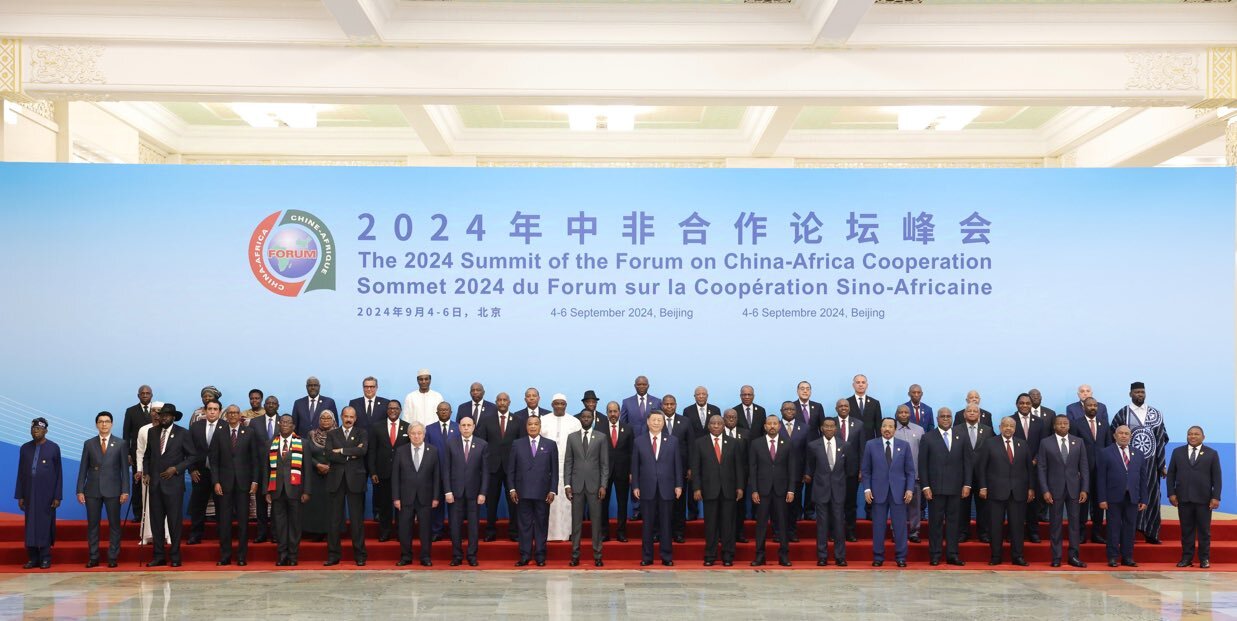
This article focuses on the Ninth FOCAC Summit, which was held in September 2024 in Beijing and the Ninth TICAD Summit, held in August 2025 in Yokohama, Japan. We shall compare the number of African presidents in attendance at each summit, analyse the significance of the issues discussed in plenary sessions, while also weighing the promises made by China and Japan to African countries in pursuance of their development goals as articulated in Agenda 2063 and the SDGs.

China’s FOCAC seems to always draw more numbers of African leaders, although both FOCAC and TICAD summits are strategically organised to alternate between African countries and China or Japan every three years. Having the two summit diversifies opportunities for African leaders to complement the benefits earned from both countries.

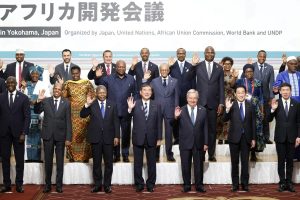
We can have a picture of the significance of FOCAC and TICAD based on the turnout they registered of African heads of state. In 2024, more than 38 African presidents attended the FOCAC summit in China. All African countries were represented at least by a Vice President, Prime Minister or Foreign Minister, except Eswatini, the only country without diplomatic relations with the People’s Republic of China. Among those in attendance were South Africa’s Cyril Ramaphosa, Nigeria’s Tinubu, Kenya’s Ruto, Tanzania’s Samia Suluhu Hassan, Zimbabwe’s Emmerson Mnangagwa, Senegal’s Bassirou Diomaye Faye, Togo’s Faure Gnassingbé, Mali’s Assimi Goïta, Sudan’s Abdel Fattah al-Burhan, Comoros’ Azali Assoumani, Djibouti’s Ismaïl Omar Guelleh, and Madagascar’s Andry Rajoelina. Others included leaders of; Mali, Sudan, Burkina Faso, Guinea, and Niger. In attendance was also Moussa Faki Mahamat, the chairperson of the African Union Commission. It is easy to observe China’s vitality as Africa’s development partner, given the pull and success that the last FOCAC summit had. At the end of the summit, over 100 agreements were signed, in comparison with 64 cooperation documents signed at TICAD 9.

By comparison, at least 13 African presidents, 15 prime ministers, and three vice presidents attended the ninth edition of TICAD in Yokohama, Japan.

The TICAD 9 Summit featured vibrant discussions on a wide range of development themes concerning Africa. The summit was segmented into various sessions to discuss pertinent issues. There were discussions about Africa’s urban awakening and catalysing economic growth and jobs. The conference examined challenges and the potential of urbanisation in Africa. The panellists shared insights from the latest World Bank reports and cases from Japanese cities, and explored how to leverage urbanisation to expand economic opportunities and improve employment outcomes. It should be noted that the World Bank was a co-organiser and, therefore, was actively involved in shaping and implementing the core themes of the conference.

The ninth TICAD summit also brought together venture capital firms, Japanese public-sector partners, and a multilateral development bank to discuss how best to support startups and venture enterprises from Africa and Japan that contribute to addressing social development challenges in Africa. It also delved into how the global aid architecture impacts development outcomes in Africa, and discussions were held on practical recommendations to reform aid systems for maximum SDG impact.

In general, TICAD 9 reflected Japan’s shift from an aid giver/ donor to a trade partner that prioritises the private sector. This shift, if it gets implemented well, will certainly be more transformative for African countries as compared to donations/ aid.

At the 2024 FOCAC, China pledged $50 billion in financial support to Africa over the next three years. In contrast, Japan pledged to contribute up to a maximum of $5.5 billion for the next four years under the Expansion of the Enhanced Private Sector Assistance for Africa (EPSA). Japan also promised to mobilise $1.5 billion in impact investments through the Japan International Cooperation Agency (JICA) to foster private sector development in Africa.

At FOCAC, China highlighted some of the contributions it has already made. It has built over 10,000 km of rail and 100,000 km of roads. Over 100 clean energy projects have been funded under FOCAC, and 50% of public funding for Africa’s clean energy sector is funded by China. China has also been Africa’s number one trading partner for the past 15 years. 70% of Africa’s 4G Network was built by China, etc.

In conclusion, whereas TICAD has a longer history compared to FOCAC, over time, African leaders and their nations have tended to shift increasingly towards China in their bilateral relations, as shown by the number of cooperation agreements signed at each of the respective summits. It should be remembered that TICAD was established in 1993 with a goal to refocus international attention on African development amid the post-Cold War aid fatigue. The inaugural FOCAC summit was in 2000, and it was proposed by African diplomats in the late 1990s in response to growing bilateral ties between the two entities.

The writer is a senior research fellow at the Development Watch Centre.