China Town and the Ugandan Economy: A Debate on Growth and Consumer Choices

One of the most difficult yet overly simplified ideas in economics is the economic growth of nations. Economists and pundits seem to always analyse by analogy, connecting dots backwards to define unique or even random experiences of developed nations and claiming that they developed because of certain economic policies they pursued.  The truth is that we know very little to certainly tell what or how countries achieve economic growth. Often, developed countries experience booms and bursts, or even the periods under which their economies experienced fast growth are always disparately distributed, with different characteristics and sometimes similar characteristics that never guarantee growth.

China is a good example to illustrate this point. It is a country famous for pursuing socialism, yet today, there is argaubly growing worry that China, a socialist country, is fundamentally restructuring the capitalist world in ways never before imagined. How is a communist country now being accused of hyper-capitalism? Isn’t this a big irony?

Back to China Town in Uganda; a hypermarket that opened in September and saw an overflow of customers who flocked to it in droves, driving the police to close it down for some time because of the security threat from the mob of buyers that had crowded the parking space at its Lugogo location.

Some critics have expressed fear and warned that China Town spells doom to local entrepreneurs in downtown Kampala who are losing business opportunities because all customers are now flocking to the China store to buy goods at astronomically low prices.

Some have observed it as the newest trend highlighting an already existing, broader issue of global capitalism, where multinational corporations undermine local economies.

I would not interpret or understand China Town as comparable to Western multinational capital at the helm of global capitalism because I see human agency both from Africans/Ugandans and Chinese traders to enter a mutually beneficial trade relationship. This is different from the state-centric phenomenon that exploitative multinational corporations often come with. I think this is also related to the common misinterpretation of all ‘‘Chinese’’ activities under the umbrella of ‘‘China.’’ For instance, industrial parks in Uganda established by the government are usually mistaken for Chinese enterprises because they are constructed with the support of the Chinese. But there is a difference between “made in China” and “made by Chinese.” The point is to have domestic industries, and what makes them domestic is that they serve the interests of the nationals, are run by nationals, and the value of the products is domestically harvested. Even if there are Chinese advisers in the industrial parks, it would not make them Chinese industries.

The question to answer about the China Town phenomenon is: Whom does the China Town business serve?

Droves of customers flock to the supermarket because they are voting with their feet and wallets and are saying, “This serves our interest!”

True, many traders in Kikuubo and Kamapala road may be losing business to China Town, but they are also selling foreign goods, imported at the cost of depleting our country’s foreign exchange reserves. The only debate they can have is as regards customer satisfaction, and it seems customers are not satisfied with paying expensively for “fake” products from Ugandan traders, yet they can buy similar products at half the price in China Town.

I would have argued differently if the fake products sold by Ugandan traders were Ugandan goods because then I would have the understanding that we need to support Indigenous innovation and support domestic manufacturing if it is to improve over the years and give us better products while also growing the size of our economy through manufacturing. But this is not the case.

Local traders in Kikuubo, as President Museveni has emphasized to them often, are simply Ugandans who promote foreigners to leach on Uganda because they are very content with investing their money in importing instead of supporting local manufacturing.

The alternative viewpoint I have on China Town is that it might actually be the engine that supports the growth of the Ugandan Economy in some ways.

How?

By providing Ugandans with affordable high-end goods such as electronics, stationery, and other items needed to perform work more effectively, China Town is likely to greatly improve the productivity of workers by availing them tools to efficiently work and increase output.

This cannot be said of expensive shops in Kampala which many Ugandans cannot afford to buy from to improve their work efficiency and general living conditions, yet they are also importers of foreign goods.

In conclusion, I am not claiming certainty of knowledge as far as predicting what the transformative factors for Uganda’s economy will be. But in analysis, local traders have no locus standi to accuse China Town of affecting the economy. The economy is built by Ugandans who go about their work, and they need tools to work. What is wrong with them buying those tools quite cheaply from a China Town supermarket?

The writer is a senior research fellow at the Development Watch Center.

Celebrating Fruits of China’s South-South Cooperation Projects in Uganda

In June this year, a three year South-South Cooperation (SSC) agriculture project between the governments of Uganda and China as well as the Food and Agricultural Organization of the United Nations (FAO) will come to a close. As we look to a renewal that is almost certain, we can take a moment to reflect on the remarkable milestones arrived at during the years in which the partnership has run.

Having commenced by the agreement titled “Technical Assistance Under the South-South Cooperation with the People’s Republic of China in Support of the Development Strategy and Investment Plan 2010/11-2015/16 in the Republic of Uganda” back in 2012, and further extended one more time before its current dispensation, the SSC’s endurance owes to its results which cannot be overstated.

During the first and second phases therefore, there was an introduction of crop varieties that best responded to the needs of local farmers, the most impressive of which is perhaps proso millet. Its attributes made it more suitable for planting than the local finger millet– it grows for a shorter time (75 days rather than 90), requires less grains in planting (5kg per acre instead of 25), bares more yield (up to three times), and is drought resistant. Also witnessed, was astounding realizations in cases that involved diary farming where cows are reported to provide at least seven liters each per day up from just two.

The present SSC is not only interesting because it builds on these numbers however, but also because it makes part of a broader framework in which China has in recent years led an effort of helping contribute to the faster realization of the Sustainable Development Goals (SDGs). Dubbed the Global Development Initiative (GDI), this program singles out eight SDGs that Beijing feels require specific attention for the sake of the developing economies post Covid-19. This is further true now that 2030 is not far off.

In his 2022 address to the ministerial meeting of the Group of Friends i.e. the umbrella of nations and organizations that support the GDI cause, Chinese Foreign Minister (FM) Wang Yi, among other things outlined improvement in agricultural practices as key in realizing SDG 1 (ending poverty). To this end, he highlighted that, his country would world over restart the SSC which had up to that point concluded.

The FM further spelled out bold measures to accompany this arrangement that Uganda has since benefited from e.g. an agreement for technical support entered by China’s Academy of Agricultural Sciences and its International Research Center of Big Data for Sustainable Development with FAO along with donation of data imperative for policy making to the United Nations like on arable land and forest coverage provided by the SDGSAT-1 satellite.

Interwoven around four objectives (development of aquaculture value chain, supporting livestock improvement, establishment of a technological transfer base, and development of high yield rice and foxtail rice) thus, it comes as no surprise that the period between 2022 and 2025 has been even more successful.

The SSC project during this time in the country has ensured that farmers in the areas of focus have very highly educated experts at their disposal for consultation something that greatly turned around their fortunes. In terms of the broader picture, there have been several collaborations between in-line institutions and their colleagues in China. Most notably, joint research by Shanghai Agro Biological Gene Center and the National Agricultural Research Organization resulted into the release of WDR-73, a genetically modified variety of rice that is incredible in its yield and doubles as drought resistant.

There has also been several sponsored visits of Ugandan officials to different regions of China for purposes of benchmarking best practices as well as in brokerage of associated policies. While attending the Forum on China-Africa Cooperation last year thus, the Minister of Agriculture, Animal Husbandry, and Fisheries Hon. Frank Tumwebaze entered an agreement with the General Administration of Customs of the Republic of China that allowed Uganda to export aquatic life and Chilies to the over 1.4 billion people market of China.

According to the minister, this was also the first time that Uganda would be exporting the second product to any part of the world there demonstrating China’s commitment to walk the talk. Therefore, as we approach the end of this partnership, considering the multitudes of success it came with, celebrations are in order. Viva  China-Uganda Cooperation.

The writer is a research fellow at the Development Watch Centre.


Wang Yi is Spot-on; The Global South is Growing Stronger

The former President of the European Commission, Professor Jose Manuel Barroso once observed; “in the age of globalisation, pooled sovereignty means more power, not less.” There was a time when Africa recorded a growth in globalisation. But that time was many centuries ago. Societies have been organised in various ways, most of which have been classified depending on the politics of the day. So were the Empires of the times. Kingdoms, Queendoms, Chiefdoms, and extended clans that followed.

Globalisation comes from the understanding that it needs to be done with neighbours, because as far as history has registered, borders and boundaries were established from many factors. What remained certain were the people. They have been the most plausible justification as to why the trend should never stop. The people of the global south today have understood that there is an international lag in the intentional relations with the other global north countries. Oftentimes, it has been using the global south for selfish gains. Here, one can even argue that West Africa has all justification for suspending French military presence. Democratic Republic of Congo, Gabon, and more on that list. That said, if critically analysed, the global north has been strategic besides its countless faults. The European Union, the confederation of the USA, the rise of the Asian Tigers, all these and more were from the same view – harnessing the power of concerted strength.

There is a reason as to why today, the global south has become a centre of attraction. From the Paris Agreement on Climate Change, to political alliances, the global south is undeniable. On the other hand, China has been standing shoulder to shoulder with almost all global south countries. Today, as Beijing doubles down efforts to support building a community of a shared future for mankind,  her close cooperation with developing countries especially in Africa are visible. For Africa, the greatest symbolism of what bloc unity can produce became a reality when the Economic Community of West African States (ECOWAS) in 2017 spoke in union and forced then the Gambian strongman, Yahya Jammeh who had lost election but refused to peacefully handover power. Therefore, when we talk about unity in efforts of development and achieving greater good for humanity, it is not far-fetched.

China’s Foreign Minister, Wang Yi put this in a better perspective as he addressed the press in Beijing where he stressed the importance of unity and cooperation of the Global South. Noting that today the Global South accounts for over 40 percent  of the global GDP, he underscored the role of the grouping  in ensuring world peace. “The Global South should stand together in unity….We should speak in one voice to the world, safeguard our common interests, and steadily increase our representation and voice in global governance,” stressed Wang Yi.

This comes from the disunity today that is being cited globally. Whereas the Global South has issues, most of them are arising from the inadequacies in governance. Wang’s idea has been backboned by the expansion of the BRICS where he believes that more global south countries joining will not only strengthen the alliance but also increase the opportunities members enjoy, one being the trade exchanges in this era of growing sanctions and tariffs from the West especially in Trump’s United States of America which is on rampage of using tariffs against others despite many experts warning that such tariffs are not only a threat to international trade but are also against international trade rules. Indeed, the Wall Street Journal described the Trump Administration’s use of tariffs as a “dumb” decision.

It therefore goes to show the double standards that have always shown up and called out. The West is predominantly only loyal to its interests. To expand the re-echo by Jeffrey Sachs on a quote from Henry Kissinger that “to be an enemy of America (insert – WEST) can be dangerous, but to be America’s (insert – WEST’s) friend is fatal.”

In recent decades, conversations have been around fighting hegemonies and to form an alternative to the powers of neo-colonialism that are not afraid to show their fangs whenever an opportunity shows itself. The comments from Wang are timely. The global south has high potential but for a few inadequacies. It is going to take visionary stewards towards ensuring realising the unity that the Global South deserves, and not just what it wants to see.

Today, the expanse of mineral deposits and natural resources that the West enjoyed is gradually diminishing, and as such the Global South holds the odds of power. The current century has proved that it is not just military might that is going to be the better of growth and development. Today’s fruits of international diplomacy were not merely achieved through the barrel of the gun, but decades of continuous middle ground formulation and genuine resource sharing, although history is littered with events of use of force. That is no longer sustainable because the world has learnt from the mistakes that led to the massive destruction of World War II. The alternatives raised by the BRICS are so practical and viable. The economic development of the Global South that has been recorded today is just an indicator of what economic unity bears as fruits.

Alan Collins Mpewo is a Senior Research Fellow, Development Watch Centre.


Governance: Lessons from Chinese Political Discipline

Khatondi Soita Wepukhulu, a Ugandan journalist of rare find, recently challenged my long-held views on corruption. Over time, I had come to deeply question the prevailing narratives surrounding corruption among Africa’s ruling elites. I had come to think, and still do, that there are fundamental epistemological miscomprehensions and biases about corruption in Africa, which are less about corruption and more about the racial-stereotypical description of Africans in general and their leaders in particular. The dominant discourses on many issues in Africa and about Africans are usually overgeneralized and oversimplified. This is largely still the case in discussions on corruption.

My agnosticism was firstly on the scale and impact of elite corruption on the national development of African countries. I grew up writing poetry against corruption. It was the easiest subject for creative writing in literature classes because we were raised to think it was Africa’s biggest problem. However, a counter-narrative emerged when my mind was opened to the actual fiscal capacity available for potential embezzlement and misappropriation of public funds in a country like Uganda.

Let us first consider the structural constraints of public finances in many African countries. Given our poverty, many African governments have limited money to spend. Our budgets are much smaller compared to the size of our economies. Our basic needs also outspend our incomes. For instance, Uganda’s tax-to-GDP ratio is about 13%. What this means is that the total amount of taxes collected by the Ugandan government each year is equal to only 13% of the country’s total economic output (GDP). This clearly shows that a very small fraction of Uganda’s economy is taxable/taxed, and consequently, the government has little money to spend on public services like healthcare, education, and infrastructure. Also, for context, Uganda’s tax-to-GDP ratio is much lower than that of many wealthier countries, where the average is 34%.

The second leg of the argument above is that Uganda/African countries’ already constrained budgets are unavoidably committed to non-discretionary spending obligations. Remember, we are talking about the budget before it is passed and, thus, before one shilling of it has been misappropriated. The non-discretionary spending obligations referred to above include committed/recurrent expenses that must be paid by law or out of necessity, meaning the government of Uganda has no choice but to spend this money appropriately. Some of these expenditures include: debt payments, i.e., paying back loans and interest; salaries for government workers such as teachers, members of parliament, RDCs, doctors, soldiers, and police officers; pensions and social security to retired government workers; basic public services like healthcare, education, and security that the government must provide. If we break down Uganda’s national budget, it is clear that a significant portion of it is allocated to these committed expenditures. For instance, in the recent budget, debt Repayment consumed 3.1 trillion for external debt and UGX 9.1 trillion for domestic debt. Wages and Salaries of government employees consumed UGX 7.926 trillion. There are also so many other expenses that cannot be captured due to limited space in this newspaper, such as scholarships for government-sponsored students in universities, etc. All these mandatory expenditures combined amount to approximately UGX 29.126 trillion, representing about 40% of our total national budget. Compared to any wealthy, developed country, this is a substantial allocation to non-discretionary spending, which limits the government’s fiscal space or financial flexibility to spend on new development programs, or for that matter, to steal the money.

The intriguing paradox presented by the fiscal reality of many of our African governments, as described above, begs the question: If African governments have so little extra money to misuse, can corruption really be the main reason for underdevelopment? Even if our leaders were to steal all the money that wasn’t already budgeted for recurrent expenditures (quite an implausible scenario), there still wouldn’t be enough to make a big difference in our countries’ development.

That is the mathematical impossibility and first indictment I found against the banal, stereotypical, overused platitude that corruption is the biggest cause of underdevelopment in Africa. Realistically speaking, for a typical African country like Uganda, with just about 2-3% of its GDP available to spend on development projects due to budget limitations, the resulting infrastructure gaps – whether it is insufficient electricity, poor public transport system, poor education/medical facilities – are inevitable regardless of the ethical height of our leaders. We could as well appoint Jesus, Mohammed, and Budha to govern Uganda, and they would do little to nothing to provide public goods and services with such a lean budget.

Of course, there are even many other arguments to deconstruct the corruption narrative. For instance, many of the developed nations actually experienced significant corruption during their periods of industrial transformation.

The wisdom from the foregoing observations made me realise that the development challenges facing African nations may be more fundamentally rooted in structural economic constraints such as low tax bases, limited industrial capacity, unfavourable terms of trade, and debt burdens – than in governance ethics. “It is the political economy, not the morality of African leaders, Stupid,” I might say.

Then enters Khatondi.

My conversation with Khatondi Soita Wepukhulu on corruption and its effect, if any, on Uganda’s development took a different tangent when she said the economics of corruption were beside the point!

“When some minister in China is hanged for stealing $100 million, it isn’t because the dent to the economy is big. Moralisation of corruption by the political elite of the day is super crucial to building the nationalist consensus required to do other things,” she said. This was an argument difficult to challenge.

She argued that “China and the Asian Tigers we admire have a strict culture on theft of public funds… What our normalized theft does is kill nationalist agency and responsibility of self towards country.”

“That is the sort of harm that a larger public wallet can’t rectify.” She continued.

I couldn’t agree more.

Khatondi’s argument introduced me to a profound dimension of why corruption in Africa matters, which I had since overlooked. I read in her point something which has been significantly degraded almost to extinction in Museveni’s NRM government – the existence of a strong public spirit in public service!

Current estimates show that China has a nominal GDP of approximately $18.28 trillion – which comes to about $37.07 trillion in Purchasing Power Parity terms (PPP). So, if a Chinese minister is executed for embezzlement of $100 million, it can’t be primarily because the theft presents a serious threat to the performance of the Chinese economy. Such strict political discipline rather represents something far more fundamental to the health of the nation: the establishment of moral authority and collective purpose in national politics.

I think that China stands highly uncompromising against elite corruption not because such theft would bankrupt its inexhaustible treasuries but because it would corrupt the soul of the Chinese state… it would fracture the moral legitimacy of the Chinese Communist Party (CCP). The severe punishment of corrupt Chinese officials, therefore, serves as a powerful ritual reminding other CCP ruling elites of the primacy of national interest over individual enrichment.

In the morning of the NRM government in the late 80s and early 90s, the state’s leadership viewed itself as a servant to a national mission. The stark contrast today is that NRM ruling elites stand rather as privileged beneficiaries of power. The moral authority that enables the Chinese government to demand sacrifices from its citizens in service of long-term development goals is absent in Uganda because of the corrupt degeneration of the NRM political class. That might be the biggest threat to the development of our country.

The normalization of elite theft in many African states has corroded the very foundation of national purpose. It is hard to see, for example, in Uganda, whether the government still has a purpose to power. It seems President Museveni’s will to power has degenerated into holding power for power’s sake, given the lawlessness with which corrupt public officials who occupy key NRM positions walk scot-free. When Ugandans regularly witness politicians engaging in brazen self-enrichment, it fractures our nation beyond the economic impact of corruption. It breeds a cynical individualism that now sees everyone buying the biggest Toyota to manoeuvre giant pot-holes in our roads instead of caring for the public infrastructure systems for the collective good.

This is why my initial persuasion on simply increasing African countries’ fiscal capacity, while important, cannot solve our fundamental problem. Widening our national budget space might enable more development spending even with some leakage to corruption, but it cannot restore the moral authority required for transformative national projects. Our leaders cannot demand sacrifice from us while they openly engage in self-enrichment.

China’s strict political disciplinary model echoes a profound lesson: uncompromising moral standards for leadership are central to building public trust with citizens, which rallies them around the nation’s development vision. Unless the NRM government rebuilds its moral authority over the state through a genuine commitment to public service, not even the vast oil resources we are hoping for will fuel our country’s transformation. When history books are written, perhaps NRM’s greatest corruption will not be the theft of money but the theft of Ugandans’ faith in the state to do good.

The writer is a senior research fellow at the Development Watch Center.


How to Modernize Uganda? Lessons from China’s Agrarian Change

Mathias Walukaga in Ekyatusomosa Lweera, Herman Basudde in Mweraba Ngenze, and Kazibwe Kapo in Sigwa Jajja Wo all sing about a common Ugandan phenomenon – the migration of people, often as individuals, on a lonely search for economic opportunity, from rural to urban centers. Whereas the central message in each of their songs is different, they all sing about work and in the process aspects of rural-urban migration filter through the message, showing how one’s fortunes usually change for the better when one leaves their villages to work in towns.

In the broader processes of national development and transformation, massive rural-urban migration, as opposed to individual migration, facilitates structural transformation in the economy, society, and politics. No country developed without experiencing increased migration of people from rural areas to urban centers with the attendant shift from subsistence agriculture to industry and service delivery as the major sources of employment and livelihood. The message in Walukaga, Basudde and Kazibwe’s songs is that rural-urban migration is economically transformative.

China is a notable example of a country which developed by systematically organising its rural–peasant population within national projects of state modernization which saw its rapid socio-economic transformation.

China harnessed its vast rural labour force for national development to enable it to transition from an agrarian economy to a global industrial powerhouse in what is known as the Great Leap Forward. Whereas the social and human consequences of the Great Leap Forward were an astronomical failure, in the end, the Leap set China on a course for long-term industrial growth. I am not suggesting the adoption of a Great Leap Forward for Uganda, but I carry the understanding that forms of violence have been central to the development process in all nations. Karl Marx, by far the greatest political economist, was cognisant of the brutality of the process of development as involving forced dispossession and coerced transformation of peasants into providers of free labourers in the process of “primitive accumulation.” Marx did not think that the peasant should be saved from this fate since the peasantry was “a relic of a past mode of production now on its way out: unproductive and, mostly, politically backward.”

More recently in the early years of this century, China set out to stimulate economic growth with rapid urbanization as its key strategy. How did China turn rural land into urban centers at an accelerated pace?

Firstly, unlike in Uganda where leaders are preoccupied with politics and power, one of the most preoccupying issues among leaders in the People’s Republic of China is solving “China’s Agrarian Question.” China’s leaders share a long-standing ideological goal of driving industrialization and urbanization.

Like China, Uganda urgently needs to modernize the countryside, reduce poverty and transfer rural peasants into the urban economy. This process will enable us to shift large droves of our population from tilling the earth in villages to being integrated into higher-value employment in industry and service sectors.

Countries which have most of their people employed in sectors of service delivery and industry are wealthier as opposed to those reliant on agriculture for employment. The current disaster in Uganda and many African countries is that agriculture still employs over 70 percent of our labour force which definitely contributes the least to our national wealth/GDP. In contrast, the world’s biggest economy – the United States has over 77% of its GDP derived from the service sector, 20% from industry and just 1-2% from Agriculture. In China, the GDP is distributed between the service sector, industry and agriculture at approximately 54.6%, 38.3% and 7% respectively.

To return to the question of how China increased urbanization in recent decades, let’s first observe the fiscal reforms of the early 1990s. The Chinese government reorganized national budget allocations by reducing the financial support it extended to local governments. This forced lower-level governments to find means to be financially self-sufficient. This consequently fundamentally altered how local governments managed revenue generation and land use in the countryside.

Additionally, local governments turned to land as a primary source of revenue. In China, rural land is collectively owned by village communities whereas land in urban areas is owned by the state. Under the new fiscal system, local authorities began systematically converting rural land into urban land which allowed them to lease the newly classified land to developers for a profit. This became an essential strategy for generating revenue since land sales to private investors and construction companies provided large sums of money that could be used for local development projects.

These policies increased pressure on rural land and the consequent economic challenges in the countryside propelled more people to migrate to cities in search of better opportunities. Indeed, this was a migration trend that had already been underway with China’s broader economic reforms, which opened it to foreign investment and turned the country into the “factory of the world.” As industrialization expanded, the cities became economic hubs that offered higher job opportunities and wages compared with the countryside. The mixture of rural economic distress and the pull of urban job opportunities accelerated rural-urban migration.

The rapid urbanization fuelled by land conversion and migration contributed to China’s economic boom, as its cities became the centers of industrial production, commerce, and innovation that we know today.

Whereas these processes faced widespread resistance from villagers, as would be expected, they were and are inevitable and necessary processes of modernisation. This is how China uprooted its peasants from agrarian modes of livelihood.

The more I commit to understanding development discourse, I find that the only way for underdeveloped countries to achieve socio-economic transformation is through undergoing ruthless processes of converting their mass populations of peasants involved in farming into workers in industries and service sectors. I have not yet known any process where this happened in peace and harmony. Except for a handful of countries that sat on mega oil reserves which simply pumped oil out of the ground to grow their economies, all the world’s nations, regardless of how much mineral resources they had, had to undertake significant land reforms in the process of “depeasantization.” That’s the missing conversation in Uganda’s political talk.

The writer is a senior research fellow at Development Watch Center.


Wang Yi is Correct: Time Looks About Right For The Global South

Having spent the last fifty years or so portraying itself as the anointed protector of the world, the last thing that the West would wish for is for stability to prevail in other regions while it disintegrates. And yet, as Europe gathers itself to patch up what is left of the NATO rags, this is exactly the place in which it finds itself.

Relatedly, it is more plausible that the inward looking frameworks being passed in the United States of America e.g. foreign aid cuts have more to do with a realization that her economy no longer has what it takes to pursue these ventures than the supposed misspending concerns.

The big mistake of the North that culminated into the harsh reality that the countries in the bloc now have to contend with, was a failure to appreciate the nuances associated with the developing world. Having landed on a couple of blanket terms one of which is “global south”, western politicians blinded themselves from a multiplicity of synergetic factors (say natural resources, geography, and population dynamics) existing in the over 100 emerging economies and so they underrated them– if not ignoring them altogether.

This meant that even countries in Asia, the Caribbean, or Africa whose governments were initially sympathetic to western ideologies found difficulty in communicating to the developed world unless they were picked on for strategic interests. An alternative had to be found thus, and it was. Most importantly, it is a model that works.

The trajectory onto which the once disenfranchised countries have set ever since is that of cooperation and it was best articulated by President Xi Jinping of China at the G20 summit in Rio de Janeiro last year as one that seeks to see “100 flowers” blossom in stark contrast to the usual hegemonic tendencies of super powers.

To this end, ensuing progress can be measured by the fact that several players in this new way of conducting international relations have leveraged domestic capabilities to support their compatriots who could otherwise not accomplish certain objectives. Like China’s Xi Jinping, Brazil’s President, Luiz Inácio Lula da Silva has been a big advocate of the admission of the African Union into the G20 grouping. Guided by her desire of building a community of shared prosperity for mankind, China has gone out of its way to support the economic development of African nations. As it stands then, the country has single-handedly lent more money to the continent than that given out by the World Bank, IMF, USA, Britain, France, and Germany combined.

If you are a numbers person, then I have some for you to crunch as they show strength on the economic front as well. By the end of 2024, the total GDP of the founding BRICS members (Brazil, Russia, India, China, and South Africa) was more than that of the G7 economies. Expanding to all the countries making up the global south, they makeup 40% of global GDP today and 80% of economic growth. Inter-trade relations amongst these countries have also seen a boom as the consumption capacity in the West continues to fall. So in 2023, China’s exports to her allies exceeded what the country shipped to Europe and the United States.

With such facts and commitment among some major powers showing unwavering support for the global south, one can safely argue that the days for West’s global hegemony are numbered, multipolarity is unstable. As observed by Member of the Political Bureau of the CPC Central Committee who doubles as China’s Foreign Minister Wang Yi as he engaged the media, the cooperation of the Global South will create the necessary environment needed for prosperity and growth of not only the global south but the entire world. “As the world is undergoing great transformation unseen in a century, historic changes are taking place in the East-West and South-North dynamics. The Global South holds the key to bringing stability to the world and making it a better place,” Wang Yi told news reporters.

In order to consolidate these gains and harness future prospects, formal and informal forums have been created e.g. the Shanghai Cooperation and Voice of Global South summits in another clear demonstration of a bold vision. Under these arrangements, care has been taken to ensure that members are best positioned to contribute in the best way that they can for the common interest of everyone involved. The admission of Saudi Arabia and the United Arab Emirates to BRICS for instance, introduced the element of oil wealth in the organization. It is not surprising then that the membership of these umbrellas has been rising up dramatically in the last couple of years.

While the future for the global south looks promising,  as Chinese adage say, “众志成城”, loosley translated as “a united will can build a fortress” or “unity brings strength,” as global south gatheres efforts needed to build an ideal world,  unity among the grouping members will play a pivital role. This was ephasized by Wang Yi as he addressed the media observing that, ‘the Global South should stand together in unity. This year, China will host the Shanghai Cooperation Organization summit, Brazil the BRICS summit, and South Africa the G20 summit. We should speak in one voice to the world, safeguard our common interests, and steadily increase our representation and voice in global governance.”

With this momentum increasing further and further, the West is reluctantly coming to admit that it might very well not have what it takes to reckon with it. In a 2023 United Kingdom defense review for example, the government affirmed that there was a looming shift in the tide of geopolitics. Too bad for them if they find no recourse.

The writer is a research fellow at the Development Watch Centre.


President Xi’s Stand on Education and Talent Development at China’s Two Sessions 2025 is Welcome

Dear editor,

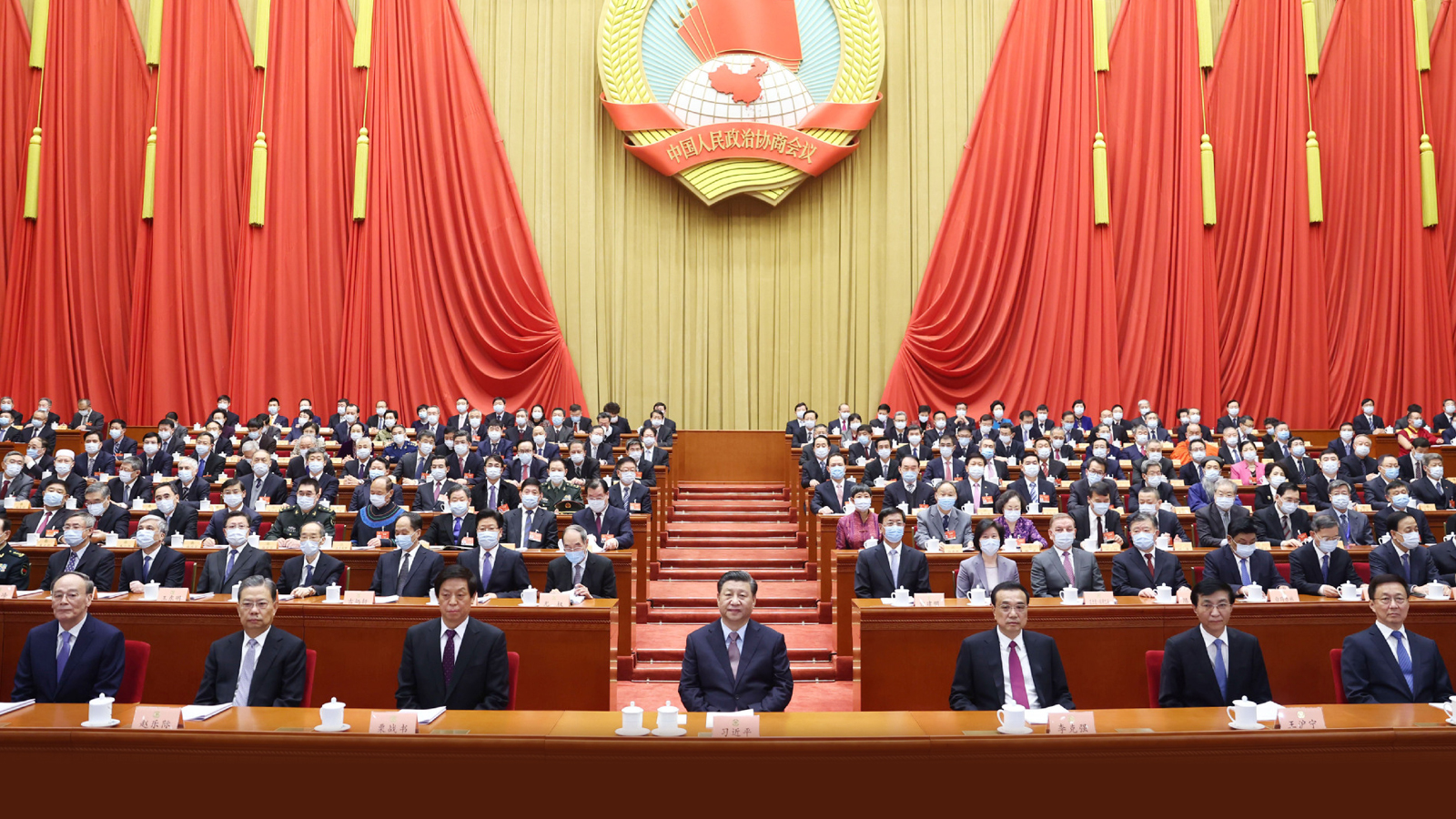
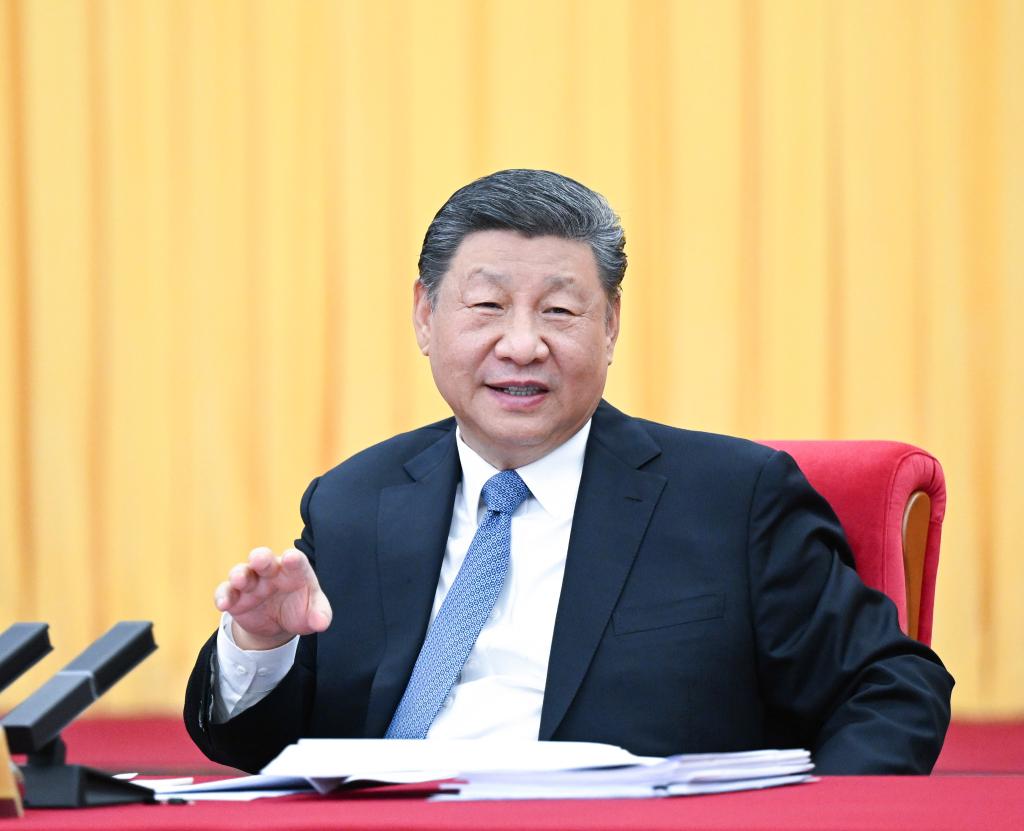
At the ongoing China’s Two Sessions 2025, Chinese President Xi Jinping made very important commitments as he stressed the importance of education in development. President Xi underscored the role of education in supporting scientific and technological development and talent development which he described as important for national and individual development.

This, President Xi who is also the Secretary General of the Communist Party of China (CPC) and the chairman of the Central Military Commission noted that will result into what he described as a steady stream of talent, unlock individual potential and ensure their abilities are fully utilised thereby contributing to efforts of driving Chinese modernisation. 

In a meeting of the third session of the 14th National Committee of the Chinese People’s Political Consultative Conference (CPPCC) – CPC’s top political advisory body, Xi emphasized that to “develope a high quality educational system that meets public expectations, the key lies in deepening comprehensive education reforms.” This he observed can be achieved through granting schools greater autonomy in decision-making, and refining school management systems. The Chinese leader stressed this will contribute to “nurturing a new generation of “capabale young people with moral grounding, intellectual ability, and work skills.”

On science, technology and innovation support, President Xi stressed that to “achieve a sound interaction between independent sci-tech innovation and self-reliant talent training,” education plays a major role and emphasised the need to “refine mechanisms for aligning talent cultivation with the needs of economic and social development. Noting that “boosting education and sci-tech and talent development is a shared responsibility,” Xi urged CPPCC to embrace the idea of leveraging its role.

While one can argue that the two sessions 2025 is a China affair, if critically analysed, full implementation of two sessions policies does not only benefit China but Africa and the entire world stand to benefit from China’s two sessions’ blueprint. This is premised on the fact that today, China is the world’s second largest economy and that almost all countries in the world are benefiting from China’s growing economy and technology growth. As observed by International Monetary Fund’s (IMF) Division Chief researcher Jean-Marc, “the very fact that China is also bigger, it means it has a bigger footprint in the rest of the world.  An increase in the trade surplus might be small from the Chinese perspective, but it could be big from the perspective of the rest of the world.”

Also, considering China’s stated vision of building a community of shared future for mankind in the new era, one can safely argue that a successful China means a successful world. This is more so especially that other major countries are preferring nationalistic and isolation policies; withdrawing foreign support in favour of home development.

For Africa, the two sessions deliberations came at a time after China and African countries  elevated their relations to “all-weather China-Africa Community with a shared future for a new era.”

Also, African countries including Uganda stand to benefit from China’s reformed education that will see sci-tech, innovations and talent development given emphasis. It should be recalled that over the years, the Chinese government has offered tens of thousands of scholarship opportunities to African scholars. The education support China offers to African countries ranges from university degree scholarships, both short and long term for professional and government financials as well as funding research and innovation programs.

Taking Uganda alone as an example,  by the end of 2021, China had provided over 5,000 short-term training opportunities for Ugandan talents, covering a wide range of fields; among others agriculture, medical care, public administration, computer science and infrastructure.

If critically analyzed, Africa-China cooperation in the education sector is strategic and mutually beneficial. Partly, this is because African countries’ capacities to give tertiary and higher education to their energetic and young population are constrained.

The United Nations Educational, Scientific and Cultural Organization (UNESCO) notes that Sub-Saharan Africa is one of the largest regions in the world with a small tertiary education enrollment ratio which stands at 9.4%. This number is  far below the global average of 38%. This figure means that with its 16% of the global population, Africa contributes just 1% of global research.

Relatedly, with China’s promise during the 2024 Forum on China Africa Cooperation where Beijing promised to continue supporting African countries’ education sector, Xi’s remarks at the ongoing two sessions 2025 offers Africa hope that the continent’s scholars will continue benefiting from China’s education. That said, China’s education support to African countries is timely and will go hand in hand in helping the continent make positive strides in  her scientific research capabilities which is also key among the goals of African Union’s Agenda 2063.

The writer is a senior research fellow at the Development Watch Centre.


China’s path to comprehensive rural revitalization: Challenges and solutions

On 25th February 2021, Chinese President Xi Jiniping announced “complete victory” in the Country’s fight against extreme poverty. As the world louded China’s great success, President Xi observed; while his country had succeeded in eliminating absolute poverty, “the most challenging and arduous tasks we face in building a modern socialist China in all aspects remain in rural areas” and announced China’s strategy to ensuring rural development calling it a “major task in realizing the great rejuvenation of the Chinese nation.”

If critically analysed, rural revitalisation can largely be achieved by ensuring comprehensive strategies that target revitalization of rural areas which oils wheels of modernization especially in the sector of agriculture – the common characteristic of rural area.

Five years since China announced its success against extreme poverty, this opinion highlights some strategies Chinese government, enterprises and people – largely farmers can take – shoulder to shoulder in efforts to realise rural revitalisation as the country marches towards its second  centenary goal of “building China into a great modern socialist country in all aspects.”

First, ensure enough and steady power supply. Energy is a major driver of socio economic transformation of any society. It makes innovation and both small and large scale industrialization take place. Such small and large small scale industries come with among others important multiplier effects like employment opportunities which is key in the fight against poverty.  The development of the solar industry Jinzhai county in Anhui is credited for transforming the province’s 218 villages once registered as poverty stricken, helping lift out of poverty 89,700 people that were registered as poor. The World Bank argues that China’s remarkable economic growth is partly possible due to the country’s capacity to produce and supply energy to meet the country’s growth of energy consumption, thanks to the Chinese government and enterprises that continue to focus on energy development, especially clean energy.

Supporting and encouraging start-ups in rural areas is another strategy that can easily spark rural revitalization. Through start-up programs in rural areas, people can be empowered to gain entrepreneurial skills which is key in starting and running successful businesses. In Nanhai, Foshan, Guangdong province for example, local government with Chinese enterprises introduced “double nurturing” and nurturing industries, started entrepreneurial training targeting rural people helping them with start-up projects which registered significant progress in the development of small scale industries and individual business. Consequently, over 526 entrepreneurial leaders were trained with skills helping them to start their businesses. As a result, the county’s efforts of empowering rural poor was realised with over 5,087 people registered as poor being lifted from poverty.

Supporting local amenities and tourism is another strategy China can embrace to achieve Beijing’s goal of rural revitalization. China is blessed with countless natural resources such as lakes, rivers and mountains almost across the country. Save using such rivers and other water sources for agriculture and, natural resources such as water sources and mountains, if improved, can be used to attract  both local and international tourists. As President Xi Jinping noted in 2005, “lucid waters and lush mountains are invaluable assets.” Tourism sector can be magic. For example, other than paying to access tourist areas, there are other multiplier effects that come with tourism development. Improved security, infrastructure especially roads, hospitality sector like hotels which all contribute to employment opportunities and source of income are associated with the sector! In Shibadong village in Xiangxi, Hunan Province, after adopting the strategy of using local tourism as a way of fighting poverty, the village registered success that it was deregistered from the poverty register as locals income grew from 1,668RMB to 12,128 RMB.

Relatedly, China can use its huge size, big population and many ethnicities, to fast track its rural revitalization programs by encouraging ethnic integration and supporting them to use their local resources to bring about meaningful social economic development. Such strategies can help in revitalization of rural areas with minority ethnics where people proactively engage in production work than mindsets of “waiting, depending, and asking for help.” This strategy worked for example in Towankh Magget village (village 7), in Xinjiang Uygur, where government embarked on empowering locals through project of “one brand in one village” which saw the use of local resources to develop black fungus production, and a walnut deep-processing plant which all have contributed to social economic development of the area while leaving locals lives improved.

The other very important strategy that can help China in realising rural revitalization is putting people at the centre of everything. When people learn that whatever is being done is for their good and development, they all embrace and support such efforts. Development becomes easy as people are involved and willing to do anything possible to support what they know is theirs. As President Xi observed while opening 20th National Congress of the CPC; “this country is its people. The people are the country…bringing benefits to the people is the fundamental principle of governance.” Put differently, it’s clear to Chinese leadership that to achieve great rejuvenation of Chinese nation, the most difficult tasks are still in the country side. Considering discussed strategies and more relevant ones, we can safely argue that China is on the march as the country eyes realising her centenary goal of building a moderately prosperous society in all aspects.

Editor’s Note: This article was first Published by China Global Television Network – CGTN.