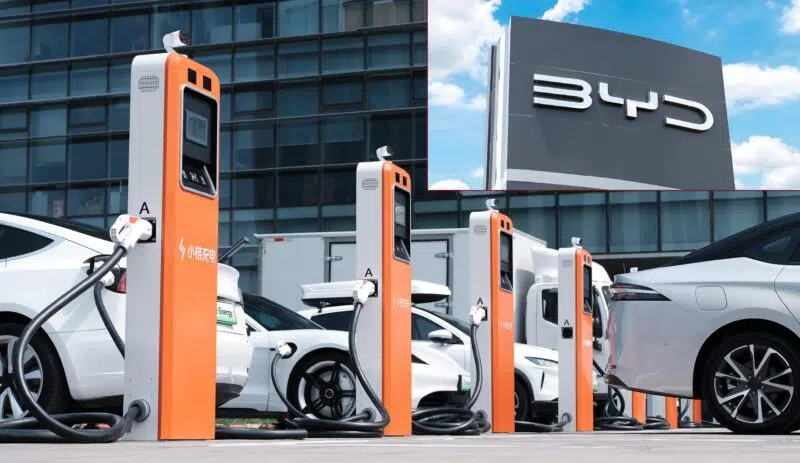
Could Electricity Vehicles be the long-term solution to the rising Fuel prices?

Global fuel prices have once again become a barometer of geopolitical tension post Covid-19 times. In April 2026, the fragile ceasefire negotiations between Iran and the United States of America triggered sharp swings in Brent crude with prices spiking to 12% in a single week after the talks stalled over uranium enrichment limits. Despite the shale output, USA felt the shock immediately yet it still imports about 6.3 million barrels per day. American gasoline now averages at $4.28 per gallon in the last quarter with a notable increase of 18%. The Energy Department largely attributes this to external conflicts translating into pump prices as a result of disruptions into the supply chains. The Strait of Hormuz avails nearly 22% of the global oil transits thus every ceasefire rumor or event becomes a tax on commuters from Texas. The question facing policymakers is nolonger whether oil is volatile but rather whether dependence on it is sustainable.

China over the past five years has offered a contrasting data point in response to this volatility. In 2021, President Xi stated that energy security must be rooted in self-reliance with new energy as the mainstay and this has since been matched with Capital Investments. Currently Beijing treats electrification as not only climate policy but also as an economic insulation. In 2025 alone, China installed 230 GW of solar and wind capacity more than the rest of the world combined. The State Grid Corporation now reports that EVs now account for 44% of all new car sales supported by 8.6 million public charging points nationwide to enhance service delivery. Nowonder, an average Chinese driver pays the equivalent of $1.10 per gallon when charging at home during off-peak hours compared to $4.60 for gasoline in Shanghai. The 14th five-year plan allocated $180 billion to grid upgrades and battery supply chains. This is part of a dual circulation strategy to link decoupling from imported oil that covers 70% of China’s crude needs to clean energy with a clearly stated goal that electricity becomes the default energy carrier for transport by 2035.

Uganda on the otherhand is sitting at the sharp end of this global equation. We being landlocked country, this shock hits us twofold; firstly at the port in Mombasa and then through domestic transport markups. In April 2026 following the Iran ceasefire turbulence, petrol across the 7 cities hit Ugx 6,300 per litre. This represents a 30% increase from July 2025. For a boda boda rider covering 80km daily, fuel now consumes over 50% of gross incomes unmatched to the competition of electric bikes that are starting to flood the cities.

Uganda’s overlooked advantage of electricity could be the life jacket in this titanic. With the commissioning of Karuma, installed capacity stretched to 2,048 MW against peak demand of 1,100 MW. Additionally, the regulator continues to report a surplus of nearly 40% during night hours when vehicle charging would mostly occur. Uedcl’s domestic tariff of Ugx 756 per kWh when converted, an electric bike covering 80km would use roughly 3.2 kWh costing Ugx 2,570 versus Ugx 6,300 for petrol at current efficiency. This is a 60% operating saving before maintenance differences are counted.

The policy parallel with China is not about scale but rather sequencing. President Xi’s model pairs generation, grid and demand. Uganda’s Energy transition plan targets 52, 000 MW of capacity and clean cooking but transport is the missing link. Kiira Motors and Zembo report electric bodas cut fuel by Ugx 18k daily and require one-tenth the maintenance of combustion engines. If 50k of Kampala’s estimated 120k bodas shifted, the city would offset 46 million litres of petrol annually translating to $38 million in forex savings at today’s prices. The global lesson from the Iran-USA standoff is that price sovereignty matters. China is buying it with solar panels and batteries. Uganda can buy it with hydro at night.

Challenges remain and must not be undertstated. Upfront costs for EVs are still 1.8x higher than petrol equivalents, charge infrastructure outside Kampala is sparse and Uedcl’s reliability in rural areas needs a robust investment. But the fuel price trajectory makes the math shift yearly. The ministry of Energy’s own modeling shows that at Ugx 6,300 per litre, total cost of ownership for an electric boda reaches parity within 15 months. If global oil crosses $110 per barrel again which is a real risk if Iran negotiations collapse, parity drops to 9 months

Electricity will not replace oil overnight, and Uganda will still need petroleum for heavy transport, aviation, and industry for decades. Yet the strategic case is clear: every kilowatt-hour generated at Karuma is a barrel Uganda does not have to import through a chokepoint it cannot control. From Washington to Beijing to Kampala, the 2026 fuel shock is teaching the same lesson. Countries that generate their own energy for transport gain price stability that diplomacy cannot guarantee. For Uganda, with surplus hydro, a young EV fleet, and fuel prices now directly tied to Middle East ceasefire talks, electricity is not just cleaner. It is becoming the cheaper, more sovereign option. The Long-term solution to pump price pain may well come through a socket, not a pipeline.


The writer, Arthur Atuha is a research fellow at the Development Watch Centre.

Strategic Alignment for Prosperity: How to Deepen China-Uganda Ties in the 15th Five-Year Plan Era

On March 17th 2025, the Development Watch Centre (DWC) in partnership with her sister organizations (Sino-Uganda Research Centre, Centre for Contemporary China-Africa Studies, and Centre for BRICS Studies Uganda) hosted a half-day symposium at Fairway Hotel in Kampala that analysed the implications of the newly adopted 15th Five-Year Plan for Uganda hence the theme “Strategic Alignment for Prosperity: Deepening China-Uganda Ties in the 15th Five-Year Plan Era.”

Appreciating how immense China’s contribution towards Africa’s development in the last couple of decades has been, and strongly believing that this fact is not about to change, the underlying thread to most of what was said at the event tied things back to what the Communist Party of China’s (CPC) 2026-2030 policy framework means for Uganda― particularly as it relates to the country’s fourth National Development Plan (NDP IV).

In his address therefore, H.E FAN Xuecheng the Chargé d’affaires at the Embassy of the People’s Republic of China in Uganda assured Kampala as well as other African countries that his homeland viewed their prosperity as integral to the welfare of her domestic economy. The Diplomat went on to explain that as such, Beijing would continue to position her strengths in trade, green energy, science and technology etc. in ways that best set the ground for their development.

The Day’s Guest of Honour, the Managing Director of Uganda Broadcasting Corporation (UBC), Mr David Winston Agaba concurred citing that China’s cooperation with Africa is further bolstered by history given that the Asian super power has always been cordial in her involvements with the continent going as far back as the dispensation of colonialism in which the attitude of western countries was to openly rampage and pillage Africa. The UBC manager then went on to express enthusiasm for DWC’s work saying that it was vital that researchers continue to actively engage with the most pressing issues of our times.

Coming prior to the speeches of the two dignitaries, DWC’s Executive Director Dr Allawi Ssemanda spoke about the unfortunate state of foreign relations that Uganda finds itself in decrying how possible it can be that our leadership has been boxed into partnerships that expressly couch their terms in language that points to the nations on the other side of things as the masters on whom Kampala is at their mercies. In contrast, the academic asserted that China’s win-win model whose spirit guides the 15th five-year plan was far much better all things considered.

Two guests joined the conversation virtually. First is Prof Timothy Kerswell, Distinguished Research Fellow at DWC who laid the ground for the day’s topics. Addressing the conference from Australia, he explained that the Two Sessions was the most important function on China’s political calendar emphasizing that this year’s National People’s Congress and National Committee of the Chinese People’s Political Consultative Conference meetings were even more so because they drew Beijing’s governance road map for the next five years.

Dr Vuyo Mjimba the Chief Research Specialist in the Human Sciences Research Council’s Africa Institute of South Africa is the other having made his presentation live from Johannesburg via zoom. Among other things, the South African scholar intimated that it was high time to view research and policy as inseparable cautioning that a lot of the dilemmas that plague Africa had something to do with the fact that very little attention was given to collecting and disseminating critical data. He then pointed out that given China’s track record of respecting Africa’s priorities, African Union member states can seek to synchronize their synergies with her through sectors where they have the comparative advantage e.g. minerals and natural resources.

The symposium closed with two panel sessions starting with one constituted by Hon. Simon Mulongo an international relations consultant together with Counsel Ssemambo Rashid of Ssemambo and Ssemambo Advocates. The latter centred his presentation on the Global Governance Initiative expressing admiration for the reforms that China has been trying to push thereunder not least, the proposal to reimagine the United Nations’ position. The Advocate posited that Beijing’s example was a breath of fresh air for the developing world especially if one looks at the prevailing attitude of other global powers. To illustrate his point, he quoted President’s Trump’s latest remarks on Cuba (i.e. “Taking Cuba, I mean, whether I free it, take it. I could do anything I want with it.”).

Mr Arthur Atuha’s presentation was the very last. Therein, he shared about the promise that lies in the 15th five-year plan for Ugandan export industry. Understood well, the DWC Research Fellow contended that the prospects of NDP IV could be attuned to harness projections of increased consumption in Beijing for the next half a decade.

There you have it, the overwhelming consensus from the day was that the 15th five-year plan had a lot in it for Uganda and that if the moment is seized by Kampala, a lot of the country’s goals set under NDP IV would be realized come 2030.


Sino-Uganda Mbale Industrial Park: Revolutionising Uganda’s Manufacturing Sector

Chinese investments have played an inextricable role in Uganda’s emergence as one of East and Central Africa’s major manufacturing hubs. The dividends from the industriousness of Ugandan industries have transformed not just Uganda but also several other countries whose consumer markets depend on Ugandan-manufactured goods, including the DRC and South Sudan, to mention a few. Uganda’s industrial capacity spans several sectors, from electronics to textiles, ceramics to steel, and more – all fuelled by factories and industrial parks set up with the support of Chinese capital and expertise. Not only have these industries created jobs, especially for Uganda’s bulging youth demographic, but they have also reduced the country’s import dependency and fostered economic growth. The country now boasts over 50,000 factories employing more than 1.4 million Ugandans, with tens of thousands of workers in Chinese-founded industries, such as Liao Shen and the Sino-Uganda Mbale industrial park.

Uganda’s manufacturing revolution is closely linked to the launch of the Belt and Road Initiative (BRI) by President Xi Jinping in 2013, because BRI is aligned towards enhancing global trade and infrastructure. What spells BRI in Uganda is practically the sprouting of hundreds of standalone factories and many industrial parks spread across different regions of the country. The success harvested from this has been the expansion of the contribution of the manufacturing sector to our GDP from 6.7% in 2000 to 16.5% by 2024, as per UBOS. The broader industrial sector contributes even more, 27.4%. About 40,000 Ugandans are directly employed in diverse Chinese enterprises, playing an instrumental role in the country’s economic growth.

ENGO Holdings Limited and SIMI Technologies were the first electronics manufacturing plants in Uganda, launched in 2019 in Namanve Industrial Park. The firms behind this factory are ENGO Holdings Limited and SIMI, both spearheaded by Chinese investors. Among the products produced there include mobile phones (feature phones and smartphones), laptops, tablets, chargers, USB cables, earphones, etc. These plants can manufacture about 2,000 feature phones, 1,500 smartphones, and 800 laptops daily, among other products. Although currently these plants have to import some Chinese components, the long-term goal is to have full-scale commercial production employing trained local workers. With time, Uganda shall drastically reduce its reliance on imported electronics by producing enough to meet local demands, including the production of a million computers annually.

One of the leading factories manufacturing plastic products and packaging materials for beverages, processed goods, medicines, oils and pesticides is Heng Shang Plastics (Bugolobi, Kampala). Previously, many of these goods were obtained from China. However, today we have import substitution and reliable local supply chains because the factory is local.

Employment that transforms lives

Over 500 workers are employed in Unisteel Investment Uganda Limited, a Chinese-backed steel production industry established with a $100 million investment in 2024. For a developing country like Uganda, steel plays a critical role as the cornerstone of industry and construction sectors. From its use in manufacturing machinery to providing structural frameworks for infrastructure, it is easy to see the significance of Unisteel’s investment.

Sino-Uganda Mbale Industrial Park is the first national industrial park constructed overseas by Hebei province with the approval of the local government, which is of great significance to the BRI. Hosting over 40 companies producing smartphones, televisions, textiles, and steel, and employing around 10,000 workers daily, the park is one of 22 state-level industrial parks in Uganda, which were proposed by President Museveni and China’s Foreign Minister Wang Yi, and constructed by the Tian Tang Group. Mbale City was a very strategic location for this industrial park. It is Uganda’s third largest city, home to millions of people who provide labour and markets, and is also an extremely important border city. Its location also has the advantages of a well-developed transport network and complete infrastructure. Goods from the factories here can be distributed easily to countries of East Africa, North and South Africa, the Middle East and West Asia.

Economic Contributions

Guangzhou Dongsong Energy Company (Uganda) Ltd. is a subsidiary of the Guangzhou Dongsong Energy Group, headquartered in China. The company sits on 1,600 acres of land that is part of the China-Uganda Free Zone at Sukulu. It started operation in October 2018 following a US$62million investment in a bio-organic fertiliser plant, a steel and glass manufacturing plant, a brick baking plant, a steel plant and other related agricultural products. The Guangzhou Dongsong Energy Company (Uganda) Ltd has a 21-year mining lease extendable for 15 years to develop the Uganda-China Free Zone at Sukulu Hills into an industrial complex. Currently, the Chinese-based company is the first to introduce purely organic fertilisers on the Ugandan market, with production standing at over 300,000 metric tonnes per annum. It also produces Sukulu Concrete blocks for construction, with plans to add Sukulu Metal and Sukulu Glass. The company hopes to reduce the Uganda’s expenditure on imports of the industrial sector, which stands at US$377million, US$60 million for fertiliser and US$23 million for glass annually, respectively.

There has been a significant contribution of Chinese investors to the development of Uganda’s industrial capacity. Capital from China has laid a solid foundation for the country to become a manufacturing hub in East and Central Africa. The road to industrialisation and economic self-reliance is now paved. It is up to us to start the journey.

The writer is a senior research fellow at the Development Watch Centre.


Education is a Corner Stone of China’s Investment to Uganda

“In order to further strengthen the mutual understanding and friendship between the peoples of China and Uganda, and to further enrich the contents of the Comprehensive Strategic Cooperative Partnership between China and Uganda, the Chinese Embassy in Uganda welcomes citizens of Uganda to apply for the 2025/26 Chinese Government Scholarship.” This statement appeared in a call issued on the Chinese Embassy website in October 2024 and last Friday, the institution fulfilled her word as Ambassador Zhang Lizhong flagged off the successful thirty nine students that will now go on to study at different Universities in China.

These scholarships are an annual programme courtesy of the China Scholarship Council targeted at students who hail from countries other than China (of which Uganda is among) wishing to study at any of the two hundred seventy partner universities. Attaining this opportunity is very prestigious as it comes with a coverage of all tuition, a monthly stipend, plus plane tickets to China as well as for the return journey upon completion of one’s degree. This window is open for those interested in Bachelors, Masters, and Doctorate of Philosophy studies.

The arrangement is part of a long standing tradition of the People’s Republic of China (PRC) investing in education in Uganda that goes as far back as the 80s. A related contemporary example is the Chinese Embassy Scholarship Project at Makerere University (Mak) that has been awarding checks of UGX. 2,800,000 a semester to learners from across several departments since the 2018/2019 academic year.

Moreover, the Chinese business community in the country has heavily invested in education of Ugandans too. As recent as May this year, the China National Offshore Oil Corporation awarded scholarships to three hundred students in the districts of Hoima and Kikuube at the levels of Primary school, Secondary school, and University in continuation of a corporate social responsibility campaign that it has carried out for more than a decade. The totality of these and more initiatives point to a commitment by PRC to contributing towards real progress in the country for as it is understood in Economics, education is one of the key indicators of economic development.

This owes to the fact that a skilled labour force harnesses the other factors of production in more and more innovative ways. Additionally, an educated populace reinforces conditions that indirectly bring about growth. By earning more for example, a large consumption base emerges which in turn attracts investment thereby creating more jobs. A well-studied country equally guarantees proper service delivery and the advantages that accrue thereto. Take proper healthcare; it helps ensure that people are in good physical and mental conditions hence they become more productive.

What is more, is that China is educating Ugandans in a quality way an attribute necessary for the realization of the outcomes we just listed. As a 2025 World Bank study has indicated, there is a lot of disillusionment especially in developing nations over the fact that the increase in education levels has not translated into improved standards of living as initially envisaged precisely because skills transfer remains a big impediment in the curricula modalities of these countries.

In contrast, obtaining one’s degree in Beijing or any of the locales in China comes with the said ingredient. As a matter of fact, thirty of the Universities that the students going to China study at are ranked among the world’s top five hundred including Tsinghua and Peking that come twelfth and thirteenth per the Times Higher Education rankings. For context, only one Ugandan University (Mak) appears in the world’s first six hundred. But it is not just that the individuals that go to these institutions attain better education, some of them get to pursue cutting-edge courses that are not offered anywhere in Uganda. Two of these are Artificial Intelligence related degrees as well as those concerning the construction of hi-tech bridges.

It is not surprising then that many alumni of these ventures have gone on to contribute significantly to different sectors of our economy upon their return. Indeed, Ambassador Lizhong affirmed that previous beneficiaries of the embassy’s scheme have gone on to become leaders in business, government, and academia among other spheres of influence in his remarks to this year’s batch of scholarship awardees.

The writer is a research fellow at the Development Watch Centre.

The Horn of Africa Peace and Development Conference: A nexus between GSI, UN SDG-16 and Economic Prosperity

Evidence shows that fragile peace is a significant handicap to prosperity in many parts of the world.  In the horn of Africa, a region where peace has mostly been elusive, the Horn of Africa peace and development conference (HoAPDC) emerges as a link between China’s Global Security Initiative (GSI) and the UN SDG-16 on peace, justice and strong institutions. The HoAPDC framework reframes regional stability not as an end but as the engine for broader regional transformation.

Amidst a challenging global environment, China by localizing solutions engages and encourages nations to find collaborative solutions to regional problems as a prerequisite for realizing shared prosperity. First held in Addis Ababa in June 2022, the third edition of the (HoAPDC) was hosted in Kampala at the end of July 2025. A major distinction between this meeting is that it followed the Non-aligned movement (NAM) and was hosted by Uganda- during the country’s chairmanship of the group; especially after solemn commitment were made in regard to security at the last NAM summit. But we might wonder what is special about the Horn of Africa anyway.

The horn of Africa, is a region consisting of several east African countries including Ethiopia, Eritrea, Somalia, Djibouti, Sudan, Kenya and Uganda. The region’s geopolitical significance stems from its strategic placement between; the River Nile, on the interior, both the Red sea and Indian ocean on the exterior but also providing access to the Mediterranean ocean. So, the horn of Africa is not merely a strategic maritime access point to Africa’s interior but also Europe and Asia.

conversely, the region has also been one of Africa’s prime security hot spots over the decades. For instance, today, aside from Al Shabaab being a salient threat in Somalia, there is unrest in Sudan’s Darfur region, simmering ethnic tensions in Ethiopia etc. This exists against a historical backdrop of civil war in Somalia, but also insurgent attacks on development projects exemplified by the tragedy of July 2007 when Ogaden National Liberation Front (ONLF) insurgents attacked the Zhongyuan oil field in Ethiopia resulting into 74 fatalities and the kidnapping of 7 Chinese nationals. Such incidents not only threaten foreign investments but also blight national prospects for prosperity.

Today, China is not only the continent’s biggest trading partner, but also a major source of Foreign Direct Investments (FDI) on the continent. Based on this, some analysts for example the Netherlands institute of international relations have advanced the argument about China’s vested interest in extending its global influence and ensuring that its nationals operate in a secure environment. However, African countries- nations of the horn of Africa in this case have an even stronger impetus as the past has proved how disruptive unrest and a lack of security can be to development.

Certainly, China is not standing by to wait for peace to reign over Africa before it can make the decision to cooperate with the continent. Instead as a trailblazer and champions of shared prosperity, China knows from its experience of rapid modernization amidst a stable peaceful environment that peace and security do indeed catalyze development. Undeniably, this idea has existed at the core of the horn of Africa peace and development conference since its inception as noted by former Ethiopian president Teshome Mulatu at the 2022 edition. This time, the message was carried by China’s special envoy to the region Xue Bing as he stressed a need to explore the potential for cooperation, safeguarding common security and deepening exchanges of government experiences.

Viewed as the global security initiative (GSI) in its implementation phase, the HoAPDC is like its parent underpinned by strong commitments to maintaining security in both traditional and nontraditional ways, common comprehensive cooperative sustainable security, and stresses dialogue as the best approach to resolving disputes between nations. The goal of the platform is to find lasting solutions to security challenges of the horn of Africa as an inroad to the overarching goal of shared prosperity. Regional cooperation on peace and security fosters a secure environment- an ingredient for sustained growth in the horn of Africa. In turn the sought sustainable security would have substantial benefits to the global economy as the international crisis group  found in the past that; onboard security experts, insurance, and detours to avoid the horn of Africa in 2010 alone cost the global economy $18 billion.

More importantly, the HoAPDC prescribes a solution to a region that’s considered to be a global security hotspot on account of its assemblage of a high security threat index, geostrategic importance, and ongoing conflicts. Unrest in the Sudan, the Al Shabaab terrorist enterprise in Somalia and the occasional piracy activities continue to have spillover ramifications for the region whether it is by an influx of displaced persons, or jaundiced economic growth. Accordingly, the UN agency for refugees UNHCR operational update March 2025 estimates that between the horn of Africa and the Greatlakes region, upwards of 24.5 million people either live as refugees or in internally displaced people’s (IDP) camps. Therefore, this framework represents more than a practical step towards achieving UN SDG-16. By guaranteeing stability it unlocks both regional economic activity and trade which in turn form a reliable launch pad for regional economic growth as a pathway to shared prosperity.

In a global environment characterized by a superfluity of security and economic challenges, the horn of Africa peace and development conference is a step on a continuum of China’s steadfast march towards its vision of building a global community of shared future for mankind. Through such frameworks, historically unstable regions like the horn of Africa are inspired to engage in constructive dialogue to find localized solutions to regional challenges. And these solutions, by limiting outside interference are more likely guarantee  win-win outcomes.

The writer is a research fellow at the Development Watch Centre.  


China’s Role in Africa’s Renewable Energy Transition

As the leading global player in green/ clean energy, China has played a pivotal role in Africa’s green energy transition through its investments in exploring solar, wind, hydropower, geothermal energy, and nuclear projects at their early stages on the continent. Through FOCAC (Forum on China-Africa Cooperation), China has addressed Africa’s pressing need for sustainable, accessible and reliable energy while at the same time aligning with both the global climate goals as well as its own strategic shift towards green energy development. Across Sub-Saharan Africa, China has reshaped the energy infrastructure, installing over 23 gigawatts of electricity capacity in 27 countries.

More than 55% of the African population is rural-dwelling. The future of impactful renewable energy solutions for rural Africa lies in investments in solar energy, which China has championed. In projects like the Garissa Solar Power Plant in Kenya, China has exhibited its understanding of Africa’s energy challenges by decentralising solutions to address rural-specific energy poverty. It has installed large-scale grid-connected projects with a capacity of 54.6 megawatts (MW), making the Garissa plant the largest grid-connected solar facility in East and Central Africa. The $136 million project was built by China Jiangxi International Kenya with funding support from the Export-Import Bank of China (CHEXIM). It now serves over 70,000 households and spans 85 hectares. Since November 2018, when it was installed, this project has drastically reduced energy costs while also enhancing electricity access in rural Kenya.

While the people of the Central African Republic combine efforts to locally combat climate change, they are joined by a Chinese firm that constructed the Sakai Photovoltaic Power Station to provide clean energy to the Gambella National Regional State. In Namibia, a solar firm was built in 2024 with a capacity of 100 MW. The rate of growth of installed clean energy plants across Africa highlights China’s commitment to green energy development. Countries like São Tomé and Príncipe are the recent beneficiaries of this commitment, with projects such as the ambitious Africa Solar Belt Program, to which the government of China committed 100 million yuan at the 2024 FOCAC meeting. Over 50,000 households are going to benefit from this project by being connected to low-cost off-grid solar systems. By extending energy to underserved communities, China has exhibited its focus on energy equity while fostering sustainable development.

In 2017, Kenya installed a 310 MW Lake Turkana Wind Power Project, thereby significantly reducing the country’s reliance on fossil fuels. This mega project, built by a Chinese firm, currently stands as Africa’s largest wind farm. And it provides over 15% of Kenya’s electricity. Similarly, China backed the construction of the Aysha Wind Power Project, which the Ethiopian government expects to expand and be able to generate 2,000 MW of wind power by 2030. To the south of the continent in South Africa, China Energy Investment Group’s subsidiary, Longyuan SA, built the 2.5 billion yuan De Aar Wind Power Project in 2017. This project taps into the Northern Cape’s abundant wind resources to generate energy. What is apparent in these projects is both China’s technical expertise and commitment to diversifying Africa’s renewable energy portfolio.

Sixty-three percent (63%) of China’s energy financing in Africa is in hydropower. Chinese equipment and expertise have stamped a mark on several key projects in different countries. For instance, Ethiopia’s 6,450 MW Grand Renaissance Dam (GERD) and Zambia’s 750 MW Kafue Gorge Hydroelectric Station have been built by Chinese firms. The dams are also mostly funded by Chinese capital, with Zambia’s Kafue Gorge built with $2 billion, which Sinohydro Corp received from CHEXIM and the Industrial and Commercial Bank of China.

CHEXIM also provided 85% of the total cost of Nigeria’s Mambilla Hydroelectric Power Project, which is projected to produce 3,050 MW at full capacity. All these projects employ thousands of Africans and are helping in enhancing local capacity for Africans to manage their energy resources, while also generating the much-needed power to support the continent’s industrial growth.

There are several other hydropower projects on the continent, including: Ghana’s 400 MW Bui Dam, Zimbabwe’s 300 MW Kariba South Expansion, Rwanda’s 43.5 MW Nyabarongo II Hydroelectric Power Station, and Kenya’s 2.5 MW Koru-Soin, to name but a few. Some of these projects play a double role, both as flood control mechanisms and irrigation schemes, thus addressing both energy and agricultural needs.

Africa is also seeing an increasing role played by China in the less ubiquitous yet equally important sector of geothermal energy. Generating geothermal energy is a green energy area with a low carbon footprint. With support from China, Kenya is currently leading Africa in its generation, with an installed capacity of 863 MW. In 2024, the Chinese firm, PowerChina, invested in Kenya’s Menengai Crater Orpower 22 Geothermal Power Plant up to $93 million.

Recently, in July 2025, China had discussions with Rwanda on what could become the continent’s first major investment in nuclear energy. The China National Nuclear Corporation (CNNC) announced that it was having discussions with the government of Rwanda to explore cooperation on nuclear energy generation. Given Rwanda’s signature efficiency, it is likely that this project will come through.

The writer is a senior research fellow at the Development Watch Centre.
 

Learning from China: Adapting Development Strategies for African Contexts

Although it may not be possible to have a comprehensive cookbook of China’s rapid development recipes, a few policy frameworks implemented in the country can provide guidance. The Chinese development model has not been uniform. It has been at every stage punctuated by state-led industrialisation alongside export-oriented growth, and strategic global engagement, among other factors/ policies. Africa sets its sights on China for direction, as a late developer, because China has mastered the art of leapfrogging growth or catching up. However, given the disparate and diverse political and economic characteristics between the two entities, we need to carefully tailor and adapt what works and leave what doesn’t, from the Chinese blueprint of late and rapid development.

There is a unique political economy framework that made China’s development success possible. Whereas Deng Xiaoping is highly credited for instituting transformative reforms, there was a strong, centralised state which he leveraged to implement pragmatic policies, i.e., special economic zones (SEZs), massive infrastructure investment, and education and technical training to spur human capital development. Deng was also granted a monopoly of power rendered by the Communist Party, which allowed him to have continuity of his policies under the stability of a cohesive political structure. It was also workable to implement policies on a largely ethnically homogenous population, with a social history of collective discipline embedded in Confucian cultural ideas. Such moral compulsion from social norms and habits can hardly be transplanted, but it facilitated the rapid policy implementation we see in China. Additionally, industrial transformation was timely in a nation which was poised to reform its large agrarian economy.

African nations emerged out of colonialism with significant infrastructure gaps. The post-colonial contexts they find themselves in require that they assert economic sovereignty and push for state-led development, which fits well with the Chinese model. It has, indeed, been China at the frontline of supporting Africa’s move to bridge infrastructure gaps, supporting such projects as Kenya’s Standard Gauge Railway and Ethiopia’s Addis Ababa-Djibouti Railway, under the BRI, among countless other projects in several African countries. Moreover, China never lends itself to political interference in Africa as a precondition for its investments, as is common with Western aid and development finance, which comes pegged with prescriptions and conditionalities of all manner, eroding away the autonomy and agency of African states.

The diversity among and within the 54 African nations, however, implies that the continent’s political economy is widely different from China’s. We have so many ethnicities, are corrupted by colonial legacies, plagued by electoral volatility undermining policy continuity, fragmented by opposing governance structures, which ultimately complicates state-led development initiatives.

Weak institutionality and corruption are a serious hindrance to Africa’s development efforts. Weak institutions make China’s state-led, long-term development strategies hard to replicate, because governments face significant opposition and illegitimacy, making the long-term stability that shelters growth absent. Corruption disorients public-spiritedness, turning ruling regimes into cash-and-carry kleptocracies. This is the challenge for countries like the Democratic Republic of Congo, making the implementation of large-scale projects unsuccessful. There is a need to earn legitimacy for African governments by ensuring merit-based and accountable governance that serves all citizens without accentuating ethnic differences. Traditional leaders should also not be merely co-opted but fundamentally involved in local and national development programs, so that they view state development policies as an inter-collective program in which they and their co-ethnics have a stake, and must therefore take responsibility and involvement.

While China’s development leveraged export-led growth to satisfy the global demand for manufactured goods, Africa finds itself in a different context. It is a resource-dependent continent; its economies survive on the extraction and sale of primary commodities like minerals, oil, or agricultural products. The key to transforming this status quo to increase returns rests in domesticating ownership and ensuring the locals have a higher stake in the businesses and industries. This will nip profit repatriation and rent-seeking in the bud. Local ownership here does not mean that indigenous people must be the only ones with economic rights, but rather that even companies owned by foreigners must register locally and transfer the most profitable work of their business to Africa.

Whereas China’s development was easy to mobilise in a socially cohesive population, Africa’s ethnic diversity should not be mourned as a challenge; rather, African governments should embrace traditional and communal participatory approaches to social mobilisation towards development goals. Africa’s ethnic groups were historically assimilationist, and this cultural heritage must be encouraged as opposed to perpetuating colonial divisions that politicised divisive ethnicity.

The writer is a senior research fellow at the Development Watch Centre.


Time Africa to Adopt China-Scale Development Commitment

Africa is tied to conventional, rudimentary, unambitious, lethargic modes of governance and political-economic behaviour. We pursue cliches of democracy and development and all related norms and conformities that have been taught to us by the developed, Western world with full blindness to our crucial realities.

We lack a grand strategy for development. We are adapted to incrementalism in everything – hoping to make progress through small, gradual steps rather than largescale, ambitious reforms. This road we are on is unlikely to deliver development. And the window within which Africa must catch-up up will eventually close.

There is no guarantee that we cannot be conquered again if we don’t stand up quickly and hold a place as a peer with all developed nations. This child-like place that Africa occupies in the world is not just humiliating but may eventually be exploited through new forms of imperialism in the future in ways we cannot comprehend today.

Think about the defining factors for the survival of nations in the world today; Artificial Intelligence (AI), synthetic biology, quantum computing, robotics, and clean energy. Where is Africa’s involvement or contribution in the global competition to advance in these fields? We only seem to be offering raw materials. In fact, we are the raw materials.

In a world with advanced AI systems, where we face risks of artificial general intelligence (AGI) becoming misaligned with human values, what would Africa do to defend itself against attack in a war where AGI is optimized by an enemy country to cause catastrophic harm based on racial identity? As a continent vulnerable to pandemics, what contribution is Africa making to the development of synthetic biology to enable rapid vaccine development?

Our net contribution to the development of any of these technologies that will shape the future is close to nothing. But the consequences of this may not be as simple as missing out. Lagging behind in the next decades might slide us into new forms of recolonization unless we embrace a development model with the ambition, scale, and discipline exemplified by China’s rapid transformation.

The era and error of foreign aid inculcated in us a dependency on foreign/Western powers by which we ceded sovereignty and agency. Such dependency also drove us to withdraw our commitment to industrialization, infrastructure development, and self-reliance. Western masters disincentivized African governments from developing domestic capacity for economic sustainability because African leaders could beg or borrow to fill gaps in their national budgets. The result is where we are; capable of almost nothing in a world of tremendous opportunities.

Given the urgency of these matters, China’s example for rapid socio-economic transformation from a predominantly large agrarian society full of peasants, to an industrial power with vast skill and intellectual resource, should be studied with a goal to be appropriated and domesticated by African leaders.

Unlike Western nations where capitalism evolved organically and defined how society is governed and resources are distributed, China’s transformation emerged out of massive state-led investment in infrastructure, education, and industry, coupled with a relentless focus on self-reliance. It is the only country where the free-market enterprise developed highly without distorting the politics of the country. Because of this, capital has not succeeded in eroding the leadership of the Chinese Communist Party (CPC). Capital has not undermined the leadership of the Chinese people.

China also exposes the lie that has been told to developing countries especially in Africa – that it takes democratisation in the Western form, to develop. We have suspended all efforts and thought towards development by being tied in an endless web of political bickering over cliches like democracy, human rights, freedom, etc.

China has guaranteed the rights and freedoms of her people outside the normative governance models of the West. It has liberated over 800 million people from poverty without ticking any boxes that the West dictates to Africa as prerequisites for development.

Without Western democracy, China constructed 37,000 kilometers of high-speed rail between 2000 and 2020. Without Western democracy, China has urbanized over 500 million people, and lifted 800 million out of poverty. Without Western democracy, the CPC prioritized long-term planning over short-term populist gains and accountably executed the aims it set out to achieve for its citizens, with a discipline in execution unimaginable in the West.

Africa must suspend many political distractions and pursue a tunnel vision of development and socio-economic transformation. We are 1.4 billion people with a median age of 19. This is a demographic resource with potential to scale development – it is a tremendous work force. But the window to achieve this will not last forever. Our young people will grow old. The peace we enjoy is not guaranteed to last forever. We must coordinate our commitment to this goal when we still can.

The Writer is a senior research fellow at the Development Watch Center.

China Town and the Ugandan Economy: A Debate on Growth and Consumer Choices

One of the most difficult yet overly simplified ideas in economics is the economic growth of nations. Economists and pundits seem to always analyse by analogy, connecting dots backwards to define unique or even random experiences of developed nations and claiming that they developed because of certain economic policies they pursued.  The truth is that we know very little to certainly tell what or how countries achieve economic growth. Often, developed countries experience booms and bursts, or even the periods under which their economies experienced fast growth are always disparately distributed, with different characteristics and sometimes similar characteristics that never guarantee growth.

China is a good example to illustrate this point. It is a country famous for pursuing socialism, yet today, there is argaubly growing worry that China, a socialist country, is fundamentally restructuring the capitalist world in ways never before imagined. How is a communist country now being accused of hyper-capitalism? Isn’t this a big irony?

Back to China Town in Uganda; a hypermarket that opened in September and saw an overflow of customers who flocked to it in droves, driving the police to close it down for some time because of the security threat from the mob of buyers that had crowded the parking space at its Lugogo location.

Some critics have expressed fear and warned that China Town spells doom to local entrepreneurs in downtown Kampala who are losing business opportunities because all customers are now flocking to the China store to buy goods at astronomically low prices.

Some have observed it as the newest trend highlighting an already existing, broader issue of global capitalism, where multinational corporations undermine local economies.

I would not interpret or understand China Town as comparable to Western multinational capital at the helm of global capitalism because I see human agency both from Africans/Ugandans and Chinese traders to enter a mutually beneficial trade relationship. This is different from the state-centric phenomenon that exploitative multinational corporations often come with. I think this is also related to the common misinterpretation of all ‘‘Chinese’’ activities under the umbrella of ‘‘China.’’ For instance, industrial parks in Uganda established by the government are usually mistaken for Chinese enterprises because they are constructed with the support of the Chinese. But there is a difference between “made in China” and “made by Chinese.” The point is to have domestic industries, and what makes them domestic is that they serve the interests of the nationals, are run by nationals, and the value of the products is domestically harvested. Even if there are Chinese advisers in the industrial parks, it would not make them Chinese industries.

The question to answer about the China Town phenomenon is: Whom does the China Town business serve?

Droves of customers flock to the supermarket because they are voting with their feet and wallets and are saying, “This serves our interest!”

True, many traders in Kikuubo and Kamapala road may be losing business to China Town, but they are also selling foreign goods, imported at the cost of depleting our country’s foreign exchange reserves. The only debate they can have is as regards customer satisfaction, and it seems customers are not satisfied with paying expensively for “fake” products from Ugandan traders, yet they can buy similar products at half the price in China Town.

I would have argued differently if the fake products sold by Ugandan traders were Ugandan goods because then I would have the understanding that we need to support Indigenous innovation and support domestic manufacturing if it is to improve over the years and give us better products while also growing the size of our economy through manufacturing. But this is not the case.

Local traders in Kikuubo, as President Museveni has emphasized to them often, are simply Ugandans who promote foreigners to leach on Uganda because they are very content with investing their money in importing instead of supporting local manufacturing.

The alternative viewpoint I have on China Town is that it might actually be the engine that supports the growth of the Ugandan Economy in some ways.

How?

By providing Ugandans with affordable high-end goods such as electronics, stationery, and other items needed to perform work more effectively, China Town is likely to greatly improve the productivity of workers by availing them tools to efficiently work and increase output.

This cannot be said of expensive shops in Kampala which many Ugandans cannot afford to buy from to improve their work efficiency and general living conditions, yet they are also importers of foreign goods.

In conclusion, I am not claiming certainty of knowledge as far as predicting what the transformative factors for Uganda’s economy will be. But in analysis, local traders have no locus standi to accuse China Town of affecting the economy. The economy is built by Ugandans who go about their work, and they need tools to work. What is wrong with them buying those tools quite cheaply from a China Town supermarket?

The writer is a senior research fellow at the Development Watch Center.

Celebrating Fruits of China’s South-South Cooperation Projects in Uganda

In June this year, a three year South-South Cooperation (SSC) agriculture project between the governments of Uganda and China as well as the Food and Agricultural Organization of the United Nations (FAO) will come to a close. As we look to a renewal that is almost certain, we can take a moment to reflect on the remarkable milestones arrived at during the years in which the partnership has run.

Having commenced by the agreement titled “Technical Assistance Under the South-South Cooperation with the People’s Republic of China in Support of the Development Strategy and Investment Plan 2010/11-2015/16 in the Republic of Uganda” back in 2012, and further extended one more time before its current dispensation, the SSC’s endurance owes to its results which cannot be overstated.

During the first and second phases therefore, there was an introduction of crop varieties that best responded to the needs of local farmers, the most impressive of which is perhaps proso millet. Its attributes made it more suitable for planting than the local finger millet– it grows for a shorter time (75 days rather than 90), requires less grains in planting (5kg per acre instead of 25), bares more yield (up to three times), and is drought resistant. Also witnessed, was astounding realizations in cases that involved diary farming where cows are reported to provide at least seven liters each per day up from just two.

The present SSC is not only interesting because it builds on these numbers however, but also because it makes part of a broader framework in which China has in recent years led an effort of helping contribute to the faster realization of the Sustainable Development Goals (SDGs). Dubbed the Global Development Initiative (GDI), this program singles out eight SDGs that Beijing feels require specific attention for the sake of the developing economies post Covid-19. This is further true now that 2030 is not far off.

In his 2022 address to the ministerial meeting of the Group of Friends i.e. the umbrella of nations and organizations that support the GDI cause, Chinese Foreign Minister (FM) Wang Yi, among other things outlined improvement in agricultural practices as key in realizing SDG 1 (ending poverty). To this end, he highlighted that, his country would world over restart the SSC which had up to that point concluded.

The FM further spelled out bold measures to accompany this arrangement that Uganda has since benefited from e.g. an agreement for technical support entered by China’s Academy of Agricultural Sciences and its International Research Center of Big Data for Sustainable Development with FAO along with donation of data imperative for policy making to the United Nations like on arable land and forest coverage provided by the SDGSAT-1 satellite.

Interwoven around four objectives (development of aquaculture value chain, supporting livestock improvement, establishment of a technological transfer base, and development of high yield rice and foxtail rice) thus, it comes as no surprise that the period between 2022 and 2025 has been even more successful.

The SSC project during this time in the country has ensured that farmers in the areas of focus have very highly educated experts at their disposal for consultation something that greatly turned around their fortunes. In terms of the broader picture, there have been several collaborations between in-line institutions and their colleagues in China. Most notably, joint research by Shanghai Agro Biological Gene Center and the National Agricultural Research Organization resulted into the release of WDR-73, a genetically modified variety of rice that is incredible in its yield and doubles as drought resistant.

There has also been several sponsored visits of Ugandan officials to different regions of China for purposes of benchmarking best practices as well as in brokerage of associated policies. While attending the Forum on China-Africa Cooperation last year thus, the Minister of Agriculture, Animal Husbandry, and Fisheries Hon. Frank Tumwebaze entered an agreement with the General Administration of Customs of the Republic of China that allowed Uganda to export aquatic life and Chilies to the over 1.4 billion people market of China.

According to the minister, this was also the first time that Uganda would be exporting the second product to any part of the world there demonstrating China’s commitment to walk the talk. Therefore, as we approach the end of this partnership, considering the multitudes of success it came with, celebrations are in order. Viva  China-Uganda Cooperation.

The writer is a research fellow at the Development Watch Centre.