How to Modernize Uganda? Lessons from China’s Agrarian Change

Mathias Walukaga in Ekyatusomosa Lweera, Herman Basudde in Mweraba Ngenze, and Kazibwe Kapo in Sigwa Jajja Wo all sing about a common Ugandan phenomenon – the migration of people, often as individuals, on a lonely search for economic opportunity, from rural to urban centers. Whereas the central message in each of their songs is different, they all sing about work and in the process aspects of rural-urban migration filter through the message, showing how one’s fortunes usually change for the better when one leaves their villages to work in towns.

In the broader processes of national development and transformation, massive rural-urban migration, as opposed to individual migration, facilitates structural transformation in the economy, society, and politics. No country developed without experiencing increased migration of people from rural areas to urban centers with the attendant shift from subsistence agriculture to industry and service delivery as the major sources of employment and livelihood. The message in Walukaga, Basudde and Kazibwe’s songs is that rural-urban migration is economically transformative.

China is a notable example of a country which developed by systematically organising its rural–peasant population within national projects of state modernization which saw its rapid socio-economic transformation.

China harnessed its vast rural labour force for national development to enable it to transition from an agrarian economy to a global industrial powerhouse in what is known as the Great Leap Forward. Whereas the social and human consequences of the Great Leap Forward were an astronomical failure, in the end, the Leap set China on a course for long-term industrial growth. I am not suggesting the adoption of a Great Leap Forward for Uganda, but I carry the understanding that forms of violence have been central to the development process in all nations. Karl Marx, by far the greatest political economist, was cognisant of the brutality of the process of development as involving forced dispossession and coerced transformation of peasants into providers of free labourers in the process of “primitive accumulation.” Marx did not think that the peasant should be saved from this fate since the peasantry was “a relic of a past mode of production now on its way out: unproductive and, mostly, politically backward.”

More recently in the early years of this century, China set out to stimulate economic growth with rapid urbanization as its key strategy. How did China turn rural land into urban centers at an accelerated pace?

Firstly, unlike in Uganda where leaders are preoccupied with politics and power, one of the most preoccupying issues among leaders in the People’s Republic of China is solving “China’s Agrarian Question.” China’s leaders share a long-standing ideological goal of driving industrialization and urbanization.

Like China, Uganda urgently needs to modernize the countryside, reduce poverty and transfer rural peasants into the urban economy. This process will enable us to shift large droves of our population from tilling the earth in villages to being integrated into higher-value employment in industry and service sectors.

Countries which have most of their people employed in sectors of service delivery and industry are wealthier as opposed to those reliant on agriculture for employment. The current disaster in Uganda and many African countries is that agriculture still employs over 70 percent of our labour force which definitely contributes the least to our national wealth/GDP. In contrast, the world’s biggest economy – the United States has over 77% of its GDP derived from the service sector, 20% from industry and just 1-2% from Agriculture. In China, the GDP is distributed between the service sector, industry and agriculture at approximately 54.6%, 38.3% and 7% respectively.

To return to the question of how China increased urbanization in recent decades, let’s first observe the fiscal reforms of the early 1990s. The Chinese government reorganized national budget allocations by reducing the financial support it extended to local governments. This forced lower-level governments to find means to be financially self-sufficient. This consequently fundamentally altered how local governments managed revenue generation and land use in the countryside.

Additionally, local governments turned to land as a primary source of revenue. In China, rural land is collectively owned by village communities whereas land in urban areas is owned by the state. Under the new fiscal system, local authorities began systematically converting rural land into urban land which allowed them to lease the newly classified land to developers for a profit. This became an essential strategy for generating revenue since land sales to private investors and construction companies provided large sums of money that could be used for local development projects.

These policies increased pressure on rural land and the consequent economic challenges in the countryside propelled more people to migrate to cities in search of better opportunities. Indeed, this was a migration trend that had already been underway with China’s broader economic reforms, which opened it to foreign investment and turned the country into the “factory of the world.” As industrialization expanded, the cities became economic hubs that offered higher job opportunities and wages compared with the countryside. The mixture of rural economic distress and the pull of urban job opportunities accelerated rural-urban migration.

The rapid urbanization fuelled by land conversion and migration contributed to China’s economic boom, as its cities became the centers of industrial production, commerce, and innovation that we know today.

Whereas these processes faced widespread resistance from villagers, as would be expected, they were and are inevitable and necessary processes of modernisation. This is how China uprooted its peasants from agrarian modes of livelihood.

The more I commit to understanding development discourse, I find that the only way for underdeveloped countries to achieve socio-economic transformation is through undergoing ruthless processes of converting their mass populations of peasants involved in farming into workers in industries and service sectors. I have not yet known any process where this happened in peace and harmony. Except for a handful of countries that sat on mega oil reserves which simply pumped oil out of the ground to grow their economies, all the world’s nations, regardless of how much mineral resources they had, had to undertake significant land reforms in the process of “depeasantization.” That’s the missing conversation in Uganda’s political talk.

The writer is a senior research fellow at Development Watch Center.
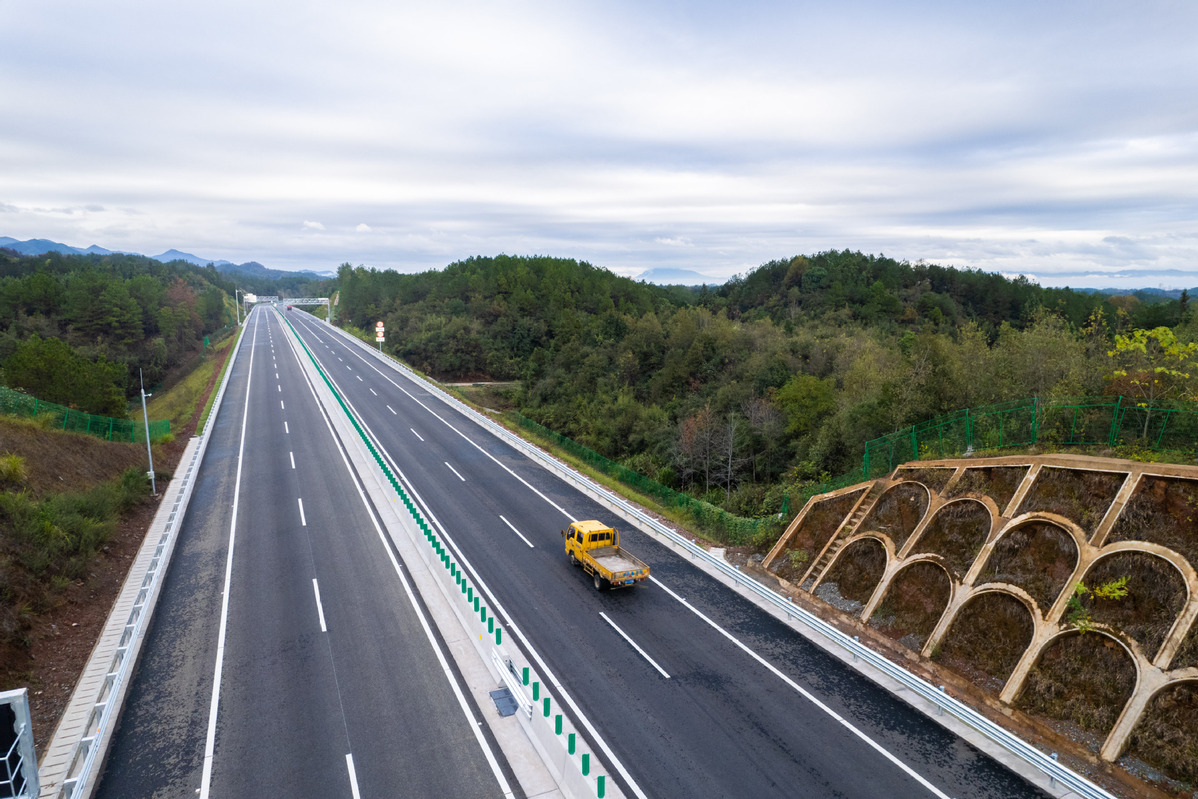


Bad Roads and Kampala Traffic Woes: How did China Address It

“If you can drive in Kampala you can drive anywhere in the world”. This phrase, often uttered in good humor betrays a perhaps poorly kept national secret that Kampala is fast approaching the carrying capacity of its own public roads. Behind the social media sensation that abound the 2023 #PotholeExhibition was also a daunting revelation that our growing middle class may need to explore alternative methods of showcasing their progress than buying more private cars adding to the mounting cesspool of Kampala traffic.

To deal with the breakdown of public traffic infrastructure in Kampala we may need to look towards China and how it so aptly used a similar situation a few decades ago as the springboard for its modern public transport system. At the moment, if China says it has the second most efficient public transit system in the world, no country can dare claim to have the first. Recently China unveiled the CR450 model high speed train with a top speed of 450km per hour. In layman’s terms this means that someone in Mbarara can go to work in Kampala with a roughly 40 minutes commute. That’s a much shorter time than it takes an average taxi from a suburb like Kira to get to the Old taxi park.

China discovered decades ago that the best solution to an urban housing crisis is an efficient transit system. This is a lesson we should do well to learn because we find ourselves at the same crossroads China was at with a young, rapidly growing population and swiftly shrinking physical public space.

Uganda’s ambitions for economic transformation hinge on one critical factor: infrastructure development. Modern transportation systems, energy networks, and industrial hubs are the foundations upon which vibrant economies are built. For a country at the heart of East Africa, strategically positioned as a potential regional logistics hub, the stakes are exceptionally high. In charting its path forward, Uganda would do well to look toward China; not only as a partner but also as a source of inspiration for what transformative infrastructure development can achieve.

More importantly we have what the Chinese never had, which is a global superpower eager  to aid us in this transition with the recipe for sustainable urban development without ulterior imperialistic designs. We even have Chinese companies bidding openly to share their infrastructural knowledge and technological progress to ease this transition. Beyond technical expertise, Chinese companies bring efficiency and a focus on results. Their ability to execute projects quickly and at competitive costs makes them valuable partners for developing countries seeking to modernize their economies without delays or inflated budgets.

China has demonstrated remarkable leadership in infrastructure, particularly through its high-speed rail network. With over 42,000 kilometers of track crisscrossing the country, this network is the largest and most advanced in the world. Trains traveling at such speeds connect cities, reduce travel times, and energize regional economies. What sets this achievement apart is its sheer scale and inclusivity. This model, combining technical excellence with a strategic vision, offers important lessons for Uganda.

China’s experience shows how large-scale infrastructure investment, when strategically aligned with national development goals, can be a game-changer. The Belt and Road Initiative (BRI), launched by China in 2013, amplifies this potential. As a global development strategy, the BRI has financed and built infrastructure projects across Asia, Africa, and Europe. For Uganda, the initiative provides a pathway to access long-term financing and technical assistance for transformative projects. Already, the  Chinese-backed Kampala-Entebbe Expressway has cut the daily commute time between the two cities by almost half. These kinds of developments are not just about convenience; they have real economic impact by improving trade logistics and encouraging investment.

The philosophy underpinning the BRI is particularly relevant to Uganda’s needs. Infrastructure is not seen in isolation but as part of a larger economic framework. Roads, railways, and energy grids are designed to connect markets, foster regional integration, and spark new value chains. For Uganda, whose Vision 2040 highlights the role of infrastructure in achieving industrialization, this approach is a natural fit.

Our  infrastructure needs extend far beyond the extraction and export of raw materials. We need transport systems that enable local industries to flourish, connecting farms to factories and factories to regional markets.

China’s role in Uganda’s development is not merely about financing or building infrastructure. It also provides a model of what is possible when infrastructure is treated as a driver of economic transformation. The high-speed rail network in China has not only revolutionized transportation but also spurred urbanization, boosted tourism, and enhanced trade. This holistic approach offers valuable lessons for Uganda as it seeks to modernize its transport systems, diversify its economy, and connect more meaningfully with regional and global markets.

Shemei Ndawula is a Senior Research Fellow at Development Watch Center.


Just Build Kampala Roads! Lessons from China’s Transport System

Recently, I set out to study the economic analysis of China’s transport system. Many writers I read considered the impact of transportation infrastructure on China’s economy with shared criticisms. One of the major criticisms I found taxed against China’s transport system was that although it comprises a wide network of roads, railways, and airports across its huge territory, the transport network, especially of roads tends to concentrate on the more economically developed coastal areas and inland cities along major rivers. As soon as I read this critique of China’s transport system, I understood that it was actually the explainer for China’s economic triumph. In building roads and railways in major business centers, China leveraged its strength to further expand its economic output. In Uganda, the government’s policy on road construction is focused on ensuring Uganda is connected “border to border” which is not a bad thing had it not been at the expense of constructing greater Kampala roads to leverage our significant economic dividends in the region.

I suspect that the construction of roads in Uganda is more (this is not to say it is the only reason) a political rather than an economic project. I also suspect that the president has much to say in the decision-making process of awarding contracts for major road constructions. The president decides to have a road constructed in an area because the local population there demanded for one… because their children “want to see tarmac also!” As such, we have roads built in areas where the net return on investment is simply political capital for the president/ the ruling government at the expense of Uganda’s economic development.

I suggest that road construction should be looked at foremost as an economic enterprise with measurable returns on investment. For every road constructed, we must be able to measure the efficiency and profitability it will produce in return. Uganda can calculate its return on investment from its road construction by assessing the economic benefits generated from road investments compared to the costs. For instance, we must be able to calculate the initial construction costs including materials, labor, and land acquisition; maintenance and operational costs over time; and environmental and social costs e.g., displacement of people and wildlife, and pollution. We also must be able to calculate the benefits estimated from the investment. For instance, increased business activities due to better transport; lower vehicle maintenance and fuel costs; shorter travel times for goods and people; reduction in road accidents and fatalities; more efficient movement of goods and services and increased land and property values near improved roads. To know the net benefit from the road constructed, we would have to subtract the total cost of construction from the total benefits estimated from the investment. Does Uganda bother with these calculations while undertaking road construction projects? I think not.

Without assessing whether our road investments are yielding positive economic and social returns, the huge amounts of money sunk into road construction are simply buried, not planted investments.

China’s transportation infrastructure investments are carefully calculated to ensure they contribute significantly to China’s GDP. For every highway built, China targets to improve logistics and reduce costs. For every railway built, China has done a study and established the need to enhance efficiency and increase overall productivity from a certain economic zone. For instance, China’s high-speed rail system is intentionally built to connect economic hubs with realisable productivity to facilitate business expansion by reducing travel time and increasing market accessibility. If we had these calculations in Uganda, the districts of Kampala, Wakiso and Mukono would take at least 50 percent of the road construction budget of Uganda.

Why?

Kampala, Wakiso and Mukono districts produce 65% of Uganda’s total Gross Domestic Product and 75% of the country’s total tax revenue collection. The bewildering irony is that despite such an enormous contribution to our nation’s economic output, these enterprising districts receive less than 2 percent of the budget allocated to road construction and maintenance for the rest of the country. This is a policy miscalculation I can never comprehend!

There is not an ounce of understanding of economic prioritization in how Uganda makes investment decisions on road construction. China concentrates its road construction in economically developed coastal areas and inland cities along major rivers such as the Pearl River Delta, Yangtze River Delta, and Bohai Economic Rim because they are the country’s economic powerhouses. These are areas that contribute significantly to China’s GDP through manufacturing, trade, and services. It is obvious that developing transport infrastructure in these regions maximizes economic returns even if many other parts of the country may lack comprehensive transport infrastructure. Why don’t we make this prioritization too? Why is it too hard to see?

China’s coastal cities also host major ports like Shanghai, Shenzhen, and Guangzhou, which handle a significant portion of China’s international trade. These regions also have high population densities. So, it makes sense to ensure efficient road networks in these areas to smoothen the transportation of goods and people between ports and industrial hubs. Following the same logic, Uganda should have a detailed road and railway network to ensure efficient transportation of goods from Malaba, through Jinja, Mukono to Kampala. Why do we have one, narrow, dilapidated road carrying the entire volume of goods into the country from Malaba?

It cannot be that the country’s understandable budget constraints are the cause of Uganda’s poor transport system in urban areas. Not even China has enough money to build every road in their country. It all comes down to prioritization of investment and strictly investing in roads with realisable economic output. Uganda’s road network spans 160,000 km. 21,000 km of that are national trunk roads, 38,600 km are district roads, 20,000 km are urban roads (covering cities, municipalities, and towns), and 80,000 km are community access roads. The country’s revenues simply can’t sustain constructing all these roads. But basic economic considerations would long have made it clear to us that we must concentrate on the 20,000 km of urban roads to create efficiency in these economic hubs which would in return generate the revenues to expand road construction to other areas across the country.

The mathematics seems simple. The return on investment looks great. Why can’t our government make policy shifts and do what is necessary?

The writer is a senior research fellow at the Development Watch Center.

D.R Congo’s Problems: Time To Try China’s Global Security Initiative?

From the wake of global biases, arose Democratic Republic of Congo (herein referred to as D.R Congo). It is one of the most unfortunate Republics globally. Some argue, that it the most unfortunate in East and Central Africa. For a country known as the cradle of wealth, it has been known for a wealth of wars. Imagine, with some of the world’s largest deposits of copper, diamond, gold, tantalum; and natural forests. Interventions have been proposed in the past. Responses too. But it never seems enough. Such is what comes of a war torn community. Disunity in the same fashion. The present pain in D.R Congo cannot be looked at a mere present day lens. Its origin is from way back. Some historians and academics of the Congo basin have even gone ahead to argue that the woes are so harshly dated to the days of old before the European colonialists entered this rich basin.

Today, Democratic Republic of Congo is in the United Nations headlines as it was in the 1990s during the Mobutu heat. As all modern day conflicts, opportunists keep lurking. And so is the story of D.R Congo. Multinational corporations, direct neocolonial representatives, and its border neighbors have been recorded to have had a contribution to it. To loot, to mine, and destabilize. This is even publicly documented that to some, there is even court judgment to it. I raise you the International Court of Justice decision of D.R Congo Versus Uganda. Insurgents have equally been a plague. Over 6 million people have since lost lives to the non ending conflicts. Unfortunate it is to state, that more lives will still be lost. The UN Security Council has had a busy end of January, 2025 with the D.R Congo problem, and each day coming into February, more revelations keep arising.

From M23 rebels, to allegations of Rwanda’s financing of these rebels, and now South Africa SADC peacekeepers and UN Staff getting caught in-between the conflict. The state of affairs has become so complex that now, it is a geopolitical issue that has gone as far as introducing tribal questions of belonging. Living the legacy of the scramble and partition of Africa. Border tribes and their reception in the isolated borders today – the Tutsi are that group. The United Nations notwithstanding, where is the African Union? A test to the new African Union Council post the Organization’s elections in early 2025. It is that point in time when the African Union has to outlive the bad reputation it has come to be crowned with. It is understood that regional relations across the African continent have become rusty that divided response is foreseeable.

As noted in a publication by Development Watch Centre in December, 2023 there had been systematic neglect of D.R Congo and Sudan by the international community because of the spotlight to Ukraine and Gaza. The call was on African Union to reign in on the situation. An approach has to be devised by the Commission to foresee protection of the vulnerable communities whose hope is lingering. The conflict in D.R Congo is telling of the underlying status of the governance fabric on the continent. It rather comes off as shameful and indicting on the holistic leadership on the Africa continent that by the time such a conflict escalated to the United Nations Security Council, the basic interventions had been issued by regional blocs than continental.

Politics has always been rusty business on the African continent. The greatest gift for D.R Congo is going to be genuine extract of politicking from the soul searching process. Right now the world is divided on who to stand with. South Africa has taken to the international scene against Rwanda on accusations of funding M23 rebels whose activities have recently seen a takeover of major Eastern towns of D.R Congo. As such, the conversation has taken a greatly different trajectory for where it matters most – the safety of the citizens of D.R Congo. Interestingly, many countries on the UN Security Council came out steady on the condemnation of Rwanda. But where were they when D.R Congo needed their voice earlier before that – when alleged genocide motives were reported perpetrated by multilateral mining companies.

Such selective responses have been seen at such time after South Africa stood strong. But should it not have been a role of the African Union? Is the conflict so complex for the African Union? Or is it a case of interests? It goes without saying that in the past the African Union has tried to cease the conflicts with the recent one having commenced during an emergency AU seating recently on the 26th January, 2025. The sincere expectation is that the arrangements that will arise therefrom for the extended engagements will be forthcoming without the past biases. The people of D.R Congo deserve a clear-sighted African Union during this era of biased alliances.

China in 2021 advocated for the adoption of the Global Security Initiative for all countries, and in there, it laid some key highlights that would be important to consider as a means of achieving the end result of global peace. At the core of its call for diffusing tensions, it called for an outward outlook for the root causes of the conflict as a guide to engaging in meaningful dialogue among all parties on a resolution table. The concept paper is comprehensive and the African Union can perhaps embrace it to lay a framework for implementation, adapted to Africa’s context. Such will be the positive way of the never-ending conflicts for which, as history has showed, parties on reconciliation tables fail to face off with regarding the bottom standing root causes.

Alan Collins Mpewo is a Senior Research Fellow, Development Watch Centre.


Improved Technology Is Vital in Answering Uganda and Africa’s Energy  Dilemma

By Arthur Atuha

The World Bank estimates that one billion people – of which a big fraction is in Sub-Saharan Africa and South Asia – have no access to electricity! Relatedly, the African Development Bank (ADB)  explains that Sub-Saharan Africa cannot realise its development targets with current shortage of electricity stressing that the region needs USD 130-170 billion annually if it is to address its power challenges. Some experts argue that this presents a major barrier to social economic transformation touching major development indicators like health, education, poverty reduction, food production, gender equality, livelihoods among others.

Indeed, President Yoweri Museveni has often explained that “lack of infrastructure such as electricity” can impede development aspirations by among others causing high cost of doing business stating that lack of energy is one of major bottlenecks the continent is grappling with. Uganda’s Vision 2040’s whose aim is “A transformed Ugandan Society from a Peasant to a Modern and Prosperous Country within 30 years” undercores the importance of energy in any country’s social-economic development. The potential demand is seemingly growing with stretches from agriculture, manufacturing and domestic consumption. Digital infrastructure and innovation in the Power sector are meant to foster entrepreneurship but how do we achieve this at the earliest times anyway?

With several sources of power such as Nuclear, thermal, biomass, solar and hydro, supply is ceasing to be a challenge for Uganda’s dream but rather demand triggered in-terms of load growth, electricity access and quality of service mapped against the cost of electricity. The Grid development plan (2018-2040) indicates growth in sales by UETCL of 9% partly due to exportation of electricity to neighboring countries like Kenya. Nonetheless, the demand side in Uganda has continued to portray potential in the next future thus the need to match it to supply.

Global energy targets have also continued to be enforced especially through donations, grants and Foreign Domestic Investments (FDIs) calling for compliance to conditions such as affordable and clean energy which is number 7 priority of United Nations Sustainable Development Goal (SDG 7) and number SDG number 13 – climate action with notable environmental regulations especially those relating to green energy and reduction of carbon emissions for example the use of electric vehicles that are eco-friendly. This has fronted Technology as a feasible solution to solve power issues globally like never before for which Uganda should not be indifferent.

China is already playing a key role especially in supporting energy infrastructure development especially in Africa and the entire global south. China’s Belt and Road initiative (BRI) is one of main vehicles Beijing has been using to fund and support energy infrastructure development including Uganda’s Karuma and Isimba hydropower stations. Also, through Chinese State-Owned firms, Beijing’s role in ensuring global transformation of the power sector is very visible and commendable. China Southern Power Grid (CSG) , a state-owned enterprise that operates in China’s five provinces including Guangdong, Guangxi, Yunnan, Guizhou, and Hainan has demonstrated digital AI plus power systems (Green) in Hainan province with low carbon development at 28% energy usage in China. With these targets of sustainability, renewables are becoming irreplaceable thus the need to attract an interdisciplinary approach of integration.

With demand, system stability is seen to be the biggest challenge however with appropriate planning parameters and investment in climate friendly portfolios and products, these can guarantee reliable and resilient power systems, for example replacing generators and inverters with converters.

Uganda’s electricity problems are largely associated with accessibility, reliability and energy losses some of which are underpinned to vandalism. Investment in digital infrastructure such as drones that have an AI inbuilt mechanism can be used for smart monitoring of both transmission and distribution network lines especially in the highly risk areas like the North-eastern part of Uganda (Karamoja region) that is prone to insecurity thus threatening the safety of staff operators.

The path of investment in Technology has seen CSG become a performance benchmark in China with its power reliability hitting nearly 100%, accessibility stands at 100% with sufficient energy storage to beat outages, cost of power has dropped by 60% in the past decade due to the pricing mechanism that is market established among the 38 OECD countries. This has stimulated economic growth and social benefits including improved competitiveness with China’s scale increasing from 11 trillion yuan in 2012 to over 50 trillion yuan in 2022.  It is imperative to associate such achievements to be driven by market demand, technological innovation and government support.

On 9th December 2024, CSG launched the implementation of a new power system to achieve cleanliness and low carbon emissions of power supply by 2035. This is to have a composition of Wind PV, hydro, nuclear and hydrogen as renewables are becoming a more reliable substitute for fossil fuels. Safety and sufficiency being pre-requisites, development is meant to advance in-tandem to enhance reliability with

They built a back-up power supply coordinating the large power grids to the distributed smart grids guaranteeing a stable electricity system operation. Cost effectiveness and efficiency being key, the electricity tariff will further decline due to the improved electricity market mechanism increasing terminal energy consumption to 42% by 2035. This demonstrates synergy between supply and demand with foundations from flexibility and intelligence thus optimizing source grid integration. If the different energy sector players in Uganda (ERA, UEGCL, UETCL, UEDCL) through the ministry of Energy explored such opportunities of technology advancements, Uganda could become among the first developing countries to witness the benefits of the new power supply system gradually by 2035. With UMEME out, maybe Uganda and Africa in general should  borrow a leaf from China’s CSG. The company has already helped a number of countries such as Vietnam, Chile, Peru, Laos and Luxenberg among others to significantly improve their power supply by significantly reducing power losses in process of distribution among others through use of advanced technology.

The writer is a Research Fellow at the Development watch Centre.

WHERE THE WEST AND CHINA HAVE LED US: COUNTING GAINS AND LOSSES

By SALIM ABILA ASUMAN

The year 2024 has come to an end, and we find ourselves in that familiar beginning of a new year moment where we look back at the past year’s events much like flipping through an annual financial report.

But, instead of profit margins and balance sheets, we are trying to reflect on the actions, decisions, and strategies that shaped the global landscape last year.

If there is that one thing that dominated the headlines the last year, it’s the dynamic duo of the West and China.

Just like an annual report provides clarity on where an establishment stands, it is time for Uganda and Africa at large to assess where the West and China have led us and what the next chapter holds.

As Uganda and definitely much of Africa, continues to play host to foreign powers, it’s time to take stock. Who’s winning? Who’s losing? And more importantly whether there has been a move towards tangible economic progress?

This article takes a final glance at 2024 as we begin 2025, it delves into the profound impact of their co-operations and partnerships in Africa, while examining the moves that defined 2024. Buckle up as we dive into last year’s most riveting global showdown.

In the recent years the relationship between China and Africa has yielded substantial returns across key sectors transforming infrastructure, boosting trade advancing industrialization, and driving economic growth.

As we review the results, its clear that the investments and collaborations are setting Uganda and the broader continent on a path to long term prosperity. Below is the assessment of the gains in tangible terms, measuring the impact of this partnership on Uganda’s development.

Kampala-Entebbe Expressway: The completion of the USD 1.3 billion Expressway, has transformed Uganda’s transport landscape. This 51-kilometers road now connects Uganda’s capital with its international airport, reducing travel time by 30 minutes and enhancing trade and tourism.

Karuma Hydroelectric Power Plant: with an investment of USD 1.7 billion, this project is set to add 600 MW of electricity to Uganda’s grid, addressing the country’s energy deficit and supporting industrial growth.

These infrastructure projects have reduced logistical costs and improved regional connectivity, contributing to a 3.5 percent increase in GDP growth. Uganda’s ranking in the world bank’s logistics performance index has improved boosting investors’ confidence.

Uganda’s trade with China has also reached USD 2.7 billion, with exports valued at USD 800 Million. Major exports included; coffee, minerals, while imports from China included machinery and electronics, accounted for USD 1.9 billion.

About USD 120 Million has also been invested by China in Education and Skills Development. Over 2,000 Ugandans have received scholarships to study in China, with 400 students graduating in fields such as engineering, energy, and agriculture.

These educational investments have equipped Uganda’s youth with technical skills, reducing unemployment rates in several sectors and as a result there has been a reduction in national unemployment.

It would be a mischief if China’s investment in Uganda’s Oil and Gas sector is ignored. China National Offshore Oil Corporation’s (CNOOC) has so far invested about USD 1.4 billion in Uganda’s oil sector.

Uganda’s economic future, in many ways, is now paved by Chinese concrete, and while it sounds like a fairy tale of infrastructure, this is the undeniable fact.

On the other side there is a symphony of good intentions and familiar missed opportunities. Let’s talk about the west, the United States, the European Union and their assorted agencies have spent decades agitating about democracy, good governance, and human rights. They have managed to tick off a few boxes in Uganda, funding healthcare programs, agricultural initiatives, and governance reforms.

Take USAID’s efforts in Uganda, sure, there has been progress in health and food security, but what about jobs? What about the kind of industrialization that could make Uganda self-sufficient, and not just reliant on aid? The West’s model often focuses on alleviating the symptoms of poverty without addressing the root causes.

Western aid flows in like a river generous and well-meaning but its often not connected to the kind of long-term economic investment that could truly propel Uganda into the future.

In addition, while western companies have been having a foothold in Uganda and Africa, they have not been enthusiastic in investing in local enterprises to aid Uganda build its own industries.

Not only has the West ignored the real engine of economic growth, but they have also missed a vast opportunity by not embracing more directly the natural resources that Africa possesses. While China was building railways, the West was stalled in pushing environmental policies that clash with Africa’s needs to extract and exploit their resources for growth.

China, on the other hand, has no qualms: oil, coal, and gas are all part of their development strategy. To many nations on the continent with natural resources, the West’s refusal to engage with Africa’s resources sector in favor of a more ‘environmentally responsible approach’ is a luxury Africa simply cannot afford.

So, what do we have at the end of 2024? If you are Uganda, you have new roads, shiny power plants, and an expanding, if slightly precarious, economic footprint on the map.

However, the truth is that, the future of Africa will be determined by a tightrope balancing between the two forces. China offers infrastructure and trade, while the West offers ideals and humanitarian aid. But the real question is, Can Uganda-can Africa-find a way to leverage these investments for long-term, self-sustaining growth? Or will it continue to stand in the shadows of foreign powers, and always counting the gains and losses on a balance sheet that never seems to add up? Only time will tell. Though the answer is right in front of us.

The writer is a research fellow at the Sino-Uganda Research Centre

Smart Urban Planning: Benchmarking China to Solve Kampala’s Traffic Crisis

By Nnanda Kizito Sseruwagi

It is estimated that 64% of Uganda’s GDP and 75% of total national revenue collection comes from the Kampala Metropolitan area. To maintain and increase this level of productivity, Kampala needs to have a smooth flow of traffic on good roads. As factors currently stand, millions of the country’s most productive population segment lose productive hours of work seated in deadlock traffic in Kampala’s congested, pot-holed, narrow roads.  On average, about 5-6 hours are wasted daily on the road by workers who are bogged down in the morning and evening when they are going to or coming from work. This is even besides counting the physical and mental health costs urban traffic congestion has on people daily.

Some analyses have concluded that Kampala’s problem is not about a lack of financial resources to build the roads, but one of bureaucratic procurement procedures. It is established that in 2016, Uganda received $300 million from African Development Bank to repair and/or reconstruct some of the major roads in Kampala. This was followed by the award of tenders and contracts by Kampala Capital City Authority (KCCA) in 2020. Those who lost in the awarding process petitioned the PPDA and other agencies to bog down the commencement of works because of the agents involved in the bidding chain who are always calculating for cuts off of the awards. Almost five years later, no serious works have commenced. The little patchwork done to fill a few potholes and clean drainages has been done by the Special Forces Command (SFC) under the direct intervention of Gen. Muhoozi Kainerugaba. The deleterious effect of these delays is multiplied into not just productivity lost in traffic congestion but also in hefty interests that the government has to keep paying on money it has not even utilised.

My concern is not even about redoing the road network in the entire Kampala Metropolitan Area which definitely must be done at some time if Kampala is to be rescued from being a large slum. I’m concerned rather with making the city workable as is currently – to cut down the traffic on our roads at an affordable cost.

I believe this is possible because of the following reasons.

Kampala traffic does not normally involve long lines of cars congested along roads. Often, you find that the traffic is intense in an area spanning about eight kilometres. Other parts of the roads are normally freely flowing with few cars.

This implies that congestion happens at intersections or what may be called “choke points.” These are points where we have roundabouts such as Wandegeya, Jinja road traffic lights area, Mulago, Bwaise, Busega, Lubigi and other such places. Other choke points are sections where more than two roads meet.

If there was a smooth flow of traffic at these choke points, cars would never be congested for hours on most of Kampala’s roads, even if they remained in their current state of shambolic narrowness.

With a population of 1.4 billion people, and hundreds of millions of people in individual provincial cities, China is a good country to benchmark with in terms of dealing with deadly traffic. The country innovatively improved its traffic problem and now enjoys high productivity from its citizens.

Let us look at China’s most reasonable and sustainable strategies which enabled it to control traffic congestion having undertaken many ineffective measures from which it improved.

China was notorious for deadly urban traffic congestion in cities such as Beijing, Guangzhou, Shangai and Shenzen.

Like Kampala, China’s cities faced congestion especially at intersections of wider roads, causing excessively long waiting hours at red lights, and general traffic disorder at intersections. This was a major cause of inconvenience.

This, I think, is Kampala’s major traffic problem today, and China offers lessons on overcoming it affordably.

China introduced policies to improve the service level of intersections. This involved building flyovers and pedestrian overpasses, and enhancing the efficiency of road networks and places with high volumes of cars. The goal was to increase the space supply of motor vehicles and expand the capacity of road traffic at choke points to avoid standstill congestion.

Given the fact that Kampala is a small city, with few major roundabouts and intersections, it is possible to invest our meagre resources to concentrate on dissolving traffic at such critical intersections such as Wandegeya traffic lights, Mulago, Busega, Jinja road and other such areas. This would include building pedestrian overwalks like the one at the former clock tower. These would consume pedestrian traffic smoothly and safely, leaving roads for motorists.

The boda boda cyclists would also have to be given special lanes at the points of intersection or be redirected to other roads that bypass the choke point areas. With that, cars would never have to stop at traffic lights and cause hours of congestion on a daily.

Following years of research, China established that the “sparse block collocation” policy is the most sustainable and fundamental congestion control measure. This policy involved the design of walkable streets and pedestrian scale blocks to enhance pedestrian traffic; incorporating pedestrian safety and convenience requirements into architectural design; reducing the demand for motor vehicles by creating bicycle-friendly road networks; increasing the use of public transport by building public transport-oriented streets and communities; advocating mixed land-use patterns to disperse public travel destinations; and establishing public green spaces and services within walking distance of each other. The benefits of instituting this policy were several, including achieving more balanced employment and housing for citizens, shortening commuting distances, and reducing traffic demand in cities. This could be a good policy to benchmark on in future when Uganda has the resources to redesign the greater Kampala area completely, which we must do at some point!

The writer is a senior research fellow at the Development Watch Center.

How China is redefining medical science and services

By Ernest Jovan Talwana

China prides as one of the most ancient medical civilisations with astonishing accomplishments in traditional herbal remedies. It is also now home to the sharpest cutting-edge biomedical research industry. China’s regular advancements in medical science discoveries are a great promise for the improvement of global health.

Chinese scientists at universities and health agencies tirelessly research the causes of illnesses, prevention measures and cures. They have even discovered efficient treatments for tropical illnesses like malaria while using traditional Chinese medicine.

Several conditions make China a conducive country for wide scientific research and innovation. Being a densely populated country, China has the opportunity of having a diversity of demographic spread across diverse terrains. This implies that its medical evolutions have to cater for a multitude of residents from several geographical spreads. As such, when they make a discovery, it can more easily correspond to the medical needs of other countries due to the inherent breadth of tests and applications (such as different disease patterns, diets and lifestyles) such medicine would have undergone before being approved.

The strides the country has made in public health have seen it nearly double its people’s life expectancy in less than fifty years, with their life expectancy now standing above 78 years. One of the major determinants of life expectancy is lower infant mortality. By 2023, China’s infant mortality rate had dropped to 4.5 per 1,000, meaning out of 1,000 children born in China, less than five are likely to die. Additionally, the mortality rate among children under five years was 6.2 per 1,000. On the other hand, the maternal mortality rate decreased to 15.1 per 100,000, meaning only 15 out of 100,000 women are likely to die while giving birth in China. In contrast, about 16 women die in Uganda per day while giving birth!

In recent years, China has produced peerless achievements in medical science and technology. This has contributed not only to the expansion of the frontiers of global scientific research but has also improved social conditions for humanity.

China has invested substantially in expanding health infrastructure. It has nearly implemented universal health insurance coverage for its huge population. The country has also promoted equal access to public health services by establishing a national essential medicine system. This has fundamentally improved the accessibility of health services.

One of the most inspiring aspects of China’s healthcare system is how it has achieved better health outcomes with less input. Few countries in the world have been able to do this, such as Cuba in South America and in Africa, only Rwanda.

However, with the Chinese population over the age of 65 at about 140 million, China has started to experience the challenges of other higher-income countries. With higher economic growth, fast changes in consumption patterns of its citizens have led to lifestyle diseases, hence demanding an increased expenditure on health care. However, regardless of these emerging needs, it cannot be forgotten that it took rich countries twice the length of time it took China to achieve the same gains in public health care.

In redefining medical science and services, China promoted a people-centred integration of care (PCIC) to ensure that the health system places more emphasis on people’s needs. It has been deliberate about its capital investment decisions by reinforcing and strengthening primary health care (PHC) so that the population can obtain access to affordable health anywhere and at anytime.

China’s health sector is one of the fastest growing globally. Chinese corporations such as Huawei are setting higher standards in digital health innovation. For instance, one of Huawei’s latest innovations is the HUAWEI TruSense System, which promises to bring accurate health tracking that has the potential to improve the health of many people across the world. It has exported over 150 million wearable devices, with over 520 million users of its Health app.

It is beyond doubt that medical science is among the highest achievements of the human race. By contributing to its advancement, China is advancing not just the treatment of disease but raising the measure of what humankind is capable of. From mastering rapid genome sequencing which saw Chinese scientists release the genetic sequence of the coronavirus in as fast as 10 days, to inventing neurosurgery robots that can fluently perform minor invasive surgeries; from building Cloud-based hospitals to ease setting appointments; obtaining referrals; and getting treatment for citizens, to performing safe surgeries using 5G-operated medical machinery, China is redefining what we think is possible in medical science and expanding the means of providing medical services. We should not just look by as Africa, but learn and catch up!

The author is a research fellow at the Development Watch Center.


CCCC’s Environment, social and Governance Report; Tightening the Knot of Uganda-China Economic Cooperation

By Moshi Israel

The China Communications Construction Company officially launched its 2023-24 ESG report on October 17th 2024 at Silver Springs Hotel in Bugolobi. The event was graced by a number of key guests from the corporate world and Governments of both countries. China at the highest level was represented by his Excellency Ambassador Zhang Li Zhong while Uganda was adequately represented by the Minister of Finance, Hon. Matia Kasaija, the Hon. Mwebesa Francis, Minister of Trade, Industry and Cooperatives and the chief guest; Vice President of Uganda her Excellency Jessica Alupo represented by the Hon. Lukia Isanga Nakadama the third Prime Minister and Minister without portfolio of the Government of Uganda.

The report comes at the heel of increased cooperation between Uganda and China that has seen the latter become one of the biggest investors in Uganda’s economic development. Just recently the IMF acknowledged that Uganda’s economy will continue to grow at a high rate and in double digits. This success can be acknowledged by many Ugandans to be in no small part a spillover effect from the numerous investments from China. The CCCC is one of many such companies that have contributed to Uganda’s continued economic success.

In a more specific way, CCCC has its name chiseled in many iconic infrastructure projects in Uganda including the Express high way and its breathtaking Nambigirwa bridge, The Entebbe International Airport, The KBE project in Kampala and many other road networks around the country.

The ESG report is perhaps one of the most important yardsticks to measure a company’s true success. This is because this is where the ethics and moral standing of a company are truly weighed beyond the profit making. CCCC has effectively incorporated Environmental stewardship, Social Responsibility and Governance and ethics at the center of their operations culture. ESG ensures that a company’s activities go beyond profit making and support sustainable development that does not come at the expense of the environment and human rights.

CCCC Uganda currently has 26 ongoing and planned projects valued at $1.7billion. The company operates across numerous sectors and is involved in the construction of highways, bridges, Airports, water supply and factory construction. It has led other companies for four years straight in the Chinese Chamber of Commerce in Uganda. The company is engaged in charitable activities including contributions to SOS orphanages. Additionally, CCCC Uganda has also played a major role in the advancement of Uganda’s education sector where they have signed an MOU with Makerere University and Wuhan City Polytechnic aimed at creating a model school-enterprise cooperation. They also launched the seagull Talent Training project to cultivate ‘internationally minded professionals with specialized skills for Uganda’s future.’

To put the achievements of CCCC Uganda into perspective, one has to point out that the company has completed 16 projects, has accumulated 1000km in construction mileage, has led to an 80%+ portion of Ugandan employees participating in construction whilst creating over 10k jobs. Much has to be done but CCCC is actively on the right track and serves as an example of investment gone right. For many years, developing countries have been faced with a problem of ‘unserious’ investors who are mostly crooks looking for a quick buck. However, the tide is ever so slowly changing and the government is increasingly looking in the right places to find genuine investors with a proper international standing.

Furthermore, what CCCC is doing also reflects well on China as a country and is in line with the 10 Action points emphasized by President Xi Jinping during the Beijing Summit and Ninth Ministerial Conference of the Forum on China-Africa Cooperation (FOCAC) held in September. Some of President Xi’s points of emphasis were on Green Development and connectivity. CCCC is actively contributing to these action plans by engaging in construction that is friendly to the environment and building extensive road networks under the umbrella of the Belt and Road Initiative.

Going forward, the Government of Uganda should continue to develop a strategy that increases the trust of international investors in the profitability, stability, security and sustainability of doing business in Uganda. Once the message is out there that Uganda is safe and open for business, more companies like CCCC from all over the world will continue flocking into the country and contributing significantly to its economic growth. Just like CCCC has been a good representative for China, Ugandan citizens and Businesses can be great ambassadors for the country everywhere they go. The ESG report has shown us how much of an impact a foreign company has had on the economic and social progress of our country and now the ball is in our hands.

The Writer is a Senior Research Fellow at Development Watch Center.
Harness China-Africa Collaboration on Artificial Intelligence

By Ernest Jovan Talwana

Current economic estimations project the value of the Artificial Intelligence (AI) industry globally to reach $16 trillion by 2030. It is also approximated that AI, if well harnessed, could grow Africa’s economy by an additional $1.5 trillion. Given that as of June 2024, the estimated nominal GDP of Africa is $3.1 trillion, a 1.5 addition would go a long way in improving our economic standing.

That said, it brings me great sadness to often discuss Africa along the lines of “seeking help” or as diplomatically coined, “partnering” with developed countries to pursue the continent’s development goals. But given our several immense development challenges, and the nature of the world’s current scientific and technological areas of innovation, partnerships seem to be the most realistic means available.

Even then, we should evaluate our continent’s contribution to this new frontier of technological possibilities, which will dramatically alter the course of all human endeavour.

When discussing strategic partnerships for Africa, the competition between the West (United States) and China unpreventably shows up. It is not Africa’s making to be in such a position. Still, it is our call to always choose wisely which partners we embrace to negotiate our development journey, particularly in line with AI development and implementation on the continent.

Several American tech giants have already implemented AI-driven projects in Africa. For instance, IBM has set up research labs in Kenya and South Africa directed towards healthcare diagnostics, precision agriculture, and financial services. Google opened an AI research center in Ghana where among other projects they develop and apply natural language processing (NLP) technologies to understand, interpret, and generate human language specific to Africa’s linguistic diversity. Cisco, which has a center in Nigeria, also initiated AI training programs to develop smart city solutions using AI technologies.

However, the West’s investments in Africa usually do not give African countries the confidence required for long-term, sustainable reliance. Even the countries of choice for these investments already show a bias in investment destinations for American capital. It will be hard for Africa to transform if our leadership systems are under constant questioning and screening for legitimacy – which risks cutting the taps of investment cooperation whenever a country’s democratic credentials don’t appeal to our Western partners’ standards. This is why I have limited faith in these ambitious AI projects by the West in those few African countries.

On the other hand, during this year’s China-Africa internet summit, China and Africa enthusiastically discussed collaboration on AI. Following the event, the Cyberspace Administration of China (CAC) released a statement on China-Africa artificial intelligence cooperation calling for: strengthening of dialogue and cooperation mechanisms on AI policy, technology, industry, application, governance, and best practices; promoting technological research, development, and application within Chinese and African enterprises, universities, and scientific research institutions, in fields such as big data analysis, machine learning, natural language processing, and computer vision; promoting industrial cooperation, development, and application of AI in, among others, agriculture, medical care, education, and urban management, as well as supporting digital infrastructure; carrying out talent exchange and capacity building, including the provision of online courses and professional training; and building strong network and data security barriers, including the development of auditable, supervised, traceable, and trustworthy AI technologies, as well as preventing abuse of AI and cyberattacks. These are very inspiring areas of collaboration for Africa, where development in AI is still nascent.

The disappointing bit is that whereas China already articulated such a brilliant memo on AI cooperation with Africa, neither a single African country nor the African Union has designed a similar policy. It is an unpromising sign. China has published its policy on how to cooperate with us on AI, but we don’t have a policy on how we shall cooperate with it. Why should we be docile partners on matters involving our development interests and ultimate survival? Are we always going to sleepwalk through history?

It is not hard to realise that the integration of AI in Africa will potentially impact diverse sectors as already highlighted. Why is it that only a handful of countries such as Egypt, Rwanda and Mauritius have adopted national AI strategies? What is Uganda’s AI strategy for instance?

Our governments should develop these strategies if we are to enable African innovators to leverage Chinese expertise in developing AI-driven solutions for our development challenges. China is the world’s leading AI innovator with 61.1% of globally registered AI patents while the U.S. accounts for only 20%. Why are we not utilising our partnership with a forerunner like China to participate in the happening AI revolution?

The author is a research fellow at the Development Watch Centre.