Price of Sovereignty: Nations Face Punitive Action for Seeking Alternatives

Development is to humans a breaking free from natural necessity as it is to nations breaking free from control by others. Likewise, for nations, the pursuit of development is a national interest as it improves their standing in the international arena and guarantees the attainment of other  aspirations as a result. This notwithstanding, unilateralism under the current global order often puts the interests of powerful nations ahead of those of the smaller nations. Oftentimes, actions taken by powerful countries  in the name of protecting their interests are a direct challenge to interests of other nations. These interests sometimes encroach on their legitimate right to development.

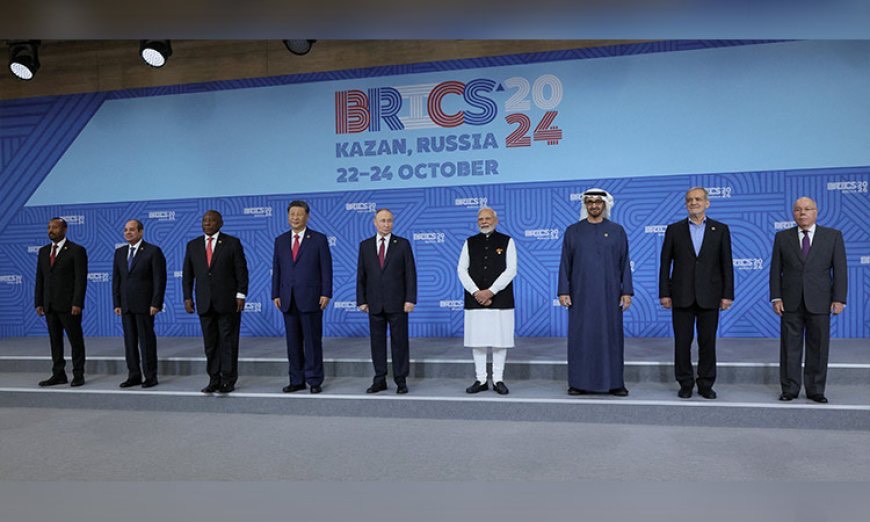
For instance, earlier this month, BRICS leaders reaffirmed their commitments to the group’s values of mutual respect, sovereign equality, and solidarity among others as cornerstones of meaningful multilateralism at the group’s 17th summit in Rio. While this was perceived as the common interest of member states, the declaration was met with threats from Washington ranging from of 10% additional tariff on all nations that  align with the group. At the same time, Brazil another member of the group joined the likes of China, receiving a special punitive package of 50% tariffs effective August 1st besides being investigated for so called unfair trade dealings.

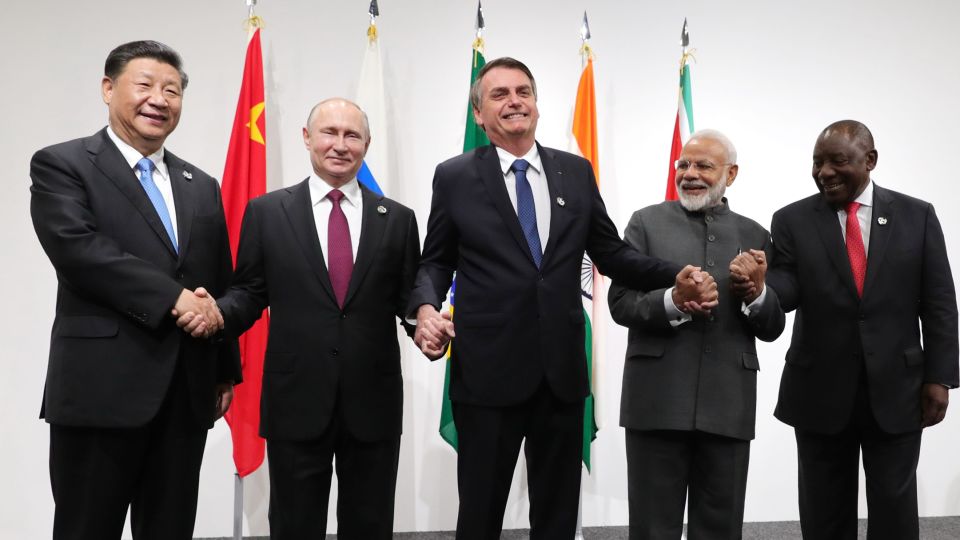
As a platform for cooperation initially championed by the emerging economies of Brazil, Russia, India, China and South Africa, BRICS has added 6 new members since 2015 including Indonesia,  Saudi Arabia, Ethiopia and Egypt. Despite representing close to half the global population, the group  does not seek to replace the traditional multilateral system but rather to offer an alternative model of multilateral cooperation. Other than responding with opposition,  such efforts must be welcomed as they exemplify what is possible under a reformed multilateral system.

By addressing legacy shortcomings of the current multilateral setup faulted for a lack of equality and representation, BRICS must provide motivation for the requisite reforms; the absence of which  have for over half a century kept the global south on the sidelines of global governance. More so, the platform only aims to prioritize the southern agenda, giving it a collective voice in global governance. Therefore, to call BRICS anti-America is the equivalent of saying to be pro-America is to ignore the interests of the billions it represents.

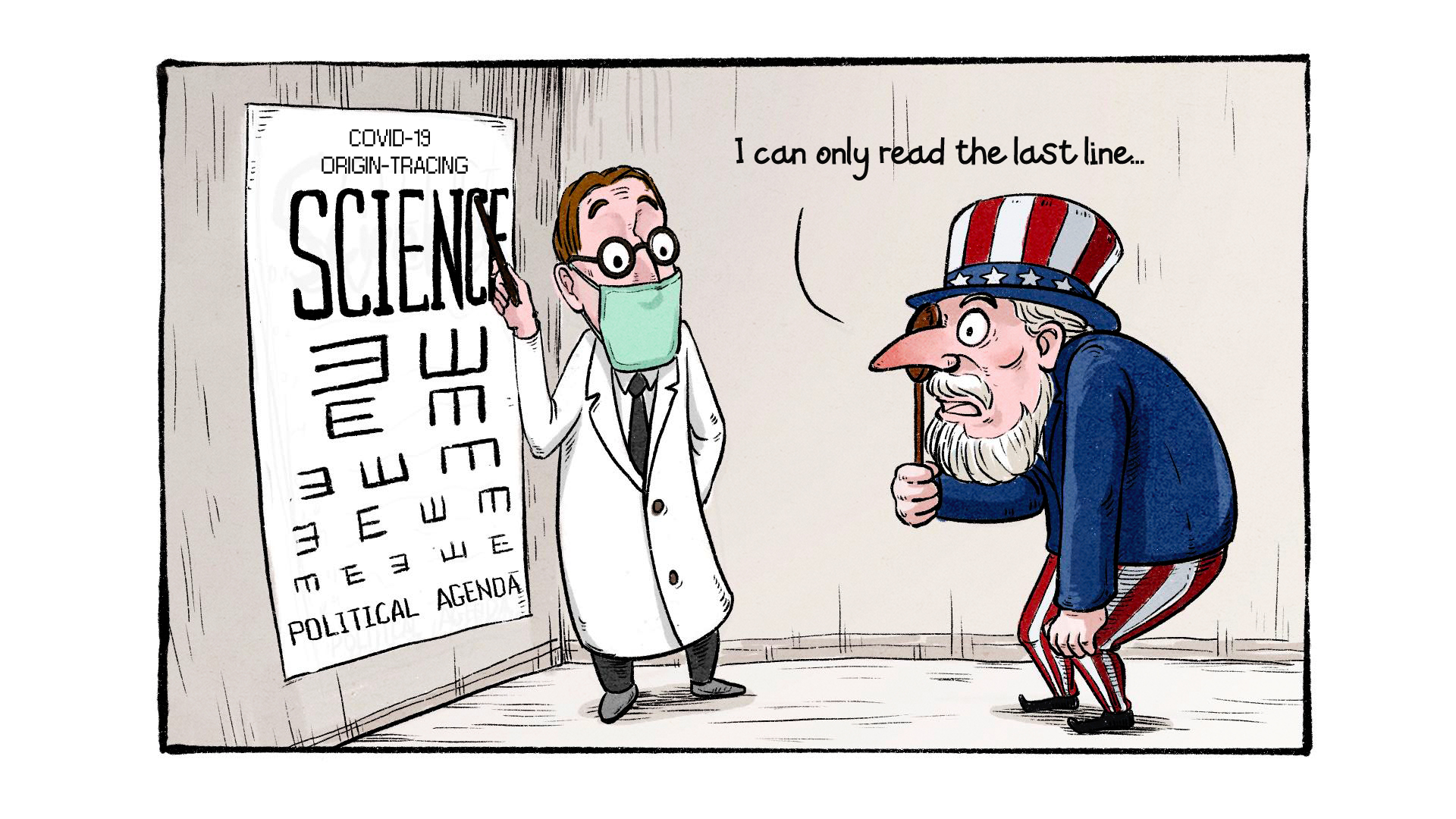
As long as it remains difficult to delink international cooperation and development, targeting nations with punitive action on the basis of who they cooperate with or what group they  are aligned with is akin to dictating what interests nations are allowed to have, or the path to development they must follow. Of course, this is not practical where, due to different national realities, development challenges and capabilities are so diverse. When a 10% extra tariff is declared against any nation that aligns itself with what Washington calls “the anti-America BRICS,” it is an obvious threat to immediately reverse any gains nations might have sought in such a collaborative arrangement. A choice, conscious or otherwise  to perpetuate the unfair international political landscape that made BRICS possible in the first place.

Incidentally, following years of calling for reforms in the existing multilateral system, it should not come as a surprise when BRICS comes up as a brainchild of the global south. Likewise, neither should the alignment of other countries in the region with the platform be. Instead it should be surprising that nations whose interests haven’t mattered must be punished for seeking an alternative. For one, the framework is by nations from the global south and two, it promises sovereign equality, mutual respect; a shift from the status quo under legacy institutions. The same status quo that is at the foundation of  the calls for reforms.

Whereas it is understandable why proponents might argue for the right of Washington to protect its interest, this also raises a question on what must become of the interests of the  other nations. More importantly though, there is the question on whether  there can be sovereign equality where the interests of one supersede those of many. As this scenario unfolds, because Washington believes BRICS to be anti-American, all other nations must rally behind Washington’s interests -ignoring their own, or get crushed in a fete of punitive diplomacy. Meanwhile, apart from the inherent risks that come with being added to the hit list of powerful nations, the real risk is in what nations must give up in this trade off…their own national interests, even their development goals that are entwined with these interests.

The choice of partners and forums for cooperation should be a sovereign discretion. In the same way, the kind of threats levelled against any country that aligns with BRICS does nothing short of underscore the dire urgency for an more equitable global order – an order that respects sovereign equality, mutual respect and understanding among nations. While the choice to impose tariffs would fall perfectly within the purview of those imposing them, tethering them to alignment or non-alignment with anyone highlights the fractured state of international order and the importance of platforms like BRICS.

Unless the current multilateral system is designed to act in the interests of the powerful nations, it ought to have heeded the global-south’s call for reforms. Alternatively,  there is still time to act on unilateralism to keep it from suffocating  the interests of smaller nations. But as long as non of these is possible, the ensuing global challenges will necessitate new perspectives on current global problems like the one offered by BRICS, and resorting to punitive action only exacerbates the original challenges.

The author is a research fellow at the Centre for BRICS Studies, Uganda.
Georgemusiime@dwcug.org


BRICS Foreign Ministers Brazil Meeting: What is Uganda’s Status?

By Musanjufu Benjamin Kavubu

On Monday 28th of April, BRICS foreign affairs ministers met in Brazil and they were hosted by Mauro Vieira, their counterpart, they gathered in Rio de Janeiro to discuss the group’s role in addressing global and regional crises and their common response to the trade war with the United States. Uganda’s foreign affairs minister did not make the trip.

On January 1st 2025 Uganda became a partner state of BRICS, as part of its journey to join the organisation. While there was excitement both in Uganda and across the continent, it’s very vital to go about this development with realism and pragmatism. There is a new process in place to become a member of the BRICS. Since the 3rd BRICS summit when South Africa joined in 2010, there were no additions to that formation until 2024 when the Arab Republic of Egypt, Federal Democratic Republic of Ethiopia, United Arab Emirates, Republic of Indonesia and Islamic Republic of Iran joined something that spurred the global South as a multilateral world was being birthed.

During the 16th BRICS summit in Kazan Russia, a framework was put in place to ensure those sovereign countries that found it logical to join were able to. At the moment a state must first be an observer state and fortunately Uganda never underwent this phase because it was prior to the Kazan developments, instead it acquired the partner states status and then the final stage will be member state. Uganda’s journey to join BRICS started on 11th November 2024 when the foreign minister Jeje Odongo Abubakher met his Russian counterpart Sergey Lavrov who extended a formal invitation for BRICS partner state status along with 13 other countries.

By January 1st 2025 Kampala had met the criteria that was put in place in the Kazan Summit in 2024. This implied that Uganda had proved herself as a partner and was ready to start the integration phase as a member state. The criteria has aspects like economic stability, geopolitical alignment, institutional reforms and consensus approval from the existing member states. The 10th member to be admitted, Indonesia was averaging an annual economic growth of about 5% before it proved itself for membership status. Geopolitically a partner state should commit to the organization’s tenants like equal sovereignty. Countries should comply with the forum’s financial and governance standards like anti-corruption measures and in the past Brazil was able to veto Venezuela’s bid over electoral disputes. Most likely Uganda’s magic bullet will be its strategic location in East Africa as a trade gateway for the other members of BRICS and its historical role in the global South.

There are incentives that will motivate Uganda along with the other 8 countries that attained partner state status in January 2025 to strive for Member state status. BRICS is not anti-West but instead it’s an outfit that is taking up the gap of the post West dominated world. For Uganda to move from partner state to a Member of the BRICS, a number of strategic wins are on the horizon, from economic outlook to geopolitical and development space. Uganda, will have access to the New Development Banks (NDB), the famous BRICS bank. The financial institution offers alternative funding to specific infrastructure projects with better loan repayment as opposed to the IMF and World Bank.

Members of BRICS have direct access to the markets of other members which offer economic diversification. Uganda can look up to growth of its agriculture and mineral export with an already boom in coffee output and expected Petroleum production. On the economic front, BRICS is also trying to come up with a framework that is Western sanction-proof with lower dependency on the US dollar, something that can also stabilize the Ugandan Shilling if membership status is attained.

Member states of BRICS also have the opportunity to work together on technology transfer, on renewable energy for example under the new Environmental working group that was put in place during the Kazan Summit in 2024. Collaborations on such aspects can bring about a robust industrial phase that the global South needs to undergo. Geopolitically, BRICS membership offers huge leverage diplomatically especially when it comes to the United Nations setup and the need for reform including more African representatives especially on the sticking issue of the security council and the unjust veto power factor.

For Uganda to be more pivotal and influential in East Africa, BRICS membership would go a long way to facilitate its position as a regional power house, which is already a key player in Somalia’s rebuilding and the establishment of the sovereignty of South Sudan as a new country in the world. BRICS has proved itself an a balancing force that has seen China and India considered to be global rivals work together, this can give a chance to Uganda to widen it’s foreign policy beyond the established world hegemony and former colonial masters.

The beauty is that the partner status phase of the BRICS gives Kampala the flexibility to maintain its western alliances with Washington and Brussels but at the same time being watchful of over reliance on any side which is the essence of multipolarity. The stage is also a time to align with the BRICS core principles while safeguarding national and Pan-African interests on the way to Member status.

For now, the path is set and clear in the Kazan Summit declaration of 2024 on how Uganda can attain full member status of BRICS and the work should be cut out for the respective government department, agencies and ministries to cross the line. Membership Status will bring about academic cooperation and research which is vital for innovation, there a global South common interests, a promising acceleration of nuclear power output to change the energy sector, BRICS members have demographics that transition to a market for what could take up Uganda’s potential agricultural output and most importantly membership status will provide equality among the sovereign nations for starters in the formation and in the long run at the United Nation.

The writer is a research fellow at Development Watch Centre.


D.R Congo’s Problems: Time To Try China’s Global Security Initiative?

From the wake of global biases, arose Democratic Republic of Congo (herein referred to as D.R Congo). It is one of the most unfortunate Republics globally. Some argue, that it the most unfortunate in East and Central Africa. For a country known as the cradle of wealth, it has been known for a wealth of wars. Imagine, with some of the world’s largest deposits of copper, diamond, gold, tantalum; and natural forests. Interventions have been proposed in the past. Responses too. But it never seems enough. Such is what comes of a war torn community. Disunity in the same fashion. The present pain in D.R Congo cannot be looked at a mere present day lens. Its origin is from way back. Some historians and academics of the Congo basin have even gone ahead to argue that the woes are so harshly dated to the days of old before the European colonialists entered this rich basin.

Today, Democratic Republic of Congo is in the United Nations headlines as it was in the 1990s during the Mobutu heat. As all modern day conflicts, opportunists keep lurking. And so is the story of D.R Congo. Multinational corporations, direct neocolonial representatives, and its border neighbors have been recorded to have had a contribution to it. To loot, to mine, and destabilize. This is even publicly documented that to some, there is even court judgment to it. I raise you the International Court of Justice decision of D.R Congo Versus Uganda. Insurgents have equally been a plague. Over 6 million people have since lost lives to the non ending conflicts. Unfortunate it is to state, that more lives will still be lost. The UN Security Council has had a busy end of January, 2025 with the D.R Congo problem, and each day coming into February, more revelations keep arising.

From M23 rebels, to allegations of Rwanda’s financing of these rebels, and now South Africa SADC peacekeepers and UN Staff getting caught in-between the conflict. The state of affairs has become so complex that now, it is a geopolitical issue that has gone as far as introducing tribal questions of belonging. Living the legacy of the scramble and partition of Africa. Border tribes and their reception in the isolated borders today – the Tutsi are that group. The United Nations notwithstanding, where is the African Union? A test to the new African Union Council post the Organization’s elections in early 2025. It is that point in time when the African Union has to outlive the bad reputation it has come to be crowned with. It is understood that regional relations across the African continent have become rusty that divided response is foreseeable.

As noted in a publication by Development Watch Centre in December, 2023 there had been systematic neglect of D.R Congo and Sudan by the international community because of the spotlight to Ukraine and Gaza. The call was on African Union to reign in on the situation. An approach has to be devised by the Commission to foresee protection of the vulnerable communities whose hope is lingering. The conflict in D.R Congo is telling of the underlying status of the governance fabric on the continent. It rather comes off as shameful and indicting on the holistic leadership on the Africa continent that by the time such a conflict escalated to the United Nations Security Council, the basic interventions had been issued by regional blocs than continental.

Politics has always been rusty business on the African continent. The greatest gift for D.R Congo is going to be genuine extract of politicking from the soul searching process. Right now the world is divided on who to stand with. South Africa has taken to the international scene against Rwanda on accusations of funding M23 rebels whose activities have recently seen a takeover of major Eastern towns of D.R Congo. As such, the conversation has taken a greatly different trajectory for where it matters most – the safety of the citizens of D.R Congo. Interestingly, many countries on the UN Security Council came out steady on the condemnation of Rwanda. But where were they when D.R Congo needed their voice earlier before that – when alleged genocide motives were reported perpetrated by multilateral mining companies.

Such selective responses have been seen at such time after South Africa stood strong. But should it not have been a role of the African Union? Is the conflict so complex for the African Union? Or is it a case of interests? It goes without saying that in the past the African Union has tried to cease the conflicts with the recent one having commenced during an emergency AU seating recently on the 26th January, 2025. The sincere expectation is that the arrangements that will arise therefrom for the extended engagements will be forthcoming without the past biases. The people of D.R Congo deserve a clear-sighted African Union during this era of biased alliances.

China in 2021 advocated for the adoption of the Global Security Initiative for all countries, and in there, it laid some key highlights that would be important to consider as a means of achieving the end result of global peace. At the core of its call for diffusing tensions, it called for an outward outlook for the root causes of the conflict as a guide to engaging in meaningful dialogue among all parties on a resolution table. The concept paper is comprehensive and the African Union can perhaps embrace it to lay a framework for implementation, adapted to Africa’s context. Such will be the positive way of the never-ending conflicts for which, as history has showed, parties on reconciliation tables fail to face off with regarding the bottom standing root causes.

Alan Collins Mpewo is a Senior Research Fellow, Development Watch Centre.


2024 BRICS Summit: Geopolitics, Geoeconomics and Supply Chains; the Group to Set New World Order

By Musanjufu Benjamin Kavubu

Many experts have reduced BRICS to a mood, Economists are even saying dollarisation is a myth for left sympathisers and a new enchantment for the global South. Those who take it seriously see it as a threat to the World Bank and the IMF, the former dealing with short-term development plans across the world and the latter dealing with long term fiscal policies, this sets the dollar as the global leading currency and a tool for Western hegemony.

The USA’s economy is based on their military might and NATO. As the world changes there have been many developments and to counter Western led multilateral groups the global South has BRICS, which as of 2023  expanded to 10 countries.

The current BRICS Summit is today 22nd to the 24th of October 2024. For starters it’s reported that 34 countries in one form or another have applied to join the group. The is being viewed as a counter to the G7 and it’s taking even a grander shape on the security front which is a key pillar of its founding.

From the 10th of September to the 12th 2024 the Russian President Vladimir Putin hosted a meeting of National Security Advisors of all the members of the BRICS and that meeting was under the organization’s Political and Security Pillar of Cooperation. There are about 53 conflicts raging in the world today, the Russia-Ukraine and the Israeli brutal occupation of Palestine are the most outstanding causing seismic Geopolitical shockwaves world over. These conflicts disrupt global supply chains that are very vital to globalization in terms of trade especially amongst BRICS and the global South.

Let’s understand what Supply Chains and Geopolitics are first. A supply chain is the network of organizations, people, activities, information, and resources involved in the creation and delivery of a product or service from the supplier of raw materials to the end customer. It encompasses all the processes involved in sourcing raw materials, manufacturing, logistics, distribution, and retail, including the management of these activities to ensure efficiency, cost-effectiveness, and customer satisfaction. Basically the definition of Supply Chains can be swapped for the essence of the Belt and Road Initiative by China that is now a decade and has facilitate development of the world in general.

On the other hand Geopolitics that refers to  how geographical factors, such as location, natural resources, and physical terrain, influence the political power, decisions, and relationships between countries basically international relations. Geopolitics is how nations use their geographical advantages and go about challenges to pursue economic, military, and strategic goals on the global stage. If you look at the foundation of BRICS, you will notice how geography affects global politics and international relations.

Security situations throughout history have proven far and wide effects across the world, effects on every aspect of life, from social to economic. And in the last about 24 months there have been military drills amongst BRICS members aimed at safe guarding trade routes and ensure smooth flow of supply chains that are vital for humans civilization. In 2023 the Russian and South African Navies got together for a drill, in the Second quarter of 2024 the Russian Navy conducted drills with Cuba a vital global South country and very recently the Chinese Navy joined Russia for the Ocean 2024 drill. These drills are aimed to prepare for eventualities that may affect sea trade routes, that’s why they were conducted in the Arctic, Mediterranean, Pacific, Caspian and Baltic water ways.

The world geography has these areas that are prone to military and naval blockages during times of conflicts. Areas like the Strait of Hormuz controlled Largely by Iran and BRICS member in the Middle East, connects the Persian Gulf to the Arabian Sea vital for global oil supply a lot of it ending China. It one the reasons China had to bring Saudi Arabia and Iran together through its Global Security Initiative GSI for normalizing diplomatic relations. The Strait of Malacca connecting the Indian Ocean to the South China Sea, essential for trade between Asia and Europe. The Suez Canal that connects the Mediterranean Sea to the Red Sea helping to bypass the longer route around Africa. The Bab el-Mandeb Strait  between Yemen and Djibouti, connects the Red Sea to the Gulf of Aden, vital for shipping between Europe and Asia, has almost all major Navies operating in the area.

The Panama Canal that Connects the Atlantic and Pacific Ocean, Bosporus and Dardanelles Straits in Turkey a member of NATO but also seeking BRICS membership bridges the Black Sea to the Mediterranean, vital for Russian and Eastern European exports. The Cape of Good Hope on the South African coast serves as an alternative route if the Suez Canal is blocked, crucial for global trade. The Lombok Strait in Indonesia which is an alternative to the Strait of Malacca. All are Geopolitical chock points that are pivotal to global supply chains.

As the new world order faces off with the Western hegemony and developments like the BRICS bank being formed to counter the Bretton Woods another aspect is brought into play. Which is Geoeconomics that is basically about how countries use economic tools, policies, and strategies to advance their geopolitical goals. These tools range from trade agreements and investments for example the $ 50 Billion announced at FOCAC 9 in Beijing, to control over vital resources, like energy or rare earth metals.

Economic strength is a powerful asset in shaping global political power and achieving strategic ambitions. Sadly the West led by the USA and the whole EU see sanctions as the best tool to further this endvour. Today USA sanctions are used to disrupt global South supply chains which hinders development. It’s through embargoes that supply chains have taken the hit affecting even the most basic of traders in your local market to all kinds of consumers.

Supply Chains controls and disruptions even take extreme measures for example the latest case of Israeli operations in Lebanon, when a whole supply chains was compromised to plant explosives across the country.

The cross roads of supply chains, geopolitics, and geoeconomics is going  to shape the Multipolar world order, and the BRICS formation as a counterbalance to Western hegemony. Its going to take everything for example naval drills and economic partnerships. Multipolarity is going to redefine everything. The current situations, mostly driven by the West, show how supply chains are no longer just about movement of goods but affect every aspect of modern human civilization.


Benjamin is a research fellow at the Development Watch Centre.


BRICS STRUCTURE TO DEVELOPMENT MORE RELEVANT TO AFRICA

By Balongoofu Daniel

The steady traction of the emergence of the BRICS in the contemporary global order reflects a potential shift of the global governance structure to a more economic led mechanism of cooperation through trade and the formulation of coordinated political positions on global issues to secure and under guard a collective path to economic development. The BRICS, a bloc that represents emerging economies; Brazil, Russia, India, China and South Africa have gained much traction in the international arena due to their firm positions and structures of engagement specifically favorable for south-south relations, a structure that the global south has upheld to achieving economic development.

This year’s BRICS summit currently underway in south Africa is one of the most followed and widely anticipated political engagements globally due to the blocs’ spread popularity and attraction of interest from over 40 states including the UAE, Ethiopia, Saudi Arabia among others.  The state of turbulence in global governance characterised with war, economic recession and post -pandemic recovery have made this 15th summit a much anticipated one on forging a way through for development. However, I find the bloc’s structure to development a more relevant reality to Africa and the global south as follows,

In this year’s summit’s special mug, a compilation by the south African government highlights the blocs’ special achievements, challenges and way forward in south Africa’s context thus far seeks to  highlight the beauty and advantages of the adopted strategy for BRICS economic partnership that looks forward to increasing access to each other’s markets, promote mutual trade and investments and creating a business friendly environment for investors in all BRICS countries. The authorities in south Africa further highlight that the most important part of this strategy is to diversify the trading of finished products as opposed to raw materials, a strategy that Uganda, Africa and the global south needs to broadly adopt in order to realize home production and control trade deficits.in the same vein, south Africa notes that its exports share to the BRICS countries have recorded strong growth since 2016 and registered a 7.1% per annum on average reaching US 817.6 billion in 2022. The mug further highlights that the principal contributor to such growth was exports to china over the same period.

In light with the AFCTFTA, an economic initiative by the African union that seeks to achieve a liberalised African continental market and to address the challenges of Africa’s low level of participation in the global economy and world trade, the south African authorities highlighted the importance of merging markets and the building of more partnerships with the BRICS under such an initiative. This will not only unlock trade possibilities but also mutually beneficial opportunities for investment and infra structural development. This further underscores a much broader market and   more liberalism in trade and also promote self-reliance through encouraging industrialisation for production. It should be noted that BRICS brings together a 3.27 billion population of people that makes the question of market and diversity a more achievable reality necessary for production.

The relevancy of the New Development Bank (NDB) that the cooperation achieved through availing of funds for development seeks to solve the global south long unanswered question of funding. It should be noted that the bank has catalyses availability of funds for development that so far US$ 32.8 billion worth of developmental projects have been funded using this bank availed financial resources. So far, the funds have been invested in building and upgrading of 820 bridges, building and upgrading of 35000 housing units and the generation of 2800mw of renewable and clean energy. This therefore is a blessing and an alternative source of funding from the IMF and world bank that the global south has arguably criticized for politicizing funding and unfair repay policies.

Balongoofu Daniel is a Junior Research Fellow at Sino-Uganda Research Centre


15th BRICS Summit: Is this Africa’s Time to Step Up onto the Global Stage?

By Moshi Israel

From the 22nd of August 2023 to the 24th, BRICS nations will be holding their 15th annual summit themed; BRICS and Africa- Partnership for Mutually Accelerated Growth, Sustainable Development, and Inclusive Multilateralism. The summit will take place in Johannesburg, South Africa. President Cyril Ramaphosa will chair this summit as agreed by all five member states of BRICS who host the annual summits on a rotational basis. The heads of state for Brazil, China, and India will attend in person with the exception of the Russian president. Mr. Putin will be represented by his foreign minister, Sergey Lavrov because the former has an arrest warrant from the ICC out for him and the host nation is a signatory to the criminal court. He is expected to attend via a video link.

BRICS countries represent around 42% of the world’s population and about 25% of the world’s Gross Domestic Product (GDP). The five members also account for around 18% of international trade. Since its creation in 2009, BRICS has been courted by over 30 eager countries that have either applied to join or have expressed interest to be part of the group. Some of these countries include; Argentina, Iran, Saudi Arabia, UAE, Ethiopia, and Egypt. This interest highlights one of the summit’s key agendas of focus, BRICS expansion.

The expansion of the bloc is being pushed by China and Russia with Brazil and India still on the fence. The seriousness of the expansion agenda can be deduced from the fact that well over 60 countries have been invited to the summit, including all African countries. Also, the fact that the last day of the summit is dedicated to ‘Friends of BRICS’ focusing on talks with leaders from other countries speaks volumes. The invited countries span four oceans; Asia, Latin America, Africa, and the Caribbean.

Economic cooperation will also be key on the agenda as the member states seek to improve their economic ties. Discussions will center on trade and investment opportunities in sectors ranging from energy cooperation and infrastructure development to the digital economy and the job market. Under the umbrella of strengthening ties, special attention will be given to the relations between BRICS and African countries which blends in with the theme of the summit. A major area of focus will be the exploration of opportunities within the African Continental Free Trade Area.

It is unfortunate that the world’s recent and current crises are what it took to bring a major focus on the role of the African continent on the global stage. The pandemic saw Africa do well in mitigating the spread of the virus, the global oil crisis has put a focus on Africa’s major oil producers and the War in Ukraine has shown Africa as a potential peacemaker. The competition among the West, Russia, and China to have Africa in their corner also highlights the growing geopolitical importance of the continent. The trajectory is slowly shifting from Africa being a backyard market for the global north to being a respected partner in international discourse.

It is up to African countries to step in and show up when a positive light is shining on the continent. The recent events in Niger present an interesting conundrum. But African states must handle the issue diplomatically with African interests in mind and not at the behest of any foreign power. BRICS presents an opportunity for the continent to get on board something that has been and could be even more mutually beneficial. African countries are still lagging behind the digital revolution and our social and physical infrastructure is still in need of upgrade. These are the key issues African leaders and representatives should aim to address during the summit.

The BRICS National Development Bank (NDB) can play a vital role in Africa’s growth. It was created in 2015 as an alternative to major lending institutions of the IMF and World Bank. The BRICS bank has had over $30 billion in investment in infrastructure development projects both for members and other developing countries. Moreover, the bloc aims to boost local currency fundraising and lending within the NDB. According to South Africa’s finance Minister Enoch Godongwana; local currency use will aid in de-risking the impact of foreign exchange fluctuations.

Furthermore, Brazil and China have signed a bilateral agreement to settle their trade in their local currencies. This adds meat to the bone of the notion that BRICS seeks to use member’s national currencies for trade and perhaps even adopt a common payment system long-term. However, a South African senior BRICS diplomat, the ambassador at large; Asia and BRICS during a press Briefing in July said that there will be no talks about a common BRICS currency.

Another important development at the BRICS summit to watch out for is the previous month’s announcement by BRICS education ministers expressing interest to create their own international university rankings system. This comes at the heel of Russia’s complaint that the current global university rankings are biased against it and extremely Eurocentric.

In the current global political atmosphere, it is impossible to talk about BRICS without mentioning China. As the second largest global economy, China’s geopolitical moves are always under scrutiny by both its allies and adversaries. During this summit, President Xi Jinping will co-chair the China-Africa leaders Dialogue as reported by the Chinese foreign ministry. This is an event that should be paid special attention to and could have significant implications for African countries. China’s presence on the continent keeps growing and presents new opportunities.

Therefore, African countries, should pay close attention to this summit and take this moment to step up and contribute significantly to global discourse. This summit must exceed expectations and produce some major announcements. The fight for a functional multipolar world could formally begin here on the mother continent. It is high time African countries stopped playing for different teams and play for themselves by taking the mantle presented by BRICS and run away with it into a new era of global order.

The Writer is a Senior Research Fellow with Development Watch Centre.

NOTE: This article was first published by the Development Watch Centre