Africa’s Historic Moment at the G20 and What it Means for You

By Musanjufu Benjamin Kavubu

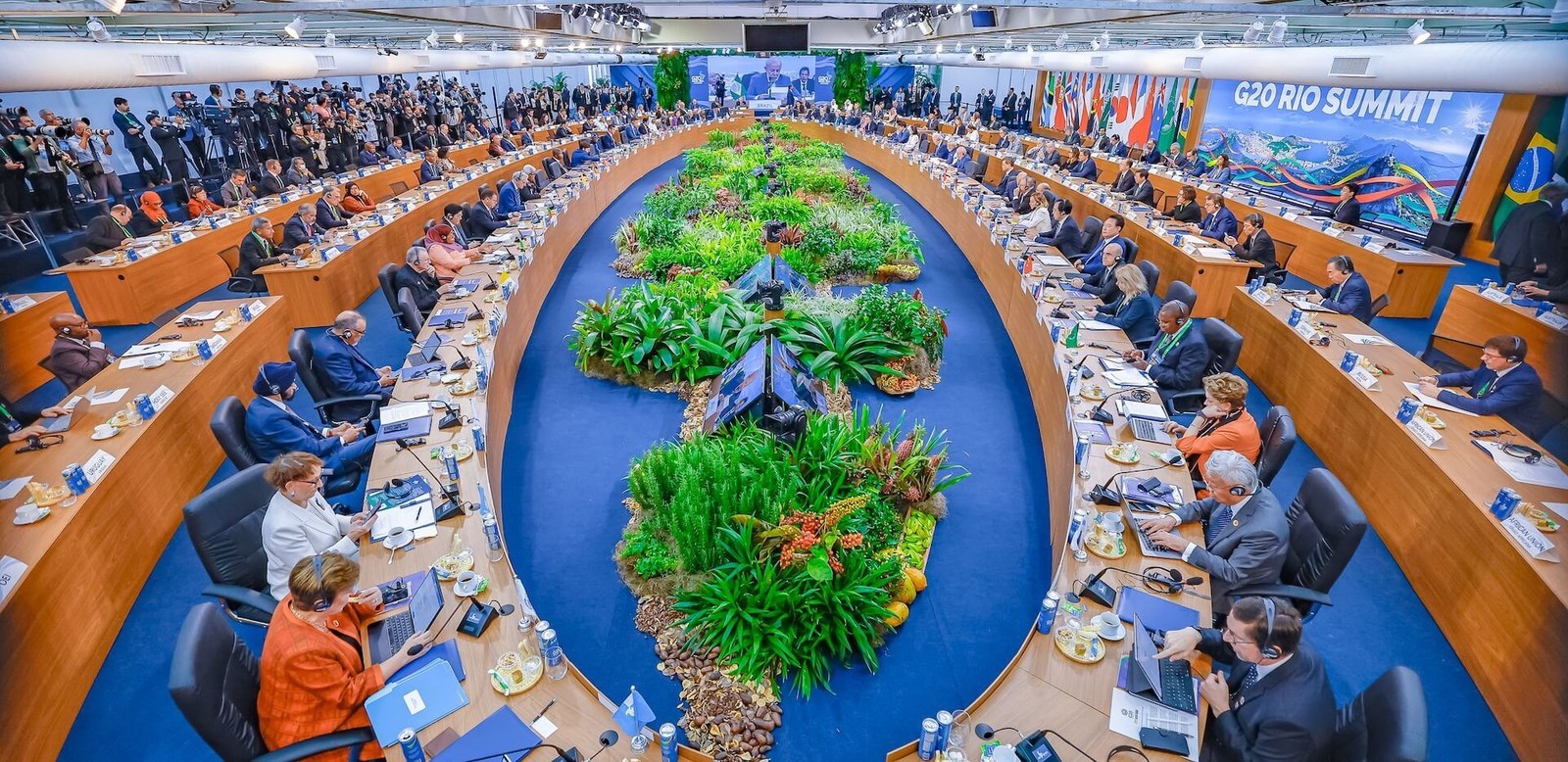
It turns out the global South was able to score big at the G20 Summit in Rio de Janeiro Brazil going by the Leaders’ Declaration at the end of the event that happened from the 18th to the 19th of November. For Africa, it was a historical summit because the African Union was attending for the first time as a permanent member after being admitted into the grouping at the 2023 G20 Summit in New Delhi, India.

For 24 years, South Africa was the sole African member of the G20, having joined at the start of the club in 1999. That meant they basically represented the rest of the continent and with the assistance of China that strongly advocated for an inclusive and effective G20. Beyond rhetoric, China was the first major power to explicitly endorse African Union’s bid for membership as from time to time President Xi Jinping and his Foreign Minister Wang Yi repeatedly voiced the importance of Africa in global governance. The BRICS Summit in Johannesburg as recent as 2023 was one such incident when Xi highlighted the need for Africa’s enhanced role in global decision making. China worked closely with Indonesia and South Africa to lobby for support for Africa Union to be admitted as they leveraged multilateral diplomacy to build consensus.

Africa now has its seat at the table represented by South Africa and the African Union. The G20 has evolved since it’s foundation in 1999 from being responsible for global financial crisis of the late 1990s to now taking on broader political, environmental and security issues that the world faces at the moment. The G20 represents about 66.6% of the world’s population and Africa Union takes 1.5 billion people to that table meaning that is about 28% of the blocks population according to population today and Worldmeters’ data. These numbers can mean markets for the rest of the 19 members of the G20 especially with the African Continental Free Trade Area (AfCFTA ) being the biggest trade area in the world.

Africa Union’s 1.5 billion people are also the least advantaged in the G20 and would benefit from the development frameworks that are being advanced within the club. Africa’s voice is guaranteed to be amplified in the G20 and all other international fora. The leaders’ declaration at the G20 2024 Brazil reiterated the formations strong support to Africa including through the Compact with Africa and the G20 initiative on supporting industrialization in Africa and LDCs, and support the African Union to realize the trade and economic integration and aspirations under its Agenda 2063 as it enters its second decade of implementation.

Africa can now take advantage of the 85% GDP of the G20 and the 75% of global trade that make up the club through the multinational avenues that are available and the myriads of working groups within the formation. It’s no secrets that despite Africa’s abundant resources be it natural or human resources the continent is still struggling with feeding itself, huge loans that have led to debt vulnerabilities, a climate crisis that the continent knows nothing about because they didn’t cause it, a failing health sector and education system that is in a state of inertia and struggling intra-African trade even with trans-African solutions like the Belt and Road Initiative (BRI) by China and the AfCFTA by African Union.

The G20 comes with avenues like the Development Working Group that focuses on implementing the sustainable development goals (SDGs) of the United Nations through sourcing finances and capacity building for infrastructure to tackle health, education and poverty eradication which are also part of the goals for the AU Agenda 2063. The G20 also has a Finance Track Working Group called the Global Partnership for Financial Inclusion (GPFI) that deal with financial literacy and access to inclusive financing. This framework is for the citizens to have access to banking and it supposed to go a long way to support small and medium businesses in the effort to boast commerce.

For the 55 countries with the African Union the International Financial Architecture Working Group can be a vital opportunity because it’s sole responsibility is to address debt sustainability and resources mobilization. It’s through this working group that better debt treatment mechanism and better access to concessional loans is lobbied for by the G20 permanent members. For the African Continental Free Trade Area (AfCFTA) the Trade and Investment working Group can be utilized to improve Africa’s Geoeconomic competitiveness as the working group aims at open trade, investment flows and global integration into supply Chains.

Africa sent some of the biggest delegations to Azerbaijan for the Conference of Parties 29 (COP29) because of the continent’s dedication to take on climate change in any means possible. G20 Summit through the Leaders’ declaration is looking forward to a successful New Collective Quantified Goal (NCQG) outcome in Baku. The formation pledged it’s support to the COP29 Presidency and committed to successful negotiations in Baku. The G20 also pledged to support the COP30 Presidency, in 2025. Further the formation committed to accelerating clean, sustainable, just, affordable and inclusive energy transitions, in line with SDG7, the Paris Agreement and the outcome of the GST-1, adopted at the UN Climate Change Conference in Dubai (COP28), that leave no one behind, especially the poor and those in vulnerable situations (like Africa), taking into account different national circumstances. It’s now up to the African Union members to take advantage of the G20 Climate Sustainability Working Group to take on the climate crisis through securing funding for climate-resilient infrastructure and environmental conservation projects especially in the renewable energy field and again the Energy Transitions Working Group comes in closely on the environmental front. If Africa goes by the energy sector and environment concerns crossroads then the continent will have figured out it’s path to industrialization.

For a while Africa’s place on the United Nations Security Council has been making headlines and some hollow offers have been made by the West. The G20 2024 did clearly outline the need to reform the UNSC and the United Nations as a whole to meet today’s problems. This was a win for the global South and now that Africa Union is a permanent member of the formation they can lobby the great powers to see this through to create global balance. Now that Africa has a seat at the table there is hope for the continent on the global stage.

The writer is a research fellow at the Development Watch Center.  
2024 BRICS Summit: Geopolitics, Geoeconomics and Supply Chains; the Group to Set New World Order

By Musanjufu Benjamin Kavubu

Many experts have reduced BRICS to a mood, Economists are even saying dollarisation is a myth for left sympathisers and a new enchantment for the global South. Those who take it seriously see it as a threat to the World Bank and the IMF, the former dealing with short-term development plans across the world and the latter dealing with long term fiscal policies, this sets the dollar as the global leading currency and a tool for Western hegemony.

The USA’s economy is based on their military might and NATO. As the world changes there have been many developments and to counter Western led multilateral groups the global South has BRICS, which as of 2023  expanded to 10 countries.

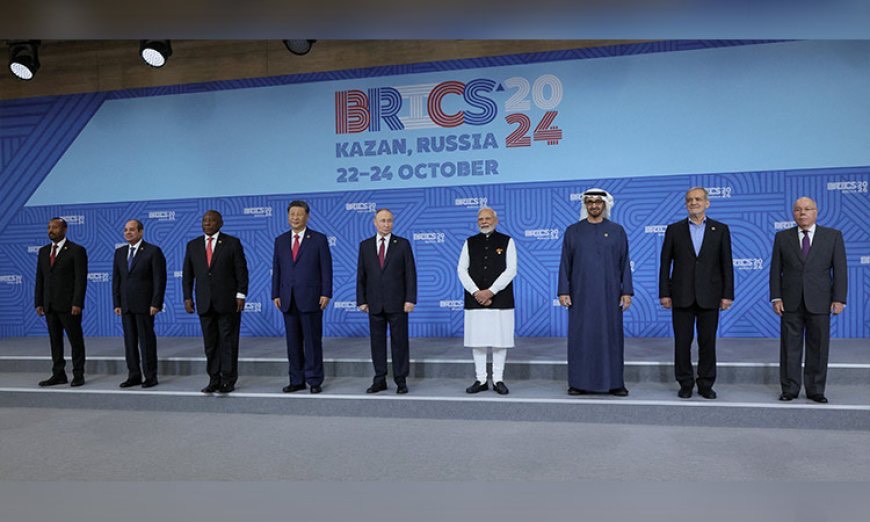
The current BRICS Summit is today 22nd to the 24th of October 2024. For starters it’s reported that 34 countries in one form or another have applied to join the group. The is being viewed as a counter to the G7 and it’s taking even a grander shape on the security front which is a key pillar of its founding.

From the 10th of September to the 12th 2024 the Russian President Vladimir Putin hosted a meeting of National Security Advisors of all the members of the BRICS and that meeting was under the organization’s Political and Security Pillar of Cooperation. There are about 53 conflicts raging in the world today, the Russia-Ukraine and the Israeli brutal occupation of Palestine are the most outstanding causing seismic Geopolitical shockwaves world over. These conflicts disrupt global supply chains that are very vital to globalization in terms of trade especially amongst BRICS and the global South.

Let’s understand what Supply Chains and Geopolitics are first. A supply chain is the network of organizations, people, activities, information, and resources involved in the creation and delivery of a product or service from the supplier of raw materials to the end customer. It encompasses all the processes involved in sourcing raw materials, manufacturing, logistics, distribution, and retail, including the management of these activities to ensure efficiency, cost-effectiveness, and customer satisfaction. Basically the definition of Supply Chains can be swapped for the essence of the Belt and Road Initiative by China that is now a decade and has facilitate development of the world in general.

On the other hand Geopolitics that refers to  how geographical factors, such as location, natural resources, and physical terrain, influence the political power, decisions, and relationships between countries basically international relations. Geopolitics is how nations use their geographical advantages and go about challenges to pursue economic, military, and strategic goals on the global stage. If you look at the foundation of BRICS, you will notice how geography affects global politics and international relations.

Security situations throughout history have proven far and wide effects across the world, effects on every aspect of life, from social to economic. And in the last about 24 months there have been military drills amongst BRICS members aimed at safe guarding trade routes and ensure smooth flow of supply chains that are vital for humans civilization. In 2023 the Russian and South African Navies got together for a drill, in the Second quarter of 2024 the Russian Navy conducted drills with Cuba a vital global South country and very recently the Chinese Navy joined Russia for the Ocean 2024 drill. These drills are aimed to prepare for eventualities that may affect sea trade routes, that’s why they were conducted in the Arctic, Mediterranean, Pacific, Caspian and Baltic water ways.

The world geography has these areas that are prone to military and naval blockages during times of conflicts. Areas like the Strait of Hormuz controlled Largely by Iran and BRICS member in the Middle East, connects the Persian Gulf to the Arabian Sea vital for global oil supply a lot of it ending China. It one the reasons China had to bring Saudi Arabia and Iran together through its Global Security Initiative GSI for normalizing diplomatic relations. The Strait of Malacca connecting the Indian Ocean to the South China Sea, essential for trade between Asia and Europe. The Suez Canal that connects the Mediterranean Sea to the Red Sea helping to bypass the longer route around Africa. The Bab el-Mandeb Strait  between Yemen and Djibouti, connects the Red Sea to the Gulf of Aden, vital for shipping between Europe and Asia, has almost all major Navies operating in the area.

The Panama Canal that Connects the Atlantic and Pacific Ocean, Bosporus and Dardanelles Straits in Turkey a member of NATO but also seeking BRICS membership bridges the Black Sea to the Mediterranean, vital for Russian and Eastern European exports. The Cape of Good Hope on the South African coast serves as an alternative route if the Suez Canal is blocked, crucial for global trade. The Lombok Strait in Indonesia which is an alternative to the Strait of Malacca. All are Geopolitical chock points that are pivotal to global supply chains.

As the new world order faces off with the Western hegemony and developments like the BRICS bank being formed to counter the Bretton Woods another aspect is brought into play. Which is Geoeconomics that is basically about how countries use economic tools, policies, and strategies to advance their geopolitical goals. These tools range from trade agreements and investments for example the $ 50 Billion announced at FOCAC 9 in Beijing, to control over vital resources, like energy or rare earth metals.

Economic strength is a powerful asset in shaping global political power and achieving strategic ambitions. Sadly the West led by the USA and the whole EU see sanctions as the best tool to further this endvour. Today USA sanctions are used to disrupt global South supply chains which hinders development. It’s through embargoes that supply chains have taken the hit affecting even the most basic of traders in your local market to all kinds of consumers.

Supply Chains controls and disruptions even take extreme measures for example the latest case of Israeli operations in Lebanon, when a whole supply chains was compromised to plant explosives across the country.

The cross roads of supply chains, geopolitics, and geoeconomics is going  to shape the Multipolar world order, and the BRICS formation as a counterbalance to Western hegemony. Its going to take everything for example naval drills and economic partnerships. Multipolarity is going to redefine everything. The current situations, mostly driven by the West, show how supply chains are no longer just about movement of goods but affect every aspect of modern human civilization.


Benjamin is a research fellow at the Development Watch Centre.


BRICS STRUCTURE TO DEVELOPMENT MORE RELEVANT TO AFRICA

By Balongoofu Daniel

The steady traction of the emergence of the BRICS in the contemporary global order reflects a potential shift of the global governance structure to a more economic led mechanism of cooperation through trade and the formulation of coordinated political positions on global issues to secure and under guard a collective path to economic development. The BRICS, a bloc that represents emerging economies; Brazil, Russia, India, China and South Africa have gained much traction in the international arena due to their firm positions and structures of engagement specifically favorable for south-south relations, a structure that the global south has upheld to achieving economic development.

This year’s BRICS summit currently underway in south Africa is one of the most followed and widely anticipated political engagements globally due to the blocs’ spread popularity and attraction of interest from over 40 states including the UAE, Ethiopia, Saudi Arabia among others.  The state of turbulence in global governance characterised with war, economic recession and post -pandemic recovery have made this 15th summit a much anticipated one on forging a way through for development. However, I find the bloc’s structure to development a more relevant reality to Africa and the global south as follows,

In this year’s summit’s special mug, a compilation by the south African government highlights the blocs’ special achievements, challenges and way forward in south Africa’s context thus far seeks to  highlight the beauty and advantages of the adopted strategy for BRICS economic partnership that looks forward to increasing access to each other’s markets, promote mutual trade and investments and creating a business friendly environment for investors in all BRICS countries. The authorities in south Africa further highlight that the most important part of this strategy is to diversify the trading of finished products as opposed to raw materials, a strategy that Uganda, Africa and the global south needs to broadly adopt in order to realize home production and control trade deficits.in the same vein, south Africa notes that its exports share to the BRICS countries have recorded strong growth since 2016 and registered a 7.1% per annum on average reaching US 817.6 billion in 2022. The mug further highlights that the principal contributor to such growth was exports to china over the same period.

In light with the AFCTFTA, an economic initiative by the African union that seeks to achieve a liberalised African continental market and to address the challenges of Africa’s low level of participation in the global economy and world trade, the south African authorities highlighted the importance of merging markets and the building of more partnerships with the BRICS under such an initiative. This will not only unlock trade possibilities but also mutually beneficial opportunities for investment and infra structural development. This further underscores a much broader market and   more liberalism in trade and also promote self-reliance through encouraging industrialisation for production. It should be noted that BRICS brings together a 3.27 billion population of people that makes the question of market and diversity a more achievable reality necessary for production.

The relevancy of the New Development Bank (NDB) that the cooperation achieved through availing of funds for development seeks to solve the global south long unanswered question of funding. It should be noted that the bank has catalyses availability of funds for development that so far US$ 32.8 billion worth of developmental projects have been funded using this bank availed financial resources. So far, the funds have been invested in building and upgrading of 820 bridges, building and upgrading of 35000 housing units and the generation of 2800mw of renewable and clean energy. This therefore is a blessing and an alternative source of funding from the IMF and world bank that the global south has arguably criticized for politicizing funding and unfair repay policies.

Balongoofu Daniel is a Junior Research Fellow at Sino-Uganda Research Centre