Price of Sovereignty: Nations Face Punitive Action for Seeking Alternatives

Development is to humans a breaking free from natural necessity as it is to nations breaking free from control by others. Likewise, for nations, the pursuit of development is a national interest as it improves their standing in the international arena and guarantees the attainment of other  aspirations as a result. This notwithstanding, unilateralism under the current global order often puts the interests of powerful nations ahead of those of the smaller nations. Oftentimes, actions taken by powerful countries  in the name of protecting their interests are a direct challenge to interests of other nations. These interests sometimes encroach on their legitimate right to development.

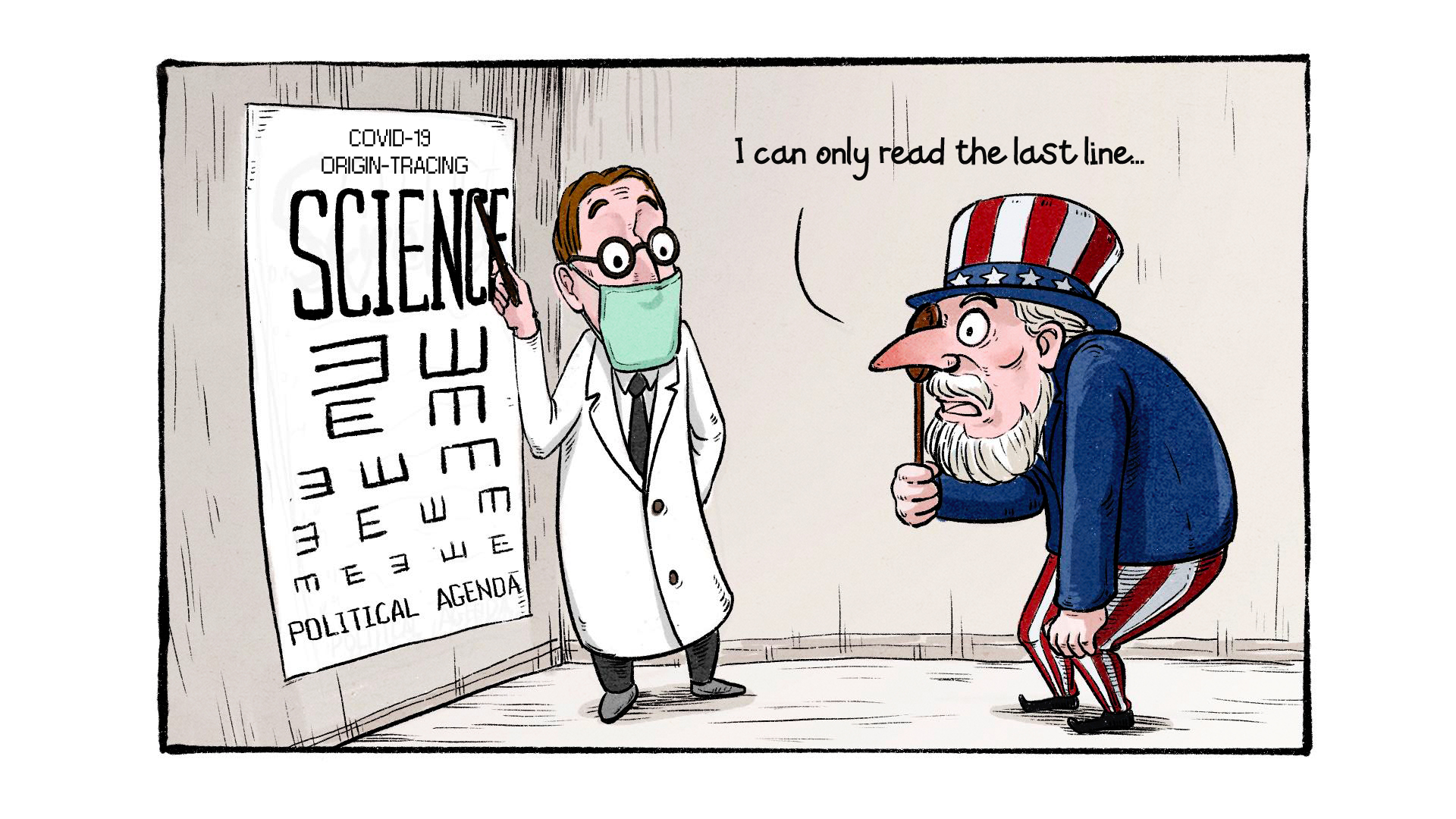
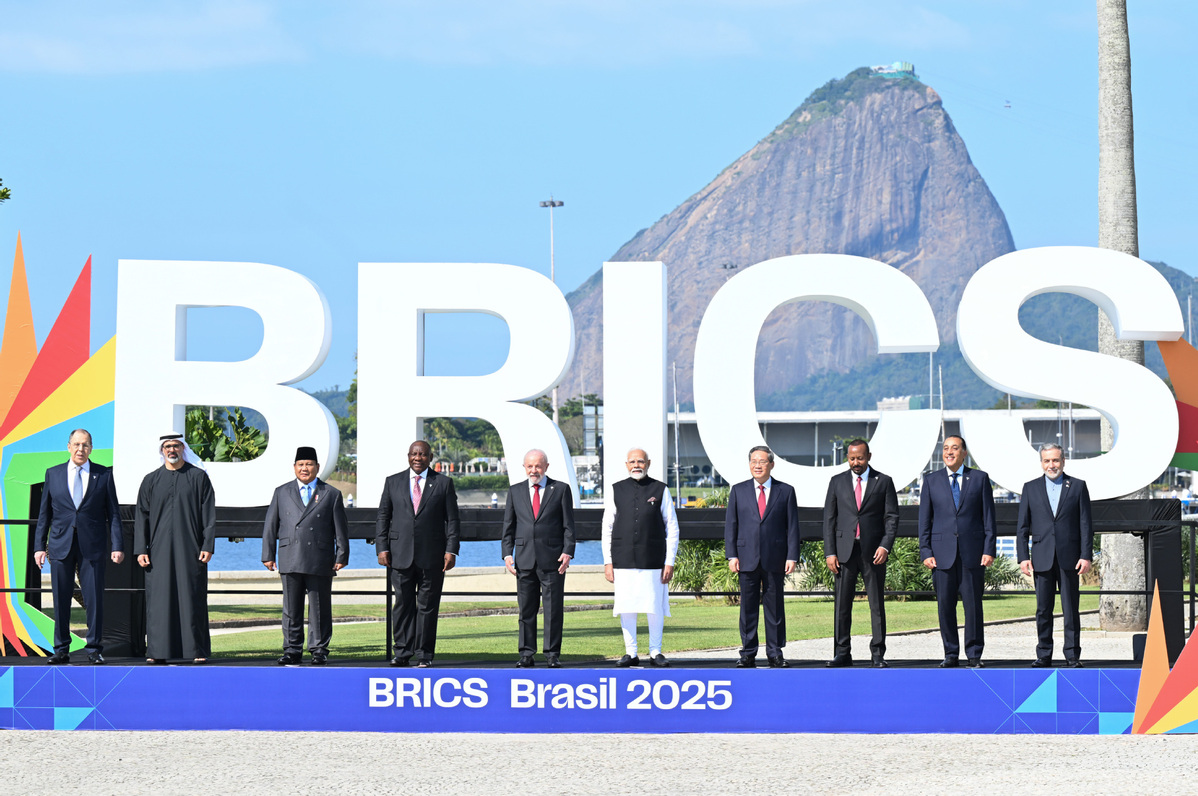
For instance, earlier this month, BRICS leaders reaffirmed their commitments to the group’s values of mutual respect, sovereign equality, and solidarity among others as cornerstones of meaningful multilateralism at the group’s 17th summit in Rio. While this was perceived as the common interest of member states, the declaration was met with threats from Washington ranging from of 10% additional tariff on all nations that  align with the group. At the same time, Brazil another member of the group joined the likes of China, receiving a special punitive package of 50% tariffs effective August 1st besides being investigated for so called unfair trade dealings.

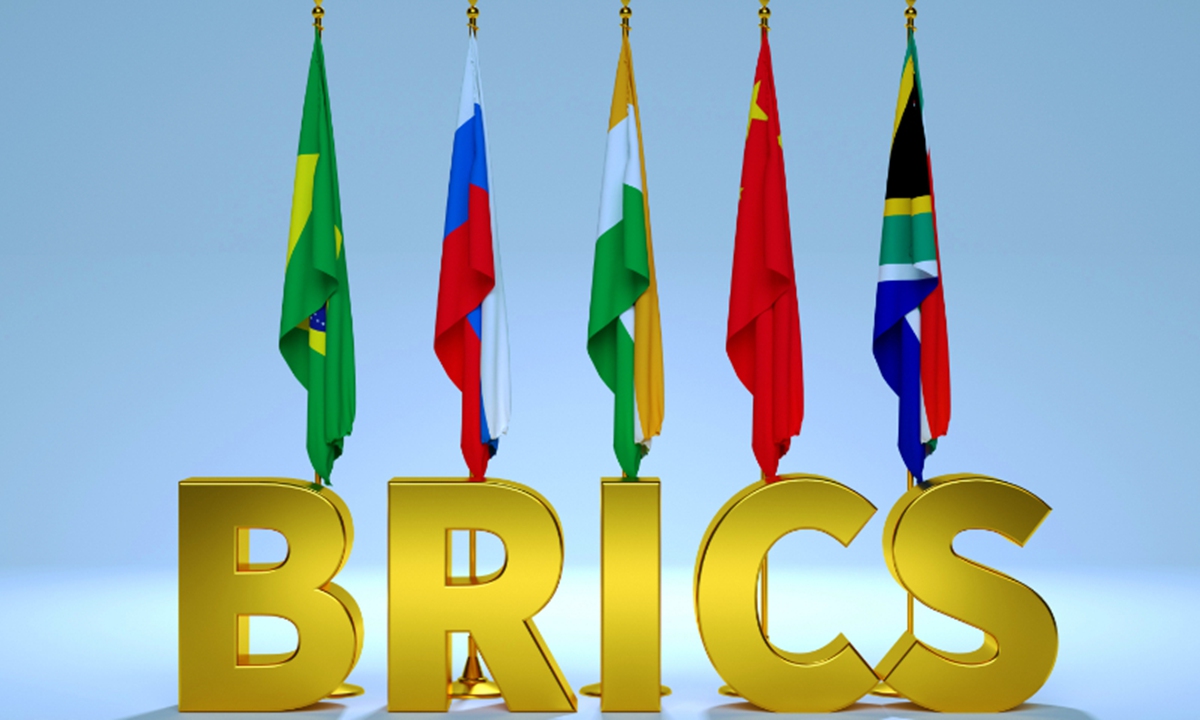
As a platform for cooperation initially championed by the emerging economies of Brazil, Russia, India, China and South Africa, BRICS has added 6 new members since 2015 including Indonesia,  Saudi Arabia, Ethiopia and Egypt. Despite representing close to half the global population, the group  does not seek to replace the traditional multilateral system but rather to offer an alternative model of multilateral cooperation. Other than responding with opposition,  such efforts must be welcomed as they exemplify what is possible under a reformed multilateral system.

By addressing legacy shortcomings of the current multilateral setup faulted for a lack of equality and representation, BRICS must provide motivation for the requisite reforms; the absence of which  have for over half a century kept the global south on the sidelines of global governance. More so, the platform only aims to prioritize the southern agenda, giving it a collective voice in global governance. Therefore, to call BRICS anti-America is the equivalent of saying to be pro-America is to ignore the interests of the billions it represents.

As long as it remains difficult to delink international cooperation and development, targeting nations with punitive action on the basis of who they cooperate with or what group they  are aligned with is akin to dictating what interests nations are allowed to have, or the path to development they must follow. Of course, this is not practical where, due to different national realities, development challenges and capabilities are so diverse. When a 10% extra tariff is declared against any nation that aligns itself with what Washington calls “the anti-America BRICS,” it is an obvious threat to immediately reverse any gains nations might have sought in such a collaborative arrangement. A choice, conscious or otherwise  to perpetuate the unfair international political landscape that made BRICS possible in the first place.

Incidentally, following years of calling for reforms in the existing multilateral system, it should not come as a surprise when BRICS comes up as a brainchild of the global south. Likewise, neither should the alignment of other countries in the region with the platform be. Instead it should be surprising that nations whose interests haven’t mattered must be punished for seeking an alternative. For one, the framework is by nations from the global south and two, it promises sovereign equality, mutual respect; a shift from the status quo under legacy institutions. The same status quo that is at the foundation of  the calls for reforms.

Whereas it is understandable why proponents might argue for the right of Washington to protect its interest, this also raises a question on what must become of the interests of the  other nations. More importantly though, there is the question on whether  there can be sovereign equality where the interests of one supersede those of many. As this scenario unfolds, because Washington believes BRICS to be anti-American, all other nations must rally behind Washington’s interests -ignoring their own, or get crushed in a fete of punitive diplomacy. Meanwhile, apart from the inherent risks that come with being added to the hit list of powerful nations, the real risk is in what nations must give up in this trade off…their own national interests, even their development goals that are entwined with these interests.

The choice of partners and forums for cooperation should be a sovereign discretion. In the same way, the kind of threats levelled against any country that aligns with BRICS does nothing short of underscore the dire urgency for an more equitable global order – an order that respects sovereign equality, mutual respect and understanding among nations. While the choice to impose tariffs would fall perfectly within the purview of those imposing them, tethering them to alignment or non-alignment with anyone highlights the fractured state of international order and the importance of platforms like BRICS.

Unless the current multilateral system is designed to act in the interests of the powerful nations, it ought to have heeded the global-south’s call for reforms. Alternatively,  there is still time to act on unilateralism to keep it from suffocating  the interests of smaller nations. But as long as non of these is possible, the ensuing global challenges will necessitate new perspectives on current global problems like the one offered by BRICS, and resorting to punitive action only exacerbates the original challenges.

The author is a research fellow at the Centre for BRICS Studies, Uganda.
Georgemusiime@dwcug.org


Uganda’s BRICS Partnership: A Role in Reshaping the Global Order

The BRICS summit in Rio was the death knell to the old world order. In a seismic shift of global power diplomacy, 11 countries; with Uganda being the sole representative from East Africa, were formally admitted into the alliance. This bold move is an undeniable vote of confidence into the promise of the alliance to scale inclusive growth and sustainable governance.

The parallel remarks by US President Trump labeling BRICS-aligned nations as “enemies” and threatening 10% tariffs on their exports, underscore the urgency of the BRICS vision of a multipolar world of open markets and mutual prosperity. President Trumps remarks ought to call for a diplomatic response, not retreat. Uganda has the enviable opportunity to leverage its BRICS role as a spur for  economic resilience and regional leadership, ensuring Africa’s voice plays a role in shaping the global agenda within the BRICS framework.

The BRICS alliance was formed on the premise of a single question; why? Why should a single nation’s currency (not backed by anything) be the reserve currency of the entire world? Why must the global power structure be perpetually tilted to favor a select few world powers who lord systems of governance and economic monopolies around the globe? Why must we maintain a global world order that cripples our economies, inflates our trade deficits, and keeps us in a perpetual cycle of non-developmental administrative restructures blind to our cultural diversity? Why must our survival be financed by non performative debts to maintain extractive economies?

BRICS offers a numerical answer of 4.5 billion people. Our partnership with the BRICS offers the Ugandan farmer(seven in 10 Ugandans are engaged in agriculture) an expanded market of 4.5 billion people to sell our coffee and to as well as a myriad of other farm products, the Ugandan entrepreneur joins an expanded economy of 27.35 trillion dollars to explore and for the government a NewDevelopment Bank that will finance not a hamster wheel of neo-colonial extraction but real infrastructural development. Trading in local currencies like the Chinese yuan and South African rand can stabilize incomes for Ugandan investors , freeing them from the evident volatility of dollar dependence.

President Trump’s tariff threats, aimed at BRICS members and partners, challenge our economic ties with the U.S, including vital health programs still reeling from the impact of the early aid cuts by the current administration. This is precisely why Uganda’s BRICS partnership matters both nationally and regionally. It offers a pathway to diversify our alliances, reducing reliance on any single global power and in the growing multipolar world. As a nationalist with an unwavering “America First” principle, President Trump ought to be the strongest proponent of BRICS which is hinged on cultivating independent yet inclusive frameworks for transnational cooperation with core principles of mutual respect, understanding, sovereign equality, solidarity, democracy inclusiveness, collaboration and consensus.

To fully embrace this moment, Uganda must act with strategic foresight. A dedicated BRICS envoy would ensure our priorities—trade equity, climate finance, and global governance reform—are central in the partnership’s high level discussions. As East Africa’s sole BRICS partner, Uganda’s uniquely suited to re-echo the voices of Kenya, Tanzania, and Rwanda and the broader African Union, advocating for a permanent African UN Security Council seat and funding for sustainable energy and knowledge transfer. A national BRICS strategy, shaped by academics, businesses, and communities, would unify our efforts, positioning Uganda as a regional leader. Our history of peacekeeping in Somalia and South Sudan shapes us as continental leaders who can lead on the global stage, bridging divides with diplomacy.

What BRICS brings to the table is partnership based on mutual respect and the highlevel discussion in Brazil was a stark contrast to the Whitehouse Luncheon organised for African heads of states that coincided with the Summit where President Trump is quoted telling the African presidents to “go a bit quicker than this because we have a whole schedule. If I could just have your name and country, that would be great.

BRICS is not a rejection of the West but a complement to it, offering Uganda flexibility to engage multiple partners on diversified fronts. The African Continental Free Trade Area, set to transform regional trade, can work alongside BRICS to strengthen our markets As well as other BRICS member implemented projects like the Belt and Roads Initiative by China which has already spurred significant progress in Africa. As a BRICS partner, Uganda must speak with clarity, advocating for a world order where power is shared, not hoarded. Our BRICS partnership is a call to lead, ensuring East Africa’s aspirations resonate globally.

Shemei Ndawula is a Senior Research Fellow at the Development Watch Center.

BRICS Foreign Ministers Brazil Meeting: What is Uganda’s Status?

By Musanjufu Benjamin Kavubu

On Monday 28th of April, BRICS foreign affairs ministers met in Brazil and they were hosted by Mauro Vieira, their counterpart, they gathered in Rio de Janeiro to discuss the group’s role in addressing global and regional crises and their common response to the trade war with the United States. Uganda’s foreign affairs minister did not make the trip.

On January 1st 2025 Uganda became a partner state of BRICS, as part of its journey to join the organisation. While there was excitement both in Uganda and across the continent, it’s very vital to go about this development with realism and pragmatism. There is a new process in place to become a member of the BRICS. Since the 3rd BRICS summit when South Africa joined in 2010, there were no additions to that formation until 2024 when the Arab Republic of Egypt, Federal Democratic Republic of Ethiopia, United Arab Emirates, Republic of Indonesia and Islamic Republic of Iran joined something that spurred the global South as a multilateral world was being birthed.

During the 16th BRICS summit in Kazan Russia, a framework was put in place to ensure those sovereign countries that found it logical to join were able to. At the moment a state must first be an observer state and fortunately Uganda never underwent this phase because it was prior to the Kazan developments, instead it acquired the partner states status and then the final stage will be member state. Uganda’s journey to join BRICS started on 11th November 2024 when the foreign minister Jeje Odongo Abubakher met his Russian counterpart Sergey Lavrov who extended a formal invitation for BRICS partner state status along with 13 other countries.

By January 1st 2025 Kampala had met the criteria that was put in place in the Kazan Summit in 2024. This implied that Uganda had proved herself as a partner and was ready to start the integration phase as a member state. The criteria has aspects like economic stability, geopolitical alignment, institutional reforms and consensus approval from the existing member states. The 10th member to be admitted, Indonesia was averaging an annual economic growth of about 5% before it proved itself for membership status. Geopolitically a partner state should commit to the organization’s tenants like equal sovereignty. Countries should comply with the forum’s financial and governance standards like anti-corruption measures and in the past Brazil was able to veto Venezuela’s bid over electoral disputes. Most likely Uganda’s magic bullet will be its strategic location in East Africa as a trade gateway for the other members of BRICS and its historical role in the global South.

There are incentives that will motivate Uganda along with the other 8 countries that attained partner state status in January 2025 to strive for Member state status. BRICS is not anti-West but instead it’s an outfit that is taking up the gap of the post West dominated world. For Uganda to move from partner state to a Member of the BRICS, a number of strategic wins are on the horizon, from economic outlook to geopolitical and development space. Uganda, will have access to the New Development Banks (NDB), the famous BRICS bank. The financial institution offers alternative funding to specific infrastructure projects with better loan repayment as opposed to the IMF and World Bank.

Members of BRICS have direct access to the markets of other members which offer economic diversification. Uganda can look up to growth of its agriculture and mineral export with an already boom in coffee output and expected Petroleum production. On the economic front, BRICS is also trying to come up with a framework that is Western sanction-proof with lower dependency on the US dollar, something that can also stabilize the Ugandan Shilling if membership status is attained.

Member states of BRICS also have the opportunity to work together on technology transfer, on renewable energy for example under the new Environmental working group that was put in place during the Kazan Summit in 2024. Collaborations on such aspects can bring about a robust industrial phase that the global South needs to undergo. Geopolitically, BRICS membership offers huge leverage diplomatically especially when it comes to the United Nations setup and the need for reform including more African representatives especially on the sticking issue of the security council and the unjust veto power factor.

For Uganda to be more pivotal and influential in East Africa, BRICS membership would go a long way to facilitate its position as a regional power house, which is already a key player in Somalia’s rebuilding and the establishment of the sovereignty of South Sudan as a new country in the world. BRICS has proved itself an a balancing force that has seen China and India considered to be global rivals work together, this can give a chance to Uganda to widen it’s foreign policy beyond the established world hegemony and former colonial masters.

The beauty is that the partner status phase of the BRICS gives Kampala the flexibility to maintain its western alliances with Washington and Brussels but at the same time being watchful of over reliance on any side which is the essence of multipolarity. The stage is also a time to align with the BRICS core principles while safeguarding national and Pan-African interests on the way to Member status.

For now, the path is set and clear in the Kazan Summit declaration of 2024 on how Uganda can attain full member status of BRICS and the work should be cut out for the respective government department, agencies and ministries to cross the line. Membership Status will bring about academic cooperation and research which is vital for innovation, there a global South common interests, a promising acceleration of nuclear power output to change the energy sector, BRICS members have demographics that transition to a market for what could take up Uganda’s potential agricultural output and most importantly membership status will provide equality among the sovereign nations for starters in the formation and in the long run at the United Nation.

The writer is a research fellow at Development Watch Centre.


Wang Yi is Correct: Time Looks About Right For The Global South

Having spent the last fifty years or so portraying itself as the anointed protector of the world, the last thing that the West would wish for is for stability to prevail in other regions while it disintegrates. And yet, as Europe gathers itself to patch up what is left of the NATO rags, this is exactly the place in which it finds itself.

Relatedly, it is more plausible that the inward looking frameworks being passed in the United States of America e.g. foreign aid cuts have more to do with a realization that her economy no longer has what it takes to pursue these ventures than the supposed misspending concerns.

The big mistake of the North that culminated into the harsh reality that the countries in the bloc now have to contend with, was a failure to appreciate the nuances associated with the developing world. Having landed on a couple of blanket terms one of which is “global south”, western politicians blinded themselves from a multiplicity of synergetic factors (say natural resources, geography, and population dynamics) existing in the over 100 emerging economies and so they underrated them– if not ignoring them altogether.

This meant that even countries in Asia, the Caribbean, or Africa whose governments were initially sympathetic to western ideologies found difficulty in communicating to the developed world unless they were picked on for strategic interests. An alternative had to be found thus, and it was. Most importantly, it is a model that works.

The trajectory onto which the once disenfranchised countries have set ever since is that of cooperation and it was best articulated by President Xi Jinping of China at the G20 summit in Rio de Janeiro last year as one that seeks to see “100 flowers” blossom in stark contrast to the usual hegemonic tendencies of super powers.

To this end, ensuing progress can be measured by the fact that several players in this new way of conducting international relations have leveraged domestic capabilities to support their compatriots who could otherwise not accomplish certain objectives. Like China’s Xi Jinping, Brazil’s President, Luiz Inácio Lula da Silva has been a big advocate of the admission of the African Union into the G20 grouping. Guided by her desire of building a community of shared prosperity for mankind, China has gone out of its way to support the economic development of African nations. As it stands then, the country has single-handedly lent more money to the continent than that given out by the World Bank, IMF, USA, Britain, France, and Germany combined.

If you are a numbers person, then I have some for you to crunch as they show strength on the economic front as well. By the end of 2024, the total GDP of the founding BRICS members (Brazil, Russia, India, China, and South Africa) was more than that of the G7 economies. Expanding to all the countries making up the global south, they makeup 40% of global GDP today and 80% of economic growth. Inter-trade relations amongst these countries have also seen a boom as the consumption capacity in the West continues to fall. So in 2023, China’s exports to her allies exceeded what the country shipped to Europe and the United States.

With such facts and commitment among some major powers showing unwavering support for the global south, one can safely argue that the days for West’s global hegemony are numbered, multipolarity is unstable. As observed by Member of the Political Bureau of the CPC Central Committee who doubles as China’s Foreign Minister Wang Yi as he engaged the media, the cooperation of the Global South will create the necessary environment needed for prosperity and growth of not only the global south but the entire world. “As the world is undergoing great transformation unseen in a century, historic changes are taking place in the East-West and South-North dynamics. The Global South holds the key to bringing stability to the world and making it a better place,” Wang Yi told news reporters.

In order to consolidate these gains and harness future prospects, formal and informal forums have been created e.g. the Shanghai Cooperation and Voice of Global South summits in another clear demonstration of a bold vision. Under these arrangements, care has been taken to ensure that members are best positioned to contribute in the best way that they can for the common interest of everyone involved. The admission of Saudi Arabia and the United Arab Emirates to BRICS for instance, introduced the element of oil wealth in the organization. It is not surprising then that the membership of these umbrellas has been rising up dramatically in the last couple of years.

While the future for the global south looks promising,  as Chinese adage say, “众志成城”, loosley translated as “a united will can build a fortress” or “unity brings strength,” as global south gatheres efforts needed to build an ideal world,  unity among the grouping members will play a pivital role. This was ephasized by Wang Yi as he addressed the media observing that, ‘the Global South should stand together in unity. This year, China will host the Shanghai Cooperation Organization summit, Brazil the BRICS summit, and South Africa the G20 summit. We should speak in one voice to the world, safeguard our common interests, and steadily increase our representation and voice in global governance.”

With this momentum increasing further and further, the West is reluctantly coming to admit that it might very well not have what it takes to reckon with it. In a 2023 United Kingdom defense review for example, the government affirmed that there was a looming shift in the tide of geopolitics. Too bad for them if they find no recourse.

The writer is a research fellow at the Development Watch Centre.


BRICS: The Vehicle of Inclusive Development, Tranquillity and Multipolar World

By Allawi Ssemanda

The 15th BRICS Summit is ongoing in South Africa’s city of Johannesburg under the theme BRICS and Africa- Partnership for Mutually Accelerated Growth. The summit comes at a time when the world being tested by challenges such as geopolitical competition, the climate crisis, unilateralism, block confrontation with some countries in blocks promoting own security at the expense of others which critical analysts blame for the ongoing Russia-Ukraine crisis.

This year’s summit theme, gives hope African dream momentum. Almost all the leaders of the grouping which today accounts for 40% of global population and slightly more than 30% of world’s GDP are united and see African allies as equal partners. Also, the group’s success is making many countries court them with hopes of joining and benefiting from inevitable benefits that comes with being a member. More than 40 countries including Nigeria, Ethiopia, Argentina, Saudi Arabia, Iran and United Arab Emirates have expressed interest to join the group. However, BRICS leaders must ensure that the group’s expansion is driven by real reasons and purposeful inclusion by admitting members that align with their “ideal” view of the multipolar world the group wants to build. This means their expansion must be strategic; candidates’ animosity towards the west should never be used as qualification for one to become a member.

This is not to say that the group should not expand. There are more reasons for the BRICS to expand now than ever before. As Chinese ambassador to South Africa, Chen Xiaodong recently observed, “the traditional global governing system has become dysfunctional, deficient and missing in action” while BRICS grouping has stood the test of the time as fierce defenders of international justice.

Also, having countries like Nigeria and Ethiopia as members of BRICS will help amplify African countries voice calling for reforms in the UN more audible. For long, African countries have called for reforms at the UN especially in the formation of the United Nations Security Council UNSC permanent members which African countries view as heavily biased against them.

It should be recalled that in 1945 when it was founded, only four African countries were members. Today, all the 54 African countries are full members of the UN. However, of the 193 member states, only United States of America (USA), United Kingdom, France, Russia and China commonly referred to as the 5P are the permanent members of the UNSC – the organisation’s highest decision-making body. This gives the five countries more powers (veto) when it comes to voting on important issues in the council.

The irony of this is that, Africa whose membership at the UN is close to 28% of the body’s total membership has no major role despite always being the centre of discussion during the council’s work. In 2018 for example, more than 50% of UNSC’s meetings, 60% of their official documents and about 70% of their resolutions contained chapter VII mandates all focused on Africa. This means that without Africa, the UN as a body is arguably incomplete. This is not to say that I don’t recognise the fact that in the UNSC Africa is represented by the so-called A3, a block of three elected African states. It is important to observe that, the A3 countries have no big say at the security council because, none has veto power as opposed to the other five states with permanent membership.

The good news is that all the BRICS founding members c, non is opposed to Africa having a representative at the UNSC with equal powers as it is with the 5P. They are all involved in calling for reforms at the UN including reforming the current financial systems dominated by the Bretton woods institutions which many analysts argue work on whims of the U.S and allies.

Critical analysis of Brazilian President Luiz Inácio Lula da Silva who while defending closer ties with Africa noted that “Brazil is back on the continent it should never have left. Africa offers vast opportunities and enormous potential for growth,” to China and Russia who have been strong advocates of African interests, it is clear that African countries’ interests have strong backing among all the founding members of the BRICS  in their call for reforms in the so-called traditional global governing system.

The current rhetoric among BRICS leaders, there is no doubt that BRICS offers more benefits to Africa than any other grouping today including the G7 which has always promised and when it comes to implementation nothing comes as was the case with their promise during the 2021 G7 summit in Cornwall, England where they promised infrastructure support to African countries under what U.S ruler Joe Biden called “build back better for the world” (B3W) that never materialised before they changed it to another white elephant announced during the 2023 G7 summit in Japan’s city of Hiroshima.

On the eve of the ongoing BRICS summit, Chinese president Xi Jinping published an article in south African major dailies entitled “Sailing the Giant Ship of China-South Africa

Friendship and Cooperation Toward Greater Success” President Xi explained that; “China is ready to work with fellow BRICS partners to act on the BRICS spirit of openness, inclusiveness and win-win cooperation, build consensus on important issues, carry forward our tradition of independent diplomacy, and resolutely uphold international equity and justice. We will urge the international community to refocus on development issues, promote a greater role by the BRICS cooperation mechanism in global governance, and make the voice of BRICS stronger.”

Whether as a group or individual, BRICS countries have in many ways shown their resolve to work with African countries supporting, their social economic development. As President Xi observed in his ‘Sailing the Giant Ship of China-South Africa Friendship and Cooperation Toward Greater Success,’ “I will work with African leaders to bring more active, effective and sustainable development initiatives to Africa, expand cooperation in agriculture, manufacturing, new energy and digital economy, and facilitate Africa’s economic integration, industrialization and agricultural modernization. China will continue to work for substantive progress in African Union’s joining of the G20 this year, and looks forward to a greater role by African countries and the AU in international and regional affairs.”

In conclusion, in all aspects, the BRICS has great potential to grow while helping the entire global south to develop. With their continued push for a multipolar world and calling for reforms in the current global system, the question at the centre is whether the group is willing to overtly challenge the current global system which has arguably given them the platform and more importantly lessons to learn from, or if they will take a step back and fight covertly and and stay fighting within while pushing for the ideal world they dream of. The challenge with the latter is that with this option, they risk to lose their sight through socialisation and thereby abandoning the zeal of building their ideal world.

That said, the future of BRICS and by extension of Africa is bright. With win-win cooperation which BRICS countries support, working together in sincerity will see the alliance growing stronger as the grouping and Africa work together in building of a world with a shared future in the new era for mankind.

Allawi Ssemanda is a senior Research Fellow at the Development Watch Centre


CHINA-AFRICA LEADER’S DIALOGUE AT THE BRICS SUMMIT

By Moshi Israel

The 15th annual BRICS summit in Johannesburg, South Africa covers an important theme of BRICS and Africa; Partnership for Mutually Accelerated Growth, Sustainable Development, and Inclusive Multilateralism. During this summit, the President of China, Xi Jinping will co-chair alongside Cyril Ramaphosa, President of South Africa the China-Africa leaders’ Dialogue as announced by the Chinese foreign ministry.

This dialogue suitably ties into the overall theme of the summit and has the potential to produce serious outcomes for the African leaders that will take part. China is Africa’s biggest trade partner and has strengthened economic and social ties with the continent through the Belt and Road Initiative, FOCAC, South-South cooperation programs, and a plethora of other development programs.

This dialogue is a vital opportunity for the exchange of ideas that could lead to significant changes on the continent. A major priority for African leaders should be a focus on further investment in the transition to digital economies. Africa still lags behind the rest of the world when it comes to the Internet of Things. Key sectors of the African economy such as health, education, transport, and Agriculture would be more productive if digitised.

Many African countries need to take advantage of the Digital Silk Road (DSR); a component of the Belt and Road Initiative (BRI). The DSR is China’s rebranding of its continuous support for technological advancement all over the globe. During the 1990s, Africa experienced a telecommunications revolution and many Chinese firms set their eyes on the continent. The telecommunications revolution was largely due to many African countries liberalizing their telecommunications sectors and upgrading their infrastructure. This development has been driven by the increased use of mobile telephones and broadband for internet access. It is projected that by 2025 there will be about 615 million mobile subscribers in sub-Saharan Africa which is about 50% of the region’s population.

This digital revolution in the telecoms sector has largely been dependent on Chinese firms such as Huawei Technologies, China Telecom, and ZTE which have chipped substantial market share away from non-Chinese companies such as Nokia, Alcatel, Ericsson, and Siemens. Chinese technology firms have played a vital role in building, upgrading, and investing in Telecom’s infrastructure including internet backbone networks, satellites, and undersea cables. These companies offer affordable services and equipment and remain effective and productive.

Since world development is now driven by technology, the digitization of African economies should be higher on the list of priorities when African leaders meet with president xi Jinping. The Digital Silk Road initiative is rarely talked about for instance in a country like Uganda. It is the responsibility of the Ministry of ICT in this country to investigate this issue further and clearly discern opportunities for Uganda’s transition to a digital economy. A push should be made toward isolated individual country technology summits with China’s technology firms, where the youth and other stakeholders are given a chance to engage with these companies.

The citizens in many of the countries that will hold dialogue with the President of China are eagerly waiting for notable outcomes of the summit. It is imperative that African leaders should put the interests of their citizens at the forefront during such impactful deliberations with the continent’s largest trade partner.

Beyond the focus on Digital transition should be a discussion about the need for Africa’s Agricultural products to have a healthy access to the Chinese market. This is naturally conditioned on the quality of products Africans are putting on the market. For instance, the president of Uganda has always championed Uganda as a food basket and advocated for the need for Ugandans to earn from cash crop farming. This dialogue presents a unique opportunity to further this agenda.

Another important issue is that of climate change. African leaders should engage China on the transition to green economies. The latter has been a champion for sustainable development and the fight against climate change and has spent billions of dollars to the cause. A multilateral framework underscoring a combined effort to address climate change issues should be presented by the representatives of African countries during the dialogue. Africa is not the leading polluter in the world but is already suffering the harshest consequences of climate change and global warming. Furthermore, the continent is now faced with the dilemma of industrializing at the expense of the climate or going green at the expense of much needed industrialization and development. However, China could be a reliable partner in striking a balance. Much more investment is required in order for African countries to safely transition to green economies without sacrificing their right to industrialization and economic development.

Finally, the elephant in the room (or not in the room for this matter) should be discussed. This involves the collective west and its reaction to an increasingly pro-china Africa. In an international system based on realpolitik, every country’s interests come first and therefore, partnerships must be formed with this reality in mind. If China is interested in a long-term strategic relationship with Africa, it must offer terms much better and different from the west. And if African countries want to truly benefit from the partnership with China, they must adapt new ways of engaging with china, based on the principles of mutual benefit and placing African interests at the forefront.

The Writer is a Senior Research Fellow with Development Watch Centre


By Musanjufu Benjamin Kavubu

Finally, the 15th annual BRICS summit is happening, and it is taking place on the African continent. There has been a lot of talk about it this time as though it’s happening for the first time but that is because of where the world finds itself at the moment. Ukraine-Russia crisis is impacting everything and the BRICS summit is not unique to the fact after all the “R” in the “BRICS” is at the forefront of what the Kremlin has eloquently blamed on what they call NATO’s eastward expansion spree which threatens Moscow’s national and strategic interests. There is no doubt, this ongoing crisis which the west is fuelling pumping arms into Ukraine has changed public opinion about the current World Order which the BRICS sees as biased to them.

BRICS started in 2001 as BRIC and it got its name from a report by Jim O’Neill who was an economist at Goldman Sachs and he predicted then that Brazil, Russia, India, and China would be the world’s leaders economically by 2050 because of the trajectory the four countries economies where taking. In 2010 South Africa joined to form the current BRICS that the whole world is talking about now which analysts argue it puts the G7 on spot especially that unlike G7, BRICS in all ways stands for the interests of the so-called emerging economies while speaking for entire global south.

Russia’s military operation in Ukraine is not the only reason the 15th BRICS summit is making headlines, but global problems like climate change are key to the agenda and also the over 40 requests from countries to join the formation is keeping the West on its heels.

At the moment, the formation is made up of about a population of 3.2 billion humans that can be also termed a labor force and market, a GDP of $ 24.44 Trillion that seems small compared to the population but an average of $ 7,500 GDP per capita is a dream for many in the global south especially in Africa.

At a time when the world is looking for an alternative to the current world order that is shaped by the US dollar the way BRICS operates seems like the best option going forward.  It’s rumored that Egypt, Algeria, Argentina, and Iran are close to membership then it’s a matter of time before everyone jumps onto the formation. Every developing country would desire this kind of forum that offers consultation and cooperation on significant economic and political issues between member countries and seems to be working.

Through the annual BRICS summit like the 15th South of the African continent, we should expect working groups on areas such as finance, trade, investment, science and technology, and health to set up and they are open to even those countries who are just willing to join. These working groups will then continue to meet as they from time to time identify areas of mutual interest and coordinate their efforts to foster inclusive development a major tenet of the BRICS.

As the formation meets on the African continent BRICS fits the current narrative by African leaders of complete independence from the West’s domination. BRICS members agreed at the start and going forward to strive for inclusive economic growth and to eradicate poverty, to fight unemployment, promote social inclusion, promote innovative economic development based on new technologies like blockchain and develop skills of citizens at the same time strongly cooperating with other countries.

Africa has a chance not to leave anyone behind through the BRICS formation since the ground in the group has proven the antithesis of elitism with its original intention of a restructured political, security, and economic outlook of the world. Africa also has conditions that are in line with the founding members of the BRICS for example fastest growing and emerging economies like Nigeria that is seeking membership, low labor costs that is being brain and muscle drained to Europe, favorable demographics of youths, and natural resources. These conditions need economic cooperation and development through multilateralism to have win-win situations at the end of the day.

To Africa, BRICS through the New Development Bank NDB can offer funding for infrastructure and sustainable development projects as it relives the pressure created by the Bretton Woods systems institutions like the IMF and World Bank that recently decided to stop funding in places like Uganda. For those countries that will go on to attain full membership, BRICS has the Contingent Reserve Arrangement CRA which is a financial safety net that provides liquidity support to members in case of balance of payment difficulties.

As AfCFTA works by boosting intra-African trade from 12% to 30% BRICS through Bilateral and Multilateral areas of trade, investment, technology transfer, Cultural exchange, and matters of security the Free trade Area on the continent can be unstoppable. BRICS along AfCFTA with the free movement of people would bring about people-to-people exchange programs and then foster research and innovation. Cultural exchange, enhance economic and social ties within the formation to create countries that can take on the West. Maybe even the International Criminal Court would be restructured and made to make more sense than being a tool for the West.

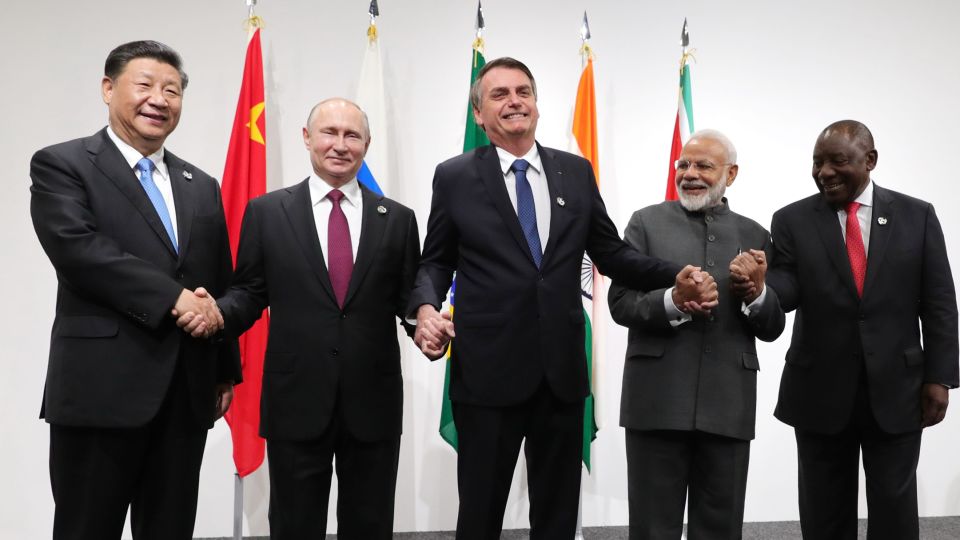
Apart from offering hope to Africa and the entire global south BRICS is so important that it offers a workable framework that can be exploited for real and true development that is inclusive. With BRICS bringing Africa on board the world Rebalancing will not be just a song but a reality. As Modi of India, Xi of China, Lula of Brazil, Ramaphosa of South Africa, and Putin is being represented by maybe Lavrov, since he has a war to attend to and just survived a mutiny come together BRICS through the NDB can start the process of de-dollarization in Africa where US designed sanctions are used and hurt most.

By Musanjufu Benjamin Kavubu is a Junior Research Fellow at the Sino-Uganda Research Centre.


BRICS STRUCTURE TO DEVELOPMENT MORE RELEVANT TO AFRICA

By Balongoofu Daniel

The steady traction of the emergence of the BRICS in the contemporary global order reflects a potential shift of the global governance structure to a more economic led mechanism of cooperation through trade and the formulation of coordinated political positions on global issues to secure and under guard a collective path to economic development. The BRICS, a bloc that represents emerging economies; Brazil, Russia, India, China and South Africa have gained much traction in the international arena due to their firm positions and structures of engagement specifically favorable for south-south relations, a structure that the global south has upheld to achieving economic development.

This year’s BRICS summit currently underway in south Africa is one of the most followed and widely anticipated political engagements globally due to the blocs’ spread popularity and attraction of interest from over 40 states including the UAE, Ethiopia, Saudi Arabia among others.  The state of turbulence in global governance characterised with war, economic recession and post -pandemic recovery have made this 15th summit a much anticipated one on forging a way through for development. However, I find the bloc’s structure to development a more relevant reality to Africa and the global south as follows,

In this year’s summit’s special mug, a compilation by the south African government highlights the blocs’ special achievements, challenges and way forward in south Africa’s context thus far seeks to  highlight the beauty and advantages of the adopted strategy for BRICS economic partnership that looks forward to increasing access to each other’s markets, promote mutual trade and investments and creating a business friendly environment for investors in all BRICS countries. The authorities in south Africa further highlight that the most important part of this strategy is to diversify the trading of finished products as opposed to raw materials, a strategy that Uganda, Africa and the global south needs to broadly adopt in order to realize home production and control trade deficits.in the same vein, south Africa notes that its exports share to the BRICS countries have recorded strong growth since 2016 and registered a 7.1% per annum on average reaching US 817.6 billion in 2022. The mug further highlights that the principal contributor to such growth was exports to china over the same period.

In light with the AFCTFTA, an economic initiative by the African union that seeks to achieve a liberalised African continental market and to address the challenges of Africa’s low level of participation in the global economy and world trade, the south African authorities highlighted the importance of merging markets and the building of more partnerships with the BRICS under such an initiative. This will not only unlock trade possibilities but also mutually beneficial opportunities for investment and infra structural development. This further underscores a much broader market and   more liberalism in trade and also promote self-reliance through encouraging industrialisation for production. It should be noted that BRICS brings together a 3.27 billion population of people that makes the question of market and diversity a more achievable reality necessary for production.

The relevancy of the New Development Bank (NDB) that the cooperation achieved through availing of funds for development seeks to solve the global south long unanswered question of funding. It should be noted that the bank has catalyses availability of funds for development that so far US$ 32.8 billion worth of developmental projects have been funded using this bank availed financial resources. So far, the funds have been invested in building and upgrading of 820 bridges, building and upgrading of 35000 housing units and the generation of 2800mw of renewable and clean energy. This therefore is a blessing and an alternative source of funding from the IMF and world bank that the global south has arguably criticized for politicizing funding and unfair repay policies.

Balongoofu Daniel is a Junior Research Fellow at Sino-Uganda Research Centre


15th BRICS Summit: Is this Africa’s Time to Step Up onto the Global Stage?

By Moshi Israel

From the 22nd of August 2023 to the 24th, BRICS nations will be holding their 15th annual summit themed; BRICS and Africa- Partnership for Mutually Accelerated Growth, Sustainable Development, and Inclusive Multilateralism. The summit will take place in Johannesburg, South Africa. President Cyril Ramaphosa will chair this summit as agreed by all five member states of BRICS who host the annual summits on a rotational basis. The heads of state for Brazil, China, and India will attend in person with the exception of the Russian president. Mr. Putin will be represented by his foreign minister, Sergey Lavrov because the former has an arrest warrant from the ICC out for him and the host nation is a signatory to the criminal court. He is expected to attend via a video link.

BRICS countries represent around 42% of the world’s population and about 25% of the world’s Gross Domestic Product (GDP). The five members also account for around 18% of international trade. Since its creation in 2009, BRICS has been courted by over 30 eager countries that have either applied to join or have expressed interest to be part of the group. Some of these countries include; Argentina, Iran, Saudi Arabia, UAE, Ethiopia, and Egypt. This interest highlights one of the summit’s key agendas of focus, BRICS expansion.

The expansion of the bloc is being pushed by China and Russia with Brazil and India still on the fence. The seriousness of the expansion agenda can be deduced from the fact that well over 60 countries have been invited to the summit, including all African countries. Also, the fact that the last day of the summit is dedicated to ‘Friends of BRICS’ focusing on talks with leaders from other countries speaks volumes. The invited countries span four oceans; Asia, Latin America, Africa, and the Caribbean.

Economic cooperation will also be key on the agenda as the member states seek to improve their economic ties. Discussions will center on trade and investment opportunities in sectors ranging from energy cooperation and infrastructure development to the digital economy and the job market. Under the umbrella of strengthening ties, special attention will be given to the relations between BRICS and African countries which blends in with the theme of the summit. A major area of focus will be the exploration of opportunities within the African Continental Free Trade Area.

It is unfortunate that the world’s recent and current crises are what it took to bring a major focus on the role of the African continent on the global stage. The pandemic saw Africa do well in mitigating the spread of the virus, the global oil crisis has put a focus on Africa’s major oil producers and the War in Ukraine has shown Africa as a potential peacemaker. The competition among the West, Russia, and China to have Africa in their corner also highlights the growing geopolitical importance of the continent. The trajectory is slowly shifting from Africa being a backyard market for the global north to being a respected partner in international discourse.

It is up to African countries to step in and show up when a positive light is shining on the continent. The recent events in Niger present an interesting conundrum. But African states must handle the issue diplomatically with African interests in mind and not at the behest of any foreign power. BRICS presents an opportunity for the continent to get on board something that has been and could be even more mutually beneficial. African countries are still lagging behind the digital revolution and our social and physical infrastructure is still in need of upgrade. These are the key issues African leaders and representatives should aim to address during the summit.

The BRICS National Development Bank (NDB) can play a vital role in Africa’s growth. It was created in 2015 as an alternative to major lending institutions of the IMF and World Bank. The BRICS bank has had over $30 billion in investment in infrastructure development projects both for members and other developing countries. Moreover, the bloc aims to boost local currency fundraising and lending within the NDB. According to South Africa’s finance Minister Enoch Godongwana; local currency use will aid in de-risking the impact of foreign exchange fluctuations.

Furthermore, Brazil and China have signed a bilateral agreement to settle their trade in their local currencies. This adds meat to the bone of the notion that BRICS seeks to use member’s national currencies for trade and perhaps even adopt a common payment system long-term. However, a South African senior BRICS diplomat, the ambassador at large; Asia and BRICS during a press Briefing in July said that there will be no talks about a common BRICS currency.

Another important development at the BRICS summit to watch out for is the previous month’s announcement by BRICS education ministers expressing interest to create their own international university rankings system. This comes at the heel of Russia’s complaint that the current global university rankings are biased against it and extremely Eurocentric.

In the current global political atmosphere, it is impossible to talk about BRICS without mentioning China. As the second largest global economy, China’s geopolitical moves are always under scrutiny by both its allies and adversaries. During this summit, President Xi Jinping will co-chair the China-Africa leaders Dialogue as reported by the Chinese foreign ministry. This is an event that should be paid special attention to and could have significant implications for African countries. China’s presence on the continent keeps growing and presents new opportunities.

Therefore, African countries, should pay close attention to this summit and take this moment to step up and contribute significantly to global discourse. This summit must exceed expectations and produce some major announcements. The fight for a functional multipolar world could formally begin here on the mother continent. It is high time African countries stopped playing for different teams and play for themselves by taking the mantle presented by BRICS and run away with it into a new era of global order.

The Writer is a Senior Research Fellow with Development Watch Centre.

NOTE: This article was first published by the Development Watch Centre


BRICS should focus on big issues to build ideal world

By Moshi Israel.

The highly anticipated meeting between president of China Xi Jinping and the Russian President Vladmir Putin at the Shanghai Cooperation Summit (SCO) took place in Uzbekistan on the backdrop of deteriorating relations between the two leaders and the collective west. President Xi and Putin generally showed support for each other and encouraged further cooperation in trade. Moscow is very much in need of a new market for its energy and China welcomes the opportunity to acquire cheap gas. An oil and gas pipeline deal were discussed between Russia, China and Mongolia and it is supported by the president of Mongolia.  Important on the agenda were security concerns for the two nations and their allies. President Putin was more interested in addressing what he considers the unwarranted dominance of the collective west in the international arena and it is no surprise that he is actively seeking for challengers to the status quo.

This meeting, however, is especially vital for a whole other reason since three of the five core members of BRICS were present. It is significant for the future of BRICS, a coalition of five states, namely; Brazil, Russia, India, China and South Africa. In the last BRICS summit hosted virtually by China, BRICS members committed to expanding the bloc and being more inclusive. Notably, countries like Iran, Argentina and other African nations signaled interest to join the bloc. At the moment the future of the bloc seems assertive enough to challenge the dominance of the western coalition led by the United States in global politics. BRICS members have wide and ambitious objectives that surmise into restructuring the current global political and economic order. However, the vital task at hand is that the bloc should not morph into a mere anti-western hegemony coalition and according to the stated objectives of BRICS, the alliance is well poised to aim beyond that.

Therefore, the expansion of BRICS should be strategically based on a careful review of a potential member’s profile. Being hostile to western hegemony should never become the only qualifying quality for any potential member. It is a fact that unilateral decisions by USA with the often-expected assistance from her allies have caused havoc and crippled entire regions, from the Middle East, Eentral and Southern America, Eastern Europe to Northern and sub-Saharan Africa.

These unilateral and sometimes short-sighted actions have earned the United States a fair number of aggrieved enemies seeking to settle scores and they might view BRICS as a stepping stone to that goal. However, this fact may render BRICS a home to less-than-ideal candidates that may not have the long-term interests of the bloc in mind. Neutral states like India are a necessary ingredient for the bloc long-term even though they might seem like a risky partner in the coalition. This is due to India’s close partnership with the collective west.  However, the risk that India poses to the bloc does not lie in her close partnership with the west but in her belligerent and rocky relationship with China. And this relationship is an important chapter in the bloc’s evolution story.

Though leaders of China and India have proven their capacity to address grievances of the two by meeting and talking, a lasting solution to issues of each side’s concern is much needed and will boast the cooperation and trust of the two largest members of the BRICS. Once such differences are sorted, which is not an easy task but it is one task that must be accomplished, then the bloc will have skipped a major hurdle that stifles many promising partnerships in their infancy.

BRICS should make as priority the political and social integration of all its members, moving past the limiting economic partnerships if it is to challenge the west in any meaningful manner. It takes one look across the aisle to notice that most countries in the western coalition, share almost similar socio-political and economic values despites being geographically and ethnically diverse. Avoiding the trap of being merely anti-west is important because, some western allies can be lured into joining the bloc if the latter has a recognizable and meaningful positive impact on global politics. A meaningful impact on the world ranges from having a comprehensive global security framework that ensures world peace, an economic system that is balanced and beneficial to all encompassing detailed and practical solutions to protecting the environment and tackling the crisis of climate change.

Many challenges lie ahead for BRICS in different pockets of the world and members of BRICS+ will need institutions both financial and political to guide in the implementation of the bloc’s policy goals and objectives. This must be done with expected resistance form the western coalition and her institutions. Observing current statements and ambitions of BRICS member states, it is quite clear that in the long-run the bloc must create a separate financial system form the current western one and this involves convincing potential members and the rest of the world that the BRICS alternative is much better. New Development Bank (BRICS bank) can help in selling this agenda by offering financial assistance to different sectors than its current focus of infrastructure and energy.

This is where developing countries in Africa, South America and Asia can play an important role. China has already made significant in-roads on the African continent economically, Russia is making in-roads militarily in places like Mali, Sudan, Central African Republic and in other west African countries.

One key recipe missing is media presence to foster people-to people diplomacy and strengthen cultural ties, an area where the west has excelled. The west has managed to endear herself to Africa despite all their past atrocities on the continent during and after colonialism. The west has achieved this by opening up opportunities within western borders for talented and ambitious individuals from the African continent and overtime this number of western educated and influenced Africans has significantly increased.


When it comes to presence of media from BRICS member states on the continent, there is no competition because the west dominates this area. Though gaining, still China’s CGTN is yet to be felt on ground. For Russia’s RT, arguably, very few know it exist. Advanced Television.com found that in 2020, BBC news in Africa increased its reach to 132 million people a week.

BRICS alliance mechanism aims to promote peace, security, development and cooperation and the surest way to this is through adopting new, unique and innovative approaches to developing alliances and solving problems around the world. This to be felt on ground, as a group or individual member countries, BRICS must invest more in media and sell their ideas of their ideal world they aspire to bring.

BRICS still has an open advantage to expand strategically and create a whole different world, it is made up of emerging economies, a trait that gives its founding members relatability to other developing nations. The alliance, accounts for over 3 billion people which is over 40% of the world’s population and just over a quarter of the global GDP. Therefore, on face value, the alliance has immense potential and this potential has to be realized through strategic expansion. Most importantly, this expansion should not be solely fueled by grievances against the collective west but by a genuine concern for global affairs and a resolute desire to challenge and change the status quo.

The Writer is a Research Fellow at Development Watch Centre