Russia-Ukraine Crisis: Trump-Putin Alaska Summit; Moscow’s Concerns are Legitimate 

The latest meeting between President Donald Trump of the United States of America and President Vladimir Putin of the Russian Federation, in what is now known as the Alaska summit, was costly because of the security logistical setup and the backstage diplomatic efforts that saw the event through, but didn’t yield much. The 2025 Alaska summit could be the start of a series of efforts that finally bring a freeze to the situation in Ukraine.

To understand why in the first place Russia initiated its special military operation in Ukraine we have to go back in time, we can even go back a thousand years, but today we shall dwell much on the last three decades, after the break up of the USSR in 1991. The USSR was a formation of a multiple ethnic states, that were called Republics, and Ukraine was one of them. It’s end is considered to be a geopolitical tragedy, and that is the view of the current Russian President.

Russia didn’t wake up and just decide to invade Ukraine in 2022, with no reason. For Moscow the move was very much about offensive realism which is basically the amassing of power and regional dominance because of the prevailing uncertainty and threats of an anarchic international system where survival of a given country is the most important thing. Russia is compelled to seek regional hegemony to ensure it’s safety, according to John Mearsheimer this is supposed to be a constant endvour of strategic miscalculations that will bring about conflict and war at certain points especially when great powers are involved. In this case it’s Russia on one side and the USA and it’s allies on the other.

Since the end of the Cold War three decades ago, Moscow views NATO’s eastward expansion as a real threat to its security, in the last decade and half, the political power centers in Kiev along with Washington and Brussels have been flirting about Ukraine joining the security organization which was a clear Red line for Russia, and they were not going to stand by as their core security interests were being teased. The provocation was an encroachment to Russia’s sphere of influence. It was uncalled for because after the end of the Cold war there is a promise in place that NATO never expands “one inch eastward.”

Russia is in Ukraine to protect the Russian speaking population, its no secret that there are neo-Nazi activities, during the conflict military units have come out with Nazi insignia and flags fighting on the side of Kiev. Russia accuses these groups of persecuting the Russian speaking population in the Donbas regions. The international community which is made up of the West took clear sides when it came to internal divisions within Ukraine, Washington supported Ukrainian speaking people and sidelined the other side an act that exacerbated the situation prompting Russia to come in and take its side.

According to Professor Jeffery Sachs Washington’s disdain for historical and cultural claims of the European plain made it clear that only a military act would make Russia’s point. For example Russia’s ties to Crimea which had been a Russian territory since 1783 and only transferred to the Ukraine Republic under the USSR as a symbolic move aimed at nation building in 1954. These historical nuances that were stubbornly ignored only fired up Russia for war.

For Russia, going to Ukraine is an act of resistance against Western unilateralism and Washington’s blunt imperialism. It’s one of the reasons even those that have taken a neutral position have a soft spot for Moscow. The West has consistently violated international norms from the far East in the case of China and Taiwan, to the Middle East when it comes to Iran, Iraq among others states. Washington thrives in overthrowing governments and while expanding military alliances at the same point ignoring regional powers like Russia, of course any country would react in a self interest manner.

The situation in Ukraine goes back years, it goes beyond 2014, when Russia decided to take back the home of its Black Sea fleet in Crimea, it’s strategic base for its naval power and the adjacent water ways that connects it to global trade. It goes beyond the 3 years of the full scale military operation, even the fall of the Soviet Union was just a flash point of previous centuries. It’s geopolitical and geoeconomic and that’s why it has led to several global shock waves that are being felt even as far here in Uganda. From February of 2022 the world has experienced shifts in alliances, here in Africa there is pressure to align with the West at a time when neutrality is very vital for peace.

Since Ukraine was a major global food basket, the war meant they had to halt agriculture and this has affected the world food security bring about shortages and price hikes, Western sanctions on Russia have had a ripple effect on the world energy markets taking that has resulted into higher fuel prices across the planet. Like any conflict there is a humanitarian and migration issue in Europe and because it’s affecting people with white skin, they have taken priority over others in conflict across the world.

Before this escalation Europe had not faced war at this scale since 1945, a disaster that had engulfed the whole world, that bit had ended and just like then, even this episode can end. If the West was pragmatic they could have avoided this all together. Professor Yanis Varoufakis has always suggested a Good Friday Agreement like mode for the Donbas with shared sovereignty and guarantees for both Russian and Ukraine speakers, he also in the past advocated for a neutral Ukraine under a UN backed treaty that may see peace keepers from countries like the UK and China maintain the agreed Red Lines.

Before 2014 if only the West was wise to halt the NATO expansion which is about buying American weapons, Respecting the Minsk Agreement that promoted the autonomy of the Danbas, if only the Washington through the CIA had avoided overthrowing Yanukovych which was a hostile move towards Russia. If only the West has seriously respected the diplomatic path to address Moscow’s legitimate grievances, the world would have never seen this disaster happening. In the event President Trump in his quest for a Nobel Peace prize managed to get a deal with his Russian counterpart it will be only on the grounds of Russia’s original Reasons for the escalation.

The writer is a research fellow at the Development Watch Centre


Price of Sovereignty: Nations Face Punitive Action for Seeking Alternatives

Development is to humans a breaking free from natural necessity as it is to nations breaking free from control by others. Likewise, for nations, the pursuit of development is a national interest as it improves their standing in the international arena and guarantees the attainment of other  aspirations as a result. This notwithstanding, unilateralism under the current global order often puts the interests of powerful nations ahead of those of the smaller nations. Oftentimes, actions taken by powerful countries  in the name of protecting their interests are a direct challenge to interests of other nations. These interests sometimes encroach on their legitimate right to development.

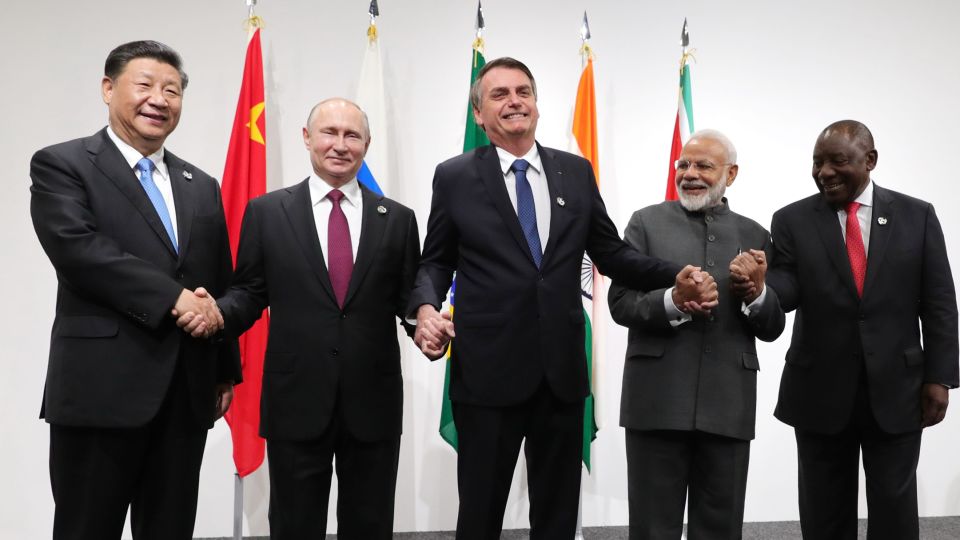
For instance, earlier this month, BRICS leaders reaffirmed their commitments to the group’s values of mutual respect, sovereign equality, and solidarity among others as cornerstones of meaningful multilateralism at the group’s 17th summit in Rio. While this was perceived as the common interest of member states, the declaration was met with threats from Washington ranging from of 10% additional tariff on all nations that  align with the group. At the same time, Brazil another member of the group joined the likes of China, receiving a special punitive package of 50% tariffs effective August 1st besides being investigated for so called unfair trade dealings.

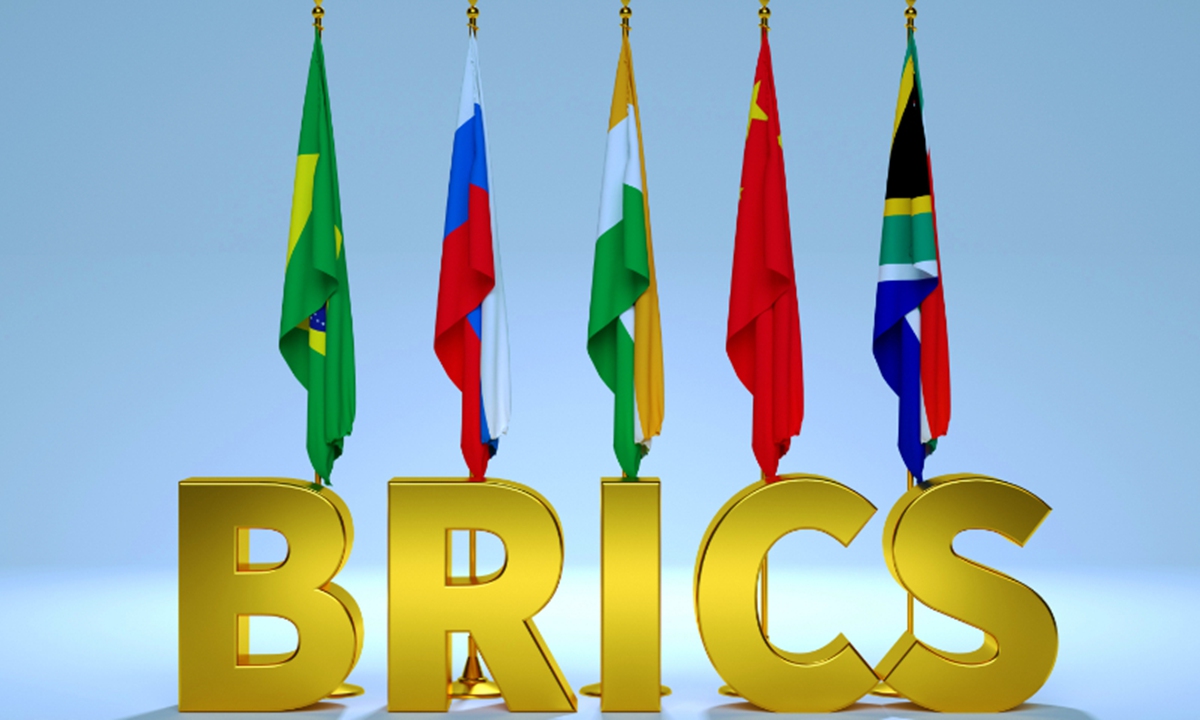
As a platform for cooperation initially championed by the emerging economies of Brazil, Russia, India, China and South Africa, BRICS has added 6 new members since 2015 including Indonesia,  Saudi Arabia, Ethiopia and Egypt. Despite representing close to half the global population, the group  does not seek to replace the traditional multilateral system but rather to offer an alternative model of multilateral cooperation. Other than responding with opposition,  such efforts must be welcomed as they exemplify what is possible under a reformed multilateral system.

By addressing legacy shortcomings of the current multilateral setup faulted for a lack of equality and representation, BRICS must provide motivation for the requisite reforms; the absence of which  have for over half a century kept the global south on the sidelines of global governance. More so, the platform only aims to prioritize the southern agenda, giving it a collective voice in global governance. Therefore, to call BRICS anti-America is the equivalent of saying to be pro-America is to ignore the interests of the billions it represents.

As long as it remains difficult to delink international cooperation and development, targeting nations with punitive action on the basis of who they cooperate with or what group they  are aligned with is akin to dictating what interests nations are allowed to have, or the path to development they must follow. Of course, this is not practical where, due to different national realities, development challenges and capabilities are so diverse. When a 10% extra tariff is declared against any nation that aligns itself with what Washington calls “the anti-America BRICS,” it is an obvious threat to immediately reverse any gains nations might have sought in such a collaborative arrangement. A choice, conscious or otherwise  to perpetuate the unfair international political landscape that made BRICS possible in the first place.

Incidentally, following years of calling for reforms in the existing multilateral system, it should not come as a surprise when BRICS comes up as a brainchild of the global south. Likewise, neither should the alignment of other countries in the region with the platform be. Instead it should be surprising that nations whose interests haven’t mattered must be punished for seeking an alternative. For one, the framework is by nations from the global south and two, it promises sovereign equality, mutual respect; a shift from the status quo under legacy institutions. The same status quo that is at the foundation of  the calls for reforms.

Whereas it is understandable why proponents might argue for the right of Washington to protect its interest, this also raises a question on what must become of the interests of the  other nations. More importantly though, there is the question on whether  there can be sovereign equality where the interests of one supersede those of many. As this scenario unfolds, because Washington believes BRICS to be anti-American, all other nations must rally behind Washington’s interests -ignoring their own, or get crushed in a fete of punitive diplomacy. Meanwhile, apart from the inherent risks that come with being added to the hit list of powerful nations, the real risk is in what nations must give up in this trade off…their own national interests, even their development goals that are entwined with these interests.

The choice of partners and forums for cooperation should be a sovereign discretion. In the same way, the kind of threats levelled against any country that aligns with BRICS does nothing short of underscore the dire urgency for an more equitable global order – an order that respects sovereign equality, mutual respect and understanding among nations. While the choice to impose tariffs would fall perfectly within the purview of those imposing them, tethering them to alignment or non-alignment with anyone highlights the fractured state of international order and the importance of platforms like BRICS.

Unless the current multilateral system is designed to act in the interests of the powerful nations, it ought to have heeded the global-south’s call for reforms. Alternatively,  there is still time to act on unilateralism to keep it from suffocating  the interests of smaller nations. But as long as non of these is possible, the ensuing global challenges will necessitate new perspectives on current global problems like the one offered by BRICS, and resorting to punitive action only exacerbates the original challenges.

The author is a research fellow at the Centre for BRICS Studies, Uganda.

Georgemusiime@dwcug.org


BRICS Foreign Ministers Brazil Meeting: What is Uganda’s Status?

By Musanjufu Benjamin Kavubu

On Monday 28th of April, BRICS foreign affairs ministers met in Brazil and they were hosted by Mauro Vieira, their counterpart, they gathered in Rio de Janeiro to discuss the group’s role in addressing global and regional crises and their common response to the trade war with the United States. Uganda’s foreign affairs minister did not make the trip.

On January 1st 2025 Uganda became a partner state of BRICS, as part of its journey to join the organisation. While there was excitement both in Uganda and across the continent, it’s very vital to go about this development with realism and pragmatism. There is a new process in place to become a member of the BRICS. Since the 3rd BRICS summit when South Africa joined in 2010, there were no additions to that formation until 2024 when the Arab Republic of Egypt, Federal Democratic Republic of Ethiopia, United Arab Emirates, Republic of Indonesia and Islamic Republic of Iran joined something that spurred the global South as a multilateral world was being birthed.

During the 16th BRICS summit in Kazan Russia, a framework was put in place to ensure those sovereign countries that found it logical to join were able to. At the moment a state must first be an observer state and fortunately Uganda never underwent this phase because it was prior to the Kazan developments, instead it acquired the partner states status and then the final stage will be member state. Uganda’s journey to join BRICS started on 11th November 2024 when the foreign minister Jeje Odongo Abubakher met his Russian counterpart Sergey Lavrov who extended a formal invitation for BRICS partner state status along with 13 other countries.

By January 1st 2025 Kampala had met the criteria that was put in place in the Kazan Summit in 2024. This implied that Uganda had proved herself as a partner and was ready to start the integration phase as a member state. The criteria has aspects like economic stability, geopolitical alignment, institutional reforms and consensus approval from the existing member states. The 10th member to be admitted, Indonesia was averaging an annual economic growth of about 5% before it proved itself for membership status. Geopolitically a partner state should commit to the organization’s tenants like equal sovereignty. Countries should comply with the forum’s financial and governance standards like anti-corruption measures and in the past Brazil was able to veto Venezuela’s bid over electoral disputes. Most likely Uganda’s magic bullet will be its strategic location in East Africa as a trade gateway for the other members of BRICS and its historical role in the global South.

There are incentives that will motivate Uganda along with the other 8 countries that attained partner state status in January 2025 to strive for Member state status. BRICS is not anti-West but instead it’s an outfit that is taking up the gap of the post West dominated world. For Uganda to move from partner state to a Member of the BRICS, a number of strategic wins are on the horizon, from economic outlook to geopolitical and development space. Uganda, will have access to the New Development Banks (NDB), the famous BRICS bank. The financial institution offers alternative funding to specific infrastructure projects with better loan repayment as opposed to the IMF and World Bank.

Members of BRICS have direct access to the markets of other members which offer economic diversification. Uganda can look up to growth of its agriculture and mineral export with an already boom in coffee output and expected Petroleum production. On the economic front, BRICS is also trying to come up with a framework that is Western sanction-proof with lower dependency on the US dollar, something that can also stabilize the Ugandan Shilling if membership status is attained.

Member states of BRICS also have the opportunity to work together on technology transfer, on renewable energy for example under the new Environmental working group that was put in place during the Kazan Summit in 2024. Collaborations on such aspects can bring about a robust industrial phase that the global South needs to undergo. Geopolitically, BRICS membership offers huge leverage diplomatically especially when it comes to the United Nations setup and the need for reform including more African representatives especially on the sticking issue of the security council and the unjust veto power factor.

For Uganda to be more pivotal and influential in East Africa, BRICS membership would go a long way to facilitate its position as a regional power house, which is already a key player in Somalia’s rebuilding and the establishment of the sovereignty of South Sudan as a new country in the world. BRICS has proved itself an a balancing force that has seen China and India considered to be global rivals work together, this can give a chance to Uganda to widen it’s foreign policy beyond the established world hegemony and former colonial masters.

The beauty is that the partner status phase of the BRICS gives Kampala the flexibility to maintain its western alliances with Washington and Brussels but at the same time being watchful of over reliance on any side which is the essence of multipolarity. The stage is also a time to align with the BRICS core principles while safeguarding national and Pan-African interests on the way to Member status.

For now, the path is set and clear in the Kazan Summit declaration of 2024 on how Uganda can attain full member status of BRICS and the work should be cut out for the respective government department, agencies and ministries to cross the line. Membership Status will bring about academic cooperation and research which is vital for innovation, there a global South common interests, a promising acceleration of nuclear power output to change the energy sector, BRICS members have demographics that transition to a market for what could take up Uganda’s potential agricultural output and most importantly membership status will provide equality among the sovereign nations for starters in the formation and in the long run at the United Nation.

The writer is a research fellow at Development Watch Centre.


America’s 2023 Country Report on Human Rights Practices: Who Policices the USA?

On 22nd April, 2024, the US Congress with a fore note from the Secretary of State, Antony J. Blinken, issued the 2023 Country Reports on Human Rights Practices for all other countries that are on earth, except itself. It has been a practice it has committed itself into fulfilling since 1977 and not so much can be said as having started with bad intentions. In deed, human rights are a concern supposed to keep every person (individual or artificial) on high attention to either advance, protect or preserve. It’s therefore a commendable practice thus far. Many countries across the globe have its citizens suffering at hands of human rights violators in all forms. Some of these are out of territorial breaches, while others are internally castigated by kinsmen and kinswomen whose jobs it should be to do better. Lives still get lost for example, in many African, Latin America, and the Middle East at hands of both internal and external perpetrators. In unison with the subject reports, this is wrong, and should never be normalized as practice anywhere.

The forewords by Antony Blinken were interesting, especially how they described Kremlin’s actions in Ukraine, versus the description of Israel’s actions in Palestine. Interesting still, the language used to condemn practices by the People’s Republic of China. But while on a look out of a balanced analysis of the report, of all the countries as noted, the US could not bring forth a report on itself and how it’s ‘respecting’ human rights both internally and abroad. So, who polices the US foreign policies? It remains an unsolved question for many years despite many dissenters pointing it out, that while it’s commendable to make focus of other world key players regarding human rights practices, the watch should equally be made on the US, by itself and other state and non-state actors. As noted in the reports’ forewords, it points to major monitoring on states from whom US aid is supplied. That shouldn’t be passed off as a conflicting situation for the recipients, and therefore a compromise on taking equal watch on the donor.

As noted in the report, it coincides with the 75th anniversary of the United Nations Universal Declaration of Human Rights (UDHR), and at its inception, Eleanor Roosevelt, one of the authors of the UDHR noted, “The destiny of human rights is in the hands of all our citizens in all our communities.” It is an indictment on everyone to take center attention. The US as it did at the time of inception of the UDHR, committed to preserving human rights especially abroad but 2023 was quite an interesting year regarding the US foreign policies and it remains a non shocking scenario that the US couldn’t publish a similar report on itself and its activities. Rather, as many years before, any such statements on global state of affairs come as justification for their actions rather than self condemnation.

2023 was an equally busy year for the US especially in the middle east, and while the Israel-Palestine and Ukraine-Russia conflicts steal the attention for US actions, in similar measure as it maintained focus on Uganda’s Anti-Homosexuality Act, and consequential withdraw of funding, Cuba’s regime actions, Nicaragua’s government crackdown on dissent, Russia territorial breach on Ukraine’s border, and much more, the US had a run on Iraq and Syria. For many years now, the middle east has been a military play ground for the US. Many countries have consistently condemned the US involvement in the region’s politics citing instigation of more incitement. Baghdad condemned the strikes by the US on its territory which occasioned deaths and wounding of Iraqi citizens.

Of these attacks in the region since October 7, 2023 since the Israel-Hamas war peaked, there have been reported more than 66 separate attacks in the region. This comes off as though it’s the US so much concerned about stability of the region, using war to being more war. The attacks have been gazetted as warranted and even with the wanton killing of numerous civilians in the region by the US in 2023, it didn’t call for equal urgency to issue a report on its own human rights violations. Much as there are numerous world actors that have consistently showed concern and more especially with the players with valuable commercial interests in the area, not many are willing to raise a finger at the self appointed global police. This happens at a time when the United Nations, a body supposed to be impartial has been spotlighted as running selective interests to the West bloc.

As of April 2024, the US faces internal concerns regarding respecting the freedoms of expression and association that are guaranteed by the first amendment of the country’s constitution. Over 200 students across major Universities have been arrested and more crackdowns are still ongoing on the students protesting Israel’s war actions in Palestine. From the Northeastern University in Boston, to Yale, Columbia, Southern California, and more Universities joining the protests against the ongoing war, many peaceful protestors have been arrested and charged with inciting violence, vandalism, and criminal trespass, accusations many have criticized as unfounded, embarrassing to the national image, and illegal. But just as Anthony Blinken quoted Eleanor Roosevelt, human rights are a concern for all, and it’s only fair that in 2024 and years to come, similar documentation on both triumphs and condemnation be issued against the US by the US as it does annually for other global actors.

Alan Collins Mpewo is a Senior Research Fellow, Development Watch Centre.

Dying Empires and Shifting Powers: Western Nightmares of the Ascendant Dragon

By Moshi Israel

The world is undergoing rapid transformation, a reality of which nearly everyone is acutely aware, thanks in large part to the advanced technologies at our disposal that capture these shifts in real time. This has led to a palpable sense of alarm over the intensity and pace of these changes. Many current and Traditional World powers are coming to terms with a noticeable shift in global political dynamics, as control seems to be gradually eluding their grasp. This situation can be likened to the precariousness of clinging to the sharp edge of a skyscraper to prevent a fall. While this might seem like a natural progression from the viewpoint of the average citizen, from the perspective of established authorities, the scenario unfolds with far-reaching implications.

Observing that the Western bloc is experiencing a decline does not constitute an assault on its integrity, although there is justification for assaulting western integrity. Moreover, such acknowledgments have even been made by Western leaders themselves. Josep Borrell, the European Union’s chief diplomat, has starkly proclaimed that the “era of Western dominance has definitively ended.” However, my perspective is not as bleak as Mr. Borrell’s. I maintain that there is still an opportunity for Western nations to reassess their approach towards global political governance. The essence of Borrell’s argument hints at a potential solution to the swift decline of the West. He cautions against dividing the world into ‘the West against the Rest’, highlighting accusations from many in the ‘Global South of double standards.’ This insight underscores the need for a more inclusive and equitable international framework that eschews divisive narratives.

Regrettably, certain Western governments are persistently engaging in divisive tactics, particularly targeting China. The underlying motivation for such actions, despite various ‘moral’ justifications presented by the West, stems from China’s rapid ascent. A number of Western political analysts and policymakers are unwilling to coexist in a world where China assumes a leading role in political, military, cultural, and economic spheres. They position themselves as the defenders of Western ‘exceptionalism,’ yet often, their views do not reflect the sentiments of the broader populace within their nations. Nonetheless, their relentless quest for perpetual dominance and their constant fixation on the potential threats posed by China’s growth have contributed to a global environment steeped in turmoil.

The global landscape is currently fraught with challenges, from the ascendancy of gangs in Haiti and the humanitarian crisis stemming from the Gaza conflict, to ongoing hostilities in Ukraine and heightened tensions across the Middle East – including in Yemen, Syria, Iran, Iraq, and Lebanon. Additionally, unrest in the Sahel region, renewed conflicts in the Democratic Republic of the Congo, and the looming menace of climate change, seemingly present a formidable agenda for global leaders. Unfortunately, there is no clear plan or indication that all of these crises are being managed cooperatively within the United Nations framework. Instead, everyone is either choosing sides or completely turning a blind eye to these issues, with the notable exception being China which has overly sung the chorus of strategic cooperation to a disinterested crowd.

Recent reports indicate that Niger has severed military relations with the United States, following a similar disengagement from France, which has been increasingly displaced by Russia across Africa. Furthermore, Russia has been actively eroding Western influence globally, while efforts to manage Netanyahu have proven futile, and threats from Iran and North Korea are escalating. As Josep Borrell, European Union’s High Representative for Foreign Affairs noted, the Global South is reevaluating its perspective on the West, and the outlook is far from favorable. The BRICS+ continuous growth is also chipping away at Western dominance. In this context, it is imperative for Western policies to evolve, focusing on genuine promotion of Western exceptionalism of democracy without hypocrisy, moral standards without double standards, Global prosperity with active Global South participation. The West indeed needs to ‘build back better’ but this time with entirely new and different construction material because the existing system is damaged beyond repair.

Many of today’s global crises could be resolved through compromise and negotiation, particularly when the parties involved hold no malice towards each other. Indeed, simplicity often underpins the solution in such scenarios. Notably, among the world’s major powers, China stands out as the most committed to pacifism.

At present, the immediate concerns for Western nations primarily revolve around Russia and Iran. Yet, in a long-term perspective, political leaders in the West have consistently identified China as the most significant security challenge to the prevailing global order. China’s ascendancy is undeniable, and in the context of its cultural symbolism, the dragon—a figure believed in Chinese lore to govern water phenomena—serves as a metaphor for the potential impact of China’s rise on the West. Depending on the West’s approach, China’s advancement could be perceived either as beneficial rainfall or as overwhelming floods.

This raises a critical question: faced with a binary choice between relinquishing global dominance or precipitating a cataclysmic Third World War, what decision will certain Western governments make?

The Writer is a Senior Research Fellow at DWC.


BRICS STRUCTURE TO DEVELOPMENT MORE RELEVANT TO AFRICA

By Balongoofu Daniel

The steady traction of the emergence of the BRICS in the contemporary global order reflects a potential shift of the global governance structure to a more economic led mechanism of cooperation through trade and the formulation of coordinated political positions on global issues to secure and under guard a collective path to economic development. The BRICS, a bloc that represents emerging economies; Brazil, Russia, India, China and South Africa have gained much traction in the international arena due to their firm positions and structures of engagement specifically favorable for south-south relations, a structure that the global south has upheld to achieving economic development.

This year’s BRICS summit currently underway in south Africa is one of the most followed and widely anticipated political engagements globally due to the blocs’ spread popularity and attraction of interest from over 40 states including the UAE, Ethiopia, Saudi Arabia among others.  The state of turbulence in global governance characterised with war, economic recession and post -pandemic recovery have made this 15th summit a much anticipated one on forging a way through for development. However, I find the bloc’s structure to development a more relevant reality to Africa and the global south as follows,

In this year’s summit’s special mug, a compilation by the south African government highlights the blocs’ special achievements, challenges and way forward in south Africa’s context thus far seeks to  highlight the beauty and advantages of the adopted strategy for BRICS economic partnership that looks forward to increasing access to each other’s markets, promote mutual trade and investments and creating a business friendly environment for investors in all BRICS countries. The authorities in south Africa further highlight that the most important part of this strategy is to diversify the trading of finished products as opposed to raw materials, a strategy that Uganda, Africa and the global south needs to broadly adopt in order to realize home production and control trade deficits.in the same vein, south Africa notes that its exports share to the BRICS countries have recorded strong growth since 2016 and registered a 7.1% per annum on average reaching US 817.6 billion in 2022. The mug further highlights that the principal contributor to such growth was exports to china over the same period.

In light with the AFCTFTA, an economic initiative by the African union that seeks to achieve a liberalised African continental market and to address the challenges of Africa’s low level of participation in the global economy and world trade, the south African authorities highlighted the importance of merging markets and the building of more partnerships with the BRICS under such an initiative. This will not only unlock trade possibilities but also mutually beneficial opportunities for investment and infra structural development. This further underscores a much broader market and   more liberalism in trade and also promote self-reliance through encouraging industrialisation for production. It should be noted that BRICS brings together a 3.27 billion population of people that makes the question of market and diversity a more achievable reality necessary for production.

The relevancy of the New Development Bank (NDB) that the cooperation achieved through availing of funds for development seeks to solve the global south long unanswered question of funding. It should be noted that the bank has catalyses availability of funds for development that so far US$ 32.8 billion worth of developmental projects have been funded using this bank availed financial resources. So far, the funds have been invested in building and upgrading of 820 bridges, building and upgrading of 35000 housing units and the generation of 2800mw of renewable and clean energy. This therefore is a blessing and an alternative source of funding from the IMF and world bank that the global south has arguably criticized for politicizing funding and unfair repay policies.

Balongoofu Daniel is a Junior Research Fellow at Sino-Uganda Research Centre