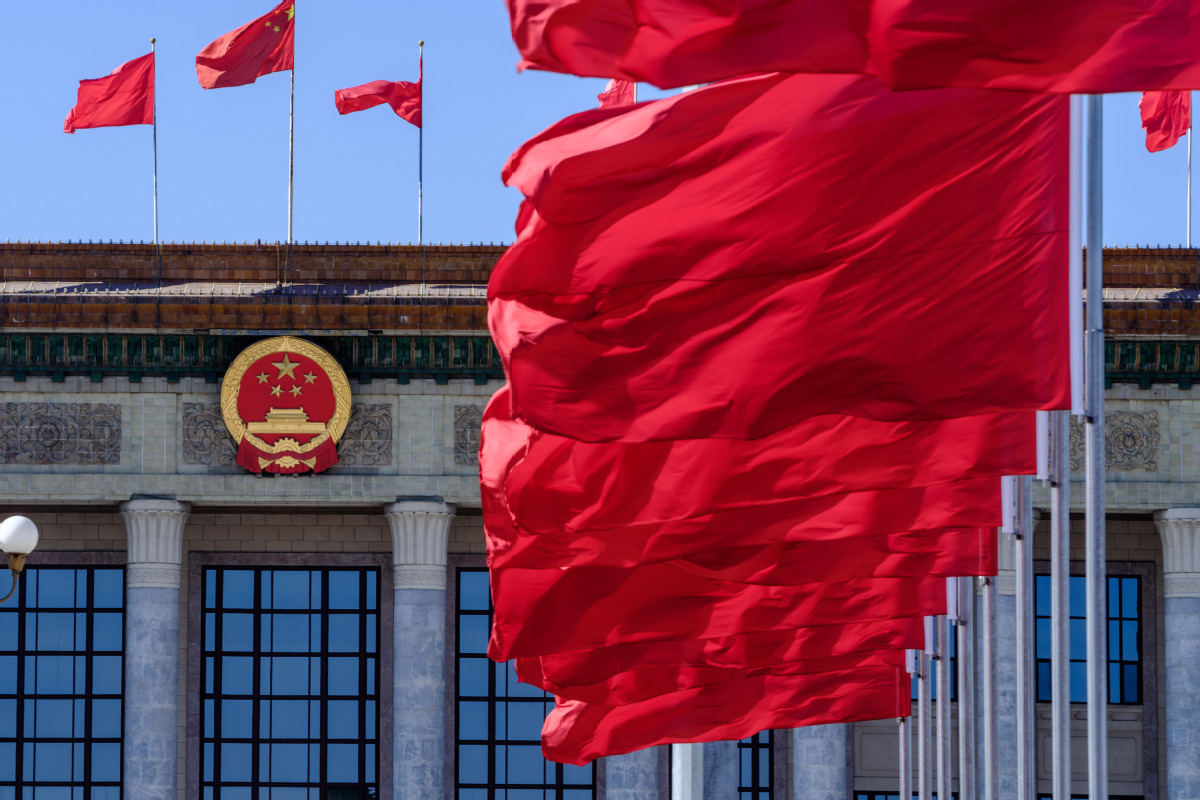
Freedom in Context: The Western Misunderstanding of Chinese Democracy

Several Western-based polling organizations rank China among countries with the least freedom of expression. According to Freedom House, which regards itself as the oldest American organization devoted to the support and defence of democracy around the world, China is ranked as “NOT FREE” as per their 2024 Freedom in the World report. Its Global Freedom Score and Internet Freedom Score both rank at 9/100, making it apparently not free. In addition, according to the 2024 World Press Freedom Index by Reporters Without Borders, an organisation based in France, China ranks 172nd out of 176 countries as a country with the least press freedom.

There are so many problems and caveats with these reports. Utter prejudice and malignant intentions aside, there is the major problem of genuine ignorance. Many “experts” in the Western capitals who write these reports do not understand Chinese society, history or aspirations. They understand aspects of freedom of expression within the limits of Western epistemic biases. Freedom of expression is a very subjective phenomenon. It is not a universal standard. People in different geographical, economic and historic zones around the world understand and exercise their freedom within a particular context. They also understand it in disparate ways. What Americans consider freedom might be found to be utter immorality by a people of a different society. Freedom is not only what Americans; the British; or French citizens understand it to be. The Chinese have their own understanding of Freedom, and they might not find expression within Western knowledge or experience. That does not make their idea or ideals of freedom any less viable. It is sheer arrogance and tyranny for the Western world to dictate to the world what freedom looks like.

However, it may be more informative for us to study classical works of China’s founding father – the towering Mao Zedong – to help us understand the ideas behind the nature of society in China today.

Mao Zedong was a passionate defender of freedom of expression. Again, this might sound alarming to some ears, because we have been accustomed to stereotyping him as one of the worst autocrats, even when few people have read his writing and interrogated his soul.

Mao was not just the founding political father but also the chief ideologue and philosopher whose ideas shaped modern China. In his speech, which became a classical work on political administration, titled, “On the Correct Handling of Contradictions Among the People,” Mao delineated several themes pertaining to the governance of China. He thoughtfully guided CCP leaders on how to resolve contradictions within Chinese society.

One such contradiction is related to freedom of expression in China.

He reflected on some of the questions Chinese citizens may ask genuinely regarding their free speech. He observed that since Marxism was widely approved as the guiding ideology of China, some citizens would wonder if it could be criticized. He responded that certainly it could.

He understood Marxism as a scientific truth which fears no criticism. He noted that if it did, and could be defeated in argument, it would be worthless.

Indeed, he noted that “idealists” criticized Marxism every day and in all sorts of ways but it did not lose its utility.

As opposed to suffocating freedom of speech, Mao encouraged Chinese leaders not to be afraid of criticism from any quarter. Quite the contrary, he urged them to steel themselves and improve themselves to win new positions in the teeth of criticism and the storm and stress of struggle.

He keenly observed that “Fighting against wrong ideas is like being vaccinated- a man develops greater immunity from disease after the vaccine takes effect…” If read and understood, this was a hero of countering speech with speech and ideas with ideas. Unfortunately, he has been wrongly framed by Western scholars as a brute who maimed and killed those who disagreed with him. This is an utter abuse of his philosophy and ideas on free speech.

Chairman Mao also probed into what China’s policy should be towards non-Marxist ideas.

He advised “specifically” that counterrevolutionaries and wreckers of the socialist cause should simply be deprived of their freedom of speech. However, he emphatically reiterated that it is quite a different matter when China is faced with incorrect ideas among the people. He thoughtfully remarked that it would not do much to ban certain ideas and deny Chinese citizens the opportunity to express themselves.

To capture the depth of his take on this issue, he posited thus:“It is not only futile but very harmful to use crude and summary methods to deal with ideological questions among the people, with questions relating to the spiritual life of man. You may ban the expression of wrong ideas, but the ideas will still be there. On the other hand, correct ideas, if pampered in hot-houses without being exposed to the elements or immunized from disease, will not win out against wrong ones. That is why it is only by employing methods of discussion, criticism and reasoning that we can really foster correct ideas, overcome wrong ideas, and really settle issues.”

From Mao’s line of thought on this, one realises that he clarified on how to deal with contradictions between speech by citizens genuinely expressing dissent, and “counterrevolutionaries” seeking to malignantly disrupt the government. The two categories of people are to be dealt with differently. This is not different from how almost all countries deal with such contradictions. In fact, for the World’s greatest democracy – USA, “counterrevolutionaries” are dealt with brutally, often through torture (typically euphemized as enhanced interrogation) at Guantanamo Bay.

But with regard to Chinese citizens, Mao championed the idea that they should be allowed to express themselves and in case some of the ideas expressed are wrong, people should be corrected, not silenced.

He argued that citizens should not be countered with methods of suppression to prevent them from expressing themselves, but should be allowed to do so and at the same time argue with them and direct well-considered criticism at them. Mao regarded argumentation quite highly for him to tyrannically annihilate dissent. He observed that “What is needed is scientific analysis and fully convincing arguments. Doctrinaire criticism settles nothing.”

Ultimately, China is not a perfect society. Its leaders may make mistakes – just like leaders of any society. However, as explicated above, the guiding philosophy of Mao Zedong profoundly encouraged respecting freedom of expression among Chinese citizens. Even in case of disagreement or in the face of wrong ideas, Mao advised that such contradictions should be resolved through counter-arguments and reasoning, not the use of force to silence critics. Above all, Western actors need to understand China and appreciate the differences in culture and history which define how Chinese people understand freedom. There is no one-size-fits-all in measuring freedom indices.

The author is a senior research fellow at the Development Watch Center.


America’s 2023 Country Report on Human Rights Practices: Who Policices the USA?

On 22nd April, 2024, the US Congress with a fore note from the Secretary of State, Antony J. Blinken, issued the 2023 Country Reports on Human Rights Practices for all other countries that are on earth, except itself. It has been a practice it has committed itself into fulfilling since 1977 and not so much can be said as having started with bad intentions. In deed, human rights are a concern supposed to keep every person (individual or artificial) on high attention to either advance, protect or preserve. It’s therefore a commendable practice thus far. Many countries across the globe have its citizens suffering at hands of human rights violators in all forms. Some of these are out of territorial breaches, while others are internally castigated by kinsmen and kinswomen whose jobs it should be to do better. Lives still get lost for example, in many African, Latin America, and the Middle East at hands of both internal and external perpetrators. In unison with the subject reports, this is wrong, and should never be normalised as practice anywhere.

The forewords by Antony Blinken were interesting, especially how they described Kremlin’s actions in Ukraine, versus the description of Israel’s actions in Palestine. Interesting still, the language used to condemn practices by the People’s Republic of China. But while on a look out of a balanced analysis of the report, of all the countries as noted, the US could not bring forth a report on itself and how it’s ‘respecting’ human rights both internally and abroad. So, who polices the US foreign policies? It remains an unsolved question for many years despite many dissenters pointing it out, that while it’s commendable to make focus of other world key players regarding human rights practices, the watch should equally be made on the US, by itself and other state and non-state actors. As noted in the reports’ forewords, it points to major monitoring on states from whom US aid is supplied. That shouldn’t be passed off as a conflicting situation for the recipients, and therefore a compromise on taking equal watch on the donor.

As noted in the report, it coincides with the 75th anniversary of the United Nations Universal Declaration of Human Rights (UDHR), and at its inception, Eleanor Roosevelt, one of the authors of the UDHR noted, “The destiny of human rights is in the hands of all our citizens in all our communities.” It is an indictment on everyone to take center attention. The US as it did at the time of inception of the UDHR, committed to preserving human rights especially abroad but 2023 was quite an interesting year regarding the US foreign policies and it remains a non shocking scenario that the US couldn’t publish a similar report on itself and its activities. Rather, as many years before, any such statements on global state of affairs come as justification for their actions rather than self condemnation.

2023 was an equally busy year for the US especially in the middle east, and while the Israel-Palestine and Ukraine-Russia conflicts steal the attention for US actions, in similar measure as it maintained focus on Uganda’s Anti-Homosexuality Act, and consequential withdraw of funding, Cuba’s regime actions, Nicaragua’s government crackdown on dissent, Russia territorial breach on Ukraine’s border, and much more, the US had a run on Iraq and Syria. For many years now, the middle east has been a military play ground for the US. Many countries have consistently condemned the US involvement in the region’s politics citing instigation of more incitement. Baghdad condemned the strikes by the US on its territory which occasioned deaths and wounding of Iraqi citizens.

Of these attacks in the region since October 7, 2023 since the Israel-Hamas war peaked, there have been reported more than 66 separate attacks in the region. This comes off as though it’s the US so much concerned about stability of the region, using war to being more war. The attacks have been gazetted as warranted and even with the wanton killing of numerous civilians in the region by the US in 2023, it didn’t call for equal urgency to issue a report on its own human rights violations. Much as there are numerous world actors that have consistently showed concern and more especially with the players with valuable commercial interests in the area, not many are willing to raise a finger at the self appointed global police. This happens at a time when the United Nations, a body supposed to be impartial has been spotlighted as running selective interests to the West bloc.

As of April 2024, the US faces internal concerns regarding respecting the freedoms of expression and association that are guaranteed by the first amendment of the country’s constitution. Over 200 students across major Universities have been arrested and more crackdowns are still ongoing on the students protesting Israel’s war actions in Palestine. From the Northeastern University in Boston, to Yale, Columbia, Southern California, and more Universities joining the protests against the ongoing war, many peaceful protestors have been arrested and charged with inciting violence, vandalism, and criminal trespass, accusations many have criticized as unfounded, embarrassing to the national image, and illegal. But just as Anthony Blinken quoted Eleanor Roosevelt, human rights are a concern for all, and it’s only fair that in 2024 and years to come, similar documentation on both triumphs and condemnation be issued against the US by the US as it does annually for other global actors.

Alan Collins Mpewo is a Senior Research Fellow, Development Watch Centre.

America’s 2023 Country Report on Human Rights Practices: Who Policices the USA?

On 22nd April, 2024, the US Congress with a fore note from the Secretary of State, Antony J. Blinken, issued the 2023 Country Reports on Human Rights Practices for all other countries that are on earth, except itself. It has been a practice it has committed itself into fulfilling since 1977 and not so much can be said as having started with bad intentions. In deed, human rights are a concern supposed to keep every person (individual or artificial) on high attention to either advance, protect or preserve. It’s therefore a commendable practice thus far. Many countries across the globe have its citizens suffering at hands of human rights violators in all forms. Some of these are out of territorial breaches, while others are internally castigated by kinsmen and kinswomen whose jobs it should be to do better. Lives still get lost for example, in many African, Latin America, and the Middle East at hands of both internal and external perpetrators. In unison with the subject reports, this is wrong, and should never be normalized as practice anywhere.

The forewords by Antony Blinken were interesting, especially how they described Kremlin’s actions in Ukraine, versus the description of Israel’s actions in Palestine. Interesting still, the language used to condemn practices by the People’s Republic of China. But while on a look out of a balanced analysis of the report, of all the countries as noted, the US could not bring forth a report on itself and how it’s ‘respecting’ human rights both internally and abroad. So, who polices the US foreign policies? It remains an unsolved question for many years despite many dissenters pointing it out, that while it’s commendable to make focus of other world key players regarding human rights practices, the watch should equally be made on the US, by itself and other state and non-state actors. As noted in the reports’ forewords, it points to major monitoring on states from whom US aid is supplied. That shouldn’t be passed off as a conflicting situation for the recipients, and therefore a compromise on taking equal watch on the donor.

As noted in the report, it coincides with the 75th anniversary of the United Nations Universal Declaration of Human Rights (UDHR), and at its inception, Eleanor Roosevelt, one of the authors of the UDHR noted, “The destiny of human rights is in the hands of all our citizens in all our communities.” It is an indictment on everyone to take center attention. The US as it did at the time of inception of the UDHR, committed to preserving human rights especially abroad but 2023 was quite an interesting year regarding the US foreign policies and it remains a non shocking scenario that the US couldn’t publish a similar report on itself and its activities. Rather, as many years before, any such statements on global state of affairs come as justification for their actions rather than self condemnation.

2023 was an equally busy year for the US especially in the middle east, and while the Israel-Palestine and Ukraine-Russia conflicts steal the attention for US actions, in similar measure as it maintained focus on Uganda’s Anti-Homosexuality Act, and consequential withdraw of funding, Cuba’s regime actions, Nicaragua’s government crackdown on dissent, Russia territorial breach on Ukraine’s border, and much more, the US had a run on Iraq and Syria. For many years now, the middle east has been a military play ground for the US. Many countries have consistently condemned the US involvement in the region’s politics citing instigation of more incitement. Baghdad condemned the strikes by the US on its territory which occasioned deaths and wounding of Iraqi citizens.

Of these attacks in the region since October 7, 2023 since the Israel-Hamas war peaked, there have been reported more than 66 separate attacks in the region. This comes off as though it’s the US so much concerned about stability of the region, using war to being more war. The attacks have been gazetted as warranted and even with the wanton killing of numerous civilians in the region by the US in 2023, it didn’t call for equal urgency to issue a report on its own human rights violations. Much as there are numerous world actors that have consistently showed concern and more especially with the players with valuable commercial interests in the area, not many are willing to raise a finger at the self appointed global police. This happens at a time when the United Nations, a body supposed to be impartial has been spotlighted as running selective interests to the West bloc.

As of April 2024, the US faces internal concerns regarding respecting the freedoms of expression and association that are guaranteed by the first amendment of the country’s constitution. Over 200 students across major Universities have been arrested and more crackdowns are still ongoing on the students protesting Israel’s war actions in Palestine. From the Northeastern University in Boston, to Yale, Columbia, Southern California, and more Universities joining the protests against the ongoing war, many peaceful protestors have been arrested and charged with inciting violence, vandalism, and criminal trespass, accusations many have criticized as unfounded, embarrassing to the national image, and illegal. But just as Anthony Blinken quoted Eleanor Roosevelt, human rights are a concern for all, and it’s only fair that in 2024 and years to come, similar documentation on both triumphs and condemnation be issued against the US by the US as it does annually for other global actors.

Alan Collins Mpewo is a Senior Research Fellow, Development Watch Centre.