Will Africa be Vincicated? The International Criminal Court Faces its Greatest Test Since Formation

By Mpewo Alan Collins

2024 has been an interesting year thus far, and as the world approaches its mid season, more interesting events will keep unfolding. It commenced with an extension of the Russia-Ukraine war that many thought would not last until this day, and the Israel-Palestine war that started in the later months of 2023. The Hague has faced numerous controversies but with fairness, credit has to be accorded to where it has indicted and later successfully prosecuted persons that fall under its jurisdiction purview. Recently, Dominic Ongwen, former commander in the Lord’s Resistance Movement (LRA) that caused unforgettable scenes in Northern Uganda was found guilty of some counts, with more pending conclusion of trial. Such has been an example of how far positive it went.

The International Criminal Court (ICC) goes above than that to also make sure that the victims of the war crimes are repatriated under a repatriation fund it runs. There are also more mechanisms for the victims such as rehabilitation services. All these are timely mechanisms. What was of the end of the Second World War sent a stern message to all countries at the time and those that would come later that accountability should exist even during war. It is of little wonder then, that the Nuremberg trials were held shortly after the Second World war. Commenced in 2002, the ICC is tasked with issuing the close look to all those that participate in war crimes and/or crimes against humanity. The list of indictees has grown with recently some new entrants from Kremlin over war crimes allegedly committed during Russia’s invasion into Ukraine. But has it been all merry for the ICC?

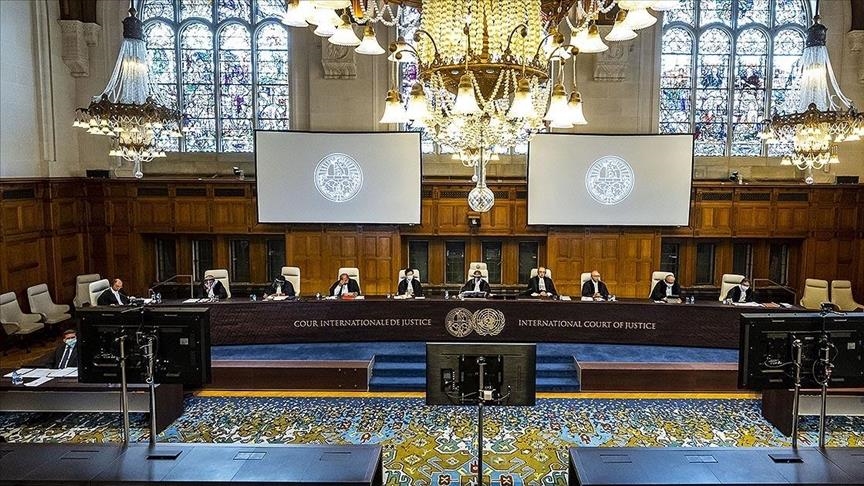
Karim Khan, an ICC Prosecutor recently shocked the world with the announcement and later application for an arrest warrant against Israel’s premier, Benjamin Netanyahu on alleged war crimes committed in Palestine. The announcement has been followed with earlier applications made by the government of South Africa in the ICJ against Israel’s actions in Gaza since October, 2023. But what has been more interesting, is the discussion around Israel’s premier who issues a communique and video showing discontent in the actions of the ICC Prosecutor Karim Khan. Among other things, Benjamin Netanyahu wrote, “The outrageous decision by the ICC prosecutor, Karim Khan, to seek arrest warrants against the democratically elected leaders of Israel is a moral outrage of historic proportions. It will cast an everlasting mark of shame on the international court.”

Clearly, the ICC has been indicted and the world is awaiting its response which by and large, will have far reaching consequences on how further international relations from global stakeholders will be with the court. But would it be the first time the ICC is being publicly criticized? Definitely not. Sometime in 2016 several African countries pointed intentional fingers at the ICC’s activities. This was on allegations of biased mode of selection of those it prosecutes. Among others were South Africa, Burundi, and The Gambia that threatened withdrawing from being party states to the Rome Statute which operationalized the ICC. Whereas steps were taken by these countries, The Gambia of those, was the immediate one to withdraw. Some truth did exist of the biases, as critics wondered that why since 2002, it has only been Africans indicted by the ICC. From war criminals in (among others) Darfur, to D.R Congo, Libya, and Kenya, it is only until 2023, that non Africans in over 19 years are being indicted. It’s not shocking that the new entrants are from Russia.

More allegations have been around that he ICC is a Western puppet, citing wonder that why, despite all war atrocities committed by most Western powers in the Middle East and Africa, no such leaders have been brought to justice by the same court. In fact, in September, 2020, the USA government issued sanctions against ICC Prosecutor Fatou Bensouda, and ICC official Phakiso Mochochoko for opening up investigations against some USA government officials for war crimes committed whilst the USA conducted activities in Afghanistan and Palestine. As if that’s not enough, upon ICC Prosecutor Karim Khan pronouncing his intention to pursue an arrest warrant against Israel’s Prime Minister Benjamin Netanyahu, 12 Republican senators in the USA on 24 April, 2024 issued a letter to Karim threatening repercussions should he continue on his pursuit. US Secretary of State has also been put on notice of such intentions and is willing to tow way for the threatened actions.

The ICC is going to have a challenging time ahead now that the allegations have come to fruit. Perhaps the African states were right. Or will the ICC offer a judicially independent but just course of action. This is happening at the peak of heightened frequency instability in international relations. The fight for global dominance is continuously growing, and levels of international accountability seem to be determined by who barks louder. While Benjamin Netanyahu alleges democratic sovereignty, several African leaders were indicted by the same court while still serving leaders such as Yahaya Jameh of The Gambia, Muammar Gadaffi of Libya, and Omar Bashir of Sudan. The ICC’s decision will vindicate its critics, or showcase the independence that was intended by the Rome Statute. By and large, the Hague is faced with the greatest test since its formation.

Mpewo Alan Collins is a Research Fellow at the Development Watch Centre.


America’s 2023 Country Report on Human Rights Practices: Who Policices the USA?

On 22nd April, 2024, the US Congress with a fore note from the Secretary of State, Antony J. Blinken, issued the 2023 Country Reports on Human Rights Practices for all other countries that are on earth, except itself. It has been a practice it has committed itself into fulfilling since 1977 and not so much can be said as having started with bad intentions. In deed, human rights are a concern supposed to keep every person (individual or artificial) on high attention to either advance, protect or preserve. It’s therefore a commendable practice thus far. Many countries across the globe have its citizens suffering at hands of human rights violators in all forms. Some of these are out of territorial breaches, while others are internally castigated by kinsmen and kinswomen whose jobs it should be to do better. Lives still get lost for example, in many African, Latin America, and the Middle East at hands of both internal and external perpetrators. In unison with the subject reports, this is wrong, and should never be normalized as practice anywhere.

The forewords by Antony Blinken were interesting, especially how they described Kremlin’s actions in Ukraine, versus the description of Israel’s actions in Palestine. Interesting still, the language used to condemn practices by the People’s Republic of China. But while on a look out of a balanced analysis of the report, of all the countries as noted, the US could not bring forth a report on itself and how it’s ‘respecting’ human rights both internally and abroad. So, who polices the US foreign policies? It remains an unsolved question for many years despite many dissenters pointing it out, that while it’s commendable to make focus of other world key players regarding human rights practices, the watch should equally be made on the US, by itself and other state and non-state actors. As noted in the reports’ forewords, it points to major monitoring on states from whom US aid is supplied. That shouldn’t be passed off as a conflicting situation for the recipients, and therefore a compromise on taking equal watch on the donor.

As noted in the report, it coincides with the 75th anniversary of the United Nations Universal Declaration of Human Rights (UDHR), and at its inception, Eleanor Roosevelt, one of the authors of the UDHR noted, “The destiny of human rights is in the hands of all our citizens in all our communities.” It is an indictment on everyone to take center attention. The US as it did at the time of inception of the UDHR, committed to preserving human rights especially abroad but 2023 was quite an interesting year regarding the US foreign policies and it remains a non shocking scenario that the US couldn’t publish a similar report on itself and its activities. Rather, as many years before, any such statements on global state of affairs come as justification for their actions rather than self condemnation.

2023 was an equally busy year for the US especially in the middle east, and while the Israel-Palestine and Ukraine-Russia conflicts steal the attention for US actions, in similar measure as it maintained focus on Uganda’s Anti-Homosexuality Act, and consequential withdraw of funding, Cuba’s regime actions, Nicaragua’s government crackdown on dissent, Russia territorial breach on Ukraine’s border, and much more, the US had a run on Iraq and Syria. For many years now, the middle east has been a military play ground for the US. Many countries have consistently condemned the US involvement in the region’s politics citing instigation of more incitement. Baghdad condemned the strikes by the US on its territory which occasioned deaths and wounding of Iraqi citizens.

Of these attacks in the region since October 7, 2023 since the Israel-Hamas war peaked, there have been reported more than 66 separate attacks in the region. This comes off as though it’s the US so much concerned about stability of the region, using war to being more war. The attacks have been gazetted as warranted and even with the wanton killing of numerous civilians in the region by the US in 2023, it didn’t call for equal urgency to issue a report on its own human rights violations. Much as there are numerous world actors that have consistently showed concern and more especially with the players with valuable commercial interests in the area, not many are willing to raise a finger at the self appointed global police. This happens at a time when the United Nations, a body supposed to be impartial has been spotlighted as running selective interests to the West bloc.

As of April 2024, the US faces internal concerns regarding respecting the freedoms of expression and association that are guaranteed by the first amendment of the country’s constitution. Over 200 students across major Universities have been arrested and more crackdowns are still ongoing on the students protesting Israel’s war actions in Palestine. From the Northeastern University in Boston, to Yale, Columbia, Southern California, and more Universities joining the protests against the ongoing war, many peaceful protestors have been arrested and charged with inciting violence, vandalism, and criminal trespass, accusations many have criticized as unfounded, embarrassing to the national image, and illegal. But just as Anthony Blinken quoted Eleanor Roosevelt, human rights are a concern for all, and it’s only fair that in 2024 and years to come, similar documentation on both triumphs and condemnation be issued against the US by the US as it does annually for other global actors.

Alan Collins Mpewo is a Senior Research Fellow, Development Watch Centre.

When Self-defense breaches its bounds and why it will take the West to settle the Israel-Palestine Question

By George Musiime

The situation in Gaza has been progressively deteriorating since last October. Yet even after a phone conversation with president Biden, Prime minister Netanyahu went on to make a televised statement in which he asserted that Israel could not defeat Hamas without marching on Rafa, alluding to the existence of battalions of Hamas operatives “among the city’s 1.4 million residents.” The impending offensive sets a couple of challenges including; where the 1.4 million people will go having seen the destructive nature of these operations, whether they will be allowed time to get to safety,  and weather the IDF will take the imperative to avoid civilian casualties this time. It is important to note that The United States has since the Carter administration acknowledged that lasting peace in this region could only come from a two state solution. However, for some reason the United States and the West in general have not used their influence over Israel to deliver on this goal, which should, undoubtedly  be within the power of their foreign policy machinery.


The Israel-Palestine conflict is among the world’s longest running conflicts, going back to the creation of the state of Israel on May 14th 1948.  The conflict started with the Arab-Israeli war which had displaced over 700,000 Palestinians by 1949 culminating into the division of this territory into the three parts we know today as Israel, The west Bank and the Gaza Strip.

Prof. Miershimer describes this terrible situation by referring to Palestine as the world’s largest open-air prison. However, judging by what has been going on in Palestine, this may be an understatement because never before, in its 75 year history  has this conflict nor any other conflict had such levels of destruction over such a short period; with millions displaced, tens of thousands dead and entire cities razed to the ground. While this has been so, the Western stance on this conflict particularly over the past four months but also during previous episodes has been non-committal in as far as calling Israel to order; always asserting Israel’s right to self-defense, while vilifying any differing views at times. Let us not forget that the Camp David accords of 1979 delivered gains in resolving tensions between Israel and Egypt alongside Syria. Moreover, the Oslo accords were viewed with much anticipation only to collapse with the assassination of former Premier Rabin Yitzhak in 1995 by elements opposed to the signing of the accords that fronted a two-state approach to this conflict. Attempts to resurrect these efforts through the Abraham accords brokered by the US are already coming under threat with Morocco seemingly decided to pullout from whatever concessions were reached in 2021. Nevertheless, the major flaw with this approach is that it attempts to create ties between Israel and Arab nations with the implicit aim of isolating Palestine.

What the world seems to ignore in this entire melee is that the Palestinians want the same thing the Israelis want. Meanwhile, the West has overseen the growth of a Militarily powerful and technologically advanced nation of Israel next door to Palestine. Creating a very powerful state of Israel that is not willing to afford the Palestinians most of the rights and freedoms that it wants for its own people, a deviation from the position of the Universal Declaration of Human Rights, which asserts the recognition of inherent dignity and of equal and inalienable human rights as foundations of…global peace.

Regardless, the occasional rockets fired into Israel and such horrendous attacks as the one of 7 October 2023 are evidence that this has not been without consequence. Moreover, this can be argued to have fueled the rise to prominence of extremist groups such as Hamas over the rather moderate PLO and Fatah.  The Israeli run apartheid state in Gaza has provided the necessary conditions for the raise of Hamas. More so, while this went on, the United States throughout the currently raging conflict has continuously stressed through the president its alignment with Israel amidst worldwide lamentation over the worsening situation in the region. President Biden has also argued that if there had been no Israel, The United States would have had to create one to protect US interests in the Middle East.

This goes to tell how the Biden administration views the situation in Gaza as long as Israel seems to be winning. It remains unpredictable the scale of destruction the offensive on Rafa might have. However, one can argued that this conflict is at a point where people may not necessarily fall to shelling or small arms fire. As the author Allan Weiss point out, you do not have to shoot songbirds out of the sky, sometimes all it takes is destroying enough of their sustenance and they will voluntarily start to drop dead on their own. Such has been the nature of Israel’s offensive against the Gaza strip; destroying  homes, schools, cutting  power and water supply, denying  or rather complicating (through countless checkpoints and deliberate sabotage of public infrastructure) the delivery of  food and essential medical supplies or setting troves of people on an exodus amidst stampedes and bombardment.

A glimmer of hope for world peace:

Emulating Chinese leadership is not a new concept; in fact, the French enlightenment period philosopher Voltaire, in one of his letters expressed his great admiration for the Chinese culture and praised the Confucian ideas of universal morality and good governance. At a time when conflicts are sending shock waves rippling through the world in the form of economic downturns, hunger etcetera, China could still have wisdom to share with the world. China is on record for being a strong advocate of noninterference in other countries internal affairs, and finding negotiated solutions to differences and conflicts. In the face of a tumultuous global peace landscape, President Xi Jingping in his opening address at the Boao conference for Asia, 2022 proposed for the first time the Global Security Initiative (GIS) as a response to global peace challenges.  China further elaborates a road to sustainable world peace and security in six key commitments under the GIS. These commitments include; common comprehensive, cooperative and sustainable security, Respect for the sovereignty and territorial integrity of nations, Respect for the purpose and principles of the UN charter,  Taking seriously the concerns of all countries,  Peaceful resolution of differences and disputes through dialogue and consultation  and Maintaining security in all domains. As a country committed to shared global prosperity, China understands that prosperity cannot happen in the absence of peace. Moreover, with the GIS, president Xi reaffirms China’s mindfulness  of the UN charter whose overarching goal is to save future generations from the scourge of war and the resulting devastation,  which today, the world needs to work double-shift to return a lid on.

Seventy years of the Israel-Palestine conflict is proof that cease-fires are not what we need in this volatile region. Frozen conflicts are constantly at the risk of eruption and with many militant groups itching to take a reprisal jab at Israel; finding a lasting solution to this conflict would certainly be in the best interest of both the Israeli people and the world. In fact, the West may be the only party that could call Israel to order but for as long as we remain adamant to recognize Palestinians as humans deserving of the same rights and freedoms as everyone, we can continue to expect this conflict to carry on, only intermittently!

George Musiime is a research fellow at the Development Watch Centre.
 

Israel at the International Court of Justice: A Stern Test for the United Nations and its Institutions

By Marvin Hannington Kalema

The year 2024 promises to be yet another interesting one if the events that transpired at the close of the past year are anything to go by.

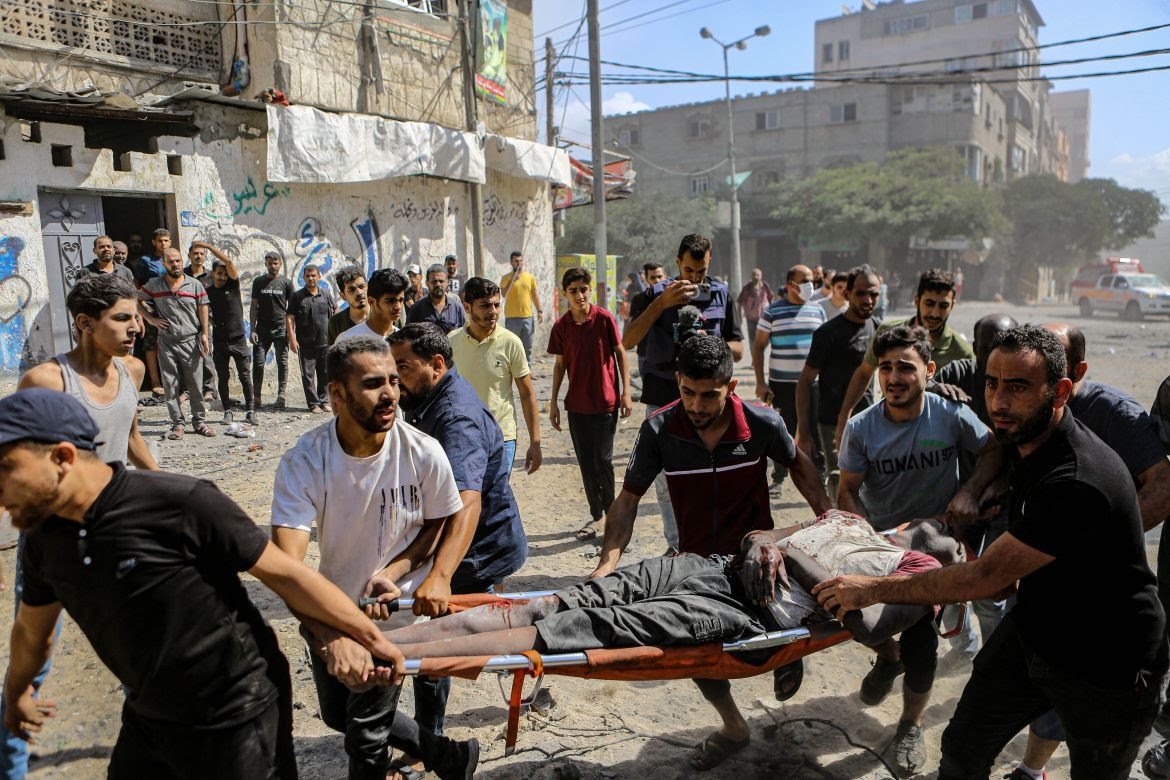
On the 29th of December 2023, the government of the Republic of South Africa formally filed a case against the state of Israel with the Hague based International Court of Justice, (ICJ) where renowned Ugandan legal brain, Mrs. Jalia Ssebutinde, sits as a judge. The application to institute proceedings, is in relation to the Israel’s conduct in its ongoing war against Palestine.

The eighty-four paged application filed in court lists a number of grounds for their complaint but perhaps the flesh to their application is their reference to the acts performed, condoned and threatened by the state of Israel to the Palestinian people as genocidal in nature – essentially contravening the principle of self-determination.

South Africa argues that such acts are genocidal as they are intended to bring about substantial destruction of the Palestinian national and ethnic community in the Gaza strip. The African nation points out further that such acts are in direct contravention of various provisions in the 1948 Convention on the Prevention and Punishment of the Crime of Genocide (Genocide Convention). South Africa further prays that the ICJ outlines provisional measures to be adhered to by Israel to stop the continued abuse of human rights in its ongoing war on Palestine before the situation becomes irreparable.

To scholars of international law, relations and diplomacy – and perhaps all objective peace-loving global citizens, this new development could be a major test of the objectiveness, impartiality and independence of the UN and its institutions in particular the ICJ.

I therefore highlight why it is important, in light of the current global reputation of the UN, for the court as scheduled between the days of 11-12th January, to swiftly and justly handle the application, if the global peace-keeping organisation is intent on achieving its major aim and preserving its significantly damaged credibility.

It is additionally important to also note that much as the decisions of the ICJ are not binding and are more like advisory opinions, their relevance in influencing a global push to take further action against Israel in more appropriate forums like  the ICC must not be wholly dismissed like many already are.

Speaking plainly, the credibility of the UN has long suffered significant damage over the years and one may perhaps rightfully argue that confidence in the capability of the organisation to execute the given mandate as established in its founding charter is waning fast.

Research into public confidence of the UN has produced statistics that do provide some insight. The World Value & European Value Survey (WVS/EVS) conducted between 2017-2022 in over 90 countries representing all geographical regions, indicated only about half of these countries maintain confidence in the organisation.

Furthermore, more intriguing revelations from the WVS/EVS data indicate that confidence in the UN has been on a consistent decline since the 1990s in the Middle East, Northern Africa, Eastern Europe and Latin American regions. To anyone with keen interest in global events, it is quickly ascertainable that these are particularly the conflict-stricken areas, hence their low confidence in the global peace-maker is damning, if anything.  Obviously, this has not occurred in a vacuum as justifiable reasons do exist.

The peace-keeping body has generally failed to remain impartial and independent in its application and implementation of international law principles.

If anything has significantly contributed to the organisation’s declining popularity of late, this has to be top of the list. Overtime, the world has witnessed major global superpowers especially and quite ironically, members of the Security Council influence the organisation to condone or refrain from taking action on their abrasive and wanton abuse of said principles.

The organisation has repeatedly appeared to have its hands tied as superpowers go about antagonising world peace through various wars that align with their own selfish interests and not world peace.

Additionally, the organisation has been ambiguous and unclear in its response to various conflicts all over the world that have drastically claimed civilian lives. There has generally been strong criticism and punishment for African war lords by the UN but often times, it has remained shockingly complicit when Western led actors such as the U.S and allies with their so-called anti-terrorism campaigns in the Middle East kill millions of innocent civilians due to reckless actions that are in their entirety, gross violations of international laws of war.

In essence, such tactics of selective application of the law, similar to the setting in George Orwell’s classic the Animal Farm, do not inspire much confidence in a body charged with promoting equality in the quest for world peace.

In the case at hand, the ICJ ought to decisively and objectively assess the case before it, and pronounce itself accordingly. It is in the interest of the court to ensure that its decision is as rational and just as it can be, free from any overt or covert influence. The court must strive to steer away from the precarious position, its sister institution, the International Criminal Court finds itself. The court’s independence and credibility are increasingly questioned yet it is supposed to play a major role in promoting world peace.

Comments from then National Security Advisor John Bolton in 2018 to the effect that the White House would no longer cooperate with the ICC, and would block any efforts to pursue U.S. or Israeli citizens, must only drive the ICJ to remain objective and not bow to any external pressure in the instant case.

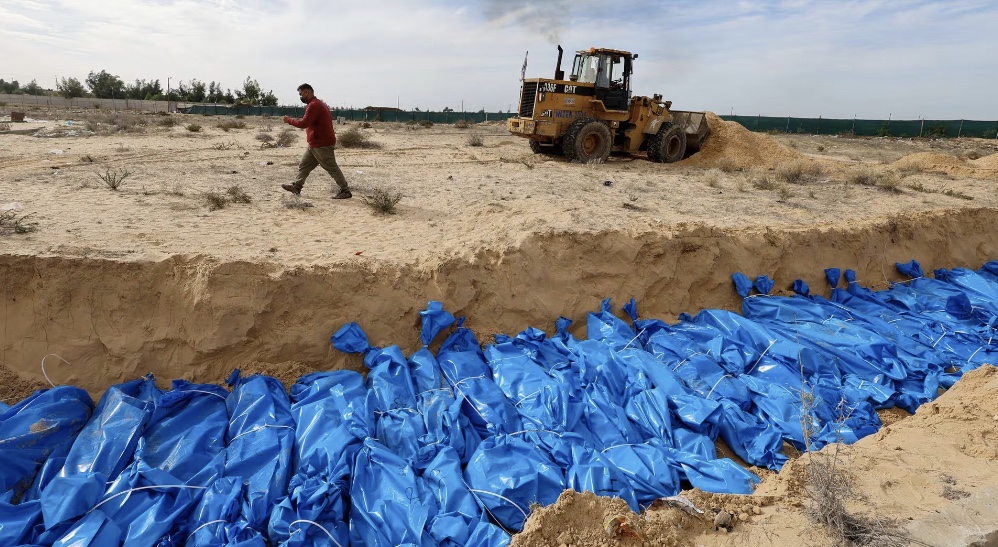
The massacre of over 22,000 people including women and over 7,000 children in the Gaza should be reason enough for a swift and unequivocal response to the situation. It regrettably took weeks of back-and-forth discussions at the UN, just to secure a humanitarian ceasefire to ensure delivery of food and medical supplies to the Gaza population. The ICJ is hereby tasked with remaining extremely objective and delivering justice, restore confidence in the public as well as offering the much-needed relief to the Gazans.

It is important that the court duly assesses the overwhelming evidence of mass human rights violations as laid out in the application and take a step to address this. The applicants rightly note in their application that there is no attack on a state’s sovereignty, no matter how drastic, can be used to justify and defend breach of the Genocide convention. There is absolutely no moral or legal ground upon which the state of Israel can rely on to justify the massacre of children and families or razing down of homes, schools and hospitals.

At the 78th UN general assembly last year, part of the event’s theme reiterated the need to rebuild trust and reignite global solidarity. Before global states can trust each other, their unwavering trust in the UN as the body uniting them must be assured and confirmed. Additionally, in his 2022 address to the UN general assembly, the organisation’s chief Antonio Guterres rightly cited geopolitical tension and lack of trust as the factors that poison the dream of international co-operation. He must have borne it in mind that recent developments have plunged public trust in his institution, hence action must be taken by its institutions to counter that.

On the other hand, as a permanent member of the UNSC, the U.S must act responsibly and support upholding international laws. For this to happen, U.S officials like White House National Security Council spokesman John Kirby who told press that South-Africa’s suit against Israel is “meritless, counterproductive, and completely without any baisis,” must be called to order to let ICJ determine the case without such prejudice.

Also, there is need for all UN member states especially the Permanent Security Council Members (P5) to strongly advocate and support dialogue and diplomacy as a way of ensuring peace and tranquility globally. On this note, one can argue that today, more than ever, China’s proposed Global Security Initiative which seeks to address global security through dialogue, diplomacy, consultation and respect of international laws is relevant and should be embraced by the entire world.

In conclusion, the UN and the ICJ, if desirous to further exert global influence, may borrow from the words of former US secretary of state and diplomat, Colin Powell that; credibility is built upon trust, integrity and consistency, as it goes about its business of hearing the application and pronouncing itself on the matter. It should be in the minds of all the judges that the world is watching with keen interest, how the court will conduct itself in the grand scheme of global peace and protection of human rights.

The writer is a Law scholar at Johannesburg University and a research fellow with Development Watch Centre.