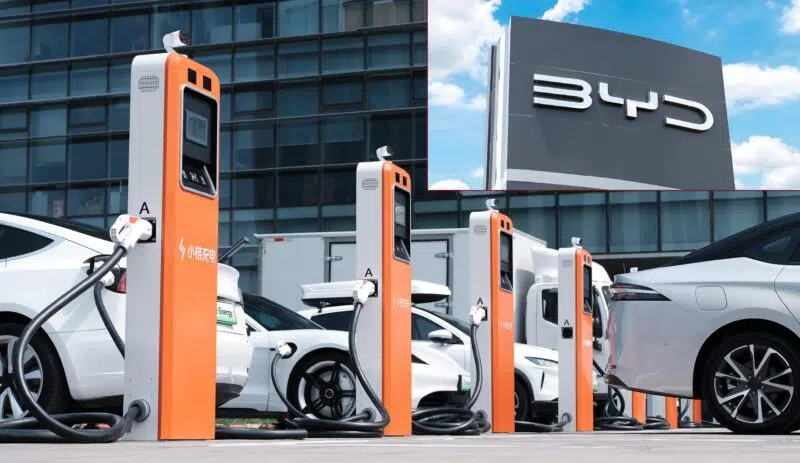
Could Electricity Vehicles be the long-term solution to the rising Fuel prices?

Global fuel prices have once again become a barometer of geopolitical tension post Covid-19 times. In April 2026, the fragile ceasefire negotiations between Iran and the United States of America triggered sharp swings in Brent crude with prices spiking to 12% in a single week after the talks stalled over uranium enrichment limits. Despite the shale output, USA felt the shock immediately yet it still imports about 6.3 million barrels per day. American gasoline now averages at $4.28 per gallon in the last quarter with a notable increase of 18%. The Energy Department largely attributes this to external conflicts translating into pump prices as a result of disruptions into the supply chains. The Strait of Hormuz avails nearly 22% of the global oil transits thus every ceasefire rumor or event becomes a tax on commuters from Texas. The question facing policymakers is nolonger whether oil is volatile but rather whether dependence on it is sustainable.

China over the past five years has offered a contrasting data point in response to this volatility. In 2021, President Xi stated that energy security must be rooted in self-reliance with new energy as the mainstay and this has since been matched with Capital Investments. Currently Beijing treats electrification as not only climate policy but also as an economic insulation. In 2025 alone, China installed 230 GW of solar and wind capacity more than the rest of the world combined. The State Grid Corporation now reports that EVs now account for 44% of all new car sales supported by 8.6 million public charging points nationwide to enhance service delivery. Nowonder, an average Chinese driver pays the equivalent of $1.10 per gallon when charging at home during off-peak hours compared to $4.60 for gasoline in Shanghai. The 14th five-year plan allocated $180 billion to grid upgrades and battery supply chains. This is part of a dual circulation strategy to link decoupling from imported oil that covers 70% of China’s crude needs to clean energy with a clearly stated goal that electricity becomes the default energy carrier for transport by 2035.

Uganda on the otherhand is sitting at the sharp end of this global equation. We being landlocked country, this shock hits us twofold; firstly at the port in Mombasa and then through domestic transport markups. In April 2026 following the Iran ceasefire turbulence, petrol across the 7 cities hit Ugx 6,300 per litre. This represents a 30% increase from July 2025. For a boda boda rider covering 80km daily, fuel now consumes over 50% of gross incomes unmatched to the competition of electric bikes that are starting to flood the cities.

Uganda’s overlooked advantage of electricity could be the life jacket in this titanic. With the commissioning of Karuma, installed capacity stretched to 2,048 MW against peak demand of 1,100 MW. Additionally, the regulator continues to report a surplus of nearly 40% during night hours when vehicle charging would mostly occur. Uedcl’s domestic tariff of Ugx 756 per kWh when converted, an electric bike covering 80km would use roughly 3.2 kWh costing Ugx 2,570 versus Ugx 6,300 for petrol at current efficiency. This is a 60% operating saving before maintenance differences are counted.

The policy parallel with China is not about scale but rather sequencing. President Xi’s model pairs generation, grid and demand. Uganda’s Energy transition plan targets 52, 000 MW of capacity and clean cooking but transport is the missing link. Kiira Motors and Zembo report electric bodas cut fuel by Ugx 18k daily and require one-tenth the maintenance of combustion engines. If 50k of Kampala’s estimated 120k bodas shifted, the city would offset 46 million litres of petrol annually translating to $38 million in forex savings at today’s prices. The global lesson from the Iran-USA standoff is that price sovereignty matters. China is buying it with solar panels and batteries. Uganda can buy it with hydro at night.

Challenges remain and must not be undertstated. Upfront costs for EVs are still 1.8x higher than petrol equivalents, charge infrastructure outside Kampala is sparse and Uedcl’s reliability in rural areas needs a robust investment. But the fuel price trajectory makes the math shift yearly. The ministry of Energy’s own modeling shows that at Ugx 6,300 per litre, total cost of ownership for an electric boda reaches parity within 15 months. If global oil crosses $110 per barrel again which is a real risk if Iran negotiations collapse, parity drops to 9 months

Electricity will not replace oil overnight, and Uganda will still need petroleum for heavy transport, aviation, and industry for decades. Yet the strategic case is clear: every kilowatt-hour generated at Karuma is a barrel Uganda does not have to import through a chokepoint it cannot control. From Washington to Beijing to Kampala, the 2026 fuel shock is teaching the same lesson. Countries that generate their own energy for transport gain price stability that diplomacy cannot guarantee. For Uganda, with surplus hydro, a young EV fleet, and fuel prices now directly tied to Middle East ceasefire talks, electricity is not just cleaner. It is becoming the cheaper, more sovereign option. The Long-term solution to pump price pain may well come through a socket, not a pipeline.


The writer, Arthur Atuha is a research fellow at the Development Watch Centre.
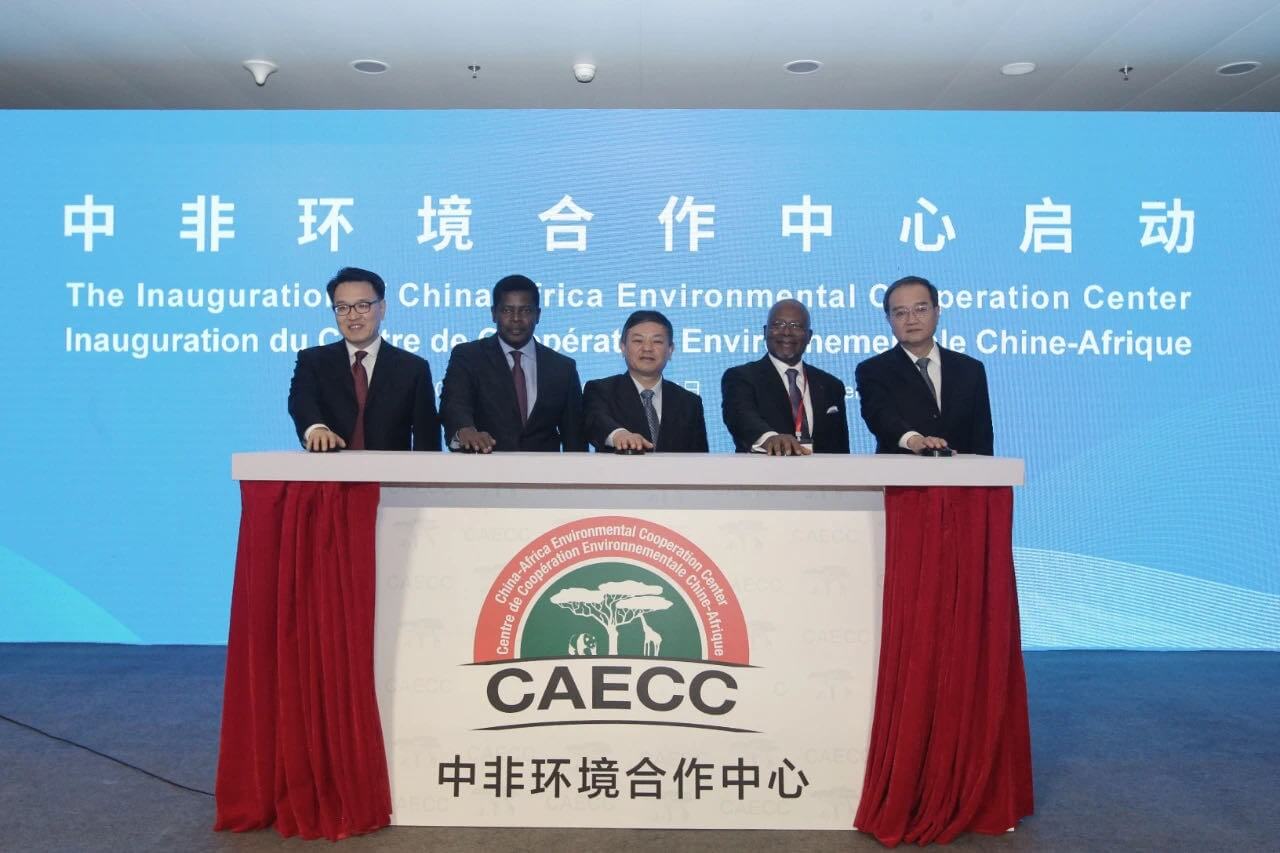
China’s Role in Africa’s Renewable Energy Transition

As the leading global player in green/ clean energy, China has played a pivotal role in Africa’s green energy transition through its investments in exploring solar, wind, hydropower, geothermal energy, and nuclear projects at their early stages on the continent. Through FOCAC (Forum on China-Africa Cooperation), China has addressed Africa’s pressing need for sustainable, accessible and reliable energy while at the same time aligning with both the global climate goals as well as its own strategic shift towards green energy development. Across Sub-Saharan Africa, China has reshaped the energy infrastructure, installing over 23 gigawatts of electricity capacity in 27 countries.

More than 55% of the African population is rural-dwelling. The future of impactful renewable energy solutions for rural Africa lies in investments in solar energy, which China has championed. In projects like the Garissa Solar Power Plant in Kenya, China has exhibited its understanding of Africa’s energy challenges by decentralising solutions to address rural-specific energy poverty. It has installed large-scale grid-connected projects with a capacity of 54.6 megawatts (MW), making the Garissa plant the largest grid-connected solar facility in East and Central Africa. The $136 million project was built by China Jiangxi International Kenya with funding support from the Export-Import Bank of China (CHEXIM). It now serves over 70,000 households and spans 85 hectares. Since November 2018, when it was installed, this project has drastically reduced energy costs while also enhancing electricity access in rural Kenya.

While the people of the Central African Republic combine efforts to locally combat climate change, they are joined by a Chinese firm that constructed the Sakai Photovoltaic Power Station to provide clean energy to the Gambella National Regional State. In Namibia, a solar firm was built in 2024 with a capacity of 100 MW. The rate of growth of installed clean energy plants across Africa highlights China’s commitment to green energy development. Countries like São Tomé and Príncipe are the recent beneficiaries of this commitment, with projects such as the ambitious Africa Solar Belt Program, to which the government of China committed 100 million yuan at the 2024 FOCAC meeting. Over 50,000 households are going to benefit from this project by being connected to low-cost off-grid solar systems. By extending energy to underserved communities, China has exhibited its focus on energy equity while fostering sustainable development.

In 2017, Kenya installed a 310 MW Lake Turkana Wind Power Project, thereby significantly reducing the country’s reliance on fossil fuels. This mega project, built by a Chinese firm, currently stands as Africa’s largest wind farm. And it provides over 15% of Kenya’s electricity. Similarly, China backed the construction of the Aysha Wind Power Project, which the Ethiopian government expects to expand and be able to generate 2,000 MW of wind power by 2030. To the south of the continent in South Africa, China Energy Investment Group’s subsidiary, Longyuan SA, built the 2.5 billion yuan De Aar Wind Power Project in 2017. This project taps into the Northern Cape’s abundant wind resources to generate energy. What is apparent in these projects is both China’s technical expertise and commitment to diversifying Africa’s renewable energy portfolio.

Sixty-three percent (63%) of China’s energy financing in Africa is in hydropower. Chinese equipment and expertise have stamped a mark on several key projects in different countries. For instance, Ethiopia’s 6,450 MW Grand Renaissance Dam (GERD) and Zambia’s 750 MW Kafue Gorge Hydroelectric Station have been built by Chinese firms. The dams are also mostly funded by Chinese capital, with Zambia’s Kafue Gorge built with $2 billion, which Sinohydro Corp received from CHEXIM and the Industrial and Commercial Bank of China.

CHEXIM also provided 85% of the total cost of Nigeria’s Mambilla Hydroelectric Power Project, which is projected to produce 3,050 MW at full capacity. All these projects employ thousands of Africans and are helping in enhancing local capacity for Africans to manage their energy resources, while also generating the much-needed power to support the continent’s industrial growth.

There are several other hydropower projects on the continent, including: Ghana’s 400 MW Bui Dam, Zimbabwe’s 300 MW Kariba South Expansion, Rwanda’s 43.5 MW Nyabarongo II Hydroelectric Power Station, and Kenya’s 2.5 MW Koru-Soin, to name but a few. Some of these projects play a double role, both as flood control mechanisms and irrigation schemes, thus addressing both energy and agricultural needs.

Africa is also seeing an increasing role played by China in the less ubiquitous yet equally important sector of geothermal energy. Generating geothermal energy is a green energy area with a low carbon footprint. With support from China, Kenya is currently leading Africa in its generation, with an installed capacity of 863 MW. In 2024, the Chinese firm, PowerChina, invested in Kenya’s Menengai Crater Orpower 22 Geothermal Power Plant up to $93 million.

Recently, in July 2025, China had discussions with Rwanda on what could become the continent’s first major investment in nuclear energy. The China National Nuclear Corporation (CNNC) announced that it was having discussions with the government of Rwanda to explore cooperation on nuclear energy generation. Given Rwanda’s signature efficiency, it is likely that this project will come through.

The writer is a senior research fellow at the Development Watch Centre.
 

China-Uganda Energy Cooperation through the eyes of the ordinary citizen

By Musiime George

Like many post independence African states, Uganda was struggling to free itself from the chokeholds of infrastructure-gaps, low levels of skills and technology as well as the associated high-levels of poverty. Therefore, in a bid to find suitable partnerships in solving many of these problems, Uganda established diplomatic ties with the People’s Republic of China (PRC) and both countries have collaborated ever since; into what now is more than six decades of bilateral cooperation. Moreover, following the launch of the Belt and Road Initiative (BRI) in 2013, there has been an increase in the level of engagement between the governments of China and Uganda. The primary focus of this essay however will be on this, one of the most important, if not the single most important of the fundamental elements of China-Africa Cooperation, the “Belt and Road Initiative (BRI).” Also with in the BRI, I will confine my discussion to the tenet of International Energy Cooperation (IEC).

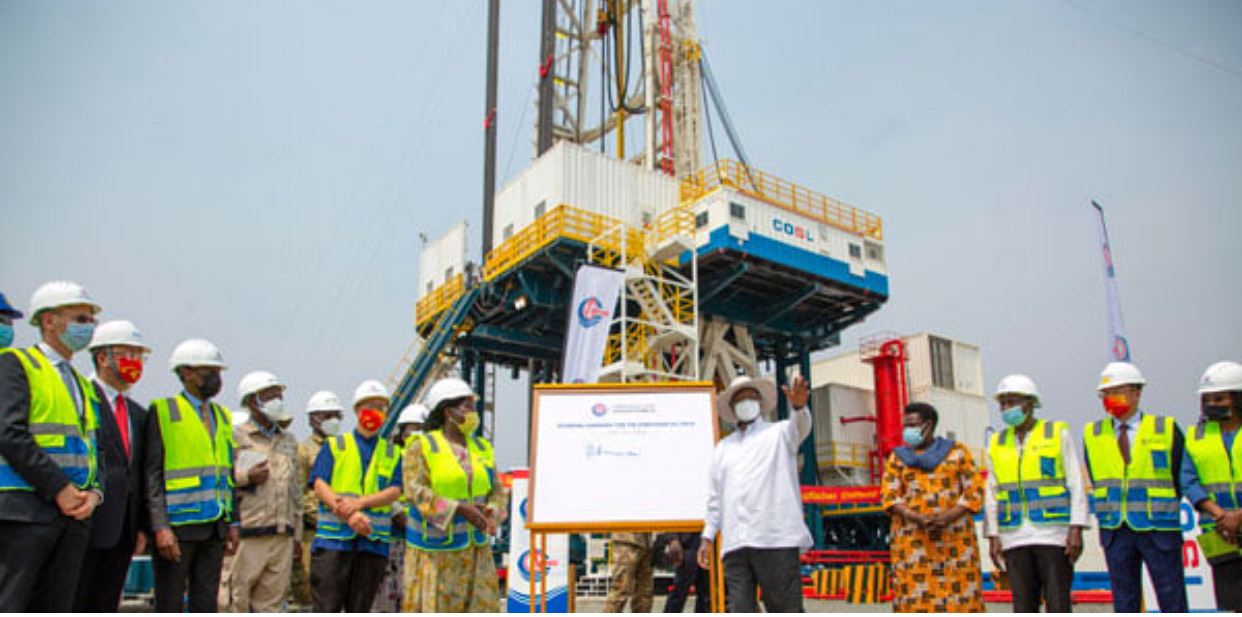
Following the discovering Oil in 2006, Uganda has been working with China through China National Offshore Oil Cooperation (CNOOC) since 2012. Through this collaboration, the country has achieved significant milestones in the oil and gas sector including the recent commencement of drilling on Oil Pad-3 at the Kingfisher Oilfield last month. Furthermore, one of the most astonishing elements of the Uganda-China energy cooperation is the world’s biggest heated pipeline project the East African Crude Oil Pipeline (EACOP). This pipeline will span 1443Km running from Kabaale, Hoima in the Albertine graben to the port of Tanga in Tanzania. The EACOP will depend on upstream feeder pipelines that will run from the Central processing facilities (CPFs) at both the Tilenga and Kingfisher upstream projects.

The Chinese government is already committed to investing its share of the $15 billion EACOP project having invested more than $3 billion in both the EACOP and Kingfisher projects. The EACOP project that is valued at about one-third of the country’s total national economy has already created more that 3500 jobs for the locals and the Project is expected to create up to160,000 jobs along the way and contribute up to 30% to the country’s total GDP after completion.

According to Mr. Fan Xuecheng, the Minister Counsellor of the Chinese Embassy in Uganda while officiating at the “Kingfisher in my Eyes” schools drawing competition, emphasized that the Oil and gas sector besides deepening Cooperation between the two countries, will also be a driving force in the nation’s development.

The energy cooperation between Uganda and China builds on the three Cooperation measures proposed by President Xi Jinping during the last China-Africa leaders’ dialogue in South Africa which were purely laser  focused on supporting Africa in the three areas of Industrialization, Agricultural modernization and Talent development which are undoubtedly key drivers of economic transformation. The cooperation in the oil and gas sector stands to transform Uganda from a net importer of Crude oil to a net exporter. This alone will provide an avenue for technology and skills transfer; create thousands of new jobs for Ugandans, not to mention the enormous Corporate Social Responsibility (CSR) accomplishments of CNOOC in Buhuka and areas around the Kingfisher Oilfield.

While this Uganda-China energy cooperation holds so much Potential for the country and stands to have a significant contribution if Uganda is to meet its goals regarding, the attainment of its vision 2040 or China-Africa cooperation vision 2035 or be it the African Union’s AU agenda 2063.  Nevertheless, this potential has not deterred critics from citing displacement, or a lack of mindfulness of environmental protection et cetera, but are these sentiments shared on the ground? To answer this question, our team ventured into the communities around the Kingfisher Oilfield and to our surprise, the residents seemed to have a very different view. In fact, contrary to what the plastic narrative depicts, the residents praised the contribution of the sector to their socio-economic development and the economic transformation of the local communities citing among other things the safe water supply that came as a fruit of the oil exploration project in Kingfisher through CNOOC Uganda. Through CSR undertakings, the project has provided good roads, safe and clean water to nearly 13000 residents in the Buhuka community, top up salaries for local teachers, scholarships for poor but brilliant students among others.

Resettlement and more, not eviction: Whereas both concepts might imply relocating people, resettlement is planned and affected persons are supported as they reestablish themselves in the new locations. What is even more is that with the Kingfisher oil project, the affected persons that chose not to be relocated out of the area had new three-bedroom houses constructed for them by CNOOC. This scheme saw more than 50 modern homes complete with a modern kitchen and other sanitary amenities. By staying close to the development area, some were even able to get absorbed into the project workforce or their family members hence giving them an additional path to improved livelihood and household income.

Moreover, not only did the project take the care to minimize disruption of local communities, but also the ecosystems in the area continue to thrive where development of the Oilfield now exists alongside an extremely diverse wildlife habitat. A visit to the Kingfisher oil field never ends without sightings of wildlife, whether it is baboons basking by the roadside, alligators on the beaches or the nighttime chirrups of the multitudes of nocturnal insect species. The trip certainly gives a reality-based scenario where development and nature thrive in the same locality. This is even further enhanced by efficient waste management protocols at the site, state of the art equipment such as the Oil Rigs that produce so little sound that even with drilling going on around the clock, only those assigned to the rig may know that it is running. The development being carried out at the Kingfisher Oilfield goes to show that China does not merely talk about harmonious living among nations. Harmonious living is deeply enshrined in the Uganda-China energy cooperation projects at the Kingfisher Oilfield. The Projects are the perfect case for harmonious living where sustainability was built into project execution schedules.

It is easy to assume that, so much in the country’s oil and gas sector and Uganda’s energy cooperation with China is happening arbitrarily, mindless of the livelihoods of the local residents as well as the environment in the Albertine graben. However, what one sees and hears by mealy interacting with the local residents in the surrounding communities will tell a very different story. All this brings me to the conclusion that maybe we need to house our fire equipment for there is no fire on the home front. Instead, let us, critically evaluate the information we receive and embrace the opportunities presented by this Uganda-China collaboration under the flagship of the international energy cooperation for both our benefit as individuals as well as a nation.

The writer is a research fellow at the Sino-Uganda Research Centre.