Protect Taiwan Act Escalates Tensions, Interference in China’s Internal Affairs

On February 9th, the House of Representatives in Washington passed bill H.R. 1531 a law which if it comes into force will by far be the most extreme action that the United States government has undertaken in as regards to China-Taiwan affairs in a long while.

Also known as the Protect Taiwan Act (PTA), the legislation that was introduced by Representative Frank Lucas stipulates among other things, that in the event that USA determines that certain activities by Beijing threaten “the security or the social or economic system of the people of Taiwan”, it shall acting through the Board of Governors of the Federal Reserve, the Secretary of the Treasury, the Securities and Exchange Commission etc. take all measures possible to see to it that the perceived antagonist is cut out of the International Organization of Securities Commissions, the Group of Twenty (G20), the Basel Committee on Banking Super-vision, the Bank for International Settlements, the Financial Stability Board, and the International Association of Insurance Supervisors. In other words, if successful, such a move would see China become completely isolated by the international monetary system.

That the United States of America opted to further escalate its Taiwan position without provocation is not surprising as it has in recent years shown that it is capable of crossing redlines that even the least hopeful analysts imagined if one goes back a decade or so. In 2025 for instance, the House increased its security support for the Province of China by more than threefold (from $300 million to $1 billion).

What is concerning instead, is that the modality that H.R 1531 takes is so extreme that it is literally the last step to war. Given the stakes involving Taipei when it comes to technology, anyone looking on should be gravely concerned. The island’s involvement with the manufacturing of computer chips employed in the artificial intelligence industry has brought about what has come to be understood as the “Silicone Shield” making Taiwan a national security issue for Washington.

Further important to underscore is that PTA was by all estimations bipartisan (395 representatives voted in its favour as opposed to the 2 that opposed it). It also arrived in a time when the US is doing all that it can to downplay its already existing obligations both under acceptable geopolitical norms but also in international law when it comes to Taiwan. A September 2025 publication by the Congressional Research Service thus sought to portray “one-China policies”― which is what the US is supposedly involved in― as different from the one-China principle.

This is of course, is a clear bending of history. At least if one looks at the three joint communiques (1971, 1979, and 1982) which are understood to be the bedrock of modern diplomatic relations between the United States and China. Respectively, they provide that; “the U.S. acknowledges that all Chinese on either side of the Taiwan strait maintain that there is but one China and that Taiwan is a part of China”, that “the government of the USA acknowledges the Chinese position that there is but one China and Taiwan is part of China”, and finally that “(USA) has no intention of infringing on Chinese sovereignty and territorial integrity, or interfering in China’s internal affairs, or pursuing a policy of ‘two Chinas’ or ‘one China, one Taiwan”.

Finally, as long as UN Resolution 2758 adopted in October 1971 still takes precedence over any other claim regarding the subject of our inquiry today, the US may do as it pleases albeit its actions will remain contrary to the general assembly instrument. By recognizing the government of the People’s Republic of China “as the only legitimate representative of China”, the United Nations settled once and for all any questions pertaining to whether Taiwan is a sovereign state or not. And because of this, her leadership lost their seat in New York and they have never regained it to date.

To pretend otherwise would be to undermine declarations such as the one on the Inadmissibility of Intervention and Interference in the Internal Affairs of States (1981) which have reinstated the fact post World War II, when it comes to inter-state relations, the international dispensation is governed by mutual respect.

The US then has two options; either it proceeds to ignore the law whilst being aware of the violations or it does the right thing and tone down. What it cannot do is eat her cake and have it at the same time.

The writer is a reserch fellow at the Development Watch Centre.

The Horn of Africa Peace and Development Conference: A nexus between GSI, UN SDG-16 and Economic Prosperity

Evidence shows that fragile peace is a significant handicap to prosperity in many parts of the world.  In the horn of Africa, a region where peace has mostly been elusive, the Horn of Africa peace and development conference (HoAPDC) emerges as a link between China’s Global Security Initiative (GSI) and the UN SDG-16 on peace, justice and strong institutions. The HoAPDC framework reframes regional stability not as an end but as the engine for broader regional transformation.

Amidst a challenging global environment, China by localizing solutions engages and encourages nations to find collaborative solutions to regional problems as a prerequisite for realizing shared prosperity. First held in Addis Ababa in June 2022, the third edition of the (HoAPDC) was hosted in Kampala at the end of July 2025. A major distinction between this meeting is that it followed the Non-aligned movement (NAM) and was hosted by Uganda- during the country’s chairmanship of the group; especially after solemn commitment were made in regard to security at the last NAM summit. But we might wonder what is special about the Horn of Africa anyway.

The horn of Africa, is a region consisting of several east African countries including Ethiopia, Eritrea, Somalia, Djibouti, Sudan, Kenya and Uganda. The region’s geopolitical significance stems from its strategic placement between; the River Nile, on the interior, both the Red sea and Indian ocean on the exterior but also providing access to the Mediterranean ocean. So, the horn of Africa is not merely a strategic maritime access point to Africa’s interior but also Europe and Asia.

conversely, the region has also been one of Africa’s prime security hot spots over the decades. For instance, today, aside from Al Shabaab being a salient threat in Somalia, there is unrest in Sudan’s Darfur region, simmering ethnic tensions in Ethiopia etc. This exists against a historical backdrop of civil war in Somalia, but also insurgent attacks on development projects exemplified by the tragedy of July 2007 when Ogaden National Liberation Front (ONLF) insurgents attacked the Zhongyuan oil field in Ethiopia resulting into 74 fatalities and the kidnapping of 7 Chinese nationals. Such incidents not only threaten foreign investments but also blight national prospects for prosperity.

Today, China is not only the continent’s biggest trading partner, but also a major source of Foreign Direct Investments (FDI) on the continent. Based on this, some analysts for example the Netherlands institute of international relations have advanced the argument about China’s vested interest in extending its global influence and ensuring that its nationals operate in a secure environment. However, African countries- nations of the horn of Africa in this case have an even stronger impetus as the past has proved how disruptive unrest and a lack of security can be to development.

Certainly, China is not standing by to wait for peace to reign over Africa before it can make the decision to cooperate with the continent. Instead as a trailblazer and champions of shared prosperity, China knows from its experience of rapid modernization amidst a stable peaceful environment that peace and security do indeed catalyze development. Undeniably, this idea has existed at the core of the horn of Africa peace and development conference since its inception as noted by former Ethiopian president Teshome Mulatu at the 2022 edition. This time, the message was carried by China’s special envoy to the region Xue Bing as he stressed a need to explore the potential for cooperation, safeguarding common security and deepening exchanges of government experiences.

Viewed as the global security initiative (GSI) in its implementation phase, the HoAPDC is like its parent underpinned by strong commitments to maintaining security in both traditional and nontraditional ways, common comprehensive cooperative sustainable security, and stresses dialogue as the best approach to resolving disputes between nations. The goal of the platform is to find lasting solutions to security challenges of the horn of Africa as an inroad to the overarching goal of shared prosperity. Regional cooperation on peace and security fosters a secure environment- an ingredient for sustained growth in the horn of Africa. In turn the sought sustainable security would have substantial benefits to the global economy as the international crisis group  found in the past that; onboard security experts, insurance, and detours to avoid the horn of Africa in 2010 alone cost the global economy $18 billion.

More importantly, the HoAPDC prescribes a solution to a region that’s considered to be a global security hotspot on account of its assemblage of a high security threat index, geostrategic importance, and ongoing conflicts. Unrest in the Sudan, the Al Shabaab terrorist enterprise in Somalia and the occasional piracy activities continue to have spillover ramifications for the region whether it is by an influx of displaced persons, or jaundiced economic growth. Accordingly, the UN agency for refugees UNHCR operational update March 2025 estimates that between the horn of Africa and the Greatlakes region, upwards of 24.5 million people either live as refugees or in internally displaced people’s (IDP) camps. Therefore, this framework represents more than a practical step towards achieving UN SDG-16. By guaranteeing stability it unlocks both regional economic activity and trade which in turn form a reliable launch pad for regional economic growth as a pathway to shared prosperity.

In a global environment characterized by a superfluity of security and economic challenges, the horn of Africa peace and development conference is a step on a continuum of China’s steadfast march towards its vision of building a global community of shared future for mankind. Through such frameworks, historically unstable regions like the horn of Africa are inspired to engage in constructive dialogue to find localized solutions to regional challenges. And these solutions, by limiting outside interference are more likely guarantee  win-win outcomes.

The writer is a research fellow at the Development Watch Centre.  
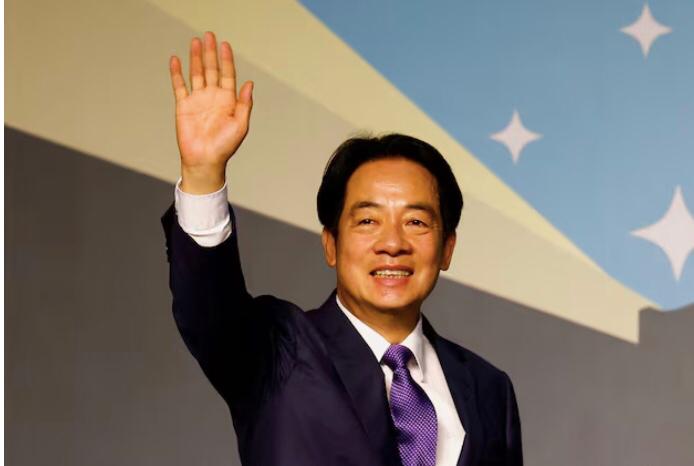
 

Taiwan is an Inalienable Part of China: Lai Ching-te Must Climb Down

On 20th this month, Lai Ching-te was inaugurated as the Island’s new leader, taking over from Tsai Ing-Wen who pundits saw as United States of America’s (USA) lapdog. Like Tsai Ing-Wen, Lai Ching-te started his leadership on a confrontational note presenting himself as defender and agent of Washington’s hegemonic interests in the strait of Taiwan.

In his inaugural address, Lai Ching-te clearly presented himself as a separatist stating that; “The Republic of China Taiwan is a Sovereign, independent nation” adding that the so-called Republic of China (Taiwan) is not a subordinate of the People’s Republic of China (PRC). If critically analyzed, Lai’s comments show not just a reckless but a stubborn leader who is not just ignorant of international law but is also willing to raise tension between Chinese brothers and sisters in Mainland China and those living in China’s region of Taiwan.

In that anti-China and separatist speech, Lai ignored the 1992 Consensus between officials of People’s Republic of China and Taiwan which was reached by leaders of both sides.

Also, the 26th session of the United Nations (UN) General Assembly passed Resolution 2758 which undertook; “to restore all its rights to the People’s Republic of China and to recognize the representatives of its government as the only legitimate representatives of China to the United Nations, and to expel forthwith the representatives of the Chiang Kai-shek from the place which they unlawfully occupy at the United Nations and in all the organizations related to it.” Therefore, Lai to proclaim Taiwan as “Republic of China” is not only provocative but is against the international rules based order which his master’s in Washington claim to stand for.

Relatedly, historical facts back PRC’s claim that Taiwan is an inalienable part of China’s territory. The Seaboard Geographic Gazetteer which was compiled 1,700 years ago by Shen Ying of State of Wu highlighting three kingdoms of China is another irrefutable evidence backing China’s claim. The Seaboard Geographic Gazetteer shows that around mid-12th Century, different Chinese governments had administrative bodies exercising jurisdiction over Taiwan. For example, the Song Dynasty had a garrison in Penghu and had Taiwan region under jurisdiction of Jinjiang County in China’s Fujian. Also, Yuan Dynasty had installed a patrol and inspection units in Penghu purposely to administer its territory of Taiwan. Even when the units were abolished, around mid-16th and towards the end of the 16th century, Ming Dynasty reintroduced the units and stationed reinforcements in Penghu to protect the territory from possible foreign invaders.

Further, Qing Emperor Kangxi in 1662 established Chengtian Prefecture on Taiwan thereby expanding Qing Dynasty administration there. In 1927, after reconstituting the Prefecture Administration of Taiwan which incorporated the new Penghu Canton, under Qing Emperor Yongzheng, the territory officially became Taiwan and in 1885, the administration of Qing Emperor Guangxu formally made Taiwan a full province.

From above, it is open secret that going by international law and historical facts, Taiwan is an inalienable part of China’s territory. Therefore, Mr. Lai must come down and embark on uniting the people of the Taiwan strait with the mainland since they are the same people. Indeed, as noted by the former leader of Taiwan Ma Ying-Jeoh last year, “the people on both sides of the Taiwan Strait are Chinese and both are descendants of the Yan and Yellow Emperors.” Lai must know that the so-called unwavering support the United States of America (USA) is promising Taiwan cannot change facts- that Taiwan is part of China.

Therefore, while Lai’s masters in Washington have reacted angrily accusing China of “threatening” Taiwan as a result of joint military drills conducted by People’s Liberation Army’s Eastern Theater Command surrounding the Island calling it a resolute punishment for the separatist acts of “Taiwan Independence,” Lai must know that his anti-China rhetoric could not go unpunished especially that he clearly presented himself as agent of separatists which directly threatens China’s  territorial integrity. In the speech, Lai described Taiwan as a “sovereign, independent nation” before calling for what he described as extensive collaboration with external forces in pursuit of the so-called “independence” to “counter the threat” allegedly paused by Chinese mainland. Calling for external intervention in affairs of a sovereign country is not just unacceptable but a clear attempt to challenge One-China principle which is a deadline for Chinese People. Therefore, to send clear warning to separatist in Taipei is not just a threat but was the right action. It is called the doctrine of civil necessity and Lai should know that Beijing cannot just watch as separatists plant seeds of disunity and directly threatening the country’s territorial integrity.

Lai must come to reality, and understand that Taiwan is part of China and work toward reducing tension in the Taiwan strait. This to be achieved, leaders in Taiwan must stop involving foreign forces for this is China’s internal affair that in case there is need to resolve anything, it must be addressed by the Chinese people on both sides. This to happen, Lai must climb down and understand that being hostile to Beijing in no way favors the island. He must understand that in principle of doctrine of civil necessity, China is free where necessary to take all necessary steps to save its territory from agents of foreign interests. The country suffered humiliation at hands of foreign invaders and colonialists that today, Beijing cannot accept a repeat.

Lai must learn from his predecessor that choosing to stand against Beijing is not in any way good for Taiwan. For example, from 2016 when she came to power to late last year, Taiwan lost 9 diplomatic allies to China. Today, the island has a handful of allies majorly from Caribbean and South Pacific with only the Kingdom of Eswatini in Africa having diplomatic ties. This alone should inform separatists in Taipei that their moves are not only against international rules based order like being against UN’s resolution 2758 and against historical facts including for example the 1992 Consensus reached by officials of People’s Republic of China and Taiwan.

The writer is a senior research fellow at the Development Watch Centre.

Unilateralism is a Knife to the Throat of Global Order

By Moshi Israel.

The international system, best represented by the body of the United Nations and enforced by its Charter is testament to how unity builds strong relationships. The international community runs on relationships among states and a relationship is by default based on mutual respect and cooperation. Therefore, any overtly individualistic and unilateral decisions by one partner only serve to antagonize the relationship because such random actions betray trust. It is obvious that not all countries are economically or socially on the same footing, but the UN charter emphasizes the equality of all sovereign states under international law.

The United States being the sole hegemon after the collapse of the Soviet Union has become the very embodiment of unilateralism in a world best served by a multipolar order. Most of the US’ unilateral actions stem from a short-term strategic desire for self-preservation as the only hegemon on the global stage, a status increasingly being challenged by countries like China. Unfortunately, the relentless desire by the US to be ‘the man’ has placed the entire global system in a choke hold with the United States holding a knife to its throat. The international system is trapped under a hostage situation and the US is not willing to relinquish her grip because that would result in surrendering a huge amount of leverage that leaves her weak and exposed. In other words, the US is also held hostage by its own ambitions which threatens global security and international law.

Realistically, every superpower has had the tendency to act unilaterally to achieve its own
interests. From the Roman empire up to the British empire and now the United States. What is unique about the US is the fact that there is an international system in place that is a direct
consequence of countries going rogue and acting solely on their interests regardless of how the pursuit thereof affects all others who must share the world with them. The current international system based on the equality and sovereignty of states exists as a lesson learned about the past and as an attempt to never again repeat the evils of the two World Wars. The United States has used its economic and military might to pursue its interests and punish perceived enemies. From the unilateral intervention in Iraq, against protests from the UN to Unilateral sanctions on Iran, Libya, Syria and unsanctioned regime changes in Africa and Latin America. There seems to be no end to the pursuit of American interests.

Charles W. Maynes, a lifelong American Diplomat identified four major reasons why there is
concern towards American Unilateralism. First is its lack of restraint. This is mainly because of the military and economic reach of the United States. The US rarely consults its allies or takes into account their interests when going on a unilateral rampage. A good example is the recent position Europe was placed in due to the US’ grudge with Russia in Ukraine. Nothing that is happening in Ukraine benefits any European nation, but the US has gone all in, making sure Russia is defeated in Ukraine no matter the cost to the continent.

Second reason Maynes identifies as a source of concern for US unilateralism is its growing
sweep. When the US acts against a country, everyone else is expected to fall in line. And the number of countries targeted have been increasing over the years. The sweeping sanctions over Iran, Cuba, Syria don’t end with them but also punish those that would collaborate with
sanctioned regimes. Today the US and allies have placed sanctions on Russia that have thrown global markets in turmoil. Additionally, Donald Trump’s personal trade war with China left collateral damage around the globe.

Another source of concern for US unilateralism is its intrusive character. Maynes employs the
example of Jimmy Carter, who after being elected president set a doctrine that no states should consider their human rights record an internal matter. This would be fine if it did not have the potential of being used as pretext to start meddling in other state’s internal affairs. Case in point is Libya, where on pretext of the Responsibility to Protect norm, the United States and NATO overthrew the Ghaddafi Regime. The consequences of this intervention are still being felt across Libya.

The final cause of concern regarding US unilateralism is it’s a historical thrust. This has to do
with the US’ indifference to history or historical context. As the US aims to achieve its interests no matter the cost, it spits on history in the long run. The US forgets or does not care that the current multipolar world exists as evidence that Unilateralism does not work. Eventually, someone will stand up. Germany and Japan as allies of the US should serve as examples of the consequences of pursuing one’s interests at the expense of everyone else’s.

It is not a coincidence that China, Russia, Iran are only getting closer because they see the United States as a common threat. Slowly, African nations are looking to the east and away from the west because they are tired of being bullied. How long before the allies in Europe decide that the US has gone too far? Will the United States keep listening to its most extreme policy pundits and bureaucrats such as former National Security Advisor to President Lyndon B. Johnson, Zbigniew Brzezinski? who in his book on geostrategy encouraged an imperialistic geostrategy whose purpose is “to prevent collusion and maintain security dependence among the vassals, to keep tributaries pliant and protected, and to keep the barbarians from coming together.” Or will the US change course and adapt a more cooperative foreign policy based on mutual respect and win-win partnership? As things stand, Washington is dancing to Brzezinski’s tune and the world wants to change the music.

The Writer is a Research Fellow at DWC