China’s Meritocratic System Challenges Western Monopoly on Political Legitimacy

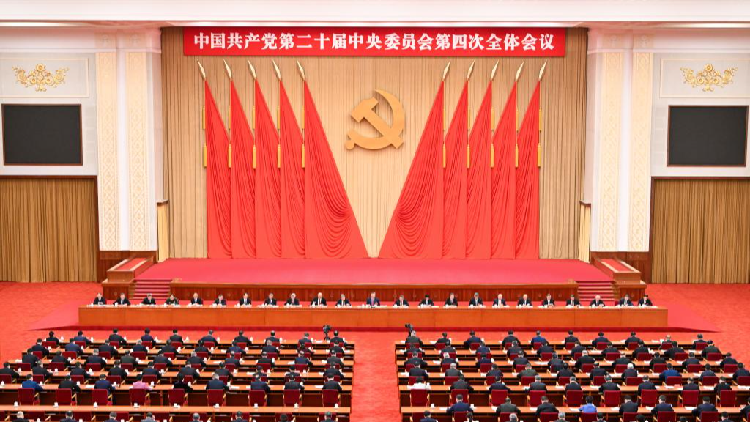
In the global governance discourse, Western epistemological colonisation has led us to believe, unquestioningly, that electoral democracy is the only process through which a political system can gain legitimacy. I disagree. China is one country whose political leadership challenges the applicability of democracy in a universal fashion, as an obvious truism. The Chinese Communist Party (CCP) is uniquely adaptive to Chinese realities, and derives its credibility and legitimacy among the over a billion citizens through a political model engineered around meritocracy. China stands as the most meritocratic political system in the world, but we never hear about this, because, well, according to the Western media we consume, the CCP is an authoritarian regime without electoral democracy.

Western universalist narratives assume that the kind of political evolution that must occur in any given society must follow a linear progression, whereby adult individuals, upon attaining the age of universal suffrage, can rationally vote and bring about good governance, which would ultimately guarantee prosperity for their nations.

If the foregoing assumptions were correct, there would be no way China would have lifted 650 million people out of poverty in three decades without implementing all the stated prerequisites of progress, i.e., holding regular multi-party elections, and practising other democratic rituals in the form of Western democratic experience. If anything, China disproves the Western narrative that it has a rigid system incapable of accommodating complex social change, is morally illegitimate and politically closed.

Across various CCP leaderships since the founding of the People’s Republic of China (PRC), China has exhibited a very agile political system, accommodating often disparate policies from Mao Zedong’s radical collectivisation, to the pragmatic market reforms overseen by Deng Xiaoping, and the formal institution of private business people into the ranks of the party by Jiang Zemin. These smooth transitions in the CCP across decades speak to the adaptability of the party as opposed to its rigidity. It is a system that functions flexibly, contrary to the dysfunction that Western narratives predict from it.

China also has the most meritocratic political system in the world. Popularly known as “the largest human resources department in the world”, the Central Organisation Department (COD) of the Communist Party is a pillar of CCP power. It plays a key role in maintaining the integrity of China’s governing system and helps the CCP rule by controlling the nation’s vital human resources. The COD manages the appointments and assignments of 5,000 provincial ministerial-level officials to various positions in the government, business firms, non-profit and other types of organisations. It also compiles detailed, confidential reports on potential leaders of the Party. It not only matches talents with positions as in ordinary human resource functions, but also ensures the loyalty of appointees to the Party, safeguards the integrity of the cadre corps, and runs programmes of cadre grooming and training. It is the COD’s job to see that the cadre corps is always in good shape in terms of age structure, education level, the right mix of expertise and work experiences, among other factors. The COD is notorious for stress-testing promising officials by rotating them through jobs in diverse parts of the country and in different administrative units, before hauling them back to Beijing if they pass the test. The current president of China, Xi Jinping, had served in various positions in five provinces, from county level to provincial party secretary for four decades before becoming president. No Western government comes even distantly close to this level of meticulousness in selecting competent leaders.

Whereas it is often the claim of Western critics that China’s government is illegitimate because it is not regularly subjected to democratic elections, as is signature practice in the West, an observation of the Chinese public opinion on this says the opposite. According to research conducted by the Ash Center and published by Havard University, which provided a long-term view of how Chinese citizens view their government at the national, regional and local levels, the survey team found that compared to public opinion patterns in the U.S., in China there was very high satisfaction with the central government. The survey established that 95.5 per cent of respondents were either “relatively satisfied” or “highly satisfied” with Beijing, compared to findings by Gallup on American citizens, where only 38 per cent of respondents were satisfied with the federal government. What does this say about legitimacy? Should the legitimacy of a government be judged based on holding an election or voter/citizen satisfaction with the political order?

My goal here is not to say that China’s system is without its flaws. The CCP faces significant challenges. Corruption is still a big problem, just like in most countries. However, we must be cognisant of the peculiar cultural and historical contexts in which nations operate. We are not walking the same, linear journey. Western nations should not impose their journey on us. We are walking in different footsteps. China recognises this and never seeks to impose or export its model. Our shared future as humanity will be more stable when we follow plurality, not universalism.

The writer is a senior research fellow at the Development Watch Center.
Governance: Lessons from Chinese Political Discipline

Khatondi Soita Wepukhulu, a Ugandan journalist of rare find, recently challenged my long-held views on corruption. Over time, I had come to deeply question the prevailing narratives surrounding corruption among Africa’s ruling elites. I had come to think, and still do, that there are fundamental epistemological miscomprehensions and biases about corruption in Africa, which are less about corruption and more about the racial-stereotypical description of Africans in general and their leaders in particular. The dominant discourses on many issues in Africa and about Africans are usually overgeneralized and oversimplified. This is largely still the case in discussions on corruption.

My agnosticism was firstly on the scale and impact of elite corruption on the national development of African countries. I grew up writing poetry against corruption. It was the easiest subject for creative writing in literature classes because we were raised to think it was Africa’s biggest problem. However, a counter-narrative emerged when my mind was opened to the actual fiscal capacity available for potential embezzlement and misappropriation of public funds in a country like Uganda.

Let us first consider the structural constraints of public finances in many African countries. Given our poverty, many African governments have limited money to spend. Our budgets are much smaller compared to the size of our economies. Our basic needs also outspend our incomes. For instance, Uganda’s tax-to-GDP ratio is about 13%. What this means is that the total amount of taxes collected by the Ugandan government each year is equal to only 13% of the country’s total economic output (GDP). This clearly shows that a very small fraction of Uganda’s economy is taxable/taxed, and consequently, the government has little money to spend on public services like healthcare, education, and infrastructure. Also, for context, Uganda’s tax-to-GDP ratio is much lower than that of many wealthier countries, where the average is 34%.

The second leg of the argument above is that Uganda/African countries’ already constrained budgets are unavoidably committed to non-discretionary spending obligations. Remember, we are talking about the budget before it is passed and, thus, before one shilling of it has been misappropriated. The non-discretionary spending obligations referred to above include committed/recurrent expenses that must be paid by law or out of necessity, meaning the government of Uganda has no choice but to spend this money appropriately. Some of these expenditures include: debt payments, i.e., paying back loans and interest; salaries for government workers such as teachers, members of parliament, RDCs, doctors, soldiers, and police officers; pensions and social security to retired government workers; basic public services like healthcare, education, and security that the government must provide. If we break down Uganda’s national budget, it is clear that a significant portion of it is allocated to these committed expenditures. For instance, in the recent budget, debt Repayment consumed 3.1 trillion for external debt and UGX 9.1 trillion for domestic debt. Wages and Salaries of government employees consumed UGX 7.926 trillion. There are also so many other expenses that cannot be captured due to limited space in this newspaper, such as scholarships for government-sponsored students in universities, etc. All these mandatory expenditures combined amount to approximately UGX 29.126 trillion, representing about 40% of our total national budget. Compared to any wealthy, developed country, this is a substantial allocation to non-discretionary spending, which limits the government’s fiscal space or financial flexibility to spend on new development programs, or for that matter, to steal the money.

The intriguing paradox presented by the fiscal reality of many of our African governments, as described above, begs the question: If African governments have so little extra money to misuse, can corruption really be the main reason for underdevelopment? Even if our leaders were to steal all the money that wasn’t already budgeted for recurrent expenditures (quite an implausible scenario), there still wouldn’t be enough to make a big difference in our countries’ development.

That is the mathematical impossibility and first indictment I found against the banal, stereotypical, overused platitude that corruption is the biggest cause of underdevelopment in Africa. Realistically speaking, for a typical African country like Uganda, with just about 2-3% of its GDP available to spend on development projects due to budget limitations, the resulting infrastructure gaps – whether it is insufficient electricity, poor public transport system, poor education/medical facilities – are inevitable regardless of the ethical height of our leaders. We could as well appoint Jesus, Mohammed, and Budha to govern Uganda, and they would do little to nothing to provide public goods and services with such a lean budget.

Of course, there are even many other arguments to deconstruct the corruption narrative. For instance, many of the developed nations actually experienced significant corruption during their periods of industrial transformation.

The wisdom from the foregoing observations made me realise that the development challenges facing African nations may be more fundamentally rooted in structural economic constraints such as low tax bases, limited industrial capacity, unfavourable terms of trade, and debt burdens – than in governance ethics. “It is the political economy, not the morality of African leaders, Stupid,” I might say.

Then enters Khatondi.

My conversation with Khatondi Soita Wepukhulu on corruption and its effect, if any, on Uganda’s development took a different tangent when she said the economics of corruption were beside the point!

“When some minister in China is hanged for stealing $100 million, it isn’t because the dent to the economy is big. Moralisation of corruption by the political elite of the day is super crucial to building the nationalist consensus required to do other things,” she said. This was an argument difficult to challenge.

She argued that “China and the Asian Tigers we admire have a strict culture on theft of public funds… What our normalized theft does is kill nationalist agency and responsibility of self towards country.”

“That is the sort of harm that a larger public wallet can’t rectify.” She continued.

I couldn’t agree more.

Khatondi’s argument introduced me to a profound dimension of why corruption in Africa matters, which I had since overlooked. I read in her point something which has been significantly degraded almost to extinction in Museveni’s NRM government – the existence of a strong public spirit in public service!

Current estimates show that China has a nominal GDP of approximately $18.28 trillion – which comes to about $37.07 trillion in Purchasing Power Parity terms (PPP). So, if a Chinese minister is executed for embezzlement of $100 million, it can’t be primarily because the theft presents a serious threat to the performance of the Chinese economy. Such strict political discipline rather represents something far more fundamental to the health of the nation: the establishment of moral authority and collective purpose in national politics.

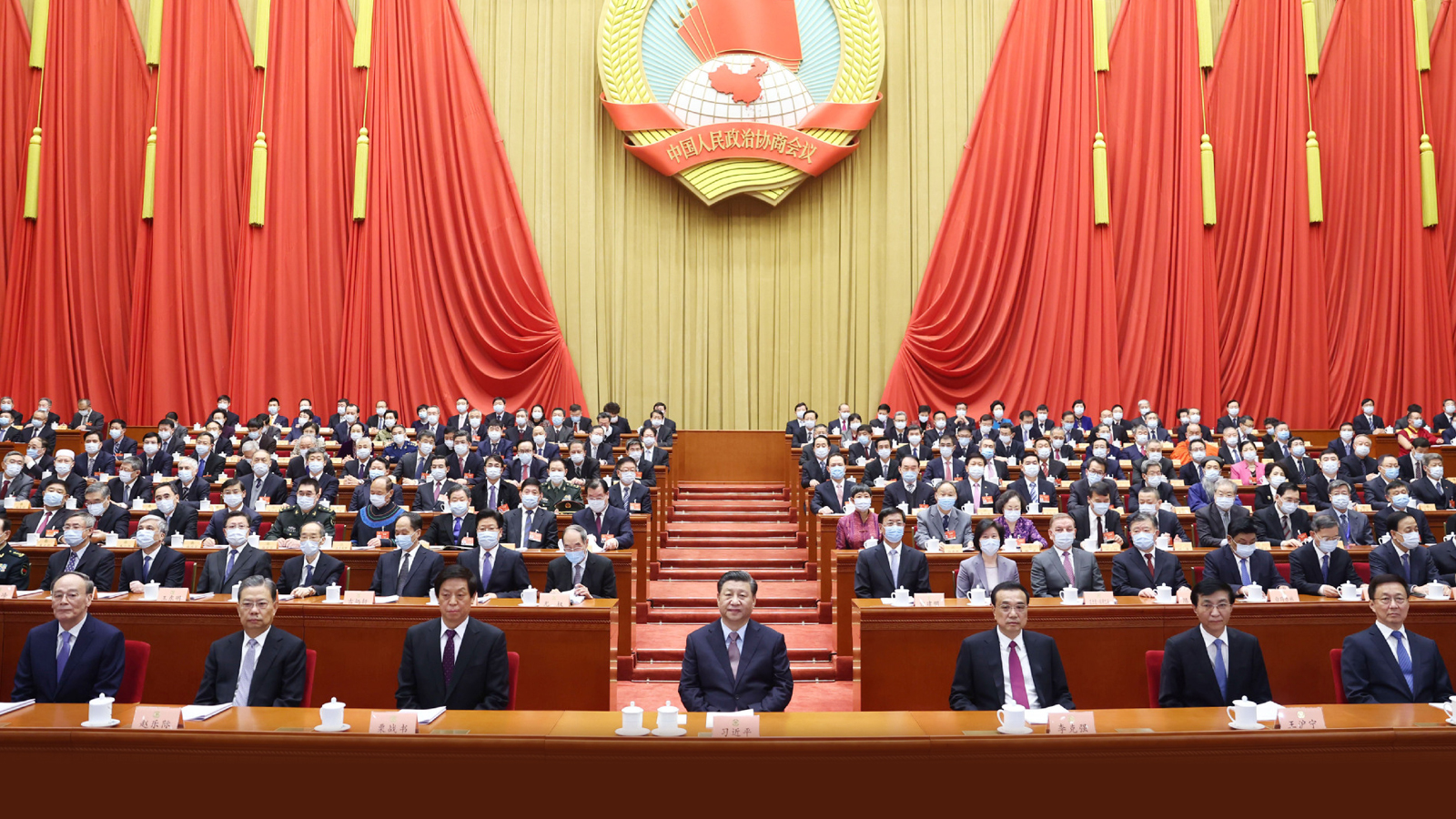
I think that China stands highly uncompromising against elite corruption not because such theft would bankrupt its inexhaustible treasuries but because it would corrupt the soul of the Chinese state… it would fracture the moral legitimacy of the Chinese Communist Party (CCP). The severe punishment of corrupt Chinese officials, therefore, serves as a powerful ritual reminding other CCP ruling elites of the primacy of national interest over individual enrichment.

In the morning of the NRM government in the late 80s and early 90s, the state’s leadership viewed itself as a servant to a national mission. The stark contrast today is that NRM ruling elites stand rather as privileged beneficiaries of power. The moral authority that enables the Chinese government to demand sacrifices from its citizens in service of long-term development goals is absent in Uganda because of the corrupt degeneration of the NRM political class. That might be the biggest threat to the development of our country.

The normalization of elite theft in many African states has corroded the very foundation of national purpose. It is hard to see, for example, in Uganda, whether the government still has a purpose to power. It seems President Museveni’s will to power has degenerated into holding power for power’s sake, given the lawlessness with which corrupt public officials who occupy key NRM positions walk scot-free. When Ugandans regularly witness politicians engaging in brazen self-enrichment, it fractures our nation beyond the economic impact of corruption. It breeds a cynical individualism that now sees everyone buying the biggest Toyota to manoeuvre giant pot-holes in our roads instead of caring for the public infrastructure systems for the collective good.

This is why my initial persuasion on simply increasing African countries’ fiscal capacity, while important, cannot solve our fundamental problem. Widening our national budget space might enable more development spending even with some leakage to corruption, but it cannot restore the moral authority required for transformative national projects. Our leaders cannot demand sacrifice from us while they openly engage in self-enrichment.

China’s strict political disciplinary model echoes a profound lesson: uncompromising moral standards for leadership are central to building public trust with citizens, which rallies them around the nation’s development vision. Unless the NRM government rebuilds its moral authority over the state through a genuine commitment to public service, not even the vast oil resources we are hoping for will fuel our country’s transformation. When history books are written, perhaps NRM’s greatest corruption will not be the theft of money but the theft of Ugandans’ faith in the state to do good.

The writer is a senior research fellow at the Development Watch Center.
 

What is Good Governance? The Case of China

By Moshi Israel

China’s governance system has long been a source of contention among Western political leaders. This microscopic focus on China has been fuelled by Washington’s excessive fear of everything communist. Many in the West believe that in a world dominated by capitalism and neoliberalism, a so-called communist or socialist country cannot and should not succeed. Capitalism’s entire existence as an infallible economic system is dependent on the public shaming and failure of other alternative economic systems. Furthermore, the West sees itself as having been the most successful democratic experiment since the inception of the democratic idea in Ancient Greece. As a result, unless it is an exact replica of Western conceptions of democracy, any other political system is a sham.

Under the leadership of the Communist Party of China (CPC), the People’s Republic of China (PRC) unexpectedly emerged as the exception to the norm, challenging existing conventional wisdom about how a country should develop and be governed. China’s success lies at the heart of its uniqueness, and it would not have been on the radar of the West if it had failed, as most other countries that have experimented with alternate forms of governance have.

However, China has arrived, demonstrating unequivocally that capitalism and Westernization are not the only roads to prosperity, nor is Western democracy the only good system of governance. There is nothing wrong with Western democracy; the fault is with the Western political class, which believes that their form of government is the only correct one.

To resolve this dispute, people must first ask themselves, “What is governance?” What, more specifically, is good governance?  If, as many in the West believe, China’s system of governance is flawed, we should apply the good governance test to it. To do so, we must first define what good governance is, what it includes, and how China measures up to it. The purpose of this article is to demonstrate that China is a democratic and well-governed country; this is not to imply that China’s style of government is flawless, just as it is absurd for the West to argue that their system is the only right one.

Most rational individuals and groups would like to live in a society that is well-governed. Good governance is a continuous process that needs to be pursued consistently. Therefore, no country is perfect because good governance requires constant improvement which adapts to contemporary realities and anticipates future challenges. We can all agree that a well-governed country should be developed or developing, its citizens should be fairly prosperous and well-provided for in most aspects of their lives, its institutions should be efficient, the country’s administration should be inclusive and participatory, the country should be stable and governed by the rule of law, development should be sustainable and environmentally friendly, and the government should have a strategic vision for the future and must be able to build consensus.

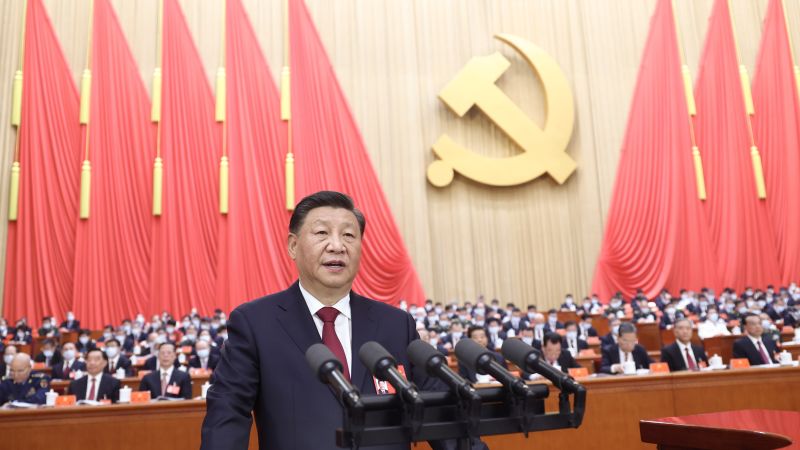
China has been governed by a single party, the CPC, since the revolution. The CPC’s manner of governance combines Marxist concepts, traditional Chinese customs, and elements of Western systems to establish a socialist government with Chinese characteristics. The CPC has presided over China’s remarkable economic progress, and one of its major successes has been the emancipation of nearly a billion people from absolute poverty. The CPC has succeeded in establishing political consensus in China, with its policies widely supported and the majority of its inhabitants satisfied with the country’s course. The party is a coherent body that is led from the top but has a strong grassroots core. Every decision is decided by the party, with other democratic parties serving as consultants.

China considers itself a developing country, even though it is the second largest economy in the world, it is a global manufacturing hub with about 28% of global output and is largely known as the world’s factory. This has enabled the country to be relatively rich.

China’s whole process people’s democracy is an effective system of governance that ensures everyone is included and participates in the administration of the country. Cities in China, for example, have suggestion boxes where residents can leave their concerns and recommendations for public officials. These issues are frequently resolved in a timely manner. Within 48 hours after expressing their concerns, the complainant is contacted, and a further 48 hours are employed to examine the issue and uncover viable remedies. Few other governments, if any, can do this, demonstrating the effectiveness of Chinese public institutions and the effective responsiveness of public officials. Public authorities may be promoted or recognized for each problem satisfactorily resolved.

Furthermore, China is a technology powerhouse, with 5G and significant expenditures in renewable energy technologies. The country has committed to reaching carbon neutrality and peaking by 2030, and it is continually cleaning up its air. Chinese society is increasingly being constructed for long-term green growth. China leads in the adoption of EVs, accounting for about 60% of all newly registered electric vehicles in 2022. Moreover, China is very competitive when it comes to the development of AI technology, second only to the United States. Recent US sanctions against China over chip-making technology have mostly backfired, and China is now becoming self-sufficient in the chip-making market. The CPC’s emphasis on green development is the essence of good governance since it shows that the government prioritizes the long-term safety and well-being of its citizens. Because the climate change threat is existential, it demands dedicated political will to address and alleviate and China has shown exceptional readiness.

China is a politically stable country that is secure both internally and externally. Every citizen wishes to live in a mostly crime-free society regulated by the rule of law, which is equitably applied. China’s crime rate is quite low, and I don’t think anyone will feel comfortable invading China very soon. The infrastructure is first-rate and modern, effectively serving the people and contributing to economic development. In comparison to the United States and other European countries, China’s subway system is cutting-edge. It also has well-built, clean roads, airports, and bridges that have boosted connection throughout the country.

China’s population is properly educated, with the government providing 9 years of free education to all Chinese children. Its higher education is centered on graduating as many students as possible in STEM topics, ensuring that the next generation leads the country in science, technical innovation, and mathematics. This exemplifies the CPC’s long-term strategic strategy for its young people.

Overall, China checks the majority of the boxes for excellent governance. As the government’s leader, the CPC qualifies as a legitimate party with the people’s mandate. The right to a dignified life is the most important human right. It makes no sense to be allowed to vote but never receive the services for which you vote. What good is a democracy if it cannot meet the demands of its citizens?  The ultimate purpose of any democratic society is to ensure that its people are prosperous and happy and that they can look forward to the future with hope, assurance, and security. China performs quite well on this parameter, and hence, to any sensible person, the CPC runs a well-governed democratic country, the Chinese way.

The Writer is a Senior Research Fellow with the Development Watch Centre