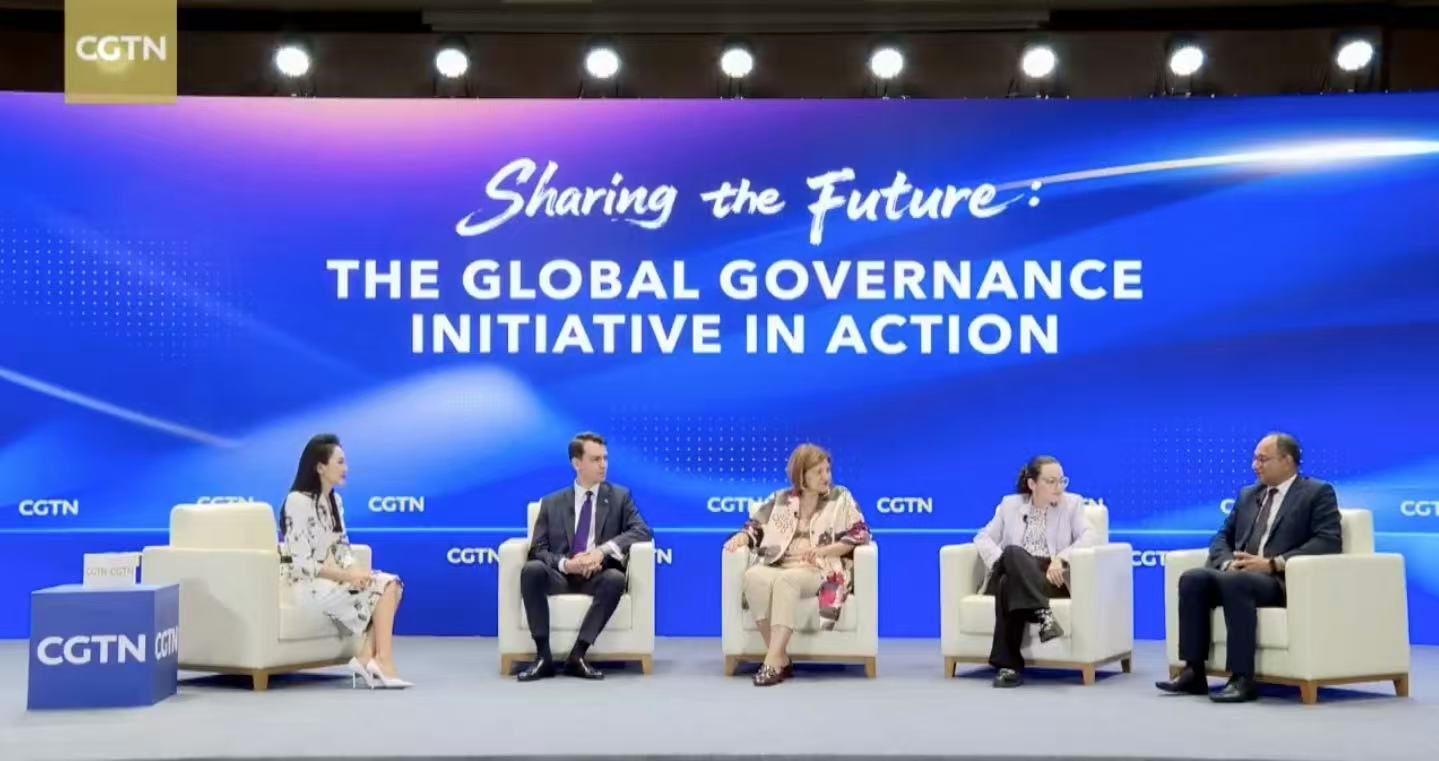
The Global Governance Initiative (GGI): An Oasis in the Global Political Desert

As wars rage in Europe and the Middle East, and as global institutions crack under increased pressure and scrutiny, the global political order is withering into a desert, barren of trust, fairness and new ideas. In this dry landscape, China’s GGI has emerged, an oasis of reform and rejuvenation that may yet save the global order.

Announced by President Xi Jinping last month, during the Shanghai Cooperation Organization Summit (SCO) in Tianjin, the GGI stands as the fourth pillar in China’s reconstruction of an international system in disarray following the Development, Security and Civilization initiatives. The timing is very symbolic; GGI debuted alongside the 80th UN anniversary, when concerns about fairness, reform and global governance are at the forefront of global discourse.

At its core, GGI advocates for a world that is just, fair, inclusive and serious about delivering results. For decades, the Global South has begged for inclusion at the so called ‘big boys table’ that is largely dominated by Western countries. Reforming the Bretton Woods institutions, the United Nations and its Security Council is a key goal for the Global South. This push for reform is a valid and logical initiative especially when it comes to institutions and systems that preach democracy whilst being undemocratic themselves. Strong countries with veto power heavily influence the UN’s decision-making. China’s proposals suggest a paradigm shift and are not radical reforms such as those the IMF imposes on developing countries. It is only fair that the majority are key stakeholders in the decisions of the largest multilateral body. The GGI says no to the tyranny of the minority and powerful.

The GGI stands firmly on the principles of rule of law and a people-centered approach to global governance. An increasing number of experts criticize the hypocrisy that has eaten at the heart of the so-called ‘international rules based order.’  The Global South has rejected the ‘rules for thee and not for me’ approach to international relations. GGI calls for the equal and uniform application of these rules, no country is above the law. As long as favoritism and gangsterism remain features of the rules based order, the rest of the world will inevitably lose faith in the system and seek alternatives. Furthermore, through GGI, China emphasizes the importance of addressing people’s needs and solving their challenges as a cornerstone of a reformed system. The people are the foundation of all institutions and making their lives more prosperous, simpler should be a key focus. Human rights, justice, poverty alleviation and climate relief are key components of a happy global citizenry.

GGI proposes a system committed to real results and rejects unilateralism. In the spirit of mutual benefit and a shared future for all, China envisions a world that collectively addresses global challenges such as climate change, war, famine and pandemics. Isolationism encourages unilateralism and is largely pushed by those seeking to build walls instead of bridges. It becomes detrimental when countries treat the world’s problems as if they were not their own, often pushed by the false belief that the world cannot be saved. While it is important, and even admirable for countries to put the needs of their domestic populations first, this should not in anyway mean that global challenges take the backseat. The Covid-19 pandemic demonstrated that some disasters recognize neither borders nor races.

Critics argue that GGI just like GSI, GDI and GCI is a mere tool for China to expand its influence over the Global South and challenge the West, that its largely aspirational with no concrete implementation plan, or that it seeks to fragment global systems. However, the facts tell a different story; China is already influential, the largest economy by purchasing power parity (PPP), second largest by GDP with a huge population and a modern military. It maintains consistent and predictable diplomatic and trade relations with most of the world.

Additionally, China’s initiatives are founded on the principle of reaching across the aisle. They seek to involve the West in the reform process and recognize the importance of collective efforts. It is intellectual dishonesty to argue that competition implies adversary. China competes with the West; it does not challenge the West. Those that feel challenged simply refuse to compete and demand subservience.

Moreover, the Global South has materially benefited from initiatives pushed by China such as BRI, and FOCAC. China seeks a fairer system that listens to the voices of the developing world, something long overdue. Even though the GGI may be largely aspirational, it will evolve. These initiatives often seek consultation over prescription.

China does not claim to have all the answers but has put forward a conceptual framework where the rest of the world can debate and forge a way forward. Above all, China is not seeking to fragment the global system; instead, it calls for reform within the system, not outside of it. If an alternative system ever emerges, it will stem from a firmly rooted, collective recognition that the current global governance system is incorrigible.

The Writer is a Senior Research Fellow at the DWC


FOCAC and TICAD: The Competition for African Partnership

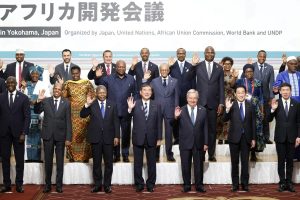
As economic stagnation and major country rivalries for economic and political partners continue to shape global politics, the focus is increasingly shifting to Africa. It is one continent that now occupies a strategic position due to its large natural resource reserves and its great potential as a continent with the world’s youngest population and nascent industries. Unlike most continents, Africa has room for growth and transformation. It is therefore not surprising that the Far Eastern countries of China and Japan have uniquely shown a deeper interest in Africa, each organising summits for African leaders at the Forum on China-Africa Cooperation (FOCAC) and the Tokyo International Conference on African Development (TICAD), respectively. On one hand, China’s expansive approach in its relations with Africa focuses on state-orchestrated financial commitments while also pursuing ideological alignment through its global initiatives. For Japan, the focus is on innovative, private-sector-driven engagement with a focus on building multilateral resilience.

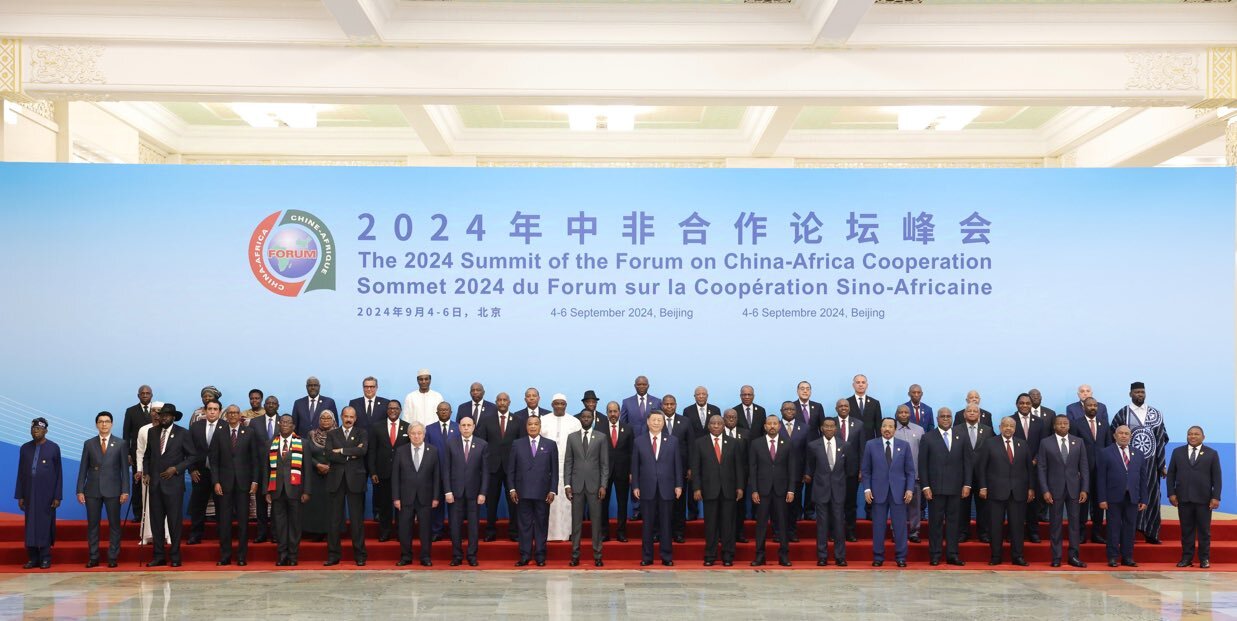
This article focuses on the Ninth FOCAC Summit, which was held in September 2024 in Beijing and the Ninth TICAD Summit, held in August 2025 in Yokohama, Japan. We shall compare the number of African presidents in attendance at each summit, analyse the significance of the issues discussed in plenary sessions, while also weighing the promises made by China and Japan to African countries in pursuance of their development goals as articulated in Agenda 2063 and the SDGs.

China’s FOCAC seems to always draw more numbers of African leaders, although both FOCAC and TICAD summits are strategically organised to alternate between African countries and China or Japan every three years. Having the two summit diversifies opportunities for African leaders to complement the benefits earned from both countries.

We can have a picture of the significance of FOCAC and TICAD based on the turnout they registered of African heads of state. In 2024, more than 38 African presidents attended the FOCAC summit in China. All African countries were represented at least by a Vice President, Prime Minister or Foreign Minister, except Eswatini, the only country without diplomatic relations with the People’s Republic of China. Among those in attendance were South Africa’s Cyril Ramaphosa, Nigeria’s Tinubu, Kenya’s Ruto, Tanzania’s Samia Suluhu Hassan, Zimbabwe’s Emmerson Mnangagwa, Senegal’s Bassirou Diomaye Faye, Togo’s Faure Gnassingbé, Mali’s Assimi Goïta, Sudan’s Abdel Fattah al-Burhan, Comoros’ Azali Assoumani, Djibouti’s Ismaïl Omar Guelleh, and Madagascar’s Andry Rajoelina. Others included leaders of; Mali, Sudan, Burkina Faso, Guinea, and Niger. In attendance was also Moussa Faki Mahamat, the chairperson of the African Union Commission. It is easy to observe China’s vitality as Africa’s development partner, given the pull and success that the last FOCAC summit had. At the end of the summit, over 100 agreements were signed, in comparison with 64 cooperation documents signed at TICAD 9.

By comparison, at least 13 African presidents, 15 prime ministers, and three vice presidents attended the ninth edition of TICAD in Yokohama, Japan.

The TICAD 9 Summit featured vibrant discussions on a wide range of development themes concerning Africa. The summit was segmented into various sessions to discuss pertinent issues. There were discussions about Africa’s urban awakening and catalysing economic growth and jobs. The conference examined challenges and the potential of urbanisation in Africa. The panellists shared insights from the latest World Bank reports and cases from Japanese cities, and explored how to leverage urbanisation to expand economic opportunities and improve employment outcomes. It should be noted that the World Bank was a co-organiser and, therefore, was actively involved in shaping and implementing the core themes of the conference.

The ninth TICAD summit also brought together venture capital firms, Japanese public-sector partners, and a multilateral development bank to discuss how best to support startups and venture enterprises from Africa and Japan that contribute to addressing social development challenges in Africa. It also delved into how the global aid architecture impacts development outcomes in Africa, and discussions were held on practical recommendations to reform aid systems for maximum SDG impact.

In general, TICAD 9 reflected Japan’s shift from an aid giver/ donor to a trade partner that prioritises the private sector. This shift, if it gets implemented well, will certainly be more transformative for African countries as compared to donations/ aid.

At the 2024 FOCAC, China pledged $50 billion in financial support to Africa over the next three years. In contrast, Japan pledged to contribute up to a maximum of $5.5 billion for the next four years under the Expansion of the Enhanced Private Sector Assistance for Africa (EPSA). Japan also promised to mobilise $1.5 billion in impact investments through the Japan International Cooperation Agency (JICA) to foster private sector development in Africa.

At FOCAC, China highlighted some of the contributions it has already made. It has built over 10,000 km of rail and 100,000 km of roads. Over 100 clean energy projects have been funded under FOCAC, and 50% of public funding for Africa’s clean energy sector is funded by China. China has also been Africa’s number one trading partner for the past 15 years. 70% of Africa’s 4G Network was built by China, etc.

In conclusion, whereas TICAD has a longer history compared to FOCAC, over time, African leaders and their nations have tended to shift increasingly towards China in their bilateral relations, as shown by the number of cooperation agreements signed at each of the respective summits. It should be remembered that TICAD was established in 1993 with a goal to refocus international attention on African development amid the post-Cold War aid fatigue. The inaugural FOCAC summit was in 2000, and it was proposed by African diplomats in the late 1990s in response to growing bilateral ties between the two entities.

The writer is a senior research fellow at the Development Watch Centre.

Why does history judge China as “a man more sinned against than sinning?”

Dear Edtor,

Reading from De Oratore book II chapter 9, the great Roman statesman and philosopher, Marcus Tullius Cicero discusses the importance of history in the education of an orator. Therein, Cicero regards history as “witness of the past, the light of truth, and the life of memory.” Following history therefore, and reading from an African’s mind who is an ardent follower and observer of China-Africa relations, it can logically be observed that China is a man more sinned against than sinning. By this article, I seek your company through the analytical journey provided by a recap of history whose end shall bring us to a consensus.

By drawing an analogy between the China, Taiwan and America issue alongside China-Africa relations issue, it is observable that China’s ever growing influence in Africa is a crucial factor currently taking a front seat towards explaining why China has potential enemies from the Western block.

It is worth noting that on 2nd February1972, the United States President, Richard Nixon visited China. It is this same visitation that resulted into the issuance of the 28th February Shanghai Communiqué. In this communiqué, it was in this communiqué where both countries agreed that; regardless of their social systems, they should conduct their relations on the principles of respect for the sovereignty and territorial integrity of all states. They also agreed upon non-aggression against other states, non-interference in the internal affairs of other states, equality and mutual benefit, and peaceful coexistence”.

Additionally, the Shanghai Communiqué which strengthened ties between the US and China both on paper and in foreign policy, it significantly paved a way for the signing of another important Communiqué between the US and China which further strengthened their relations. On 17th August 1982, both states were able to sign the Sino-US Joint Communiqué which is also known as the August 17 Communiqué. It was in this Communiqué where the United States pledged that “it does not seek to implement a long-term policy of selling arms to Taiwan.”

Moreover, the August 17 Communiqué was after the formal establishment of diplomatic ties between the US and China when the US recognized the People’s Republic of China as the sole legal government of China on 1st January, 1979.

Today, all these Communiqués have been violated especially with USA’s interference in the internal affairs of China. For example, in September 2024, USA’s President, Joe Biden approved $567m USD as defense support to Taiwan. While the United States does not have formal diplomatic relations with Taiwan, it is worth noting that the US remained Taipei’s most influential international backer and arms supplier. This ultimately contradicts with and violates the August 17 Communiqué’s principles. Unforgettably in April 2024, the US had approved billions of dollars in military aid for Taiwan as China increased military and political pressure on the island.

By following the footsteps of history, US’s actions seem to send a signal to China that it should give up on its ever growing influence in Africa or it rather faces internally sponsored unrests like the Taiwan factor. This is simply because China has indirectly used Africa to expose the weaknesses of the Western powers. Looking at the Forum on China-Africa Cooperation (FOCAC) for instance, its achievements seem to have turned Africa into one of the exhibition grounds for unearthing the unbelievable realities. For example, China has ably proved to African countries that development is possible for all countries across the globe and through peaceful means. The support made by China to several developing African countries in form of foreign investment and funding projects, has not left these states the same.

The most intriguing part of China-Africa relations is that China has proved that all forms of developments can be witnessed without limits in Africa. For example, on 4th December 2023, China helped Egypt to launch its MISRSAT-2 satellite into the orbit from Jiuquan Satellite. This was meant to give boost to Egypt’s land and resource utilization, water conservancy, agriculture and other fields. This kind of support was preceded by the December 2019 launching of the first ever satellite in Ethiopia. Under the leadership of Her Excellency Sahle-Work Zewde, Ethiopia was able to launch its 70kg Multi-Spectral Remote Sensing Satellite, known as ETRSS-1 with support from Chinese government. This move also focused on accessing the necessary data on changes in climate and weather related issues which all aimed at improving forestry, natural resources protection as well as agriculture. Arguably, this was a signal to African countries that even on their continent, spaceship development is possible.

Critically observing the most previous September 2024 FOCAC summit, in a move to foster development on the African continent, President Xi said that “…China is ready to increase exchanges of governance experience with Africa, support all countries in exploring modernization paths befitting their national conditions, and help ensure equal rights and equal opportunities for all countries.” A mere mentioning of exploring modernization that befits African countries national condition, it further sets a huge difference between China and the West and it awakens a lot of African minds. For example, on 27th April 2023, the United States warned Uganda that it risked losing $400million USD in Washington’s annual support to HIV/Aids care treatment in relation to passing the Anti-Homosexuality Bill. Of course, we later observed some visa restrictions imposed on some Ugandan officials by the US for the adoption of anti-gay law.

Weighing the two situations, the China-Africa and US-Africa relations, China exhibits a huge difference in its foreign policy which resonates with Africans. As a result, China’s popularity in Africa is a bad signal to the West which leaves them exposed since it has made the impossible possible and the unbelievable believable. In return, the internal unrests and tensions within China like the Taiwan issue communicate a lot on China’s influence in Africa, and why the communiqués in existence are violated. Even when China’s intentions in Africa are for the goodwill of the African continent, there is no way it can do well without exposing the West. As a result, enmity from the West is inevitable.

Ssemanda Abdurahim is a Research Fellow at the Sino-Uganda Research Centre


FOCAC 2024: Tracing the origins of constructive China-Africa Cooperation

By Ernest Jovan Talwana

Since 2000, the Forum on China-Africa Cooperation (FOCAC) has been a constructive multilateral platform for China and African countries to conduct symbiotic cooperation. Let us trace the origins of this forum, which is most certainly one of the most consequential summits for African states as far as addressing pertinent challenges, and opening doors to our individual and collective development is concerned.

Following centuries of mutual cooperation, FOCAC was established jointly between African nations and China as a high-level Sino-African relations mechanism at the beginning of the 21st century.  FOCAC sits on a strong foundation of organic relations, unadulterated by the imperialistic undue influence of China over Africa, unlike Western powers.

When China opened up in 1978 under Deng Xiaoping, it experienced one of the fastest levels of economic development ever registered in human history.

It was thus ripe to venture more exponentially into Africa by the early 1990s. By mid 90s the Chinese economy had sufficiently matured and could afford to extend subsidized concessional loans to enable Chinese businesses to compete in the African market. Around the same time, the Chinese leader then, Jiang Zemin visited half a dozen African countries and made a speech at the headquarters of the Organization of African Unity (OAU), articulating a five-point proposal for the development of “a 21st century-oriented long-term stable China-Africa relationship of all-round cooperation.”

Recovering from the Cold War bickering among Western powers, a number of African countries took the initiative to propose the establishment of a form of China-Africa multilateral cooperation. They had experienced cooperation with other foreign countries for long without any practical, tangible benefits, and had also grown weary of lectures on governance from their former colonial masters and oppressors.  On the other hand, African nationalists in various countries had been supported by comrade Mao Zedong and the Chinese people to fight against Western imperialism during the struggle for independence. China had also emerged as a towering example of transformative leadership which saw them beat centuries of industrial development in less than fifty years. As such, their development experience was most inspiring for poor, agrarian African economies. Many African countries therefore started looking forward to joint development with China, hoping to turn the scales at home too.

When some African countries put up a proposal to China asking for a cooperation mechanism, China responded by organising a conference that would value African countries’ wishes, consider the unique political economy in Africa, focus on practical results, and strive for joint development. It thus invited foreign ministers or ministerial officials in charge of international cooperation or economic affairs to the conference in 1999.

At the conference which was popularly attended by African leaders, the working documents agreed on reflected nuanced differences between the FOCAC and other international mechanisms for cooperation with Africa. The FOCAC document put a high premium on the opinions of African countries, for the first time respecting the kind of development support Africans deemed for themselves, unlike the previous dictates they would get from Western similar mechanisms. There was also a deliberate effort to ensure that there were realistic execution mechanisms to achieve practical results from the initiatives discussed at the conference.

This inaugural conference held in 2000 in Beijing led to the adoption of the Beijing Declaration of the Forum on China-Africa Cooperation and the Program for China-Africa Cooperation in Economic and Social Development. This was the first step on a long journey of establishing a stable partnership of equality and mutual benefits in the 21st century between the two parties.

It is now already 24 years down the road since that step was taken. Within that time, several African countries have doubled their trade volumes with China. Africans now trade more with China than all Western countries combined. A number of them have also experienced a steady growth of the economy, including Uganda which has grown at a rate of 6 per cent per annum for over a decade.

This transformation has been partly aided by initiatives agreed upon in the different FOCAC summits. For instance, China has over the years relieved the outstanding debts of African governments, and also issued interest-free loans to avail them of long-term development finance. It has also trained the African human resources, helping African countries improve their communication infrastructure by education engineers, as well as training experts in other fields such as education and health.

If there is anything to learn from the FOCAC 2024 Summit, it is that there is a deepening relationship between China and African countries. This relationship is healthy because of its unique characteristics mutual benefit, mutual respect, and a sense of shared prosperity and a common future. This has set an irrevocable trend in partnership. The practicality of results from this relationship raises the bar high for Western development partners who are constantly involved in self-righteous lectures on how Africans should govern themselves.

The writer is a research fellow at the Development Watch Center.

9th FOCAC summit: A Further Demonstration of China’s commitment to Shared prosperity

By George Musiime

This year’s Forum on China Africa Cooperation (FoCAC) summit in Beijing further underscored China’s commitment to shared prosperity. This message  was driven home through the keynote address of president Xi Jinping at the opening of the FoCAC summit earlier this month. In his speech, president Xi emphasised multiple  key areas for China-Africa cooperation over the next three years. These included; agriculture, health, development and livelihood, green development, security et cetera. Moreover, all of these areas were in perfect alignment with the Africa’s aspiration of becoming a global powerhouse. And not just that, but also, they  tied in well with the African Union’s (AU) Agenda 2063.

Central to the agenda for China-Africa cooperation set at the 2024 FOCAC in Beijing was building on past achievements of  this friendship. China-Africa cooperation  has already been addressing strategic challenges on the continent  including infrastructure, industrialisation, food security, health, security etcetera. Moreover, many of these challenges have for long been bottlenecks in the continent’s pursuit of modernisation. Indeed these challenges needed addressing like yesterday. China through its cooperation with Africa   has thus become a trailblazer in giving this much needed attention to these Cinderella-continental challenges. Therefore, President Xi’s address  backed by China’s pledge of 360-billion-yuan in financial support was a sign of China’s commitment not only to driving shared prosperity but also building mutually beneficial and transformative China-Africa cooperation. Thus the agenda for China-Africa Cooperation set at the 2024 FOCAC is important not only because China and Africa account for one-third of the world’s population. It is also extremely important to Africa and particularly sub-Saharan Africa; a continent that is home to about 60% of global poverty.

Different scholars have tried to explain why China-African Cooperation has been on the rise over the years. Among them is  Gyude Moore, a fellow at the Centre for Global Development. He explains China’s growing foothold in Africa by juxtaposing the western view of Africa with that of China. He contends that whereas the west views Africa as a problem needing to be solved,  China perceived the continent as a place of enormous potential and opportunity. Hence, this and  an appreciation of Africa’s place on the global stage is what informs our dealings and forms the bedrock of China-Africa cooperation .

Conversely , he contrasts this view with  the Western view where Africa is seen as a problem needing a solution and a partner of lesser significance. This has also become a foundation for the preference of interference over intervention. It is this divergence of perception that he contends accounts for growing willingness by Africa to work with China. Even more important, China’s engagement with Africa is not  imposed on Africa. Instead it is  the outcome of aligned aspirations, interests and mutual friendship between the two partners. According to Mr. Moore, other than view Africa through a Rudyard Kipling lens of the “white man’s burden,”   China chooses to view Africa as an equal partner. Indeed, other than exploit the opportunity for unilateral gain, China also works towards a mutually beneficial partnership with Africa.

In his address at the FOCAC summit, president Xi committed to 100% no-tariff treatment to imports from 33 African countries. In light of mutually beneficial cooperation, there is no better display of reciprocity than this. This is a practical move towards turning China’s big market into Africa’s big opportunity. Indeed, it would  also positively impact on  Africa’s participation in global trade. Therefore commitments under the action for trade and prosperity present  huge prospects for Africa and make China the first to make such a commitment.

Relatedly, regarding the Global Security Initiative, the 9th FOCAC summit committed to partnership for common security. This is rooted deeply in China’s strong belief that common prosperity cannot occur in the absence of common peace and security. Indeed one of the major huddles on Africa’s road to progress has forever been peace  and security or the lack thereof. Realising the significant gains under the BRI cooperation, guaranteeing that progress has become top of our list of most important objectives.  In a world where security is a critical ingredient in development,  the commitment of one-billion yuan in military grants, training for 6000 army, and 1000 police and law enforcement officers and exchanges will help to build capacity for peace and  security on the continent. This will in turn fine-tune our capacity for modernisation as a continent.

Most importantly, we can not ignore the reality of  today’s world; the growing competition between the West and China. While this might seem to create options, it also creates a need for Africa to evaluate outcomes and potential for outcomes alike. A wise word from Xi Zhongxun during the reform period was that words alone will not help our people . This is something that President Xi and China understands  very well till today . Indeed there’s already visible and quantifiable benefits of China-Africa Cooperation all across the continent. Moreover the president’s keynote address made more than promises. It went as far as committing   funds for the different  action areas of China-Africa cooperation over the next 3 years.

Thus, from Africa looking inwards, president Xi Jinping’s keynote addressing at the 2024 was the blueprint for strengthening the thriving China Africa-friendship. It was Proof of how seriously china takes it cooperation with Africa. This agenda for China-Africa Cooperation will be the bridge that brings us yet another step closer to a modernised Africa, our aspirations as a continent and a better and more beneficial China-Africa.

The writer is a research fellow at the Sino-Uganda Research Centre

Speak and Place: Where Does President Xi Jinping’s Speech at the 2024 FOCAC Summit Put Africa?

By Ssemanda Abdurahim

In his book, Moral Grandeur and Spiritual Audacity, Abraham Joshua Heschel remarks that “Words Create Worlds.” By far to moralists, this is not a fallacy. When we speak, we create, and in our creations, we place or put something new somewhere in a place. As a result, it is indisputable that President Xi Jinping’s speech at the Forum on China-Africa Cooperation (FOCAC) summit held in Beijing on 5th September 2024, has a huge implication on Africa and it clearly points out his position and Africa’s position in FOCAC. In this article therefore, I am going to analyse what it actually means for Africa to be in this cooperation and where the cooperation places Africa in relation to President Xi’s speech.

In his keynote address,  the President of the People’s Republic of China remarked that; “as we are about to celebrate the 75th anniversary of the People’s Republic of China, we are going all out to build a great modern socialist country in all respects and pursue national rejuvenation through a Chinese path to modernization. Africa is also awakening again, and the continent is marching in solid strides toward the modernization goals set forth in the AU’s Agenda 2063.” By reference to AU’s Agenda 2063, it clearly indicates that China is purely cognisant of the goals set by Africans in order to achieve development for Africans. This therefore tells us that China willingness to work with African countries to realise their potential is genuine and purely driven by China’s wish to support building a community of shared future for mankind. It means, as a former colony which like African countries suffered injustices of colonial masters, China just chips in to help African countries realise their development goals. Thus, Beijing doesn’t do it by interfering in African affairs but rather, shared developmental ideas, at times funds and leaving final decisions to be taken by African governments.

By this, President Xi clearly indicates that amity, and respect for each other,  is a core value in the cooperation between China and Africa. He shows us that even when there is a need to adopt the means of development just as the Chinese Path to Modernity, it should be an incorporation and blending of African thoughts alongside Chinese thoughts. Put differently, China respects the decisions of African governments, their rights and values. For such, indeed it is an ideal cooperation that Africa has lacked.

With this approach, China excels as the best country ever to cooperate with Africa as far as development is concerned. This is simply because, it makes China to perfectly fit in the analogy of a good curriculum developer who has thoroughly understood what is the problem (The problem or need for Africa), who is facing the problem (Characteristics and the needs of Africans), the intended outcomes or what will the Africans be able to do, the important and relevant means, and ways or methods through which the desired goals can be achieved. Whereas one might argue that China will not do different things to help Africa achieve modernisation and development, another one can argue that it is differently doing those obvious things like funding projects. However, Africa’s problem has always been who it cooperates with. Most of the countries especially those in the West have failed to understand and respect Africa’s and the demands of Africans. However, President Xi’s speech signals a lot of awareness and respect for Africa as far as this cooperation is concerned.

For instance, in a move to promote modernisation, President Xi argued that; We should jointly advance modernisation that is just and equitable. In promoting modernisation, we should not only follow the general rules, but also act in light of our national realities. China is ready to increase exchanges of governance experience with Africa, support all countries in exploring modernisation paths befitting their national conditions, and help ensure equal rights and equal opportunities for all countries. His choice of words clearly indicates that Africa will not be thought and decided for but rather, decisions of modernising Africa shall come on a round table. By this, problems of some powers pretending to know us (Africans) better than we know ourselves shall be solved with the shift to China.

Furthermore, President Xi called for the advancement of modernisation that puts the people first. In this call, he remarked that the ultimate goal of modernisation is the free and full development of human beings. He talked about how China would work vigorously with Africa to promote personnel training, poverty reduction and employment, focused on enhancing the sense of gain, happiness and security of the people in the course of modernisation, and ensure that all will benefit from the process. The concept of personnel training alone shows how China aims at training the Africans to catch the fish themselves rather than giving them the fish. This predictably signals a country with which Africa is cooperating that aims at equipping people with skills of sustaining themselves rather than relying on foreign help and support. To any careful observer, one can clearly see that China is helping Africans to realize that it is possible to stand alone without depending on other powers, especially those we look at as developed countries. This is an idea that the West cannot stand doing for Africans.


The visionary President of China further remarked that China and Africa account for one-third of the world population. Without our modernization, there will be no global modernization. In the next three years, China will work with Africa to take the following ten partnership actions for modernization to deepen China-Africa cooperation and spearhead the Global South modernization. Any person who would have a reason to doubt China’s authenticity as far as cooperating with Africa is concerned now has all the reasons to believe that China is the right country to cooperate with. The president stressed issues that are meant to help the cooperation stand for centuries ahead rather than being focused on how the cooperation would benefit China.

In conclusion, President Xi’s speech clearly places Africa at the forefront of development and clearly reassures Africa that it has got a genuine escort on her journey to development. President Xi’s frequent use of the first person plural pronoun (we) also vividly shows that Africa has got a companion and a brother who understands Africa’s challenges and is willing to help her sail through. The speech emphasizes harmonious cooperation full of respect for culture and values of Africa and its people with harmony being a central pillar in achieving the desired goals.

Ssemanda Abdurahim is a research fellow at the Sino-Uganda Research Centre


FOCAC: Understanding China-Africa Areas of Cooperation

By Ernest Jovan Talwana

The Forum on China–Africa Cooperation (FOCAC) is the official multi-lateral cooperation mechanism within the Belt and Road Initiative (BRI) between several African countries and China. Each FOCAC summit usually results in a three-year action plan, with activities agreed on to be implemented bilaterally between China and individual African Countries and with China pledging support for African countries in several areas of cooperation. Let’s understand the various sectors of cooperation encompassed in this year’s summit, which happened on Wednesday, Sep 4, 2024 – Friday, Sep 6, 2024.

Differently put, one may wonder what is in it for Africa? African countries have various individual and collective development goals which they pursue when they go to the FOCAC meetings. This year, those goals are encapsulated in a number of highlighted commitments between China and African nations to realize mutual cooperation, economic growth and sustainable development. These areas include Mutual learning among civilisations; Trade prosperity; Industrial chain cooperation; Connectivity; Development cooperation; Health; Agriculture and livelihoods; People-to-people exchanges; Green development and lastly Common security.

FOCAC is a critical platform for China-Africa cooperation because of its unique consideration for supporting the Global South’s priorities. In this, it offers an alternative to the restrictive, arrogant, talk-down kinds of aid dependency that African states had endured for decades under the patronage of Western-Bretton Woods institutions like the International Monetary Fund and World Bank. With FOCAC, African leaders can now negotiate mutually beneficial agreements with China in a manner never precedented in history.

Cooperating on common security

No development can happen in a state of insecurity. African countries have been tied back from the course of development because many spend great attention, resources and time while fighting civil wars, terrorism and against Western imperialism. This state of chronic insecurity affects their ability to concentrate on infrastructural development and modernisation while the rest of the world is advancing. China under FOCAC promised to give Africa $140.5M in military assistance. Additionally, Comrade Xi Jinping committed to having training programs, and joint military exercises to create a “mine-free Africa” in order to the safety of people working on developmental infrastructure projects. This is a solid guarantee of peace and security to Africa to set off on its modernisation agendas.

Deepening Industrial Cooperation

Development cannot happen without industrialisation. African economies are currently largely importers of foreign goods which leads to a haemophilic drainage of their foreign reserves due to spending the little they have on buying external goods. To end this parasitic bleeding of African economies, China will support the construction of industrial clusters in Africa to empower Africans to engineer their own products and become industrially self-reliant. It also promised to build a technology cooperation center with 20 digital demonstration projects in Africa.

Providing opportunities for Trade prosperity

About 33 African countries stand to gain from China’s zero-tariff policy. This is good because many less developed countries especially in Africa lack sufficient capacity to trade with rich countries like China due to tariff barriers. Therefore, a zero-tariff policy will not only open China’s market further but also create an opportunity for African states to sell to the Chinese huge market.

Supporting Connectivity

China is already Africa’s biggest infrastructural development financer. Over 100,000 kilometres of road networks and expressways have been built in Africa with Chinese support in order to have connectivity. Additionally, bridges, hydropower dams, railway lines and ports have been built in China. To this, the FOCACsummit came with more promises by China to work on 30 infrastructure projects in Africa. This will further deepen our mutual Belt and Road Initiative (BRI) cooperation.

Cooperating in building robust Public Health

Africa is highly a disease-ridden continent, which puts a heavy burden on our national budgets and eats away at our developmental budget. Poor public health systems also render millions of Africans an economically unproductive constituency of their governments, while at the same time collapsing the public wallet because of the health expenditures. China will build more hospitals under the China-Africa hospital alliance to provide health care to Africans. It will also support us with over 2,000 medical personnel in addition to investing in Africa’s pharmaceutical production. This will go a long way in strengthening public health systems on the continent.

Promoting Agriculture and improving livelihoods

China promises financial support in food assistance as well as building agricultural demonstration areas and sending experts and creating jobs through joint ventures with African entrepreneurs. Some of these projects are already running, and Uganda is one of the exemplary beneficiaries with a robust rice farming scheme supported by China in Butalejja district.

Cooperating on Green development

As the world weans itself off of crude oil due to its deleterious effect on the climate, China is poised to implement 30 clean energy projects in Africa and also support the protection of our rich biodiversity. FOCAC also earned us cooperation on nuclear technology and space exploration, fields which are key to our energy needs and communication.

Promoting People-to-people exchanges

China promised to enable the growth of vocational education in Africa by offering training opportunities for our youth to learn hands-on skills they can use to build industrial products. This is a very constructive area of collaboration since it is where Chinese excellence is – in a large population of skilled people with hands-on capabilities.

In conclusion, there are a lot of opportunities that we look forward to harness from the concluded FOCAC summit. Many commitments and promises were made. It is now time for work to utilise the goodwill China has shown us over the years. Our previous dealings with China have proved that it is a reliable development partner which is keen on real results and practical cooperation. As such, its promises can be banked on.

The writer is a research fellow at the Sino-Uganda Research Center.


By Mpewo Alan Collins

The just concluded Forum on China-Africa Cooperation (FOCAC) gave a new picture of how we should view FOCAC. The conference laid a groundwork for the just concluded 2024 FOCAC Beijing summit attracted foreign and economic ministers from 53 African member countries, and representatives of the African Union and other regional and international organizations were among more than 300 attendees of the meeting.

This conference has held a long standing life since the year 2000, when it came to life. The partner states meet in the FOCAC conference after every 3 years of holding a similar gathering, a tradition until now, that has been maintained registering this year’s as the 9th FOCAC Ministerial Conference.

Because of the growing changes in the international relations environment, China and Africa Continent countries but Eswatini found it fitting in their wisdom to come up with the idea of a coalition where they would keep looking out for the best for their citizens while enhancing multi border cooperation. The FOCAC bases on two major standing values to wit, ‘Mutual Respect’ and ‘Mutual Benefit’. It goes without saying that succeeding the relations among major superpowers of the mid and late 1990’s, China and Africa appreciate a change in direction as regards international cooperation to which, the FOCAC was birthed as a pilot idea, interesting enough, that today its profile of successes and ideals are becoming a model for China’s and Africa’s rivals to emulate.

As all good things, the FOCAC has over the years registered new states joining to also take part in the benefits that come with association. The 9th FOCAC Ministerial Conference is under the theme ‘Joining Hands to Advance Modernization and Build a High-Level China-Africa Community with a Shared Future’. As before, the focus is to build more for the future having significantly realized the 8th FOCAC Ministerial Conference action points. The attention is therefore on extensive focus on modernization as by all standards should be.

But amidst the events that occasioned the success of the conference, the greatest attention snatcher was the Beijing Declaration on Jointly Building an All-Weather China-Africa Community with a Shared Future for the New Era. The declaration was adopted by attendant FOCAC members, and the letter and spirit of each declaration clause gets interesting as to what it speaks to. Three key extracts being international security and human rights; science; and sustainable globalization. In this the African Union and United Nations agendas have been factored in. China has resounded its commitment to an Africa that’s empowered to ending Western power financial trapping into unconscionable interest loans and extended solidarity for the 2026 World Trade Organization conference that will take place on the African continent. The financial independence that understands the balance in negotiation for a win-win situation has never been neglected, and as sustainable globalization became something of concern, the FOCAC members are continuously focusing on materializing it.

These commitments and more come at a time of a fragile international environment (economically and socio-politically) to which major superpowers keep finding their way to a strategic position of leading the apex. Many global powers have made their work plan known over and over again, locking arms topping the list, the consequences of which are forever regrettable. China has maintained course for partnerships with every possible global member and it doesn’t come off as shocking that it is a leading economic superpower in recent decades. Africa stands strategically in the global agenda especially on major subjects such as climate change, global industrialization, and maintaining economic dominance. It is of less wonder therefore that major superpowers keep finding ways of penetrating the continent, but telling enough, is the modus operandi.

Africa member states have a trigger to leverage on now that the First Ten Year Implementation Plan of Agenda 2063 was implemented. The Second Ten Year plan having been launched, the implementation phase is going to detailing because of the much work that will be required by the members. Green financing is something the FOCAC members should look closely to especially in the extensive Belt and Road Initiative program to account for their contribution to the Paris Agreement net zero agenda. Now than before, the FOCAC members are more resolute partly because the 9th FOCAC Ministerial Conference came succeeding major events like the Non-Allied Members Conference where equally important pillars of global security and human rights were a topic of importance.

The economy wheel has maintained Its face but with rejuvenation on the conversation of deeper penetration of markets in China. China has without a doubt extended its influence in industrialization and product accessibility in the African markets, but what has been a constant struggle was the reciprocal ease in accessing some markets by Africa FOCAC Members. With the recent opening of imports and tariff policies by China to their economic partners, it is going to be up to the Africa FOCAC members to take advantage of China’s commitment to share technology and science so as to lessen gaps in Africa’s industrialization. Empowerment will have to remain a pillar of the cooperation to enable independence in running of affairs. Africa FOCAC Members have grappled with imbalances in financial cooperation from external powers who see them as a cash cow, but the storyline has kept drifting to one of a shared future – Trade and Commerce, Global Climate Change, Science and Technology, International Human Rights and Diplomacy, Infrastructure Partnership, Cultural and Traditional exchanges and learning, Education, and more multi phased into a singular composite. The watch remains focused to the next phase before the 10th FOCAC Ministerial Conference.

 The writer is a Senior Research Fellow and Lawyer,at the  Development Watch Center.

FOCAC 2024: Xi’s Speech Attests to China’s Commitment to a Community of Common Prosperity and a Shared Future

By  Allawi Ssemanda

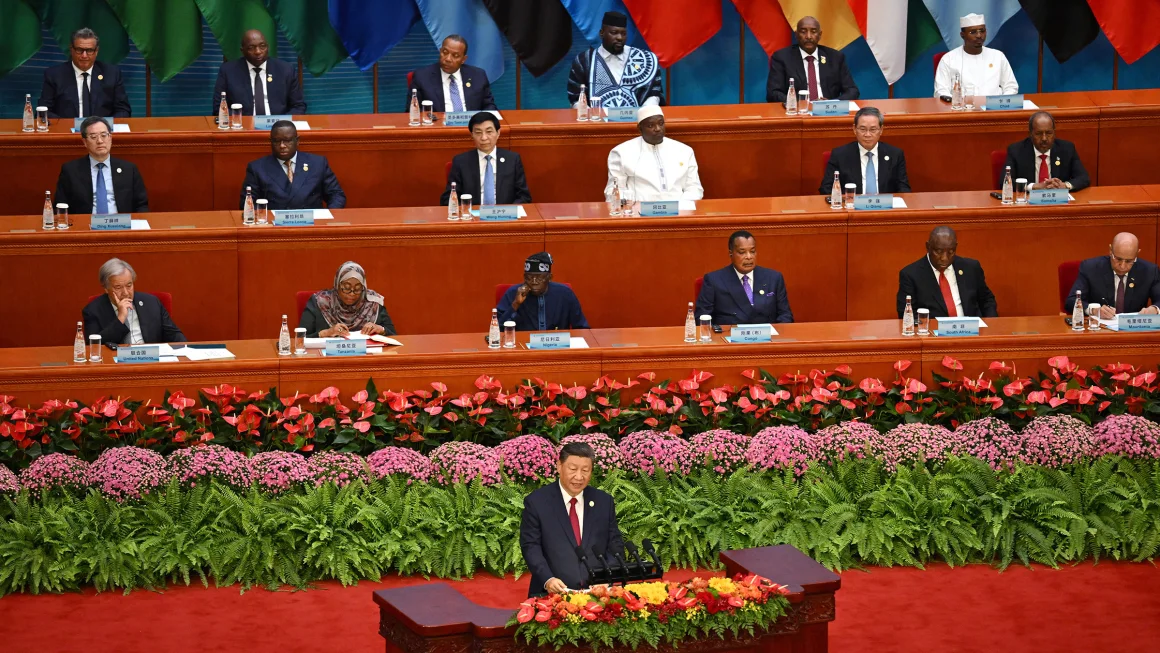
Dear Editor, on Thursday, September 5, 2024, Chinese President Xi Jinping delivered a 10-minute keynote address at the opening ceremony of the Forum on China-Africa Cooperation (FOCAC) summit in Beijing, China. In the address entitled; “Joining Hands to Advance Modernization and Build a Community with a Shared Future,” President Xi explained that “the friendship between China and Africa transcends time and space, surmounts mountains and oceans, and passes down through generations,” and pledged China would support African countries’ endeavours in different sectors with approximately $50.70 billion.

Explaining the 24 years of the FOCAC, Xi emphasized that “China has advanced forward hand in hand with our African brothers and sisters in the spirit of sincerity, real results, amity and good faith…” He explained that China and African countries “…stand shoulder to shoulder with each other to firmly defend our legitimate rights and interests as once-in-a-century changes sweep across the world.” This he emphasized is making the two sides “stronger and more resilient together by riding the tide of economic globalization, delivering tangible benefits to billions of ordinary Chinese and Africans.”

Explaining that “modernization is an inalienable right of all countries,” Xi regretted that “the Western approach to it has inflicted immense sufferings on developing countries.” He pledged China will continue working with African countries and support the continent’s development efforts as laid out in the African Union’s Agenda 2063, which he noted will accelerate the Global South’s transformation. Explaining that “China and Africa account for one-third of the world population, Xi observed that “without our modernization, there will be no global modernization.” He thus pledged that “China is ready to deepen cooperation with Africa in industry, agriculture, infrastructure, trade and investment.”

To be specific, President Xi pledged, “In the next three years, China will work with Africa to take the following ten partnership actions for modernization to deepen China-Africa cooperation and spearhead the Global South modernization.” The ten partnership actions will focus on; Mutual Learning among Civilizations, Trade Prosperity, Industrial Chain Cooperation, Partnership Action for Connectivity, Development Cooperation, Health sector cooperation, and supporting African countries’ Agriculture and Livelihoods. The others are; supporting People-to-People Exchanges, Green Development, and the Partnership Action for Common Security.

When critically analyzed, the ten areas President Xi mentioned that China would work with African areas “deepen China-Africa cooperation and spearhead modernization,” if implemented, will not only reignite Africa’s economic growth but also drive sustainable development.

For example, President Xi listed Partnership Action for Connectivity; specifically, noting that “China is prepared to carry out 30 infrastructure connectivity projects in Africa, promote together high-quality Belt and Road cooperation, and put in place a China-Africa network featuring land-sea links and coordinated development.” China’s offer to further support Africa’s infrastructural development is a welcome move as the continent is still faced with a shortage of funding in this critical sector. He also mentioned Partnership Action for Green Development stressing that “China is ready to launch 30 clean energy projects in Africa, create a China-Africa forum on peaceful use of nuclear technology…” Put differently, Xi promised to cooperate with the continent on nuclear technology which will tackle a power deficit which has been cited as one of the major challenges delaying Africa’s industrialization efforts. A study by the WB titled “Why we need to close the infrastructure gap in sub-Saharan Africa,” underscores this, stressing that infrastructure funding gaps are hindrances to Africa’s economic take-off. The African Development Bank (ADB) notes that to reduce the continent’s infrastructure funding gaps, Africa needs a of budget $130-$170 billion annually. Therefore, China’s support in such a sector is spot-on.

On the Partnership action for development cooperation, and the partnership action for agriculture and livelihoods, President Xi pledged China’s readiness to “implement 1,000 “small and beautiful” livelihood projects. “China will provide Africa with RMB1 billion yuan (approximately $140 million) in emergency food assistance, build 100,000 projects of standardized agriculture demonstration areas in Africa,” stressed President Xi. These programs if implemented will help the continent in addressing key challenges. It is important to note that China has already been supporting livelihood programs in several African countries, Uganda inclusive. For instance, under the arrangement of the South-South Cooperation (SSC) project between China, Uganda and the Food and Agriculture Organization of the United Nations (FAO), China has injected over 30 million USD is Uganda’s agriculture sector and livelihood programs.

On the Partnership Action for Trade Prosperity, Xi promised to ensure trade between the two sides improves, stressing that “China will voluntarily and unilaterally open its market wider. We have decided to give all LDCs having diplomatic relations with China, including 33 countries in Africa, zero-tariff treatment for 100 per cent tariff lines.” This in many ways will continue to support the continent’s social and economic development. Already, China for the last 15 years has been Africa’s largest trading partner. As of the end of 2023, the trade volume between China and Africa reached 282.1 billion USD.

President Xi further proposed to African leaders that “bilateral relations between China and all African countries having diplomatic ties with China be elevated to the level of strategic relations, and that the overall characterization of China-Africa relations be elevated to an all-weather China-Africa community with a shared future for the new era.”

In conclusion, looking at China’s record of fulfilling its pledges, there is no doubt Beijing sees African countries as partners and the cooperation between the two is indeed guided by principles of mutual respect, real results and win-win cooperation. Therefore, as President Xi noted, China and Africa should rally their populations together to become a “powerful force” and write a “new chapter in peace, prosperity and progress.” This is a sure way for Africa to realize her development goals.

Dr. Allawi Ssemanda is a Senior Research Fellow at the Development Watch Centre.

The Forum on China-Africa Cooperation 9: The Journey Over The Last Two Decades

By Musanjufu Benjamin Kavubu.

From September 4th to 6th  the Forum on China-Africa Cooperation (FOCAC) will take place in Beijing. This comes at a very critical time for South South-Cooperation, the world economy has slowed down mainly because of the impacts of the last Pandemic and the ongoing 54 major conflicts around the world that affect Africa and China’s supply chain on the Geopolitical discourse.

FOCAC 9 comes at a time when African Continental Free Trade Area (AfCFTA) is taking root and its backbone the Belt and Road Initiative (BRI) in many forms makes a decade milestone. The FOCAC summit also comes at a time when the BRICS have become formidable on the global scale and Africa is now very much involved in the new format that is driving multipolarity.

In many aspects, FOCAC 9 will be a momentous summit, in the year 2000 the Forum on China-Africa Cooperation started in Beijing with a ministerial meeting and it was followed by multi-year efforts by African diplomats to formalize the new relationship, in 2003 FOCAC 2 was hosted in Addis Ababa, Ethiopia Africa’s political capital and China announced the first Zero-tariff trade measures for Africa. It also marked the first time cultural exchange started being a target area. In 2006 FOCAC moved back to Beijing and it was held at summit level resulting in a $5 billion in financing from China that was geared toward agricultural exchange as a focus area and in 2006 the China-Africa Development Fund was also put in place.

The next FOCAC was back in the African continent in 2009 in Sharm el-Sheikh Egypt with more formalization of the cooperation area, with greater attention on the African development agenda including training and there was $10 billion in funding that was put in place for the Continent.  FOCAC 5 was in Beijing in 2012 and with a number of conflicts largely fueled by Western interests on the African continent and posing as a stumbling block for development, peace and security was the focal area of cooperation and China put in place $ 20 Billion in funding the endeavour.

In Johannesburg South Africa in 2015 FOCAC embraced the famous Belt and Road Initiative of President Xi that has seen infrastructural developments across the continent and the initial investment that was put in place at that SUMMIT by China was $ 69 billion in funding and it’s fruits are evident today across the Continent, from ports on the East African coast to the Standard Gauge Rail that snakes its way into the interior and new road networks like the Kampala-Entebbe Express highway.

As a tradition the next event in 2018 was in Beijing and the formal integration of the FOCAC into the BRI, agricultural modernisation was the key area of cooperation and more $ 60 Billion in funding was put in place.

FOCAC 8 was special and it was in Dakar Senegal in 2021 happening at the tail end of the COVID-19 Pandemic and it was a semi-virtual event. This saw health and inter-parliamentary diplomacy as Focus areas. And for this meeting there was no single funding package; instead the $ 40 billion put in place was to be spread across a wide range of different categories.

It’s at this back foot that we head into the 9th FOCAC on the 4th of September 2024 in Beijing and we expect agricultural trade for Africa’s part to be the focus point. Agritech cooperation is something that is lacking on the African continent and China has the resources and experience to make this end. Over the past years, diversification through Africa exporting to China for food security purposes will most likely take priority at FOCAC 9 as Africa seeks to move up the value chain. Africa’s agricultural potential production still has space for expanding and more countries can find thriving markets in China. China is already doing a great job in this aspect. To support Africa’s agricultural modernisation, Beijing has sent over 500 agricultural experts to Africa and provided more than 9,000 training opportunities for agricultural experts from the continent.

Other key areas are going to be climate resilience and we have seen China in the past collaborate with countries to develop satellite systems aimed at improving weather forecasts and other forms of scanning to make agriculture more climate-resilient.

As Africa now seeks to export more to China, there is a need to industrialize and Chinese firms are going to be asked to come into the African arena at FOCAC since the BRI has laid the groundwork for that to happen smoothly.

People to people exchange through training and the many scholarships will be another major focus area for cooperation at FOCAC, technology transfer and employment pipeline will take center stage and many African delegations heading to Beijing will be products of China in terms of education.

China’s partnership with Africa is crucial for our infrastructure, and energy sectors. FOCAC isn’t just about building relationships on a diplomatic level, it’s a strategic platform that’s shaping Africa’s role on the global stage.

Over the years, FOCAC has evolved from focusing mainly on economic ties in 2000 to becoming a broader platform for Africa-China relations. Now, Africa is setting the agenda when it comes to working with China, especially in areas like green energy, our youthful population, and our rich mineral resources. China plays a key role in helping us with mass electrification and industrialisation through technology transfer and this is the basis of South-South cooperation.

The September summit comes at a time when the trade between China and Africa is booming. For the last 15 years in a row, China has been Africa’s largest trading partner. In 2023, the trade between the two sides reached a hooping USD 282.1 billion. As we look ahead to FOCAC 2024 on the 4th of September,  this moment is set to be a critical time in our relationship as Africa with China. It has the potential to bring significant progress in trade, industrial development, and sustainable cooperation. For Africa, the key to long-term benefits will be our ability to shape and influence the agenda in this partnership.

The writer is a  research fellow at the Development Watch Centre.