Spain’s PM China Trip: A Cobweb of Politics and Geopolitical Re-alignment

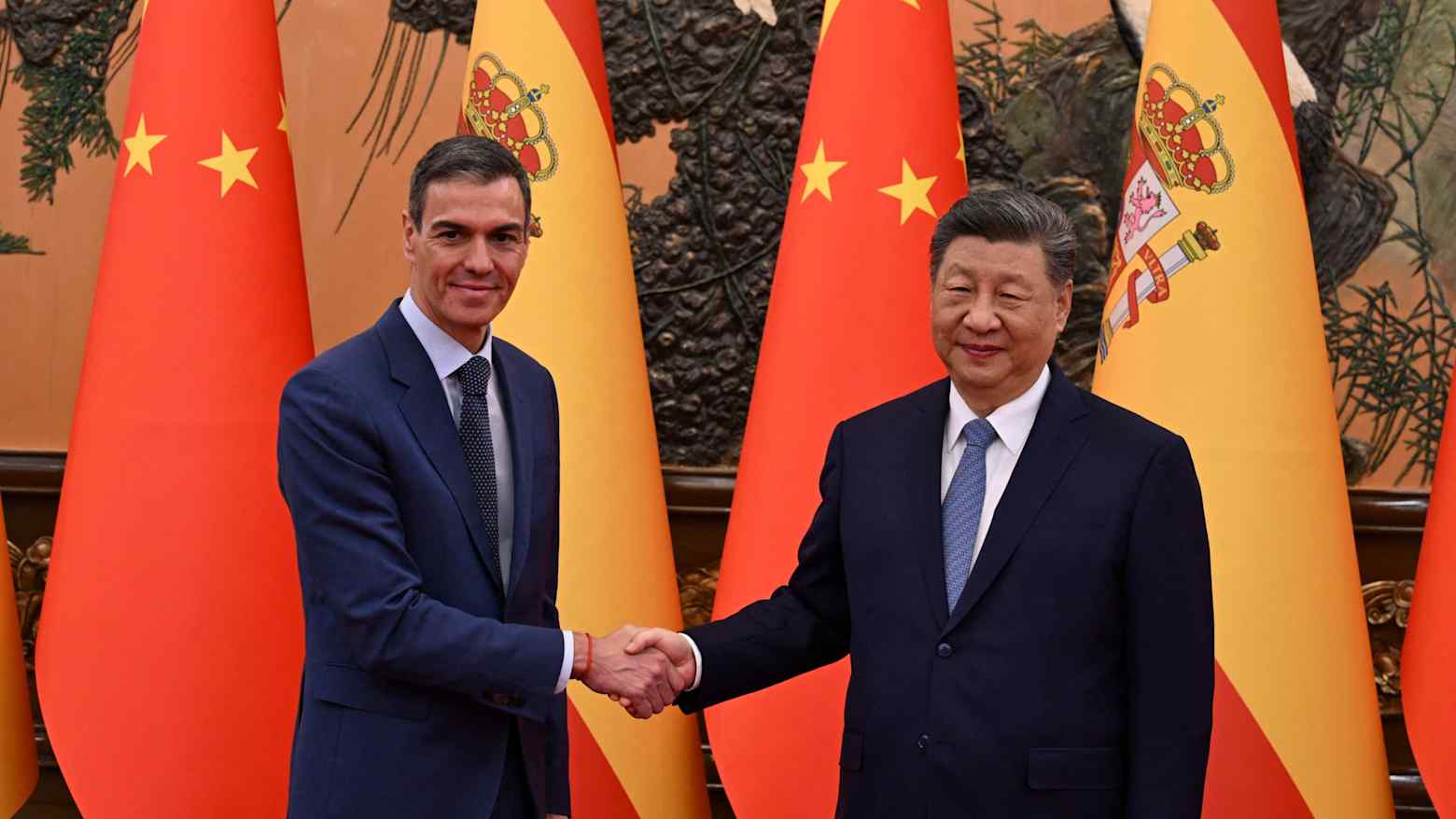
On Sunday April 12th, Spain’s Prime Minister (PM) Pedro Sánchez landed in China for a five days state visit making him the sixth European statesman to do so between December 2025 and April 2026. The leaders coming before him were; Emmanuel Macron of France, Keir Starmer of the United Kingdom (UK), Friedrich Merz of Germany, Petteri Orpo of Finland, and Taoiseach Micheal Martin of the Republic of Ireland. In January, Mark Carney also headed a high level Canadian delegation to China.

In part then, PM Sánchez’s mission can be understood as falling in the emerging trend of European Union (EU) member states opting to collaborate more with Beijing in a bid to hedge themselves against the increased unpredictability in Washington following the re-entry of President Trump on the international political scene. Stopping at that however, would be to miss the most important aspect of Sino-Madrid relations in recent years.

In order to have a better grasp of the dynamics at play, one has to go back to 2023 starting from which, the Spanish Socialist Workers Party’s Secretary General has put it upon himself to embark on an annual diplomatic sojourn to China. This places him in a category of his own. What is even more fascinating is that King Felipe VI and Queen Letizia travelled to the Asian nation too towards the end of last year.

Looking at things from this perspective, the capacities that PM Sánchez’s relationship with Secretary Xi Jinping has brought about overtime become a point of inspiration for other heads of states (both within Europe and outside of it) who are only awakening to the current moment in geopolitics now about the opportunities that become available to harness once a country establishes strong ties with  China. A concrete example in this regard is trade between China and Spain which increased by almost 10% in 2025 alone (the final figure stood at $55 billion). Specifically for Madrid, her exports under this bilateral framework grew by 7%.

By working more closely, the two parties have been able to set in place conditions that facilitated the realization of each other’s comparative advantage. In 2024 hence, Prime Minister Sánchez alongside Prime Minister Li Qiang entered agreements on green development, science research, education, culture etc. Two years down the road, Chinese manufacturer Chery announced that it would be setting up a plant targeting to serve the European continent at large in Barcelona.

The Chinese and Spanish political establishments have also been able to provide an alternative model to interstate relations which though cognizant of the fact that national interests can never be aligned across the board, is at the same time sophisticated enough to bypass the same to emphasize areas of common ground. The reigning President of Socialist International addressed this phenomenon in a speech delivered at Tsinghua University during the 2026 official visit saying that; “A multipolar world is not an assumption or an ideal, but a new reality. We cannot change it; we can only deny it or embrace it.”

Unfortunately, when Spain has exemplified this spirit more broadly, her efforts have been treated with contempt. Having denied the United States of America access to the Morón and Rotafor military bases for instance (cautioning instead that “you cannot answer one illegality with another, because that is how the great catastrophes of humanity begin”), the country’s 47th President responded with threats of imposing a full trade embargo on the EU state. The good news is that Donald Trump has not treated less vocal parties kindly either a move that has tested their patience significantly such that as it stands, UK and Paris have both made public the fact that they will not partake in the Strait of Hormuz blockade that America recently announced.

From here, it is not difficult to see them seek to consolidate their cooperation with Beijing given what Spain has managed to achieve by doing so. When he met with President Xi thus, Pedro Sánchez made no secret of the fact that he thought that it was necessary that the China takes a more proactive role in geopolitics and that if the party, it would have the full support of his government.

The writer is a Lawyer and Research Fellow at the Development Watch Centre


The World at a Stand Off

By Moshi Israel

Growing up, many of us watched American “Westerns,” most popularly known as cowboy movies. In these movies, there was always a scene where two men, usually the protagonist and the villain, stood facing each other at a distance, and the one who could draw their gun the quickest would emerge victorious. These moments were commonly referred to as “standoffs.”

In today’s world, where the stakes are far higher than a mere Hollywood script, we find ourselves in a geopolitical stand-off. Despite the alarm bells ringing loudly, attention remains scarce as decision-makers are too busy pointing guns at each other. Only China seems to care about cooperation and the need for normalizing relations among the world’s heavy weights.

In Europe, the war in Ukraine has failed to reach a compromise as numerous young people die aimlessly. The West is set on punishing Russia for its military operations in their neighbor’s territory while the latter is set on protecting itself from NATO’s endless military expansion to its borders. Guns have been drawn and pointed and no one is dropping theirs. The developments on the battle field in Ukraine have had a negative effect on the global economy and specifically on the economies in Europe and the United Kingdom. As I pen this down, the UK has entered a recession by reporting a second consecutive negative quarter of GDP. On the other hand, Russia which was expected to fold under the weight of unprecedented sanctions has defied expectations. However, it is paying the cost with the blood of its young on battlefields in Ukraine.

Furthermore, political tensions are raising between EU allies. Most of Europe has resorted to ‘allegedly ‘using under handed tactics to coerce Hungary into getting in line with the agenda. Turkey is another wild card whose foreign policy is drenched in mind games of confusion which I believe are a reflection of Recep Tayyip Erdogan’s character. No one knows what Turkey might do or better yet what Erdogan might do. Also, one cannot forget about the protests by Farmers and other workers in Poland, Germany, France and the Netherlands. The Polish in particular have problems with special treatment for Ukrainian refugees and cheap Ukrainian grain that is devaluing the efforts of the local farmers. There have been intermittent squabbles between Ukraine and Poland but relations remain largely stable, at least for now.

In the Middle East, the war in Gaza has become a dividing factor within the international community. Israel has used what most have deemed excessive force in response to the Hamas terror attack on October 7th. The stories and pictures from this part of the world are painful to watch. The war is being carefully managed so as not to turn into a wider war regional war. We have Israel, Palestine, Iran and its proxies in Lebanon, Iraq and Syria, the Houthis in Yemen, the United States and a few willing allies, the Arab league, and Russia all pointing guns at each other. On the other hand, China is asking everyone to calm down in the region.

Furthermore, South Africa has prominently taken Israel to the International Criminal Court (ICC) on charges of genocide, sparking a heated exchange between the two nations. As anticipated, the ICC’s response was not definitive, underscoring the complexity of these issues that often transcend legal proceedings. On a less intense note, the ICC has been commendable in its pursuit of justice, particularly in holding warlords and dictators accountable across regions such as Africa, Eastern Europe, the Middle East, and South America. It’s notable that major world powers have not ratified the court’s jurisdiction, perhaps suggesting that they consider themselves beyond its reach, reserved for ordinary individuals.

Top of Form

In Africa, everyone seems to develop sudden amnesia when its people are dying. Sudan, South Sudan, Tigray and the DRC continue to be valleys and deserts of death. Some of these conflicts are triggered by external factors and influence. The endless massacres do not serve the interests of the African continent. The continent is a constant battle ground and backyard for great power struggles. Additionally, we have the dramatic series of coups in the Sahel belt. Mali, Burkina Faso, Niger, Guinea and Gabon have had military coups. Experts say, that Tunisia, Chad and Sudan had constitutional coups. Who are we to judge, let’s leave the nuances to the experts. However, this much is clear, most of these coups are internally popular and the common theme has been kicking out neo-colonial regimes that are deemed to be serving the interests of foreigners at the expense of the citizens. France has come up several times in these accusations. No one knows where all this is headed…but the guns are pointed.

When examining the United States, we encounter a complex entity akin to the mythological Cerberus, with three distinct challenges. Firstly, there are domestic political issues, secondly, concerns arise regarding US foreign policy, and finally, there’s the matter of US relations with the world’s second-largest economy. Internally, the US grapples with significant division. The political landscape is sharply split between the left and right wings. Progressives advocate for reform, while conservatives prioritize maintaining traditional values. Yet, both sides are influenced by a neoliberal ideology at their core, with only the fringes deviating from this norm. On the left, the fringe is represented by progressive socialists, often branded as “communists” by the right. Conversely, on the right, the fringe is perceived as the “MAGA right,” which the left tends to label as “fascist racist extreme MAGA conservatives.” If tensions persist between these factions, civil unrest within the US could be imminent. However, amidst this turmoil, there exists a dominant neoliberal core that has thus far maintained stability, despite being criticized by both the extreme left and right, and often referred to as the “uni-party.”

The Uni-Party is what has kept American foreign policy consistently antithetical to world peace. This includes interventions in foreign regimes, engagement in proxy wars for dominance, financial exchanges for political allegiance in developing nations, as well as conflicts against ideologies such as Islamic extremism, communism, and fascism. Notably, domestic issues in the US frequently spill over into global affairs, with US political decisions profoundly influencing international realities. Any internal discord within the US thus inherently poses a risk to global stability.

Tensions between the US and China are rapidly becoming tensions between the collective West, G7 and BRICS+. On the economic scale, Japan entered a recession alongside the UK. Japan has lost its global economic rank to Germany. These recessions have weakened the G7 economically as compared to BRICS+ economies. Currently, BRICS+ countries have a higher GDP in terms of purchasing power parity (PPP) than the G7. And the gap keeps increasing. This means nothing but guaranteed competition that will also put the world on its toes and guns will eventually be drawn.

The pressing question at hand is the significance of these developments and where they ultimately lead. Speculation is inevitable as we navigate this complex landscape. What is clear, however, is that the world finds itself in a scenario reminiscent of a ‘Western’, where every party seems poised for a shootout. Geopolitically, we’re at a standoff, and it seems only a matter of time before tensions escalate into action.

The Writer is a Senior Research Fellow at Development Watch Centre.