Spain’s PM China Trip: A Cobweb of Politics and Geopolitical Re-alignment

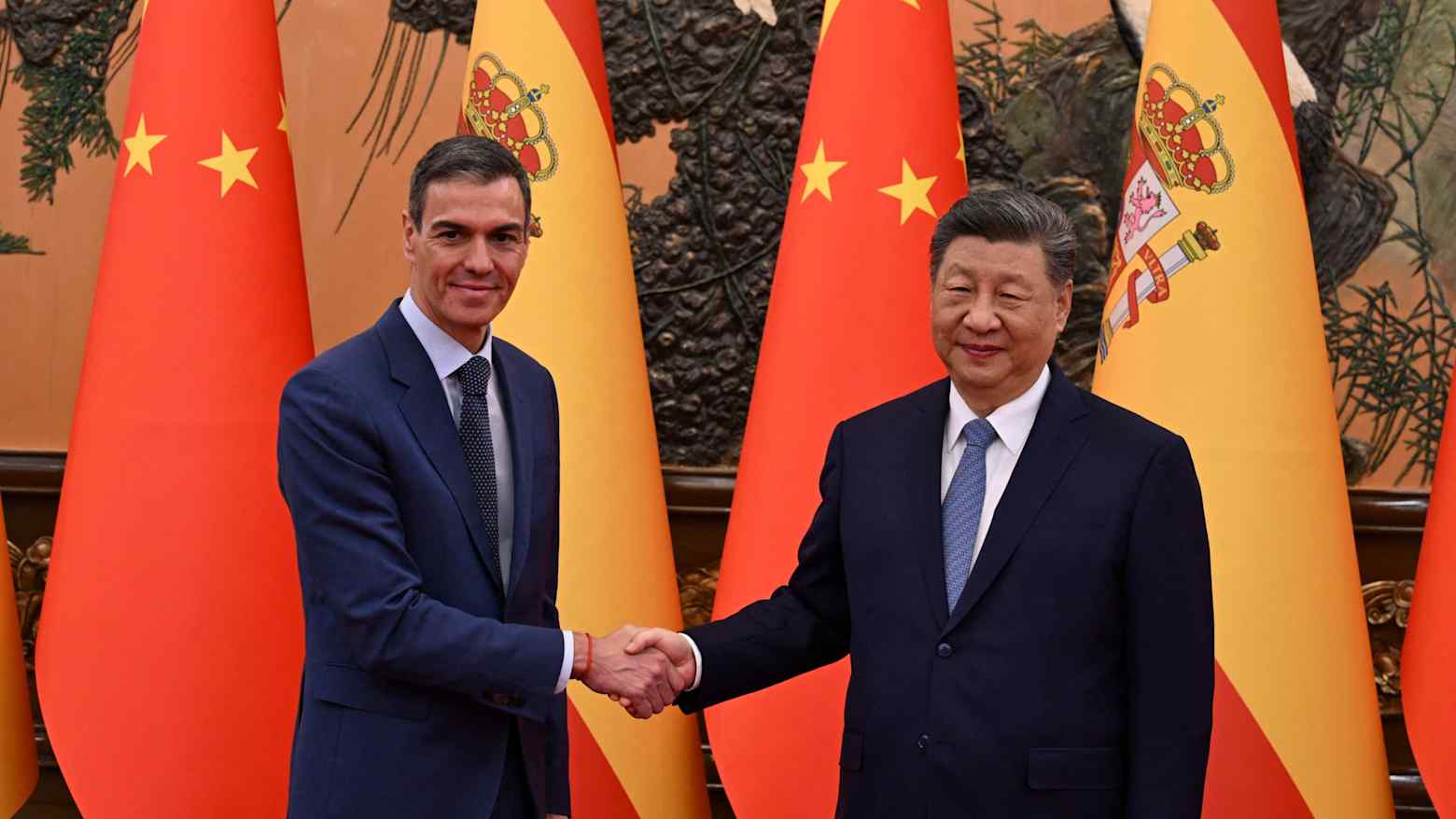
On Sunday April 12th, Spain’s Prime Minister (PM) Pedro Sánchez landed in China for a five days state visit making him the sixth European statesman to do so between December 2025 and April 2026. The leaders coming before him were; Emmanuel Macron of France, Keir Starmer of the United Kingdom (UK), Friedrich Merz of Germany, Petteri Orpo of Finland, and Taoiseach Micheal Martin of the Republic of Ireland. In January, Mark Carney also headed a high level Canadian delegation to China.

In part then, PM Sánchez’s mission can be understood as falling in the emerging trend of European Union (EU) member states opting to collaborate more with Beijing in a bid to hedge themselves against the increased unpredictability in Washington following the re-entry of President Trump on the international political scene. Stopping at that however, would be to miss the most important aspect of Sino-Madrid relations in recent years.

In order to have a better grasp of the dynamics at play, one has to go back to 2023 starting from which, the Spanish Socialist Workers Party’s Secretary General has put it upon himself to embark on an annual diplomatic sojourn to China. This places him in a category of his own. What is even more fascinating is that King Felipe VI and Queen Letizia travelled to the Asian nation too towards the end of last year.

Looking at things from this perspective, the capacities that PM Sánchez’s relationship with Secretary Xi Jinping has brought about overtime become a point of inspiration for other heads of states (both within Europe and outside of it) who are only awakening to the current moment in geopolitics now about the opportunities that become available to harness once a country establishes strong ties with  China. A concrete example in this regard is trade between China and Spain which increased by almost 10% in 2025 alone (the final figure stood at $55 billion). Specifically for Madrid, her exports under this bilateral framework grew by 7%.

By working more closely, the two parties have been able to set in place conditions that facilitated the realization of each other’s comparative advantage. In 2024 hence, Prime Minister Sánchez alongside Prime Minister Li Qiang entered agreements on green development, science research, education, culture etc. Two years down the road, Chinese manufacturer Chery announced that it would be setting up a plant targeting to serve the European continent at large in Barcelona.

The Chinese and Spanish political establishments have also been able to provide an alternative model to interstate relations which though cognizant of the fact that national interests can never be aligned across the board, is at the same time sophisticated enough to bypass the same to emphasize areas of common ground. The reigning President of Socialist International addressed this phenomenon in a speech delivered at Tsinghua University during the 2026 official visit saying that; “A multipolar world is not an assumption or an ideal, but a new reality. We cannot change it; we can only deny it or embrace it.”

Unfortunately, when Spain has exemplified this spirit more broadly, her efforts have been treated with contempt. Having denied the United States of America access to the Morón and Rotafor military bases for instance (cautioning instead that “you cannot answer one illegality with another, because that is how the great catastrophes of humanity begin”), the country’s 47th President responded with threats of imposing a full trade embargo on the EU state. The good news is that Donald Trump has not treated less vocal parties kindly either a move that has tested their patience significantly such that as it stands, UK and Paris have both made public the fact that they will not partake in the Strait of Hormuz blockade that America recently announced.

From here, it is not difficult to see them seek to consolidate their cooperation with Beijing given what Spain has managed to achieve by doing so. When he met with President Xi thus, Pedro Sánchez made no secret of the fact that he thought that it was necessary that the China takes a more proactive role in geopolitics and that if the party, it would have the full support of his government.

The writer is a Lawyer and Research Fellow at the Development Watch Centre


Merz’s High-Stakes China Balancing Act

In February this year, the German Chancellor Friedrich Merz arrived in China. This was his first visit there since taking office, and he’s the latest Western leader seeking to reset ties with Beijing. The trip came amid warnings from German industry of growing competition from China. It is clear that both countries now want to pursue increasingly practical cooperation.

Any curious observer of China knows that the country is currently celebrating the year of the horse. It is therefore symbolically significant for Germany that the first high-profile visitor to Beijing during this highly auspicious lunar year has been their Chancellor.

One of the difficult asks Merz had for President Xi Jinping was that China should encourage Russia, its key ally, to end the war in Ukraine. But that will be a topic for another piece. For this trip, the primary focus for Germany was on seeking closer cooperation with Beijing as a hedge against rising global trade protectionism and tariffs.

Ahead of his journey to the Land of the Dragon, Merz remarked thus: “Foreign policy and economic policy belong together just as much as defence policy and domestic policy. We can no longer separate them today. That’s why I’ll be travelling to China to discuss future cooperation between Europe and Germany on the one side and China on the other…”

Remember, Merz is the latest leader to trip his way to China, seeking to stabilise economic ties and navigate geopolitical shifts. Countries which in the past had blocked China during its trade dispute are now impatiently knocking at the Middle Kingdom’s door, all keen to strike business deals. The British, Canadian, and South Korean leaders have all visited Beijing this year, yet we have not even moved half of the year!

Firstly, it is obvious, even common sensical that Merz should tread carefully not to cause a rift with Washington over China. President Trump recently threatened 100% tariffs on Canada for holding trade talks with Beijing. Germany will be aiming to strengthen ties without triggering a similar retaliation from the US.

Secondly, there is apparent domestic pressure for Merz, too. Over the past year, German politicians and business groups have increasingly warned about intensifying industrial competition with China and the risk of a new China shock. Even European/Western experts have spoken out and recognise that China has become a sophisticated manufacturer and is advancing rapidly in key technologies, a growing challenge for Germany’s export-driven economy. Last year, China sold a trillion dollars more overseas than it imported. Germany’s economy is highly export-driven, but exports to China fell more than 9% in 2025. Overall, car exports to China have dropped by a staggering 2/3 since 2022.

The other concern on Merz’s hands is that he needs to balance the need to protect vulnerable German industries from cheap Chinese goods while repairing strained ties. This would be a defining challenge for him. German automakers are already feeling the pinch from Chinese competition, since China is now the global leader in EVs, and a distant number one for that matter. This is something that Merz has to navigate along with the whole question of where rare earths will come from in the future, as China becomes more and more restrictive and is very open that it wants to use this as a political instrument as well. The other key challenge on Merz’s table is the pressure from the United States. America, of course, wants to see its European partners take a tough line on the Chinese government and particularly on their trade deficit.

Therefore, whereas Merz may want to have a stable, prosperous relationship with China, the foregoing issues I have highlighted are real concerns for him to deal with. The reality of the time is that Germany is exporting less to China. German brands in China have less of a market share, and Chinese brands are increasingly competing with Germany in third countries around the world. Merz travelled with several European manufacturers on this trip, and they all had/have serious concerns that this is costing jobs in Germany. The business people are definitely critical of what they may find to be unfair practices by China, such as things like government subsidies, although basic knowledge of economic history would reveal that this is the same process by which Western industries accumulated significant growth and came to dominate the global market.

For President Xi Jinping, it must be a very great experience hosting yet another powerful Western leader. Xi has effortlessly been positioned by Western leaders themselves as a stable partner compared to the US, whose leader, Donald Trump, seems to be as fragile to rely on as the weather.

These events have also added to the image of China as the true leader of the new multipolar world order. And since Germany and Europe in general are important markets for China, Xi must be glad to welcome more European leaders to China to strike trade deals. This is even more urgent now, when the Chinese economy’s domestic demand has been slowing down. China, therefore, needs to rely increasingly on the export market.

We should remember that the relationship between Germany and China has really flipped over the years. It had been the case that Germany was a big exporter to China, with China having to rely significantly on German machinery and German expertise. However, in recent years, China has become the one exporting a lot to Germany. There is a lot of dependency on Chinese manufacturing for the German economy to survive. Nevertheless, China still relies heavily on German imports for materials and other chemicals and manufacturing, although Germany is the most dependent of the two countries.

The writer is a senior research fellow – Development Watch Center.


CHINA’S DIPLOMATIC BLUEPRINT: HOPE FOR A DYING ART OF DIPLOMACY

By Salim Abila Asuman

In the modern geopolitics, an ugly discovering has been made: the cold-blooded killing of traditional diplomacy of dialogue between nations lies lifeless, its vibrant spirit snuffed out by the hands of indifference and hostility.

The absence of diplomatic discourse has left a void, one that threatens the fabric of peaceful coexistence. As one looks through the wreckages, a narrative of betrayal and neglect begins to unravel, revealing a sinister conspiracy to silence the voice of reason and compromise.

With the menace of conflict looming large, the urgent question resonates: can the echoes of traditional diplomacy of dialogue be resurrected before the drums of war drown out all hope for peaceful coexistence, and how can China be of help in its resurrection?

For generations, conventional diplomacy of dialogue stood as the beacon of hope in a world often besieged by the storms of conflict and discord.

Diplomats used their words with precision, forging alliances and as a result, weaving the delicate threads of international relations with finesse and grace. This was when the world was once where trust was built through the exchange of ideas, where bonds of friendship were forged over shared experiences and mutual respect.

As proof, the Treaty of Westphalia in 1648, which not only ended the Thirty Years’ War but also laid the foundation for the modern state system, or the Camp David Accords in 1978, where President Jimmy Charter brokered peace between Egypt and Israel, setting a precedent for diplomatic breakthroughs in the Middle East.

However, as the digital age expanded its dazzling excellence, traditional diplomacy of dialogue found itself at a crossroads, confronting a challenging adversary in the form of rapid technological advancement.

In a world where tweets and hashtags carry more weight than treaties and virtual summits replace face-to-face negotiations, this old guard confrontation struggles to maintain its relevance in an ever-evolving landscape.

From the Korean Peninsula to the heat of Africa, examples overflow of how neglecting dialogue with adversaries only deepens cracks and prolongs suffering.

The Democratic Republic of Congo’s M23 rebellion and the Rwanda Congo situation serves as a stark reminder of this reality that is closest to us. Instead of engaging in constructive dialogue with the rebel faction, a militarised response is opted. The absence of sustained diplomatic efforts not only exacerbated the conflict but also upset attempted to address the underlying grievances fuelling the rebellion, perpetuating instability and human suffering.

Similarly, the standoff between North Korea and the international community underscores the risks of neglecting diplomacy. Despite repeated attempts at negotiations, including multilateral talks and bilateral engagements, the North Korean nuclear issue remains unresolved. The absence of sustained dialogue has led to periodic escalations and heightened tensions, stressing the urgent need for diplomatic engagement.

In the Middle East, from the occupied territories of Palestine to the war-torn landscapes of Syria, the failure to prioritise diplomacy has perpetuated conflict and hindered efforts for peace.

These examples underscore the critical importance of embracing the dying traditional diplomacy of dialogue as a means of resolving global conflicts. While military interventions may offer temporary solutions, they often exacerbate tensions and sow the seeds of future strife.

To address the question that was previously raised; As a significant global force and a central actor on the world’s stage China continues to foster the resurrection of dialogue as the foremost instrument for resolving conflicts and this is how;

Sustained dialogue, grounded in mutual understanding and compromise, remains the most effective pathway to lasting peace and stability and China emerges as a formidable player for its diplomatic strategies that prioritise dialogue and cooperation, even with adversaries.

In the stormy seas of international relations, China’s approach to diplomacy stands as a beacon of stability and pragmatism. Rooted in the time-honored tradition of dialogue and cooperation, China’s diplomatic blueprint offers invaluable lessons for navigating the complexities of our interconnected world.

At the heart of China’s diplomatic philosophy lies a steadfast commitment to dialogue. Amidst differences and tensions, China recognises the indispensable role of communication and negotiation in preventing conflicts and fostering mutual understanding. Whether engaging with adversaries or allies, China’s dedication to dialogue remains firm, serving as a cornerstone of its diplomatic approach.

Territorial disputes, particularly in the South China Sea, exemplify China’s emphasis on diplomatic engagement and regional cooperation. Through platforms like the Association of Southeast Asian Nations (ASEAN), China seeks peaceful resolution and manages tensions, demonstrating the power of dialogue in promoting stability in contested regions.

Ongoing negotiations with neighbouring nations underscore China’s commitment to resolving disputes through diplomatic channels, showcasing a pragmatic and constructive approach to conflict resolution.

Furthermore, China prioritises identifying mutual interests with adversaries to foster cooperation across a spectrum of issues. From trade and environmental protection to global governance, China not only builds trust but also cultivates a conducive environment for sustainable cooperation amidst diverging interests.

Above all, China places a premium on stability and harmony in international campaigns and prioritising dialogue and cooperation, China contributes to a more peaceful world order. Whether mediating conflicts or participating in multilateral forums, China’s diplomatic judgement promotes prosperity and security for all nations.

In recognising the interconnectedness of our global community, China advocates for diplomatic solutions to conflicts, emphasising the importance of cooperation and mutual respect.

From the Korean Peninsula to the Middle East and Africa, China’s diplomatic engagements exemplify its role as a responsible global actor committed to fostering peace and prosperity.

To sum it all up, China’s diplomatic blueprint offers a compelling narrative for navigating the complexities of international relations. By embracing dialogue, managing disputes, focusing on mutual interests, and prioritising stability, China sets an exemplary standard for fostering a more harmonious and prosperous global community. Its diplomatic wisdom servings as a guiding light towards a more peace world, China’s diplomatic blueprint is hope for this dying art of diplomacy in the face of its death.

The writer is a research fellow at the Development Watch Centre.


SINO-UGANDA RELATIONS HAVE ENTERED A CRUCIAL STAGE

By Steven Akabwayi

Early Feb this year, China opened a visa center in Kampala for ordinary passport holders, aiming to reduce congestion at the main embassy. The center was launched by the Chinese Ambassador to Uganda H.E Zhang Lhizong, purposely to ease travel for Ugandan nationals traveling to China for business and other activities.

The relations between Uganda and China have been grown rapidly over the years. It should be noted that by 2023,, the trade volume between the two countries had risen by 6.6%, reaching 1.14 billions

Uganda Airlines is expected to open direct flights between Entebbe and China’s Guangzhou City which will ease trade and also strengthen people diplomacy within the two countries.

China’s direct investment in Uganda reached 131million US dollars in 2022, ranking 10th among all African countries

President Museveni has always shown optimism on Sino-Africa relations, in one of his interviews in 2022, he demystified allegations commonly peddled by Western countries that Beijing expands its influence by drawing smaller economies into a debt trap.

“Africa has been having problems for the last 600 years due to the slave trade, colonialism, neocolonialism, and none of it was from China,” he said.

China’s engagement with Uganda is rooted in a shared commitment to development and prosperity. Over the years, China has emerged as one of Uganda’s most significant partners, investing in key sectors such as infrastructure, energy, agriculture, and healthcare. These investments have played a pivotal role in driving Uganda’s economic growth, creating jobs, and improving the quality of life for millions of Ugandans.

One of the most notable examples of China’s contribution to Uganda’s development is the construction of the Kampala-Entebbe Expressway. This vital infrastructure project, funded by China Exim Bank and built by Chinese companies, has not only eased traffic congestion but also enhanced connectivity, facilitating trade and investment within the region.

Moreover, China’s support for Uganda’s agricultural sector has been instrumental in boosting food security and rural livelihoods. Through initiatives like the Uganda-China Agricultural Technology Demonstration Center, Chinese experts share their expertise in modern farming techniques, irrigation systems, and crop diversification, empowering Ugandan farmers to increase productivity and adapt to climate change.

Critics often raise concerns about China’s involvement in Africa, citing issues such as debt sustainability and environmental degradation. However, such criticisms fail to acknowledge the agency of African nations like Uganda in negotiating mutually beneficial partnerships with China. Unlike colonial powers of the past, China’s approach to engagement with Africa is based on equality, mutual respect, and non-interference in domestic affairs.

Furthermore, China’s investments in Uganda go beyond infrastructure and agriculture, extending to education, healthcare, and human resource development. Through initiatives like the China-Uganda Friendship Hospital in Naguru and scholarships for Ugandan students to study in China, bilateral cooperation in the healthcare and education sectors has strengthened people-to-people ties and fostered cultural exchange.

The significance of China-Uganda relations transcends bilateral cooperation and holds implications for regional and global dynamics. As Uganda serves as a gateway to the East African Community (EAC) and the Great Lakes region, its strategic importance cannot be overstated. China’s investments in Uganda’s infrastructure, particularly in transportation and energy, contribute to regional integration and promote economic development across East Africa.

Moreover, Uganda’s participation in China’s Belt and Road Initiative (BRI) offers opportunities for connectivity and trade along the Maritime Silk Road and the Silk Road Economic Belt. As a landlocked country, Uganda stands to benefit from enhanced infrastructure linkages and improved access to global markets, positioning it as a key player in Africa’s economic transformation.

In light of the COVID-19 pandemic, China’s support for Uganda’s healthcare system has been particularly noteworthy. From donating medical supplies and equipment to deploying medical teams, China has stood in solidarity with Uganda in the fight against the virus. This demonstration of friendship and cooperation underscores the resilience of China-Uganda relations in times of crisis.

Looking ahead, the potential for deeper cooperation between China and Uganda is immense. From harnessing renewable energy resources to promoting sustainable tourism and enhancing digital connectivity, there are numerous avenues for collaboration that can benefit both nations and contribute to shared prosperity.

In conclusion, the relationship between China and Uganda is not only critical but also holds immense potential for shaping the future of both nations and the broader African continent. Through cooperation, mutual respect, and commitment to common development goals, China and Uganda can pave the way for a brighter, more inclusive future for all.

Steven Akabwayi a Research fellow at Development Watch Centre.


Navigating the minefield of negative media punchlines on China-Africa relations will take forming our own opinions

By George Musiime

As Africans, we cannot continue to be a people that turn on our own because we have outsiders urging us on to do so. We are as human, as the next human trying to help us determine our destiny. Unfortunately, to use the words of one notable Son of Africa Dr. Kaihura Nkuba, the biggest obstacle to Africa’s progress is “the riddle of who we truly are” and to some this, all we need is to build our people’s confidence in being African and taking pride in it. Only then shall we be able to think for ourselves and to trust our choices; that we are able to make the right choices for our people and ourselves. As sociologists argue, he who controls your langauge of discourse your reality! History has it that we have already lost to the ploys of divide and conquer in the past. Moreover, albeit being able to lift the heavy boot of colonialism from our neck at independence, we were not able to totally free ourselves, as many of us remain prone to being turned into marionettes; our opinions swayed easily by manipulating a few strings by some who relentlessly attempts to influence the course of our future.

When it comes to Sino-Africa relations, it is no doubt that China presents Africa with a uniquely suitable development partner who understands the distinctive problems of the continent and its people given our shared history. Yet commentary originating from without is often times punctuated by denunciations that echo notions such as resource exploitation, developmental debt-trap diplomacy, corruption, dictatorship and neo-colonialism etcetera. What is more is that, unless we take the initiative to rationalize the spirit underpinning the conception of such opinions, we are likely to be misled and consequently pitted against arguably, Africa’s best bet when it comes to development partnerships and all that  to our own detriment.

One such opinion is the negative impact of Confucius institutes (CIs) across Africa, which critics associate with a tactful push of Chinese soft power and influence over Africa. Since the establishment of the first CI in Kenya in 2005, many more have followed with the aim providing an understanding of the Chinese culture and language to many Africans. This has in turn laid the necessary groundwork for the growing cultural interaction between the African continent and China. For example, by 2018, during the FOCAC conference in Beijing, China committed to making available 50,000 government scholarships to African students as well as 50,000 opportunities for seminars and workshops to train more professionals in a diversity of fields. All this serve to strengthen one of the key pillars of China-Africa relations, which is the people-to-people exchange. Therefore, CIs do not act as a tool for imposing Chinese culture in the old assimilation fashion as critics baselessly claim; but rather serve to build a bridge for the exchange of knowledge, culture and expertise between China and Africa.

This is in line with the Chinese diplomacy principle of bolstering people-to-people exchange between China and rest of the world focusing on relations that are not prejudiced or relations  where one-entity projects its superiority over the other. Conversely, these are relations built on mutual understanding and camaraderie.  Such should be the basis upon which Africa relations must be built especially at a time when we are looking to take a step into the future; away from the mound of bottlenecks, the continent has faced against a backdrop of unfair dealings where Africa has engaged as the lesser party. Of course, China understands this as a fundamental cornerstone to progressive diplomatic relations with Africa as emphasized in their foreign policy. The Chinese approach is from a position of awareness that not only Africa needs China but China needs Africa as well if we are both to achieve our development goals. As such, China relations with Africa are hinged on the understanding that both parties are Partners of equal significance and nothing but a win-win cooperation. Moreover, as we move towards improved diplomatic collaboration aided in part by the work of the Confucius institutes, we realize an increased potential for extending the chain of linked benefits. As diplomatic collaboration avenues are expanded, so are development partnerships both in the public private sectors for both parties. This in turn forms a sound basis for a surge in trade and investments, the one thing that Africa needs more than anything at the moment.

Therefore, to emphasize cultural and language exchange as a tool for galvanizing Chinese soft power over Africa while ignoring the role of language as a cornerstone of human interaction and communication as emphasized by a 2023 publitard article titled “The Role of Language in Global Collaboration” and a key part in the broader jigsaw puzzle that is global cooperation is to say the least intellectual dishonesty. Even more important is the emphasis on mutually beneficial China-Africa relations stressed in a document titled “China’s African Policy” which also highlights actionable steps to this end.  According to this policy paper, the five key aspects of the China-Africa relations are Sincerity, Equality, Mutual benefit, Solidarity, and common development focusing on the fundamental benefits of both the African and Chinese people.

Certainly, this is not to say that this is exactly how things are going to happen in principle but the language and cultural exchange being built under the flagship of the Confucius Institutes is a key ingredient in putting in place an integral element on the soft infrastructure such as the people-to-people exchange necessary for China-Africa relation. And it should be the work of all; governments, Independent thinkers and every forward-thinking African to debunk the punchy news headlines and social media bites aimed at painting the negative image of China-Africa Relations and the future for Africa.

George Musiime is a research fellow at the Sino-Uganda Research Centre.

The African Union in the G20 is a Good Omen for the Global South

By Moshi Israel

During the recently concluded G20 summit, the African Union (AU) earned permanent member status among the world’s top 20 economies. For the hosts, India or Bharat, and even more specifically, Prime Minister Nerandra Modi, the acceptance of the AU into the G20 is symbolic of his continuous fight to give a voice to the global south in an international system increasingly dominated by great power politics.

This decision has been long overdue given the enormous size of the African continent and the diversity of people and economies it represents. Combined, African countries are as good as any other, and perhaps a future ambition for the AU should be the integration of all the region’s economies into one with a common trade policy. This would prove instrumental in dealing with countries that created the current international trade system and constantly break the rules that limit their ambitions. The AU’s elevation to permanent member status just like the European Union is a chance for countries at the periphery of international relations to be represented in the group.

The presence of the African Union as a permanent member in the G20 also serves to extend the often-elusive microphone to the bloc. For so long, African countries have had to stand outside the halls of power as others debated problems and deliberated solutions concerning the continent. Many of the region’s leaders tuned in to cable television to receive breaking news about what the major powers had decided would be Africa’s future. Moreover, the African continent has no control over the narratives concerning its past. This opportunity is, therefore, a significant step for developing countries in Africa to represent themselves and offer up ideas that align with the African context. The AU right now has a podium to prove naysayers wrong.

India is following in the footsteps of its BRICS partners, China and Russia in championing the platforming of the global south on the international stage. In this aspect, China has been ahead of the curve and has behaved in a foresighted manner. Indeed, for long, China and entire BRICS family have for long shown their support for Africa to be admitted into the grouping as a Permanent member. Foresight often eludes most great powers. The west seems to be playing catch up when it comes to updating and revising relations with the global south.

The current global order is in crisis and many international state actors are turning to the global south as the foundation for a new more inclusive and equitable global order. The addition of the AU as a permanent member into the G0 ranks is yet another step in the direction of achieving a truly multipolar world.

The crises facing the world today range from the recent COVID-19 pandemic, the Ukraine war, and climate change to food insecurity and inflation. Fittingly, the summit in India had an agenda that focused on the issues affecting developing countries the most. Some of these issues include; finding alternatives to fossil fuels, food security, a common framework for digital public infrastructure, and resource efficiency. Reforming the major mainstream lending institutions like the World Bank and International Monetary Fund was also key on the agenda. This would help developing countries have quick access to development-related funds. Moreover, the growing popularity and strength of the BRICS bank should be a signal to the World Bank and IMF that change is inevitable and reform is a necessity.

The AU will be a key figure in the global fight against climate change. Its permanent presence in the G20 will help to expand the voice of the global south, especially on issues of climate financing and a just transition to the green economy.

The growing relevance of the global south in the international arena should not be underestimated. Countries like China have picked up on this trajectory and invested heavily in developing countries all around the world. The goal is to obtain a mutually beneficial partnership through south-south cooperation.

The West has largely treated the global south as its backyard and often dealt with it through handouts and dictates. Blocs like BRICS helped change this narrative and engaged the global south on equal terms. And now, the G20 has also awakened to the reality that the world’s nations need each other and the global south has a vital role to play. For instance, the conflict in Ukraine and the subsequently failed sanctions on Russia have shown that having the global south on your side is important and necessary for key geopolitical maneuvers.

Additionally, as part of the G20, the AU should seek to lead Africa on a new path that is strategically beneficial for all its members. The first step in this process is to get rid of the destructive colonial mindset that has held the AU members back.

The Writer is a Research Fellow with Development Watch Center.


Diplomacy and Development: A Citizen’s Perspective on China’s Role in Uganda’s Economic Development

By Busulwa John Ivan

Diplomacy, international relations, and foreign policy play crucial roles in shaping nations’ economic development. China, a country known for its rich history and economic prowess, has significantly contributed to Uganda’s economic growth over the years. This essay explores the historical context of Uganda’s friendship with China and the role it has played in fostering economic development in Uganda.

The diplomatic relations between China and Uganda began in 1962 when Uganda gained independence. Nine days after Uganda gained her independence on October 9, 1962, China established diplomatic ties by opening its embassy within the country. Since then, both countries fostered a friendship based on mutual respect and non-interference in each other’s internal affairs. This approach laid a strong foundation for sustained cooperation and shared development objectives.

China has emerged as one of Uganda’s most important trading partners. Over the years, bilateral trade has grown significantly, reaching approximately $1.13 billion in 2022. This accounts to 6.6% growth! In a bid to improve and boost trade between the two countries, China granted zero-tariff to 98% of taxable items to Uganda. China has also become a key importer of Ugandan agricultural produce, including coffee, tea, and other agricultural products which stood at $36.19M in 2022. These exports have contributed to Uganda’s economic growth and provided income opportunities for local farmers.

Another key area where China has and continues to play a significant role in Uganda’s economic development is infrastructure.  Chinese companies have participated in various projects, including the construction of roads, bridges, stadiums, and hydroelectric power plants. Notably, the Kampala-Entebbe Expressway which cost USD 479M with the Chinese government funding 74% of that cost, the ongoing Entebbe Airport Expansion and Upgrading Project which is a US$200 million preferential loan project financed by the Export-Import Bank of China, the Karuma Hydroelectric Power Station, and the Isimba Hydroelectric Power Station which both combined added a significant 783 megawatts of electricity to Uganda’s national grid are some of other examples of successful collaborations. These infrastructure projects have improved transportation networks, boosted tourism, and enhanced Uganda’s overall competitiveness.

The Chinese commitment to helping Uganda construct and develop world class infrastructure isn’t a recent phenomenon but one that has been existing for decades. A case in point is the Mandela National Stadium that was constructed by the Chinese way back in April 1993 and handed over to the Ugandan Government in February 1997. The stadium, 30 years after its construction still remains Uganda’s biggest with 40000 seats with accessory constructions including a hotel of 120 beds, 2 outdoor tennis courts, 2 volleyball training grounds, 2 basketball training grounds and one football training ground.

In health sector, China contribution cannot be underestimated. For the past four decades, China has been sending medical teams to Uganda to provide support, share expertise, and offer training programs. Up to now, 11 teams and about 128 doctors have been sent to work in Uganda mainly in Jinja and Naguru Hospitals at the Chinese Government’s own expenses.

In response to the COVID-19 pandemic, China provided medical supplies, including personal protective equipment (PPE), testing kits, and vaccines to Uganda. The Chinese government has donated 1 million doses of Covid vaccines and thousands of units of testing kits to Uganda. These contributions have been crucial in strengthening Uganda’s healthcare capacity and addressing public health challenges at a time when other developed countries chose vaccine nationalism. As other countries opted to consider vaccines for their citizens first, China declared covid-19 vaccines a public good!

One of the crown jewels of the strong Chinese support of Uganda’s health sector is the $8M Uganda-China Friendship hospital in Naguru. Completed in December 2011, the hospital consists of seven buildings, four operating rooms, a maternity ward, a pediatric unit, a teenage center (adolescent health unit), a blood bank, radiology department (including a CT scanner) and housing for medical staff. Earlier this month, Chinese Ambassador to Uganda, Zhang Lizhong told Ugandan media and think tanks that currently, “Chinese experts are conducting a feasibility study on the renovation and expansion project of the China-Uganda friendship Hospital.”

In the education sector, China has offered scholarships to Ugandan students, enabling them to pursue quality higher education in China. These educational opportunities have empowered young Ugandans with knowledge and skills that contribute to Uganda’s human capital development. Additionally, the Chinese embassy established the Confucius Institute at Makerere University, which has fostered people-to-people cultural exchange between the two friendly countries.  The Chinese government has also offered scholarships locally to help students who are economically underprivileged students. Since 2016, over 6000 Ugandans have attended China-aided training courses and seminars in different sectors such as agriculture, medical care, public administration, infrastructure among others.

It shouldn’t be left unnoticed that the 61-year-old longstanding bond between Uganda and China encompasses more than just economic transactions but one that serves as a testament to the profound influence of diplomacy and international relations in shaping the destinies of nations. China has played a vital role in supporting Uganda’s security efforts. Both countries have engaged in military exchanges and training programs, promoting capacity-building and knowledge sharing. China has provided military equipment and technology to enhance Uganda’s defense capabilities. This cooperation has bolstered regional stability and contributed to peacekeeping efforts in Africa. Early 2021, Chinese appointed special envoy for the Horn of Africa (HA) who among other countries visited Uganda and through diplomatic channels continue to engage countries in HA with aim of ensuring stability which is key for both social and economic development.

China’s involvement in Uganda’s economic development through diplomacy, international relations, and foreign policy has been significant. The history of friendship between China and Uganda has laid the groundwork for extensive cooperation. China’s contributions to Uganda’s health, education, agriculture, trade, and infrastructure development have positively impacted the country’s economic growth and improved the livelihoods of its citizens.

While acknowledging China’s positive contributions, it is important to recognize that international relations are complex and involve diverse perspectives. By harnessing the synergies between the countries’ respective strengths, China and Uganda can embark on a journey that not only enriches their bilateral ties but also sets an exemplary model for international collaboration. In light of this, I urge Uganda’s leaders, businesses, and citizens to actively engage with China, explore new avenues of collaboration, and capitalize on the immense promise that our relationship holds so as to build a community of shared future and prosperity for mankind in the new era.

Busulwa John Ivan is a Law student at Makerere University and a research Fellow at the Sino-Uganda Research Centre

Diplomacy and Economic Development: Taking Stock of China-Uganda Relations

By Nanziri Christine

The world today considers diplomacy vital in shaping and developing countries’ economies. As a landlocked country in East Africa, establishing diplomatic relations with various countries is considered one of the ways to boost Uganda’s economy. Through economic diplomacy from both sides, to a greater extent, Uganda continues to attract Chinese investments in different sectors a trend that started 60 years ago and improved from strength to strength in the last two decades that today, for consecutive years, China tops Uganda’s source of foreign direct investments!

China’s role in Uganda’s economic development is evident in various forms, including infrastructure development, education, health, agriculture, and trade. Last year, the two countries celebrated 60 years of diplomatic relations. China was one of the first nations to recognize the newly independent nation, Uganda, and the relationship between the two has been strengthened by China’s policy of non-interference in internal affairs of others.

China has been involved in Uganda’s infrastructural development, positively impacting the economy of Uganda as a whole and neighboring countries. Examples include the construction of Uganda’s largest hydropower dams, Karuma and Isimba power dams, which have increased Uganda’s electricity generation capacity. Other China supported infrastructure projects include roads, with China funding the glamorous Entebbe express highway.

China has equally positively impacted Uganda’s healthcare sector. China has so far sent 21 medical teams to Uganda to support its medical healthcare services plus building a 100-bed – China-Uganda friendship hospital (Naguru hospital) to boost Uganda’s health. When the Covid 19 pandemic broke out, as the rest of major economies of the world embraced vaccine nationalism, China religiously amplified her support donating the much-needed medical supplies to Uganda.

The Agriculture, fishing and trade sectors have also been developed through China’s training programs and the provision of equipment. For example, the Aquaculture Research and Development Centre Kajjansi also known as China-Uganda Friendship Agricultural Technological Demonstration Centre is one of many vivid examples in this sector.

Relatedly, working with the United Nations’ Food and Agriculture Organization (FAO), in 2009 China introduced a new programme dubbed FAO-China South-South Cooperation (SSC) and created a FAO-China Trust Fund with $30 million to specifically support Uganda’s agriculture sector. In 2015, China launched the second phase of SSC and injected $50million before adding another $50million in phase III which was launched in 2021. During implementation of SSC’s phase II, China funded and sent 47 Chinese agricultural experts and technicians on a two years mission to train Ugandans to improve technologies used in production of rice, grapes, cherry tomatoes, foxtail millet, and apples among others. The project focused on exchanging mechanization, agro-processing and value-addition expertise. Considering the multiplier effects that comes with such projects, the role of China in Uganda’s agriculture sector cannot be ignored.

In trade, last year China announced a preferential trade arrangement for Ugandan goods granting zero-tariff treatment to 98% of imports from Uganda – a development that in many ways will widen the market for Uganda’s agricultural produce. Agriculture sector is the backbone of Uganda’s economy, with over 70% of the country’s population deriving their livelihood from it.

China has also invested in Uganda’s mining sector, majorly in the exploration of oil and gas. Uganda and Tanzania are seeking funding from China to develop an export pipeline before 2025. China’s willingness to fund Uganda’s oil sector leaves us in a privileged position to have China as a creditable development and business partner are evident. Future plans for the oil industry and exploration by the Chinese North Offshore Oil Company (CNOOC) by 2025 will boost Uganda’s economy, transforming the standard of living of the majority of Ugandans through job creation for both skilled and unskilled citizens in the oil and gas sector.

In human capital capacity development, China’s hand is visible. As of today, China has provided thousands of scholarship opportunities to Ugandans, including both short and long courses.

Generally, talking about Uganda’s economic development journey without mentioning China’s role makes the analysis incomplete. The unique part is that unlike other cooperation between Uganda and other traditional development partners, China-Uganda cooperation is partnership of equals, mutual trust and is based on win-win cooperation.

However, Sino-African critics have always claimed that Chinese development assistance especially infrastructure funding is leaving Uganda and some other African countries heavily indebted with the so-called debt trap. However, while we cannot completely dismiss voices against over borrowing, such sweeping statements should be cautiously listened too. Today, as a result of global politics and changing global order, it is clear that there is a calculated move meant to discredit Sino-Africa relations which has seen many of critics cherry-picking facts when it comes to critiquing China’s development assistance to developing world. However, to allay fears of critics, Uganda and in general all developing countries should aim to remain responsible borrowers and only go for loans when very necessary. Otherwise, it is unfair to carry on sweeping statements of the so-called debt diplomacy and misinterpret China’s good will of offering development assistance that China is hiding what critics claim to be ulterior motives.

In conclusion, it is indisputable that China plays a major role in Uganda’s economic development. The relationship between the two countries is characterized by mutual benefit and cooperation, with both countries working together to promote economic development and improve the wellbeing of their people and build a community of shared prosperity for mankind. Its pertinent therefore for countries around the world to continue cooperating in order to ensure that economic development is experienced by all nations and build a world of shared future with shared prosperity.

Nanziri Christine is a law student at UCU and a Junior Research Fellow at Sino-Uganda Research Centre.

China’s Soft Power: An Effective Approach & A Lesson to The Rest of The World

By Balongoofu Daniel

The created rift between the west and a huge percentage of the rest of the world implies of how the western assertive approach to some realities in the international system may not be good for the west and the world at large. The United States with its allies were best positioned to attract and keep nonwestern countries on side if they understood what motivates them and stopped their wrong claim of acting like ‘big brother” of the house.

In a wider perspective, if we use Ukrainian crisis example, although 141 of the members of the United Nations General Assembly voted to condemn Russia’s military operation in Ukraine, it should be noted that most nonwestern countries have not imposed economic sanctions on Russia amidst calls by the west to completely isolate Russia.

The hardliner response by the west in form of military equipment supplies to Ukraine, sanctions to Russia and Russian led institutions have evidently not been bought by the rest of the world especially by the global south with countries like Brazil, China, India, Mexico, South Africa among others choosing intellectual pragmatism view that unilateral sanctions against Russia cannot help in resolving this crisis.

These countries which are arguably guided by principles of intellectual pragmatism and nonhegemonic aspirations have rightly refrained from signing onto resolutions that criticize Russia in UN forums and have suggested more binding and practical solutions in relation to respect to sovereignty, non-interference and the geopolitics of that region to mention but not limited to the Ukrainian question, actors that have sought indifferent means to the western led assertive, non-binding mechanisms to pressing issues in the international arena have been pooled to common ground leading to a birth of a much needed multipolar global order and formulation of new strategic partnerships and the most recent one being China that has been advocating for peace with the most recent proposal being Global Security Initiative (GSI) and the pivotal role Beijing played in ending several years of animosity between Tehran and Riyadh which Beijing blocked and saw two former arch enemies resuming diplomatic ties, a development international community welcomed as a step in bringing sustainable peace in the Gulf region.

Actors in the global south have increasingly sought for more binding resolutions as opposed to a more assertive global order, speaking of China, Beijing has mastered the art of seeking binding resolutions and softer means to power in the international system being good for the rest of the world because it limits contestation and the bleach of peace hence forth. Evidently, in the joint statement released by the Kingdom of Saudi Arabia, the Islamic Republic of Iran and the Peoples Republic of China on the 10th of March highlighting what Saudi Arabi described as “the noble initiative of His Excellency President Xi Jinping, President of the Peoples Republic of China,” to restore diplomatic relations between the two nations. The statement as well highlights the series of coordinal meetings in Beijing over seen by the Chinese government between the Iran and Saudi foreign envoys. Actually, Saudis’ statement mentions President Xi twice and 5 times China underscoring the role played by President and China as a country played in this deal.  It should be noted that the two nations were at the verge of war in the recent past as a result of the assertive notion that the prevailing global order ascertains. This is however challenged by Beijing’s soft power, a liberal tool that saw the normalization of diplomatic ties and a structure laid for the two nations to fully resume healthy diplomatic relations. This however, speaks volumes if subjected to the ends-based theory justified by the results if juxtaposed by the assertive means of the prevailing global order.

It should be noted that Beijing has heavily invested in soft power in the past decade notably evident through trade relations as a liberal approach to under guard the importance of peace and order in the international system., Beijing holds the biggest trade share in trade partnerships across the globe evidently being Europe’s biggest trade partner with trade worth 46.6 billion euros and the maximum being 55.5 billion euros as per September last year. China is also Africa’s biggest trade partner, with trade mounting to 282 billion dollars according to the Chinese customs authorities as per last year’s data. That said, in terms of trade, Beijing and Washington need each other for today, it is impossible for any single country to stand on its own and isolate China – the world’s second largest economy and arguably, the home of innovations. Therefore, with such a strong economic relation with actors in the international system, actors are bound to under guard their economic interests and underscoring the importance of peace limiting further contestation and a bleach of peace.

Another successful testament to Beijing’s soft power was on the 1st of July 1997 when Hongkong reverted back to China. It should be noted that in 1839, Britain invaded China and as a result, the Hong Kong occupation by the British. As a sparsely in habited island off the coast of southeast China. Beijing sought for more binding solutions to this problem evidently by the series of meetings undertaken to have Hongkong back under the main land China administration. Later in 1842, the treaty of Nanking was signed formally to end the war however British rule and occupation of the island was to continue for another 99years as agreed upon by the Chinese mainland authorities, this was however absolute evidence of the soft power tool that the Chinese authorities opted for and refrained from contestation which would result into further bleach of peace. Hong Kong at the time, with a bustling economy bigger than the Chinese mainland as a result of the British occupation was so important to Chinese mainland for economic cooperation and growth, therefore as a result, the Chinese authorities chose a more binding resolution with the British to safe guard their economic development and avoid the bleach of peace. This approach limited contestation till Hongkong was won back peacefully without military confrontation and notably with all the economic gains that the British had established in Hong Kong for the time.

Today, as Washington seems boxed in cold war mentality, power politics and block formation, Beijing is moving with their head high as an advocate of peace, and meaningful partnership which the world needs to attain sustainable peace and development which are key for if the world is to realize a community of shared future for mankind. Such efforts must be supported by all peace-loving citizens of the world.

Balongoofu Daniel is a Research Fellow with Sino-Uganda Research Centre.