Framing Foreign Employees: Tales of Chinese Workers at Karuma Hydropower Project

By Allawi Ssemanda

Figures from the Word Bank indicate that approximately, one billion people from Sub-Saharan Africa and South Asia have no access to electricity. This is a huge barrier to socio-economic transformation of world’s significant population and has both direct and indirect effects on development efforts like slowing expansion of development indicators such as health, poverty reduction programs, education, food security among others.

Despite significant progress in growing the numbers of people with access to electricity, it is still hard for developing countries to meet the 7th Sustainable Development Goal (SDG) of all having access to affordable, reliable, sustainable and modern energy by 2030.

The government of Uganda has been working hard to increase electricity production capacity to increase its accessibility countrywide. Through EXIM bank of China, Chinese government offered concessional loan to fund 85% cost of the project, while Uganda government is meeting the remaining 15%.  A Chinese firm SinoHydro Cooperation was contracted to undertake the project which is Uganda’s biggest hydropower plant and possibly, the 14th largest hydropower dam in the world.

The dam will produce 600MW which will push the country’s hydropower generation to 1,868 MW. The government hopes this will help the country to increase power accessibility countrywide reduce power tariffs in the long run.

Uganda’s vision 2040 which aims to make “a Transformed Ugandan Society from a Peasant to a Modern and Prosperous Country within 30 years” lists increased generation of affordable power as a magic bullet for the country’s socio-economic take off. To achieve this, Uganda must increase its electricity per capita consumption from the current 215 kWh to at least 3,668 kWh. This to happen, we must raise our power generation capacity to at least 41,738MW and increase access to national grid to at least 80%!

As Bent Flyvbjerg, a Danish professor at Harvard University taught us; “Infrastructure is the great space shrinker, and power, wealth and status increasingly belong to those who know how to shrink space,…” Put differently, Uganda to realise her 2040 vision, we must shrink electricity deficits. This will among others increase multiplier effects associated with increased access to power.

For this to happen, as a country, we must not aim at small and individualistic gains but rather aim at those that benefit us as a country.  We must not kill a hen to save an egg. This means resisting all acts that may delay or sabotage infrastructural developmental projects.  For instance, the completion of Karuma Hydropower project partly delayed because of sabotage when unknown individuals vandalised and collapsed 5 transmission towers on the Karuma-Kawanda 400KV transmission line.

Last year, I and a team of researchers from the Development Watch Centre went to Kiryandongo district specifically to get first-hand information and understand how the Karuma hydropower project was impacting the host communities.

We interviewd 91 people who included residents and leaders of Karuma town council and neighbouring sub countries, managers and emplyees of the project. These included 64 men and 27 women. Among the 27 women, some were those some media outlets identified as victims. While interviewing alleged victims, who media reported to have claimed to have children fathered by Chinese workers, one Lydia Atim (she gave consent to quote her) from Gulu refuted the claims stressing the father of her child was a Pakistan. “No, the father of my child is not a Chinese. He is a Pakistani,” Lydia Atim affirmed.

The findings reached at after several interviews revealed striking findings including ground truthed claims of blackmail by some local politicians who some community members and politicians argue are using the “victims” of the project for both political and monetary gains.

Asked why they cite Chinese employees as responsible including those who know that afthers of their children are not Chinese, Washington Ochaya, the area district councillor noted; “for us, all foreign workers in this area who are not black in colour are Chinese because they are the majority.” He stressed that as local leaders, in total they had “registred only five ladies who claimed to have had children with foreign workers.” If anaysed, in this case Chinese employees can easily be accused even when it is clear they are not personally responsible.

Desipte what he called a few challenges, Ochaya who was our contact person during the study credited the project stressing; “before this project, Karuma was a small town with no opportunities. With the project kicking off, the area has registered significant growth in all aspects that today, we have a Town Council and we are still growing.” “Land used to be cheap here, but with this project, land prices skyrocketed and social services in the area improved. Those Chinese also helped us to have access to clean water by constructing a water tap at Karuma primary school which is a source of clean water for entire community,” emphasised Ochaya.

While one may not conclude that accusing foreign workers of abandoning their alleged fathered children is a common conspiracy against Chinese, some local leaders think that some politicians are manipulating mothers who have children with project’s foreign employees to say it’s Chinese who are responsible. In our interview with Mr. Oryem Joseph Lilly, the chairperson LC 1 Karuma cell, he argued that some local politicians use local women with children fathered by foreign workers as a campaign tool so that they can be seen as having fought for what they present as vulnerable people. Oryem emphasises that some politicians are manipulating those women hopping they would get compensated and share their money claiming they helped them. Describing the act as corruption, Oryem stressed “corrupt politicians are using the project for selfish interests. They are so determined that some are willing to blackmail the project, inflate victims’ list and list of those who lost land hopping they can gain monetarily from this,” Oryem emphasised. Here, one can conclude that some politicians in the area are willing to kill a hen to save an egg!

In this case, a hen is framing and blackmailing huge infrastructural projects like Karuma hydropower project with its immense opportunities to local communities. The egg saved is someone individually benefiting as a result of blackmail or framing the project that would otherwise benefit entire society but the individual consciously or otherwise frames and blackmail it for personal gains which may in the long run affect the entire project and the host community who would otherwise benefit from such projects.

To avoid such blanket claims, government especially the ministry of energy should interest themselves in this matter and where a person or local politician claims of having knowledge of existence of so-called “many abandoned children” left behind by foreign workers, they should be tasked to help authorities locate alleged victims. Otherwise, other than the possibility of government or the contractor spending much money compensating such non-existent victims on long lists created for political and other ulterior motives, such unsubstantiated claims have potential to cause unnecessary projects delays.  Also, as a country, we risk being seen as hostile to our development partners because of selfish individuals who thrive on blackmail.

Allawi Ssemanda is a Senior Research Fellow at the Development Watch Centre.
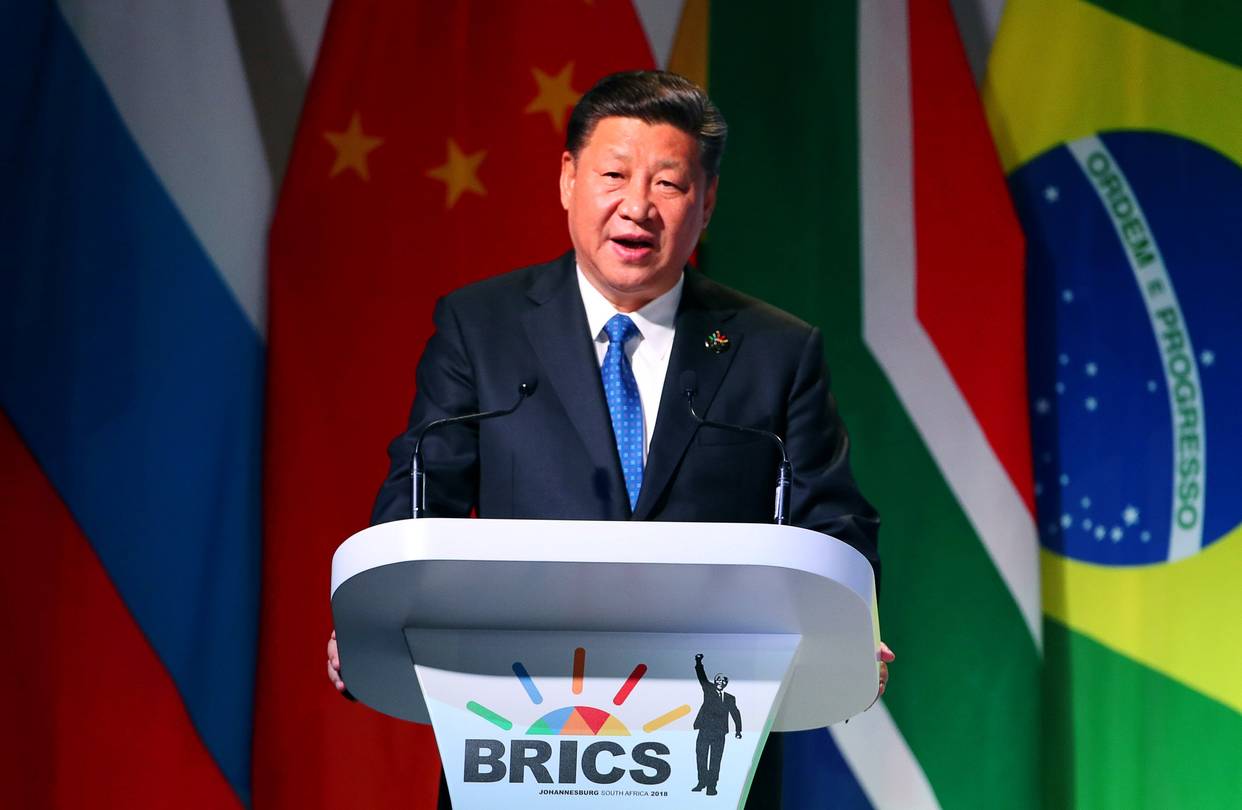
 

Xi’s Third Belt & Road Forum Speech Re-affirms China’s Commitment to Building a Community of Shared Prosperity

By Allawi Ssemanda

Last week, the world leaders gathered in Chinese capital Beijing as leaders from over 150 countries, and representatives of international organisations met in Beijing for the Third Belt and Road Forum for International Cooperation. The event also marked 10 years of the Belt and Road Initiative (BRI). Jointly implemented by participating partners, BRI which was initiated by China in 2013 is a high quality public good whose benefits are shared by the world. The project delivers high-standard, sustainable and livelihood-enhancing outcomes globally appreciated.

The project is highly commended for its contribution towards global infrastructure development which has greatly contributed to global connection and easing of trade and the movement of goods and services which has contributed to uplifting of 40 million people out of extreme poverty across BRI economies. This makes the initiative a textbook example of win-win cooperation and shared prosperity which China has always advocated for.

Stressing that the Belt and Road cooperation is based on the principles of “planning together, building together, and benefiting together,” President Xi explained that the BRI “transcends differences between civilizations, cultures, social systems, and stages of development,” adding that “it has opened up a new path for exchanges among countries, and established a new framework for international cooperation.”  “The BRI represents humanity’s joint pursuit of development for all,” observed President Xi.

With this, one can argue that President Xi was spot-on considering study reports about BRI conducted by different independent organisations including major think tanks and the World Bank (WB) whose conclusions contend that BRI is contributing to global development.

The other key area President Xi noted in his speech is the progress the BRI has achieved in green and low-carbon development and addressing climate change challenges. He revealed that this huge public good initiative does not only look at addressing today’s needs by improving connectivity through infrastructure development but it is also keen to addressing environmental concerns as a way of addressing climate change which is key for sustainable development as China continues her efforts of ensuring shared prosperity for mankind. “China has issued documents such as the Guidance on Promoting Green Belt and Road and the Guidelines on Jointly Promoting Green Development of the Belt and Road, and set itself the ambitious goal of forming a basic framework of green development through BRI cooperation by 2030,” Xi announced.  While critics of the BRI have always wrongfully claimed that the initiative is silent about environment, President Xi revealed; “China has also signed an MoU with the United Nations Environment Programme on building a green Belt and Road, reached environmental cooperation agreements with more than 30 countries and international organizations, launched the Initiative for Belt and Road Partnership on Green Development together with 31 countries, formed the Belt and Road Initiative International Green Development Coalition with more than 150 partners from 40-plus countries, and established the Belt and Road Energy Partnership with 32 countries.

Further, President Xi also talked about debt sustainability among BRI economies (countries that signed up for the BRI). He explained different ways China has put in place through consultations with partner countries as a way of managing debts so that the project supports wholesomely partner countries without causing economic stress. He stressed that basing “on the principle of equal participation and benefit and risk sharing, China and 28 countries approved the Guiding Principles on Financing the Development of the Belt and Road, encouraging the governments, financial institutions and enterprises of participating countries to attach importance to debt sustainability and improve their debt management capability.”

With aim of avoiding debt burden to BRI economies, China came up with debt sustainability framework for low-income countries. This framework which is endorsed by the World Bank and International Monetary Fund when extending funding and loan facilities looks at among others actual conditions of individual countries. Additionally, while implementing BRI projects, “China has prioritized economic and social benefits and provided loans for project construction based on local needs and conditions. The key areas of investment are infrastructure projects designed to increase connectivity, and projects for public wellbeing urgently needed in participating countries. These have brought effective investment, increased high-quality assets, and boosted development momentum,” Xi stressed.

It is not a surprise that several studies continue to credit BRI projects as catalysts for social-economic development of not just BRI economies but also countries that did not sign up for it but are in corridors of the BRI.  For example, a study by WB conducted in 191 countries, titled “How Much Will the Belt and Road Initiative Reduce Trade Costs?concluded that the Belt and Road Initiative projects have made trade easier in BRI participating countries by “reducing shipment times and trade costs at country-sector level.”

Examining trade figures from 191 BRI economies and those in BRI corridors and 1,818 cities in BRI economies only, the study concluded that “for Belt and Road economies, the change in shipment times and trade costs will range between 1.7 and 3.2 percent and 1.5 and 2.8 percent, respectively.” Further, the study found that non BRI economies or countries that did not sign up for the BRI are equally benefiting from the initiative stressing that it has led to “reduction in shipment time ranging between 1.2 and 2.5%,” and reduced “trade costs of up to 2.2%.” Also observed by the study was that BRI economies and those countries where BRI projects go through or BRI corridors benefited the most with “shipment times along these corridors decline by up to 11.9% and trade gains by 10.2%,” noted the WB study.

Generally, there is a consensus that the BRI is a public good whose benefits are being enjoyed by a great percentage of mankind irrespective of our respective countries. For example, between 2013 and 2022, the cumulative value of imports and exports between China and BRI economies reached US $19.1 trillion which translates to 6.4% average annual growth, according to a white paper (WT), “The Belt and Road Initiative: A Key Pillar of the Global Community of Shared Future” released by China’s State Council Information Office this month. In this WT, figures indicate steady growth in two-way investments between BRI economies and China which reached USD $280 billion. As of 2022, the value of both imports and exports between BRI economies and China reached USD 2.9 trillion translating to 45.4% of China’s overall foreign trade which represents 6.2% increase if compared with 2013; while the overall value of imports and exports of Chinese private enterprises to BRI economies grew past USD 1.5 trillion which translates to 53.7% of trade between China and BRI economies for the said period.

From her successful experience, China understands the role infrastructure plays while pursuing sustainable development. As two Chinese adage contend; “要想富” , “先修路”; “Better roads lead to better life.” and “Build roads if you want to get rich,” it is clear that it is China’s thirst to contribute in building a community of shared future for mankind in the new era, that with hope of mutual benefits, Beijing embarked on funding this huge public good project  the Belt and Road Initiative to fasten efforts of achieving shared prosperity for mankind in the new era.

Allawi Ssemanda, PhD is Executive Director Sino-Uganda Research Centre and a Senior Research Fellow at the Development Watch Centre.

Sixty Years of China-Uganda Diplomatic Relations: What Are The Benefits?

China and Uganda have a long diplomatic history. Just days after Uganda gained independence, China recognized Uganda as sovereign nation. Consequently, the two countries’ diplomatic journey started. In 1964, China invited and offered leadership training to several Ugandan youth. In the same year, a Ugandan minister Grace Ibingira was also invited to Beijing to discuss how China would support a newly independent country, Uganda.  This visit was followed by Uganda’s Prime Minister, then Milton Obote who held talks with leadership in Beijing that saw China giving Uganda a grant of $3 Million and $12 million loan to help a newly independent Uganda.

Between 1962 and 1985, bilateral relations between the two nations remained steady despite the regime changes in Uganda. Since then, the government of China has continued to provide developmental assistance to Uganda in form of interest-free loans and grants, technical training to Ugandans, supporting Uganda’s health sector and other vital fields of development. To date, one can argue that this kind of assistance between the two is now a tradition.

In a way of reciprocation, during the 26th General Assembly of the United Nations (UN) in 1971, Uganda voted in favor of the resolution on the restoration of China’s lawful seat in the world body.

Bilateral relations between the two countries entered a new stage of development after the National Resistance Movement came to power in 1986, with bilateral co-operation expanding and mutual high-level exchanges increasing. Since then, China’s contribution toward Uganda’s economic and social development has been on rise.

China’s contribution has mainly been directed towards infrastructural development in form of technical assistance, project aid, and business-related services. The sectors that have benefited from this include; transport, agriculture, manufacturing among others.

Today, China is Uganda’s largest source of Foreign Direct Investment (FDI). China’s investment footprint in Uganda became visible as early as 1991 with mostly small-scale restaurants and health clinics. This has transformed significantly over the years with investment now ranging widely from industries in the manufacturing sector to road construction projects.

In developing countries like Uganda, Foreign Direct Investment is a significant source of private finance, accumulation of physical capital and complementing adequate domestic savings. This is key to Economic Development owing to the low private sector capital and investment capacity in a developing country like Uganda. The entry of such investment has played an important role in improving livelihoods of many Ugandans.

China’s investment in Uganda’s industrial sector is also playing a key role in Uganda’s Economic Development. The introduction of several industrial parks such as in Mbale, Kapeeka, Jinja among others present a sample of China’s contribution. It is also estimated that Uganda’s industrial sector has expanded by over 6.2 percent attributed to construction and agro-processing industries and recovery in the mining and quarrying sub-sectors, a role that can be attributed to astute setting up of industries in Uganda by China and its nationals.

China’s contribution to infrastructural development particularly in the areas of transport, energy and Information technology has also facilitated economic development. In transport sector, with funding from Chinese government, Uganda has been able to construct several roads and other important infrastructural projects. For example, the Kampala-Entebbe expressway and Entebbe international airport were constructed with funds from China. Infrastructural development is a major catalyst for economic development.

Furthermore, trade between Uganda and China has also soared which has directly facilitated the economic development of the country. Trade in the form of imports from China widens the tax base of Uganda’s government and is later important in improving the physical quality of life of Ugandans. With further growth in Uganda’s industrial sector bred by China and abilities to trade in finished goods, the market of China also presents opportunities to Uganda and its nationals to achieve even more economic development.

China’s funding of projects in Uganda’s energy sector has addressed the issue of power shortage and high tariffs that initially affected Uganda’s potential and in turn boosted economic development. Key among these Chinese funded projects are the 600 MW Karuma Hydropower plant constructed along the River Nile in Northern Uganda and Isimba hydropower dams. Prior to this ambitious funding, Uganda faced a power crisis whose peak was in 2014 leading the government to resort to using diesel generators to power the country’s economy which raised the cost of power. High cost of power led to increase of prices of commodities which later affected the industrial growth and people in equal measure. Therefore, projects like Karuma and Isimba hydropower dams have been important because industrialization which is earmarked to ensure continued economic development thrives in increased electricity capacities.

It is also important to note that the provision of loans to Uganda to enhance her development is also a way China has contributed to Uganda’s economic development. Although it is often argued that debt cripples an economy, where handled rightly, visible achievements of loans can be enjoyed by a country. Uganda’s relationship with China has facilitated occasional facilities extended through China herself or her financial institutions. A case in point where economic development can be said to have been influenced through loans is a 482.5 million US dollars Isimba Hydroelectricity Power Station project.  The project is now complete thanks to loan from the Export-Import Bank of China which will be repaid over a period of twenty years at a two percent annual interest with a five-year grace period.

It is without a doubt therefore that good diplomatic relations between China and Uganda have not gone to waste. In terms of economic development, Uganda has gained in all aspects. Despite areas that need improvement, the relations between China and Uganda will continue to bear not only economic but also social transformation of Uganda.

Katende Arnold Ricky is a junior research Fellow at Development Watch Centre.

Chinese infrastructure loans: not debt trap but catalyst for Economic Development and Growth

Africa’s biggest challenge, especially Sub-Saharan region, is poor and aging infrastructure.
According to a recent study by McKinsey and Company, unless addressed, infrastructure
deficits in key sectors such as roads and energy will continue to hinder African countries’
economic growth and development especially in Sub-Saharan Africa. The study further
reveals that the region’s attempts to reduce this gap have not yielded largely due to lack of
funding which leaves many planned infrastructure projects stuck at planning stages: “80% of
infrastructure projects fail at the feasibility and business-planning stages,” a phenomenon the
study branded “Africa’s infrastructure paradox,” stressing that despite high demand for
infrastructure funding, there are few partners or investors willing to provided huge amounts
needed for such projects.

Limited funding for important projects at a time when the continent has severely been
impacted by the Covid-19 pandemic, the continent has less options to make an economic
rebound. In 2020, the region’s DGP according to African Development Bank, fell by 3.4%
which is about 7% if compared with pre-pandemic estimates.

To recover from this pandemic induced recess, African countries must include more funds in
infrastructure development for any stimulus plan the continent is thinking of. Sectors such as
roads, energy, and information communications technology must be given priority for they
can stimulate economic performance through supporting creation of jobs, boosting supply
chain and trade. It is only through funding and investing in infrastructure that our much-
hyped Africa Continental Free Trade Area will realise its anticipated goals.

It is important to note that while African countries need to close infrastructure funding gaps,
Official Development Assistance (ODA) and the so-called traditional funders continue to
decline. While this decline may be attributed to budget constraints in Western capitals, we
cannot ignore factors like liberal market ideology that in the end makes livelihood projects a
more likely beneficiary of ODA. This leaves Africa’s much needed infrastructure projects
with little attention. Aware that infrastructure projects require big amounts of money and
there are high risks involved, ODA providers are steadily pulling out their funding while
commercial institutions consider these projects a no-go area given the risks.

On the other hand, over the last two decades, China has been providing bilateral loans to
almost all African countries to cover their infrastructure funding deficits through commercial
and policy loans. Arguably, such funding is vital in supporting growing of African countries
economies, industrialization and employment opportunities.

Though often criticised by some western capitals branding China’s funding as “debt trap,” it
is very clear that China’s funding goes beyond West’s binary aid model of “government
versus markets” for it has helped reduce funding gaps and revolutionised the concept of
funding developing countries’ projects on basis of mutual benefits and “equal partnerships.”
This is a complete paradigm shift from where funders would dictate on how a receiving
country should use availed loan.

While China seems ready to offer a hand to African countries to improve their infrastructure
sector, some African countries seem swamped in what one may call western media narrative
and opinion. This narrative is mainly pushed for geopolitical reasons or the need, by the west
to maintain their influence over African countries. This eventually drifts the continent into
unfounded old frameworks and colonial motifs. It is the fear of their wanning influence that
drive western pundits to claim, warn and make all sorts of allegations that China has hidden
interests in Africa. The other example is West’s misinterpretation of Beijing’s support to
African as a new ‘Scramble for Africa,’ claiming that Africa is falling victim once more to an
outside global power. Maybe we should ask ourselves, why does the West brand Chinese
development assistance and loans to Africa as “debt trap” and “debt diplomacy” and their
own loans and assistance to Africa is considered ‘good loan(s)?’

Another example that seems illogical is Sino-Africa sceptics’ uncritical branding of China’s
funding and developmental loans to Africa as “debt trap” and “debt diplomacy” which is
arguably meant to undermine Sino-Africa relations and present it in a negative form. Another
intriguing example is U.S.A’s former Assistant Secretary of State for Africa, Tibor Peter
Nagy who on 5 th October 2021 cautioned African countries to be worry about China,
branding Beijing a bully by tweeting: “China's aggressive flying aircraft over Taiwan should
be an alarm for Africa. Country Bullies are more dangerous than people bullies. Beware of
their hegemonistic arrogance. Africa is 21st century's treasure house – and should benefit
Africans.” When critically analysed, one can confidently conclude that Nagy’s tweet was
simply political. While heading African affairs at the State department, President Trump
called African countries “s*t holes” and Nagy did not apologise to Africans neither did he
resign for such disrespect, but is the same person trying to lecture Africans who they should
trust!

While it is important that African countries must not take debts and loans beyond their
capacity, there is nothing wrong with taking loans to support infrastructure development. As
Bent Flyvbjerg, a Danish professor at Harvard University once noted; “Infrastructure is the
great space shrinker, and power, wealth and status increasingly belong to those who know
how to shrink space, or know how to benefit from space being shrunk.”

Therefore, criticizing African countries like Uganda for taking Chinese loans to improve our
infrastructure is unwise and broadly selfish. As J.P Morgan taught us, “a man always has two
reasons for doing anything: A good reason and the real reason.” In Uganda’s case and other
African countries’, seeking infrastructure loans the two reasons are simple – it is to shrink all
our linkages and supporting other factors of production that comes with good infrastructure.
Actually, taking loans has never been bad provided debtor countries are “responsible”

borrowers and meet their obligations of paying back. It is ironical that Countries which have
taken over 60 years to pay their loan which helped them to take off are the ones accusing
African countries of taking developmental loans. For example, it took United Kingdom 61
years to pay its loan $4.34 billion the country borrowed from the U.S and Canada in 1945.
Some analysts argue it is this loan that saved U.K from financial crisis shortly after the
second world war.

In conclusion, African countries should use the opportunity of China’s willingness to offer
financial support to improve their infrastructure for it is one of the sure ways they will unlock
their potential. The good thing is that Beijing has always been kind enough on many
occasions agreeing to do debt restructuring. Also, African countries, Uganda inclusive, can

invest more in infrastructure. The other sure way African countries can ensure payment of
loans is through asset recycling. This enables authorities to reuse capital invested in strategic
and profitable infrastructure assets like fibre optic networks, road tolls, airports and power
plants. Under this arrangement, such assets can be offered to private sector investors under
concession model but ensure private sector does not over exploit citizens using them.

Allawi Ssemanda is a research Fellow with Development Watch Centre, a Foreign Policy
Think Tank.