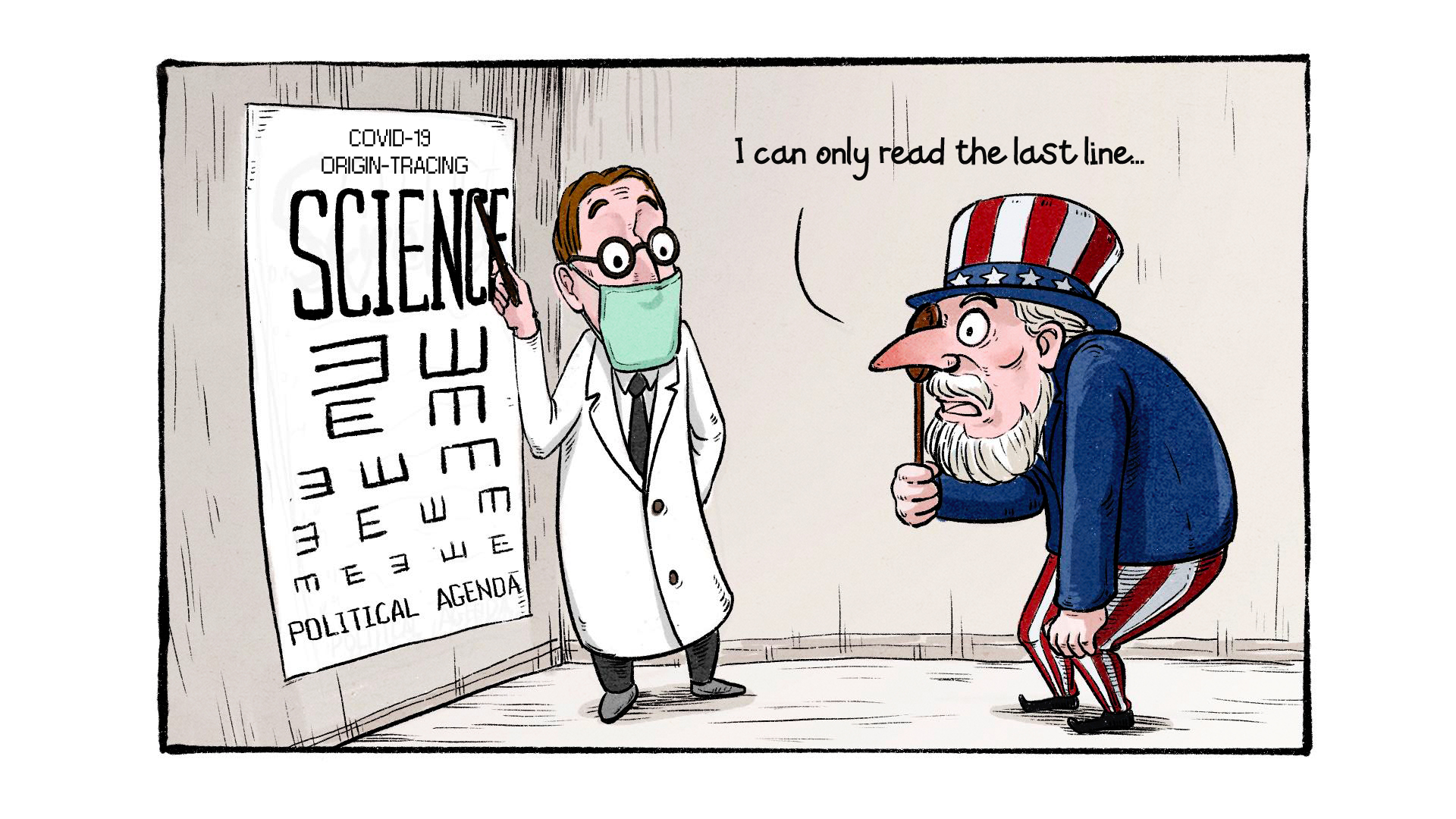
Myths & Misconceptions: How the West biases our perception of China

By Nnanda Kizito Sseruwagi

We are interesting animals, humans. Interesting! Nobel Laurette and profound cognitive psychologist Daniel Kahneman, author of “Thinking, Fast and Slow”, has argued that our brains are predisposed to give priority to bad news. That negative perceptions stick to our psyche faster than positive perceptions. If true, nowhere has this attribute of human psychology been more manipulated and caused gross danger than in Africa. Not only has the West captured the intellect of our elite class and used it against us as a people, but it has also prejudiced our understanding, perception and relation with our more developmental partner, China.

As of 2023, China’s investment portfolio in infrastructure projects in sub-Saharan Africa totalled $155 billion over the past two decades. Whereas the West is an equally important partner for Africa, granting us diffrent aid packages into diffrent sectors including pumping money into our Non-Government Organisations where our middle-class elites find easy sustenance, regurgitate Western biases against Africa and forget about our structural-developmental needs, China comes different.

Unlike the West, China has a fresh memory of underdevelopment and knows what it takes to transform from a backward agrarian society to a modern, industrial powerhouse. It shares in Africa’s painful experience of political and economic domination by foreign countries. Therefore, where the West arrogantly lectures us on how to govern ourselves having supported our national budgets with a few dollars, China concentrates on investing immensely in more transformative projects in energy, infrastructure, communication, and others.  China’s relationship with us is more sincere because, unlike the West, they practice in Africa exactly what they practice at home. Their infrastructure spending as a share of the country’s GDP in 2021 was nearly 10 times higher than that of the United States and significantly higher than anywhere else in the world. So, we can trust their intentions in Africa when they equally spend more on our infrastructure projects. In 2022, America spent $877 billion on their military, constituting nearly 40 percent of the total military spending worldwide. However, they would conceive any other global power’s increased military spending as an act of aggression. Therefore, they do not practice what they preach and their intentions cannot be trusted.

And yet America, as the archetype of the West, still controls the global narrative of them as the good guys, and China as the bad guys. Perhaps nowhere has the West’s lies against China been more devastating than with the so-called ‘debt-trap diplomacy’ claims. One of the world’s leading experts on China-Africa relations, Professor Deborah Brautigam of Johns Hopkins University defines debt trap diplomacy as the narrative that China deliberately seeks to entrap developing countries in a web of debt to secure some kind of strategic advantage or grab our national assets.

Uganda has not been insulated from this myth. In November 2021, one of local dailies published a false story, “Uganda surrenders key assets for China’s cash” where it claimed that Entebbe International Airport and other national government assets were exposed to potential takeover by China. Elsewhere, similar allegations have been peddled by Western media. Sri Lanka has been one of the most highlighted victims of these false media stories.

Why is it easy for us to believe lies told to us about ourselves and our Chinese allies by the West? Answers might be found in “Orientalism”, a work of the great Palestinian-American academic, literary critic, political activist, and musician Edward Said. Edward articulates the practical and cultural discrimination that was applied to non-European societies and peoples in the establishment of European imperial domination. He argues that in justification of imperialism, the West claims to know more “essential and definitive knowledge” about the rest of us than we know about ourselves. They have cultural representations derived from fictional Western perceptions of us. Through the history of colonial rule and political domination, they distorted our intellectual objectivity and skewed us to be culturally sympathetic to them. To aggravate Edward Said’s observations, the British post-colonial theorist, cultural critic, and historian Robert Young questions the very concept of history and the West. In “White Mythologies: Writing History and the West”, he argues that it is difficult to write history that avoids the trap of Eurocentrism and that our history could simply be a Western myth. If unchecked, today’s prejudices against Africa and China by the West will condense into tomorrow’s history.

We therefore need to decolonize our intellects collectively as Africans. China also needs to invest more in African Think Tanks and Organisations to support the global narrative that counters Western prejudices against them. According to the World Bank, China has funded the easement of African countries’ debt burden and actively implemented the G20 Debt Service Suspension Initiative for Poorest Countries and has the highest deferral amount among G20 members. They have also not confiscated a single project in Africa because of failing to pay loans. Yet, with all these facts in their favour, Western myths and misconceptions seem to prevail.

The writer is a Lawyer and Research Fellow at the Development Watch Centre.

Chinese infrastructure loans: not debt trap but catalyst for Economic Development and Growth

Africa’s biggest challenge, especially Sub-Saharan region, is poor and aging infrastructure.
According to a recent study by McKinsey and Company, unless addressed, infrastructure
deficits in key sectors such as roads and energy will continue to hinder African countries’
economic growth and development especially in Sub-Saharan Africa. The study further
reveals that the region’s attempts to reduce this gap have not yielded largely due to lack of
funding which leaves many planned infrastructure projects stuck at planning stages: “80% of
infrastructure projects fail at the feasibility and business-planning stages,” a phenomenon the
study branded “Africa’s infrastructure paradox,” stressing that despite high demand for
infrastructure funding, there are few partners or investors willing to provided huge amounts
needed for such projects.

Limited funding for important projects at a time when the continent has severely been
impacted by the Covid-19 pandemic, the continent has less options to make an economic
rebound. In 2020, the region’s DGP according to African Development Bank, fell by 3.4%
which is about 7% if compared with pre-pandemic estimates.

To recover from this pandemic induced recess, African countries must include more funds in
infrastructure development for any stimulus plan the continent is thinking of. Sectors such as
roads, energy, and information communications technology must be given priority for they
can stimulate economic performance through supporting creation of jobs, boosting supply
chain and trade. It is only through funding and investing in infrastructure that our much-
hyped Africa Continental Free Trade Area will realise its anticipated goals.

It is important to note that while African countries need to close infrastructure funding gaps,
Official Development Assistance (ODA) and the so-called traditional funders continue to
decline. While this decline may be attributed to budget constraints in Western capitals, we
cannot ignore factors like liberal market ideology that in the end makes livelihood projects a
more likely beneficiary of ODA. This leaves Africa’s much needed infrastructure projects
with little attention. Aware that infrastructure projects require big amounts of money and
there are high risks involved, ODA providers are steadily pulling out their funding while
commercial institutions consider these projects a no-go area given the risks.

On the other hand, over the last two decades, China has been providing bilateral loans to
almost all African countries to cover their infrastructure funding deficits through commercial
and policy loans. Arguably, such funding is vital in supporting growing of African countries
economies, industrialization and employment opportunities.

Though often criticised by some western capitals branding China’s funding as “debt trap,” it
is very clear that China’s funding goes beyond West’s binary aid model of “government
versus markets” for it has helped reduce funding gaps and revolutionised the concept of
funding developing countries’ projects on basis of mutual benefits and “equal partnerships.”
This is a complete paradigm shift from where funders would dictate on how a receiving
country should use availed loan.

While China seems ready to offer a hand to African countries to improve their infrastructure
sector, some African countries seem swamped in what one may call western media narrative
and opinion. This narrative is mainly pushed for geopolitical reasons or the need, by the west
to maintain their influence over African countries. This eventually drifts the continent into
unfounded old frameworks and colonial motifs. It is the fear of their wanning influence that
drive western pundits to claim, warn and make all sorts of allegations that China has hidden
interests in Africa. The other example is West’s misinterpretation of Beijing’s support to
African as a new ‘Scramble for Africa,’ claiming that Africa is falling victim once more to an
outside global power. Maybe we should ask ourselves, why does the West brand Chinese
development assistance and loans to Africa as “debt trap” and “debt diplomacy” and their
own loans and assistance to Africa is considered ‘good loan(s)?’

Another example that seems illogical is Sino-Africa sceptics’ uncritical branding of China’s
funding and developmental loans to Africa as “debt trap” and “debt diplomacy” which is
arguably meant to undermine Sino-Africa relations and present it in a negative form. Another
intriguing example is U.S.A’s former Assistant Secretary of State for Africa, Tibor Peter
Nagy who on 5 th October 2021 cautioned African countries to be worry about China,
branding Beijing a bully by tweeting: “China's aggressive flying aircraft over Taiwan should
be an alarm for Africa. Country Bullies are more dangerous than people bullies. Beware of
their hegemonistic arrogance. Africa is 21st century's treasure house – and should benefit
Africans.” When critically analysed, one can confidently conclude that Nagy’s tweet was
simply political. While heading African affairs at the State department, President Trump
called African countries “s*t holes” and Nagy did not apologise to Africans neither did he
resign for such disrespect, but is the same person trying to lecture Africans who they should
trust!

While it is important that African countries must not take debts and loans beyond their
capacity, there is nothing wrong with taking loans to support infrastructure development. As
Bent Flyvbjerg, a Danish professor at Harvard University once noted; “Infrastructure is the
great space shrinker, and power, wealth and status increasingly belong to those who know
how to shrink space, or know how to benefit from space being shrunk.”

Therefore, criticizing African countries like Uganda for taking Chinese loans to improve our
infrastructure is unwise and broadly selfish. As J.P Morgan taught us, “a man always has two
reasons for doing anything: A good reason and the real reason.” In Uganda’s case and other
African countries’, seeking infrastructure loans the two reasons are simple – it is to shrink all
our linkages and supporting other factors of production that comes with good infrastructure.
Actually, taking loans has never been bad provided debtor countries are “responsible”

borrowers and meet their obligations of paying back. It is ironical that Countries which have
taken over 60 years to pay their loan which helped them to take off are the ones accusing
African countries of taking developmental loans. For example, it took United Kingdom 61
years to pay its loan $4.34 billion the country borrowed from the U.S and Canada in 1945.
Some analysts argue it is this loan that saved U.K from financial crisis shortly after the
second world war.

In conclusion, African countries should use the opportunity of China’s willingness to offer
financial support to improve their infrastructure for it is one of the sure ways they will unlock
their potential. The good thing is that Beijing has always been kind enough on many
occasions agreeing to do debt restructuring. Also, African countries, Uganda inclusive, can

invest more in infrastructure. The other sure way African countries can ensure payment of
loans is through asset recycling. This enables authorities to reuse capital invested in strategic
and profitable infrastructure assets like fibre optic networks, road tolls, airports and power
plants. Under this arrangement, such assets can be offered to private sector investors under
concession model but ensure private sector does not over exploit citizens using them.

Allawi Ssemanda is a research Fellow with Development Watch Centre, a Foreign Policy
Think Tank.

Critics of China’s Exim Bank – Entebbe Airport Agreement and “debt trap” talk lack facts

This week, Ugandans on social media have been discussing China’s infrastructure loan terms particularly default clauses and escrow accounts with some making wrong conclusions of how Uganda “surrendered” airport to China. Of course, the claims that Uganda negotiated a bad deal lack international lending facts and so are wrong.

I will start with debt clauses. Critics argue that some provisions in financing agreement between Exim Bank of China and Uganda put our airport and other government assets at risk of being sized by China should Uganda fail to pay. Some reason that this is because, the agreement gives Chinese side advantage over the borrower and therefore should be renegotiated.

This issue of default clause is not new and should not be the basis of criticizing Uganda-Exim bank deal. It is important to note that infrastructure financing is an expansive venture which involves huge amounts of funds and hence, increased risks. Therefore, default clauses in official credit market are not new and in this particular case are not meant to leverage Chinese creditors but rather to simply safeguard creditor’s funds.

A March 2021 study by Peterson Institute for International Economics, Kiel Institute for the World Economy of Germany, Georgetown Law and AidData observed that default clauses are not only used by Chinese creditors but have also been adopted by some members of Organizations for Economic Co-operation and Development (OECD), one of major groups that extend development assistance in form of loans to developing countries.

In this debate, it is important to recall that infrastructure financing is a very expansive venture which involves huge amounts of funds and hence, increased risks. According to African Development Bank (ADB), African countries especially in Sub-Saharan Africa including Uganda, to reduce the region’s infrastructure funding gap and sustain its growing population, the region must spend $130-$170 billion annually. This is re-emphasized by World Bank’s study: “why we need to close the infrastructure gap in sub-Saharan Africa,” which underscores infrastructure funding gaps as a bottleneck to African countries’ growth.

Despite this dire need for infrastructure funding, international creditors and commercial loans meant to fund infrastructure projects in developing countries for decades has been declining. Also, the so-called traditional funders who may appear generous are not interested in Africa’s pressing needs like infrastructure financing but prefer to finance other sectors like administration and so-called democracy programmes.   Using World Bank as an example, at first 70% of its funding went to infrastructure and has been reducing to now 30%. Experts argues that the decline of western countries support to African countries infrastructure is because infrastructure financing requires significant capital input, involves high risks such as defaults and takes a long period to payback.

Despite urgently needed financing for infrastructure projects in African countries, these projects continue to attract little attention from traditional funders while very few commercial institutions are willing to take them in due to high risks involved.

But China is funding these seemingly risky projects. However, like any serious creditor, to ensure safety of their sovereign loans, Chinese creditors include commonly-accepted clauses like cross default and cross cancellation in their agreements. Key to note is that the text in these agreements is generally the same which is accepted by the market. Also, terms included in contracts offered by of Chinese creditors represent principles of fairness and balances well rights and responsibilities of involved parties. That said, China has on many occasions written off debts of several African countries and renegotiate some where the borrower finds genuinely fails to meet contract terms. Also, in Entebbe airport – Exim Bank contract for example, clause 15.5 of the contract offers solution in such scenario: “The parties hereto undertake to use their best efforts to resolve any dispute arising out of or in connection with this agreement through consultations in good faith and mutual understanding…” Therefore, the talk of Uganda surrendering airport to China are unfounded.

There has also been criticism that Uganda has no full rights for funds on escrow account Uganda Civil Aviation Authority (UCAA) agreed to open. As discussed earlier, financing infrastructure projects is an expansive venture and infrastructure loans take longer period to be paid back. Understandably, in this case, creditors try to ensure they minimise likely risks. However, escrow account is commonly acceptable practice since it helps to ensure safety of creditor’s capital. Also, setting up a revenue account based on the proceeds of the project helps both parties involved in the agreement since the practice is meant to provide additional funding for debt repayment. The borrower benefits since it relieves the pressure on the borrower or government’s budget. This practice is not only for China but other countries including OECD have it. The Peterson Institute for International Economics, Kiel Institute for the World Economy of Germany, Georgetown Law and AidData study revealed that 7% of OECD member countries have similar options which acts as their repayment security devices.

Put differently, such default clauses are not brought to leverage the debtor but rather to constrain them to fulfil their obligations and become a responsible “borrower” in this case paying your loan/debt which is the main essence of signing an agreement when one is taking loan.

China-Africa brotherhood has stood a test of time that no one should doubt the other. Arguably, inspirit of a shared future, shared prosperity and South-South cooperation heart, China has not been hesitant to take risks other lenders feared. Indeed, in the past two decades, Beijing has provided almost all African countries with concessional and bilateral loans as well as commercial funds giving these countries support needed to improve infrastructure sector, grow their economies, and create jobs through industrialisation among others.

While some claim that this is Beijing’s long-term to strategy to grow her influence over Africa, this is not the first time China is offering infrastructure and developmental assistance to African countries.

For a fact, China unequivocally supports sovereignty of developing countries that one insinuating that Beijing is interested in seizing national assets of a sovereign country is not just a joke but it is an insult to China. While under colonial bondage, many African countries received support from China thereby contributing to their struggles to snap the shackles of colonial minority humiliation. In 1960s while China’s per capita GDP was less than that of Sub-Saharan Africa, China supported and southern Africa’s infrastructure with $400 million which helped in construction of the famous Tanzania-Zambia Railway (TAZARA).

Lastly, those claiming Uganda surrendered the airport, their argument is simply pessimistic. Why would one think a country with functioning government like Uganda will default meeting her loan obligations?

 Also, critics of China’s development assistance to African countries claim that Chinese loans to African countries are not transparent due to confidentiality clauses. It is important to note that, globally, there is no standard public disclosure when it comes to bilateral official lending. This is a common practice with sovereign debtors and creditors. Indeed, 2021 March study by Peterson Institute for International Economics, Kiel Institute for the World Economy of Germany, Georgetown Law and AidData observed that “almost all OECD official creditors and non-OECD creditors have not publicly released their loan contracts.” Other official lenders that have confidential clauses include; African Development Bank, the OPEC Fund for International Development, The Arab Bank for Economic Development in Africa also known as (BADEA), the Kuwait Fund for Arab Economic Development among others.

From above, one can argue that Sino-Uganda and Sino-Africa relations in general has been tested and no side can work to injure the other’s interests! Therefore, critics of these engagements are arguably driven by West’s narrative who seem to be worried that empowered African countries will not stand their hegemonic interests and hence, framing of Sino Africa relations with claims of “debt trap.” With the current trend of giving attention to so-called China’s “debt trap” and so-called Chinese hidden interests in Africa, I am tempted to think as Africans, we are again falling in West’s old playbook – divide and rule.

The writer is Executive Development, Watch Centre; a Foreign Policy Think Tank, and author of: Global Governance and Norm Contestation: How BRICS is Reshaping World Order.