Beyond the Debt Trap Narrative: Examining China’s Infrastructure Investments in Uganda

By Shemei Ndawula

It is said that when you owe the bank one million shillings, you have got a problem, and when you owe the bank 1 billion shillings, the bank has a problem. The narrative of China’s Belt and Road Initiative (BRI) as a “debt trap” for developing nations has gained significant traction. However looking specifically at Uganda’s case with Chinese investment reveals a more nuanced picture, where China’s infrastructure investments are fostering sustainable development, not financial suffocation.

Contrary to popular belief, China can not pack up an airport or Hydro dam and ship it to Guangzhou. Aside from the physical extremities that such an ambitious project would demand there’s no provision in international and diplomatic law that would sanction such a venture.  With such a precarious state of affairs China is one of the few of our development partners who are genuinely rooting for our success because that is the only way they can ever recover their loans and get out of the “debt trap” we have put them in.

This is probably why Chinese investment in Uganda is always geared towards parts of the economy that compound development. Uganda, like many developing countries, faces a significant infrastructure deficit. Limited access to reliable power,transportation networks, and communication technology hinders economic growth and social progress. China’s BRI steps in by offering loans for projects that directly address these needs and Chinese state affiliated companies also occasionally tender cost effective bids for the projects.

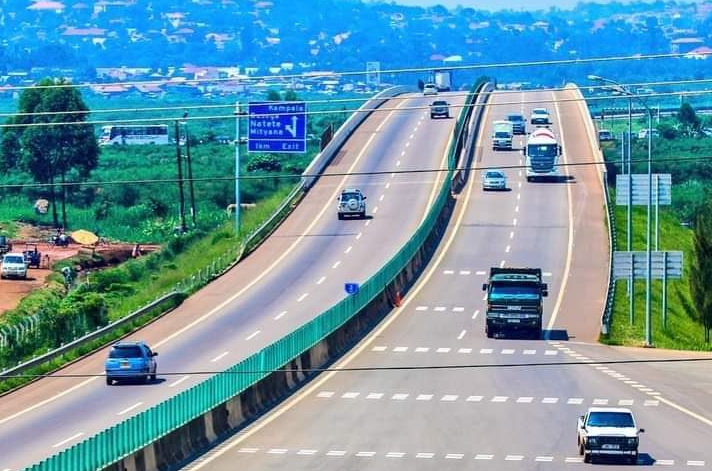
Additionally Chinese projects in Uganda usually focus on revenue generation. Many of China-funded projects in Uganda, like the Entebbe Expressway or the Karuma hydropower dam, are designed to generate revenue and pay for their own setup cost.  Tolls collected from the expressway directly contribute to repaying the loan, while the hydro dam increases electricity production, leading to increased export potential and government income.

Our country’s debt-to-GDP ratio, while on the rise, largely  remains below internationally recognized thresholds for “debt distress”. The Ugandan government prioritizes responsible borrowing and actively works with international institutions to monitor debt sustainability. The Chinese government also does a forensic feasibility study on each and every project before it’s implementation because as I may have pointed out earlier, it is in the Chinese best interest to avoid bad debts.

This is why China implements a zero tariff policy on 99% of Uganda’s export goods. Since China is a manufacturing economy, it is in their best interest to make sure that the farmer in Bududa has got a good road connection to the agro processing factory in Mbale industrial park to add value to his products before being exported to China and the rest of the world because then he’ll have the disposable income necessary to buy Chinese manufactured goods. It is hard to get similar concessions from countries who’s biggest exports are “democracy and liberalism“.

Without the pomp and funfare with which many other development partners launch their collaborations with domestic players; China goes a long way in collaborating with Ugandan companies and individual players and provides training programs, fostering technology transfer and creating skilled local workforces. This is geared towards empowering Uganda to maintain and manage infrastructure projects in the long run, reducing dependence on external expertise. An outstanding example is that many of the Ugandans working in  the Tilenga oil enterprise have benefited from Chinese trainings many even going to China on full state scholarships.

In many ways Uganda’s collaboration with China devolves a lot from it’s usual bilateral relationships with its traditional development partners because this is a story of Collaboration, Not Control. The Ugandan narrative goes beyond simply acting as a conduit for surplus Chinese capital. It’s a story of collaboration, with Uganda actively negotiating loan terms and prioritizing projects that align with its own development goals. Uganda retains ownership and control over its infrastructure assets as well as its national economic/ political identity and outlook.

As Uganda and China’s partnership grows, focusing on transparency, environmental sustainability, and capacity building will be crucial. The evidence from past and ongoing projects suggests that China’s investments, when carefully managed, can be a powerful tool for accelerating Uganda’s development journey. We need to; beyond infrastructure and economic ties look towards a cultural synergy that can merge the Ugandan(African) spirit of community (Ubuntu) with the Chinese Confucian culture.

This reductive approach to China’s role in Africa fosters a more constructive dialogue, moving beyond the simplistic “debt trap” narrative and highlighting the potential for mutually beneficial partnerships that pave the way for a more prosperous future. For every false alarm ringing in Kampala, there should probably be a tenfold alarm in Beijing because if the bank has a problem when you owe it a billion, imagine how much more worried the Chinese should be who’s “debt-trap” is in the trillions. 

Shemei Ndawula is a senior research fellow at the Development Watch Centre.
Opportunity in Uganda’s Road Crisis? Lessons from China

By Nnanda Kizito Sseruwagi

I was initially depressed when pondering this article. The crisis of Uganda’s roads depresses many of us. I don’t think it is necessary to explain or emphasize the wreckage of what used to be the roads and the dreams and potential we have lost economically and humanly with the loss of precious lives in avoidable accidents.  But I was later rescued from my depression with the realisation that something could be done. Something must be done.

So, I will focus more on the opportunities buried in the mess of Uganda’s dilapidated transport infrastructure.

In more developed countries, it is extremely hard to have accidents on highways and even in the city because of the width of the roads. Not only are their roads wide, but they are also two-way lanes, meaning they have only one lane taking vehicles in each direction. Therefore, cars can hardly collide or struggle in messy traffic caused by competition for space on single-track roads as we occasionally see in Uganda. Motorcycles are also given separate lanes which both reduces their traffic while mitigating accidents.

I had never reflected seriously about the state of our roads until I travelled to China. Let me first satiate you with the excellence of China’s road network.

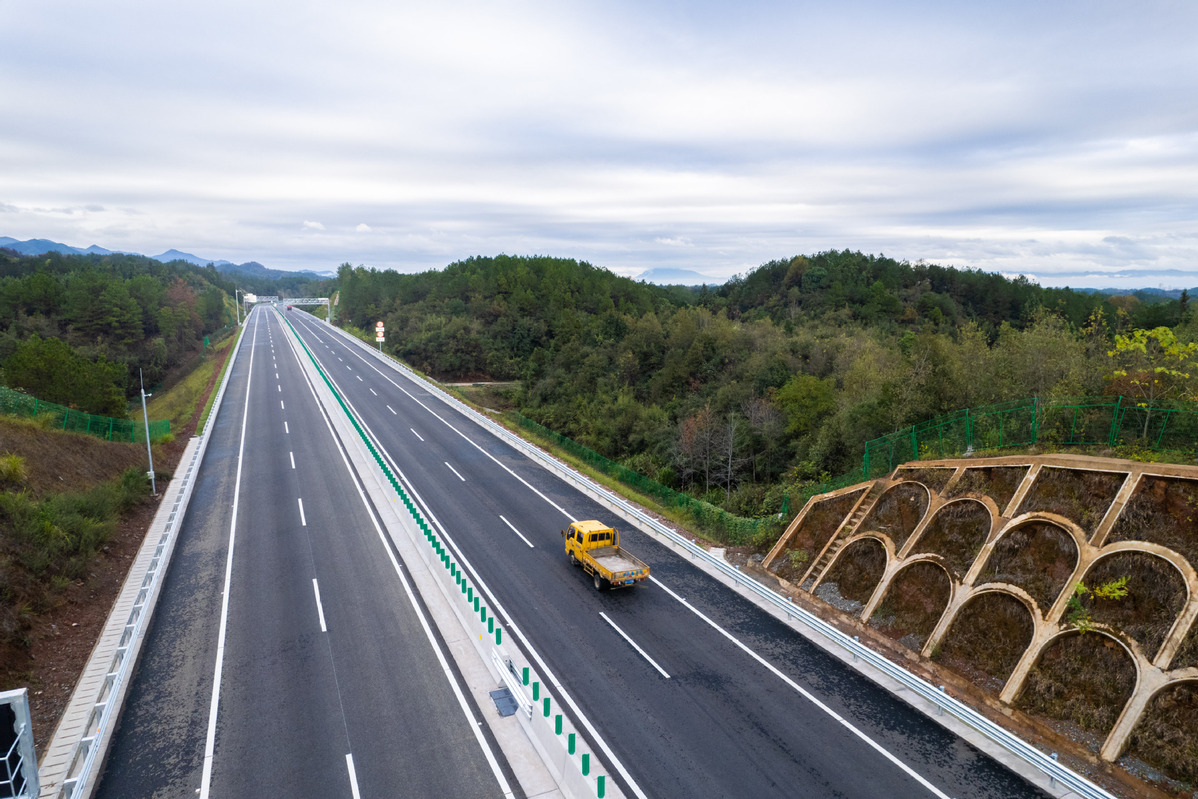
Almost all roads in China are two-way laned, both for roads in the city suburbs and the expressways that stretch to China’s furthest villages. These roads are mostly flat. This is to say, any barrier to the flat flow of the road meets the insurmountable human will and engineering dare-devil attitude of Chinese road constructors. For every slope down one mountain to another or over a river or a lake, the Chinese will erect huge pillars of steel and concrete and suspend a bridge stretching the entire length that nature decided to go. In case the land along which the roads curve is flat, but is blocked by a small mountain, the Chinese will dig a tunnel to create a way through the stomach of the mountain. And since they have two-way lanes, these tunnels are always two. And are equally very wide and well-lit.

The engineering art required to think these roads into existence pales away in contrast to the courage it takes to look at a mountain and say; “you shall make a way for our people!”. The Biblical Moses laid a stick to split the water for Israelites to move, but the Chinese engineering Moseses suspend tons of concrete high above the water and make a way for their people. One construction feat accomplished in China recently was the Sanyuan Bridge in Beijing, where a 1,300-ton bridge was replaced in just 43 hours.

But to avoid this article sounding like a song of praise for China’s road infrastructure greatness, I will turn to the opportunities Uganda has in its failing road network.

Of course, my thoughts are generalized observations in a way because there are so many material factors which make China function in a different way from Uganda. But we still share a lot in common and have several factors in our favour supporting transformation.

One of the advantages China has over us is its land tenure system which is flexible for the government to implement road construction projects without the bloated compensation claims and long court battles involved with road construction projects in Uganda. I strongly believe that it will be very hard and expensive for Uganda to develop if we keep the system of private land ownership. But that’s a whole topic for another article/book.

Here are the opportunities. For each road we see in Uganda today, we need one more going in the opposite direction. We can and should adopt the policy of two-way lanes. I know it sounds expensive and hard but Uganda is a small country with abundant unexploited resources. We have enough concrete to build up this country excellently. This spells big business for road construction companies. And for our unemployed engineering graduates.

The government should incentivise students to study civil and architectural engineering if we are serious about industrialising this country. Costs in health, business/investment and trade sectors will be indirectly met if we succeed in having a well-built environment. For example, a lot of the cases of disease and accidents which eat up our national health budget are caused by poor living conditions due to bad housing, shoddy drainage and poor road networks. These can be curbed by developing a high-level engineering industry to build up this country.

The Chinese are so obsessed with roads. They have many well-paved and wide roads. I think every developing country should study this obsession. We should first and foremost plan and build our roads and then consider space for other buildings. That’s how we shall build an organised city. And it’s on those roads that our economy will run and take off.

The writer is a senior research fellow, Development Watch Centre.

nnandakizito@dwcug.org


Build Back Better World v BRI: Can Africa Benefit From Development Finance Competition?

By Nnanda Kizito Sseruwagi

There is a competition. A spending competition. The spending is in trillion dollars. Developing countries are participants. Participating from an interesting position. Participating as recipients. Imagine that. Being at the receiving end of a spending competition!

Whereas both foreign aid and development finance are projects that pursue development objectives in developing countries, we should distinguish them. Unlike foreign aid, development finance comprises an extensive range of financial instruments and interventions intended to support long-term economic growth and infrastructure development in underdeveloped countries.

Foreign aid often tends to address immediate humanitarian needs, support social welfare programs and alleviate poverty in poor countries. It has also suffered profound criticism as deleterious and counterproductive to the development of African countries.

The biggest foreign aid providers are historically Western countries including the countries under the European Union, the United States, Germany, United Kingdom, France, Sweden, Netherlands, Italy, Canada and Norway. Japan is also a major foreign aid giver. China is noticeably absent from this list. It has unwaveringly pursued a unique strategy borne out of its shared historical experience with Africa. This was partly the spirit in which the Belt and Road Initiative (BRI) was initiated.

While the G7 countries launched the Build Back Better World (B3W) in 2021, they were reactively ushering in an alternative to China’s BRI. It had been almost a decade earlier since China had recognised the primacy of infrastructure development in low- and middle-income countries. Observed, that it could also have been a quiet concession that foreign aid was not as impactful as it had been magnified to be.

The B3W initiative focuses on addressing infrastructure needs in developing countries. It is planned that by 2035, this initiative will have contributed about $40 trillion worth of infrastructure in recipient countries.

By contrast, the cumulative BRI engagement in the 147 countries undertaking the project since its inauguration in 2013 is $962 billion. Out of that, about $573 billion was invested in construction contracts while $389 billion went into non-financial investments. It is also estimated that BRI will likely increase the world GDP by $7.1 trillion per annum by 2040. Its benefits are also expected to be “widespread” because of the efficiency likely to be experienced in world trade as a result of improved infrastructures across the world.

But here is the catch. Whereas both initiatives sound ambitious, a close examination of their current contribution is very revealing. Out of the gigantic promise of $40 trillion, the B3W has so far yielded a paltry $6 million in global infrastructure construction. Whereas China’s BRI did not promise trillions of funds to China’s friends and allies, it has already sunk almost a trillion dollars in brick-and-mortar infrastructure projects around the world.

Let’s turn the focus to Africa. The majority of the world’s poorest and developing countries are spread across this continent. We are the central focus of this development finance competition between the West and China. If we need to choose a reliable partner, given the above delineation of how the B3W and BRI promise versus how they have performed, where should we fall?

As we seek to unlock our development potential by tapping into financial assistance to jumpstart our industrialisation, let us not lose sight of the dynamics involved by the two major development finance funders, China and the United States.

The BRI is already directly seen to be bridging the gap of Africa’s infrastructure deficit which is reported to be about $130-170 billion annually. We need all the financing we can find to close this gap since our development needs are many.

This is where the B3W initiative would come in. It presents us with an opportunity to diversify our sources of development finance. The problem only arises from the signature conditions that come with Western funding. The well-meaning, well-sounding terms that espouse democratic governance values and transparency as prerequisites for qualifying to receive this finance. A lot has been written and said about the mismatch between the focus on these values as opposed to the impact which that focus makes on the ground. Unless the West is capable of learning from the futility of its conditional foreign aid to Africa and is willing to risk a blind investment with the understanding that different societies evolve with different norms and habits which may change as they achieve economic development, insisting on these preconditions will yield nought.

As Africa, we need to leverage both the BRI and the B3W initiatives by aligning the investment that comes from them with our national development priorities. If we are not clear on those priorities, it doesn’t matter how much money will be thrown at us, it won’t impact our people. But the choice is in our hands.

The Writer is a senior research fellow at the Development Watch Centre.


Understanding the Belt and Road Initiative

By Nnanda Kizito Sseruwagi

Probably you have heard about it. Probably not. What is it? Let us first understand what it isn’t. Many initiatives from China suffer from being misunderstood, even at the highest echelons of policy experts around the world. This is due to the saturation in public media internationally by Western propaganda and culture, which has bred most of us. We are therefore predisposed to be suspicious of any agenda, idea, initiative or policy from “others” i.e. not the collective West. That’s why it’s important to begin by explaining what the Belt and Road Initiative (BRI) has been disarticulated to be.

Firstly, it isn’t about Debt Trap Diplomacy. BRI has been grossly misrepresented in the media as China’s means to propagate an empire across the globe by intentionally loaning developing countries sums of money they cannot repay. And that in default, China will turn around and attach national assets and gain strategic control of countries’ resources. Not only is this an oversimplification of the complexities involved in the financial architecture of BRI, but there is also no evidence found for a single national asset auctioned to China by any developing country that defaulted on a loan.

What is widely available is eveidence where China has written off billions of loans owed to China by African countries including forgiving interest free loans that reach maturity. For example, in 2022,  China announced debt cancellation of 23 loans for 17 African countries. Also, a study by Deborah Brautigam, the director of the China-Africa Research Initiative at Johns Hopkins University concluded that between 2000 and 2019, China restructured about $15 billion in African debt adding that to date, no evidence that China has been involoved in any asset seizures.

Secondly, some critics have expressed concerns that misunderstand the BRI as a subtle strategy that China is employing to pursue military interests. This might be more a reflection of what those critics would have done and less to do with China’s primary goal. It is in China’s interest and strategy for long-term success as a nation to maintain its founding ideals of peaceful coexistence and mutual respect for all nations. Building its military muscle would threaten a global conflict with America and it has nothing to gain from such a catastrophe, yet it has everything to gain in pursuing economic success.

Having dispelled the major misconceptions and misrepresentations of what BRI isn’t, let’s understand what it is. The Belt & Road Initiative is ironically China’s promotion of a Western-born idea and process of globalization. It is generally agreeable that globalization is synonymous with global Westernization, which might be why the West generally criticises China for BRI because it is a way of China overtaking them on their own game. The BRI is a restorartion of the ancient Silk Road Economic Belt and 21st-Century Maritime Silk Road Development Strategy.

This initiative is designed to increase global connectivity, primarily through constructing gigantic infrastructure projects. Its broader aim is to link Asia, the Middle East, Africa, and Europe via railways, highways, sea ports and other infrastructure and trade channels. By 2023, over 150 countries and about 75 percent of the global population had signed up under the initiative.

BRI’s stated objectives include; constructing a unified large market, making full use of both international and domestic markets through cultural exchange and integration, enhancing mutual understanding and trust of member nations, and creating innovative patterns of capital inflows, talent pools, and technology databases. The project also intends to fill the infrastructure gap in developing countries which promises us increased economic growth.

To become a member of BRI, countries sign a memorandum of understanding with China regarding their participation in it. The Government of China maintains a profile of all member countries and Xinhua News Agency, China’s state media house, releases a press statement whenever a memorandum of understanding related to the Belt and Road Initiative is signed with a new country.

Financing of BRI mainly comes from the Chinese government. It has injected billions of dollars into Chinese public financial institutions, such as the Chinese Development Bank (CDB), the Silk Road Fund (SRF) and the Export-Import Bank of China (EXIM). As policy banks, these enjoy low borrowing costs given that their bonds are Chinese government debt with very low interest rates.

The Central Bank of China also lends cheaply to both Chinese and foreign companies working on BRI projects. Multilateral financial institutions, such as the Asian Infrastructure and Investment Bank (AIIB) and the New Development Bank (NDB), Commercial banks, such as the Industrial and Commercial Bank of China (ICBC), China Construction Bank, and the Agricultural Bank of China also provide loans and financial services for this initiative. China has also established bilateral agreements with some member states to finance BRI projects through concessional loans (loans characterized by more generous terms than market loans e.g. below-market interest rates, long-term grace periods etc.), grants, or other financial instruments. It should be noted that BRI projects’ financing mechanisms may vary per project specification, the country involved or the type of infrastructure being developed.

Cynics have not spared critiquing the BRI. Most of its critics are policymakers from non-participant countries, especially the United States. They have called it a plan for a Chinese-centered international trade network to make it unpopular. In fact, panicking about the success of BRI, the United States, Japan, and Australia formed the Blue Dot Network (BDN) in 2019 to support infrastructure investments around the world. As though BDN wasn’t effective, in 2021, Western nations comprised under the G7 introduced another initiative called Build Back Better World (B3W). As developing countries, let us cautiously navigate how to achieve our own interests from this project finance competition among global powers.

The writer is a Lawyer and Research Fellow at the Development Watch Centre.

Belt And Road Initiative: 10 Years of Transforming Africa

By Steven Akabwayi

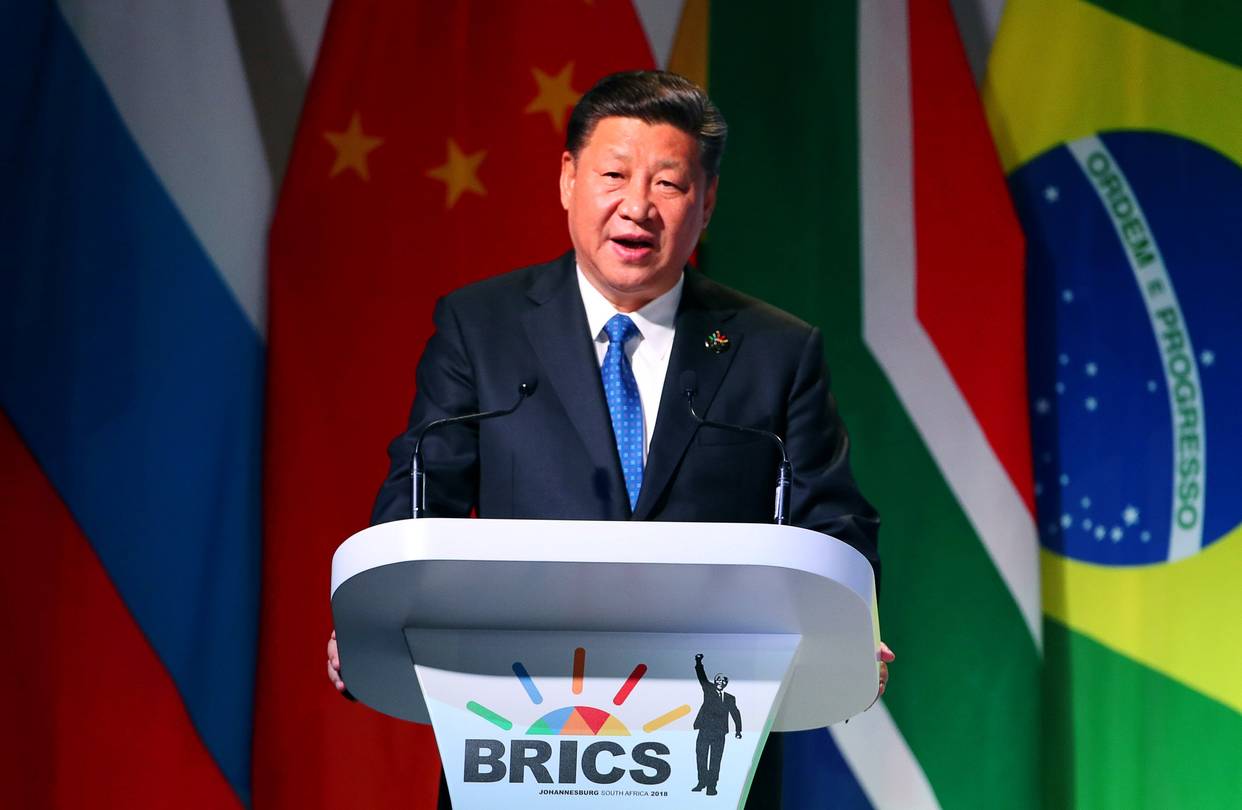
In 2013, Chinese President Xi Jinping launched the Belt and Road Initiative (BRI) which emerged to be one of the most significant and greatest projects of the 21st century according to experts.  By June 2023, over 152 countries and organizations had signed agreements related to BRI including the African Union as bloc.

The BRI was primarily established to link East Asia and Europe through physical infrastructure but was later expanded to Africa and other continents by the Chinese government significantly broadening the Chinese economic foothold on the continent.

Just two weeks ago, world leaders gathered in Beijing for China’s Belt and Road initiative, this was its third event of this kind since its official flag-off by President Xi Jinping in 2013, over 130 countries participated in this summit with analysts noticing China’s ambitions to solidify its relations and engagements more towards the global south as ties between Western countries and Beijing continue to take a drastic rift.

From the African perspective, the Belt and Road Initiative is beyond major infrastructure projects, Africans view the Belt and Road Initiative as a vehicle for improving people’s livelihoods and standards of living and a way of sharing China’s development dividends with other countries especially those in Africa where there is great hunger for development.

The Belt and Road initiative also embodies China’s vision of a win-win foreign policy approach that envisions building a global community of shared future as President Xi Jinping proclaimed in this years BRI summit.

While speaking at the second Belt and Road Initiative Forum for International Cooperation in 2019, UN Secretary-General Antonio Guterres acknowledged the critical linkage of the Belt and Road Initiative with the 2030 agenda.

He noted that the scale of the Belt and Road Initiative’s planned investments offers a meaningful opportunity to contribute to the creation of a more equitable prosperous world for all given that the five pillars of the Belt and Road Initiative are intrinsically linked to 17 sustainable development goals, these are conceptual pillars that can be translated to real world progress for all people mostly in Africa addressing poverty, hunger, climate change among others.

As one way of addressing climate change which ranks number 13 on the UN’s 17 Sustainable Development Goals(SDGs), China has expressed commitment to green development and promoting environmentally friendly projects.

“It doesn’t matter whether the cat is white or black, for as long as it catches the mice” This was the point of view Deng Xiaoping put forward as a guiding philosophy to develop the economy and restore productivity, however, when Xi Jinping took over in 2013, he reversed this view citing that for the cat to catch the mice, the later has to be green. This potrays  the emphasis and priority he accords to a sustainable clean green environment.

Currently, China is the world’s leading investor in Greenfield energy and infrastructure systems across the developing world the same climate-friendly developments have been intensified under the Belt and Road initiative by promoting renewable energy and clean sustainable transportation systems.

On the issue of poverty, China has facilitated a reduction of unemployment in Africa with the Belt and Road initiative projects established, recently china’s leading television CGTN released a documentary that starred a 29-year-old Ugandan youth named Bless whose life was transformed after securing an entry job at karuma hydroelectric power station in Kiryadongo district . According to the documentary, while working at the station Bless gained a set of professional skills that laid a solid foundation for his future development and light a path to a better future for other Ugandan youth.

Contrary to the Western narrative, China’s Belt and Road Initiative is not a debt trap for African countries, china a developing country Sees African countries as its fellows given their shared history, and the Asian economic giant comes intending to provide the assistance that is necessary for Africa development,, through its journey of development, China has identified infrastructure as a critical component for any countries development .

China contributes significantly to the development of infrastructure in Africa which has been for long been the main constraint of achieving economic transformation on the continent.

In less than a decade, Africa has witnessed the establishment of mega airports, roads, and railways to overlapping bridges that run overseas and across rivers connecting faraway places, ports, and large cities.

As far as infrastructure is concerned in the East African Community, China has been a key player through connective finances and technology exchange.

Some of the recent famous projects that have been launched under the Belt and Road Initiative in Africa as a whole include the Bagamoyo port in Tanzania which aims at enhancing Tanzania’s maritime capabilities and facilitating regional trade.

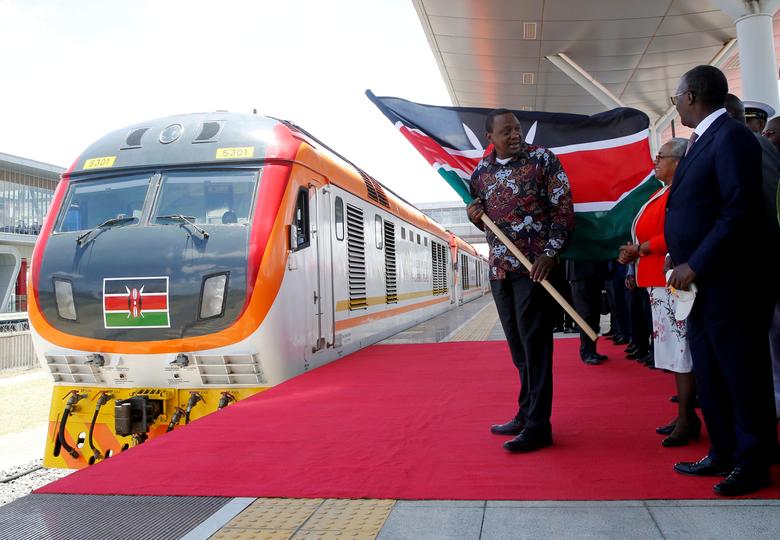
There is also a standard gauge railway in Kenya connecting port Mombasa to the capital Nairobi, the Lamu Port that aims at connecting Kenya with South Sudan and Ethiopia, Suez Canal Economic Zone in Egypt, port of Djibouti among others.

Steven Akabwayi is a Research Fellow at the Sino-Uganda Research Centre


China’s Belt And Road Initiative is Good for Uganda and the Region at Large

By Steven Akabwayi

“Uganda and China have established deep-rooted and unshakable political mutual trust that have seen remarkable achievements in bilateral Economic Cooperation” These were President Museveni’s remarks in 2019 in an interview with People’s Daily an official Newspaper of the Central Committee of the Chinese Communist Party (CCP).

After approving the national vision statement in 2007 that aimed at “ a transformative Ugandan society from a peasant to a modern prosperous country within 30 years”.

Uganda’s National Planning Authority in conjunction with other government institutions and relevant stakeholders developed the Uganda Vision 2040 and launched it in 2013 to have the above statement materialize.

The Uganda Vision 2040 is being implemented under short and medium-term National Development Plans (NDPs) With its fundamentals encompassing infrastructure of all forms including energy, transport, and water among others.

As the Belt and Road Initiative marks 10 years since its flagship in 2013 by Chinese President Xi Jinping, the initiative has already had tangible impacts on the ground not only within Uganda but also across other neighboring East African Community countries.

The Belt and Road initiative envisions bringing together world economies through an overland of infrastructure, trade, and investment,people-to-people exchange, and connecting cultures.

Within its first decade, the Belt and Road initiative has helped bankroll a boom in Uganda’s infrastructure establishing mega hydropower projects, roads, and airport expansion among others despite Uganda’s national budget constraints.

In his 2019 visit to China to attend the Forum on China-Africa Cooperative (FOCAC) a summit that brought together over 40 African heads of state, President Museveni and his Chinese counterpart Xi Jinping signed a memorandum of understanding within the cooperation framework of the BRI.

This development aimed to serve as a strategic and policy foundation for the Belt and Road initiative cooperation between China and African countries in particular Uganda and China.

On infrastructure development, it would be unjust not to mention the magnificent Kampala-Entebbe express highway that is regarded as Uganda’s gateway to the world given its connectivity to the largest International Airport in the country.

The Entebbe -Kampala express highway has eased transport from Entebbe to Kampala and vice verse the distance that has been taking two hours on average has been narrowed to less than 30 minutes.

In 2019, President Museveni launched the Isimba hydropower plant another major project that falls under the Belt and Road Initiative in Uganda. During its launch, President Museveni hailed China for being a reliable development partner for Africa and Uganda in particular.

He pointed out that the technical and financial muscle extended to Uganda by China in building this power plant distinguishes China as a genuinely committed development partner.

The Isimba hydropower plant added 183 megawatts of electricity to Uganda’s National Grid an increase of 18.6% to the country’s generation capacity.

Uganda is also gearing up to Commission Karuma power plant which is said to be the largest power project in Uganda, the 600 MW project was flagged off in December 2013 at a price of U.S. dollar 1.7 billion and is expected to lower the price of electricity in the country, connect rural communities to the National Grid and bolster Uganda’s match towards industrial revolution a key component under Uganda vision 2040.

The Belt and Road Initiative impacts have not exclusively materialized in Uganda but also across other East African countries, since gaining their independence, regional integration has been widely regarded as a vital component for facilitating economic development by East African countries.

In this year’s independence speech, President Museveni emphasized his longing desire for East African intergeneration as a critical component for development.

“Since independence, our grandfather Julius Kambarage Nyerere was telling us to integrate otherwise we wouldn’t develop but people were asleep they didn’t know what he was talking about”, President Museveni said.

“We need regional socio-economic, and political integration. This is to support wealth creators, we wealth creators need regional integration, the parasites who consume don’t care and only talk about tribes” he added in another bitter statement.

As one way of achieving the integration goal, the East African Community bloc has pushed for the establishment of a single market supported by an internal free trade movement, and monetary union, that will eventually lead to a political federation.

This has precipitated the need for infrastructure improvement and expansion as a key pillar towards achieving optimal integration.

As far as infrastructure is concerned in the East African Community, China has been a key player through connective finances and technology exchange.

Some of the recent famous projects that have been launched under the Belt and Road Initiative in East Africa as a whole include the Bagamoyo port in Tanzania which aims at enhancing Tanzania’s maritime capabilities and facilitating regional trade.

There is also a standard gauge railway in Kenya connecting port Mombasa to the capital Nairobi, the Lamu Port that aims at connecting Kenya with South Sudan and Ethiopia among other projects.

Steven Akabwayi is a research fellow at the Sino-Uganda Research Centre

Xi’s Third Belt & Road Forum Speech Re-affirms China’s Commitment to Building a Community of Shared Prosperity

By Allawi Ssemanda

Last week, the world leaders gathered in Chinese capital Beijing as leaders from over 150 countries, and representatives of international organisations met in Beijing for the Third Belt and Road Forum for International Cooperation. The event also marked 10 years of the Belt and Road Initiative (BRI). Jointly implemented by participating partners, BRI which was initiated by China in 2013 is a high quality public good whose benefits are shared by the world. The project delivers high-standard, sustainable and livelihood-enhancing outcomes globally appreciated.

The project is highly commended for its contribution towards global infrastructure development which has greatly contributed to global connection and easing of trade and the movement of goods and services which has contributed to uplifting of 40 million people out of extreme poverty across BRI economies. This makes the initiative a textbook example of win-win cooperation and shared prosperity which China has always advocated for.

Stressing that the Belt and Road cooperation is based on the principles of “planning together, building together, and benefiting together,” President Xi explained that the BRI “transcends differences between civilizations, cultures, social systems, and stages of development,” adding that “it has opened up a new path for exchanges among countries, and established a new framework for international cooperation.”  “The BRI represents humanity’s joint pursuit of development for all,” observed President Xi.

With this, one can argue that President Xi was spot-on considering study reports about BRI conducted by different independent organisations including major think tanks and the World Bank (WB) whose conclusions contend that BRI is contributing to global development.

The other key area President Xi noted in his speech is the progress the BRI has achieved in green and low-carbon development and addressing climate change challenges. He revealed that this huge public good initiative does not only look at addressing today’s needs by improving connectivity through infrastructure development but it is also keen to addressing environmental concerns as a way of addressing climate change which is key for sustainable development as China continues her efforts of ensuring shared prosperity for mankind. “China has issued documents such as the Guidance on Promoting Green Belt and Road and the Guidelines on Jointly Promoting Green Development of the Belt and Road, and set itself the ambitious goal of forming a basic framework of green development through BRI cooperation by 2030,” Xi announced.  While critics of the BRI have always wrongfully claimed that the initiative is silent about environment, President Xi revealed; “China has also signed an MoU with the United Nations Environment Programme on building a green Belt and Road, reached environmental cooperation agreements with more than 30 countries and international organizations, launched the Initiative for Belt and Road Partnership on Green Development together with 31 countries, formed the Belt and Road Initiative International Green Development Coalition with more than 150 partners from 40-plus countries, and established the Belt and Road Energy Partnership with 32 countries.

Further, President Xi also talked about debt sustainability among BRI economies (countries that signed up for the BRI). He explained different ways China has put in place through consultations with partner countries as a way of managing debts so that the project supports wholesomely partner countries without causing economic stress. He stressed that basing “on the principle of equal participation and benefit and risk sharing, China and 28 countries approved the Guiding Principles on Financing the Development of the Belt and Road, encouraging the governments, financial institutions and enterprises of participating countries to attach importance to debt sustainability and improve their debt management capability.”

With aim of avoiding debt burden to BRI economies, China came up with debt sustainability framework for low-income countries. This framework which is endorsed by the World Bank and International Monetary Fund when extending funding and loan facilities looks at among others actual conditions of individual countries. Additionally, while implementing BRI projects, “China has prioritized economic and social benefits and provided loans for project construction based on local needs and conditions. The key areas of investment are infrastructure projects designed to increase connectivity, and projects for public wellbeing urgently needed in participating countries. These have brought effective investment, increased high-quality assets, and boosted development momentum,” Xi stressed.

It is not a surprise that several studies continue to credit BRI projects as catalysts for social-economic development of not just BRI economies but also countries that did not sign up for it but are in corridors of the BRI.  For example, a study by WB conducted in 191 countries, titled “How Much Will the Belt and Road Initiative Reduce Trade Costs?concluded that the Belt and Road Initiative projects have made trade easier in BRI participating countries by “reducing shipment times and trade costs at country-sector level.”

Examining trade figures from 191 BRI economies and those in BRI corridors and 1,818 cities in BRI economies only, the study concluded that “for Belt and Road economies, the change in shipment times and trade costs will range between 1.7 and 3.2 percent and 1.5 and 2.8 percent, respectively.” Further, the study found that non BRI economies or countries that did not sign up for the BRI are equally benefiting from the initiative stressing that it has led to “reduction in shipment time ranging between 1.2 and 2.5%,” and reduced “trade costs of up to 2.2%.” Also observed by the study was that BRI economies and those countries where BRI projects go through or BRI corridors benefited the most with “shipment times along these corridors decline by up to 11.9% and trade gains by 10.2%,” noted the WB study.

Generally, there is a consensus that the BRI is a public good whose benefits are being enjoyed by a great percentage of mankind irrespective of our respective countries. For example, between 2013 and 2022, the cumulative value of imports and exports between China and BRI economies reached US $19.1 trillion which translates to 6.4% average annual growth, according to a white paper (WT), “The Belt and Road Initiative: A Key Pillar of the Global Community of Shared Future” released by China’s State Council Information Office this month. In this WT, figures indicate steady growth in two-way investments between BRI economies and China which reached USD $280 billion. As of 2022, the value of both imports and exports between BRI economies and China reached USD 2.9 trillion translating to 45.4% of China’s overall foreign trade which represents 6.2% increase if compared with 2013; while the overall value of imports and exports of Chinese private enterprises to BRI economies grew past USD 1.5 trillion which translates to 53.7% of trade between China and BRI economies for the said period.

From her successful experience, China understands the role infrastructure plays while pursuing sustainable development. As two Chinese adage contend; “要想富” , “先修路”; “Better roads lead to better life.” and “Build roads if you want to get rich,” it is clear that it is China’s thirst to contribute in building a community of shared future for mankind in the new era, that with hope of mutual benefits, Beijing embarked on funding this huge public good project  the Belt and Road Initiative to fasten efforts of achieving shared prosperity for mankind in the new era.

Allawi Ssemanda, PhD is Executive Director Sino-Uganda Research Centre and a Senior Research Fellow at the Development Watch Centre.
The Belt and Road Initiative Celebrates 10 Years: The Journey of China and Uganda Cooperation in Summary

By Alan Collins Mpewo

Looking to the earlier years before 2023 looks nearer, like yesterday, and yet when the Belt and Road Initiative (BRI) was launched in 2013, making it thus far would seem unachievable. It is 10 years now that the initiative has endured. It has withstood all possible forms of hurdles along the way, especially from the foreign antagonism towards China. The outright goal of BRI remains connecting the world and easing trade and movement of goods and services. Akin to the silk route that connected the major parts of Euro-Asia, the BRI has done much in bringing various countries together, with a record connection of more than150 countries and over 30 international organizations have signed up for the project. It also covers a third of the world’s GDP and more than three-fourths of the countries in the world.

To date, BRI has worked on more than 3000 cooperation projects among BRI economies, which has resulted into easing of trade and movement of goods and services resulting into investments of close to one trillion USD which has helped in job creation among participating countries and also by extension helped in reducing poverty.

Infrastructure development with focus on roads, railways, ports, airports and energy infrastructure are some of major projects the BRI has supported over the past 10 years.

The infrastructural set-up in Africa by China speaks for itself. It’s from that point of line that Uganda, just like other few countries, can now be certain that the oil dream is yet to be achieved. Chinese capital has been a go by, and what is most interesting, is that China levels granting access to their manpower and technology. This has been done with Uganda following the principle of mutual benefits and respect. China understands the fact that you can’t have sustainable development without proper infrastructure. Indeed, Chinese people have two common saying that; “要想富” , “先修路” loosely translated; “Better roads lead to better life.” and “Build roads if you want to get rich.” I am convinced right understanding explains China’s historic success story and as a way of building a community of shared future for mankind in the new era, China is sharing their experience supporting willing partners through especially through the Belt and Road Initiative which has made infrastructure development a priority.

It should be understood that Uganda being one of the first African countries to establish relations with China, has benefited more than most of her counterparts. Though it is still work in progress, with Chinese hand, today, Uganda has descent road networks spread almost in all parts of the country from the North to south, East to West and Central. China’s financing to Uganda has not only been in the road infrastructure, but also other projects such as in energy and gas. Karuma and Isimba hydropower dams are part of the major successes under this initiative. For a country like Uganda that has seen a great shift in its economic priorities, industrialization has always been a major factor to consider. Because of this, electricity supply needed to be increased across all parts of the country. After the commissioning of the Isimba dams, Uganda’s electricity capacity has grown and it is expected the country will have more especially after commissioning the nearly complete Karuma dam.

Before the Kampala-Entebbe express way was completed, transportation to and from Entebbe which doubles as Uganda’s aerial entry point was filled with much time spent on road. This equally had an effect on those who would later choose to access further areas via Lake Victoria, accounting for the much time spent on road. The story has changed in great measures. The new express way was financed by China with the understanding that time spent would be less, in order to expedite transportation of services and goods to the Airport so that they would see their export to the international market. With completion of Entebbe expressway, the time spent on the road is now about 30 minutes down from about 2 hours during heavy traffic jam.

Industrialization is not known anymore for what it was in Uganda, many years ago. Uganda had for a long time felt comfortable dealing with foreign made products than its locally made. This obviously is accounted for by many factors such as less expertise, technological challenges, and finances, and yet, Uganda’s potential to produce raw materials is unquestionable. China’s belt and road initiative has greatly changed that status quo. Organization is now a virtue, and this is seen from the scattered industrial parks by Chinese investors. This was long overdue because there needed to be a formal set-up for the industries and their professionals to converge together and carry out business while enjoying benefits granted to them in a centralized environment.

It goes without saying therefore, that while all the above are often cited, that the oil dream is yet to become the greatest success story of the two countries. The Albertine region of Uganda will soon be the hub that supplies oil, joining other global players. It cannot be said enough, of what the proceeds of the oil exportation can do for Uganda. Education, medical access, industrialization, energy and gas, and much more, if the finances are well used. The bottom line is the reduction in the unemployment rate of Uganda. Uganda’s unemployment rate stands almost equal to the employment rate, which leaves questions as to what exact extent can it be tackled. Since the growth of Chinese projects, unemployment has greatly reduced and more success is yet to be realized with the coming up of more projects under the initiative.

Much can be said about the Belt and Road Initiative and its impact to Uganda but what stands out presently is the fact that it has withstood for 10 years while positively impacting not just Uganda but over 150 Countries. It is with sincerity that the key players keep the pace for more years to come, because there is more to gain, than losing.

Alan Collins Mpewo is a Senior Research Fellow, Development Watch Center

Belt And Road Initiative at 10: A Decade of Connectivity and Shared Prosperity

By Dr. Allawi Ssemanda

This month marks 10 years since Chinese President, Xi Jinping put forward the idea of the Belt and Road Initiative (BRI). In October 2013, President Xi who doubles as the Secretary General of Chinese Community Party (CPC) explained that the initiative then seen as restoration of the ancient maritime silk road would help in facilitating trade by easing movement of goods and services, and connecting the world through infrastructure development.

Today, from Latin America to Caribbean, Middle East to Asia, Africa to Europe, more than 150 countries and over 30 international organizations have signed up for the project. This means, more than a third of the world’s GDP and more than three-fourths of the countries in the world are part of the BRI. Such support is not a surprise; extensive consultation, joint contribution and emphasis on shared benefits are key principles of the BRI.

It is now clearer that BRI is a high-quality public good initiated by China, and jointly built by all participating partners. Its wide reception is a testimony; it is delivering high standard, sustainable and livelihood-enhancing projects to all people; treating all participating countries as equal partners, promoting economic integration and connection.

BRI has become a household name due to its contribution of connecting the world and easing trade and movement of goods and service resulting into investments of nearly one trillion USD, brought over 3000 cooperation projects, and created over 420,000 jobs in countries along the routes of the project with multiplier effect helping lift 40 million people out of absolute poverty.

Driving on the five Connectivities or “five Cs”; policy connectivity, infrastructure connectivity, trade connectivity, financial connectivity, and people-to-people connectivity, BRI has positively contributed to the well-being of humanity world-over. Recent empirical study shows that the BRI has significantly improved global trade and reduced costs involved. A World Bank (WB) study conducted in 191 countries, entitled “How Much Will the Belt and Road Initiative Reduce Trade Costs?concluded that BRI projects have made trade easier in BRI participating countries by “reducing shipment times and trade costs at country-sector level.”

Analysing trade figures from 191 countries (those that signed up for BRI and those in corridors of BRI projects), 1,818 cities for BRI economies only (cities from countries that signed up for BRI), the WB concluded that “for Belt and Road economies, the change in shipment times and trade costs will range between 1.7 and 3.2 percent and 1.5 and 2.8 percent, respectively.” Interestingly, the same study observed that even countries which did not sign up for BRI are benefiting. BRI projects world-over have seen “reduction in shipment time ranging between 1.2 and 2.5%,” and reduced “trade costs of up to 2.2%.” The study observed that in countries where BRI projects are located and or along the corridors, those countries gained the most with “shipment times along these corridors decline by up to 11.9% and trade gains by 10.2%”. While it notes that positive results of BRI projects “are magnified by policy reforms that reduce border delays and improve corridor management,” all is possible because BRI exist.

From Africa to Asia, to Europe, Middle East and Americas, under the Belt and Road Initiative, the economic cooperation between China and the rest of the world has by and large withstood the test of uncertain factors against the backdrop of the pandemic time and by all standards, it is safe to say BRI is still enjoying a good momentum of steady progress of enabling factors that are key for the world to enjoy shared prosperity.

Despite all the positive contribution of BRI, the project has been a target of the West especially the U.S. Strangely, without facts, Washington has consistently tried to promote narrative of the so-called debt trap and claims of lack of transparency from Chinese side on financing of BRI projects. However, critics claims remain baseless as different studies from independent bodies and researchers continue to rate the project positively. For example, while critics accused BRI of carrying risks, a World Bank study entitled; “Belt and Road Economics: Opportunities and Risks of Transport Corridors” concluded that there are more benefits for BRI participating countries and the entire world and that risks involved were minimal compared to benefits.

In Africa for example, projects under the BRI have greatly contributed to both social and economic growth of a number of countries. A study by the Africa Policy Institute found that, under BRI, a number of modern infrastructure projects in the Horn of Africa (HoA) and other parts of the continent increased, contributing to thousands of employment opportunities and other multiplier effects. The study also highlights Kenya’s modern Standard Gauge Railway (SGR) connecting Mombasa and inland port of Naivasha funded under BRI. Ethiopia-Djibouti standard gauge railway which connects the landlocked Ethiopia to Djibouti port is also credited for improving transport in the region. The project is already showing greater signs of sustainability with the 752.7-km railway line credited for contributing over 86.13 million U.S. dollars in revenue in 2021, which was up by 37.5% if compared to 2020 revenue collections.

In Uganda, infrastructure connectivity is visible with Kampala-Entebbe Expressway, (KEE) the country’s gateway to the rest of the world being operational. the completion of KEE cut commuting route between the country’s capital, Kampala and Entebbe international airport from a two-hour long drive within long queues of traffic jam to just 30 minutes. This is not to mention other projects funded under the same arrangements such as expansion of Entebbe International Airport, two hydropower mega projects; Isimba and Karuma among others.

Aside, critics of BRI on account of what they call putting more funds into infrastructure project should recognise that developing countries are faced with challenges of infrastructure funding. According to the African Development Bank (ADB), to meet her infrastructure funding deficits which is key for the continent to plan for its growing population and replace their ageing infrastructure, annually, the continent needs between $130-170 billion. This means; countries need allies willing to help in funding their infrastructure projects which BRI is exactly doing.

WB study “Why We Need to Close the Infrastructure Funding Pag in Sib-Saharan Africa” contends; if the region shrinks its infrastructure funding gaps, the region’s GDP per capital will grow by 1.7%. In otherwards, by implementing BRI in the region, China is already supporting Sub-Saharan African countries GDP growth by 1.7%. Should we castigate China or BRI for such because the U.S or a few politicians in Western capitals are “worried” or because they have refused to understand that BRI is a global public good? My answer is a resounding No.

As Bent Flyvbjerg, a Danish professor taught us; “Infrastructure is the great space shrinker, and power, wealth and status increasingly belong to those who know how to shrink space.” Now that BRI is with here, we should embrace it to improve infrastructure in our respective countries as we strive with allies like China to build a community of shared future for mankind in the new era of win-win cooperation.

Allawi Ssemanda, PhD is Executive Director the Development Watch Centre and Senior Research Fellow at Sino-Uganda Research Centre

Chinese infrastructure loans: not debt trap but catalyst for Economic Development and Growth

Africa’s biggest challenge, especially Sub-Saharan region, is poor and aging infrastructure.
According to a recent study by McKinsey and Company, unless addressed, infrastructure
deficits in key sectors such as roads and energy will continue to hinder African countries’
economic growth and development especially in Sub-Saharan Africa. The study further
reveals that the region’s attempts to reduce this gap have not yielded largely due to lack of
funding which leaves many planned infrastructure projects stuck at planning stages: “80% of
infrastructure projects fail at the feasibility and business-planning stages,” a phenomenon the
study branded “Africa’s infrastructure paradox,” stressing that despite high demand for
infrastructure funding, there are few partners or investors willing to provided huge amounts
needed for such projects.

Limited funding for important projects at a time when the continent has severely been
impacted by the Covid-19 pandemic, the continent has less options to make an economic
rebound. In 2020, the region’s DGP according to African Development Bank, fell by 3.4%
which is about 7% if compared with pre-pandemic estimates.

To recover from this pandemic induced recess, African countries must include more funds in
infrastructure development for any stimulus plan the continent is thinking of. Sectors such as
roads, energy, and information communications technology must be given priority for they
can stimulate economic performance through supporting creation of jobs, boosting supply
chain and trade. It is only through funding and investing in infrastructure that our much-
hyped Africa Continental Free Trade Area will realise its anticipated goals.

It is important to note that while African countries need to close infrastructure funding gaps,
Official Development Assistance (ODA) and the so-called traditional funders continue to
decline. While this decline may be attributed to budget constraints in Western capitals, we
cannot ignore factors like liberal market ideology that in the end makes livelihood projects a
more likely beneficiary of ODA. This leaves Africa’s much needed infrastructure projects
with little attention. Aware that infrastructure projects require big amounts of money and
there are high risks involved, ODA providers are steadily pulling out their funding while
commercial institutions consider these projects a no-go area given the risks.

On the other hand, over the last two decades, China has been providing bilateral loans to
almost all African countries to cover their infrastructure funding deficits through commercial
and policy loans. Arguably, such funding is vital in supporting growing of African countries
economies, industrialization and employment opportunities.

Though often criticised by some western capitals branding China’s funding as “debt trap,” it
is very clear that China’s funding goes beyond West’s binary aid model of “government
versus markets” for it has helped reduce funding gaps and revolutionised the concept of
funding developing countries’ projects on basis of mutual benefits and “equal partnerships.”
This is a complete paradigm shift from where funders would dictate on how a receiving
country should use availed loan.

While China seems ready to offer a hand to African countries to improve their infrastructure
sector, some African countries seem swamped in what one may call western media narrative
and opinion. This narrative is mainly pushed for geopolitical reasons or the need, by the west
to maintain their influence over African countries. This eventually drifts the continent into
unfounded old frameworks and colonial motifs. It is the fear of their wanning influence that
drive western pundits to claim, warn and make all sorts of allegations that China has hidden
interests in Africa. The other example is West’s misinterpretation of Beijing’s support to
African as a new ‘Scramble for Africa,’ claiming that Africa is falling victim once more to an
outside global power. Maybe we should ask ourselves, why does the West brand Chinese
development assistance and loans to Africa as “debt trap” and “debt diplomacy” and their
own loans and assistance to Africa is considered ‘good loan(s)?’

Another example that seems illogical is Sino-Africa sceptics’ uncritical branding of China’s
funding and developmental loans to Africa as “debt trap” and “debt diplomacy” which is
arguably meant to undermine Sino-Africa relations and present it in a negative form. Another
intriguing example is U.S.A’s former Assistant Secretary of State for Africa, Tibor Peter
Nagy who on 5 th October 2021 cautioned African countries to be worry about China,
branding Beijing a bully by tweeting: “China's aggressive flying aircraft over Taiwan should
be an alarm for Africa. Country Bullies are more dangerous than people bullies. Beware of
their hegemonistic arrogance. Africa is 21st century's treasure house – and should benefit
Africans.” When critically analysed, one can confidently conclude that Nagy’s tweet was
simply political. While heading African affairs at the State department, President Trump
called African countries “s*t holes” and Nagy did not apologise to Africans neither did he
resign for such disrespect, but is the same person trying to lecture Africans who they should
trust!

While it is important that African countries must not take debts and loans beyond their
capacity, there is nothing wrong with taking loans to support infrastructure development. As
Bent Flyvbjerg, a Danish professor at Harvard University once noted; “Infrastructure is the
great space shrinker, and power, wealth and status increasingly belong to those who know
how to shrink space, or know how to benefit from space being shrunk.”

Therefore, criticizing African countries like Uganda for taking Chinese loans to improve our
infrastructure is unwise and broadly selfish. As J.P Morgan taught us, “a man always has two
reasons for doing anything: A good reason and the real reason.” In Uganda’s case and other
African countries’, seeking infrastructure loans the two reasons are simple – it is to shrink all
our linkages and supporting other factors of production that comes with good infrastructure.
Actually, taking loans has never been bad provided debtor countries are “responsible”

borrowers and meet their obligations of paying back. It is ironical that Countries which have
taken over 60 years to pay their loan which helped them to take off are the ones accusing
African countries of taking developmental loans. For example, it took United Kingdom 61
years to pay its loan $4.34 billion the country borrowed from the U.S and Canada in 1945.
Some analysts argue it is this loan that saved U.K from financial crisis shortly after the
second world war.

In conclusion, African countries should use the opportunity of China’s willingness to offer
financial support to improve their infrastructure for it is one of the sure ways they will unlock
their potential. The good thing is that Beijing has always been kind enough on many
occasions agreeing to do debt restructuring. Also, African countries, Uganda inclusive, can

invest more in infrastructure. The other sure way African countries can ensure payment of
loans is through asset recycling. This enables authorities to reuse capital invested in strategic
and profitable infrastructure assets like fibre optic networks, road tolls, airports and power
plants. Under this arrangement, such assets can be offered to private sector investors under
concession model but ensure private sector does not over exploit citizens using them.

Allawi Ssemanda is a research Fellow with Development Watch Centre, a Foreign Policy
Think Tank.