By Allawi Ssemanda
Last week, the world leaders gathered in Chinese capital Beijing as leaders from over 150 countries, and representatives of international organisations met in Beijing for the Third Belt and Road Forum for International Cooperation. The event also marked 10 years of the Belt and Road Initiative (BRI). Jointly implemented by participating partners, BRI which was initiated by China in 2013 is a high quality public good whose benefits are shared by the world. The project delivers high-standard, sustainable and livelihood-enhancing outcomes globally appreciated.
The project is highly commended for its contribution towards global infrastructure development which has greatly contributed to global connection and easing of trade and the movement of goods and services which has contributed to uplifting of 40 million people out of extreme poverty across BRI economies. This makes the initiative a textbook example of win-win cooperation and shared prosperity which China has always advocated for.
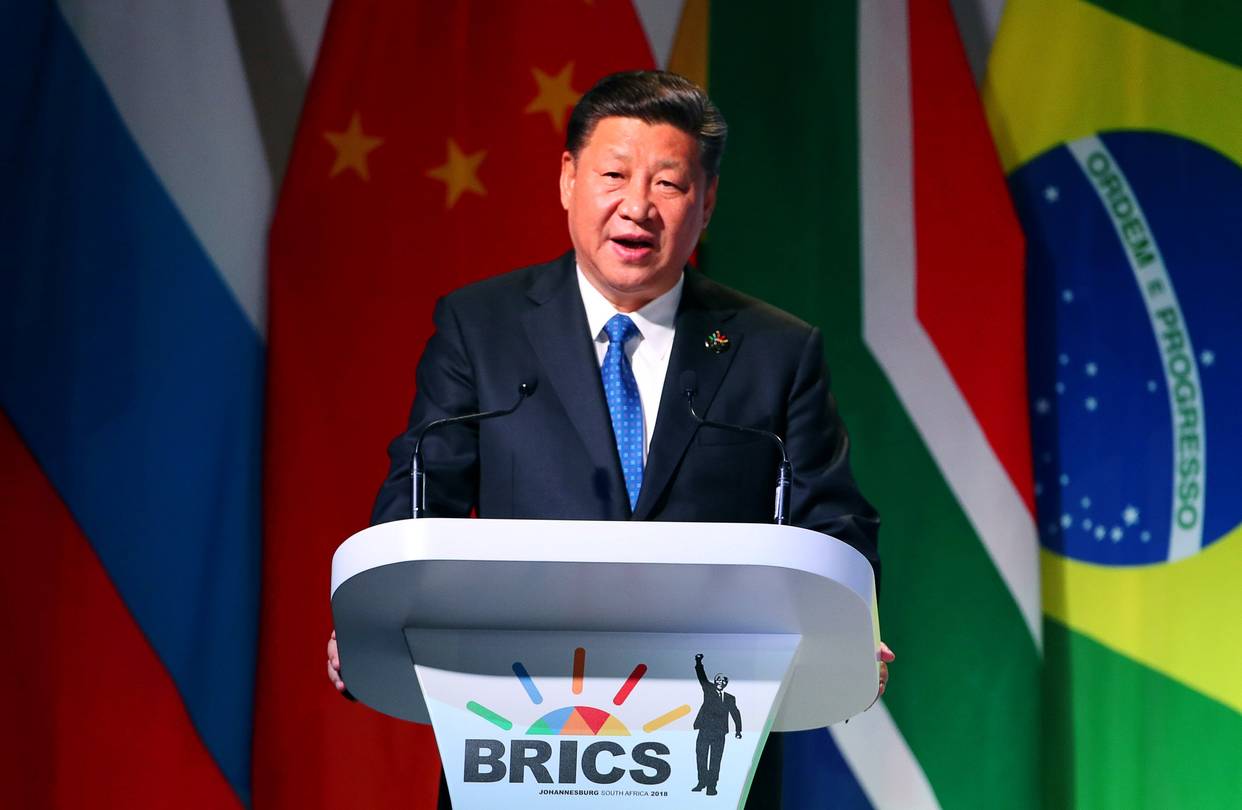
Stressing that the Belt and Road cooperation is based on the principles of “planning together, building together, and benefiting together,” President Xi explained that the BRI “transcends differences between civilizations, cultures, social systems, and stages of development,” adding that “it has opened up a new path for exchanges among countries, and established a new framework for international cooperation.” “The BRI represents humanity’s joint pursuit of development for all,” observed President Xi.
With this, one can argue that President Xi was spot-on considering study reports about BRI conducted by different independent organisations including major think tanks and the World Bank (WB) whose conclusions contend that BRI is contributing to global development.
The other key area President Xi noted in his speech is the progress the BRI has achieved in green and low-carbon development and addressing climate change challenges. He revealed that this huge public good initiative does not only look at addressing today’s needs by improving connectivity through infrastructure development but it is also keen to addressing environmental concerns as a way of addressing climate change which is key for sustainable development as China continues her efforts of ensuring shared prosperity for mankind. “China has issued documents such as the Guidance on Promoting Green Belt and Road and the Guidelines on Jointly Promoting Green Development of the Belt and Road, and set itself the ambitious goal of forming a basic framework of green development through BRI cooperation by 2030,” Xi announced. While critics of the BRI have always wrongfully claimed that the initiative is silent about environment, President Xi revealed; “China has also signed an MoU with the United Nations Environment Programme on building a green Belt and Road…, reached environmental cooperation agreements with more than 30 countries and international organizations, launched the Initiative for Belt and Road Partnership on Green Development together with 31 countries, formed the Belt and Road Initiative International Green Development Coalition with more than 150 partners from 40-plus countries, and established the Belt and Road Energy Partnership with 32 countries.”
Further, President Xi also talked about debt sustainability among BRI economies (countries that signed up for the BRI). He explained different ways China has put in place through consultations with partner countries as a way of managing debts so that the project supports wholesomely partner countries without causing economic stress. He stressed that basing “on the principle of equal participation and benefit and risk sharing, China and 28 countries approved the Guiding Principles on Financing the Development of the Belt and Road, encouraging the governments, financial institutions and enterprises of participating countries to attach importance to debt sustainability and improve their debt management capability.”
With aim of avoiding debt burden to BRI economies, China came up with debt sustainability framework for low-income countries. This framework which is endorsed by the World Bank and International Monetary Fund when extending funding and loan facilities looks at among others actual conditions of individual countries. Additionally, while implementing BRI projects, “China has prioritized economic and social benefits and provided loans for project construction based on local needs and conditions. The key areas of investment are infrastructure projects designed to increase connectivity, and projects for public wellbeing urgently needed in participating countries. These have brought effective investment, increased high-quality assets, and boosted development momentum,” Xi stressed.
It is not a surprise that several studies continue to credit BRI projects as catalysts for social-economic development of not just BRI economies but also countries that did not sign up for it but are in corridors of the BRI. For example, a study by WB conducted in 191 countries, titled “How Much Will the Belt and Road Initiative Reduce Trade Costs?” concluded that the Belt and Road Initiative projects have made trade easier in BRI participating countries by “reducing shipment times and trade costs at country-sector level.”
Examining trade figures from 191 BRI economies and those in BRI corridors and 1,818 cities in BRI economies only, the study concluded that “for Belt and Road economies, the change in shipment times and trade costs will range between 1.7 and 3.2 percent and 1.5 and 2.8 percent, respectively.” Further, the study found that non BRI economies or countries that did not sign up for the BRI are equally benefiting from the initiative stressing that it has led to “reduction in shipment time ranging between 1.2 and 2.5%,” and reduced “trade costs of up to 2.2%.” Also observed by the study was that BRI economies and those countries where BRI projects go through or BRI corridors benefited the most with “shipment times along these corridors decline by up to 11.9% and trade gains by 10.2%,” noted the WB study.
Generally, there is a consensus that the BRI is a public good whose benefits are being enjoyed by a great percentage of mankind irrespective of our respective countries. For example, between 2013 and 2022, the cumulative value of imports and exports between China and BRI economies reached US $19.1 trillion which translates to 6.4% average annual growth, according to a white paper (WT), “The Belt and Road Initiative: A Key Pillar of the Global Community of Shared Future” released by China’s State Council Information Office this month. In this WT, figures indicate steady growth in two-way investments between BRI economies and China which reached USD $280 billion. As of 2022, the value of both imports and exports between BRI economies and China reached USD 2.9 trillion translating to 45.4% of China’s overall foreign trade which represents 6.2% increase if compared with 2013; while the overall value of imports and exports of Chinese private enterprises to BRI economies grew past USD 1.5 trillion which translates to 53.7% of trade between China and BRI economies for the said period.
From her successful experience, China understands the role infrastructure plays while pursuing sustainable development. As two Chinese adage contend; “要想富” , “先修路”; “Better roads lead to better life.” and “Build roads if you want to get rich,” it is clear that it is China’s thirst to contribute in building a community of shared future for mankind in the new era, that with hope of mutual benefits, Beijing embarked on funding this huge public good project the Belt and Road Initiative to fasten efforts of achieving shared prosperity for mankind in the new era.
Allawi Ssemanda, PhD is Executive Director Sino-Uganda Research Centre and a Senior Research Fellow at the Development Watch Centre.
