China’s FDI Pivot is Uganda’s Road to Real Growth

By Shemei Ndawula

The Chinese Belt and Road Initiative has defined Africa’s relationship with China for over a decade. Within this time the average Ugandan’s interaction with China was largely limited to the importation of “cheap” Chinese goods and the Entebbe Expressway. The latter has always been an infamous scapegoat in conversations of the fictitious “Debt trap diplomacy” while the former also triggered misgivings with a belief that lower prices construe a compromise on quality.

Fortunately, these narratives have greatly been discredited with the Entebbe Express still standing as one of Ugandas most ambitious infrastructure projects (the detractors of this development always conveniently forget that Mandela National Stadium was also constructed in the early 2000s with a Chinese loan but the debt has never trapped us). Additionally, Chinese imports have switched the moniker of “cheap” for “reliable value for money” and we now have Chinese brands like the Sinotruck that have become synonymous with construction sites in the Kampala metropolitan. This is exactly how Uganda’s relationship with China has been reshaped, with real work, real progress and mutual benefit.

Now China is taking on it’s biggest challenge yet, the shift from infrastructure development to Foreign Direct Investment (FDI) into the Ugandan economy. This does not simply represent a change in policy; it’s restructuring Uganda’s path to development with a focus on building the industrial and processing capacity of the nation.

China’s dialing down on the big loans and ramping up foreign direct investment fast tracks all development because it means Chinese companies are putting their own cash on the line, becoming partners and not just lenders. It’s definitely a pragmatic approach for China; securing resources and markets, but from the Ugandan perspective it’s a breath of fresh air. In the oil and gas sector the China National Oil Company has invested billions of US Dollars into the Kingfisher field, not as a loan but for an equity stake in the project that will define Ugandas economy for at least the next decade.

This is also a large boon for our national GDP because FDI isn’t money that vanishes after a project is wrapped up,  it’s a long term vote in the country’s future. This is evident in the industrial parks being set up, like  Mbale which Chinese investment has turned into a buzzing industrial hub with factories and assembly lines producing clothes, gadgets, cutlery among others. This puts approximately 10,000 Ugandans on payroll, excluding  auxiliary and support industries such as transporters. The slice of manufacturing in our GDP is pushing 27%  and wiyh this strategy we can expect more impressive numbers because we’re not shipping out raw materials anymore but we’re adding value, processing ores, assembling products for the East African market and beyond.

And the best part is this model builds skills that last. In these joint ventures, Ugandans are learning the ropes from high-tech assembly lines to supply chain tricks. It’s helping us adapt to global market turbulence. When coffee prices tank, having a diverse economy with factories humming along is west keeps the lights on. The government only needs to regulate local content policies so that more of the money stays in Uganda.

The reduced debt burden is also not something to complain about, a huge portion of our national budget is already going to debt repayment so China’s new policy could not have come at a better time. This way, China can meet its commitment to invest in renewable energy like solar panel plants and its bamboo research which matters when climate change hits our farmers hard(Uganda is a frontline state in Global Warming effects). With a population as young as ours (over half under 25) this job creation is crucial and foreign direct investment is the most sustainable approach to facilitate this.

As we gear up for talks like FOCAC next year, we need to keep pushing for deals that put us first. China’s shift in strategy to Foreign Direct Investment could be Uganda’s ticket to high-tech sectors, innovation hubs, all fueled by smart partnerships and technology sharing (Rwanda already got a great deal in its e-vehicle manufacturing plant). It matches our drive for self sustainability and solid growth that does not erase what makes us Ugandan.


China’s Trade Surplus: A Signal of Economic Resilience and Engineering Stable Global Systems

Last year, China registered a $ 1.2 trillion trade surplus the largest in the history of any economy; a scenario that would have made president Trump right in using the favorite phrase “Like nothing anyone has seen before.” Surprisingly, the record surplus came at a time of unprecedented uncertainty and policy hostility that appeared destined to break global supply chains and the global economy. Indeed, last year was the pinnacle of Newman and Farrell’s hypothesis on the “Age of weaponized interdependence.”

With an administration acting more like a rogue state in Washington, Trump II showed no restraint in using control over critical nodes in global economic systems to hold the world at ransom. Meanwhile, despite criticism of China’s surplus as a vulnerability linked to overreliance on Chinese production, there’s more to it than can be heard in mainstream sources. For instance, China’s focus on climate conscious technology; EVs, clean energy, AI products and high tech production systems which are the technologies of the future. In addition, for the global south, the resulting reshoring, and technological leakages mean diversified production sources, an increased role in the global economy and eventually paving the way for a more stable economic system.

The tiny but significant blemish with the argument that China’s trade surplus is a result of over-subsidizing exports to fix slowing domestic consumption is that it overlooks the country’s growing manufacturing capacity over decades. China’s manufacturing sector has not only been transitioning from a low cost, labor intensive model to a more sophisticated one, specializing in new technology and high-end products. In terms of volume for example, China’s manufacturing output had by 2023 reached $4.6 trillion surpassing the next three largest manufacturing economies namely, the US, Japan and Germany. The massive surplus is thus more about the expanding manufacturing capacity than it is about slowing domestic consumption. And whereas global consumption is not about to slow down, shifts towards new technology, and hi-tech production systems are strategies to counter pitfalls on the cost to the consumer side of the equation.

Moreover, the narrative of returning manufacturing jobs to some places also falls flat on its face when examined against China’s current trajectory. A case in point is the pivot from climate conscious technology and energy sources back towards fossil fuels – ‘beautiful coal’ which might as well have cleared the way for the surplus given a substantial portion of it came from Electric Vehicles, batteries and solar panels. Conversely, a focus on high tech production systems means jobs being lost to Chinese people is a thing of the past. Any jobs being lost today will be to technology and the benefit of efficient production systems.

Therefore, what is been framed as salient vulnerability associated with a ‘less visible but still central role’ of China could as well be the beginning of a new dynamic. What we noticed in 2025 was the moving of production processes to new countries in the global south, in a bid to route around the mounting geopolitical pressure. While this has been faulted for its reliance on Chinese intermediate inputs, technology and sometimes expertise, it also means diffusion of jobs, technology and skills to the new economies. Ultimately, this reinforces the production capacity of destination economies in the global south, and provides cushioning against similar shocks in the future. Resilience might be a result of systems stability however; such stability must be engineered by evenly distributing risk across multiple nodes as a safeguard against cascading failure starting in a single dominant node.

The events of the past year and the fallout from a global surge in economic nationalism and protectionism were a warning sign against the implications of concentrating risk in a single dominant hub. The tariff wars by Washington indeed highlighted how vulnerable global supply chains were under the old West-dominated configuration.  Additionally, in the event of the kind of shocks as instigated by the geopolitical strife seen through the tariff wars, the developing parts of the world risked taking the biggest blow. This is why China’s reshoring, and diversification albeit not breaking global dependence on Chinese manufacturing immediately, breaks ground for more stable supply chains in the long run.

However, with globalization on the raise and a more interconnected global system, a strong multilateral foundation becomes ever more important for its emphasis on mutual cooperation. Otherwise, unilateral action towards geostrategic outcomes that chokes a single critical node could jeopardize or even crash the entire system. Obviously, China’s surplus is not a sign of a win in the geopolitical standoff primarily because we are only in the very initial stages of system readjustment.

Moreover, as bellicosity becomes internationalized, targeting gray-area nodes in the supply systems could eliminate the second country of origin option unless any tethering to the parent corporations is severed. We saw this last year with threats of 50% tariffs on nations allied with China and BRICS and more recently a 100% tariff on Canada over trade with China.

In the ultimate end, China’s Trade surplus may not be a direct win in the geo-economic contest but it signals the initial stages of readjustments in the global system. As corporations move operations to other economies, the diffusion of technology, skills, and risk is dispersion that follow provide cushioning against failures of the kind the world was threatened with during the peak of last year’s tariff war. Reshoring and routing against pressure might have produced resilience that resulted into China’s surplus, but in the long term the same could reduce reliance on a single dominant hub enhancing economic stability.

George Musiime is a Research Fellow, Development Watch Center.

On Keir Starmer’s Visit to China

By Nnanda Kizito Sseruwagi

It had been almost eight years since a British Prime Minister had last set foot in Beijing. Keir Starmer’s January 28 visit to China is therefore a pivotal moment that signals a recalibration of UK-China relations, in particular, and British foreign policy generally, especially given the current paradigm shifts Western nations are making in the face of an increasingly fragmented global order. It has now become obvious to middle powers that, in the post-Cold War era, their economic and security concerns may not be permanently and reliably abdicated to the American leadership.

To understand the objective of Starmer’s trip, let’s look at the composition of his delegation to Beijing. Among his nearly 60-member entourage were cultural representatives and business executives from some of Britain’s major corporations, such as HSBC (a British universal bank and financial services group), AstraZeneca (a British-Swedish multinational pharmaceutical and biotechnology company), and Airbus (a European aerospace corporation). Both the entourage and the timing of the visit speak to economic engagement as Starmer’s primary objective at a time when the Labour government he leads is struggling at home to deliver on its economic growth promises. Whereas there is a trade deficit between the UK’s trade with China – the UK, having long-ceased to be the world’s workshop – in the services sector, the UK enjoys a surplus. This implies that there is a demand in the Chinese market for British services if Britain could leverage its expertise in finance, consulting, and professional services.

However, it is not just economic interests at the table for this visit. The past few years and even months have been frosty in the bilateral relations of the two nations. In the past, there were concerns in the UK over allegations of Chinese espionage. The UK also raised queries on claims that China was supporting Russia in the Ukrainian conflict. And of course, in typical Western fashion, the UK has always contested the way China governs in Hong Kong, claiming there is a crackdown on civil liberties. Two months before Keir Starmer’s visit, Jimmy Lai, a British citizen, had also been a subject of conflict between the two states following his conviction under Hong Kong’s national security law. As such, whereas Starmer may pragmatically focus on prioritising economic opportunities for Britain, the issue of human rights will linger in the background.

In order to show a spirit of good faith, which is key in improving relations, Starmer also approved the construction of a mega Chinese embassy in London ahead of his trip, which is one of the trade-offs taken to reset diplomatic relations between the two countries. This is a good move since, in any negotiation, each party needs to make concessions to build trust.

Keir Starmer’s government has articulated its approach to UK-China relations as characterised by a comprehensive and consistent strategy. This strategy is defined by the compartmentalisation of various aspects of the two countries’ relations in order to separate economic cooperation from the often sticky, contentious political concerns. Nevertheless, it is plausibly expected that there will be domestic opposition in the UK over the traditional points of suspicion and accusations regarding human rights violations, espionage, and related concerns, which other political parties in the UK will exploit to undermine the achievements Starmer’s Labour party is trying to realise.

If we take a broader vantage point of the developments in the global geopolitical arena, we find that Starmer’s context is shared by multiple Western leaders who have recently sought to improve relations with China and proactively reconfigure their ties with Beijing. Among the recent guests in the red dragon’s courtyard were French President Emmanuel Macron, Australian Prime Minister Anthony Albanese, and Canadian Prime Minister Mark Carney. Clearly, middle powers have established a pattern of hedging their bets with China in the midst of increasing unpredictability and uncertainty about the next move from Trump’s America. China is a much more “what you see is what you get”, stable, reliable trade partner that any country can aspire to have now. There is no need to pay the cost of navigating America’s tariff-punctuated, transactional economic terrain.

The American-dominated world order has been rapidly turning into a system of unilateralism and protection. It is China that has lit the way in championing multilateralism. With World leaders such as Irish Prime Minister Michael Martin, South Korean President Lee Jae Myung, and Finnish Prime Minister Petteri Orpo successively paying homage to China since this year began, China has demonstrated its indispensability as a resourceful global economic stability partner. It was therefore not surprising that this would spike tensions with the United States.

With Starmer’s visit, the UK has made a profound diplomatic statement in Beijing. Every country now has to engage China. Isolation would be costly. China is not to be ignored or contained but partnered with. Starmer has acknowledged without stammering that “like it or not, China matters for the UK!” This reflects a pragmatic appreciation of the dynamics of economic interdependence as constituting both vulnerabilities and opportunities that must be carefully negotiated.

Nnanda is a Senior Research Fellow, Development Watch Center.

Inside the China-Canada Trade Deal

By Nnanda Kizito Sseruwagi

Mark Carney, the Prime Minister of Canada, is currently one of my favorite leaders in the West. His speech at the recently concluded World Economic Forum was a breath of fresh air, rarely breathed from a Western leader. The essence of his message was that “middle powers” should unite against economic coercion by great powers. Profound! Without mincing words, he called out American hegemony, denounced the weaponization of economic integration, and the exploitation of the vulnerabilities of supply chains. Whereas these ideas were not new, they were unanticipated coming from a Western leader. Carney had just visited China between January 13th -17th where he met Chinese leaders including President Xi Jinping, Premier Li Qiang, and Chairman Zhao Leji of the Standing Committee of the National People’s Congress. The last time a Canadian Prime Minister had been to Beijing was nine years ago in 2017.

Carney took opportunity of the visit to commend the exemplary leadership of Xi, noting that the partnership between their two countries “sets us up well for the new world order.” His proposition to the Chinese leader had a list of key items for strategic partnership. Carney sought to partner with China on energy, finance, agriculture, security, and multilateralism.

China is a major trade partner of Canada. It consumes $30 billion worth of Canadian exports annually. This translates into 400,000 jobs for Canadians. The relations between the two countries had been strained in the past. The former Prime Minister Justin Trudeau had brushed China the wrong way on a number of occasions, including such incidents as the arrest of the Huawei executive, Meng Wanzhou, in 2018. These are the scratches that Carney now meant to mend.

Prime Minister Carney has a clear understanding of the world his country finds itself in today. Unlike most Western leaders, he seems undeluded by prejudices about China which are centered on the ideological disparities between the East and West. His narrative has been consistent about highlighting the fact that the world has changed, and China is now a key partner in setting up Canada for the new world order.

Unlike the USA, China has a stable political leadership under the Chinese Communist Party, which has been in power since 1949 and is consistent about its principles, both domestically and abroad. Carney understands, and notes that China offers a more predictable relationship with Canada as opposed to Donald Trump’s America. With China, what you see is what you get.

Canada has not had an easy time with its historical partner, USA, ever since Trump started his second term. Upon coming to office, Trump imposed tariffs on Canada’s key sectors like metals and automotives. He then moved to arbitrarily end a longstanding North American free trade agreement between Canada, the US and Mexico.

While Trump is rendering America’s trade agreements with Canada irrelevant and their future uncertain, China is moving to drastically reduce tariffs on Canadian goods, such as canola seed from 84% to around 15% by the beginning of March. It is also removing tariffs on Canadian lobsters, crabs and peas. On the other hand, Canada is also removing tariffs from Chinese electric vehicles (EVs) from 100% to 6.1% for the first 49,000 vehicles imported each year. Carney also promised that this quota could rise up to 70,000 in half a decade. This is a significant step for China, which is the world’s largest producer of EVs, accounting for 70% of global production.

It is obvious what these developments spell for the US, politically and economically. Whereas Trump had initially been indifferent towards the recalibration of the Canada-China relationship by Carney, in the wake of signing these trade deals, he has stood up and threatened to hit Canada with 100% levies on all goods and products going to the USA. This only confirms the case Carney has been making about the weaponization of economic integration by the US and the need for middle powers to rise up against the hegemonic coercion they suffer from big powers. But it is latently clear to Carney that in order to build a stronger Canadian economy, he needs to diversify his trade partnerships throughout the world, and escape the hostage of Trump’s America.

With America threatening a trade war against multiple allies, Carney is spot on about the risks involved in relying highly on USA a s a trade and security partner. Renewing and improving the China-Canada relationship is therefore important in guarding against unforeseen reactions from an unhinged Trump administration.

Carney understands well that largely due to American hegemony, the rules-based world order is fading and the era of great power rivalry is here. The rules-based order was celebrated for its principles and predictability, neither of which can be spoken about today. It is a fiction that lost its power of collective faith, and now the world comes to a rupture from that order, instead of a transition.

The writer is a senior research fellow, Development Watch Center.


Zero Tariffs: How China Quietly Rewriting Africa’s Trade Future

At a time when trade wars are raging across the world, something remarkable happened. China opened up its market to Africa fully, as it had promised during FOCAC 9 in September 2024. This write-up will have characteristics of great power contestation concerning the African continent, but it’s not a blind hip of praise for Beijing. It’s a fact that China has not in the past treated Africa with an imperial hand, unlike its counterparts in the West, especially Washington, that only deals with Africa on vertical level.

Present Trump 2.o has decided commercial diplomacy will shape his foreign policy, and Tariffs are at the forefront of his arsenal as the United States deals with the rest of the world especially Africa. Even when Washington established the famous African Growth and Opportunity Act (AGOA) in 2000 to give African economies duty free access, at the end of the day countries that didn’t obey US orders were kicked out. The orders are normally political conditions such as human rights records that are hypocritical, after all they set up their country after genocides against native Americans.

China’s policy to grant African countries duty free access was not an overnight decision, it has been decades in the making, based on pragmatic dialogue between the two sides. It all started back in the Forum on China Africa Cooperation (FOCAC) Ministerial conference in Addis Ababa in the December of 2003 when zero Tariff were introduced on selected African exports to China from 30 countries, and by 2018 the number increased to 33.

In September of 2024 the 33 countries were formally granted zero tariff treatment to all their experts to China beyond the selected goods from the past, and this took effect in the following December. Through further dialogues most notably the most recent FOCAC followup ministerial meeting held in Changsha in June of 2025, it was announced that all goods from the 33 African countries, and an additional 20 that have diplomatic relations with Beijing would be eligible for 100% duty free access to the world’s second largest economy.

At the moment all African countries except Eswatini that recognizes Taiwan as a country, have a duty free access to the Chinese market. Eswatini’s diplomatic stance does not make sense because even the United States doesn’t recognize Taiwan in that capacity. As Africa was still figuring out the African Continental Free Trade Area (AfCFTA) nothing is going to boost the continent’s main trade vehicle like the Chinese gesture for trade and corporation.

Today China has the second largest economy on the planet with a population of about 1.4 billion people, it has a middle class of over 400 million people, this middle class is still growing and it has the characteristics of other middle classes world over, it desires high quality products of all sorts. This opens several opportunities for the African continent, for example through AfCFTA, to meet Chinese demand for beauty products by African start ups in that sector across the continent will require collaboration, and coordinated efforts to make it into the Chinese market for starters. It’s going to take enhanced regional supply chains that will require regional hubs to facilitate the logistics before they hit the ports to head out for China.

For the youth on the African continent to make into sectors like fashion on the Chinese market, they have to scale up production jointly across the continent, improve economies of scale and export competitiveness are some of the areas that African women making designer clothes that meet the Chinese standards will have to take on from time to time to survive. Automatically to meet the Chinese demand African governments have to make sure there are policies in place to foster intra-Africa trade as industrial diversification will be vital.

On July 15th 2025 as Trump was proposing to impose 10%+ Tariffs on the global South, Beijing gave every African a chance to experience this remarkable natural trade evolution between China Africa Corporation, it’s not imperialistic, it’s coherent and inclusive. The question now, is how does each African from an individual level especially the educated youth benefit from having access to 400 million people with enough disposable income and consuming everything at the moment from goods like coffee, and shea butter, to services like art and music? Most African governments know exactly what they will be exporting to China, but it’s important that the individuals also position themselves to benefit from the duty free access.

To get an African product to the Chinese market there must be agents involved, its not a usual opportunity for Africa to be at the up stream of a supply chain as goods get exported to China. To meet the quality standard, more jobs will be created in agriculture, at rural industrial hubs, and in mining. Even in fashion their will be some form of machinery operations. To facilitate logistics, transport is an endless expanse. The best informed will take up the space of export consultancy. To penetrate the Chinese market, online platforms and E commerce are a must.

A few policies at state level must be put in place across the African continent under the watch of the African Union and it’s 2063 agenda the backbone of the AfCFTA, but also individuals like you and me must be ready to take up the opportunities that will be present to benefit from Africa’s zero Tariff access to the world’s largest population.

The author is a research fellow at the Centre for BRICS Studies, Uganda.  


No Reason to Take Trump’s Claims About China’s Purported Violation of the Geneva Talks

On 2nd June, China publicly responded for the first time to President Trump’s comments that Beijing was acting contrary to the agreement entered by the two countries in Geneva earlier last month. Beijing’s position was explained by the spokesperson of the country’s Ministry of Commerce (MoC), He Yongqian. Being that the pronouncements by the two parties are contradictory, it can be confusing to establish who has in fact conducted themselves improperly something that the rest of this OP-ED deals with.

To begin with, the language adopted by either administration tells a lot. On one hand, you have the MoC statement which is substantive in its claims and on the other, you have nothing but generic accusations. Specifically, Beijing pointed out that the US had despite the understanding between Secretary Scott Bessent and Vice Premier He Lifeng gone on to restrict the export of artificial intelligence chips and trade in chips with the Republic of China as well as revoking Chinese students visas among other measures. In the case of America however, Trade Representative Jamieson Greer could only afford to say that “United States did exactly what it was supposed to do, and the Chinese are slow rolling their compliance.”

One would have liked to say that Washington is treading carefully in the spirit of diplomacy except for the fact that the same leadership has not been known to act as such in recent months. They did not do so with Ukraine or South Africa so it would be a breakaway from a well-established pattern if they were to act differently in this case all over a sudden. Moreover, away from the fact that there has been no particular clarification on the facts, the rhetoric itself has been combative. In a “truth” that kicked off this whole controversy on Truth Social thus, Mr. Trump directly insinuated that it was to be expected that China would act dishonestly. His very words were; “China, perhaps not surprisingly to some, HAS TOTALLY VIOLATED ITS AGREEMENT WITH US. So much for being Mr. NICE GUY!” If he had a bomb to drop, there is no doubt that he would have proceeded to do so without any hesitation.

But it is also not that the White House is causing upheaval for no reason, it is just that its rationales are petty and selfish to say the least. We know for instance, that the presiding Commander in Chief has been known to apportion blame to an other whenever things do not go his way with China famously occupying this position for most of the time. This time round, Congress has just passed a rather unpopular law which strips essential benefits from a good number of people that voted Republican in the previous elections and so he badly needed a distraction.

Another absurd but very real scenario is that Donald Trump has long portrayed himself as a deal-maker. Unfortunately for him, President Xi’s philosophy contradicts this stance since the Asian politician believes in systems. The result of this as Bert Hofman of the East Asian Institute at the National University of Singapore put it, has been that the Secretary General of the Chinese Communist Party (CCP) has kept a healthy distance from the trade war and instead encouraged in-line officials to spearhead the negotiation process to the frustration of his American counterpart.

By artificially manufacturing friction hence, the US hopes to catch Xi Jinping’s ear. No wonder, following these developments, USA bureaucrats have been pushing for a call with the CCP head. The irony of course, is that there was one such conversation on 17th January this year the theme of which laid the foundations for the Geneva talks i.e. the very talks that the United States of America is already going back on. Why pretend to care about the future whilst presently acting in bad faith then?

Honestly, this conduct is reflective of the usual bullying from the west that we are now accustomed to. The United States forgets though that the stakes are not in its favour on this one– and, Stephen Olson, a visiting fellow at the Yusof Ishak Institute agrees. By the time it awakens, things might be too little, too late.

The writer is a research fellow at the Sino-Uganda Research Centre.

China’s First Quarter Economic Performance Vindicates Beijing’s Approach to Tump Tariffs

China’s National Bureau of Statistics (NBS) has finally released the much anticipated data on the performance of the country’s economy for last month. Ordinarily, the results should not be a big deal as China has been rather consistent for sometime now. In this case however, everyone was looking to see how things turn up because the United States President had made it an absolute priority to frustrate Beijing during the beginning months of his term. What the said statistics have shown however, is a picture far distant from this vision.

NBS’ monitoring tracked all the indicators of growth and one after another, they revealed a country that is only going strong. Figures for the year-on-year industrial production, fixed-asset investment, retail sales, and consumption increased by 6.7%, 4.2%, 6.1%, and 5.1% respectively. For the case of imports and exports, growth capped at 8% while urban unemployment declined by 5.2% and inflation remained stable at 2.5%.

Since numbers do not lie, one can confidently say that this turn of events may well be the first vindication for the measures that the Chinese Administration adopted in the wake of Washington’s offensive. The latter party might have won on rhetoric but as it turns out, strategy and foresight seem to have prevailed after all.

We remember succinctly for instance, that while warning that trade wars do not benefit anyone, President Xi took to measures such as export tax rebates, providing financial support for Chinese export companies, as well as solidifying domestic production in the face of an adamant adversary.

With Trump’s government already making concessions as substantial as the recent tariff talks in Geneva then, the NBS statistics can be seen as just one of the many hard facts that are starting to give China the edge in the new international economic dispensation. Financial institutions such as Goldman Sachs are one other example of these projections (and, they are as conservative as you can get on this issue). Morgan Stanley economists have thus gone back on their word regarding how much supplementary package China will need by the fourth quarter. They have lowered their initial estimate ($280) by more than half.

Naturally, this leads to the “what next” question. For China, there is no doubt that it will thrive following the outcomes in Geneva as it had done so even prior. The main strength that she carries here though, is that she comes to the table on her terms i.e. its economic policy will mostly proceed as the Communist Party of China (CPC) intends it to. That way, the would be uncertainty will be corrected for as the different domestic players do not have to overly rely on the mercies of what the US decides to do– which as history has shown, is not a good way to formulate policy.

But other China is hedging itself too. For this case, the CPC has introduced special treasury bonds looking to increase government expenditure and help support vital projects. $140 billion has already been injected in the process. Cao Yuanzheng of China Economic 50 Forum has pointed out that within three months (which is not far off in the future), the impact of the bonds will have begun to be felt.

Given this combination, it is expected that China’s economy will grow by an impressive 5.1% which is approximately the size of the entire Switzerland during the second quarter of the year. For context, the Swiss operate the 20th largest economy world over so it is serious expansion that we are talking about. Add to that the fact that China has had to endure times as difficult as it has and you can bet that whichever eventuality comes after the ninety days settlement with Washington, the Asian economic powerhouse will be even better positioned.

In terms of the global picture, it is anticipated that China’s contribution towards general economic development will reach a high of 35% at the end of the year which is again a testament to the country’s dynamism. This too is an improvement of 5% from what it was last year.

Looking back, it was always clear that President Trump’s approach to China was mistaken. Projections are one thing however, and reality another. Now that China’s performance aligns with the predictions however, there is a much stronger case for Xi Jinping and his team.


The writer is a research fellow at the Development Watch Centre

US Tariffs Contradicts WTO Rules on Fair Trade and Non Discrimination

By Talwana Ernest

The current US administration has continued the rhetoric of the previous Trump administration (2016-2020) which includes placing trade barriers against China amongst a litany of actions including barriers on Chinese EVs entering the US market (carefully avoiding placing tariffs on Chinese rare earth metals critical to US defense and aviation industries). This time round, the current administration has opted to place tariffs on all nations and territories  across the planet (with the exception of Russia).

These actions contradict World Trade Organisation agreements on Trade Without Discrimination which asserts equal treatment for all parties under said rules that the US is party to.

Freer Trade through negotiation is equally envisaged by said rules. These rules equally desire gradual and progressive liberation. Something the current US administration is rallying against by putting America First.

Predictability through transparency is equally significant amongst trade partners. Uneven tariffs can be viewed as acting against stated principles and creates strain on well established trade relations.

The Uruguay round of talks therefore placed a ceiling on custom tariffs which would avoid any form of unpredictability that causes strain on global supply chains and unnecessarily raises the coat of doing business.

The current American administration thus disregards the rules based order and seeks to act in her own interests while affecting global trade as a whole, subsequently causing price hikes for American citizens as well as creating shocks on global stock markets.

It should be noted that global supply chains are dependent on free trade. Not the restriction of it with tariffs. Tariffs only act to protect one party while causing economic slowdown.

In an economic war, there are no clear winners. Any form of concession another party seeks to achieve will be offset by losses incurred through higher production costs and strains on the end consumer who foots a higher bill to buy the same commodity.

China’s complaints at the World Trade Organisation are done in an effort to promote fair trade amongst a comity of nations. China doesn’t actively seek to antagonise other nations. Rather, to promote her own interests while building her trade and industrial capacity in a dynamic world.

China equally has bilateral trade agreements with a variety of nations across the globe. This means that countries are aware of China’s competence and willingness to trade. These include Austria, the Belgium-Luxembourg Economic Union, Canada, France, Germany, Italy, Japan, South Korea, Spain, Thailand, and the United Kingdom.

China has built these relationships through her culture of mutuality and trust. A culture deeply embedded in China’s millennia old cultural fabric and permeates throughout her society and international relations.  It is no surprise that many nations are seeking trade relationships with her. China is equally the leading trade partner with the MERCOSUR regional bloc with the Uruguayan President seeking to fast-track negotiations on a free trade area with China.  This includes 30 free trade agreements with a variety of nations across the planet. Aside from the more dominant states, China is equally a dominant Economic and regional player in the Pacific region.

American tariffs underestimate China’s resilience, adaptability and the versatility of Chinese supply chains and her global trade apparatus. Any pain the US hopes to inflict on China is grossly overestimated as China has shown throughout her history a capacity to withstand greater pains.

US Tariff hikes can also be seen as a deprivation of the Global South’s right to development as asserted by the Chinese MFA Spokesperson. Developing states utilise WTO Rules to negotiate global trade through negotiation and deliberation. The actions by the United States signal eonomic coercion and exceptionalism which contradict the desire for a fair system that promotes growth and development of all nations in line with the UN 2030 Agenda for Sustainable Development.

Furthermore, it should be stated that WTO Rules promote fair competition which protectionism stands antithetical to. Protectionism limits innovation and dulls an economy’s ability to challenge itself in the face of competition from other global players.

Protectionism isolates a nation from the rest of the world and causes possible stagnation in the face of changing trends in consumer preferences.

A nation only thrives when it acknowledges competition in all its forms. Not close itself to it.

The writer is a research fellow at Sino-Uganda Research Centre.

China Expands Africa’s International Trade Potential

By Nnanda Kizito Sseruwagi

Any country’s development plays out based on its participation in international trade. Countries with higher participation in global trade are comparatively wealthier than those with lower participation. Therefore, for African countries to develop, they must increase their business involvement with other countries on the international market. Several factors determine this. One of those is the availability of cheap long-term financing for infrastructure that supports production such as roads, dams, etc.

Chinese lending in Africa can be observed to increase the participation of borrowing countries, especially in Sub-Saharan Africa, in international trade. Whereas other major funders in Africa such as the World Bank concentrate their resources on social sectors like education and health, which are equally important, China focuses more extensively on infrastructure, particularly transport, energy and communications.

Research shows that funding towards these sectors which China is keen on achieves practical, significant results for African countries by increasing their potential to share in global value chains.

Over time, Chinese funding for roads, railways and hydropower dams in Africa can be seen to immensely reduce trade costs for African countries while at the same time enhancing their connection to international markets by linking landlocked areas to the coast and connecting seaports.

Since African countries are still limited in their manufacturing capacities, it is difficult for them to have an immediate advantage over more developed countries in the entire value chain of international goods. Those developed countries have centuries of efficient production techniques under their belt. However, by enabling Africa to access markets, China pushes us one step towards competitively playing in the international market.

Of course, we cannot avoid contrasting the disparity in approach between Western funders and China. I think as a recent comer to the scene of developed countries, China has a more practical appreciation of what developing countries need to spur development. It also has a fresh memory of poverty, which aligns its development experience closer to Africa’s. therefore, whereas Western funders are hellbent on dictating moral environments upon African societies as a pre-requisite for their funding, and stage-managing the results, which are often smaller than they are projected and reported to be, China on the other hand is culturally less arrogant but more practical on making results.

Chinese development finance institutions like China Development Bank and China Export-Import Bank (Eximbank) can be observed to respond to African countries’ industrialization agendas. They fund public infrastructure that supports value-added production and international trade.

This funding comes both through Chinese Development Lending (particularly concessional loans) and from China’s Belt and Road Initiative under which China directly builds infrastructure that removes trade inefficiencies like slow production and costly transportation of goods often caused by poor transport and communication networks.

Efficient transport infrastructure is very important for African countries to access the international market. Research shows that each day a good spends in transit translates into a taxation cost based on the value of the good. We should avoid unnecessary delays of our goods in transit if we are to compete better.

African countries also produce mostly raw materials and trade more in parts and components rather than final products. Such goods are much more affected by time delays than final goods. Therefore, for African countries to benefit more in international trade and reduce costs, efficient transport and communication infrastructure is fundamental.

Another area supported by Chinese funding is domestic industrialization in various African countries. Uganda is a key example, with several industrial parks established with China’s support, such as Mukono Industrial Park, Shandong Industrial Park, and Sino-Uganda Industrial Park in Mbale. By supporting the industrial capabilities of Africa, China helps us reduce imports and increase value-added exports, thus transforming our economies toward upstream positions in international production networks.

Additionally, having strong domestic industrial capacities lowers Africa’s need to import inputs used in the production of exported goods. It also reduces our dependence on foreign industries for goods which sometimes are unavailable or become very expensive due to production disruptions. We cannot forget that during the COVID-19 pandemic, we suffered “vaccine discrimination” while most countries hoarded tons of vaccines. That was a crisis we must never suffer again. We must therefore invest in our industries and also enhance the production of domestic value-added goods, which will buy us a higher place in the global value chain.

With the support of non-politicized Chinese funding, we can mitigate liquidity constraints which often limit our exporting capacity since exporters usually need the push of external capital to enter foreign markets. Africa’s weak financial institutions can never reasonably support our development because they are very risk-averse. We need to complement the little funding they are willing to provide with China’s generous, long-term credit.

Lastly, educating our children and youth is very important if we are to compete in the highly innovative and competitive international world. African governments should invest in a highly educated labour force to increase their chances to access global markets and participate more in higher value-added activities. Only by investing in innovation can African States help domestic producers meet the international standards required by global buyers.

The author is a senior research fellow at the Development Watch Centre.

Kikuubo Vs Chinese: The dialectics of Uganda’s development

By Nnanda Kizito Sseruwagi

President Yoweri Kaguta Museveni has consistently articulated his vision as well as NRM’s historical mission as the socio-economic transformation of Uganda. This vision/mission entails the transformation of Uganda from a poor, rural, agrarian society to a modern, rich, prosperous, industrial one.

Industrial societies were historically born out of the industrial revolution. The Industrial Revolution succeeded the agricultural revolution as a phenomenon that transformed the global human economy, with an even greater result of overturning the pattern of everyday life.

Human production output greatly increased due to the transition from hand production methods to industrial mechanized factory systems. Although the revolution was sparked off in Britain in the late 18th century, it later coursed like strong wine through the veins of North America in the early 19th century and further spread from Western Europe to Japan in the late 19th century. It is argued that since China had a long history of fluent pre-industrial production methods, it prevented it from experiencing the economic pressure that necessitated the industrial revolution in the West.

Now, let us turn back to Uganda. Over 70% of Ugandans are still peasants cultivating the land. Subsistence agriculture allows them a meal, but nothing extra to sell, participate in the monetary market or contribute taxes to the national treasury. Therefore, the majority of the Ugandan population is absent in the country’s economic production system, but very present in the country’s budget expenditure for public goods and services. This is disastrously unsustainable.

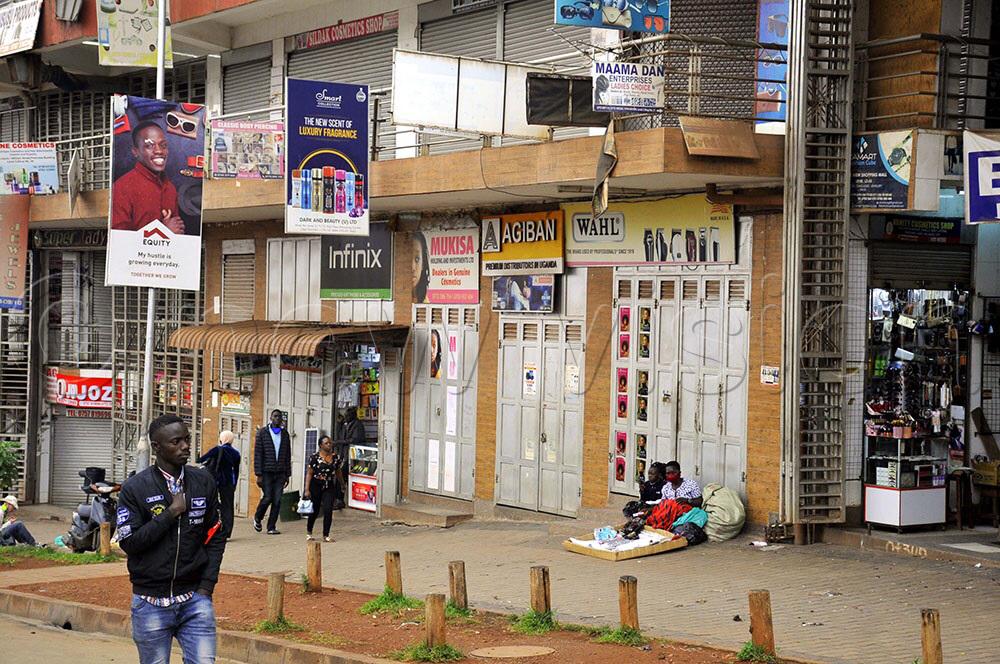
Then enters the billionaires of our economy – the Kikuubo traders. Kikuubo is a long-stretch of retail businesses in an open market in downtown Kampala.

That hyperactive, narrow business corridor is famed for offering all types of domestic goods at fairer prices compared to other retail shops across the country. It attracts retailers who buy imported merchandise cheaply and restock it in their up-country Dukas at a higher price. The transactions traded in that half a kilometer of shops are estimated to be billions of dollars annually. This explains why it is the Mecca of most of Uganda’s successful indigenous entrepreneurs.

Kikuubo is an important piece in the economy of Uganda not only because it has made many of our local businesswomen and men, but also because it takes relatively less capital to compete for business opportunities and gainful employment as compared to agriculture.

Recently, businesspeople under the Kampala City Traders Association (KACITA) have been demonstrating against what they call Chinese retailers who are allegedly taking over their business model in Kikuubo. However, the logistics of executing retail business in a foreign country involves so many factors which make it a very expensive venture. These factors should necessitate us to examine these claims a little further.

These traders met with President Museveni on 19th April 2024, to hear out their concerns. He later wrote a detailed comment about this meeting. I was very pleased to see that he termed it as “historic” because it “involved the debate on whether Uganda should break out of the colonial and neo-colonial slavery of producing what we do not consume and consuming what we do not produce”.  This is a profound debate to have in our country. We should have it more frequently.

The president highlighted two important issues to the traders. But his message might have been delivered halfway because of his indirect approach to communication in the spirit of politeness. But I felt that he was courteously rebuking them. He was showing them that exporting raw material from Uganda to foreign industries while importing manufactured goods back home to Kikuubo, is not a model that would develop our economy and transform our society.

In emphasizing how important their business is, the traders told the President that people travel from as far as Congo (DRC) and South Sudan to buy goods from Kikuubo. But the president wisely reminded them that that is a dangerous trap because “it turns the whole of East and Central Africa, into a dumping ground for foreign consumers and capital goods”.

Mr. Museveni was indirectly defending the factories set up with the help of the Chinese in the Sino-Uganda Mbale Industrial Park. Commissioned by himself in 2023, these 16 new factories covered a range of industries where Uganda lost a lot of money while exporting products such as adhesives, chemicals, jeans, textiles, and electronics. Therefore, through these factories, we are both saving money but also creating jobs for thousands of Ugandans. Most importantly, as noted by the president, these industries will enable us to develop our own industrial capacity. The president decried the incapacitation of African economies which import “big items such as air-crafts etc. and also the most ordinary such as clothes, food, etc.” which stunts our growth.

No country in the world ever transformed from a poor agrarian society as Uganda is to an industrial modern economy as Ugandan aspires to be, through the exportation of foreign goods and reselling them at a profit in one’s home country. It doesn’t matter whether Kikuubo employs a million more Ugandans tomorrow and makes tens of billions of dollars in profit, that model of entrepreneurship has never transformed any country and will never transform Uganda.

Our development will come from national companies. Indigenous capital remains the major, historically known stimulus of transformative economic growth. Since Uganda lacks expertise in manufacturing, our Chinese partners have taken the unenviable task of helping us set up industries that manufacture goods which most other countries would rather only export to us. Ugandan youth are working in these factories, learning how to use industrial machines and also make them. As such, the market is reasonably going to be shocked by the massive production of cheaper textiles and electronic products which are manufactured from Mbale or Kapeeka and from all these industrial parks which the government has set up. We need to either embrace them and start buying and selling Ugandan-made goods, or endure the obvious competition likely to come from these domestic goods. Let us not be trapped by the old ways which international capital accustomed us to get used to.

The author is a senior research fellow at the Development Watch Center.

nnandakizito@dwcug.org