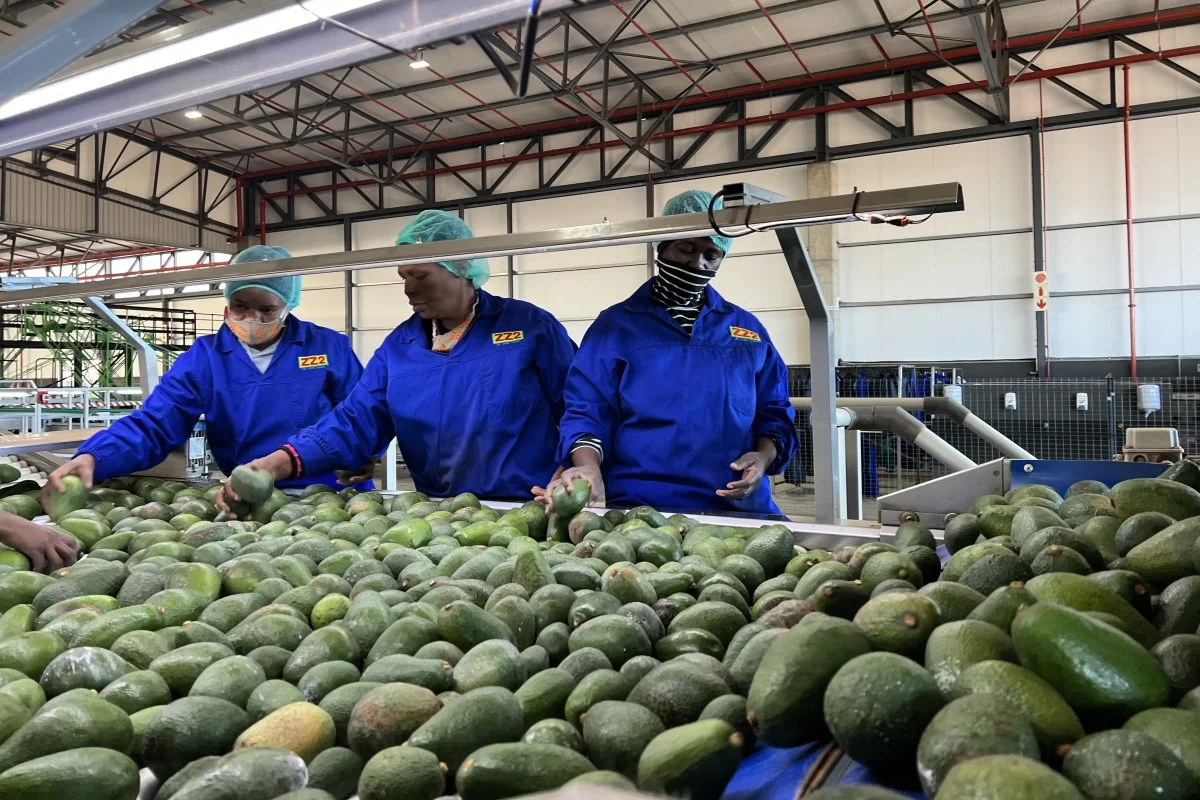
Since May 1st, 2026, 53 African countries have had zero-tariff access to the Chinese market. This is one of the most momentous developments in the realm of global trade. No other major world economy had ever unilaterally and comprehensively granted African economies such preferential treatment before.
The zero-tariff arrangement is a culmination of two decades of gradual expansion of China’s economic relations in Africa since 2005, when it first established duty-free treatment for a small basket of products to some of Africa’s Least Developed Countries (LDCs).
Over the years, China expanded and widened the preferential space within which African countries could do business with it through discussions at various FOCAC summits (Forum on China-Africa Cooperation). By December 2024, at least 33 African Least Developed Countries had benefited from a myriad tariff lines from China. The zero-tariff expansion that commenced in May 2026 was therefore initiated for the remaining 20 non-LDC economies, including Kenya, Nigeria, Egypt and South Africa. This preferential arrangement is designed to run until April 2028. The terms of this arrangement are also expected to be anchored permanently in the forthcoming China-Africa Economic Partnership for Shared Development agreement. Therefore, this is China’s latest step on the ladder of supportive economic relations with Africa, which we have been building together since the early 2000s.
It is crucial that we put into perspective the context under which this development has emerged. The United States, which had for long been the leading development partner of several African countries, with such initiatives such as USAID and AGOA (the African Growth and Opportunity Act) acting in the governance and economic spaces of our countries, has evolved a considerably hardened posture towards us. Thanks to Trump’s undisguised contempt for Africa, America’s relationship with us often dwindles when he is in office. Sometimes, this is not a really bad thing.
AGOA was paused in September 2025, bringing America’s cornerstone policy of trade preference for Africa to a halt, which is struggling to pick up despite later being renewed. This experience reminded our countries of the fragility and brittle nature of our relations with Washington, which seems to sway with the shifting moods of the Trump regime.
It has even been worsened by the coercive trade tariff diplomacy which has come to punctuate Trump’s second term in office. There’s therefore a deliberate contrast in posture to be deduced from China’s moves at this time, although as already posited, it has been building fairer and better trade arrangements with Africa since the 2000s.
The global economic and trade arena is now a contest and contrast between Beijing’s predictability and Washington’s volatility. The more America embraces protectionist tendencies, the more China implements openness. Beijing has not even demanded or required reciprocal tariff cuts from African governments. It has been unconditional, except, of course, for diplomatic recognition. This is both sheer generosity and strategy. I see no problem with either, since such a strategy is mutually beneficial. It should be Washington to worry now, since its soft power pre-eminence on the continent is being won over by Beijing.
If we evaluate this new development on the spectrum of China’s fifty-year sweep of cooperation with Africa, this policy marks not an incremental adjustment but an inflexion point. It is a paradigmatic shift from the decades of steady engagements in infrastructure financing, mining and industrial park development. What was less developed in this partnership was trade access to the Chinese market. This has now been handled. African countries now stand a chance to earn foreign exchange from China by importing processed and value-added goods, textiles, etc.
Nevertheless, we must face the new challenges now, which will become more apparent when the celebration confetti is swept away. We must build the efficiency to meet the rules of origin requirements. We have to build capacity to meet phytosanitary standards. We have to meet certification costs. We have to meet logistics bottlenecks. We need to meet all these challenges if we are to benefit. We don’t just have to simply celebrate open doors but also prepare to organise behind them how to make. We must build industrial capacity to convert tariff-free access into genuine export diversification.
The writer is a senior research fellow at the Development Watch Centre.
Tag: Trade Tariffs
No Reason to Take Trump’s Claims About China’s Purported Violation of the Geneva Talks

On 2nd June, China publicly responded for the first time to President Trump’s comments that Beijing was acting contrary to the agreement entered by the two countries in Geneva earlier last month. Beijing’s position was explained by the spokesperson of the country’s Ministry of Commerce (MoC), He Yongqian. Being that the pronouncements by the two parties are contradictory, it can be confusing to establish who has in fact conducted themselves improperly something that the rest of this OP-ED deals with.
To begin with, the language adopted by either administration tells a lot. On one hand, you have the MoC statement which is substantive in its claims and on the other, you have nothing but generic accusations. Specifically, Beijing pointed out that the US had despite the understanding between Secretary Scott Bessent and Vice Premier He Lifeng gone on to restrict the export of artificial intelligence chips and trade in chips with the Republic of China as well as revoking Chinese students visas among other measures. In the case of America however, Trade Representative Jamieson Greer could only afford to say that “United States did exactly what it was supposed to do, and the Chinese are slow rolling their compliance.”
One would have liked to say that Washington is treading carefully in the spirit of diplomacy except for the fact that the same leadership has not been known to act as such in recent months. They did not do so with Ukraine or South Africa so it would be a breakaway from a well-established pattern if they were to act differently in this case all over a sudden. Moreover, away from the fact that there has been no particular clarification on the facts, the rhetoric itself has been combative. In a “truth” that kicked off this whole controversy on Truth Social thus, Mr. Trump directly insinuated that it was to be expected that China would act dishonestly. His very words were; “China, perhaps not surprisingly to some, HAS TOTALLY VIOLATED ITS AGREEMENT WITH US. So much for being Mr. NICE GUY!” If he had a bomb to drop, there is no doubt that he would have proceeded to do so without any hesitation.
But it is also not that the White House is causing upheaval for no reason, it is just that its rationales are petty and selfish to say the least. We know for instance, that the presiding Commander in Chief has been known to apportion blame to an other whenever things do not go his way with China famously occupying this position for most of the time. This time round, Congress has just passed a rather unpopular law which strips essential benefits from a good number of people that voted Republican in the previous elections and so he badly needed a distraction.
Another absurd but very real scenario is that Donald Trump has long portrayed himself as a deal-maker. Unfortunately for him, President Xi’s philosophy contradicts this stance since the Asian politician believes in systems. The result of this as Bert Hofman of the East Asian Institute at the National University of Singapore put it, has been that the Secretary General of the Chinese Communist Party (CCP) has kept a healthy distance from the trade war and instead encouraged in-line officials to spearhead the negotiation process to the frustration of his American counterpart.
By artificially manufacturing friction hence, the US hopes to catch Xi Jinping’s ear. No wonder, following these developments, USA bureaucrats have been pushing for a call with the CCP head. The irony of course, is that there was one such conversation on 17th January this year the theme of which laid the foundations for the Geneva talks i.e. the very talks that the United States of America is already going back on. Why pretend to care about the future whilst presently acting in bad faith then?
Honestly, this conduct is reflective of the usual bullying from the west that we are now accustomed to. The United States forgets though that the stakes are not in its favour on this one– and, Stephen Olson, a visiting fellow at the Yusof Ishak Institute agrees. By the time it awakens, things might be too little, too late.
The writer is a research fellow at the Sino-Uganda Research Centre.
China’s First Quarter Economic Performance Vindicates Beijing’s Approach to Tump Tariffs

China’s National Bureau of Statistics (NBS) has finally released the much anticipated data on the performance of the country’s economy for last month. Ordinarily, the results should not be a big deal as China has been rather consistent for sometime now. In this case however, everyone was looking to see how things turn up because the United States President had made it an absolute priority to frustrate Beijing during the beginning months of his term. What the said statistics have shown however, is a picture far distant from this vision.
NBS’ monitoring tracked all the indicators of growth and one after another, they revealed a country that is only going strong. Figures for the year-on-year industrial production, fixed-asset investment, retail sales, and consumption increased by 6.7%, 4.2%, 6.1%, and 5.1% respectively. For the case of imports and exports, growth capped at 8% while urban unemployment declined by 5.2% and inflation remained stable at 2.5%.
Since numbers do not lie, one can confidently say that this turn of events may well be the first vindication for the measures that the Chinese Administration adopted in the wake of Washington’s offensive. The latter party might have won on rhetoric but as it turns out, strategy and foresight seem to have prevailed after all.
We remember succinctly for instance, that while warning that trade wars do not benefit anyone, President Xi took to measures such as export tax rebates, providing financial support for Chinese export companies, as well as solidifying domestic production in the face of an adamant adversary.
With Trump’s government already making concessions as substantial as the recent tariff talks in Geneva then, the NBS statistics can be seen as just one of the many hard facts that are starting to give China the edge in the new international economic dispensation. Financial institutions such as Goldman Sachs are one other example of these projections (and, they are as conservative as you can get on this issue). Morgan Stanley economists have thus gone back on their word regarding how much supplementary package China will need by the fourth quarter. They have lowered their initial estimate ($280) by more than half.
Naturally, this leads to the “what next” question. For China, there is no doubt that it will thrive following the outcomes in Geneva as it had done so even prior. The main strength that she carries here though, is that she comes to the table on her terms i.e. its economic policy will mostly proceed as the Communist Party of China (CPC) intends it to. That way, the would be uncertainty will be corrected for as the different domestic players do not have to overly rely on the mercies of what the US decides to do– which as history has shown, is not a good way to formulate policy.
But other China is hedging itself too. For this case, the CPC has introduced special treasury bonds looking to increase government expenditure and help support vital projects. $140 billion has already been injected in the process. Cao Yuanzheng of China Economic 50 Forum has pointed out that within three months (which is not far off in the future), the impact of the bonds will have begun to be felt.
Given this combination, it is expected that China’s economy will grow by an impressive 5.1% which is approximately the size of the entire Switzerland during the second quarter of the year. For context, the Swiss operate the 20th largest economy world over so it is serious expansion that we are talking about. Add to that the fact that China has had to endure times as difficult as it has and you can bet that whichever eventuality comes after the ninety days settlement with Washington, the Asian economic powerhouse will be even better positioned.
In terms of the global picture, it is anticipated that China’s contribution towards general economic development will reach a high of 35% at the end of the year which is again a testament to the country’s dynamism. This too is an improvement of 5% from what it was last year.
Looking back, it was always clear that President Trump’s approach to China was mistaken. Projections are one thing however, and reality another. Now that China’s performance aligns with the predictions however, there is a much stronger case for Xi Jinping and his team.
The writer is a research fellow at the Development Watch Centre